Transparent Display Systems for Products, Retail and OEM Integration
Combine visible physical products with dynamic digital content through transparent LCD display systems for refrigerator doors, vending machines, display cabinets, digital human displays, video walls and custom OEM equipment. DisplayMan helps integrate the panel, glass, lighting and control system around your application and installation requirements.
DisplayMan — Your Partner in Transparent Display Engineering
Visible Products + Digital ContentRefrigerator & Vending DisplaysCabinets & Video Wall SystemsCustom OEM & Optical Control
A transparent LCD display is a display system that allows digital content and physical objects to be viewed together.
The LCD panel shows images, videos, text or interactive content, while the product or object behind the screen remains visible.
This makes transparent LCD especially useful for applications where the customer needs both real product visibility and digital promotion or information display.
The wider product family also includes Transparent LCD Light Shutters for projects that need optical-state control instead of pixel-based images or video.
Typical Examples
Beverage coolers and commercial refrigerators
Smart vending machines and unattended retail cabinets
Luxury retail cabinets and product showcases
Museum showcases and exhibition systems
Smart product displays and transparent OEM equipment
Core Line
Transparent LCD is not only a screen. It is a product-visible display interface.
How Transparent LCD Displays Work
Transparent LCD panels do not work like transparent OLED. A transparent LCD needs controlled lighting or a backlight structure to create good image contrast and visibility.
In most projects, the final visual effect depends on LCD transparency, backlight design, cabinet structure, ambient light, content design, viewing distance, glass structure and the product position behind the screen.
Core Line
For transparent LCD, lighting and structure are as important as the screen itself.
Key Factors
LCD panel transparency
Backlight or internal lighting design
Cabinet or door structure
Ambient light condition
Content brightness and color design
Viewing distance
Glass structure
Product position behind the screen
Why Choose Transparent LCD?
Transparent LCD displays are useful when a project needs to combine digital content with real-world visibility. Compared with standard LCD displays, transparent LCD does not fully block the object behind the screen.
Compared with transparent OLED, transparent LCD can be more practical for many OEM and retail applications where cost, size range, long-term supply and controlled lighting structure are important.
Product Visibility
Transparent LCD shows digital content while keeping products or physical objects visible behind the screen.
Retail and Equipment Fit
It is suitable for retail cabinets, coolers, vending machines, showcases and product-visible OEM equipment.
Interactive Option
Transparent LCD can be integrated with touch for product browsing, digital human interaction or smart retail interfaces.
Controlled Lighting
It works well when the project has proper backlight, internal lighting or controlled cabinet lighting structure.
Batch OEM Potential
Transparent LCD is often more practical for batch OEM projects than premium transparent OLED.
System Integration
It can be combined with cabinet structure, controller board, cable routing, touch and enclosure design.
Core Line
Transparent LCD is a practical display technology when product visibility and digital content must exist in the same space.
Main Transparent LCD Product Categories
DisplayMan organizes the transparent LCD product family into seven directions based on application, structure and optical function. Six directions display pixel-based content; Transparent LCD Light Shutters switch the complete active area as one optical zone.
Refrigeration
Transparent LCD Refrigerator Display
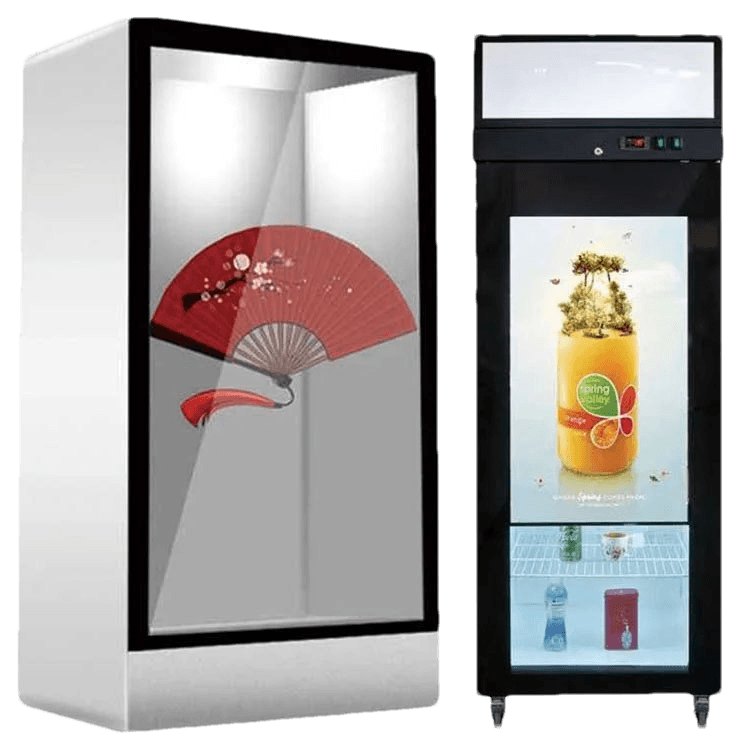
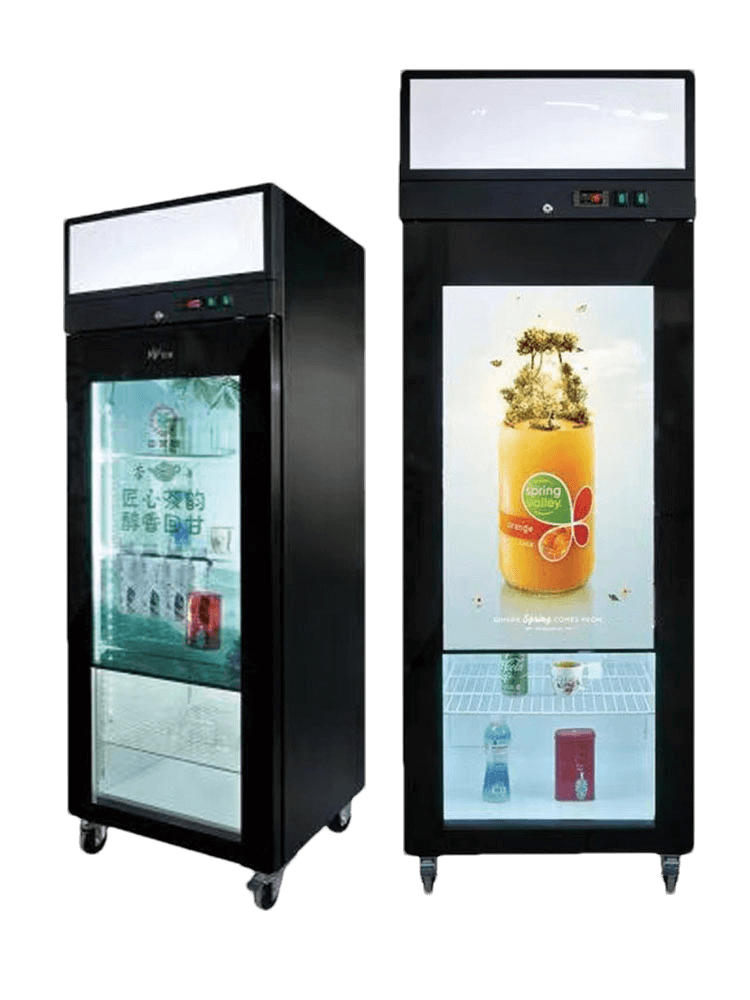
Transparent LCD refrigerator displays are designed for glass-door refrigerators, beverage coolers, smart coolers, freezer doors and commercial refrigeration systems.
Best for: beverage coolers, supermarket chiller doors, smart refrigerator doors, freezer displays, branded cooler cabinets and retail media cooler networks.
Use when: the project needs to turn a refrigerator door or cooler door into a digital display surface while keeping products visible behind the glass.
Transparent LCD digital human displays combine transparent LCD with digital avatar content, product explanation, visitor guidance or interactive presentation.
Best for: digital human presentation, AI avatar display, exhibition interaction, museum explanation systems and public service display interfaces.
Use when: the project needs a transparent display effect with a digital presenter, avatar, guide or interactive storytelling scene.
Transparent LCD cabinets are display showcase systems that combine a physical display cabinet with transparent LCD digital content.
They are often used for luxury goods, museum exhibits, collectibles, electronics, cosmetics, jewelry, watches, cultural products and technology demonstrations.
Use when: the project needs to display a real product inside a cabinet while adding video, graphics, specifications, storytelling or interactive content on the front screen.
Custom transparent LCD displays are used when standard cabinet products cannot meet the customer’s structure, size, interface, touch, lighting or installation requirements.
Best for: OEM transparent display products, custom smart appliances, embedded transparent LCD systems and product-visible interactive devices.
Use when: the project requires custom size, structure, touch, controller board, backlight, cable routing, enclosure or OEM integration.
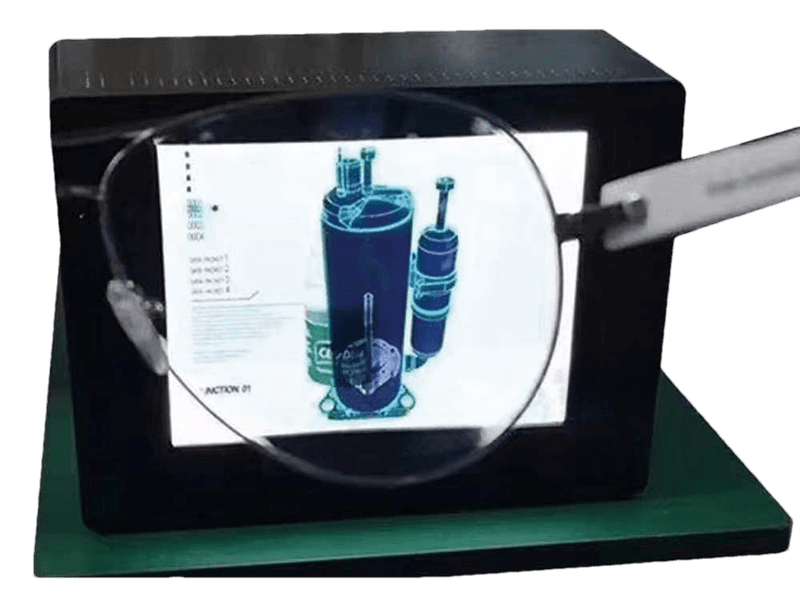
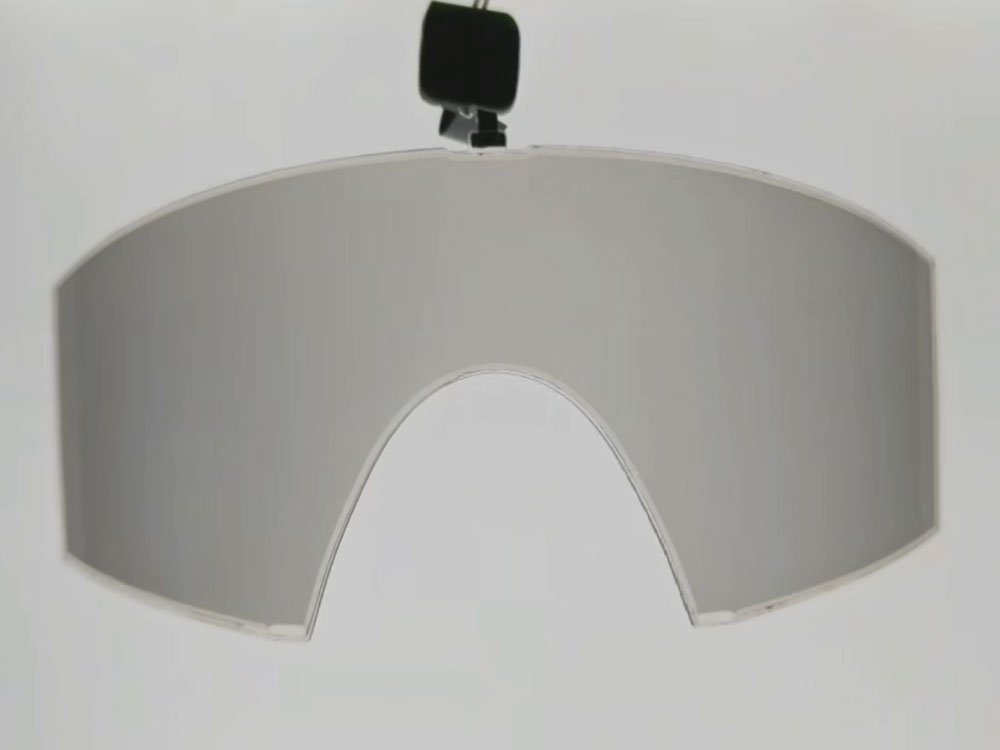
Transparent LCD light shutters are custom single-segment optical-control panels. The full active area changes state together rather than displaying text, graphics or video.
Best for: dimmable ski goggles, smart eyewear, equipment windows, protective visors, reflective indicators and project-specific optical systems.
Use when: the project needs transparent-to-black, reflective-to-transparent or multi-tint switching in a rectangular or irregular shape. Large custom directions up to approximately 450 × 170 mm can be reviewed.
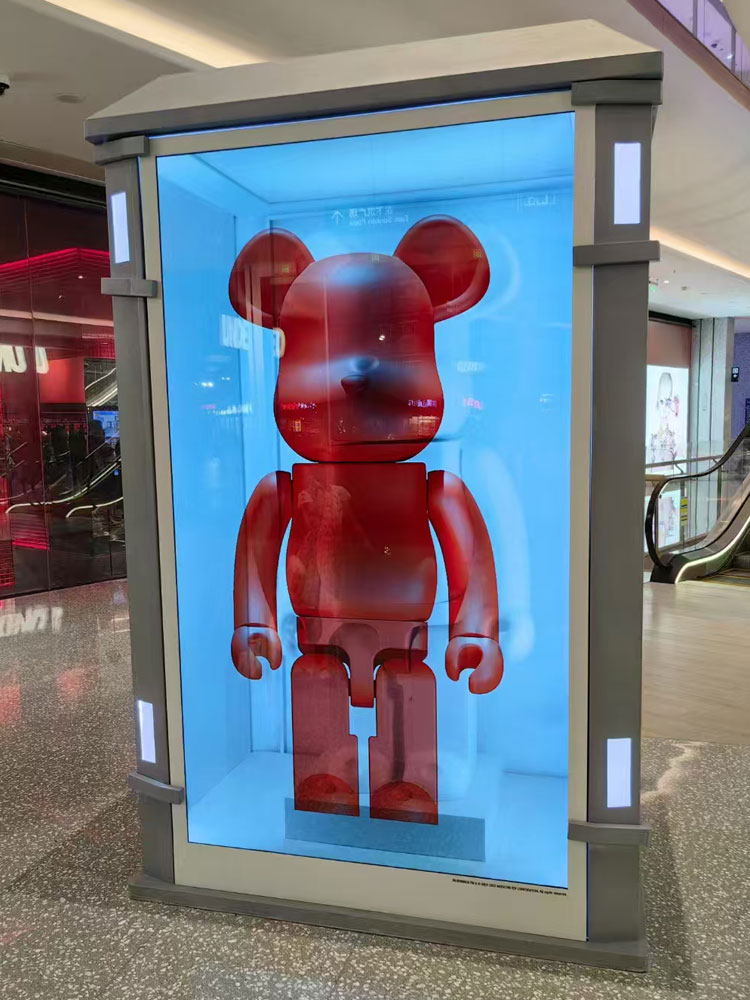
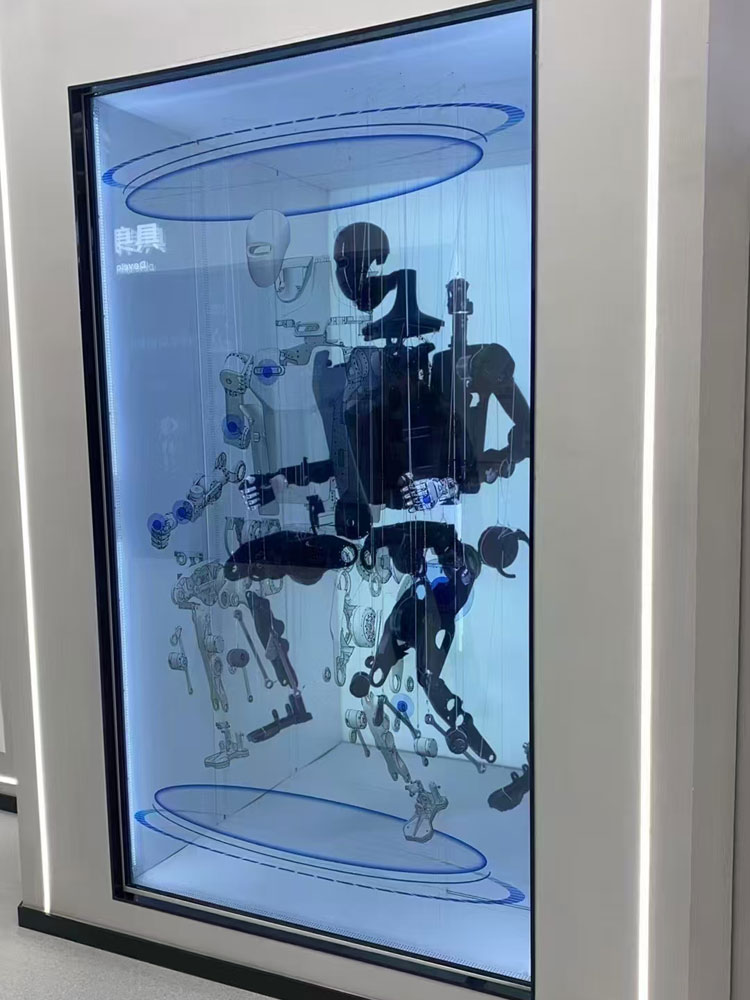
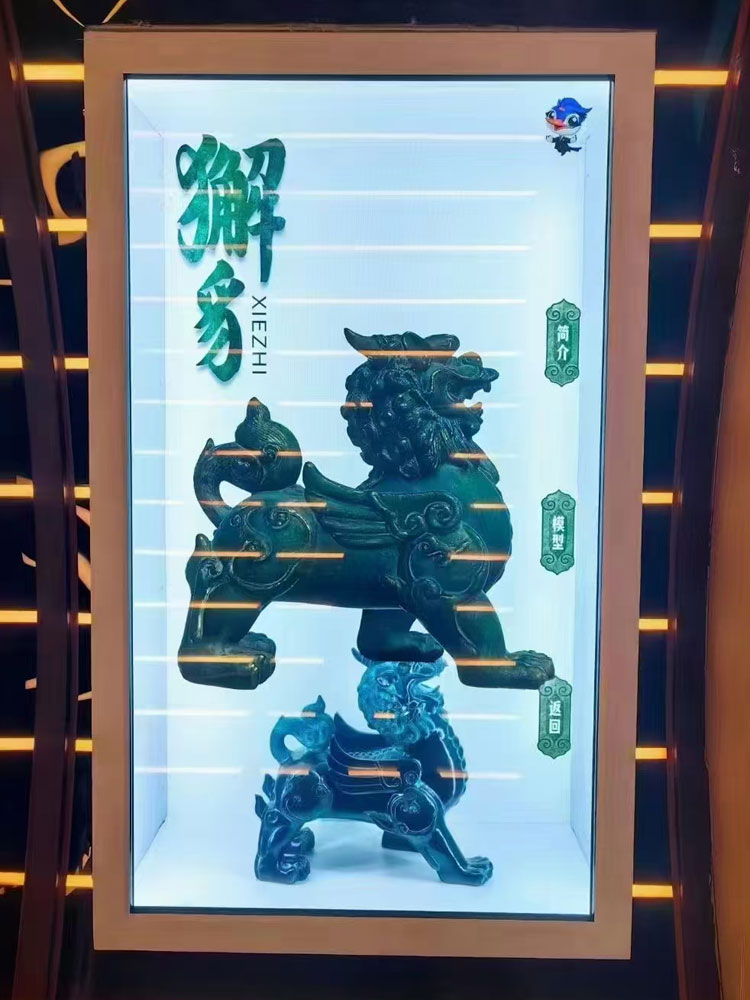
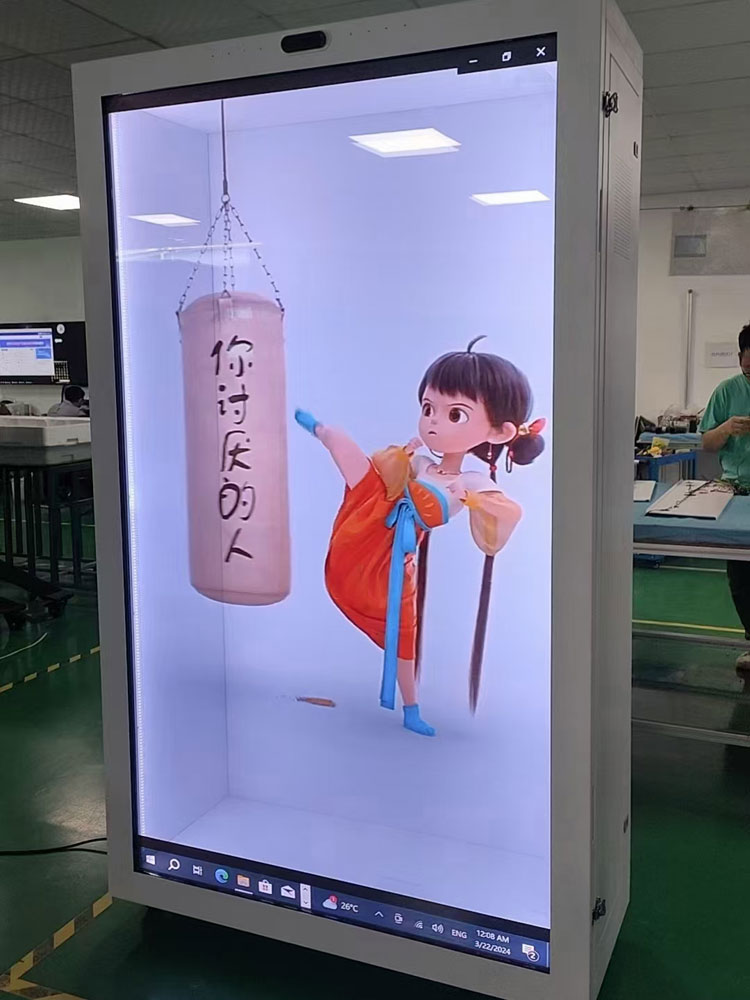
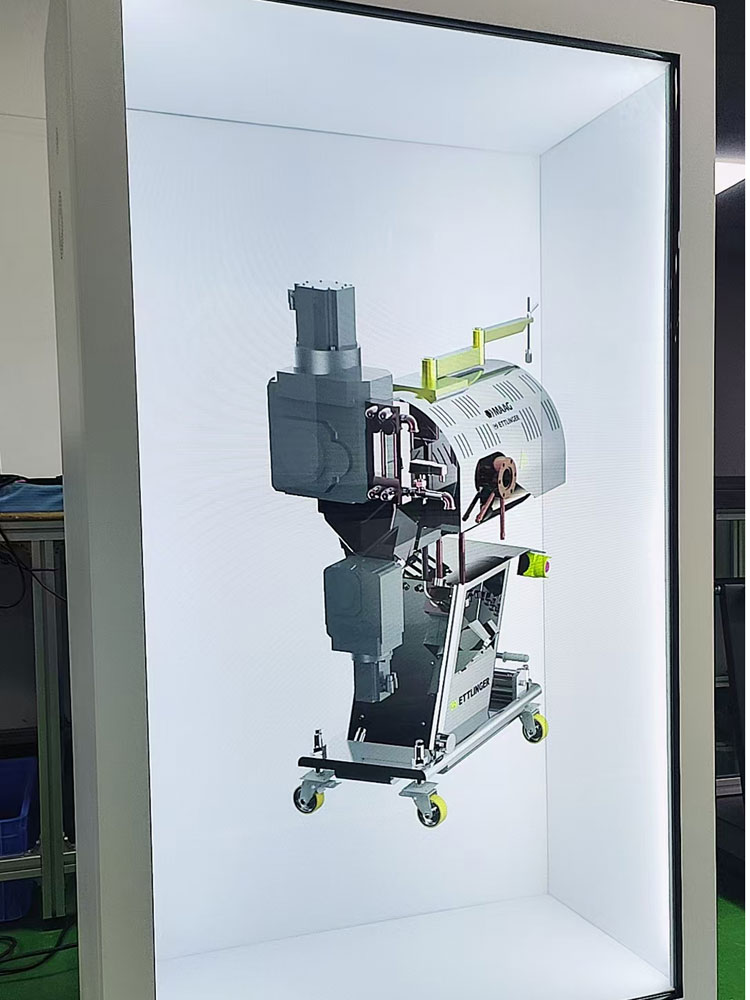
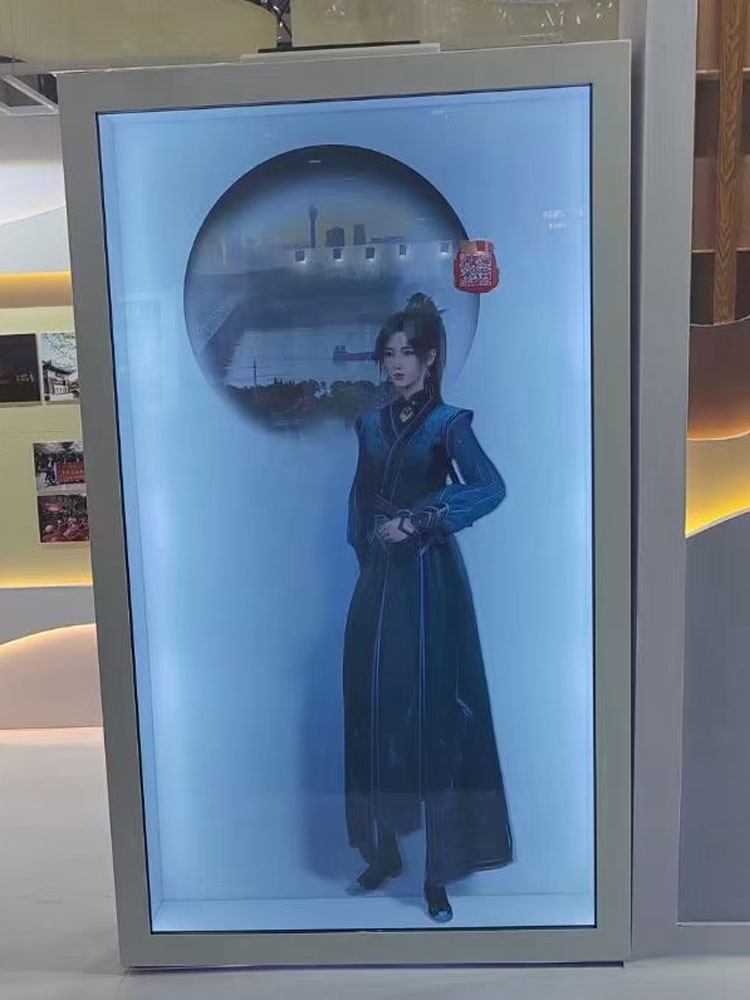
Transparent LCD Display Cabinets combine physical objects with digital content on the front screen. From collectible figures and cultural displays to machinery demonstrations, these examples show how cabinet design, internal lighting and multimedia content work together to present a product and tell its story.
DisplayMan can review cabinet dimensions, product access, lighting, content playback and optional touch interaction for retail showcases, museums, showrooms and exhibition projects.
A red bear figure is presented inside a transparent LCD display cabinet with blue visual content. The metallic enclosure combines a physical collectible with digital presentation for character merchandise, retail showcases and exhibition displays.A robotic figure is presented in a transparent LCD display cabinet, with blue graphics highlighting its mechanical details. The illuminated cabinet provides a setting for technology products, collectibles and themed exhibition content.A mythical creature statue is showcased in a transparent LCD display cabinet with digital text and character graphics. Lighting and screen content support cultural storytelling while keeping the physical exhibit part of the presentation.A white-framed transparent LCD display cabinet demonstrates animated content featuring a character in traditional Chinese clothing and a punching bag. Shown in a workshop setting, this example illustrates character animation and content testing for exhibition presentations.A detailed machine model is presented in a transparent LCD display cabinet mounted on a rolling cart. The white enclosure and workshop setup illustrate a format for engineering demonstrations, equipment explanations and showroom presentations.A transparent LCD display cabinet presents a character in traditional clothing with a cityscape inside a circular visual frame. The white cabinet provides a clean setting for cultural animation, themed storytelling and exhibition content.
DisplayMan can support transparent LCD display cabinet sizes from small desktop showcase formats to large-format transparent display cabinets.
Actual availability, panel model, resolution, touch type and cabinet design should be confirmed based on the project.
Size Range
Sizes Available
Common Use
Small Format
7″, 10.1″, 12.1″, 14″, 15.6″, 19″, 21.5″
Desktop transparent display cabinets, compact product showcases, museum objects, cosmetics, electronics, small luxury items and sample evaluation.
Medium Format
32″, 43″, 49″, 55″
Retail cabinets, product demonstration, showroom display, exhibition showcases, standard transparent LCD display cabinet systems and digital human display structures.
Large Format
65″, 75″, 86″, 98″
Large showroom cabinets, exhibition display systems, product launch installations, transparent video wall projects and large commercial display scenes.
G+G capacitive touch for small and medium cabinet projects when the structure supports it
Infrared touch frame for larger transparent LCD cabinet systems, especially 32″ and above
Non-touch display for advertising, product showcase and digital human display projects
Custom touch glass when front glass, shape, thickness or printing must be customized
Touch controller integration and interface review
Core Line
Standard sizes are useful for fast project evaluation. Custom transparent LCD structures are better when the display must fit a specific product, cabinet, refrigerator door or vending machine.
Transparent LCD Is Best Used as a System
A transparent LCD panel alone is not enough for most projects. A successful transparent LCD product usually requires the panel, lighting, controller board, structure, glass, content and maintenance method to work together.
LCD panel selection
Backlight or internal lighting design
Controller board
Power system
Cabinet or mechanical structure
Glass and front surface design
Touch integration if required
Content playback system
Cable routing
Maintenance access
Application-specific testing
Core Line
Transparent LCD performance depends on the complete system: panel, lighting, structure, content and application.
Main Application Scenarios
Transparent LCD displays are most valuable when physical product visibility and digital content need to appear in the same viewing area.
This makes them especially useful for retail, refrigeration, vending, exhibitions, museums, product showcases and OEM display equipment.
Commercial Refrigeration and Smart Coolers
Transparent LCD is one of the most practical display technologies for commercial refrigeration projects. In beverage coolers, smart refrigerators and freezer doors, the customer can still see the products inside while the screen displays advertising, product information, promotions or brand content.
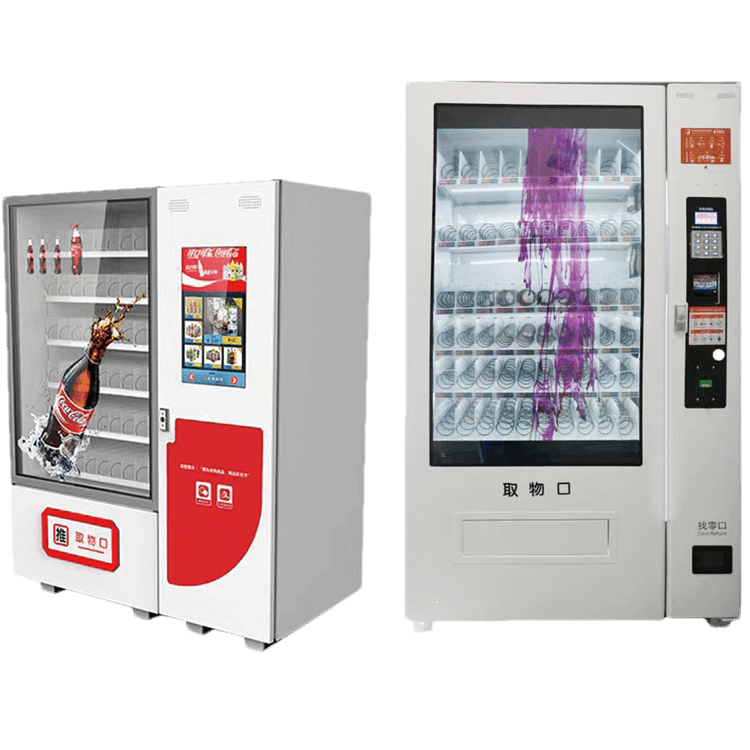
Transparent LCD is suitable for smart vending machines and unattended retail cabinets where product visibility is important. The display can show advertising, prices, product videos and buying guidance while products remain visible.
Exhibition, Showroom and Brand Experience Displays
Transparent LCD can make real products, models, exhibits or objects part of the digital presentation, helping brands explain products in a visual and memorable way.
Some projects do not need an image display. They need the complete LCD area to switch between transparent, black, reflective or project-specific tint states.
Transparent LCD is not the only transparent display technology. The best technology depends on application, viewing distance, transparency requirement, brightness, structure, budget and production quantity.
Comparison
Transparent LCD Position
Alternative Technology Position
Transparent LCD vs Standard LCD
Allows products or objects behind the screen to remain visible while showing content.
Standard LCD is opaque and better when the project only needs to show digital content.
Transparent LCD vs Transparent OLED
Needs lighting design, but is often more practical for refrigeration, vending, cabinets and batch OEM systems.
Transparent OLED is premium and self-emissive, but usually more expensive and more limited by size and cost.
Transparent LCD vs Transparent LED
Better for close-view product showcase use, refrigerator doors, vending machines and controlled cabinet structures.
Transparent LED is usually better for large-area visual impact, glass walls, façades, exhibitions and stage applications.
Transparent LCD vs Projection
Better for repeatable productized cabinets, vending machines, refrigerators and OEM equipment structures.
Projection can create special effects, but depends heavily on projection angle, lighting and surface control.
Transparent LCD Display vs LCD Light Shutter
A transparent LCD display uses individually controlled pixels to present images, text or video while preserving visibility behind the panel.
Transparent LCD Light Shutters do not present image content; the complete active area switches together as one optical-control zone.
Core Line
Choose transparent LCD when the product behind the screen must remain visible. Choose other technologies when the application, size, distance or budget points in another direction.
When Transparent LCD Is the Right Choice
Transparent LCD Is Suitable When
Products behind the screen must remain visible
The display is used in a cabinet, door, refrigerator or vending structure
Digital content needs to appear on a transparent surface
The project has controlled lighting or can add backlight structure
The customer needs product information, advertising or storytelling
The project needs prototype or batch OEM evaluation
Transparent OLED is too expensive for the project
Transparent LED is too large-pitch or unsuitable for close viewing
Best-Fit Projects
Beverage cooler display
Transparent refrigerator door
Transparent vending machine
Smart retail cabinet
Product showcase cabinet
Museum display cabinet
Luxury retail display
Digital human display
Transparent video wall
Custom transparent OEM display
Core Line
Transparent LCD is the right choice when the display must add digital content without hiding the physical product.
When Transparent LCD May Not Be the Best Choice
May Not Be Suitable When
The customer only needs a normal advertising screen
The object behind the screen does not need to remain visible
The environment cannot support proper lighting design
The application needs very high transparency with no cabinet or lighting support
The project needs a large outdoor glass façade display
The viewing distance is very long and large-format LED would work better
The customer only wants a low-cost standard display
The project has no clear application, structure or installation plan
Transparent LCD is powerful when the application fits. It is not a universal replacement for every display technology.
Key Engineering Requirements
Transparent LCD projects must be reviewed as complete systems. A transparent LCD panel alone does not guarantee a successful visual effect.
The final result depends on lighting, structure, content, glass, controller board and application environment.
Lighting and Backlight Structure
Lighting is the most important engineering factor for transparent LCD. Without proper lighting, the image may appear weak, dark or low contrast.
Product Visibility
The display must keep the object behind the screen visible. Product visibility depends on LCD transparency, object color, lighting, content design, reflection and viewing angle.
Content Design
Transparent LCD content should enhance the product, not cover it. High-contrast graphics, bright icons and clear product callouts usually work better.
Glass and Cabinet Structure
Transparent LCD is often integrated with glass, cabinet, door or showcase structures. Mounting, cable routing, maintenance access and transportation protection should be reviewed.
Touch Integration
Touch can be useful for product browsing, digital human interaction, smart retail, museum guide systems and showroom displays.
Controller Board and Signal Interface
A transparent LCD system must match the customer’s video source, control system and installation structure.
Operating Environment
Transparent LCD performance can be affected by ambient brightness, temperature, humidity, condensation risk, dust exposure, operating hours and ventilation.
Refrigeration Review
For refrigeration projects, condensation, door structure, temperature and lighting must be reviewed carefully.
OEM Integration
For OEM projects, interface, cable routing, panel supply, touch, backlight and mechanical structure should be confirmed early.
Project Information Needed for Review
To recommend a suitable transparent LCD solution, DisplayMan usually needs the following information:
Application type
Screen size
Transparent display area
Product or object behind the display
Required viewing distance
Indoor, semi-outdoor or outdoor-facing condition
Cabinet, refrigerator, vending machine or equipment structure
Glass size and thickness if available
Lighting or backlight condition
Touch or non-touch requirement
Video input or system requirement
Content playback method
Installation method
Cable routing requirement
Sample quantity
Target production quantity
Drawings, photos or reference products if available
Core Line
The more clearly the structure is defined, the faster the transparent LCD solution can be evaluated.
Suitable Customers
Transparent LCD displays are best suited for customers who need product visibility, digital content and physical structure integration in the same project.
They are especially useful when the display becomes part of a cabinet, refrigerator door, vending machine, showcase, exhibition system or OEM product.
Best Fit For
Commercial refrigerator manufacturers
Beverage cooler OEMs
Smart vending machine manufacturers
Unattended retail equipment companies
Retail display cabinet manufacturers
Museum and exhibition solution providers
Luxury retail display companies
Smart appliance developers
Product showcase system integrators
Digital human solution providers
Brand experience agencies
Retail media equipment developers
OEM equipment manufacturers
Custom display project developers
Suitable Project Conditions
The object behind the display must remain visible
The customer needs digital content on a transparent surface
The display is integrated into a cabinet, door, machine or showcase
The project has controlled lighting or can add lighting structure
The customer needs advertising, product information or storytelling
The project has sample development or batch production planning
The customer can provide drawings, photos or structure details
Standard LCD blocks the product view
Transparent OLED is too expensive for the application
Transparent LED is not suitable for close-viewing cabinet use
Core Line
Transparent LCD is strongest when real products and digital content must work together in one display structure.
Not Suitable Projects
Transparent LCD is not the best solution for every display request. It should not be selected only because it sounds futuristic.
Not a Good Fit For
Standard advertising screen projects
Low-cost digital signage inquiries
Applications where nothing needs to be visible behind the screen
Projects with no cabinet, door, glass or structure plan
Outdoor glass façade displays that need large-area brightness
Long-distance viewing applications better suited for LED displays
Customers expecting transparent OLED-level performance at LCD pricing
Projects with no lighting control or backlight possibility
Transparent LCD should be used when transparency creates real application value, not only visual novelty.
How DisplayMan Supports Transparent LCD Projects
From Panel Selection to Complete Transparent Display System
DisplayMan supports transparent LCD projects at different levels depending on the customer’s application.
Some customers need a standard transparent LCD display cabinet for fast evaluation. Some customers need a transparent LCD refrigerator door, vending machine front display, product showcase cabinet or custom transparent display system.
Some OEM customers need a transparent LCD panel, controller board, touch glass, lighting structure, cable routing and mechanical integration reviewed together.
Transparent LCD panel selection
Standard transparent LCD display cabinet supply
Transparent refrigerator display integration
Transparent vending machine display support
Transparent LCD cabinet and showcase systems
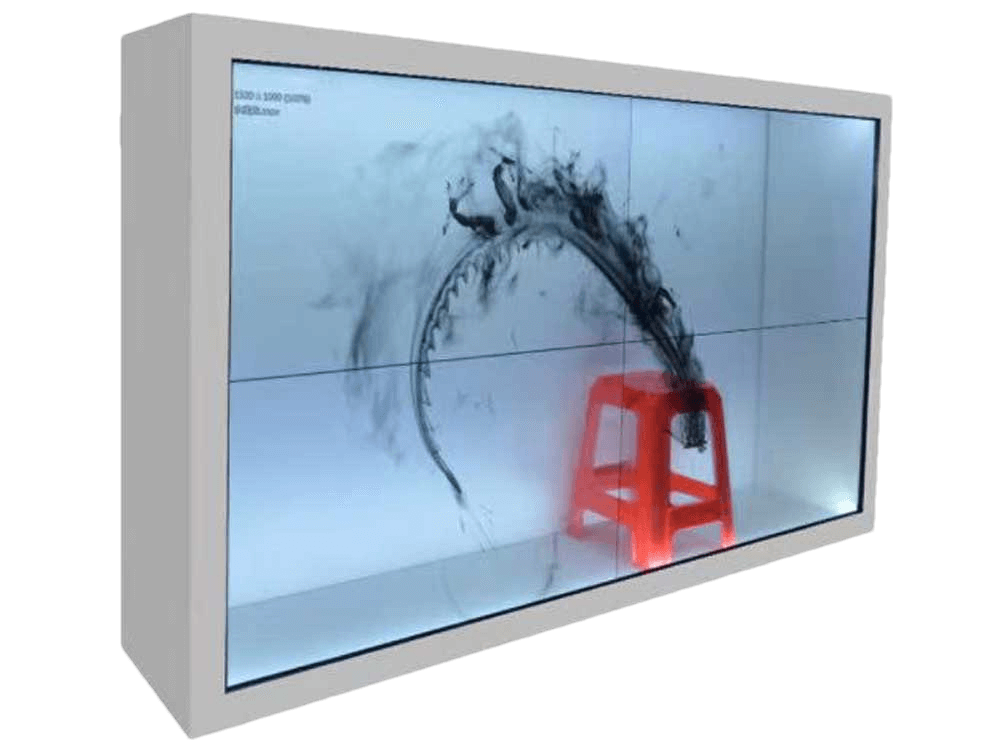
Transparent LCD video wall projects
Custom transparent LCD display development
Touch or non-touch configuration
IR touch or capacitive touch review
Controller board matching
HDMI, LVDS, eDP or other signal discussion
Media player, Android or Windows system review
Backlight and internal lighting discussion
Glass and cabinet structure review
Cable routing and connector position review
Prototype evaluation
OEM batch project communication
Core Line
Transparent LCD projects should be reviewed as complete systems: panel, lighting, structure, interface, content and application.
Project Review Checklist
Basic Project Information
Application type
Screen size
Transparent display area
Product or object behind the display
Cabinet, refrigerator, vending machine or showcase structure
Indoor, semi-outdoor or outdoor-facing use
Viewing distance
Touch or non-touch requirement
Content playback requirement
Sample quantity
Target production quantity
Project schedule
Budget range if available
Structure and Integration Information
Cabinet or door drawing
Glass size and thickness
Display mounting method
Backlight or internal lighting position
Product lighting condition
Cable routing
Power input
Controller board position
Maintenance access
Ventilation or heat dissipation condition
Transportation and installation method
Photos, sketches or reference products if available
Content and User Interaction
Advertising video
Product information
Price or promotion display
Digital human content
Museum or exhibition explanation
Touch interaction
QR code or mobile interaction
Product browsing
Remote content update
Media player or CMS requirement
Core Line
The clearer the structure and application are, the faster the transparent LCD solution can be evaluated.
Related Application, Solution and Product Pages
Transparent LCD projects connect with refrigerator door displays, vending machine front displays, transparent display cabinets, digital human display structures, custom transparent LCD systems and optical-control light shutters, as well as controller boards, LED backlights, touch glass and transparent display comparison pages.
When the project needs to clarify whether the display is mainly decorative, informational or mixed
Core Line
Transparent LCD product pages should guide customers toward the right application structure first, then the correct panel, lighting, controller, touch and cabinet integration route.
TRANSPARENT LCD FAMILY
Explore Transparent LCD Displays
FAQ
What is a transparent LCD display?
A transparent LCD display is a display system that shows digital content while allowing viewers to see the physical object behind the screen. It is commonly used in refrigerators, vending machines, product cabinets, museum showcases, exhibitions and custom OEM display systems.
Does a transparent LCD display need backlight?
Yes. Transparent LCD usually needs controlled lighting or a backlight structure to achieve good image contrast. The final visual effect depends heavily on lighting, cabinet structure, content design and the object behind the screen.
Can transparent LCD be used for refrigerator doors?
Yes. Transparent LCD is one of the most practical technologies for refrigerator doors, beverage coolers, smart coolers and freezer door display projects. The project must review glass structure, lighting, condensation risk, temperature, cable routing and maintenance access.
Can transparent LCD be used for vending machines?
Yes. Transparent LCD can be used on vending machine doors or front display areas where products need to remain visible while digital content appears on the display surface.
Can transparent LCD support touch?
Yes. Depending on size and structure, transparent LCD systems can support IR touch, capacitive touch or custom touch glass. Touch should be selected based on user behavior, screen size, glass structure and application environment.
Is transparent LCD the same as transparent OLED?
No. Transparent OLED is self-emissive and usually has a more premium visual effect, but it is also more expensive. Transparent LCD needs lighting support, but it is often more practical for refrigerator, vending, cabinet and OEM projects where structure and cost can be controlled.
Is transparent LCD better than transparent LED?
They are used for different applications. Transparent LCD is better for close-viewing cabinets, refrigerators, vending machines and product showcases. Transparent LED is usually better for large-area visual impact, glass walls, retail façades, stage applications and long viewing distances.
Can DisplayMan provide a custom transparent LCD display?
Yes. DisplayMan can support custom transparent LCD projects based on size, application, cabinet structure, lighting, touch requirement, controller board, cable routing and production quantity.
What is the difference between a transparent LCD display and a transparent LCD light shutter?
A transparent LCD display uses pixels to show images, text or video while allowing the object behind it to remain visible. A transparent LCD light shutter does not show image content. Its complete active area switches together as one optical zone between transparent, black, reflective or project-specific tint states.
What information should I provide for quotation?
Please provide the application, screen size, transparent area, cabinet or machine structure, product behind the display, touch requirement, lighting condition, interface requirement, sample quantity and target production quantity. Drawings, photos or reference products are very helpful.
Build a Transparent LCD Display Around the Real Application
Send us your application, screen size, cabinet or machine structure, product visibility requirement, touch requirement, lighting condition, interface requirement and target quantity.
DisplayMan will help evaluate whether your project is suitable for a transparent LCD refrigerator display, vending machine display, digital human display, transparent LCD display cabinet, transparent LCD video wall, custom transparent LCD display or transparent LCD light shutter.
Transparent LCD is valuable when it solves a real application problem. The panel, lighting, glass, cabinet, controller board, content and installation structure must work together.