Custom OLED Display Supplier

- The Ultimate Solutions

Explore the forefront of OLED innovation with DisplayMan, specializing in superior visual quality, energy efficiency, and customization options. From automotive to medical and beyond, experience the transformative power of OLED displays.

Custom OLED Display Products

Embark on a journey of innovation and excellence with DisplayMan’s cutting-edge OLED displays. Witness a visual revolution that redefines clarity, customization, and collaboration. Experience the power of OLED technology and the expertise of DisplayMan as they shape the landscapes of industries across the spectrum. Dive into the world of transformative displays and elevate your visual experience today.

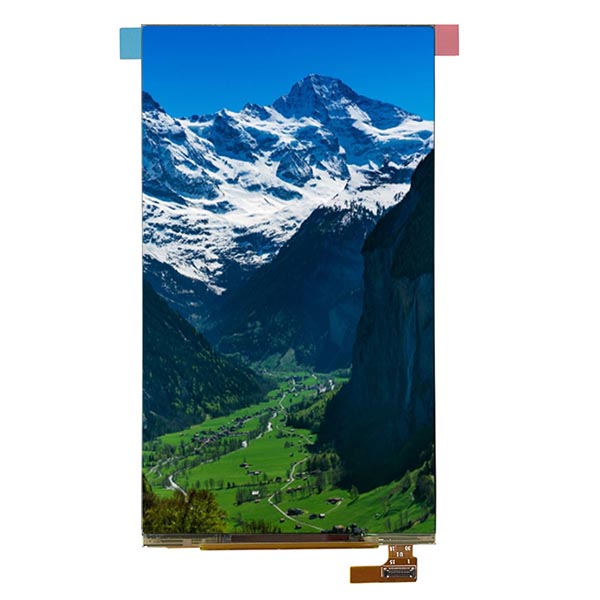
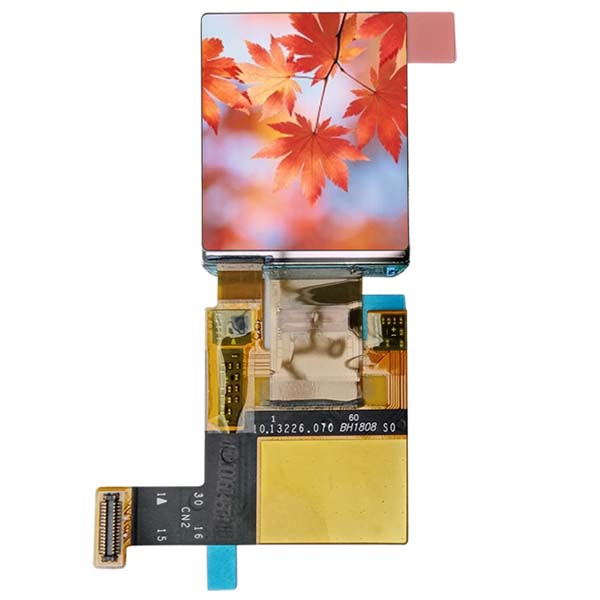
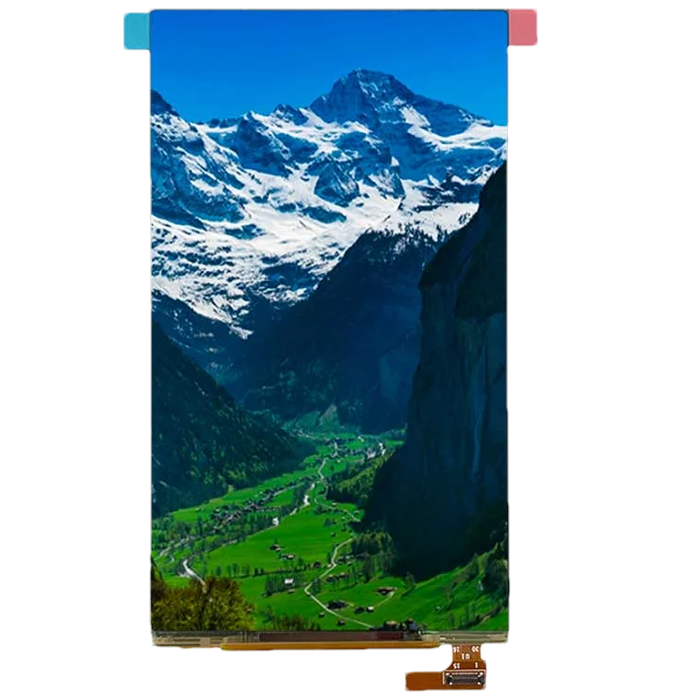
5.5 inch amoled phone display hd rgb 7201280 mipi 4 lanes interface lcd module flexible oled screen with touch panel 1

5.5 inch amoled phone display hd rgb 7201280 mipi 4 lanes interface lcd module flexible oled screen with touch panel 2

ITEM DIMENSION UNIT
Size (Diagonal)
5.5 AMOLED
inch
Dot Matrix / Resolution
720(W)x RGB x 1280(H)
dots
Module Dimension
72.80*131.20*1.81
mm
LT PS Glass Dimension
72.80*131.20
mm
Active Area
69.12*122.88
mm
Interface
MIPI 4 lanes
Glass Thickness
0.5/0.5
mm
Operating Temperature
-20~+70
°C
Storage Temperature
-40~+80
°C

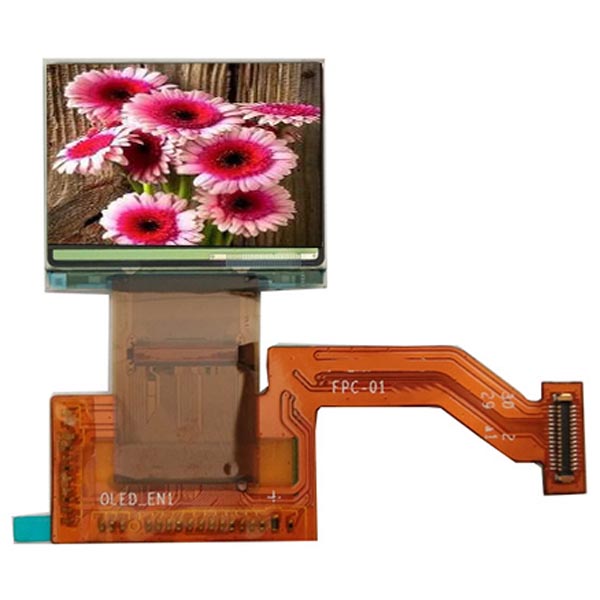
0.95 inch 180 120 amoled 1

0.95 inch 180 120 amoled 2

ITEM DIMENSION UNIT
Size (Diagonal)
0.95 AMOLED
inch
Dot Matrix / Resolution
180(W) x RGB x 120(H)
dots
Module Dimension
22.23×18.32×0.75mm
mm
LT PS Glass Dimension
22.23×18.32
mm
Active Area
20.03×13.36
mm
Dot/ Pixel Pitch
111.3 x111.3
μm
Glass Thickness
0.2/0.3
mm
Operating Temperature
-20~+70
°C
Storage Temperature
-40~+80
°C

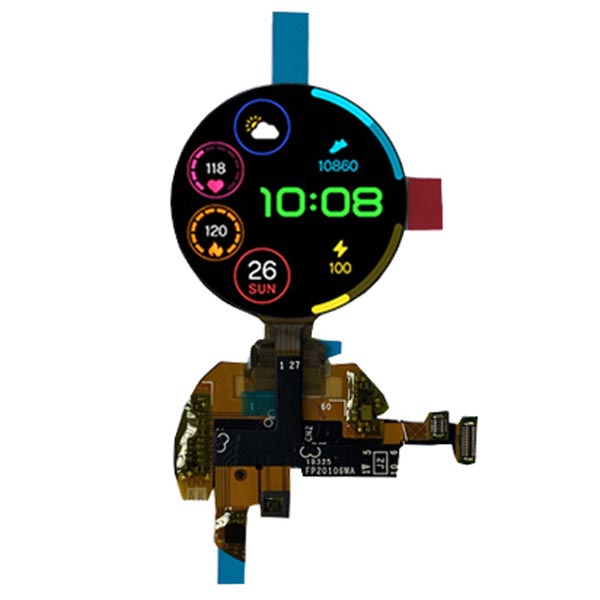
1.2 inch 390 390 amoled 1

1.2 inch 390 390 amoled 2

ITEM DIMENSION UNIT
Size (Diagonal)
1.2 AMOLED
inch
Dot Matrix / Resolution
390(W) x RGB x 390(H)
dots
Module Dimension
33.99×33.62×0.78mm
mm
Connection Method
PCB
Active Area
30.42*30.42
mm
Interface
MIPI/SPI
Glass Thickness
0.2/0.3
mm
Operating Temperature
-20~+70
°C
Storage Temperature
-40~+80
°C

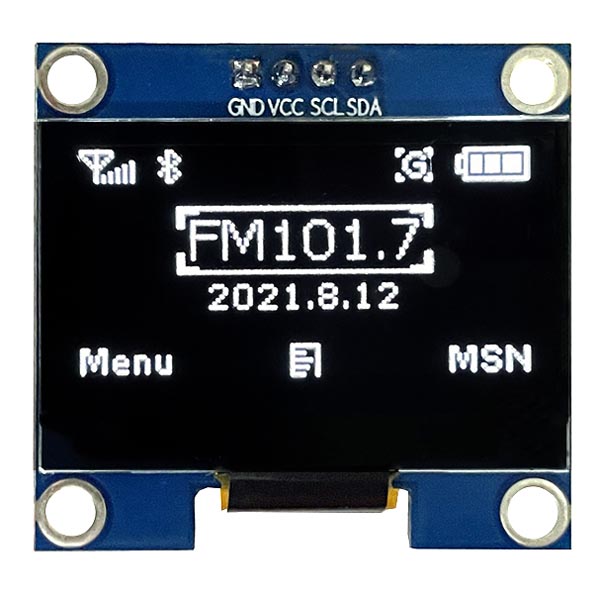
1.3 inch oled 128 64 dots iic interface ic sh1106 monochrome module with driver board 1

1.3 inch oled 128 64 dots iic interface ic sh1106 monochrome module with driver board 2

ITEM DIMENSION UNIT
Size (Diagonal)
1.3 PMOLED
inch
Dot Matrix / Resolution
128*64
dots
Module Dimension
35.40L*33. 50W*2. 70 (MAX) H
mm
Connection Method
4 PINs
Active Area
29.42*14.70
mm
Interface
I2C
IC
SH1106
Operating Temperature
-20~+70
°C
Storage Temperature
-40~+80
°C

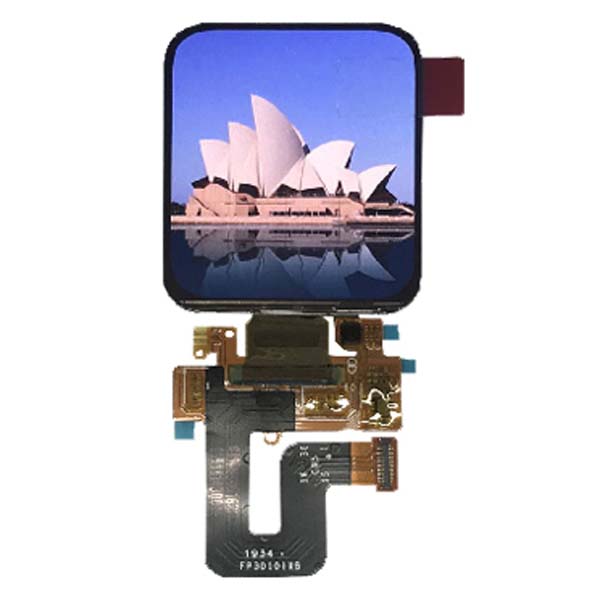
1.41 inch amoled 320360 mipi interface rgb 8 bit lcd tft module for smart watch 1

1.41 inch amoled 320360 mipi interface rgb 8 bit lcd tft module for smart watch 2

ITEM DIMENSION UNIT
Size (Diagonal)
1.41 AMOLED
inch
Dot Matrix / Resolution
320(W) x RGB x 360(H)
dots
Module Dimension
26.04×31.78*0.75
mm
LT PS Glass Dimension
26.04×31.78
mm
Active Area
23.84×26.82
mm
Interface
MIPI
Glass Thickness
0.2/0.3
mm
Operating Temperature
-20~+70
°C
Storage Temperature
-40~+80
°C

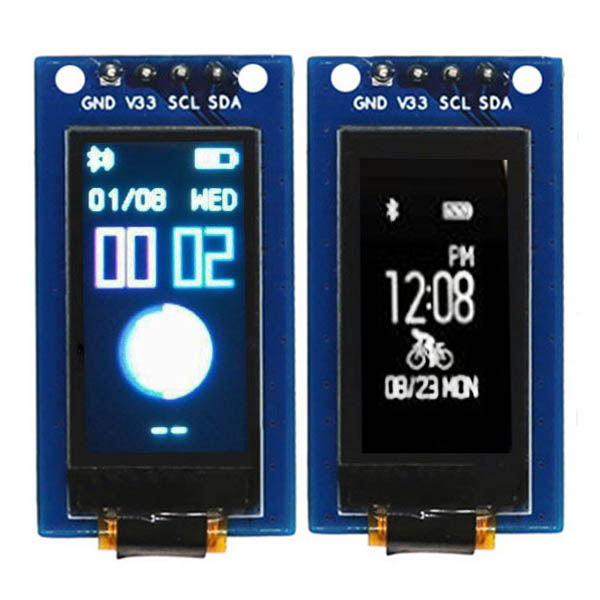
0.96 inch portrait 64 128 pmoled 1

0.96 inch portrait 64 128 pmoled 2

ITEM DIMENSION UNIT
Size (Diagonal)
0.96 PMOLED
inch
Dot Matrix / Resolution
128*64
dots
Module Dimension
27.0L*27.0W*4.15 (MAX) H
mm
Connection Method
4 PINs
Active Area
21.74*10.86
mm
Interface
I2C/SPI
IC
SH1107
Operating Temperature
-20~+70
°C
Storage Temperature
-40~+80
°C

1.78 inch 368 448 amoled 1

1.78 inch 368 448 amoled 2

ITEM DIMENSION UNIT
Size (Diagonal)
1.78 AMOLED
inch
Dot Matrix / Resolution
368(W) x RGB x 448(H)
dots
Module Dimension
30.6X37.99X0.8
mm
Connection Method
FPC
Active Area
28.7X34.94
mm
Interface
MIPI/SPI
IC
RM69090
Operating Temperature
-20~+70
°C
Storage Temperature
-40~+80
°C

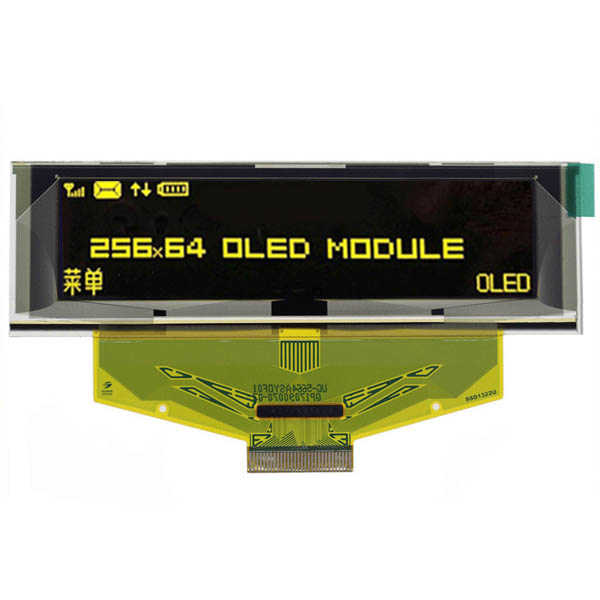
2.8 inch landscape 256 64 pmoled 1

2.8 inch landscape 256 64 pmoled 2

ITEM DIMENSION UNIT
Size (Diagonal)
2.8 PMOLED
inch
Dot Matrix / Resolution
256*64
dots
Module Dimension
84.0L*25.8W*2.0 (MAX) H
mm
Connection Method
30 PINs
Active Area
69.10*17.26
mm
Interface
I2C/SPI
IC
SSD1322U
Operating Temperature
-20~+70
°C
Storage Temperature
-40~+80
°C

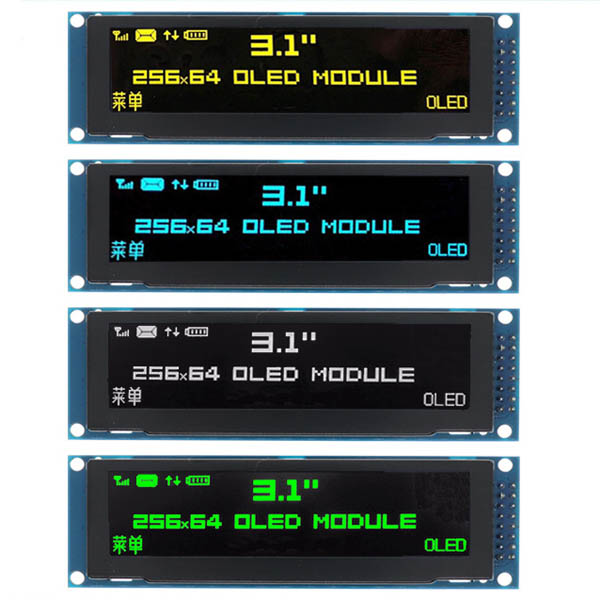
3.12 inch landscape 256 64 pmoled 1

3.12 inch landscape 256 64 pmoled 2

ITEM DIMENSION UNIT
Size (Diagonal)
3.12 PMOLED
inch
Dot Matrix / Resolution
256*64
dots
Module Dimension
100.5L*33.5W*6.3(MAX) H
mm
Connection Method
16 PINs
Active Area
76.78*19.18
mm
Interface
SPI
IC
SSD1322
Operating Temperature
-20~+70
°C
Storage Temperature
-40~+80
°C

Available OLED Displays

OLED Display Modules for AMOLED, PMOLED, Flexible and Custom OEM Applications

DisplayMan supplies OLED Displays for OEM products, instruments, smart devices, handheld electronics, medical equipment, wearables, industrial devices and custom display projects.

OLED is selected when a product needs self-emissive display performance, high contrast, thin structure, compact integration or a curved display form that conventional LCD structures cannot provide as easily.

This page helps customers understand the complete OLED product family and move from a general “I need an OLED display” requirement to the correct product direction.

Four Main OLED Product Directions

AMOLED for full-color active-matrix applications, PMOLED for small simple OLED information displays, Flexible OLED for controlled curved structures, and Custom OLED for module integration around existing OLED platforms.

OLED Display Product Directions

OLED Displays are not one single product type. Different OLED structures solve different UI, mechanical and integration requirements.

OLED Display TypeBest ForSelection Logic
AMOLED DisplaysFull-color active-matrix OLED modules for dynamic UI, wearables, handheld terminals, medical electronics and compact smart productsChoose when color image quality, resolution and active-matrix performance are the main requirements
PMOLED DisplaysSmall OLED modules for text, icons, numbers and simple graphics in instruments, meters, controllers and embedded electronicsChoose when the application needs a compact, simple OLED information display
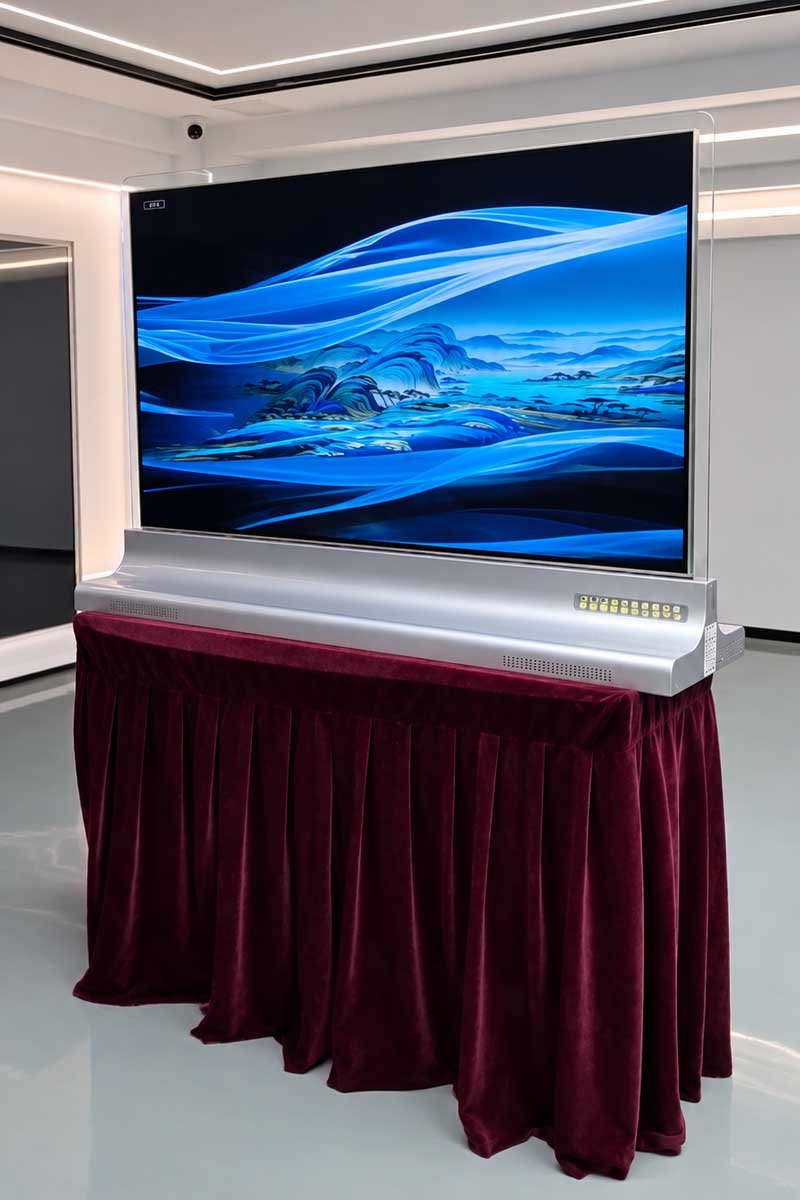
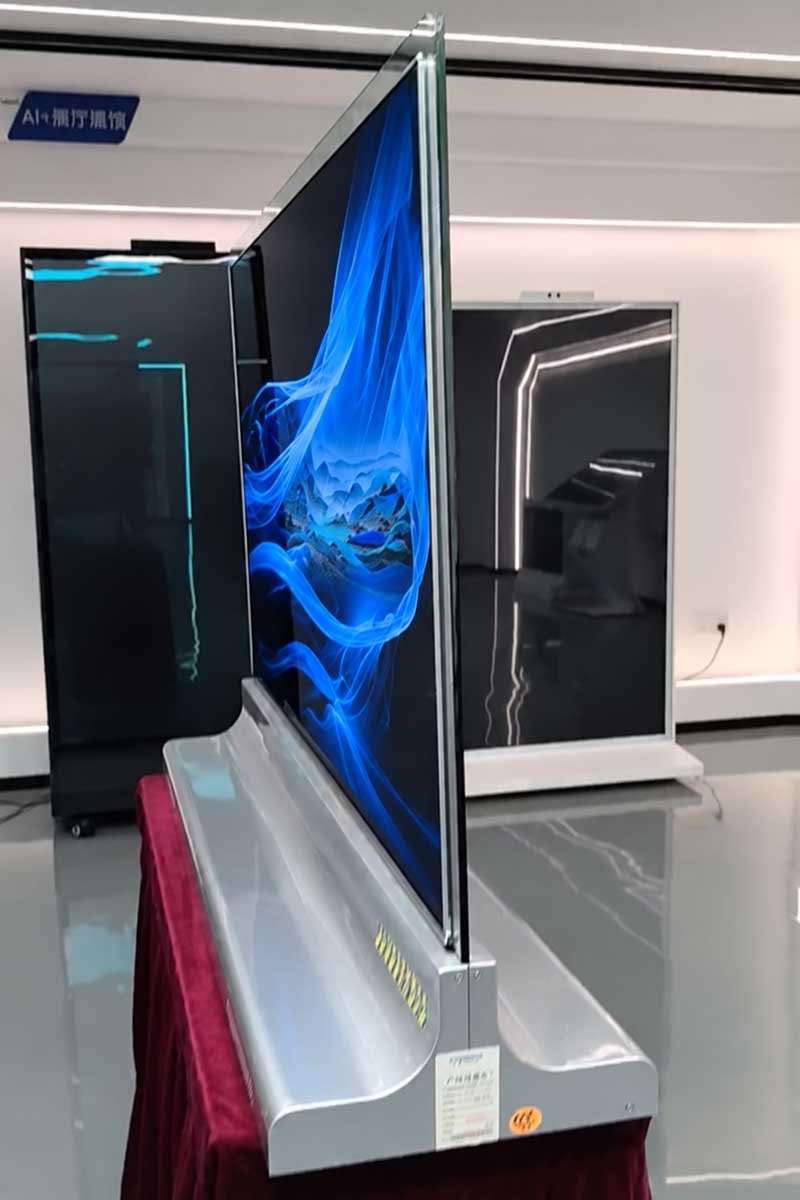
Flexible OLED DisplaysCurved products, wearables, embedded devices and large custom-shaped commercial OLED installationsChoose when the display must follow a controlled curved form; DisplayMan Flexible OLED products are curvable, not foldable
Custom OLED DisplaysOLED module integration requiring special FPC, connector, touch, cover lens, optical bonding, replacement or mechanical matchingChoose when a standard OLED module is close but cannot directly fit the electronics or mechanics
Practical Selection Rule

Choose AMOLED for full-color dynamic UI. Choose PMOLED for small simple text / icon displays. Choose Flexible OLED when controlled curvature is required. Choose Custom OLED when the main problem is FPC, connector, touch, cover lens, replacement or mechanical matching.

Reference OLED Display Module Lineup

The following models and size ranges are reference examples. Final availability should be confirmed according to size, resolution, interface, touch, mechanics, environment and quantity.

Reference TypeExample SizeResolutionInterfaceTypical Use
Small AMOLED0.95″180 × RGB × 120Project-based reviewWearables, compact instruments, small smart devices
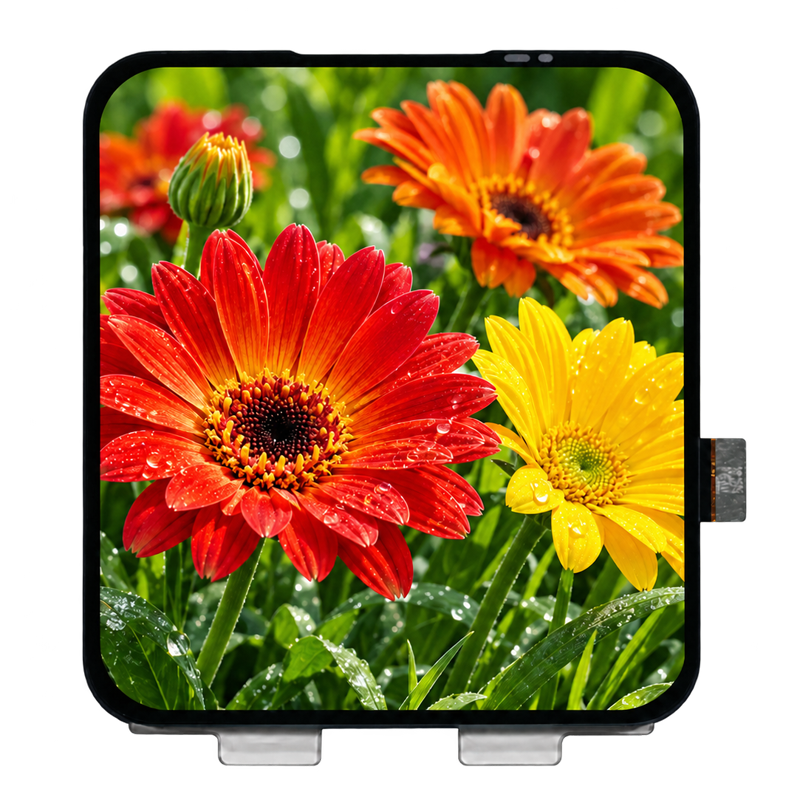
Round AMOLED1.2″390 × RGB × 390MIPI / SPISmart watches, circular controllers, wearable products
Portrait AMOLED1.41″320 × RGB × 360MIPISmart devices, handheld electronics, compact UI
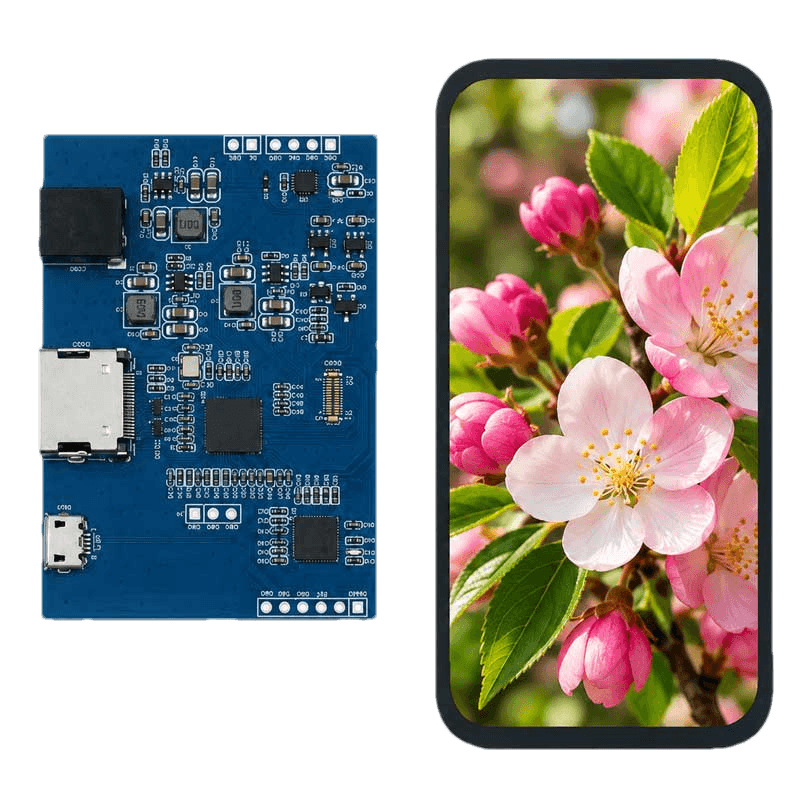
Medium AMOLED5.5″720 × RGB × 1280MIPI 4 lanesHandheld terminals, smart devices, medical electronics
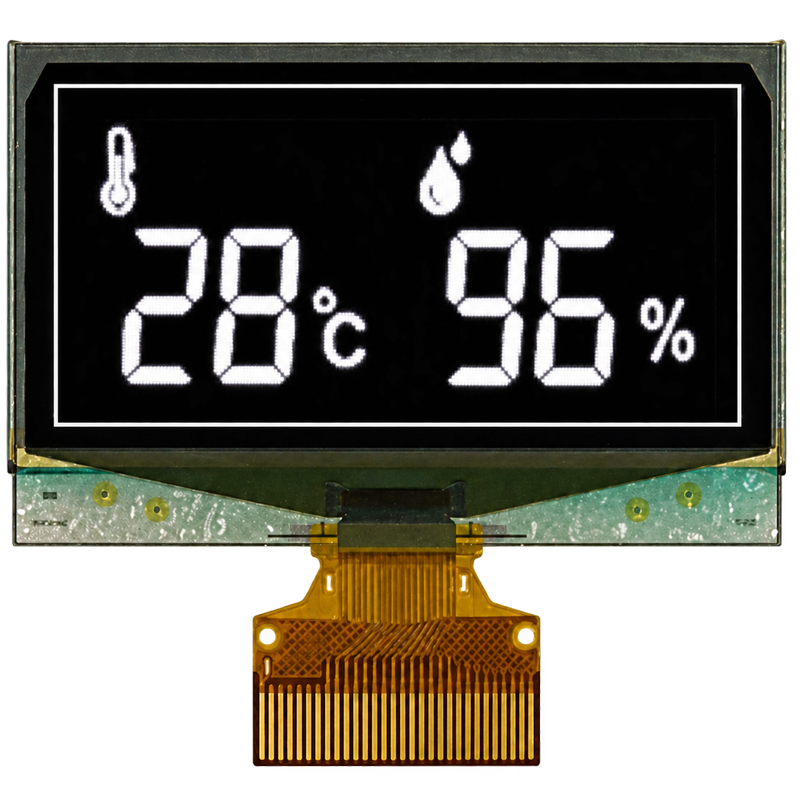
Small PMOLED0.96″128 × 64I2C / SPIStatus display, embedded electronics, controllers
PMOLED Module1.3″128 × 64I2CInstruments, meters, controllers, compact devices
Larger PMOLED2.8″ / 3.12″256 × 64I2C / SPIAudio equipment, industrial panels, status information
Small Flexible OLED1.39″ / 1.5″Project-basedMIPI / SPIWearables, curved small devices, compact product design
Medium Flexible OLED4.01″–13.3″Project-basedMIPI / eDPCurved products, handheld devices, OEM prototypes
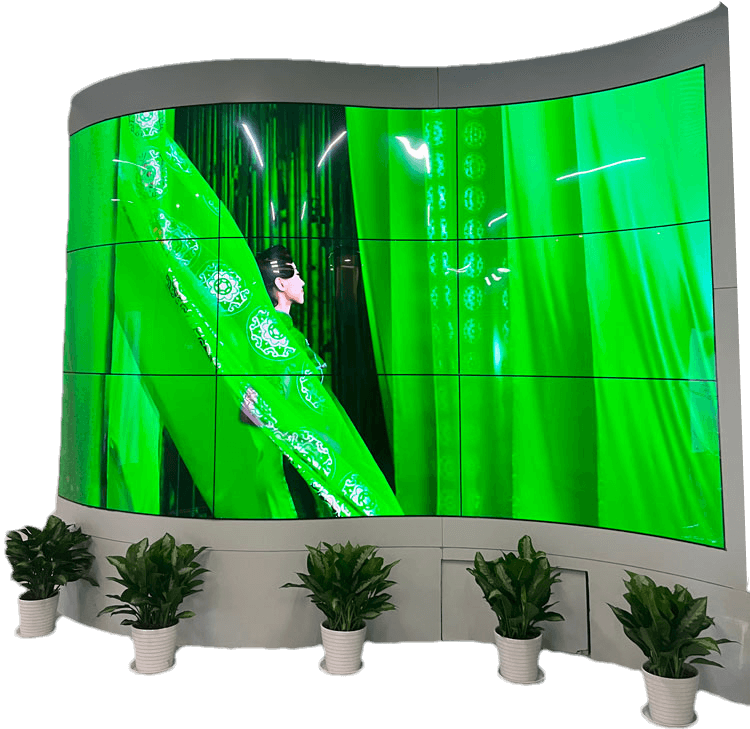
Large Flexible OLED42″–77″4K-class project optionsProject-basedCurved commercial displays, showrooms and exhibitions
Do Not Select OLED by Size Alone

For OEM products, interface, FPC direction, driver IC, connector, touch structure, cover lens, operating environment, UI content, OLED lifetime and supply stability should also be reviewed.

How an OLED Display Is Structured

OLED modules are built from a self-emissive display stack plus optional touch / cover layers and the electrical integration required to connect the panel to the customer's product.

Cover Lens / Protective LayerOptional — Front protection, printed border, AG / AR / AF treatment and mechanical appearance
Touch SensorOptional — Capacitive touch where supported by the selected OLED module
Encapsulation / ProtectionCore OLED structure — Protects moisture-sensitive OLED materials and supports the display stack
OLED Emissive LayersCore OLED structure — Self-emissive organic layers generate light directly at pixel level
TFT / Pixel Driving StructureAMOLED core — Controls individual pixels in active-matrix OLED displays
Substrate / Mechanical BaseCore structure — Rigid or flexible depending on the OLED product type
Driver IC + FPC / ConnectorModule integration — Connects the OLED to the customer's electronics and mechanical design

Why This Structure Matters

Self-emissive pixels: OLED does not need a traditional LCD backlight, which helps reduce display thickness and improves black performance.

AMOLED vs PMOLED: the pixel-driving structure changes. AMOLED uses active-matrix driving for full-color / higher-resolution interfaces, while PMOLED is optimized for simpler small displays.

Rigid vs Flexible OLED: the substrate and protection structure determine whether the panel is flat or can follow a controlled curved form.

Module integration: FPC, connector, touch, cover lens and bonding often determine whether a standard OLED module can actually fit the customer's electronics and enclosure.

Flexible OLED Mechanical Boundary

DisplayMan Flexible OLED products are curvable, not foldable. Each panel bends along one specified axis only, and the IC / driver region must not be bent. Complex final shapes are created through panel curvature, orientation, quantity and supporting structure.

Main OLED Display Types

AMOLED Displays

AMOLED uses active-matrix pixel driving and is the main OLED direction for full-color images, dynamic UI and higher-resolution smart products.

  • Smart watches
  • Wearables
  • Handheld terminals
  • Medical electronics
  • Smart controllers
  • Automotive interior interfaces

Explore AMOLED Displays →

PMOLED Displays

PMOLED uses passive-matrix driving and is normally selected for small monochrome or simple-graphic OLED applications.

  • Instruments
  • Meters
  • Controllers
  • Audio equipment
  • Embedded electronics
  • Compact status displays

Explore PMOLED Displays →

Flexible OLED Displays

Flexible OLED uses a flexible display structure for controlled curvature. Current DisplayMan Flexible OLED products are curvable, not foldable.

  • Wearables
  • Curved handheld products
  • Medical electronics
  • Custom-shaped commercial displays
  • 2 × 3 / 3 × 3 curved walls
  • Circular / ring-shaped installations

Explore Flexible OLED Displays →

Custom OLED Displays

Custom OLED mainly means module-level customization and integration around existing OLED modules rather than developing a completely new OLED panel from zero.

  • FPC / connector
  • Pin definition
  • Interface matching
  • Touch
  • Cover lens
  • Optical bonding
  • Replacement review

Explore Custom OLED Displays →

OLED Displays vs TFT LCD Displays

OLED and TFT LCD are both important display technologies. The correct choice depends on the application rather than on which technology is “better” in isolation.

FactorOLED DisplaysTFT LCD Displays
Light SourceSelf-emissive pixelsBacklight required
Black PerformanceVery strong black level because pixels can turn offDepends on LCD mode and backlight
Module ThicknessCan be thinnerUsually thicker because of backlight structure
Technology RangeAMOLED, PMOLED, Flexible OLEDTN, IPS, high-brightness, industrial TFT and other LCD types
Power BehaviorDepends strongly on content and brightnessDepends more on backlight setting
Static ContentBurn-in / image retention should be reviewedUsually more tolerant of long static UI
Size AvailabilityMore limited, especially for special sizesWider size range and stronger supply options
Cost DirectionUsually higher for full-color or flexible applicationsOften more cost-effective for many OEM products
Best ForHigh contrast, thin structure, wearables, curved products and premium UIIndustrial HMI, cost-sensitive products, long static UI and broad size choice
Selection Logic

Choose OLED when self-emissive contrast, thin structure, compact form or flexible design is important. TFT LCD may be more practical when cost, broad size availability, long static UI, high brightness or industrial lifecycle is more important.

PMOLED vs Monochrome LCD

PMOLED and Monochrome LCD are often compared in instruments, meters and simple information-display products.

RequirementOLED / PMOLEDMonochrome LCD
Display EffectSelf-emissive OLED appearanceReflective, transmissive or backlit LCD
BacklightNot requiredOptional depending on LCD type
Text / IconsCompact self-emissive UIStrong for low-power and cost-sensitive display
Sunlight ReadabilityNeeds application reviewReflective LCD can be very strong in sunlight
Static ContentOLED lifetime / burn-in should be reviewedUsually better for long static information
Power ConsumptionDepends on illuminated pixels and contentReflective LCD can be extremely low power
Custom Segment DisplayLess commonVery common and cost-effective
Best ForCompact devices needing OLED visual effectMeters, controllers, low-power products and static displays

OLED Engineering Review Factors

A reliable OLED selection requires both display-performance review and product-integration review.

OLED Type

AMOLED, PMOLED, Flexible OLED and Custom OLED solve different problems. Start with UI, color, mechanics and application—not only size.

Size & Resolution

OLED modules are not available in every size. Standard available modules should be reviewed first before considering integration changes.

Interface

MIPI, SPI, I2C, eDP and project-specific interfaces must match the customer's processor, mainboard and firmware.

FPC & Connector

FPC direction, connector position, pitch and pin definition are critical in compact OEM products.

Touch & Cover Lens

Selected AMOLED and Flexible OLED modules can support capacitive touch, custom cover lens and bonding integration.

Flexible OLED Mechanics

Flexible OLED is curvable, not foldable. Each panel bends along one specified axis only, and the IC / driver region must remain outside the bending zone.

OLED Lifetime & Burn-in

Static icons, fixed menus, high brightness and long daily operating hours should be reviewed before mass production.

Operating Environment

Temperature, humidity, sunlight, sealing, touch usage and enclosure design influence reliability.

Supply & Lifecycle

For OEM production, availability, replacement planning and alternative-model strategy should be considered early.

Typical OLED Display Applications

Compact Product Integration

OEM & Embedded Products

  • Smart watches and wearables
  • Smart bands and smart rings
  • Handheld terminals
  • Medical handheld electronics
  • Diagnostic equipment
  • Digital meters
  • Audio equipment
  • Smart controllers
  • Industrial instruments
  • IoT products
  • Automotive / motorcycle interfaces
  • Consumer electronics
Project-Based Display

Curved & Premium Display Projects

  • Curved product interfaces
  • Premium commercial displays
  • Showroom displays
  • Exhibition installations
  • Large custom-shaped Flexible OLED
  • 2 × 3 and 3 × 3 curved OLED walls
  • Circular / ring-shaped OLED installations
  • Existing OLED replacement projects
  • Custom OLED module integration

OLED Product Selection Guide

Project RequirementRecommended OLED Direction
Full-color OLED displayAMOLED Displays
Small monochrome text / icon displayPMOLED Displays
Curved or bendable product structureFlexible OLED Displays
Large custom-shaped curved OLED displayFlexible OLED Displays
Custom FPC / connector / pinoutCustom OLED Displays
Touch panel + cover lens integrationCustom OLED Displays
Existing OLED replacementCustom OLED Displays
Transparent see-through OLED effectTransparent OLED Displays
Long static industrial UITFT LCD Displays or Monochrome LCD Displays
Very low-power static displayMonochrome / Reflective LCD review

Not Sure Which OLED Direction You Need?

Start with the application. Tell us the size, UI, interface, product structure or visual effect you are trying to achieve. DisplayMan can route the project to AMOLED, PMOLED, Flexible OLED, Custom OLED or Transparent OLED.

When OLED Displays Are — and Are Not — the Right Choice

Good Fit

OLED Is a Strong Fit When You Need

  • Self-emissive display performance
  • High contrast and strong black level
  • Thin / compact module structure
  • Full-color premium UI
  • Small monochrome OLED information display
  • Curved or shape-driven display design
  • Wearable or handheld product
  • OLED + touch / cover lens integration
  • Special FPC / connector integration
  • Existing OLED replacement review
Alternative Review

Review Alternatives First When

  • Lowest possible display cost is the priority
  • A TFT LCD already meets the visual requirement
  • Very long static UI dominates the application
  • Strong direct-sunlight readability is required
  • Ultra-low-power reflective display is needed
  • A large low-cost display is required
  • Harsh outdoor operation is required without strong protection
  • The required OLED size is unavailable and quantity is too low
  • The project expects full custom OLED panel development at standard-module cost

What Information Should You Provide?

Technical

Display & Electrical Information

  • OLED type if known
  • Required size / active area
  • Resolution
  • Color requirement
  • Interface
  • Driver IC if known
  • FPC direction
  • Connector space / pin definition
  • Touch or non-touch
  • Cover lens / printed border
  • Optical bonding
Project

Mechanical & Project Information

  • Product enclosure drawing
  • PCB / connector position
  • Application environment
  • UI content type
  • Static or dynamic content
  • Daily operating hours
  • Quantity
  • Project schedule
  • Existing OLED model if replacement
  • Drawing, datasheet, photos or sample
  • For Flexible OLED: target radius / bending direction if known
For Flexible OLED Projects

You do not need to know every mechanical parameter before contacting us. If the project is a large custom-shaped display, site dimensions, photos and the desired visual form are enough to begin the engineering review.

OLED Display FAQ

What is an OLED Display?

OLED means Organic Light-Emitting Diode. OLED pixels emit their own light, so the display does not require a traditional LCD backlight.

What is the difference between AMOLED and PMOLED?

AMOLED uses active-matrix driving and is suitable for full-color, higher-resolution and dynamic UI. PMOLED uses passive-matrix driving and is usually used for small monochrome text, icons and simple graphics.

Is Flexible OLED the same as AMOLED?

No. AMOLED describes the driving architecture. Flexible describes the physical structure. Many Flexible OLED products are Flexible AMOLED displays.

Can DisplayMan Flexible OLED be folded?

No. Current DisplayMan Flexible OLED products are curvable / bendable, not foldable.

Can Flexible OLED bend in any direction?

No. Each Flexible OLED panel bends along one specified axis only. The IC / driver region must not be bent.

Can large Flexible OLED still make complex shapes?

Yes. Complex final forms such as S-shaped, wave-shaped, 2 × 3, 3 × 3, circular and other engineered structures are created through panel curvature, orientation, quantity and supporting structure.

Is OLED better than TFT LCD?

Not always. OLED is strong for self-emissive contrast, thin structure and curved or premium UI. TFT LCD is often better for lower cost, broad size availability, long static UI and industrial lifecycle.

Can OLED Displays be customized?

Yes, mainly at module and integration level: FPC, connector, interface, touch, cover lens, optical bonding, replacement and mechanical integration.

Can OLED Displays support touch?

Selected AMOLED and Flexible OLED modules can support capacitive touch. Feasibility depends on the selected module, cover structure and mechanics.

Can OLED Displays be used outdoors?

Selected outdoor-facing applications are possible, but brightness, UV exposure, sealing, temperature and lifetime must be reviewed.

Does OLED have burn-in risk?

Yes. Static content, fixed icons, high brightness and long operating hours can increase image-retention and burn-in risk.

Can you provide round OLED Displays?

Yes. Selected round AMOLED or Flexible OLED modules can be reviewed for circular interfaces and wearable products.

Can you provide Transparent OLED?

Yes. Transparent OLED is a separate OLED product direction for see-through retail, exhibition, cabinet and transparent-signage applications.

Can you replace an existing OLED module?

Replacement can be reviewed if you provide the old model number, datasheet, FPC, connector, pinout, photos and sample if available.

What information is needed for quotation?

Please provide size, resolution, OLED type if known, interface, FPC / connector, touch, cover lens, mechanics, application, environment, quantity and project schedule.

Start Your OLED Display Project

Tell us what you want the display to do, where it will be installed and how it must connect to your product.

DisplayMan can help review whether AMOLED, PMOLED, Flexible OLED, Custom OLED or another display technology is the correct direction. For OEM modules, we focus on interface and integration. For large Flexible OLED projects, we can also review curvature, shape, supporting structure and installation.

Send Your Display Requirement

Please share your application, display size, quantity and project background. We will review the most practical display direction.