2560 × 2560 Detail
A square 2.5K image provides balanced horizontal and vertical resolution for demanding binocular optics.

2560 × 2560 Image Source for High-FOV Near-Eye Systems
DisplayMan offers this square-format OLED-on-Silicon platform for VR headsets, Pancake optical engines, simulation and high-resolution binocular display systems.
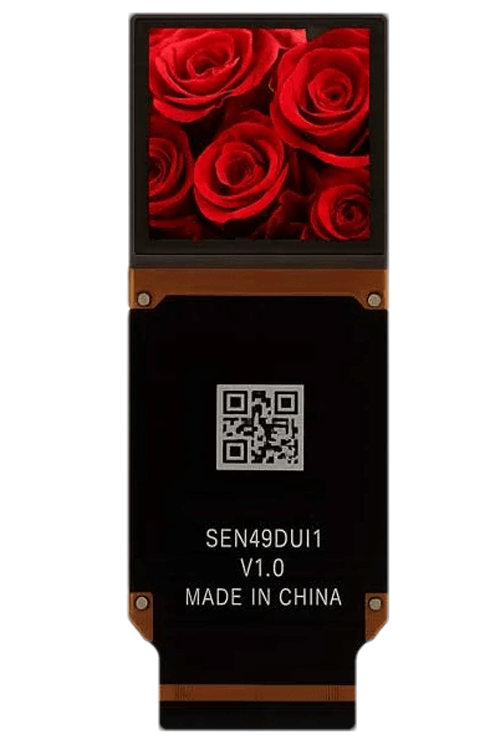
The 1.03″ Micro OLED display is a high-resolution OLED-on-Silicon platform within DisplayMan’s broader Micro OLED displays portfolio. The current SY103WAM19 direction provides a native 2560 × 2560 resolution across an 18.432 × 18.432 mm active area.
Its square format and 7.2 μm pixel pitch make it a relevant image source for binocular VR, Pancake optics, simulation and high-FOV systems where a larger image area and balanced horizontal/vertical resolution are required.
SY103WAM19 is the current 1.03″ direction, with 1000 cd/m² luminance, 90 Hz operation and a MIPI interface.
The former 1800, 3000 and 20000 cd/m² 1.03″ versions are discontinued and should not be presented as current options.
The following values describe the current SY103WAM19 direction. Final specifications, supply status and driver compatibility should be confirmed before design-in.
| Current Model | SY103WAM19 |
|---|---|
| Display Technology | Active-matrix color OLED-on-Silicon / OLEDoS |
| Diagonal Size | 1.03 inch |
| Native Resolution | 2560 × 2560 |
| Pixel Pitch | 7.2 × 7.2 μm |
| Active Area | 18.432 × 18.432 mm |
| Reference Outline Size | Approximately 21.087 × 22.765 × 1.475 mm |
| Brightness | 1000 cd/m² |
| Contrast Ratio | >100,000:1 reference |
| Frame Rate | 90 Hz |
| Display Interface | MIPI |
| Color | Full color |
| Status | Current main 1.03″ direction |
The following nominal sizes use reduced image areas from the same 1.03″ platform. They are not counted as separate silicon display platforms.
| Nominal Direction | Resolution | Active Area | Base Platform | Availability |
|---|---|---|---|---|
| 0.57″ | 1600 × 1200 | 11.52 × 8.64 mm | 1.03″ / 7.2 μm platform | Confirm by project |
| 0.62″ | 1728 × 1368 | 12.4416 × 9.8496 mm | 1.03″ / 7.2 μm platform | Confirm by project |
| 0.83″ | 2560 × 1440 | 18.432 × 10.368 mm | 1.03″ / 7.2 μm platform | Confirm by project |
Do not list the discontinued 1800, 3000 or 20000 cd/m² versions as current 1.03″ products. Use SY103WAM19 at 1000 cd/m² as the present main direction.
A square 2.5K image provides balanced horizontal and vertical resolution for demanding binocular optics.
The larger active area supports optical architectures that require greater image coverage than compact FHD panels.
A 90 Hz direction supports smooth near-eye motion when the host and complete display pipeline are correctly configured.
True black and high contrast support dark-scene detail and clear image edges after optical magnification.
The 1:1 format is well suited to binocular VR, simulation and optics that benefit from balanced field coverage.
The same 7.2 μm platform can support smaller active-area directions when a project does not require the full square image.
Square 2.5K resolution and a larger image area for binocular VR and high-FOV immersive systems.
A high-resolution image source for compact folded optics, subject to complete optical-loss and brightness evaluation.
Detailed near-eye imagery for professional simulation, training and visualization systems.
A balanced square image format for dual-display head-mounted systems and high-FOV optical designs.
High pixel count for specialized imaging, inspection and advanced optical instruments.
A platform for evaluating square-format eyepieces, driver electronics and custom near-eye optical engines.
The panel must be matched with high-bandwidth driver electronics, suitable optics and precise mechanical alignment. Panel resolution alone does not determine the final perceived image.
Use the Near-Eye Display Solution page for display selection, driver electronics, optical-engine matching, mechanics and prototype evaluation.
The current 1000 cd/m² direction may suit some enclosed or optimized systems, but Pancake architectures can have significant optical loss. Confirm brightness after the complete optical path.
Compare nine Micro OLED sizes and open the model page that best matches your resolution, optical and mechanical requirements.
SY103WAM19 is the current main direction, providing 2560 × 2560 resolution, 1000 cd/m² brightness, 90 Hz operation and a MIPI interface.
No. Those former 1.03″ brightness versions are discontinued and should not be presented as current products.
The active area is 18.432 × 18.432 mm, based on a 7.2 × 7.2 μm pixel pitch.
No. They are reduced active-area directions based on the same 1.03″ / 7.2 μm platform and should be counted as one base platform.
Normally no. A compatible driver or conversion board must output the correct high-resolution MIPI timing, control and power sequence.
It is a relevant high-resolution direction, but Pancake optics can have significant light loss. Brightness at the eye, field of view, eye box and thermal design must be evaluated together.
Yes. Its square 2560 × 2560 format and 90 Hz operation are relevant for binocular VR and high-FOV systems, subject to driver and optical compatibility.
Please provide the application, quantity, required field of view, optical architecture, host input, mechanical limits, brightness-at-eye target and project schedule.
Send the application, quantity, brightness target, host input, optical requirements, mechanical limits and project schedule. DisplayMan will review whether the 1.03-inch 2.5K direction is suitable.