EXHIBITIONS · SHOWROOMS · MUSEUMSTransparent Exhibition & Showroom Display Solution
Turn Physical Products Into Interactive Visual Presentations
Show real products together with digital explanations. Select a transparent display format around the exhibit, viewing distance, lighting and visitor experience.
DisplayMan — Your Partner in Transparent Exhibition & Showroom Display Engineering
Real products + digital contentCabinets to large wallsVisitor guidance optionsEngineering-led integration
01 · REAL PRODUCTS & TECHNICAL STORIESShow the Product and Explain How It Works
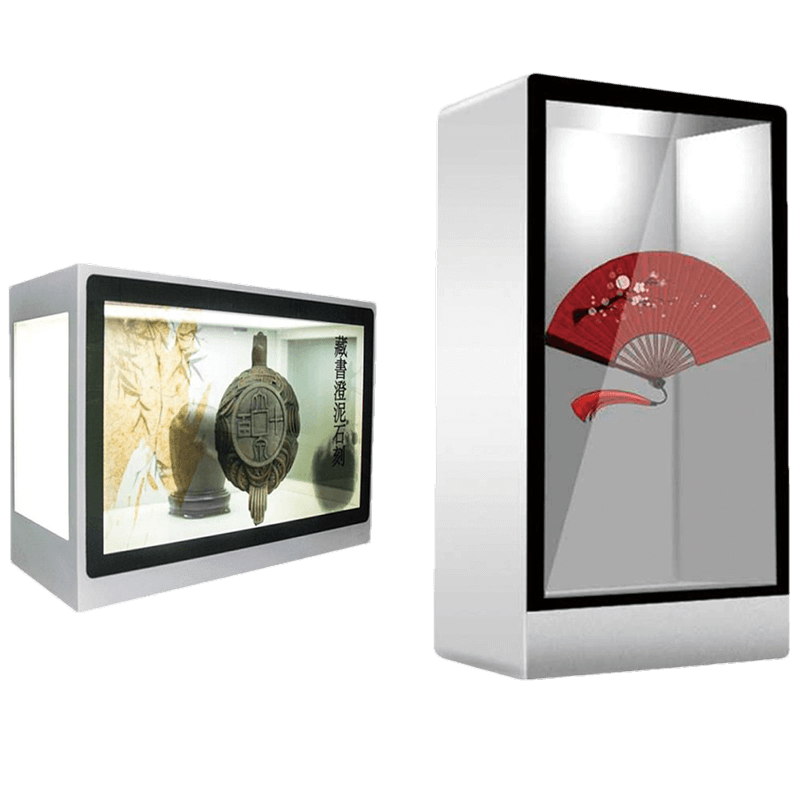
Transparent LCD Display Cabinet
A lit cabinet for technical exhibits
Place a physical product inside an illuminated cabinet and show diagrams, operating principles and captions on the transparent LCD front.
Plan the LED light bar, product placement, access and content together.
Explore Transparent LCD Display Cabinet →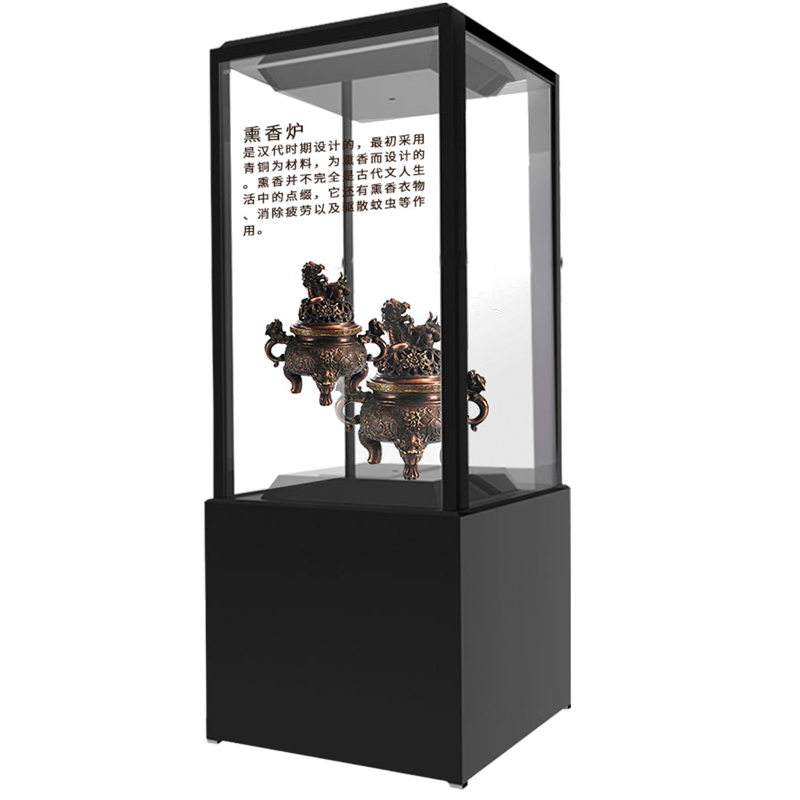
Transparent OLED Display Cabinet
A premium showcase with digital explanation
Combine a real exhibit and digital labels or animation in a transparent OLED cabinet.
Review cabinet depth, internal lighting, product access and audience position.
Explore Transparent OLED Display Cabinet →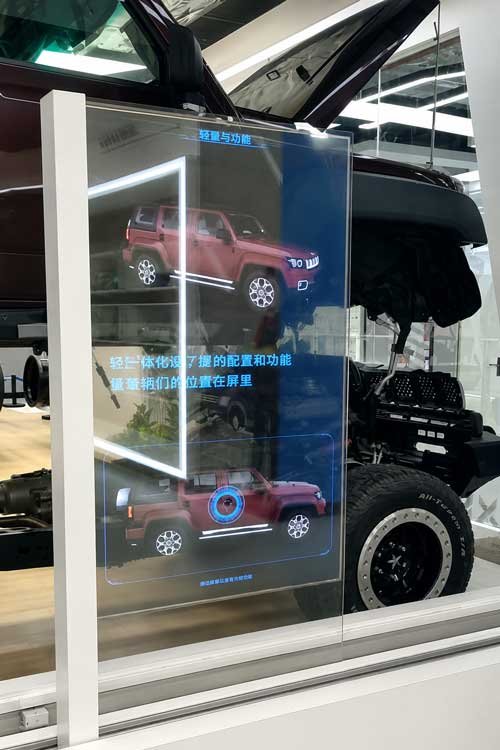
Transparent OLED Sliding-Rail Display
Explain features as the display moves
Align a moving transparent OLED with successive features of a vehicle, machine or technical exhibit.
Review rail travel, sensing, safety, content timing and the object behind the panel.
Explore Transparent OLED Sliding-Rail Display →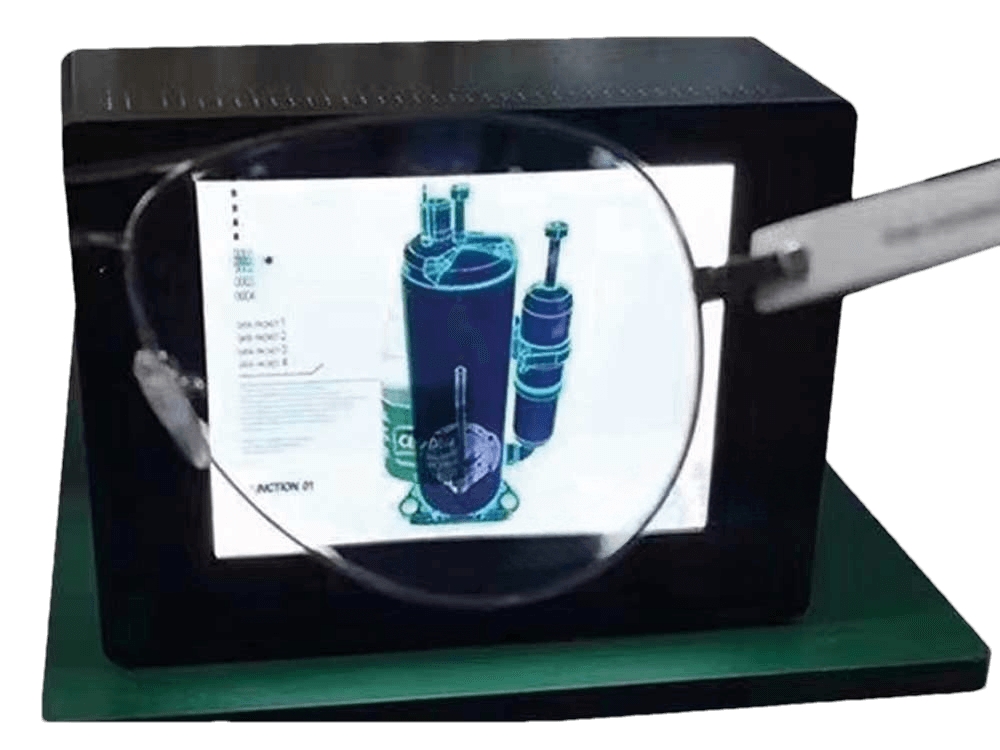
Custom Transparent LCD Display
Fit an engineered demonstration structure
Review a transparent LCD panel and enclosure around an exhibit that does not fit a standard cabinet.
Panel dimensions, LED light bar, interfaces, lighting and mechanics require engineering review.
Explore Custom Transparent LCD Display → 02 · VISITOR GUIDANCE & INTERACTIONHelp Visitors Explore at Their Own Pace
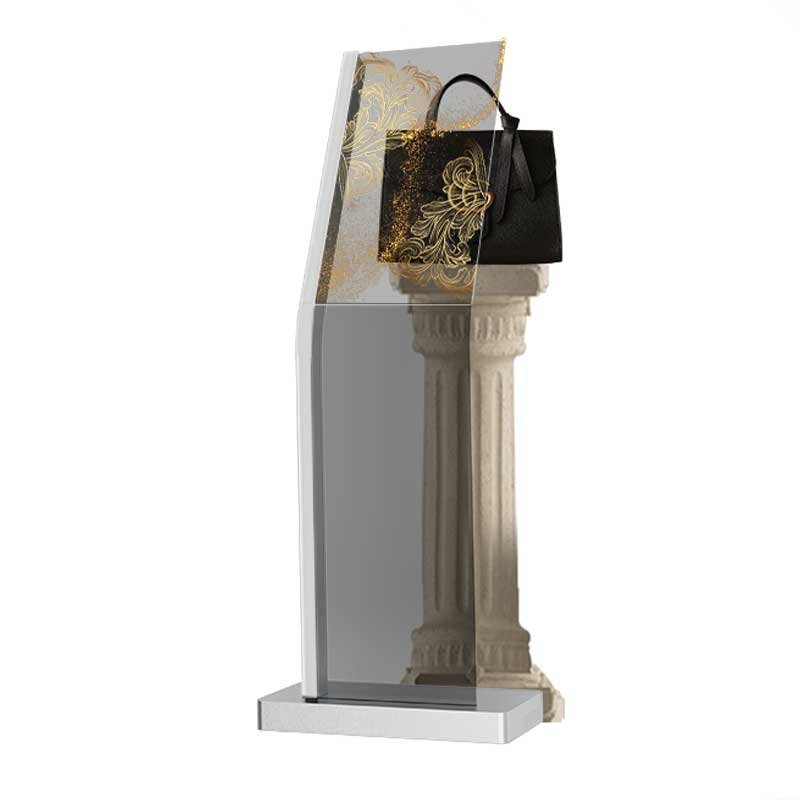
Transparent OLED Kiosk
A dedicated interactive display point
Use a transparent kiosk at a showroom entrance or product zone for introductions and wayfinding.
Review orientation, stability, input method, power and circulation space.
Explore Transparent OLED Kiosk →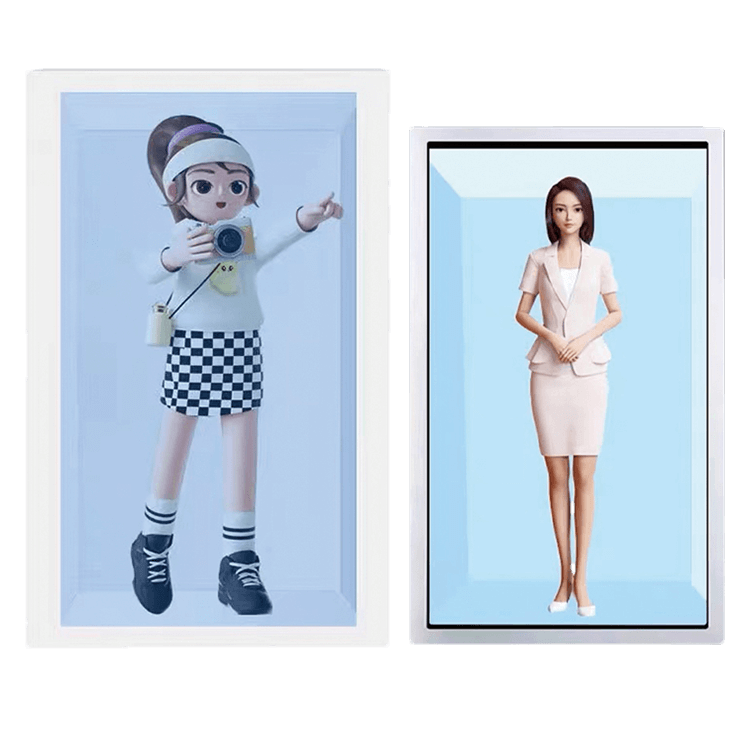
Transparent LCD Digital Human Display
A digital presenter on an LCD platform
Present a digital guide or virtual host alongside branded exhibits and a controlled lighting structure.
The base offering is hardware; AI dialogue software and content are separately scoped and priced.
Explore Transparent LCD Digital Human Display →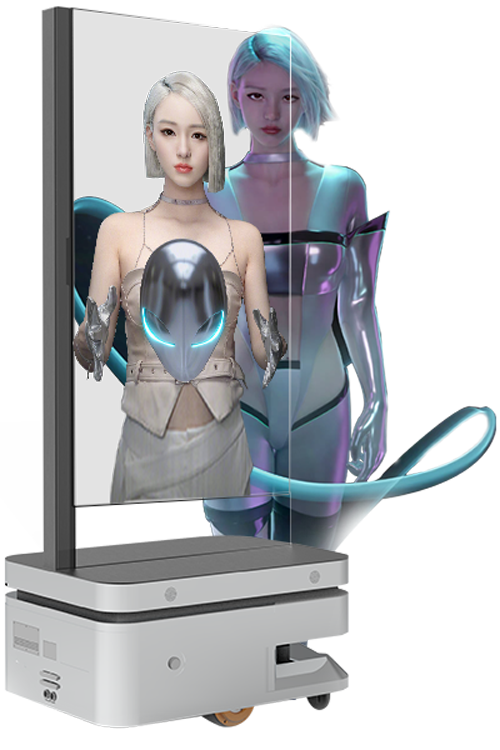
Transparent OLED AI Digital Human Display
A premium see-through digital guide
Add a digital human presentation to a reception point or guided experience in a corporate showroom.
Hardware is the base delivery. AI software, languages, content and integrations are quoted separately.
Explore Transparent OLED AI Digital Human Display →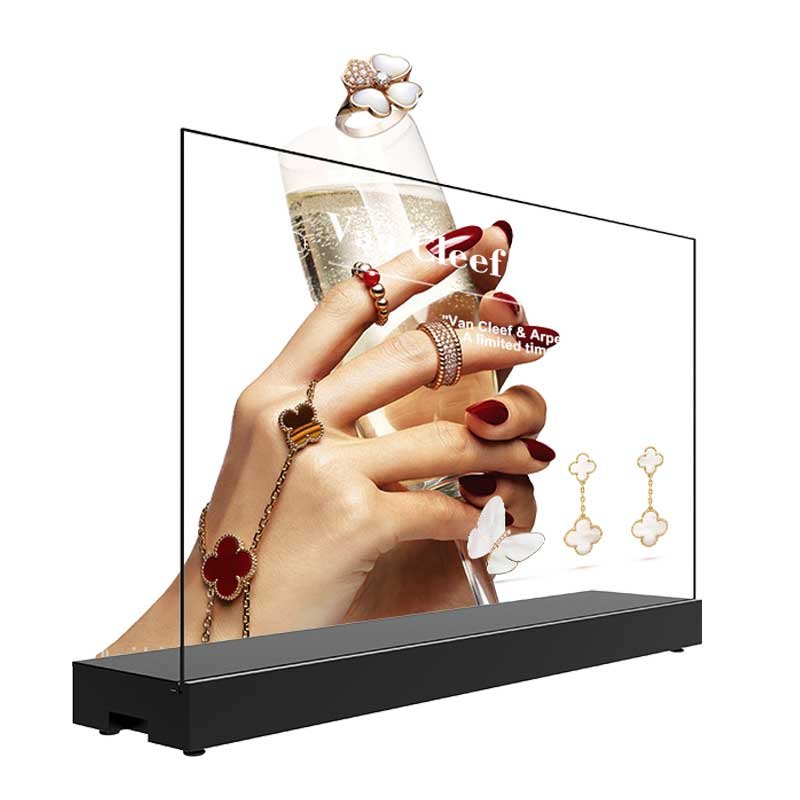
Desktop Transparent OLED Display
Close-range demonstration on a platform
Present a physical object at counter or table height with a transparent OLED visual layer.
Check support strength, product position, close viewing distance and content alignment.
Explore Desktop Transparent OLED Display → 03 · BOOTH WALLS & SPATIAL DISPLAYSBuild Larger Transparent Exhibition Surfaces
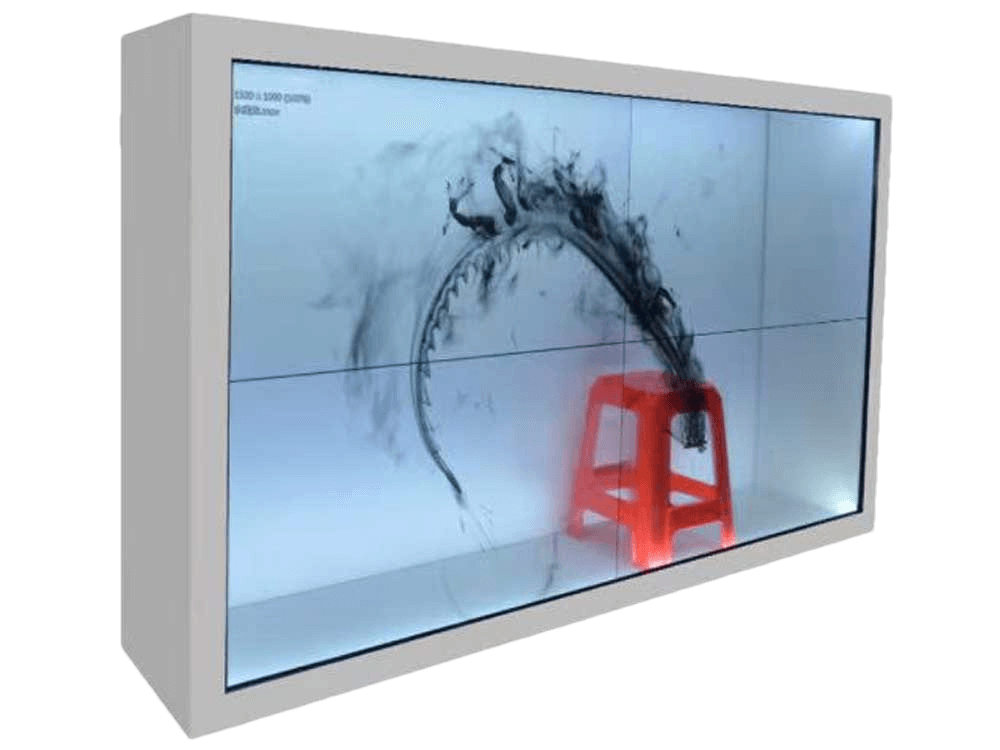
Transparent LCD Video Wall
A multi-panel transparent LCD wall
Use a planned panel array to present a larger glass-like visual area while retaining views of objects or space behind it.
Assess visible seams, LED light bar design, lighting, controller and supporting structure.
Explore Transparent LCD Video Wall →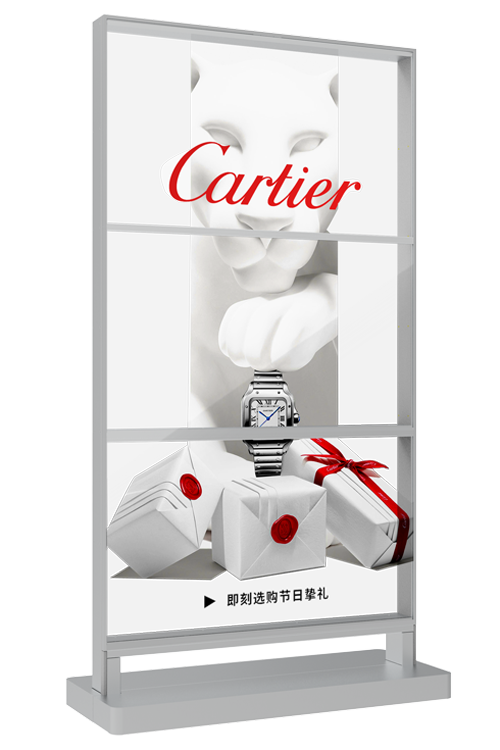
Transparent OLED Video Wall
A premium multi-panel presentation
Combine transparent OLED panels for a larger feature wall in a museum or corporate experience center.
Confirm panel arrangement, seams, mounting, content and service access.
Explore Transparent OLED Video Wall →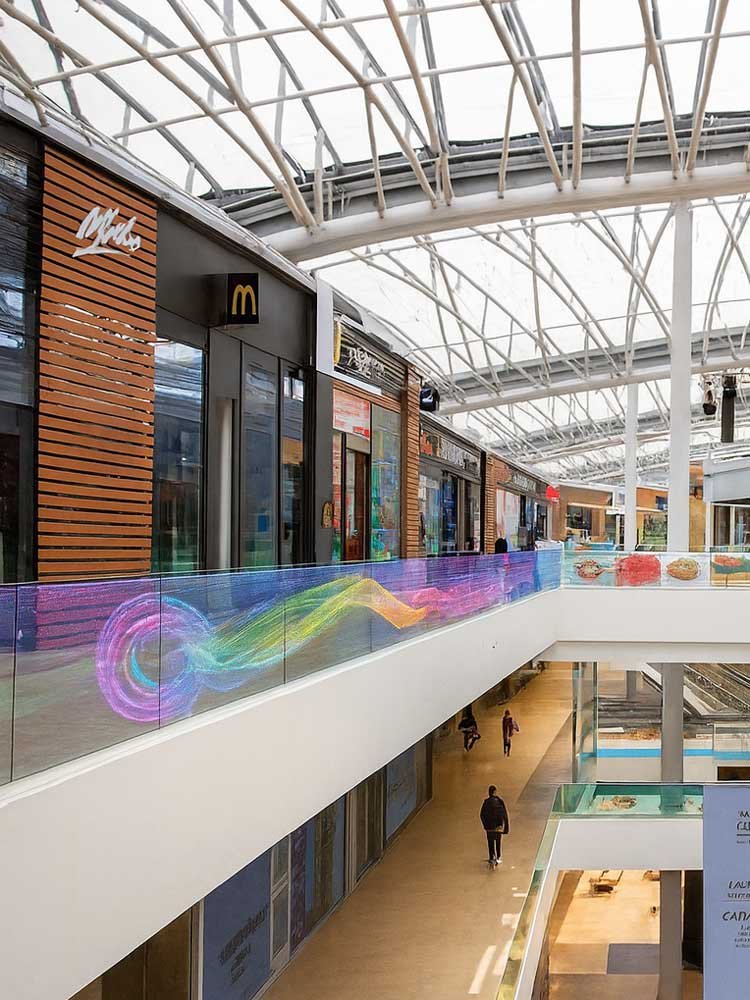
Transparent LED Glass Display
Digital content within architectural glass
Introduce transparent LED visuals on suitable glazed walls or partitions in a showroom.
Review the glass structure, cable routing, daylight, sightlines and maintenance.
Explore Transparent LED Glass Display →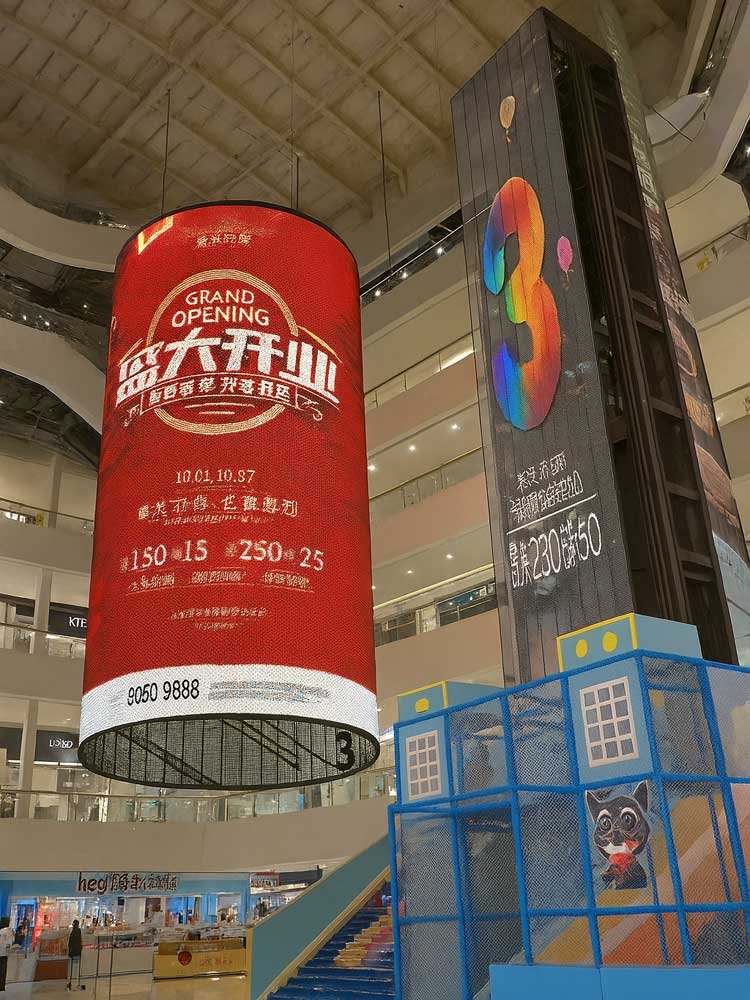
Indoor Transparent LED Display
Large transparent visual surfaces
Use transparent indoor LED for exhibition backdrops, atriums and large showroom partitions.
Select pixel pitch, brightness and transparency against viewing distance and ambient light.
Explore Indoor Transparent LED Display →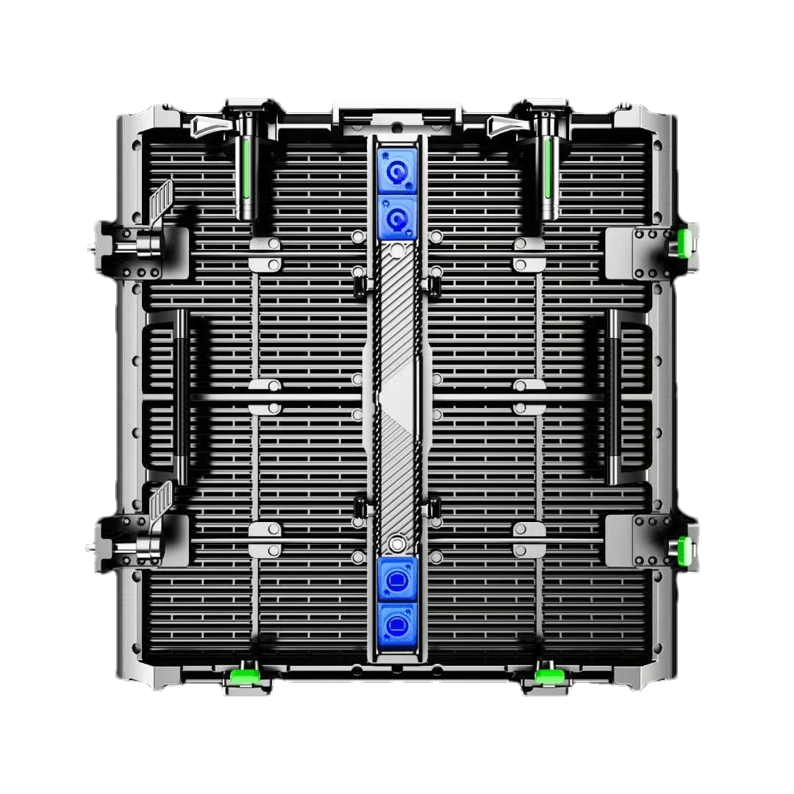
Rental Transparent LED Display
A modular route for temporary events
Rental cabinets suit exhibition builds that require transport, assembly and dismantling.
Plan rigging, module layout, handling, power and installation time for each venue.
Explore Rental Transparent LED Display → 04 · CREATIVE & FUTURE DISPLAYSCreate a Distinctive Visual Landmark
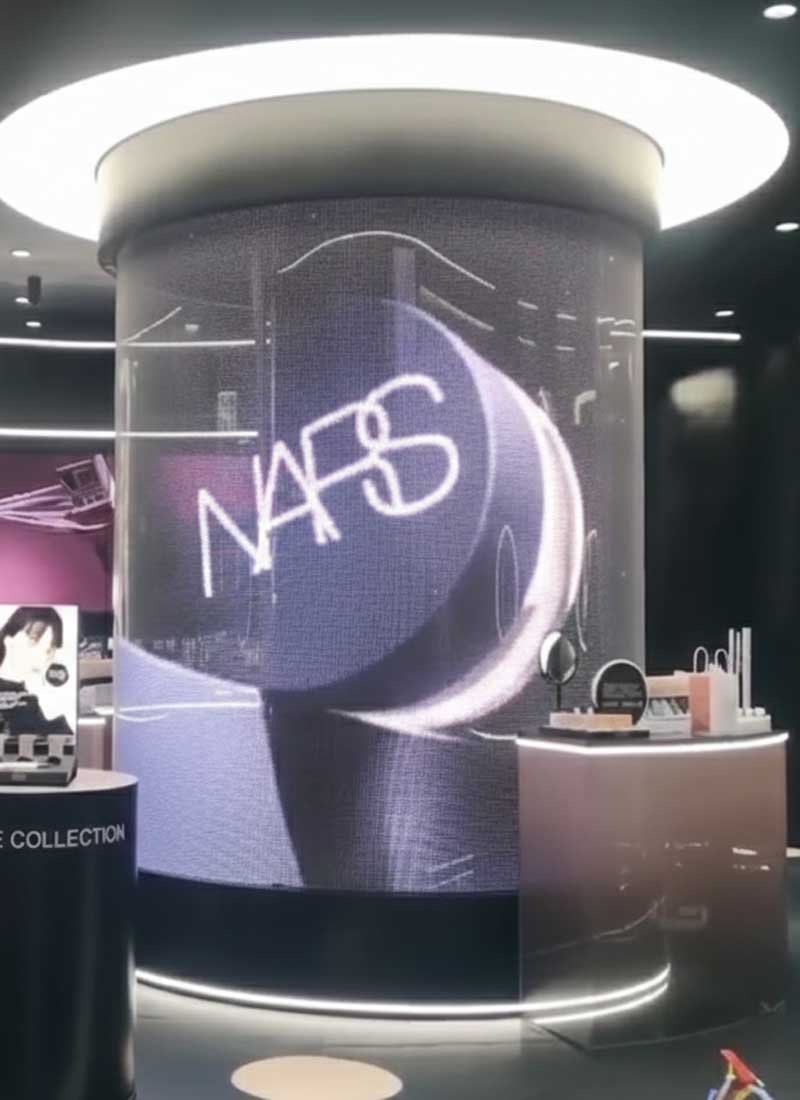
Holographic Transparent LED Display
Floating-style animations in a designed space
Create a floating-style impression with content and a suitable transparent LED structure.
Review the physical geometry, viewing angles, pitch and animation together.
Explore Holographic Transparent LED Display →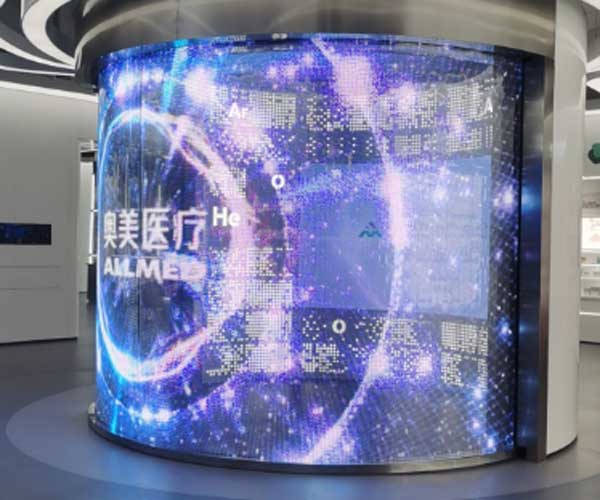
Flexible Transparent LED Film Display
Selected curved exhibition surfaces
Flexible LED film can follow selected curves, cylinders and sculptural support structures.
Confirm the permitted bending direction and radius, support and content mapping.
Explore Flexible Transparent LED Film Display →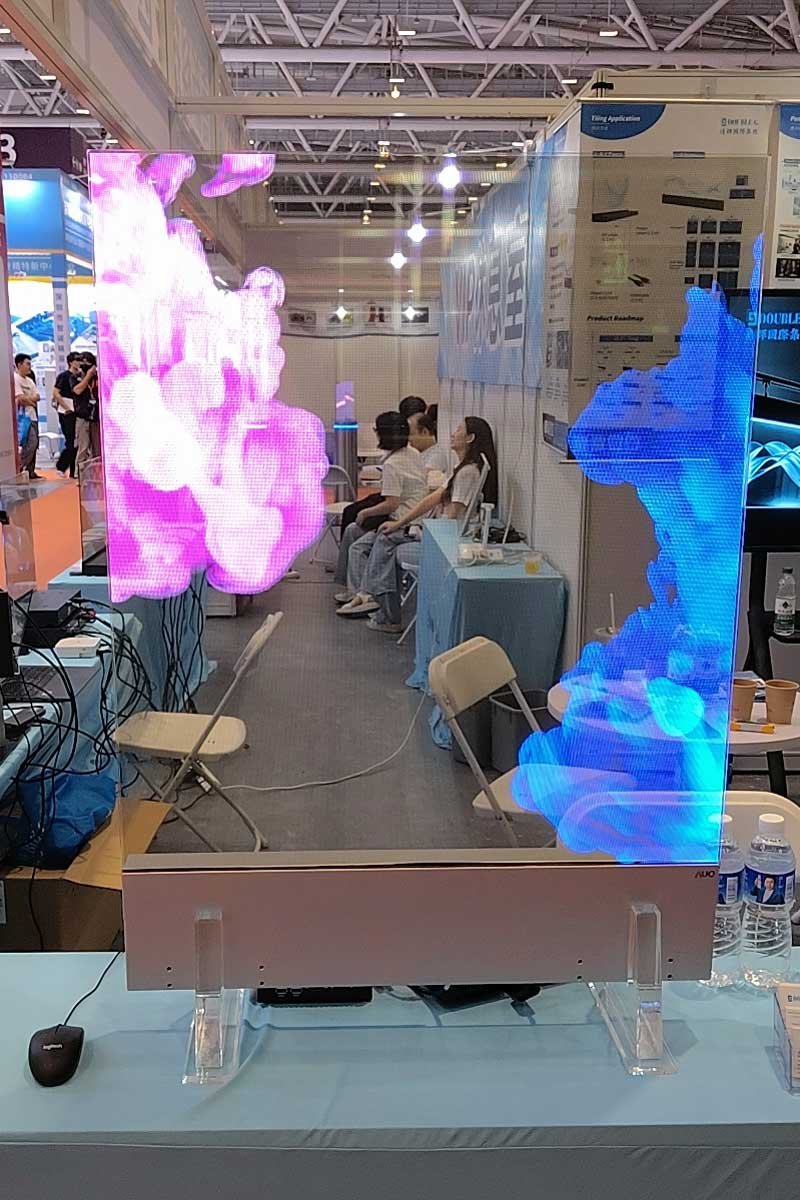
42-Inch Transparent Micro LED Display
A premium transparent technology exhibit
The 42-inch portrait platform can support selected innovation showcases and high-value product presentations.
Confirm model availability, controller and engineering fit before committing to a project.
Explore 42-Inch Transparent Micro LED Display →
What Is a Transparent Exhibition & Showroom Display Solution?
A Transparent Exhibition & Showroom Display Solution uses transparent display technology to present digital content while keeping real products, objects or spaces visible behind the screen.
It is used when a company wants to explain a physical product more clearly without hiding it behind a normal display.
For example, a transparent display can show product features, internal structure, working principles, animation, brand video, user interface or technical data while the real product remains visible.
This solution can be used for:
- Exhibition booths
- Product showrooms
- Museum displays
- Corporate experience centers
- Product launch areas
- Retail flagship spaces
- Industrial product demonstration cabinets
- Medical device display areas
- Automotive component presentation
- Electronics and technology showcases
- Glass partitions and transparent display walls
Core Line
Transparent exhibition display is not only a screen. It is a combination of physical product, digital content, transparent display technology, lighting, structure and visitor experience.
Who Is This Solution For?
This solution is suitable for customers who need a more visual and technical way to present products or concepts.
- Exhibition booth designers
- Product showroom owners
- Museum and science center projects
- Corporate experience centers
- Automotive and industrial manufacturers
- Medical device companies
- Consumer electronics brands
- Luxury product display projects
- Retail flagship stores
- Brand experience agencies
- Commercial interior designers
- System integrators
- OEM product demonstration teams
Typical Project Goals
Customers usually consider this solution when they want to:
- Show real products and digital content together
- Explain invisible product features or internal structure
- Upgrade traditional display cabinets
- Create a more modern exhibition or showroom experience
- Add video or product data directly onto glass
- Build interactive product presentation areas
- Support technical storytelling without hiding the product
- Make product demonstrations easier for sales teams and visitors
Main Transparent Display Directions
Transparent LCD is practical for display cabinets, product showcase boxes and controlled lighting structures.
It requires a suitable LED light source behind the panel. In a display cabinet or exhibition box, the lighting can illuminate both the product and the transparent LCD display.
Best For
- Transparent LCD display cabinets
- Product demonstration boxes
- Technical product showcases
- Medical device display cabinets
- Industrial component display cabinets
- Smart exhibition cabinets
- Controlled lighting showroom structures
View Transparent LCD Displays →
Transparent OLED is suitable for premium exhibition and showroom environments where a thinner structure, self-emissive display effect and clean transparent visual appearance are required.
It does not require backlight, but the size, cost, installation environment and long-term use condition must be reviewed carefully.
Best For
- Premium product showrooms
- Luxury retail showcases
- Museum exhibits
- Transparent OLED signage
- Digital human display areas
- Corporate experience centers
- High-end product presentation spaces
View Transparent OLED Displays →
Transparent LED is suitable for larger transparent visual areas such as glass walls, exhibition partitions, large booth structures and long-distance visual displays.
It is more scalable than Transparent LCD or Transparent OLED, but pixel pitch, viewing distance, transparency, mounting method and structure must be reviewed.
Best For
- Large exhibition glass walls
- Brand experience spaces
- Mall or showroom glass façades
- Transparent LED film on glass
- LED holographic invisible screen applications
- Indoor transparent LED display structures
- Outdoor transparent mesh display projects
View Transparent LED Displays →
Selection Logic
Choose Transparent LCD when the project is cabinet-based and can support lighting. Choose Transparent OLED when the project needs a premium close-view transparent display effect. Choose Transparent LED when the project needs a larger transparent display area or glass installation.
Typical Exhibition and Showroom Applications
Transparent displays can help exhibition visitors see the physical product while viewing videos, technical highlights or product explanation content on the same display surface.
This is useful when a product has internal features, structure, workflow or technical advantages that are difficult to explain with the physical object alone.
Key Review Factors
- Booth size
- Viewing distance
- Lighting environment
- Product placement
- Display size
- Installation structure
- Content playback
- Touch requirement
- Transport and packing
Send Exhibition Booth Requirement →
In showrooms, transparent displays can be used to create a more modern product presentation area.
They can show product features, animations, brand content or technical information while keeping the real product visible.
Typical Showroom Products
- Automotive components
- Medical devices
- Industrial equipment
- Electronics
- Smart devices
- Luxury goods
- Technical models
- Product prototypes
Send Showroom Display Requirement →
Transparent displays can be used in museums, science centers and education spaces to explain objects, models or historical exhibits without fully covering them.
Possible Content
- Object information
- Structural explanation
- Timeline animation
- Scientific process
- Layered visual explanation
- Interactive learning content
Send Museum Display Requirement →
Corporate experience centers can use transparent displays to show company history, product evolution, technology roadmap, product structure or brand stories.
Transparent displays are useful when the company wants to combine physical product samples with digital presentation content.
View Corporate & Office Environments →
Transparent display technology can be used in luxury retail, electronics retail, cosmetics, watches, jewelry and premium product presentation.
The purpose is not only advertising. It is to combine real products with digital product highlights, brand visuals or interactive explanation.
View Transparent Retail Display Solution →
How the Solution Works
A transparent exhibition or showroom display usually combines several elements:
Different transparent technologies work differently.
- Transparent LCD requires a suitable LED light bar and controlled illumination behind the display.
- Transparent OLED is self-emissive and does not need a backlight.
- Transparent LED uses LED pixels on a transparent structure and is better for larger areas or longer viewing distance.
Important Note
The final visual effect depends on the complete environment, not only the display panel. Lighting, reflection, content design, product placement, viewing distance, glass angle and installation structure all affect the final result.
Key Components
A transparent exhibition or showroom display project may include:
| Component |
Function |
| Transparent Display Panel |
Shows digital content while keeping products or objects visible behind the display |
| Lighting System |
Required for Transparent LCD and useful for product display cabinets |
| Glass / Cabinet / Mounting Structure |
Holds or protects the display and product area |
| Controller Board |
Drives the display and receives signal input |
| Media Player / Signal Source |
Plays videos, technical animations, brand content or product information |
| Optional Touch Panel |
Adds interactive navigation, product information or visitor engagement |
| Power Supply |
Provides power for display, lighting and electronics |
| Frame / Mechanical Structure |
Supports installation and ensures mechanical fit |
| Cable Assembly |
Connects display, controller, touch, lighting and power |
| Content System |
Supports playback, update or scheduled content depending on project |
Core Line
Transparent exhibition display projects should be reviewed as complete visual systems, not only by screen size.
Transparent Display vs Traditional Exhibition Showcase
| Factor |
Traditional Showcase |
Transparent Exhibition Display |
| Product Visibility |
Physical product is visible |
Physical product remains visible through the display |
| Digital Content |
Usually separate screen or printed label |
Digital content appears on the same visual surface |
| Product Explanation |
Depends on salesperson, label or side screen |
Videos, animations and information can be shown directly on the display layer |
| Visual Effect |
Standard display cabinet |
More modern and technology-driven presentation |
| Structure |
Glass, lighting and cabinet |
Display, glass, lighting, controller and structure integration |
| Cost |
Lower |
Higher |
| Best For |
Standard product display |
Product presentation that needs digital explanation and visual impact |
| Selection Logic |
Choose when product visibility alone is enough |
Choose when physical product and digital content should work together |
Transparent Display vs Normal Digital Signage
| Factor |
Normal Digital Signage |
Transparent Exhibition Display |
| Product Visibility |
Usually replaces the physical product view |
Keeps product or object visible behind the display |
| Content Position |
On a separate screen |
Overlaid on or in front of the physical product area |
| Best For |
General video advertising and information playback |
Product demonstration, technical explanation and premium presentation |
| Installation |
Wall-mounted, freestanding or kiosk-based |
Cabinet, glass, window or custom structure integration |
| Content Style |
Normal videos and images |
Content should work with transparency and product placement |
| Cost |
Usually lower |
Usually higher due to display and structure integration |
| Selection Logic |
Choose for general display content |
Choose when product visibility and digital overlay are both important |
Choosing the Right Transparent Display Technology
| Technology |
Best For |
Main Review Points |
| Transparent LCD Displays |
Display cabinets, technical showcase boxes, controlled lighting structures |
Needs a suitable LED light bar and controlled illumination |
| Transparent OLED Displays |
Premium showrooms, museums, luxury displays, transparent signage |
Higher cost, limited size, careful environment review |
| Transparent LED Film Screen |
Glass walls, retail windows, larger exhibition surfaces |
Needs glass or mounting surface, viewing distance matters |
| LED Holographic Invisible Screen |
Lightweight transparent LED-style display and creative installations |
Structure, pixel pitch and viewing distance need review |
| Indoor Transparent LED Screen |
Larger indoor transparent display structures |
Frame, cabinet, viewing distance and installation need review |
| Outdoor Transparent LED Mesh Screen |
Outdoor façades and large transparent display areas |
Waterproofing, brightness, wind load and structure need review |
| Transparent Micro LED Displays |
Premium high-end transparent display concepts |
Very high cost and limited availability |
Selection Logic
For cabinet-style exhibition displays, start with Transparent LCD or Transparent OLED. For large glass walls and booth structures, review Transparent LED products. For premium high-budget projects, Transparent OLED or Transparent Micro LED may be considered.
Optional Touch Function
Touch can be reviewed when the display needs visitor interaction.
Possible Uses
- Product information browsing
- Technical specification navigation
- Interactive product comparison
- Brand story presentation
- Video selection
- Layered product explanation
- QR code or inquiry interaction
- Digital human interaction
- Museum or education interaction
Practical Note
Touch is not required for every transparent exhibition display project.
For many showroom and exhibition applications, non-touch video playback may be more practical, simpler and easier to maintain.
Important Note
Touch integration requires review of glass structure, touch technology, controller, operating system, software, user distance and installation environment.
Content Design for Transparent Exhibition Displays
Transparent display content should be designed together with the product or object behind the screen.
Recommended Content Style
- High-contrast graphics
- Bright visual elements
- Large text
- Short product messages
- Simple technical animations
- Product highlight overlays
- Clear diagrams
- Short video loops
- Content aligned with the physical product position
- QR codes with enough size
Avoid
- Dense paragraphs
- Small text
- Low-contrast images
- Dark content without bright elements
- Complex UI that requires very close viewing
- Content that hides the product too much
- Technical information that is too detailed for first-time visitors
Core Line
Good transparent display content should help visitors understand the physical product, not cover or distract from it.
Project Review Factors
DisplayMan can review the following items for transparent exhibition and showroom display projects.
| Review Factor |
Why It Matters |
| Application |
Determines whether the project is booth, showroom, museum, cabinet or glass wall |
| Display Technology |
Transparent LCD, OLED and LED suit different structures |
| Display Size |
Affects availability, cost, structure and viewing experience |
| Viewing Distance |
Very important for Transparent LED and large displays |
| Lighting Environment |
Critical for Transparent LCD and product display cabinets |
| Brightness Requirement |
Important for exhibition halls and strong ambient lighting |
| Product Placement |
Affects transparency, content alignment and visitor understanding |
| Glass / Cabinet Structure |
Determines whether integration is practical |
| Touch Requirement |
Adds glass, controller, software and cost considerations |
| Content Type |
Affects display effect and product visibility |
| Installation Method |
Affects frame, wiring, maintenance and safety |
| Transport / Packing |
Important for temporary exhibition projects |
| Maintenance Access |
Important for long-term showroom or museum use |
| Quantity |
Affects quotation, customization and production plan |
| Target Schedule |
Helps confirm feasibility and lead time |
When This Solution Is Not the Best Choice
Transparent exhibition and showroom display may not be suitable when:
- The project needs the lowest possible cost
- A normal digital signage display is enough
- Product visibility behind the screen is not important
- The installation environment cannot support the required structure
- The lighting condition is not suitable for Transparent LCD
- The viewing distance is too close for selected Transparent LED pixel pitch
- The content is mainly dense text or small UI
- The project expects a simple plug-and-play monitor
- The project has no plan for content design
- The budget cannot support display, structure and integration work
Core Line
Transparent exhibition display is valuable when physical product visibility and digital content need to work together. If only video playback is needed, normal digital signage may be more practical.
Need a More Practical Display Option?
Not every exhibition or showroom project needs a fully customized transparent display system from the beginning.
If your current project is still in the concept, booth design, showroom planning or early presentation stage, DisplayMan can also help you review simpler display options before moving into a full transparent exhibition display structure.
These options can help you present products, explain technical features, support brand storytelling, attract visitors or build a first-stage demonstration system with lower integration risk.
Lower-risk first step for product demonstration and showcase evaluation
A transparent LCD cabinet sample can help you evaluate the real transparent display effect, product visibility, lighting structure and content playback before developing a custom exhibition cabinet or showroom display system.
This is often a practical starting point for product demonstrations, internal approval, showroom testing, museum display evaluation and exhibition concept presentation.
Explore Transparent LCD Display Cabinet →
Practical option for video playback and general presentation
If your main goal is to show videos, product introductions, brand content or technical information without needing product visibility behind the screen, a normal high-brightness display or digital signage system may be more practical.
This option is suitable for exhibition booths, showroom walls, reception areas, product launch zones and corporate presentation spaces where transparency is not the main requirement.
Explore Digital Signage Displays →
Freestanding display for exhibition guidance and product information
Floor standing kiosks can be placed near exhibition entrances, product zones, showroom areas, museum paths or corporate experience centers.
They are useful when you need product videos, interactive information, wayfinding, inquiry collection or visitor guidance without building a custom transparent display cabinet.
Explore Floor-Standing Kiosks →
Premium option for high-end showroom and museum display
If the project needs a cleaner, thinner and more premium transparent visual effect, a transparent OLED display cabinet may be reviewed instead of a transparent LCD cabinet.
This direction is more suitable for luxury products, museum exhibits, corporate experience centers, high-end product launches and premium showroom environments where budget and visual quality are more important.
Explore Transparent OLED Display Cabinet →
Core Line
If physical product visibility and digital overlay are both important, a transparent exhibition display may be worth reviewing. If the main goal is video playback, visitor guidance, product information or brand presentation, a digital signage display, floor standing kiosk, transparent LCD cabinet sample or transparent OLED cabinet may be the more practical first step.
Related Application, Solution and Product Pages
This page should route customers to the right transparent exhibition display technology, showroom product display route, event LED backdrop route, touch integration option or practical alternative display system.
Related Solution and Application Pages
| Related Page |
When to Visit |
| Exhibition, Events & Showrooms |
When the project is an exhibition booth, event, product launch area, showroom, museum or brand experience space |
| Transparent Display Solutions |
When the customer needs to compare transparent LCD, transparent OLED, transparent LED and transparent Micro LED directions |
| Exhibition & Event Transparent LED Backdrop Solution |
When the project needs a large transparent LED backdrop, booth wall or event visual surface |
| Transparent LED Solutions |
When the project needs large-format transparent visual impact for booths, atriums, glass walls or exhibition structures |
| Transparent Retail Display Solution |
When the exhibition or showroom project is mainly focused on product display, luxury retail or premium brand presentation |
| Transparent Digital Human Display Solution |
When the project needs a transparent avatar guide, digital human presenter or virtual host |
| Transparent LED vs Transparent LCD |
When the customer is not sure whether the project should use transparent LED for a large area or transparent LCD for a product cabinet |
| Decorative vs Informational Transparent Displays |
When the project needs to clarify whether the display is mainly for visual atmosphere, product explanation or functional communication |
| Corporate & Office Environments |
When the transparent exhibition display is used in corporate lobbies, visitor centers or product experience areas |
| OEM / ODM Display Engineering & Prototyping |
When the project needs feasibility review, drawings, sample validation, controller matching or batch-production planning |
Related Product Pages and Hardware Capabilities
| Product / Capability |
When It Helps |
| Transparent LCD Display Cabinet |
When products, prototypes, museum objects or technical components must remain visible behind digital content |
| Transparent LCD Displays |
When the project needs practical transparent LCD modules or cabinet-style transparent display integration |
| Transparent OLED Displays |
When the customer needs premium close-view transparent visual quality for high-end showrooms or museums |
| Transparent OLED Display Cabinet |
When the project needs a premium transparent OLED cabinet for luxury product presentation or museum display |
| Transparent LED Displays |
When the project needs large-format transparent visual impact for exhibition booths, event spaces or glass walls |
| Transparent LED Film Screen |
When the project needs transparent LED film applied to glass walls, partitions or exhibition structures |
| LED Holographic Invisible Screen |
When the project needs a lightweight transparent LED-style effect for exhibition or creative display spaces |
| Custom Transparent LED Displays |
When the project needs custom pixel pitch, size, brightness, frame or installation structure for transparent LED |
| Transparent Micro LED Displays |
When the project needs ultra-premium transparent technology review and has sufficient budget |
| Floor-Standing Kiosks |
When the exhibition needs a fast freestanding product information, wayfinding or visitor interaction display |
| Digital Signage Displays |
When the project only needs normal video playback, brand content or product information without transparency |
| Custom Touch Panels & Cover Glass |
When touch, front glass, cover glass, printing, holes or surface treatment must be reviewed |
| Infrared Touch Frames |
When 32-inch and larger transparent displays, interactive walls or exhibition touch displays need touch function |
| LCD Controller Boards |
When HDMI, LVDS, eDP, Android, Windows, media player or signal input matching is required |
| LED Backlights |
When transparent LCD brightness, internal lighting or object illumination must be designed |
| FPC & Cable Assembly |
When cable length, connector position, pinout or internal wiring must match the booth, showcase or installation structure |
What Information Should You Provide?
To review or quote a Transparent Exhibition & Showroom Display project, please provide:
- Application: exhibition booth, showroom, museum, cabinet, glass wall or other
- Product or object to be displayed
- Required display size
- Installation location
- Temporary or permanent installation
- Indoor or outdoor-facing environment
- Viewing distance
- Lighting condition
- Transparency requirement
- Touch requirement
- Content playback requirement
- Glass, cabinet or structure drawing if available
- Site photos or booth design if available
- Transport or packing requirement for exhibitions
- Quantity
- Project stage: idea, sample, prototype, exhibition preparation or rollout
- Target schedule
- Target budget range if available
Project Information Helps Avoid the Wrong Technology Route
For cabinet projects, please provide cabinet size, product placement and lighting plan if available. For exhibition booths, please provide booth layout, display position, viewing distance and installation schedule.
FAQ
What is a Transparent Exhibition & Showroom Display Solution?
It is a transparent display solution used to combine real physical products with digital content in exhibitions, showrooms, museums and brand presentation spaces.
Which transparent display technology is best for exhibitions?
It depends on the structure. Transparent LCD is practical for cabinets and controlled lighting structures. Transparent OLED is suitable for premium close-view display. Transparent LED is better for larger glass walls and longer viewing distance.
Can visitors still see the product behind the screen?
Yes. That is the main purpose of this solution. The actual visibility depends on display technology, content design, lighting, viewing distance and product placement.
Does it support touch?
Touch can be reviewed as an optional function. It depends on glass structure, touch technology, controller, software and user interaction distance.
Is Transparent OLED better than Transparent LCD?
Not always. Transparent OLED has a premium visual effect and does not require backlight, but it is usually more expensive and size-limited. Transparent LCD is often more practical for cabinet structures with controlled lighting.
Is Transparent LED suitable for close-view product showcases?
Usually not the first choice. Transparent LED is better for larger glass areas and longer viewing distance. For close-view cabinets, Transparent LCD or Transparent OLED is usually more practical.
Can it be used for temporary exhibitions?
Yes, but structure, packing, transport, installation time and maintenance access must be reviewed carefully.
Can this replace a normal monitor?
Only when transparency or product visibility is important. If the project only needs video playback, a normal LCD digital signage display may be more cost-effective.
Do you provide the full exhibition booth?
DisplayMan mainly supports transparent display product selection and display system review. Full booth design, local structure installation and exhibition construction may require local partners or the customer’s exhibition contractor.
What is the best way to start?
Send us your application, display size, product photos, booth or showroom layout, lighting condition and project schedule. DisplayMan can help review whether Transparent LCD, Transparent OLED, Transparent LED or another display direction is more practical.