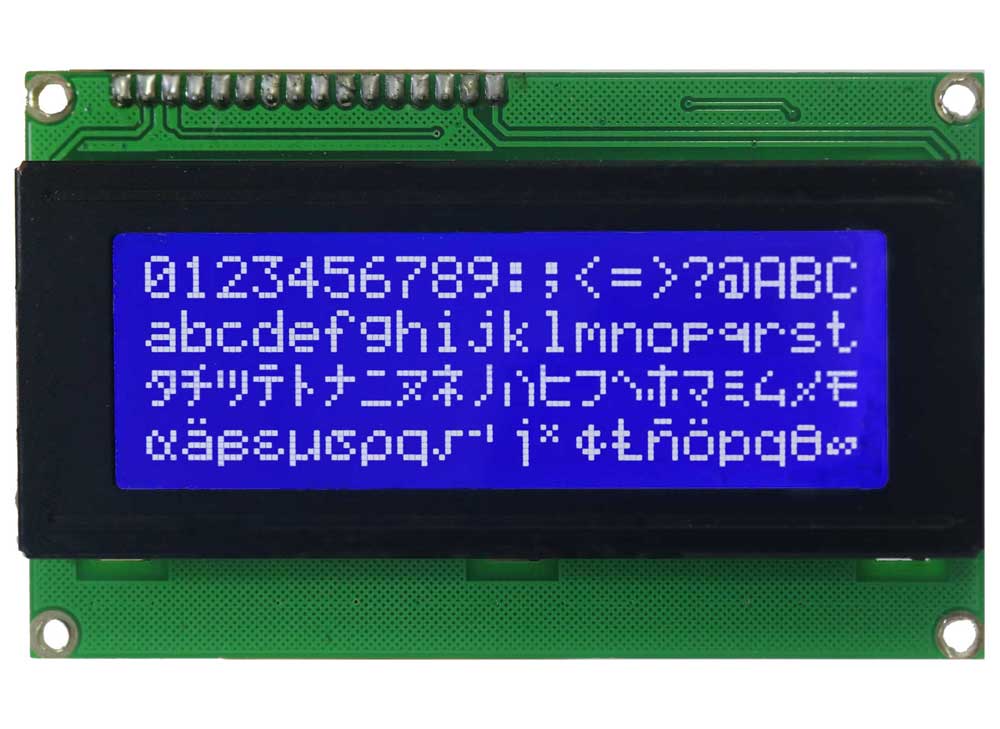
128 × 32 FSTN Negative Graphic LCD
| Display Type | FSTN / Graphic |
|---|---|
| Display Content | 128 × 32 dot matrix |
| Display Mode | Negative / Transmissive |
| Display Effect | Blue Background and White Letters |
| Structure | COB+Zebra+Metal Frame |
| Backlight | White |

Explore standard and custom graphic LCD modules for pixel-based text, icons, menus and diagrams. DisplayMan supports COB and COG structures, backlight options, FPC and mechanical integration for instruments, control panels and OEM equipment.
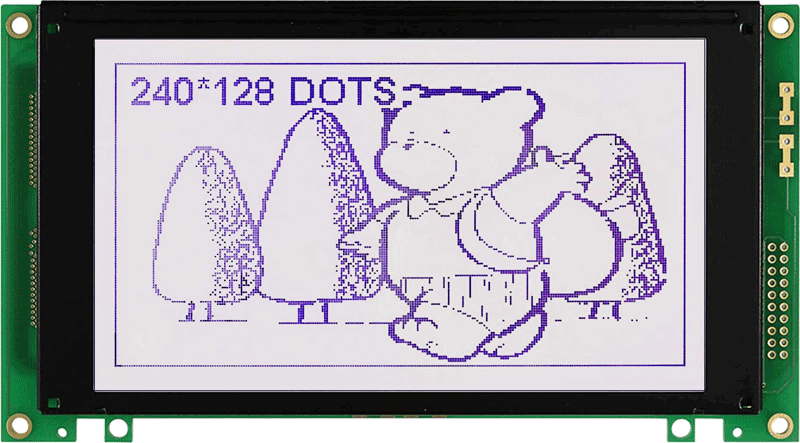
DisplayMan supplies Graphic LCD Displays for instruments, control panels, meters, medical devices, industrial equipment, handheld products and embedded electronic systems.
Graphic LCD modules use a pixel matrix instead of fixed character positions. They are selected when the product needs icons, symbols, menus, curves, diagrams, custom fonts or flexible text placement.
Standard modules are preferred when available, while project-based customization can cover LCD type, display mode, backlight, COB or COG structure, FPC, connector and mechanical matching.
Choose Graphic LCD Displays when the product needs pixel-based monochrome graphics instead of fixed character positions.
A wide range of standard graphic LCD modules is available. The six examples below showcase selected resolutions, display modes and module structures.
| Display Type | FSTN / Graphic |
|---|---|
| Display Content | 128 × 32 dot matrix |
| Display Mode | Negative / Transmissive |
| Display Effect | Blue Background and White Letters |
| Structure | COB+Zebra+Metal Frame |
| Backlight | White |
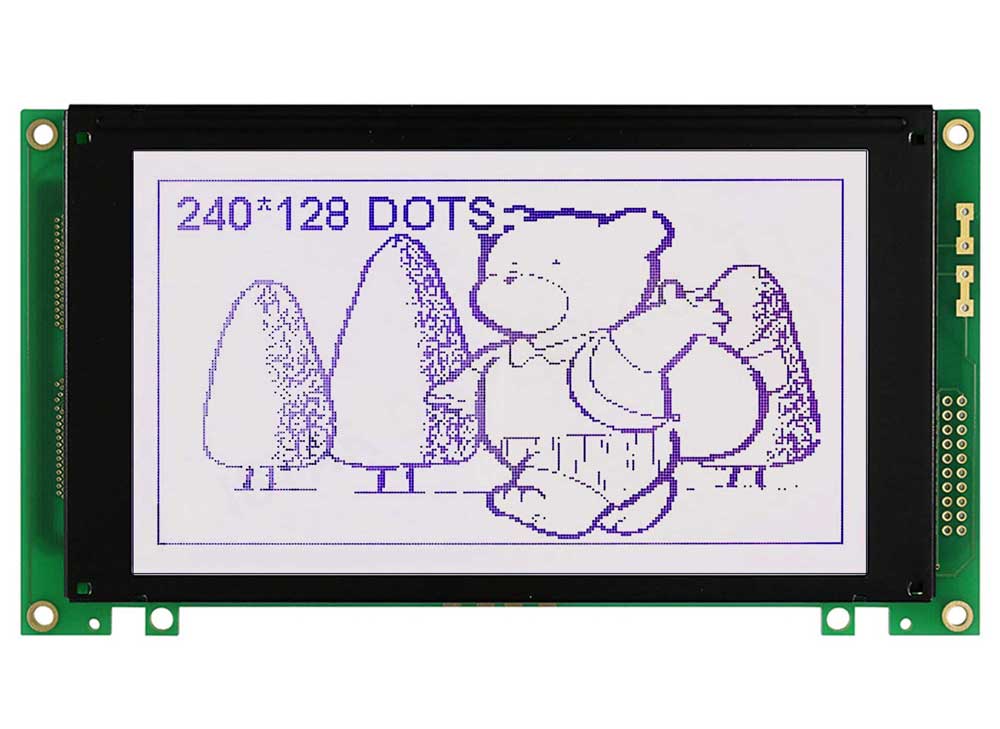
| Display Type | FSTN / Graphic |
|---|---|
| Display Content | 240 × 128 dot matrix |
| Display Mode | Negative / Transmissive |
| Display Effect | Dark Purple Background and White Letters |
| Structure | COB+Zebra+Metal Frame |
| Backlight | Green |
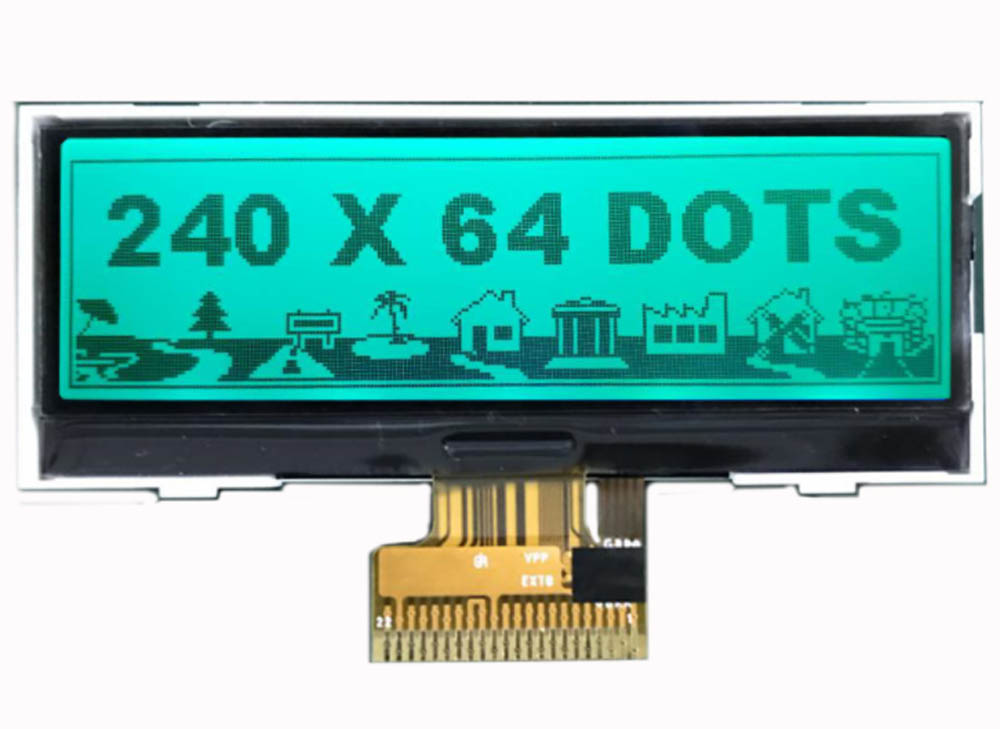
| Display Type | FSTN / Graphic |
|---|---|
| Display Content | 240 × 64 dot matrix |
| Display Mode | Positive / Transmissive |
| Display Effect | Grey Background and Black Letters |
| Structure | COG+FPC |
| Backlight | Green |
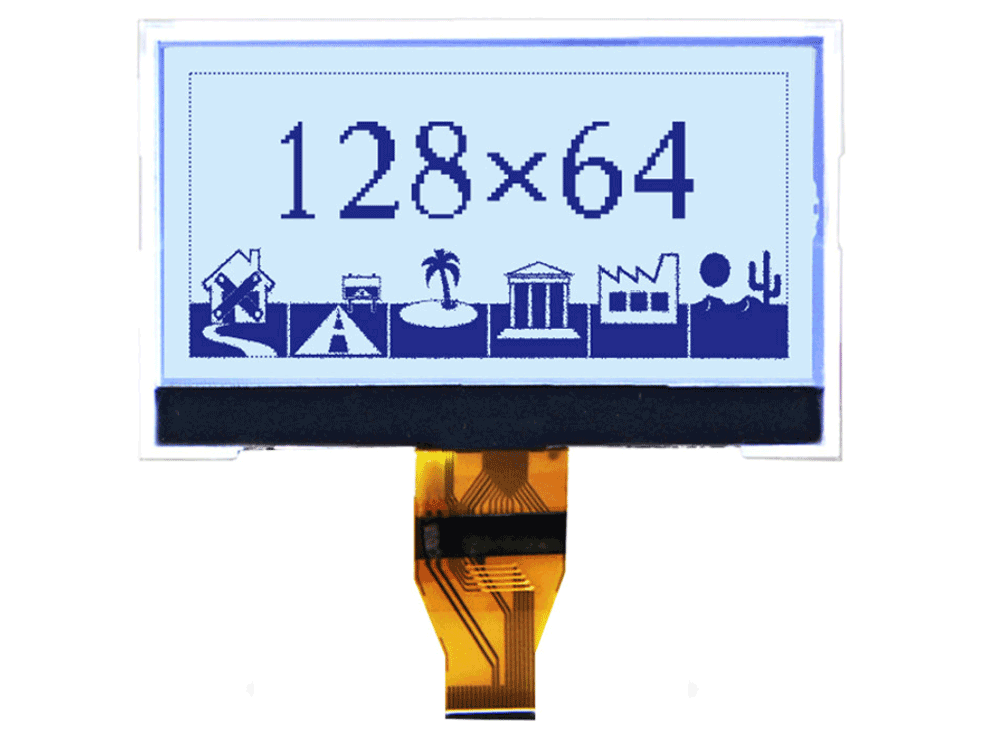
| Display Type | FSTN / Graphic |
|---|---|
| Display Content | 128 × 64 dot matrix |
| Display Mode | Positive / Transmissive |
| Display Effect | Grey Background and Blue Letters |
| Structure | COG+FPC |
| Backlight | White |
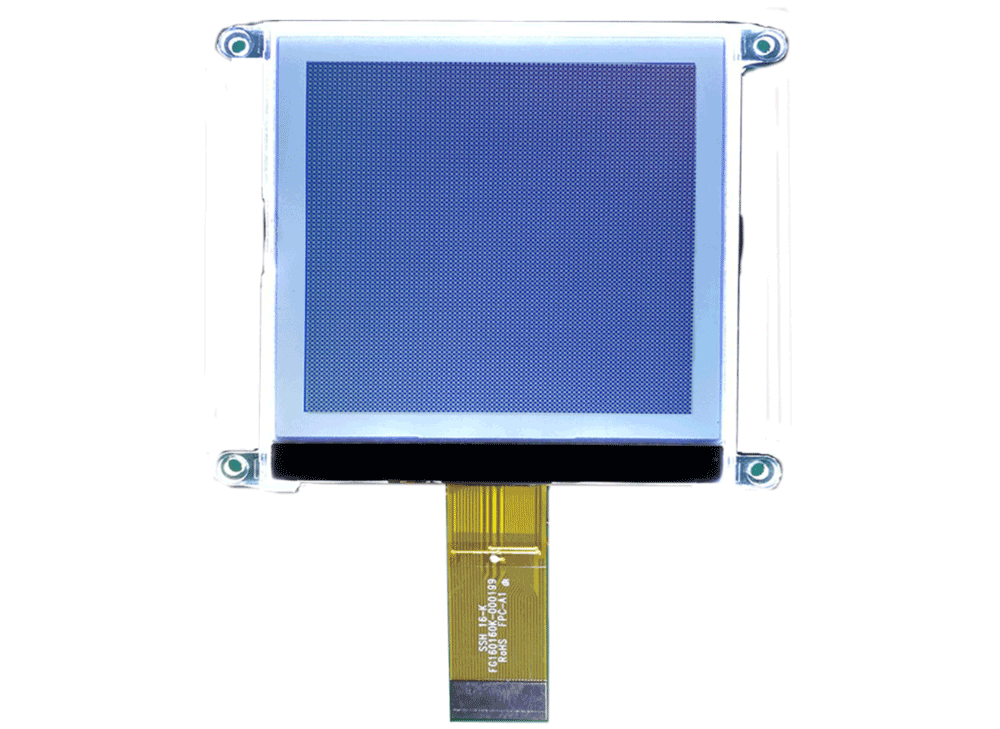
| Display Type | FSTN / Graphic |
|---|---|
| Display Content | 160 × 160 dot matrix |
| Display Mode | Positive / Transmissive |
| Display Effect | Grey Background and Blue Letters |
| Structure | COG+FPC |
| Backlight | White |
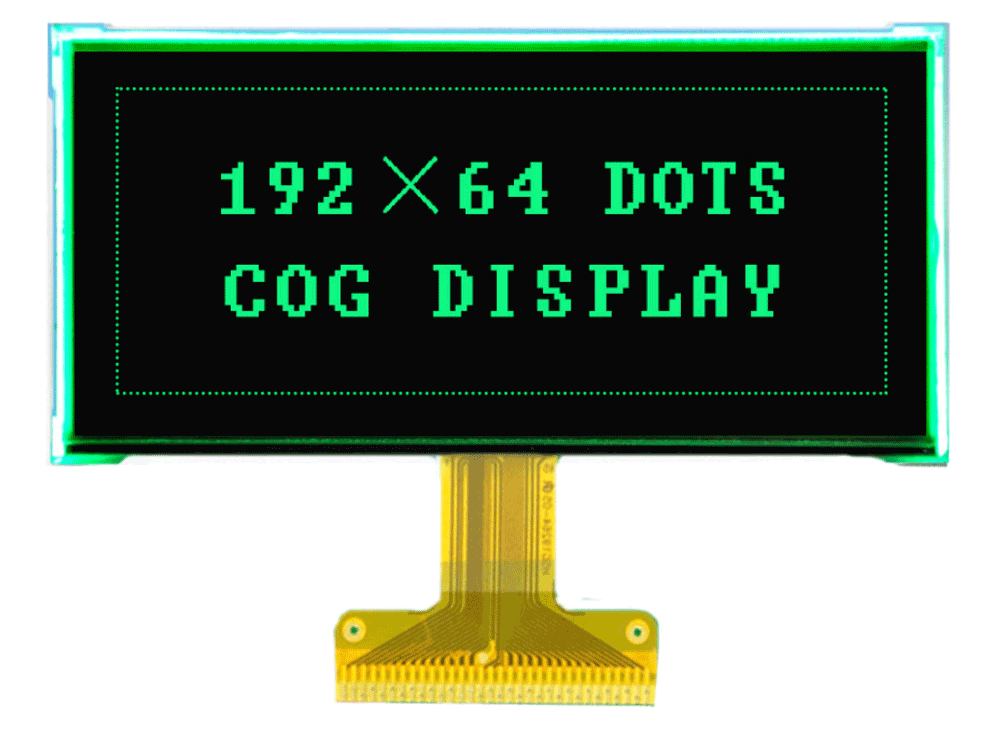
| Display Type | FSTN / Graphic |
|---|---|
| Display Content | 192 × 64 dot matrix |
| Display Mode | Negative / Transmissive |
| Display Effect | Black Background and White Letters |
| Structure | COG+FPC |
| Backlight | Green |
The following resolutions are reference examples. Final availability and specification must be confirmed according to display content, active area, structure, interface, backlight, dimensions and quantity.
| Reference Resolution | Pixel Format | Typical Structure | Display Mode | Backlight Option | Typical Use |
|---|---|---|---|---|---|
| 128×32 Graphic LCD | 128 × 32 pixels | COB + Zebra + Metal Frame | FSTN negative / transmissive | White | Small instruments, status graphics and compact control panels |
| 128×64 Graphic LCD | 128 × 64 pixels | COG + FPC | FSTN positive / transmissive | White | Meters, handheld devices and embedded products |
| 160×160 Graphic LCD | 160 × 160 pixels | COG + FPC | FSTN positive / transmissive | White | Square graphic UI, instruments and compact panels |
| 192×64 Graphic LCD | 192 × 64 pixels | COG + FPC | FSTN negative / transmissive | Green | Industrial devices, controllers and menu displays |
| 240×64 Graphic LCD | 240 × 64 pixels | COG + FPC | FSTN positive / transmissive | Green | Equipment panels, audio devices and status displays |
| 240×128 Graphic LCD | 240 × 128 pixels | COB + Zebra + Metal Frame | FSTN negative / transmissive | Green | Larger industrial panels, measurement equipment and control systems |
| 320×240 Graphic LCD | 320 × 240 pixels | COB or COG review | STN / FSTN | Project-based | Larger monochrome UI and industrial display applications |
Two 128×64 or 240×128 modules may still use different active areas, controller ICs, interfaces, pinouts, FPC directions, PCB outlines, backlights and mounting structures.
Each pixel can be controlled to create icons, symbols, curves, diagrams and custom text placement.
Text and symbols can be positioned according to the UI rather than fixed 16×2 or 20×4 character locations.
More flexible than Character LCD, but simpler and usually lower in complexity than full-color TFT LCD.
Graphic LCD Displays are selected when the product needs flexible pixel-based monochrome content rather than fixed character positions.
Custom icons, menus, fonts and layout can be created inside the pixel matrix.
Many instruments and industrial products do not need full-color TFT graphics.
Graphic LCD technology is widely used in industrial, medical and embedded equipment.
COB and COG structures can be selected according to module size, thickness and assembly needs.
Positive, negative and several backlight colors can support different product appearances.
Existing modules can be reviewed when the exact model, pinout and mechanical details are available.
| Factor | COB Graphic LCD | COG Graphic LCD |
|---|---|---|
| IC Position | Driver IC bonded on PCB | Driver IC bonded directly on LCD glass |
| Main Structure | LCD glass, PCB, IC, zebra or frame | LCD glass, IC, FPC or PIN, optional backlight |
| Thickness | Usually thicker | Usually thinner and more compact |
| PCB Flexibility | Higher PCB-level integration flexibility | Reduced module PCB area |
| Connector Direction | Suitable for pin header, PCB connector and stronger module assembly | Suitable for compact FPC integration |
| Typical Use | Larger modules and industrial assemblies | Compact instruments, meters and handheld devices |
| Selection Logic | Choose when PCB integration and module rigidity matter | Choose when compact size and lower thickness matter |
A 128×64 Graphic LCD can be supplied in a COG structure, while another Graphic LCD may use COB construction. The display content and module structure should be selected separately.
| Selection Factor | Available Direction | Practical Effect |
|---|---|---|
| LCD Technology | TN, STN, FSTN or project-based review | Affects contrast, viewing angle, response and multiplex performance |
| Positive Mode | Dark pixels on a lighter background | Common for instruments and clear monochrome information |
| Negative Mode | Light pixels on a darker background | Creates a modern appearance and requires suitable backlighting |
| Reflective | Uses ambient light | Suitable for low-power products without constant backlight |
| Transmissive | Relies on backlight | Suitable for negative displays and controlled indoor lighting |
| Transflective | Uses ambient light and backlight | Suitable for mixed-light conditions |
| Backlight Colors | White, green, blue, yellow-green, orange or project-based review | Changes night visibility and product appearance |
Standard Graphic LCD modules are preferred when available. Customization is most practical for backlight, display mode, connector, FPC, pin layout, COB or COG structure and mechanical matching. A completely new graphic module may require tooling, MOQ and engineering review.
| Requirement | Graphic LCD Display | Character LCD Display |
|---|---|---|
| Display Content | Icons, graphics, symbols, curves and flexible UI | Fixed letters, numbers and simple text |
| Display Format | Pixel resolution such as 128×64 or 240×128 | Character format such as 16×2 or 20×4 |
| UI Flexibility | Higher | Lower |
| Development | Requires graphic control and UI layout | Simpler for text display |
| Best For | Custom icons, diagrams, menus and pixel-based layout | Text, numbers, status messages and simple menus |
| Selection Logic | Choose when the product needs graphics | Choose when fixed text is enough |
| Requirement | Graphic LCD Display | Segment LCD Display |
|---|---|---|
| Display Structure | Pixel matrix | Fixed custom segments |
| Content Flexibility | Flexible icons, text and graphics | Fixed digits, icons and symbols |
| Tooling Direction | Standard modules often available | Usually custom tooling for one interface |
| Power Direction | Moderate | Can be very low power |
| Best For | Menus, icons and pixel-based monochrome UI | Meters, thermostats and fixed content |
| Selection Logic | Choose for flexible monochrome UI | Choose for fixed low-power content |
| Requirement | Graphic LCD Display | TFT LCD Display |
|---|---|---|
| Color | Monochrome | Full color |
| Content | Icons, menus, curves and simple diagrams | Images, graphics, animation and video |
| Controller Requirement | Moderate | Higher |
| Refresh Direction | Suitable for static or slowly changing content | Suitable for dynamic graphical UI and video |
| Best For | Industrial instruments and monochrome interfaces | Modern HMI, terminals and multimedia products |
| Selection Logic | Choose when monochrome graphics are sufficient | Choose when full-color visual content is required |
Menus, status graphics, parameters and simple machine-interface content.
Curves, values, icons, units and diagnostic information.
Simple diagrams, menus, measurements and professional device interfaces.
Compact portable instruments and field equipment with monochrome UI.
Values, icons, trends, menu settings and status information.
Menus, levels, status graphics and equipment-control information.
Operating modes, menus, icons and system status.
Instructions, machine status, menu graphics and embedded product UI.
Replacement projects requiring exact resolution, interface, pinout, structure and backlight matching.
Icons, menus, custom fonts, curves, diagrams or flexible text layout.
Content density, text size, viewing distance, module dimensions and enclosure opening.
Positive or negative, reflective, transmissive or transflective, and the required backlight color.
PCB integration and rigidity versus compact size, low thickness and FPC connection.
Controller, interface, connector, FPC, voltage, viewing direction, PCB and mounting.
Operating range, sample testing, quantity, replacement strategy, acceptance criteria and schedule.
Graphic LCD is the correct product when icons, diagrams and flexible monochrome layout are the main buying reasons. Use another product page when fixed text, custom segments, full-color content or module structure matters more.
| Product Page | Choose This When |
|---|---|
| Monochrome LCD Displays | You need the main monochrome LCD product entry and general selection |
| Character LCD Displays | You need fixed rows of letters, numbers or simple text |
| Segment LCD Displays | You need custom digits, icons, symbols or low-power fixed content |
| Dot Matrix LCD Displays | You need matrix-style monochrome text or graphics |
| COB LCD Displays | You need a PCB-based monochrome module structure |
| COG LCD Displays | You need a compact IC-on-glass monochrome module |
| TFT LCD Displays | You need full-color graphics, images, animation or video |
Matching only “128×64” or “240×128” is not enough. Send the old model, controller, interface, pinout, PCB or FPC, active area, backlight and mechanical drawing.
MONOCHROME LCD FAMILY
Visit a category page for product images, specifications and integration options.
A Graphic LCD Display is a monochrome LCD module with a pixel matrix, used to display icons, symbols, menus, curves, diagrams, simple graphics and flexible text layouts.
Common reference resolutions include 128×32, 128×64, 160×160, 192×64, 240×64, 240×128 and 320×240.
Choose a Graphic LCD when the product needs flexible monochrome content such as icons, diagrams, curves, custom fonts or free-position text.
Character LCD uses fixed character cells such as 16×2 or 20×4. Graphic LCD uses a pixel matrix and can display custom icons, graphics and flexible layouts.
Graphic LCD uses a pixel matrix for flexible content. Segment LCD uses fixed custom digits, icons and symbols designed for one specific interface.
Graphic LCD is normally monochrome and intended for simple graphics and text. TFT LCD supports full-color graphics, images, animation and video.
Yes. COB Graphic LCD modules use a PCB with the driver IC bonded on the board and are practical when PCB-level integration, connectors or a stronger module structure are required.
Yes. COG Graphic LCD modules bond the driver IC directly onto the glass and are useful when a thinner, more compact module with FPC connection is required.
Graphic LCD projects commonly use STN or FSTN, while TN or another monochrome LCD direction may be reviewed for selected requirements.
Positive or negative display modes and reflective, transmissive or transflective optical modes can be reviewed.
Yes. White, green, blue, yellow-green, orange or another project-based backlight color can be reviewed according to the selected module and quantity.
The interface depends on the controller IC and module design. Parallel, serial, SPI, I2C or another project-based interface can be reviewed.
Yes. FPC length, direction, connector type, pin definition and cable orientation can be reviewed according to the product structure.
Selected modules and custom projects can be reviewed for wider operating temperature. The exact range must be confirmed from the selected module specification.
Simple frame changes or basic movement may be possible depending on the resolution, controller and refresh rate, but Graphic LCD is not intended for smooth full-color animation or video.
Yes. Please provide the old module model, datasheet, photos, pin definition, interface, connector or FPC, module outline, backlight information and sample if available.
Graphic LCD provides flexible monochrome content but has lower visual richness and refresh capability than TFT LCD, and usually requires more UI control than Character LCD.
Please provide resolution, module size, active area, display mode, backlight color, COB or COG preference, interface, connector or FPC, viewing direction, temperature, quantity, schedule and available drawing or sample.
Send us the resolution, module size, display mode, backlight color, COB or COG structure, interface, connector or FPC, viewing direction, temperature, quantity and schedule.
DisplayMan will review whether a standard Graphic LCD module is suitable or whether a customized module or another monochrome LCD direction better matches the product.
Graphic LCD is intended for pixel-based monochrome icons, menus and flexible layouts. Standard modules are preferred when they meet the display, interface and mechanical requirements.