
Present digital animation, brand stories and product visuals on a fine-pitch transparent LED structure. DisplayMan supports indoor retail, museum, exhibition and showroom projects with panel selection, mounting and control-system integration.
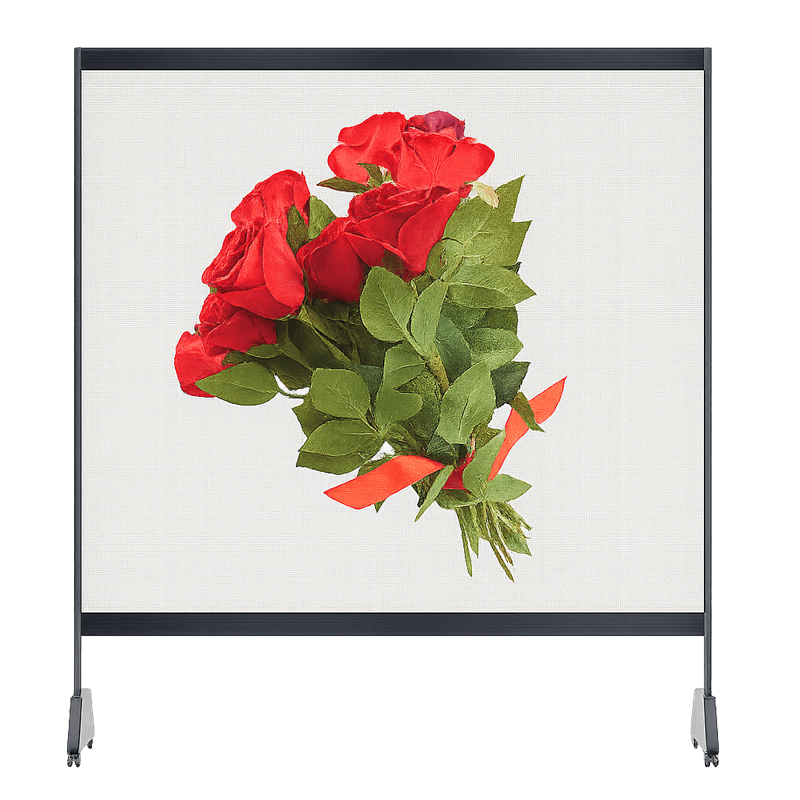
Explore the panel from the side, front and rear to understand its transparent structure and visual presentation.
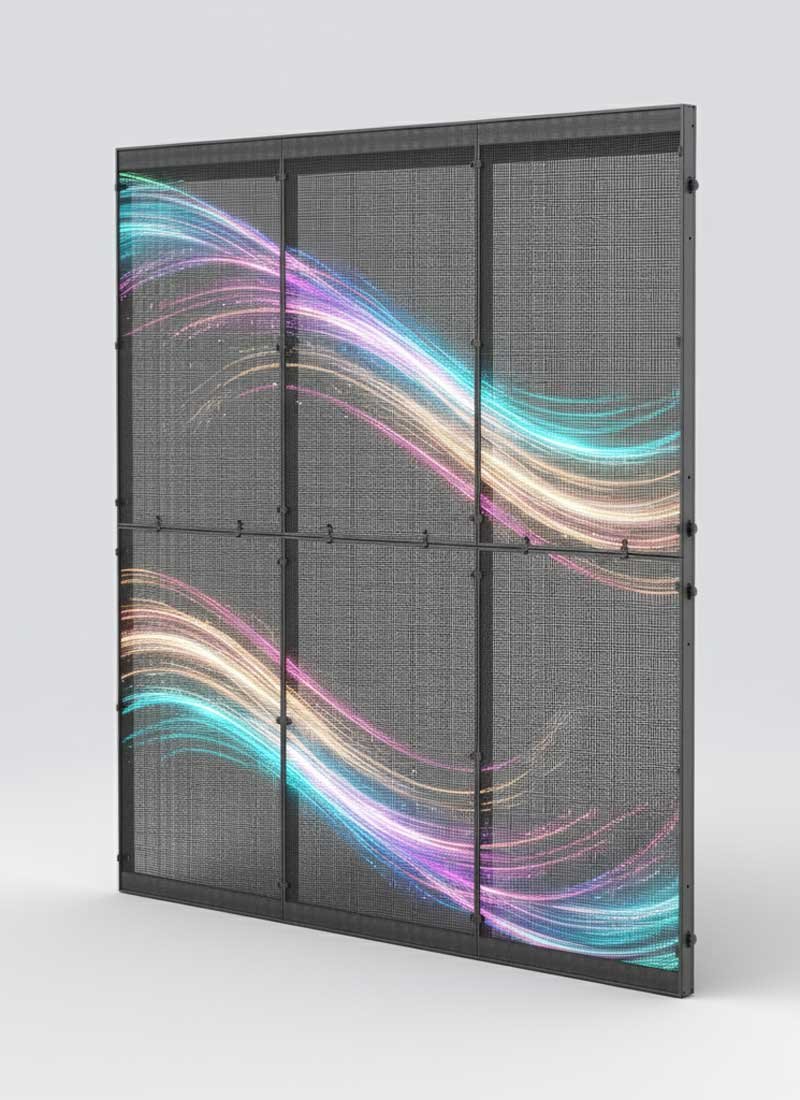
View the slim panel profile and open LED structure while animated light patterns play across the display.
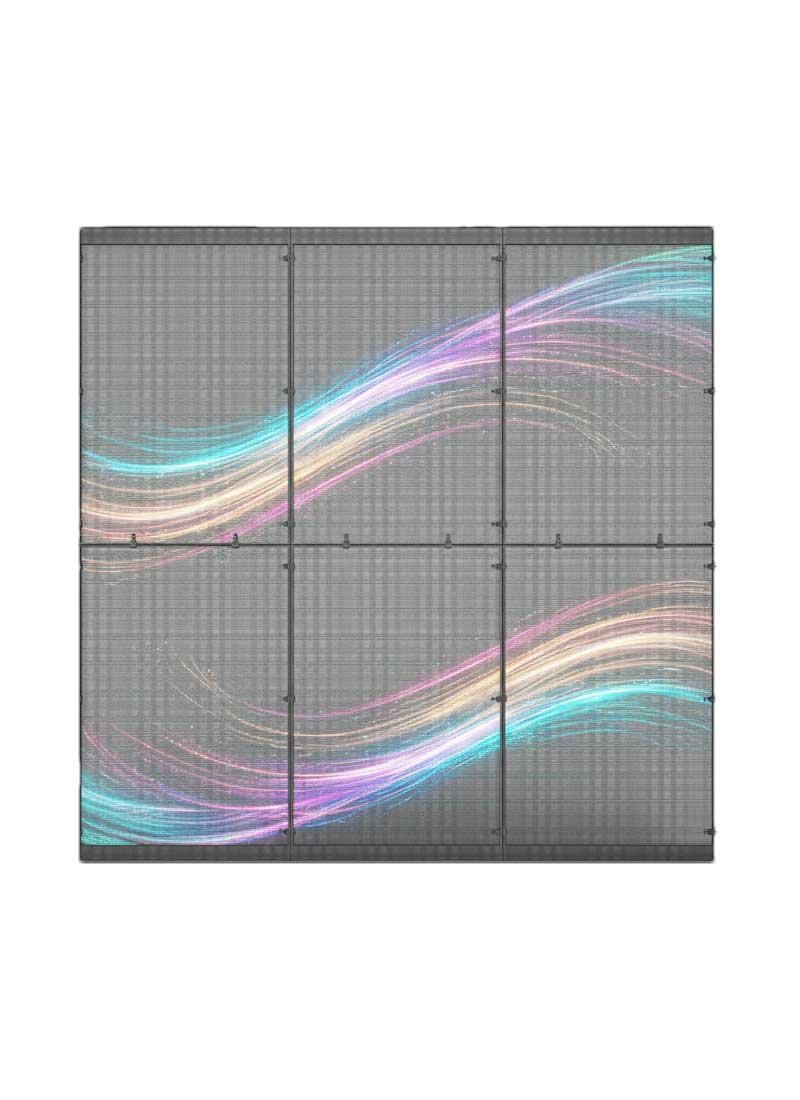
Colorful wave visuals illustrate how digital content appears across the transparent, modular panel structure.
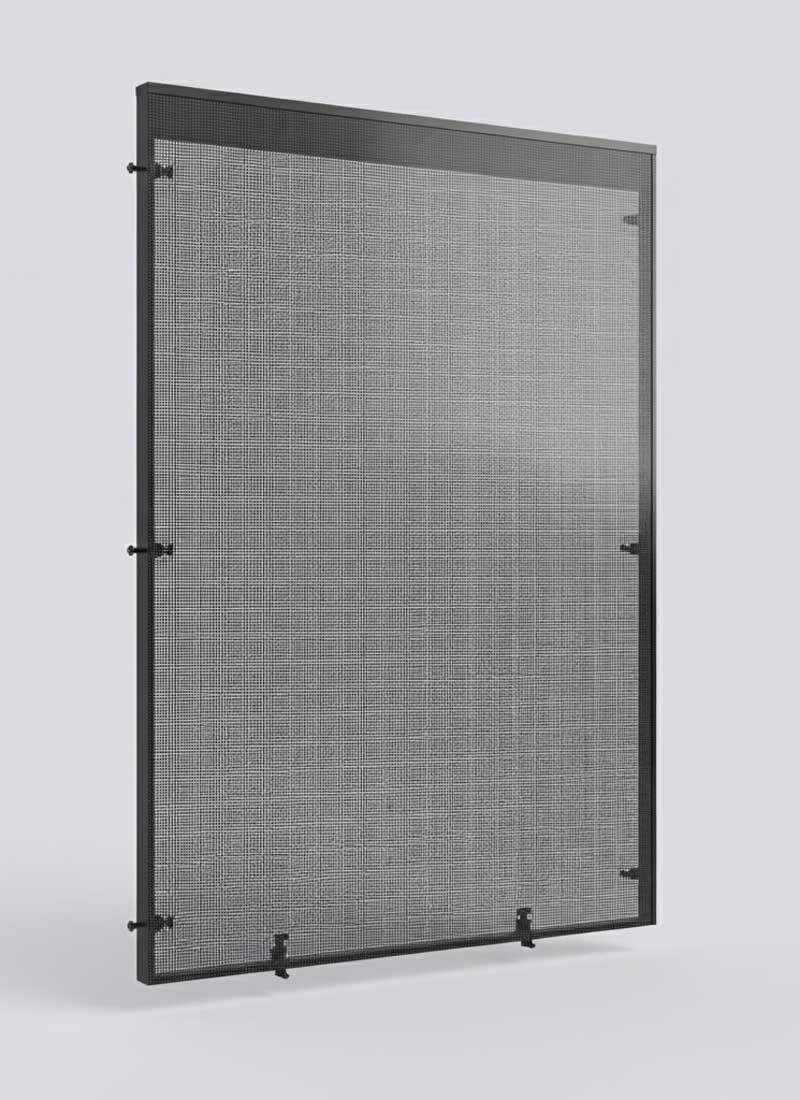
The rear view shows the panel construction, helping project teams assess mounting arrangements and access for installation.
Explore curved retail installations and creative animations that give digital content a floating appearance. These examples show how transparent LED structures combine visible surroundings with engaging brand and exhibition visuals.
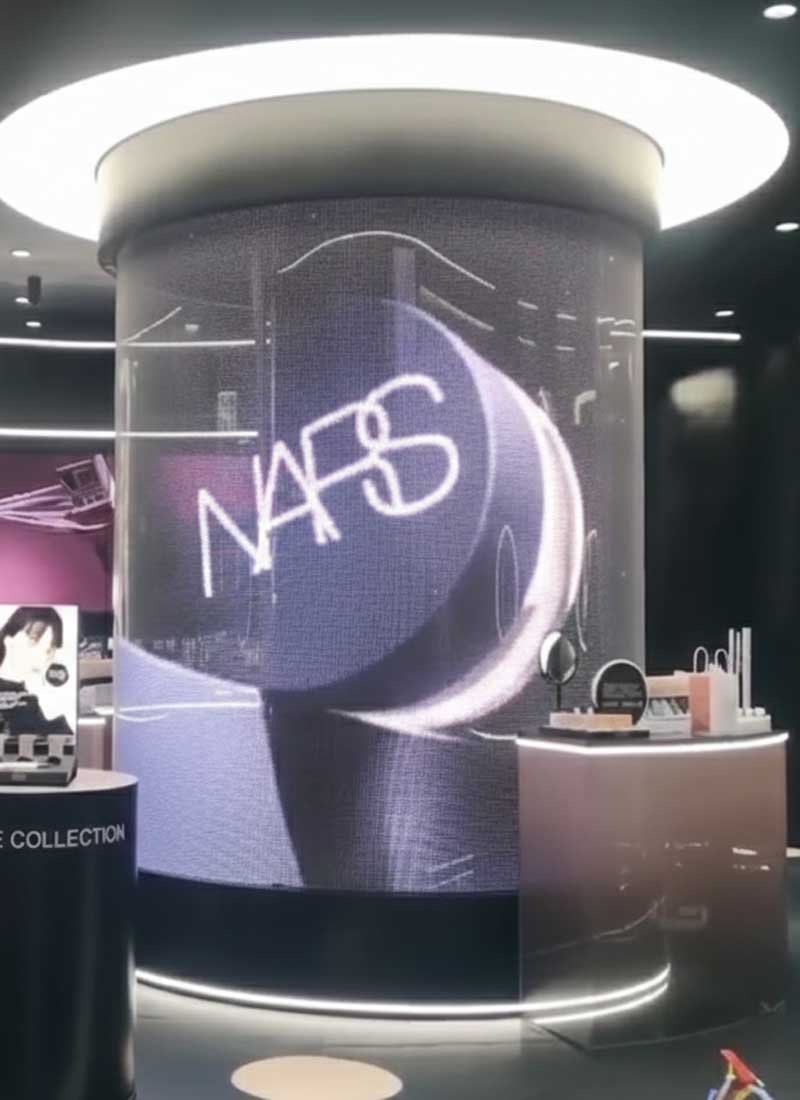
A cylindrical installation presents brand visuals within a cosmetics store, combining a curved display surface with views through the LED structure.
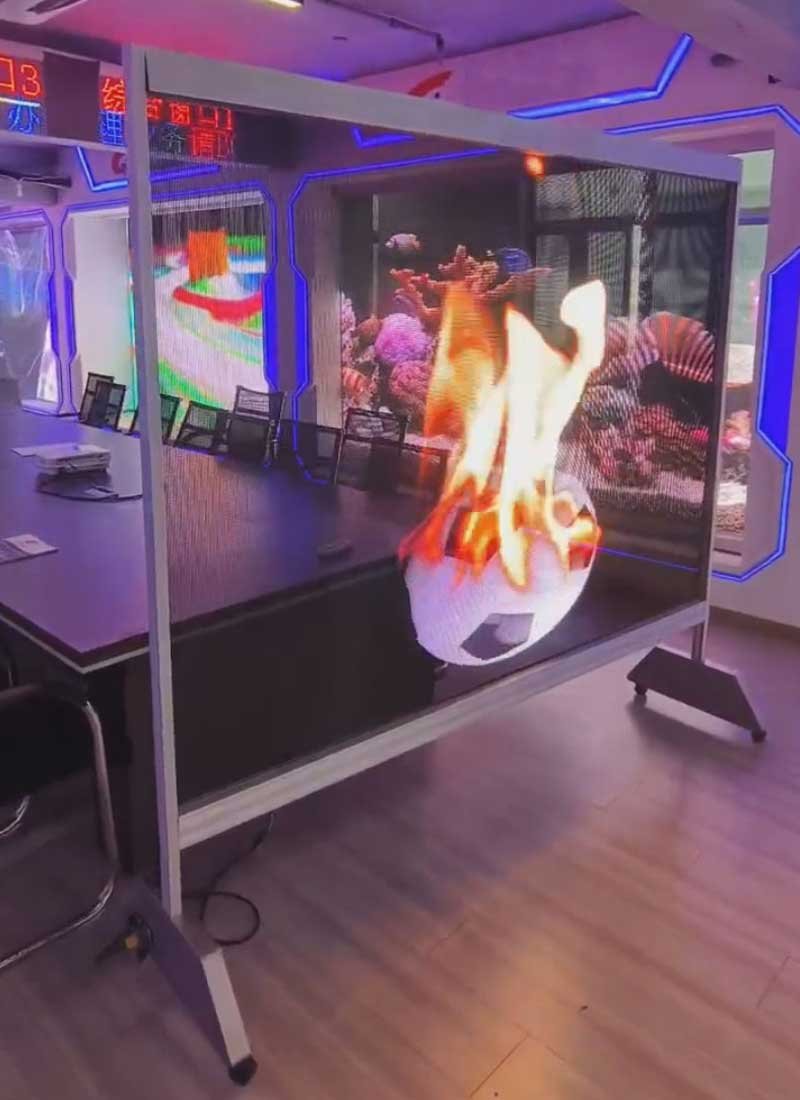
A flaming soccer ball animation creates a floating-style visual effect while the background remains visible through the display.
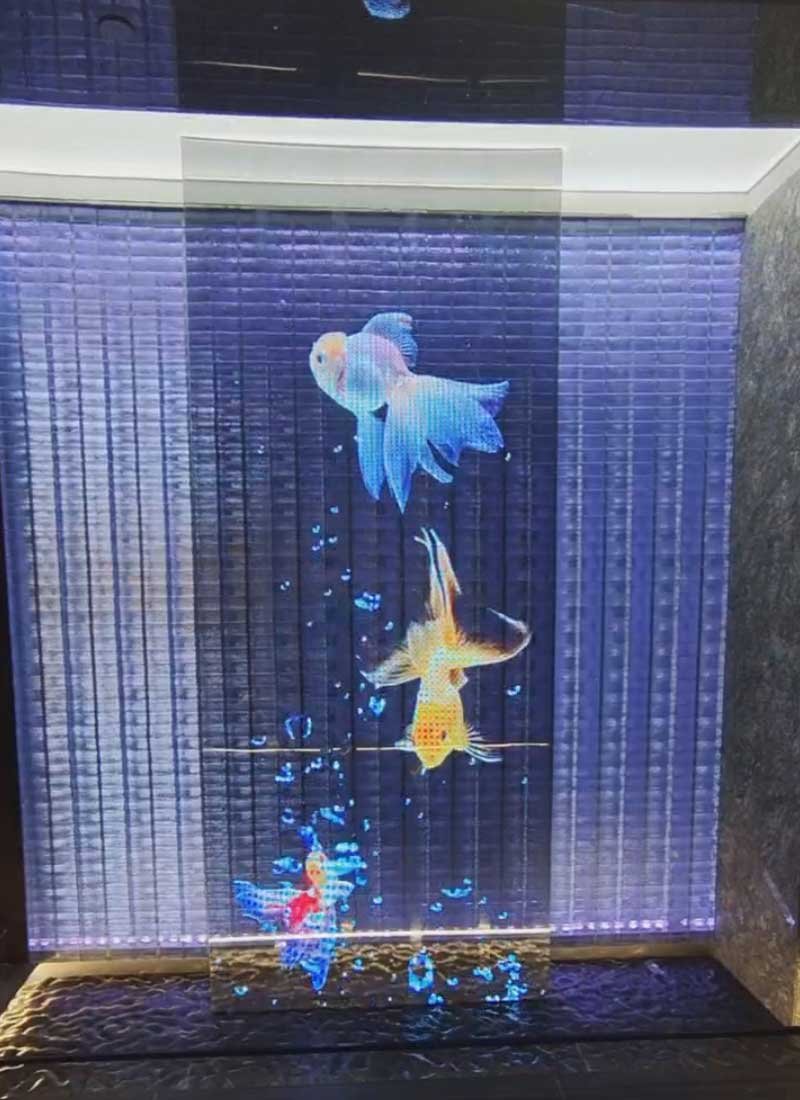
Swimming fish animations turn a vertical transparent LED display into an aquarium-themed presentation for immersive retail and exhibition content.
A Holographic Transparent LED Display is a fine-pitch transparent LED display designed to create bright floating-style visuals with very low physical obstruction.
The word holographic describes the visual impression. It is not a true laser hologram, volumetric projection or free-space image. RGB LED pixels remain physically present on an ultra-light transparent structure.
When suitable content is shown, the display can place digital animation, branding and storytelling in front of visible products, architecture or exhibition objects. When powered off, the open structure helps preserve visibility and spatial openness.
Holographic Transparent LED Display is the fine-pitch and visually minimal branch of the Transparent LED family, designed for premium indoor projects where screen structure should remain as unobtrusive as possible.
No. The floating effect is created by a transparent LED screen, content design and environmental contrast.
It does not reconstruct a three-dimensional light field using holographic optical methods.
The image is generated on a physical transparent LED surface rather than floating freely in open air.
Bright pixels, a clean background and low structural obstruction make content appear to float.
Use high-contrast content, dark or clean backgrounds, controlled lighting, large visual objects and a viewing distance appropriate for the selected pixel pitch.
The current retained product table begins at 3.508 × 3.508 mm and includes seven indoor configurations up to P16.
Most retained configurations list cabinet weight of no more than 3 kg/m², reducing visual and installation burden.
The retained specification table lists 75% transparency for all seven models.
Published brightness ranges from 4,500 to 5,000 cd/m² depending on the selected pitch.
The screen can be reviewed with glass, hanging, stacking or a project-specific fixed structure.
Power supplies, controller, cables and service access must be hidden without compromising safety.
The current published specifications start at 3.508 × 3.508 mm. Market the page as a fine-pitch transparent LED product, but do not present P2.5 as a standard model unless a separately confirmed product is available.
| Product Route | Best Use | Main Selection Reason |
|---|---|---|
| Holographic Transparent LED Display | Premium indoor retail, museums, exhibitions, launches and showrooms | Fine pitch, low obstruction and floating-style visual effect |
| Transparent LED Film Display | Flat storefront windows and larger indoor glass advertising | Practical large-area glass media and cost-performance |
| Flexible Transparent LED Film Display | Curved glass, columns and creative shaped surfaces | Shape adaptation and bending |
| Transparent LED Glass Display | Permanent architectural glass integration | Structural glass-based display construction |
| Outdoor Transparent LED Mesh Display | Outdoor facades and long-distance public media | Weather resistance and structural durability |
| Rental Transparent LED Display | Repeated event installation, dismantling and transportation | Rugged reusable rental structure |
The final project form depends on the required screen size, installation surface, viewing distance, content, support method and control system.
For the strongest image-detail direction within the currently published model range.
For premium retail windows, showrooms and glass partitions after site and mounting review.
For exhibitions, launches, stages and showrooms using a lightweight suspension structure.
For museums, lobbies, showrooms and retail spaces requiring a stable permanent installation.
For product-overlap visuals, storytelling layers, digital art and brand campaigns.
Custom review of size, modules, support, controller, cabling, power and content mapping.
3.508 and 3.91 mm published options offer better detail than larger-pitch transparent LED routes.
The lightweight open structure preserves product and background visibility.
High-contrast animation can appear suspended in front of physical objects or space.
Published configurations provide 4,500–5,000 cd/m².
A 3840 Hz reference configuration supports smooth motion and camera-friendly content; confirm the final receiving-card and driver configuration.
HDMI or DVI sources can be connected through the selected video processor or controller. Other interfaces require project confirmation.
Direct glass mounting, suspension or a suitable custom fixed structure can be reviewed according to the selected platform.
Best for visible environments where aesthetics and screen lightness matter.
Support, power, controller, cables, content and maintenance are engineered together.
The following supplier-published values describe the standard seven-model indoor range. Final dimensions, electrical design and installation details are confirmed for each project.
| Pixel Pitch (H × V) | 3.508 × 3.508 mm | 3.91 × 3.91 mm | 5 × 5 mm | 6.5 × 6.5 mm | 8 × 8 mm | 10 × 10 mm | 16 × 16 mm |
|---|---|---|---|---|---|---|---|
| LED Configuration | 1R1G1B | 1R1G1B | 1R1G1B | 1R1G1B | 1R1G1B | 1R1G1B | 1R1G1B |
| Brightness | 5000 cd/m² | 5000 cd/m² | 5000 cd/m² | 5000 cd/m² | 5000 cd/m² | 5000 cd/m² | 4500 cd/m² |
| Published Pixel Density | 81,225 pixels/m² | 65,536 pixels/m² | 40,000 pixels/m² | 23,716 pixels/m² | 15,625 pixels/m² | 10,000 pixels/m² | 3,906 pixels/m² |
| Transparency | 75% | 75% | 75% | 75% | 75% | 75% | 75% |
| System Unit Size (W × H × D) | 1000 × 336 × 70 mm | 1000 × 375 × 70 mm | 1000 × 320 × 70 mm | 1000 × 416 × 70 mm | 1000 × 512 × 70 mm | 1000 × 320 × 70 mm | 1000 × 512 × 70 mm |
| System Unit Resolution | 285 × 96 pixels | 256 × 96 pixels | 200 × 64 pixels | 154 × 64 pixels | 125 × 64 pixels | 100 × 32 pixels | 64 × 32 pixels |
| Module Size (W × H) | 1000 × 112 mm | 1000 × 125 mm | 1000 × 160 mm | 1000 × 208 mm | 1000 × 256 mm | 1000 × 320 mm | 500 × 512 mm |
| Module Resolution | 285 × 32 pixels | 256 × 32 pixels | 200 × 32 pixels | 154 × 32 pixels | 125 × 32 pixels | 100 × 32 pixels | 64 × 64 pixels |
| Published System Weight | ≤3 kg/m² | ≤3 kg/m² | ≤3 kg/m² | ≤3 kg/m² | ≤3 kg/m² | ≤3 kg/m² | ≤8 kg/m² |
| IP Rating (Front / Back) | IP43 | IP43 | IP43 | IP43 | IP43 | IP43 | IP43 |
| Environment | Indoor | Indoor | Indoor | Indoor | Indoor | Indoor | Indoor |
| Viewing Angle (H / V) | 120° / 120° | 120° / 120° | 120° / 120° | 120° / 120° | 120° / 120° | 120° / 120° | 120° / 120° |
| Viewing Distance | Project dependent; evaluate pixel pitch, content size and actual viewing conditions | ||||||
| Gray Scale | 16 bit | 16 bit | 16 bit | 16 bit | 16 bit | 16 bit | 16 bit |
| Max. Power Consumption | 800 W/m² | 800 W/m² | 800 W/m² | 800 W/m² | 800 W/m² | 800 W/m² | 800 W/m² |
| Average Power Consumption | 400 W/m² | 400 W/m² | 400 W/m² | 400 W/m² | 400 W/m² | 400 W/m² | 400 W/m² |
| Scanning Mode | 1/1 | 1/1 | 1/1 | 1/1 | 1/1 | 1/1 | 1/1 |
| Specification | Value |
|---|---|
| Refresh Rate | 3840 Hz reference configuration; confirm with the selected controller and driver system |
| Input Power | AC 100–240 V, 50/60 Hz |
| Control Mode | Synchronous or asynchronous control, selected for the screen layout and playback workflow |
| Video Input | HDMI or DVI through a compatible processor/controller; other interfaces by project confirmation |
| Operating Environment | Indoor or protected interior installation; temperature and humidity limits require model confirmation |
| Rated LED Lifetime | Up to 100,000 hours under specified operating conditions; not a warranty period |
| System Materials | Aluminum profiles and transparent PC structural components, depending on model |
| Installation | Direct glass mounting, suspension or custom fixed support, depending on the selected platform |
| Packaging | Wooden box |
Values above are supplier-published references. Final model, dimensions, brightness, power design, controller, structure, installation conditions and project layout must be confirmed before quotation and production.
The P3.91 COB series adds a transparent LED option for retail windows, exhibition spaces and creative indoor installations. Its supplied specification combines a 250 × 1000 mm module with adjustable brightness and support for curved or custom-sized layouts.
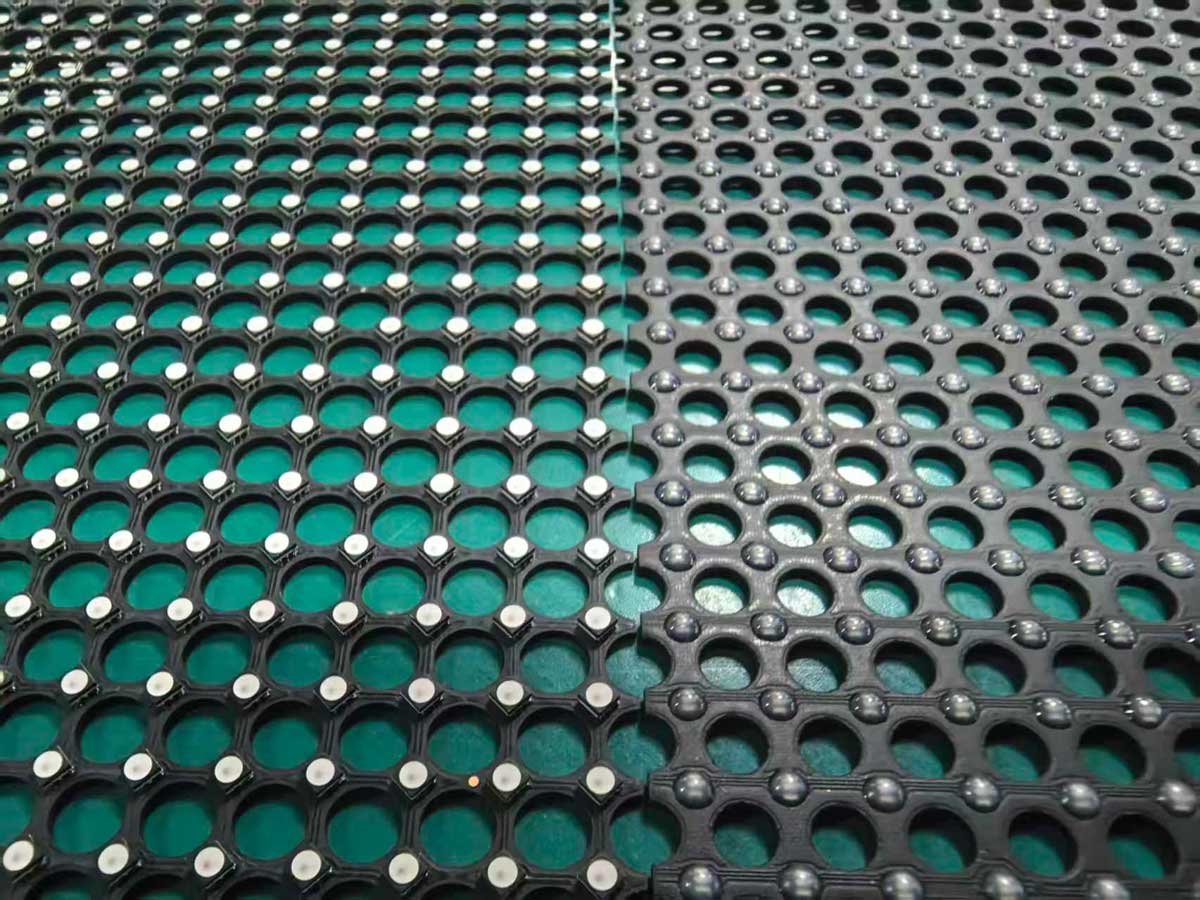
The following specifications apply to this COB series. Other models on this page have their own specifications.
| Parameter | P3.91 COB Series |
|---|---|
| LED Packaging | COB; red, green and blue chips with driver circuitry |
| Pixel Pitch | 3.91 × 3.91 mm |
| Pixel Configuration | 1R1G1B |
| Module Size (W × H) | 250 × 1000 mm |
| Module Resolution (W × H) | 64 × 256 pixels |
| Pixel Density | 65,536 pixels/m² |
| Module-to-Module Flatness | ≤0.1 mm |
| Specified Visual Transparency | 80% |
| Brightness | ≥3000 cd/m², adjustable |
| Viewing Angle (H / V) | 170° / 140° |
| Chromaticity Uniformity | Within ±0.003 Cx, Cy |
| Maximum Specified Contrast Ratio | 5000:1 |
| Protection Rating | IP43 |
| Installation Options | Direct glass mounting, suspension and inward-curved installation |
| Customization | Cutting and bending supported; allowable dimensions and bend radius require project confirmation |
The supplied controller specification includes a quad-core processor at 1.2 GHz or higher, at least 1 GB RAM and 32 GB storage, and a loading capacity of 650,000 pixels. Connectivity includes Gigabit Ethernet output, HDMI input, USB, a 3.5 mm audio output and Wi-Fi hotspot support. Synchronous and asynchronous operating modes are supported; the final controller is selected to match the screen layout and playback requirements.
Carry the RGB pixels and form the visible display area.
Maintains alignment without creating a heavy opaque cabinet wall.
Must be located for ventilation, cable length, safety and service.
Distributes the source image to the selected module layout.
PC, processor or a separately confirmed content system supplies the image.
Should remain clean and visually controlled in premium spaces.
Glass, hanging, stacking or fixed support according to the site.
Matches the content canvas to the exact screen size and orientation.
Keeps power, controller, cables and replaceable sections serviceable.
The product is most valuable where physical products, exhibits or architecture should remain visible behind a premium digital visual layer.
Jewelry, watches, fashion, cosmetics and flagship-store campaigns.
Storytelling, digital reconstruction and visual information in front of exhibits.
Floating-style feature graphics while the real product remains visible.
Technology roadmaps, product stories, digital art and visitor experiences.
Lightweight high-impact visual layers for booths and demonstration areas.
Vehicle campaigns, feature overlays and futuristic presentation.
Indoor visual effects where transparency and low structural weight matter.
Digital art, lobby branding and creative transparent media.
Interactive-looking storytelling and product demonstration layers.
Confirm how close visitors will stand and whether they must read text or only see high-impact visuals.
Review 3.508, 3.91, P5, P6.5, P8, P10 or P16 according to distance, transparency, module size and budget.
Confirm glass-mounted, hanging, stacking or project-specific fixed support.
Clean or darker backgrounds generally produce a stronger floating impression.
Reserve hidden, ventilated and serviceable equipment locations before finalizing the screen.
Use large high-contrast objects, visual space and simple messaging rather than monitor-style layouts.
| Project Direction | Suggested Starting Point | Important Note |
|---|---|---|
| Highest Detail in Current Range | 3.508 × 3.508 or 3.91 × 3.91 | Validate legibility with the real content and viewing distance |
| Balanced Premium Indoor Display | P5 or P6.5 review | Balance detail, transparency, cabinet layout and budget |
| Medium-distance Larger Area | P8 or P10 review | Use simpler content and larger text |
| Largest Pitch in Current Range | P16 | Better for longer viewing and large simple visual content |
| Critical Close Reading | Separate feasibility and content test | Do not assume a transparent LED behaves like an LCD or OLED monitor |
Fine-pitch options improve detail relative to larger-pitch transparent LED screens, but they do not provide the continuous image surface of an LCD or OLED. Confirm suitability with real content, viewing distance and site lighting.
Leave visual space around the content and coordinate the digital animation with the real product or exhibit behind the screen.
Small text, long paragraphs, dense menus, complex charts, thin lines, detailed datasheets, low-contrast video and phone-style interfaces.
| Alternative | Choose Holographic Transparent LED Display When | Choose the Alternative When |
|---|---|---|
| Transparent LED Film Display | Fine detail and minimal structure matter more. | The project needs large flat-glass advertising and stronger cost-performance. |
| Flexible Transparent LED Film Display | The main goal is a light floating visual layer. | The surface is curved, cylindrical or irregular. |
| Transparent LED Glass Display | The project needs a lightweight replaceable display system. | The LED display should be integrated into permanent architectural glass. |
| Outdoor Transparent LED Mesh Display | The environment is indoor and appearance is the priority. | The display is exposed outdoors and requires structural weather resistance. |
| Rental Transparent LED Display | The installation is premium and visually minimal. | The screen must survive repeated transport, assembly and dismantling. |
| Indoor Transparent LED Display | For fixed indoor retail, showroom and commercial installations | |
| Custom Transparent LED Displays | For project-specific dimensions, structures and system integration | |
| Transparent OLED Displays | Project-based LED size and stronger brightness are required. | Premium panel-level image quality and standard transparent OLED sizes are preferred. |
| Projection Hologram | A stable LED image and stronger ambient-light performance are needed. | The project specifically requires an optical illusion and can control the projection environment. |
| Related Page | When to Visit |
|---|---|
| Transparent LED Displays | For the complete Transparent LED product family |
| Transparent LED Solutions | For comparing film, flexible, glass, mesh, rental and minimal-structure routes |
| Transparent LED Film Display | For flat, larger-area indoor glass advertising |
| Flexible Transparent LED Film Display | For curved glass, columns and creative shaped surfaces |
| Transparent LED Glass Display | For permanent architectural glass integration |
| Outdoor Transparent LED Mesh Display | For exposed outdoor facades and long-distance media |
| Rental Transparent LED Display | For repeated event assembly and transport |
| Transparent OLED Displays | For premium transparent panel-based display alternatives |
| Transparent Exhibition & Showroom Display Solution | For museums, exhibitions, showrooms and launches |
| Exhibition, Events & Showrooms | For application planning and project positioning |
| OEM/ODM Display Engineering & Prototyping | For custom structures, samples and integration |
It is a fine-pitch, ultra-light transparent LED display designed to create bright floating-style visuals with very low physical obstruction.
No. It is not a laser hologram, volumetric display or free-space projection system. The holographic impression comes from transparent LED pixels, minimal structure, suitable content and the viewing environment.
The retained current specification table starts at 3.508 × 3.508 mm, followed by 3.91 × 3.91 mm. P2.5 is not listed as a current standard model on this page and requires separate confirmation if requested.
Finer pixel pitch generally provides better image detail at closer viewing distances, but it also affects transparency, power, cost and module configuration.
The standard seven-model specification lists 75% transparency. The separate P3.91 COB platform specifies 80% visual transparency. Actual perception also depends on content, background, ambient light, viewing angle and installation.
The standard supplier specification lists 4,500–5,000 cd/m² depending on model. The separate P3.91 COB platform specifies at least 3,000 cd/m² with adjustment. Final calibrated brightness may vary.
The supplier table lists system weight of no more than 3 kg/m² for the 3.508 to P10 models and no more than 8 kg/m² for the P16 model. Confirm the complete installed weight for structural design.
Yes. Depending on the project, it can be reviewed for glass-mounted, hanging, stacking or fixed installation. Glass is an option, not a universal requirement.
Yes. Glass installation can be reviewed according to the glass condition, display size, cable route, support method and maintenance access.
Yes. Project-specific suspension structures can be reviewed for indoor exhibitions, showrooms and creative spaces. Loads, attachment points, cable routing and maintenance access must be engineered for the site.
The finer configurations provide stronger detail than larger-pitch transparent LED screens, but the best distance depends on pitch, content, screen size and lighting. Critical close-viewing projects require a content and site test.
The models in the retained table are indoor products with an IP43 reference rating. Exposed outdoor facade projects should use a dedicated Outdoor Transparent LED Mesh Display.
High-contrast animation, floating product visuals, large logos, digital art, simple messages and content designed around the visible background work best.
Avoid dense documents, small text, complex charts, fine technical drawings, detailed menus and low-contrast video.
HDMI or DVI can be connected through a compatible video processor or controller. Synchronous or asynchronous playback and any additional interfaces are selected for the project.
Please provide screen dimensions, installation method, viewing distance, site photos or drawings, background and lighting conditions, content type, cable and power locations, quantity, budget, schedule and shipping destination.
Send us the screen dimensions, viewing distance, installation method, site photos or drawings, content type, background and lighting conditions, controller requirement, cable route, quantity, budget and schedule.
We will review whether the current 3.508–P16 Holographic Transparent LED Display range is suitable or whether another Transparent LED technology provides a better result.
For a true optical hologram, this product is not the correct technology. For a stable, bright and transparent LED-based floating visual effect, it can be a strong premium indoor solution.