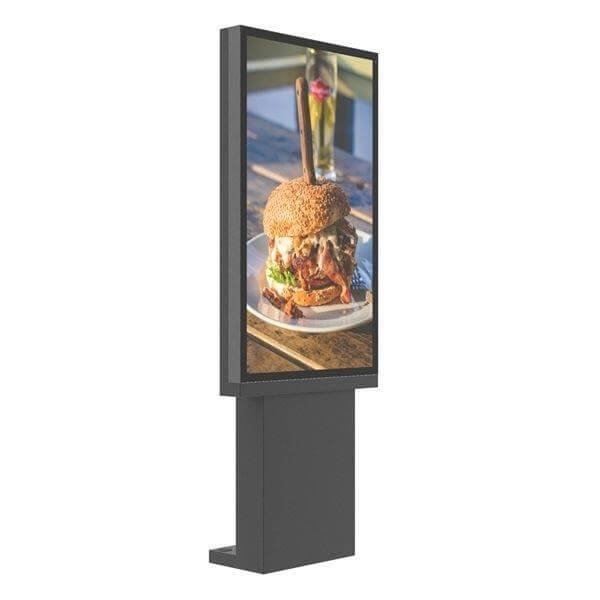
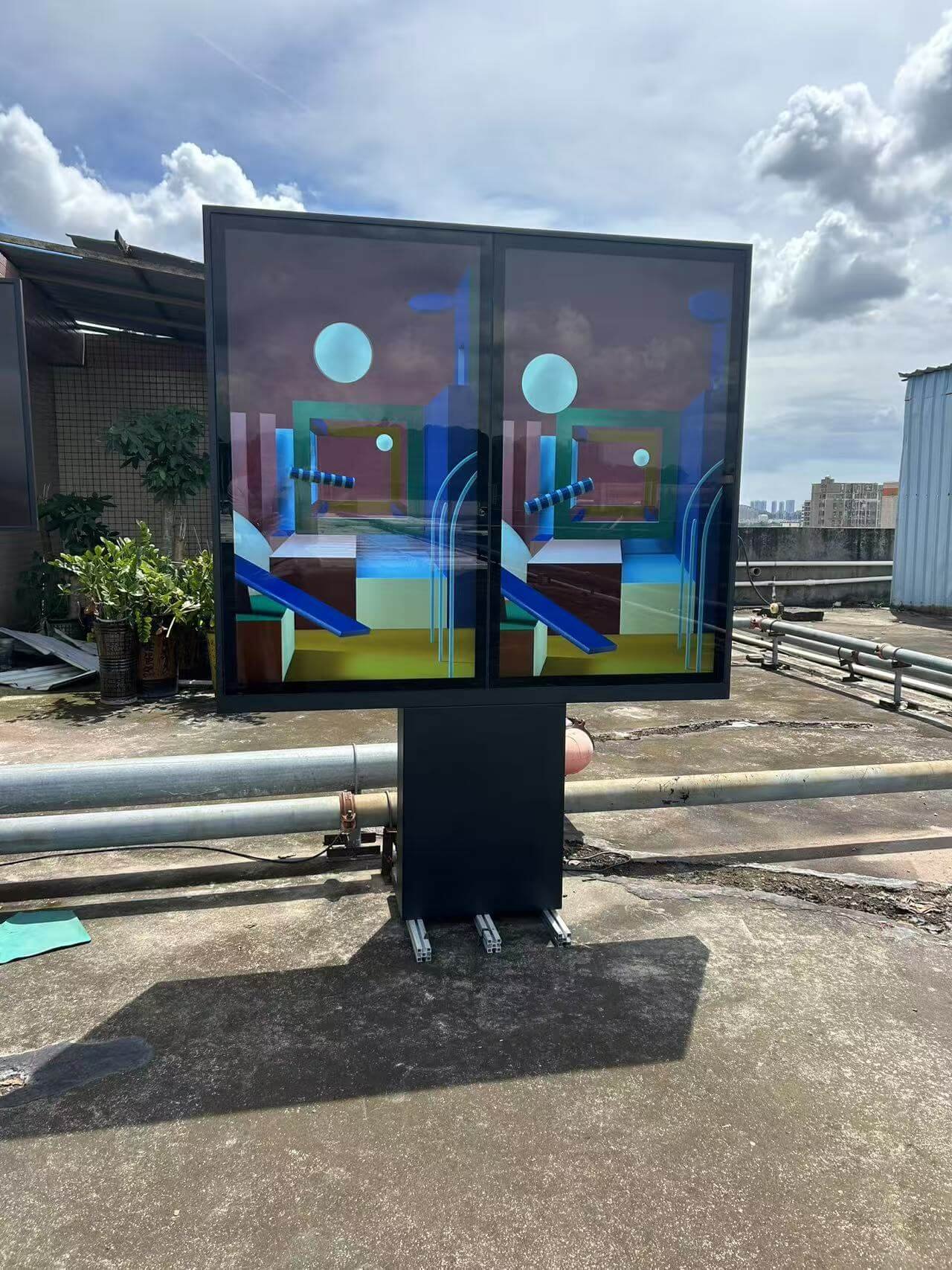
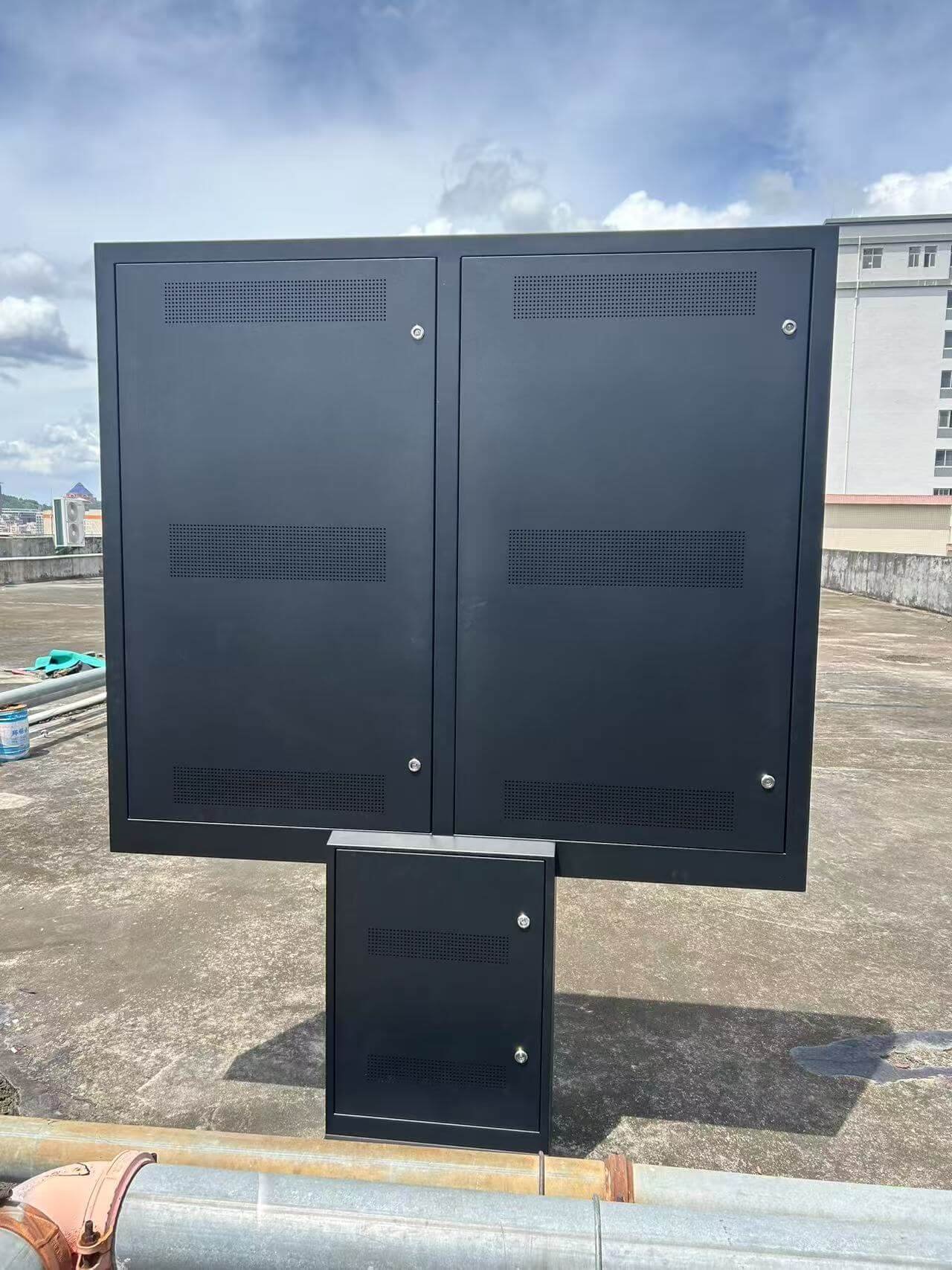
Dual-Screen Outdoor Digital Menu Board — Front, Side & Rear Views
Product information playback, pedestal structure and rear access views.

Present advertising, menus and public information with DisplayMan high brightness outdoor LCD display systems. IP65 configurations are available for commercial outdoor installations, with enclosure protection, front glass, thermal management and content control selected for your site, climate and operating hours.
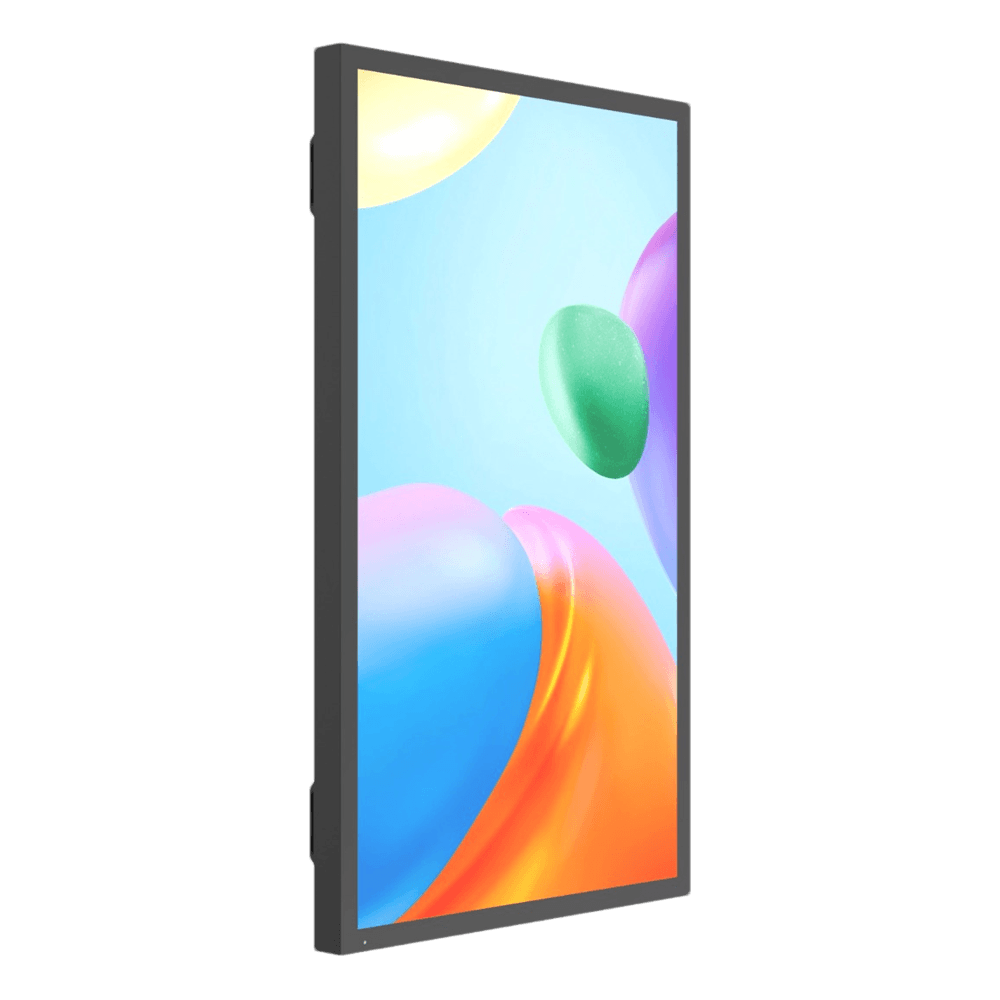
An Outdoor High Brightness Display is a complete LCD display system engineered for outdoor or semi-outdoor public use.
It combines a sunlight-readable LCD with an outdoor enclosure, thermal control, power and signal systems, controller and mounting structure. Front glass and optical bonding depend on the selected configuration; the IP55 outdoor TV reference models below are supplied without tempered cover glass.
It is not simply a bright indoor screen placed outside. Outdoor reliability depends on the complete system: visibility, weather protection, heat control, condensation management, structural safety, maintenance access and operating duty cycle.
Outdoor High Brightness Displays are complete outdoor display systems—not bare LCD modules, Open Frame Monitors or indoor Window Facing Displays.
View menu and video playback, front and rear structures, and a water spray test.
Product information playback, pedestal structure and rear access views.
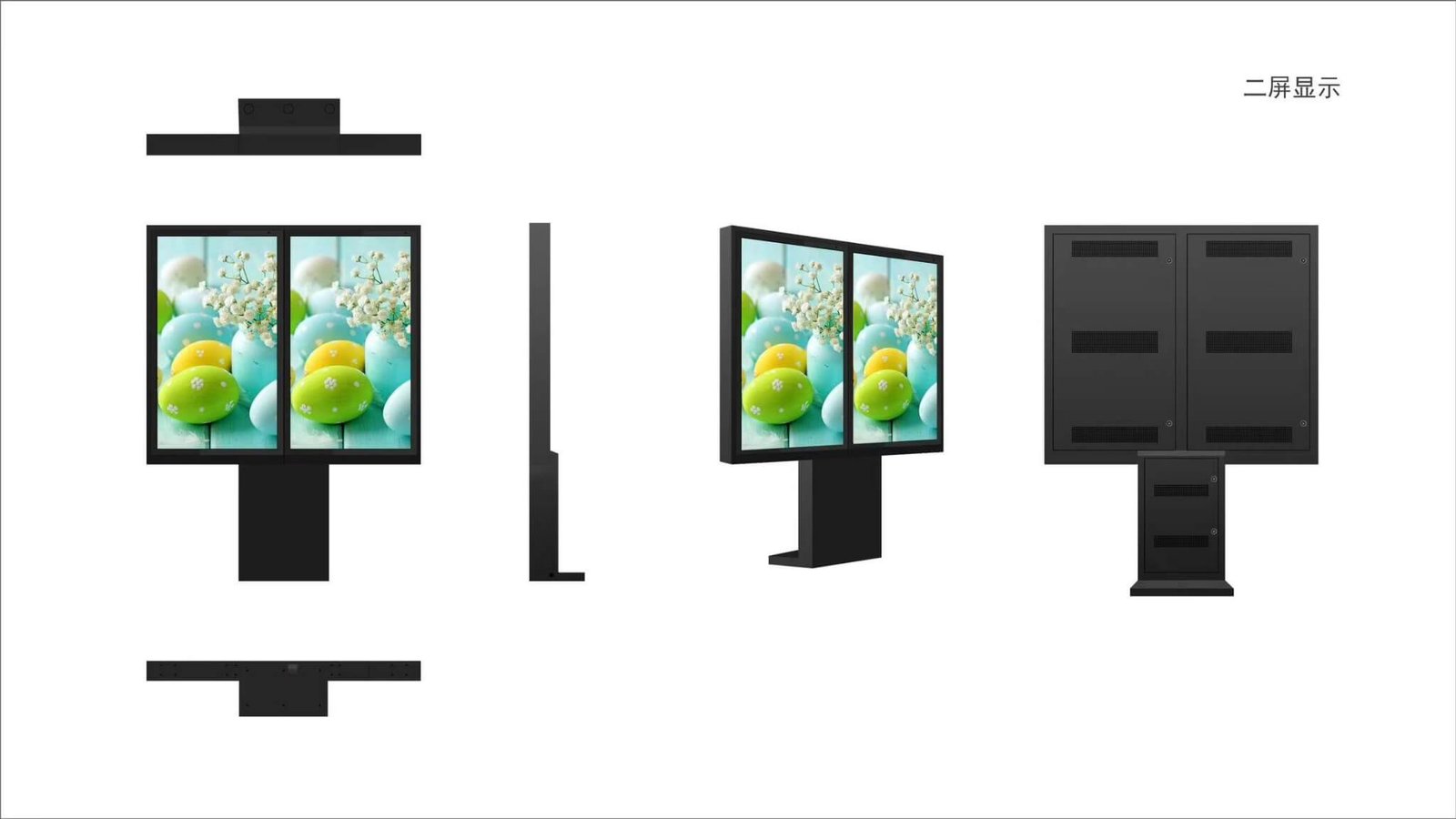
Dynamic content playback on two side-by-side portrait screens, with front and rear enclosure views.
Front and rear views followed by a water spray test. The IP rating is confirmed separately for the selected model.
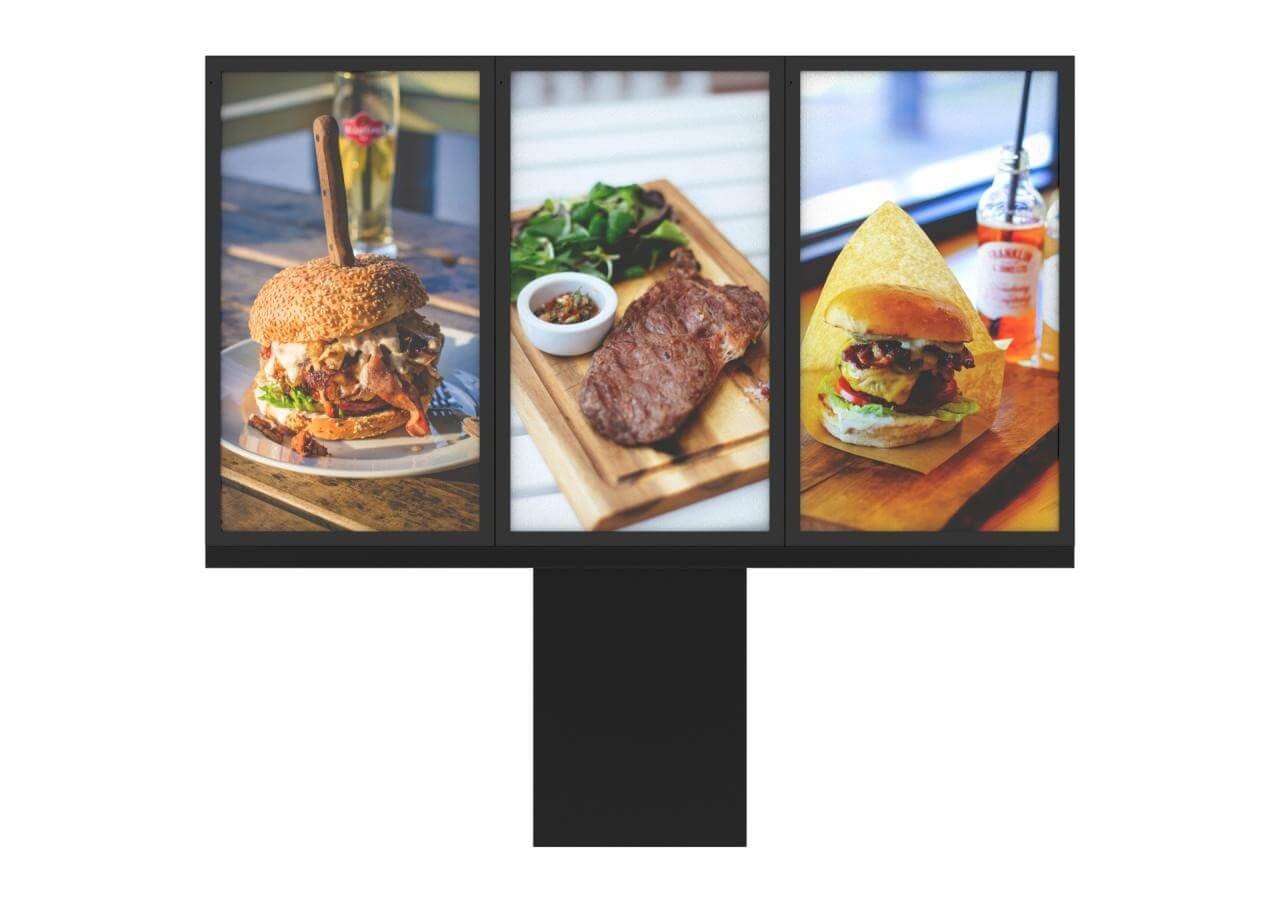
Menu content playback on a freestanding dual-screen outdoor display.
| Product Route | Main Product Form | Best For | Protection Responsibility |
|---|---|---|---|
| Open Frame High Brightness Monitors | Embedded display assembly without a finished enclosure | OEM machines, kiosks, vending systems and industrial equipment | Provided mainly by the customer’s final equipment enclosure |
| Window Facing Displays | Finished indoor signage facing storefront glass | Retail windows, banks, restaurants and street-facing commercial spaces | Protected by the building and installed indoors |
| Outdoor High Brightness Displays | Finished high-brightness display with outdoor enclosure | Outdoor advertising, public information, transportation, QSR and smart city projects | Integrated into the complete outdoor display product |
| Outdoor Waterproof Touch Screen Displays | Waterproof touch screen assembly or complete enclosed outdoor monitor | Outdoor wayfinding, ticketing, payment and public self-service | Front-panel or full-enclosure protection, according to the selected supply scope |
| Holographic Cylinder Displays | Cylinder-format display system | Creative commercial presentation | Confirm the selected model and installation environment |
| Mini-LED Backlit LCD Displays | LCD display with Mini-LED backlighting | Projects requiring a dedicated backlight configuration | Confirm the selected model and installation environment |
Weather-protected high-brightness signage for entrances, exterior walls, commercial streets and public buildings.
A public-facing outdoor kiosk structure for plazas, campuses, shopping centers and pedestrian areas.
Two display surfaces in one structure for sidewalks, transportation areas and public plazas.
High-brightness menu and promotion display for QSR, restaurants and drive-thru lanes.
Large-format public advertising for commercial media operators, retail streets and brand campaigns.
Custom enclosure, mounting, brightness, system, glass, touch and maintenance configuration.
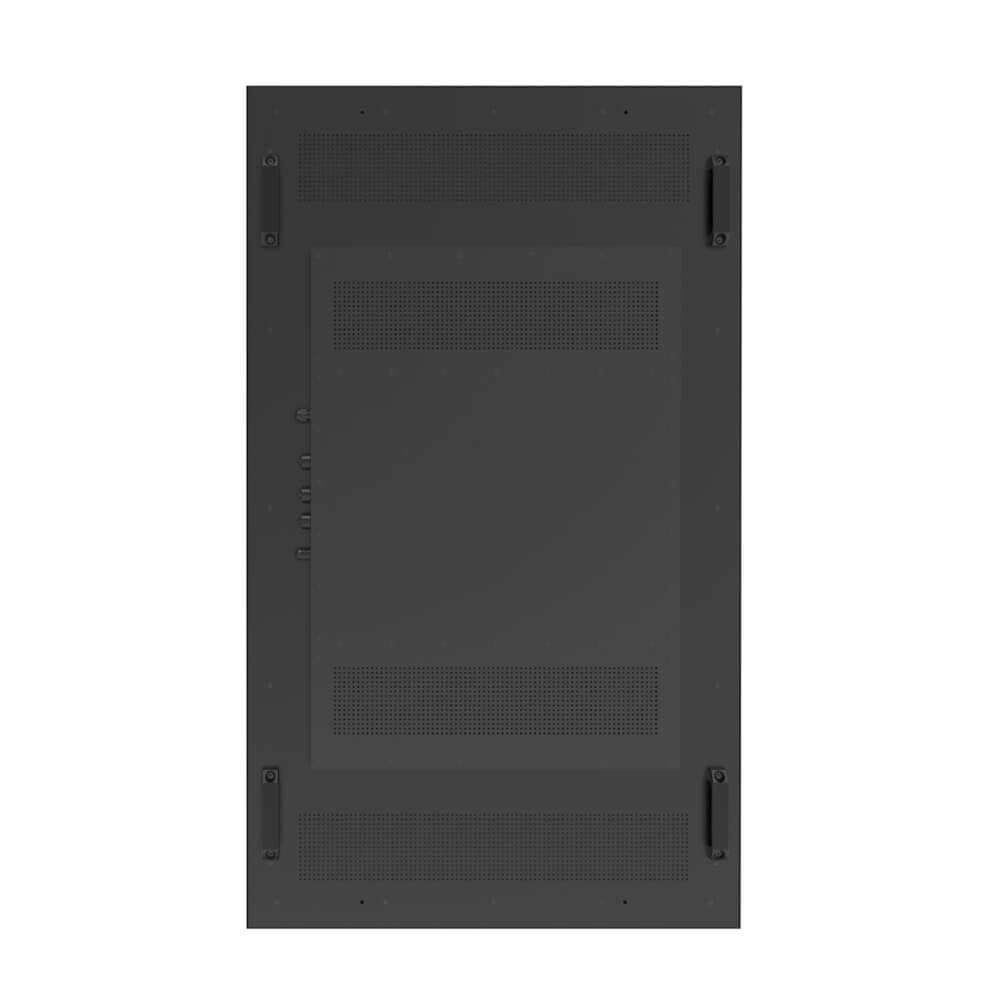
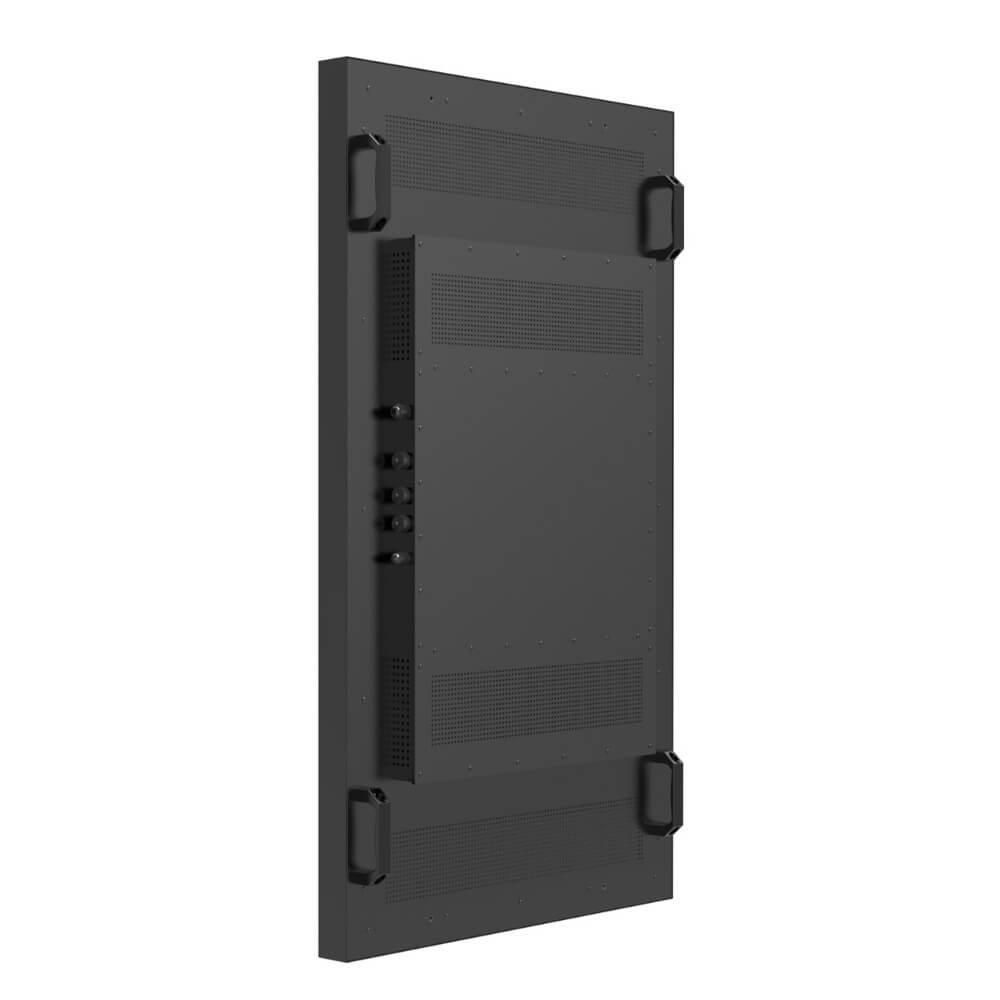
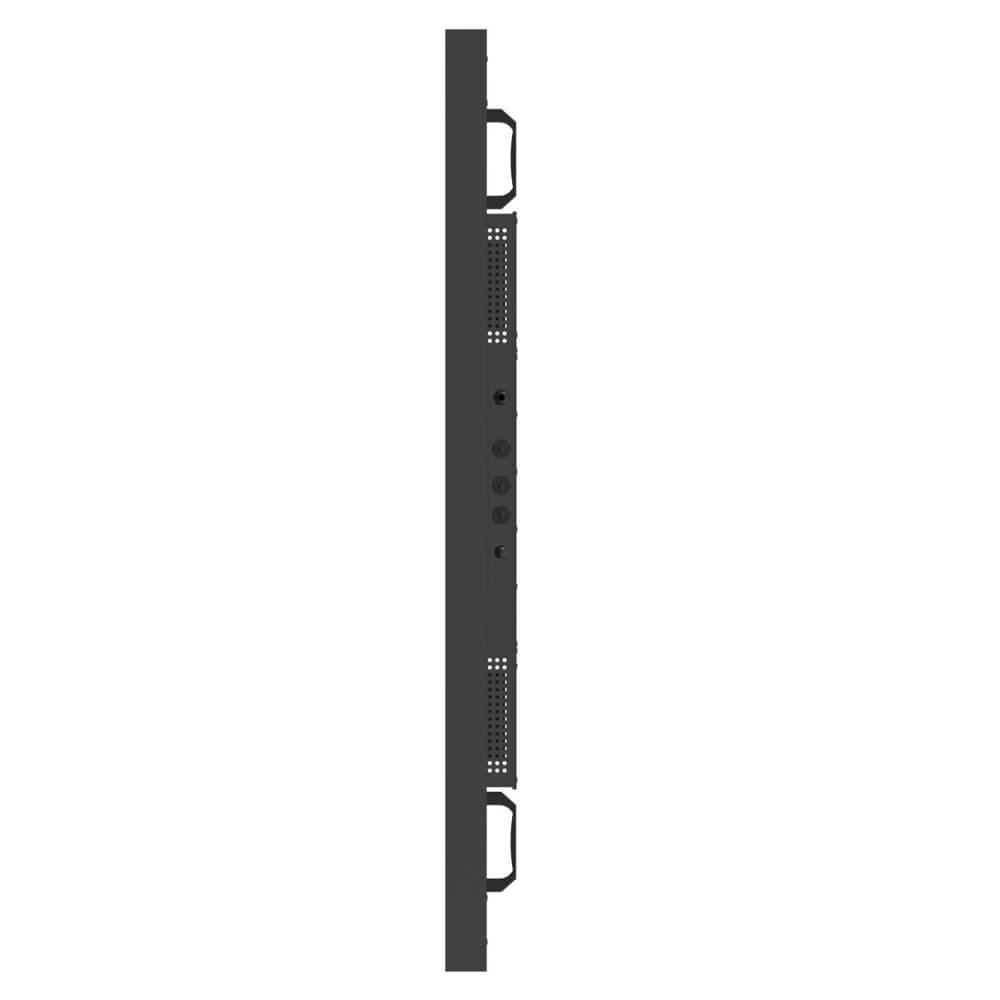
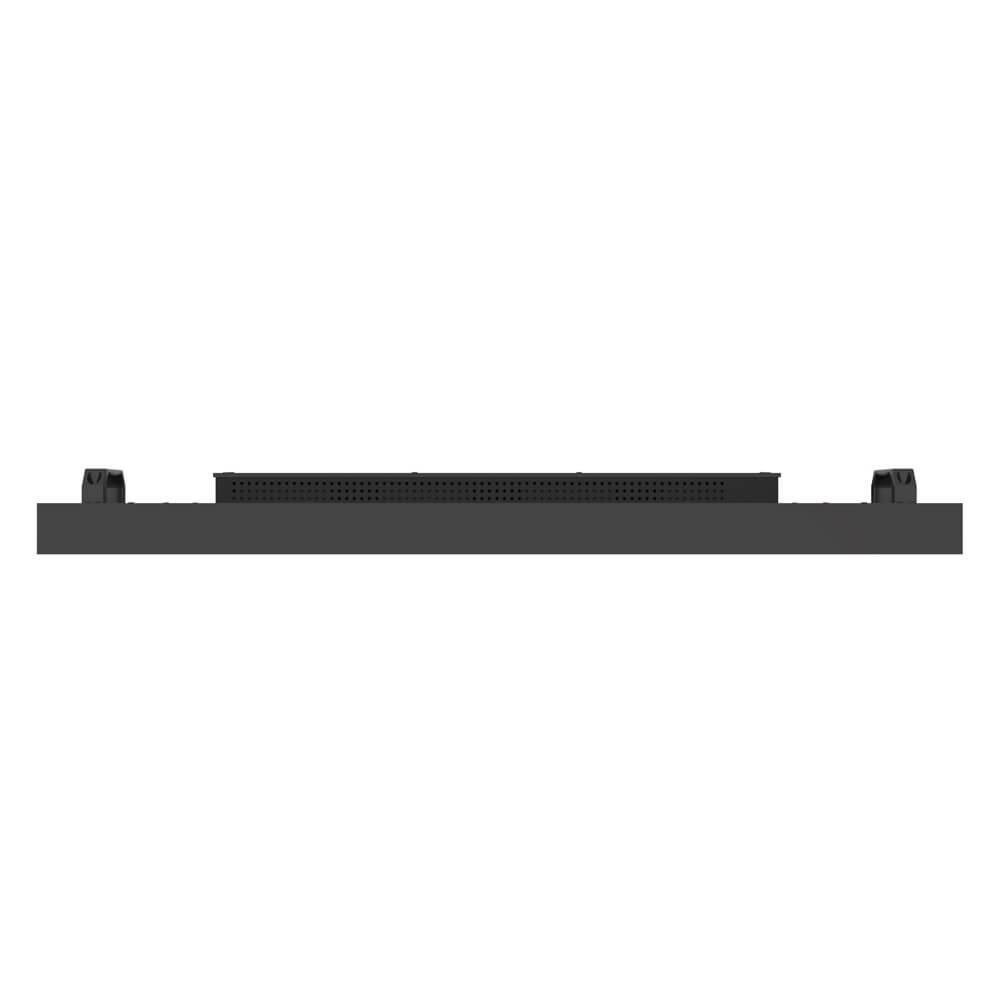
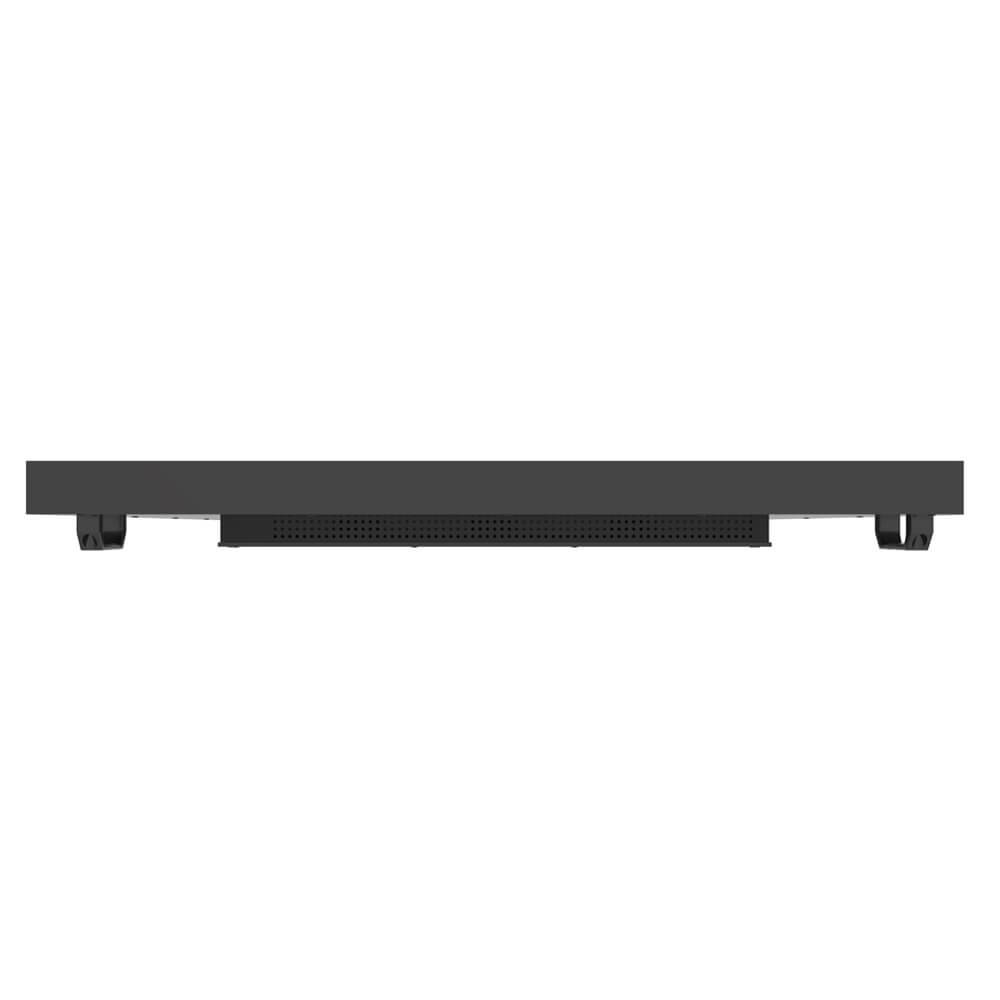
Compare enclosure dimensions before choosing the installation structure. The dimensional references cover 32, 43, 49, 55, 65 and 75 inches; the product gallery below shows the supplied 32, 55 and 65-inch enclosure views.
| Display Size | Enclosure W × H × D (mm) | Display Area W × H (mm) | Rear Mounting Centres H × V (mm) |
|---|---|---|---|
| 32 inch | 457.3 × 762.8 × 95.5 | 393.9 × 699.4 | 300 × 670 |
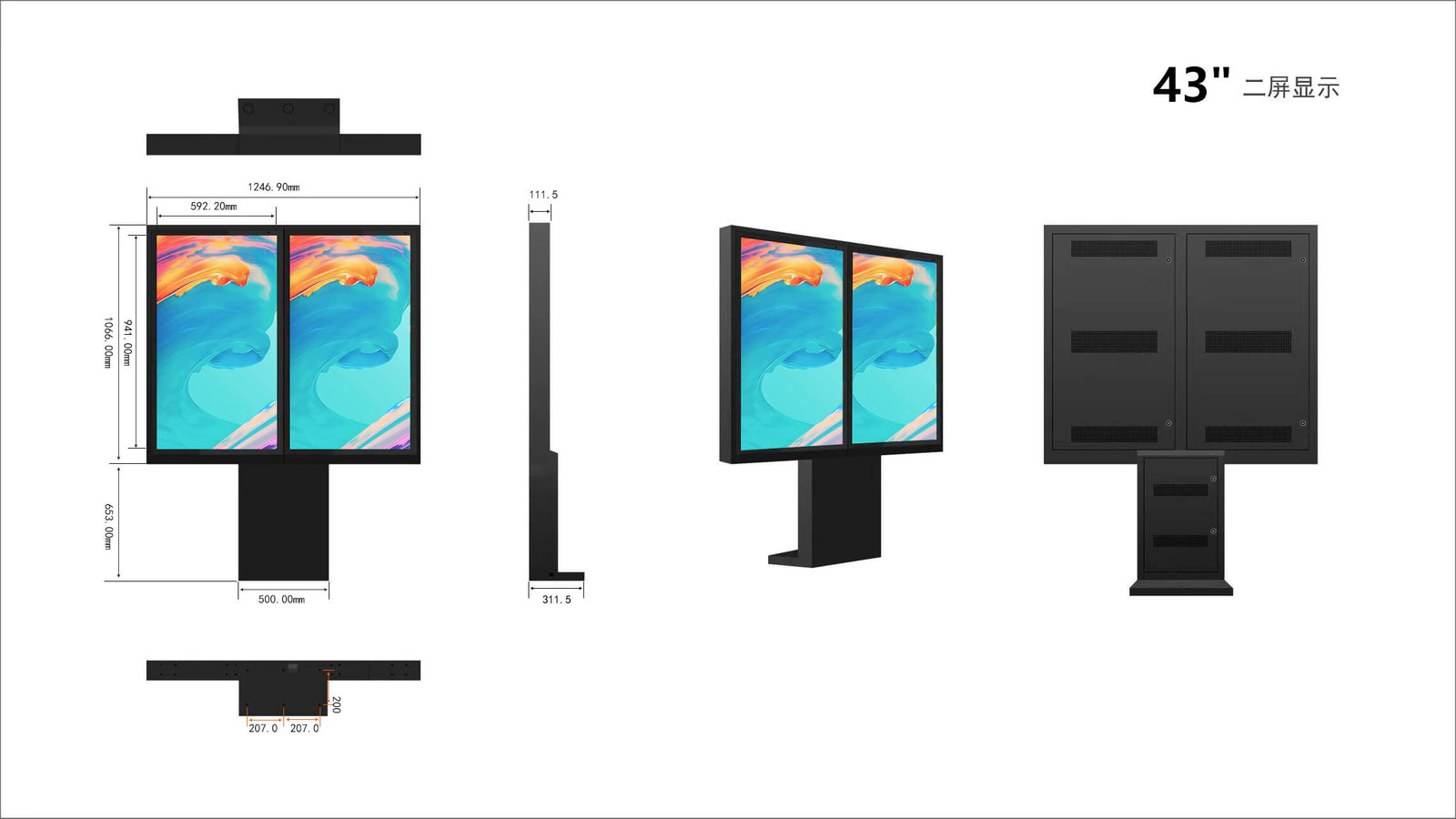
| 43 inch | 602.2 × 1014 × 95.5 | 529.2 × 941 | 400 × 900 |
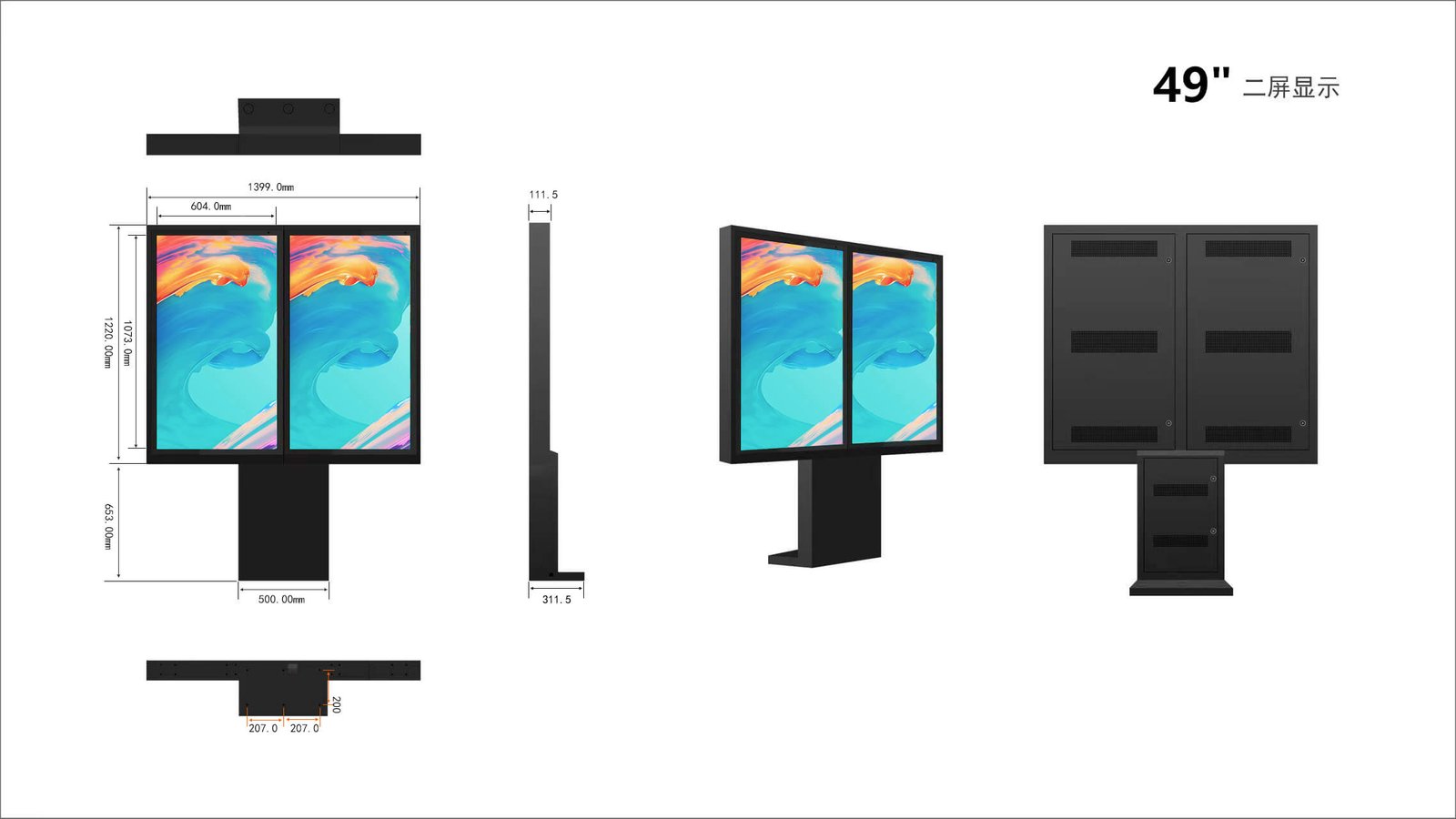
| 49 inch | 676 × 1146 × 95.5 | 604 × 1074 | 400 × 1075 |
| 55 inch | 753 × 1282 × 95.5 | 684.4 × 1213.6 | 400 × 1200 |
| 65 inch | 889.6 × 1514.5 × 95.5 | 805.6 × 1430.5 | 600 × 1400 |
| 75 inch | 1034 × 1755.6 × 95 | 929.9 × 1651.6 | 800 × 1650 |
Dimensions are transcribed from the supplied portrait-orientation reference drawings. Rear mounting values are hole-centre spacing shown on the drawing, not a claim of VESA compliance. Body depth excludes projecting handles, brackets and connectors. Confirm the final drawing before installation.
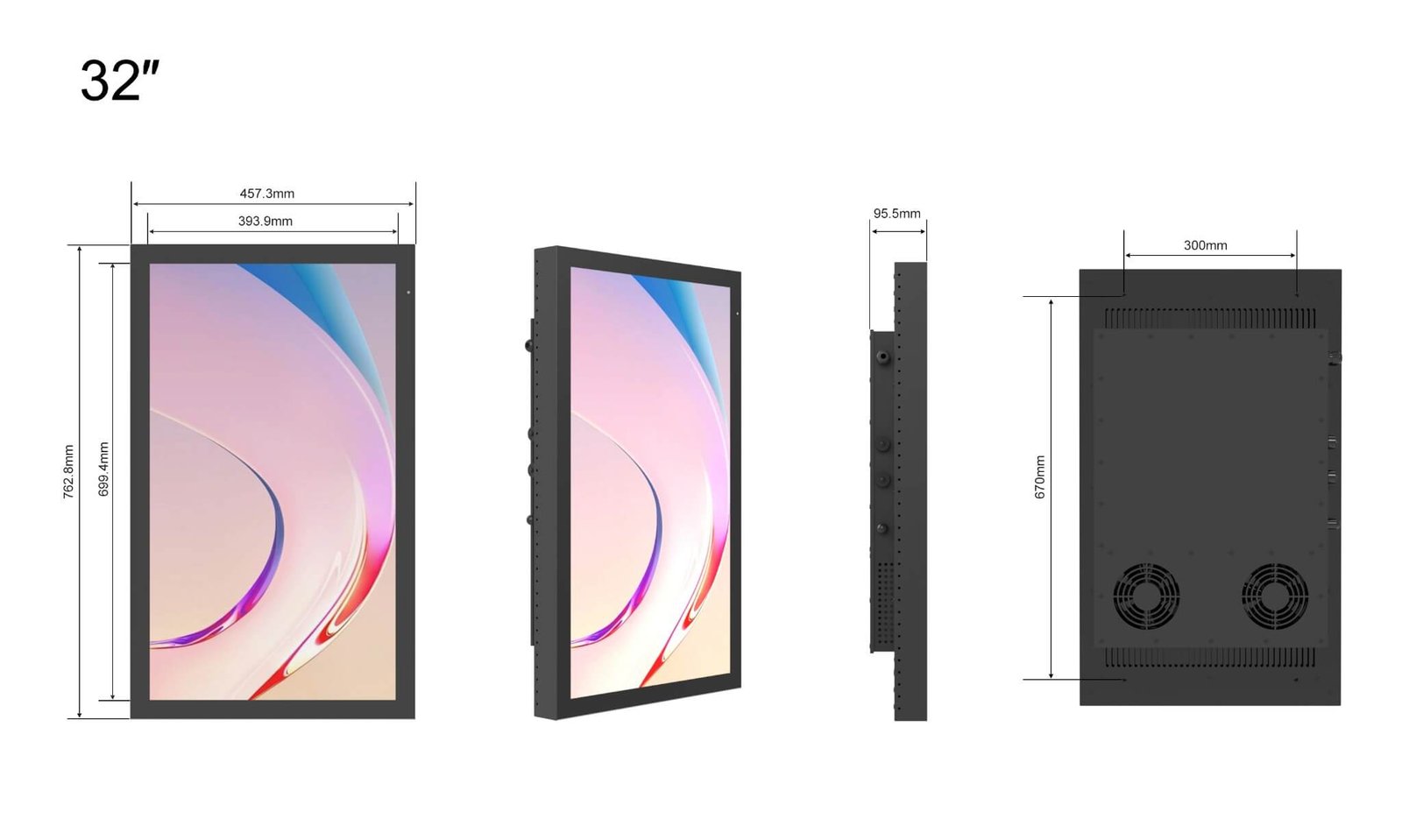
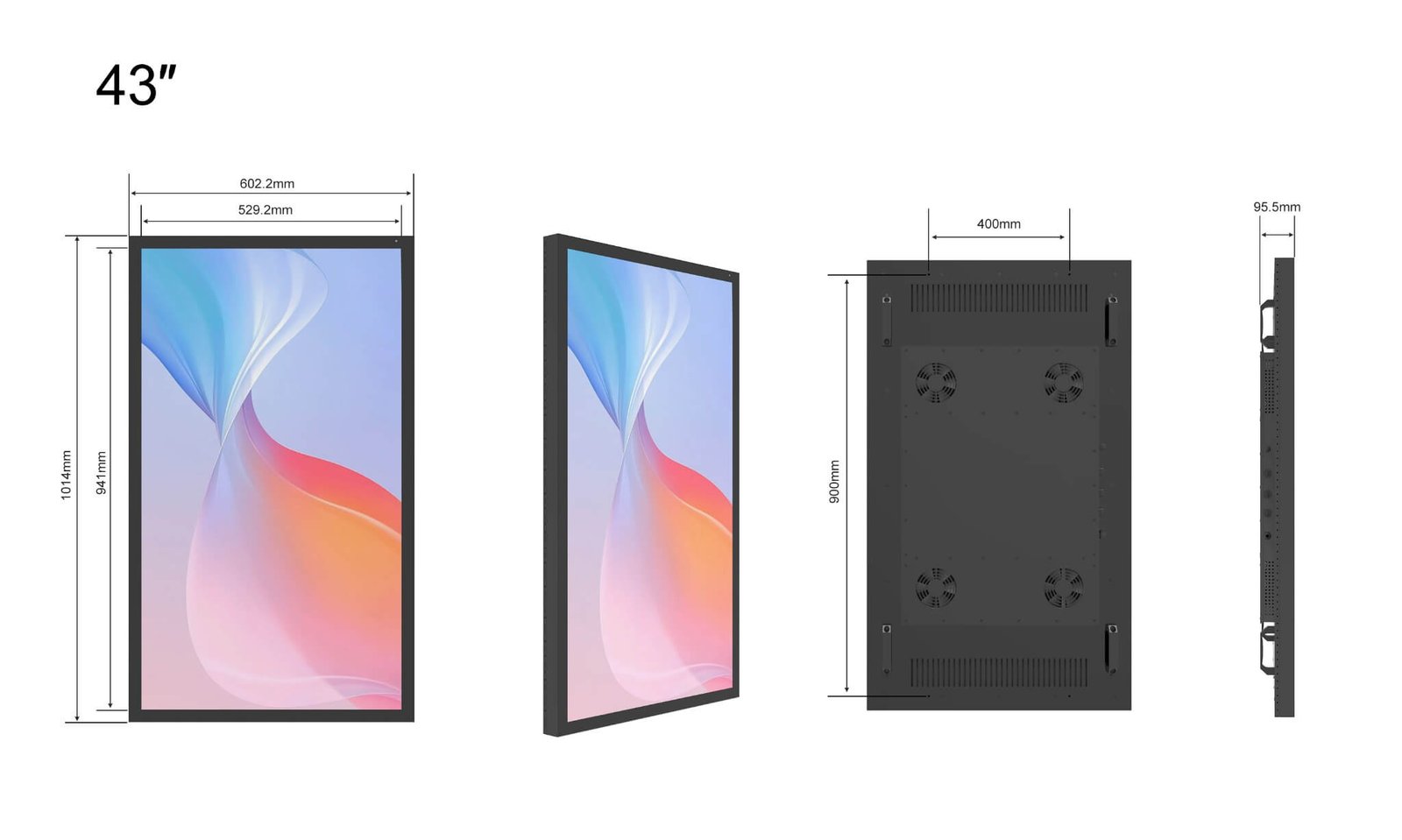
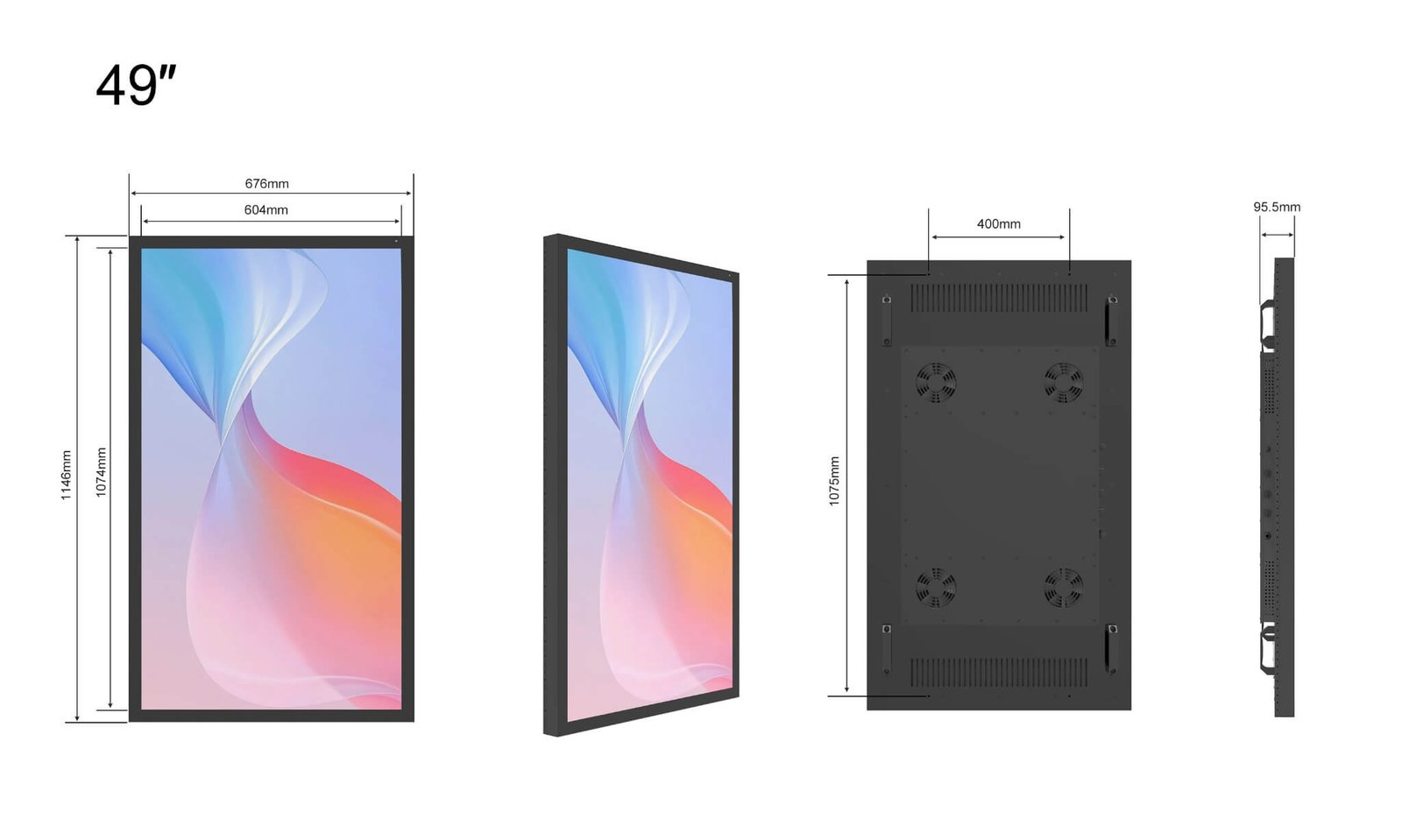
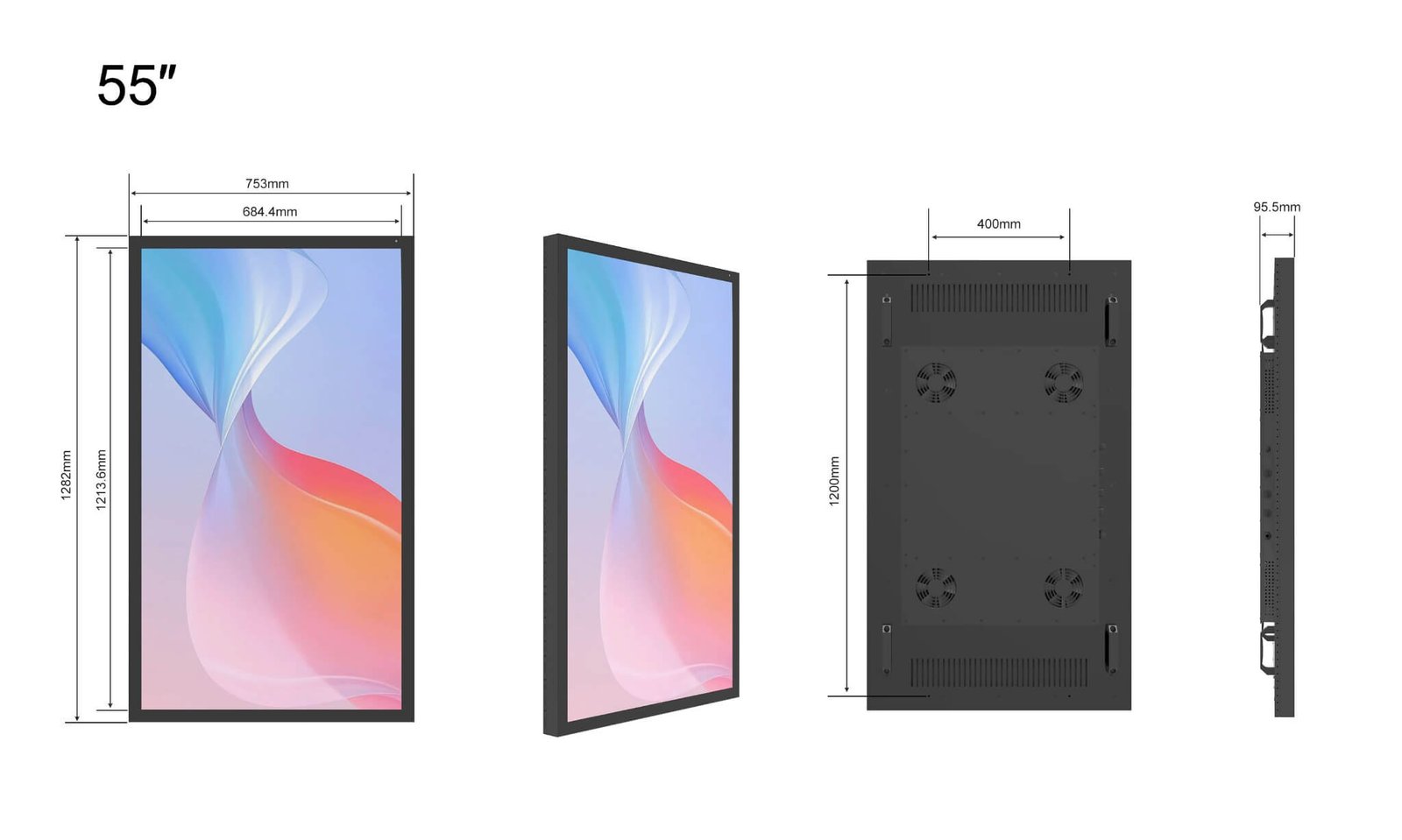
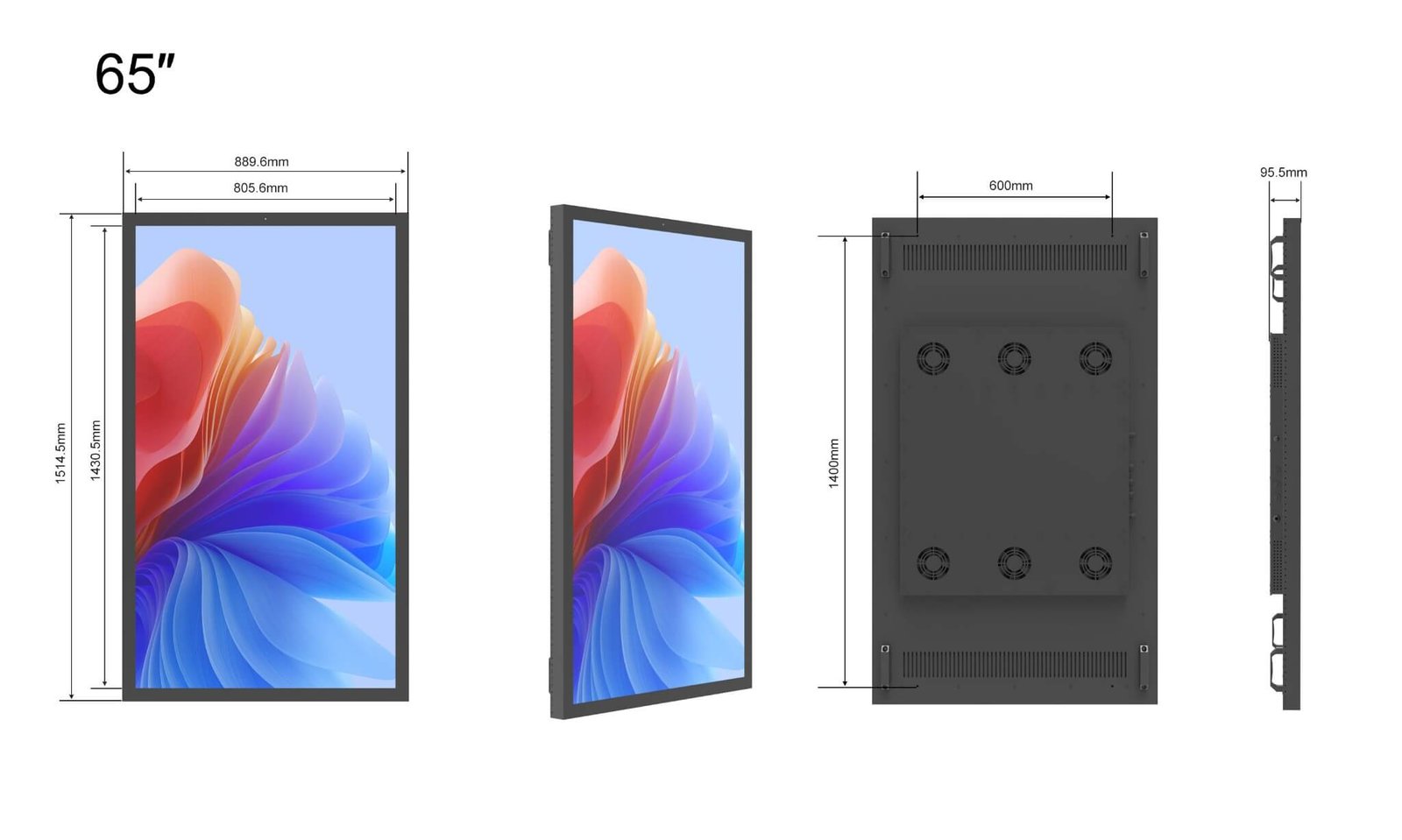
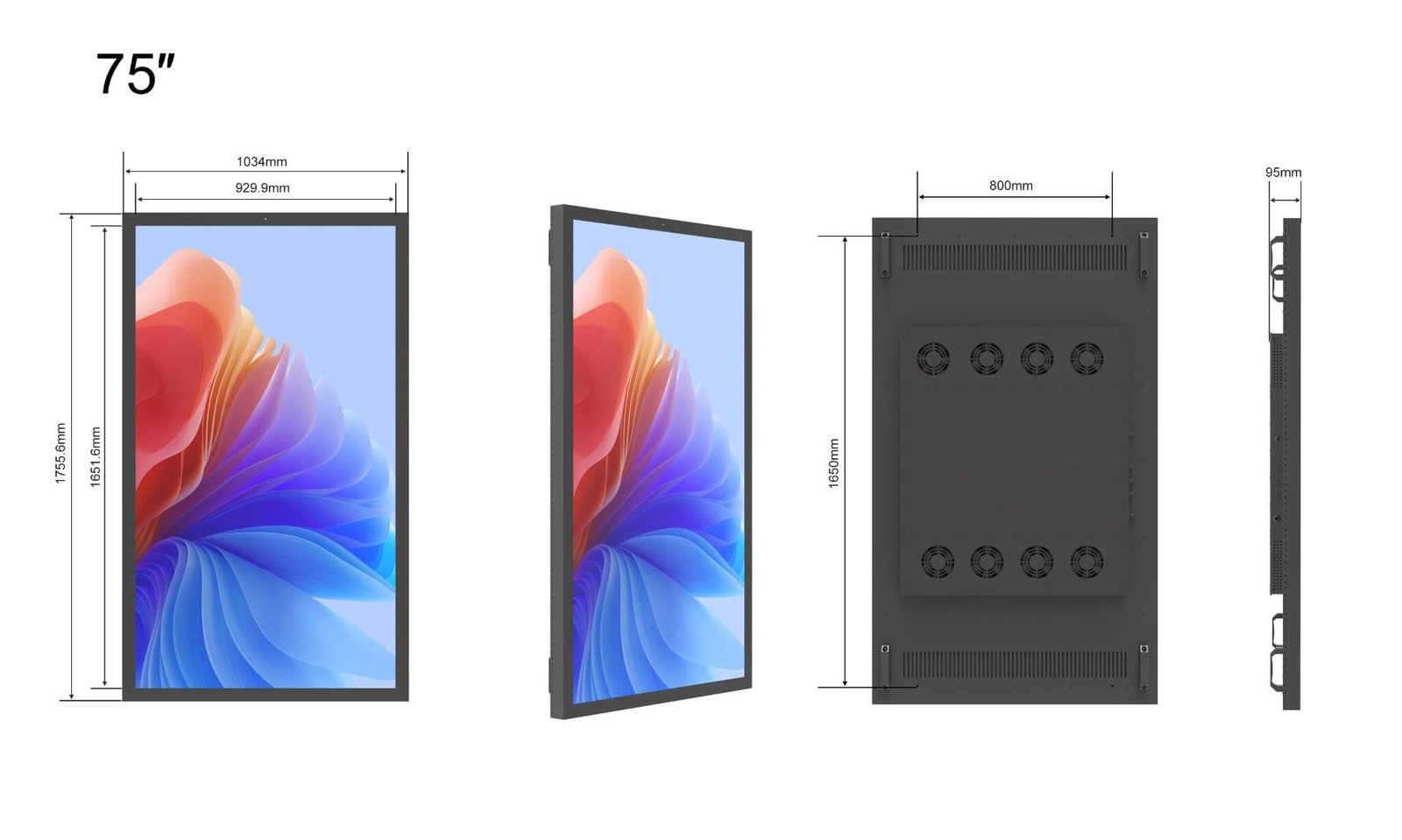
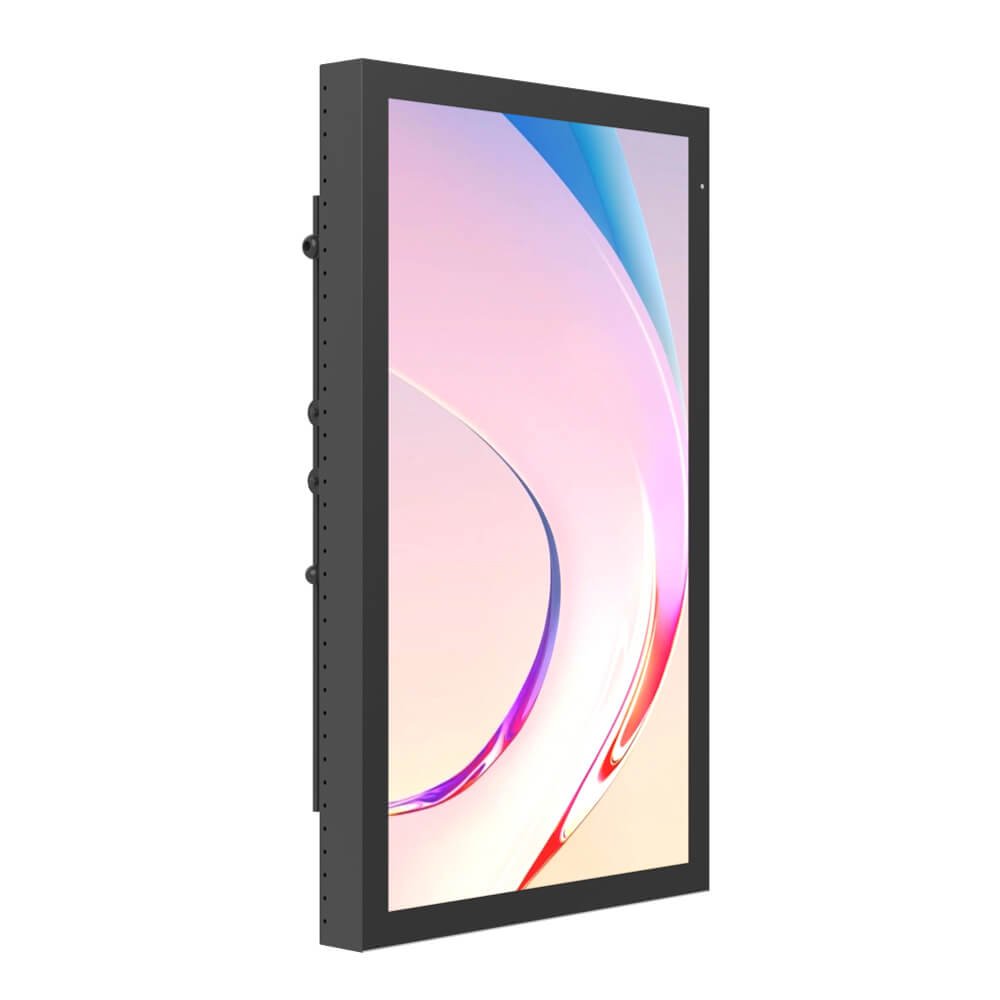
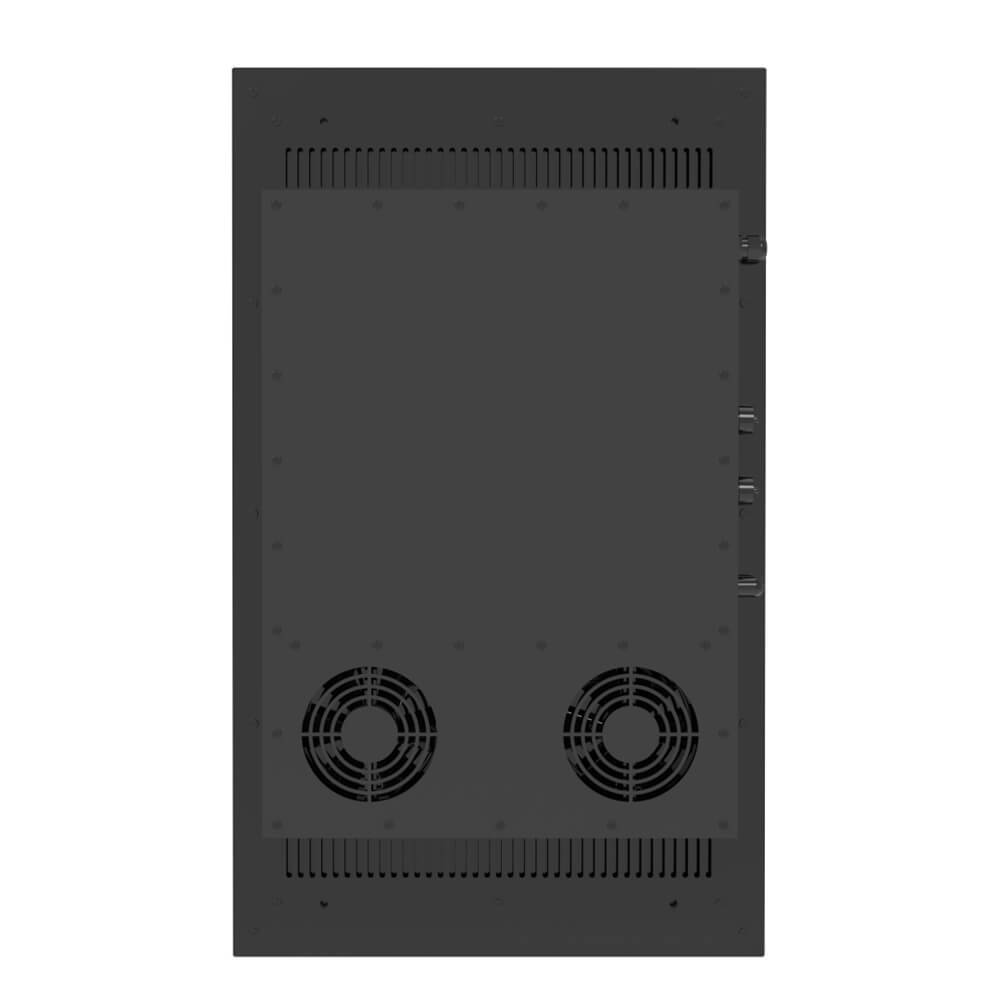
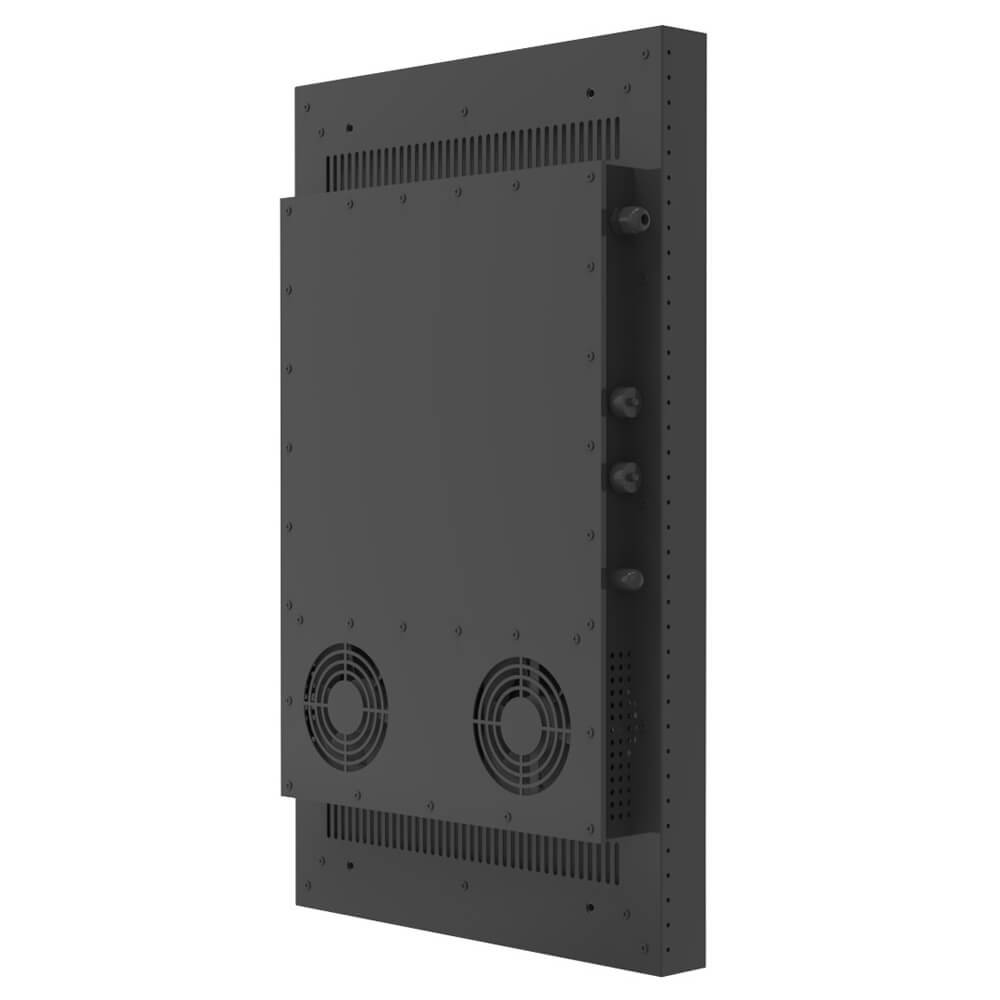
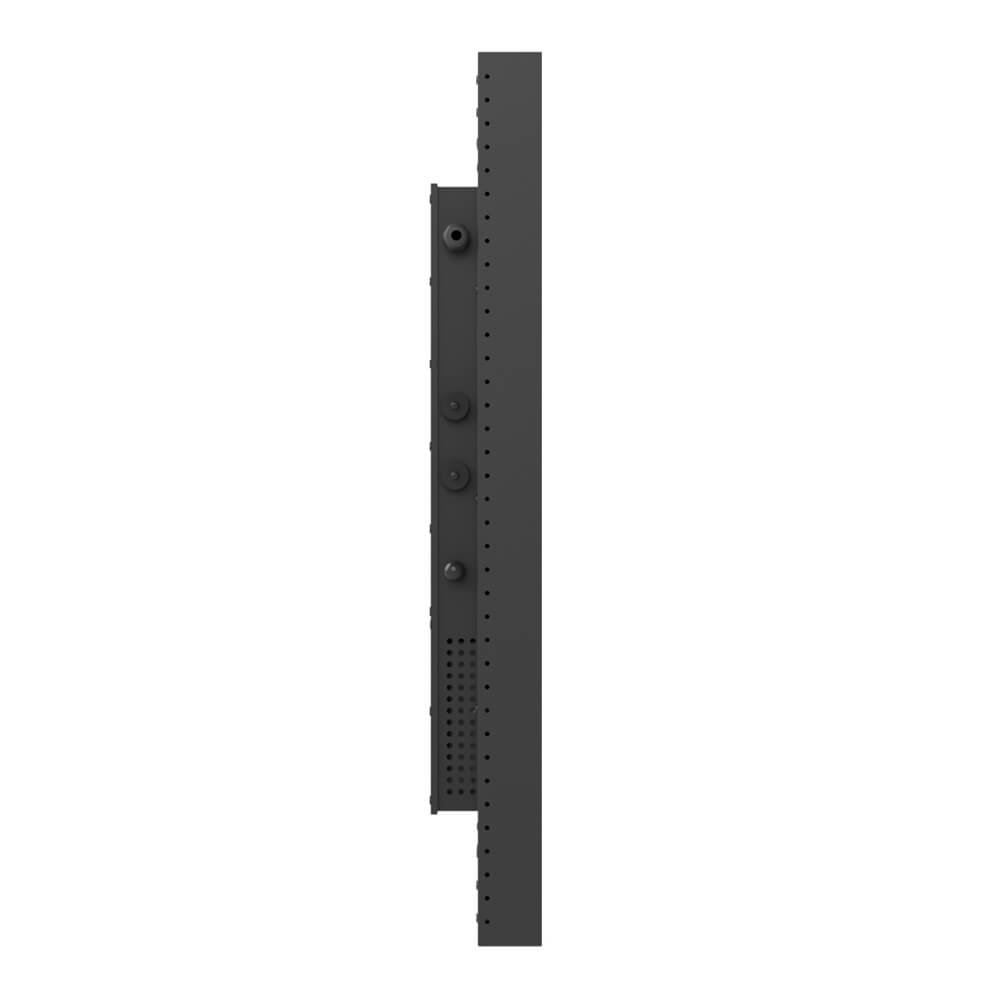

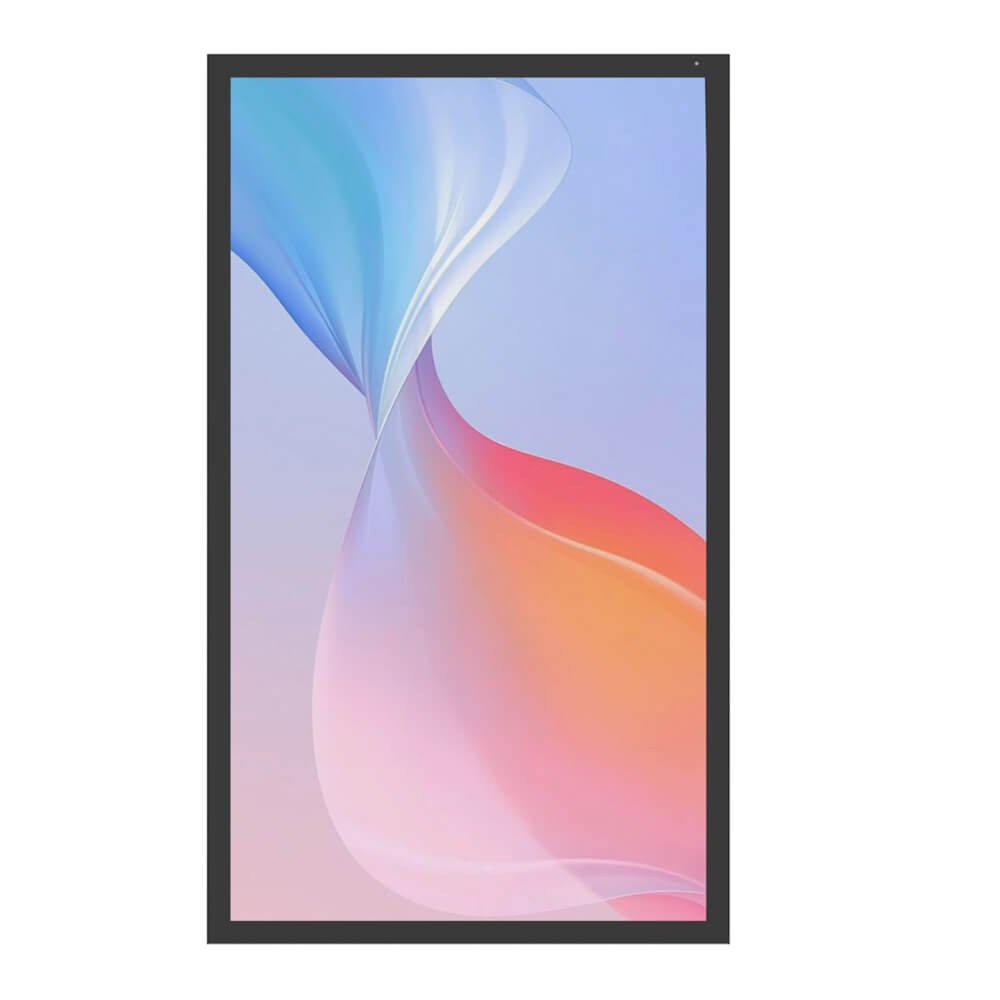
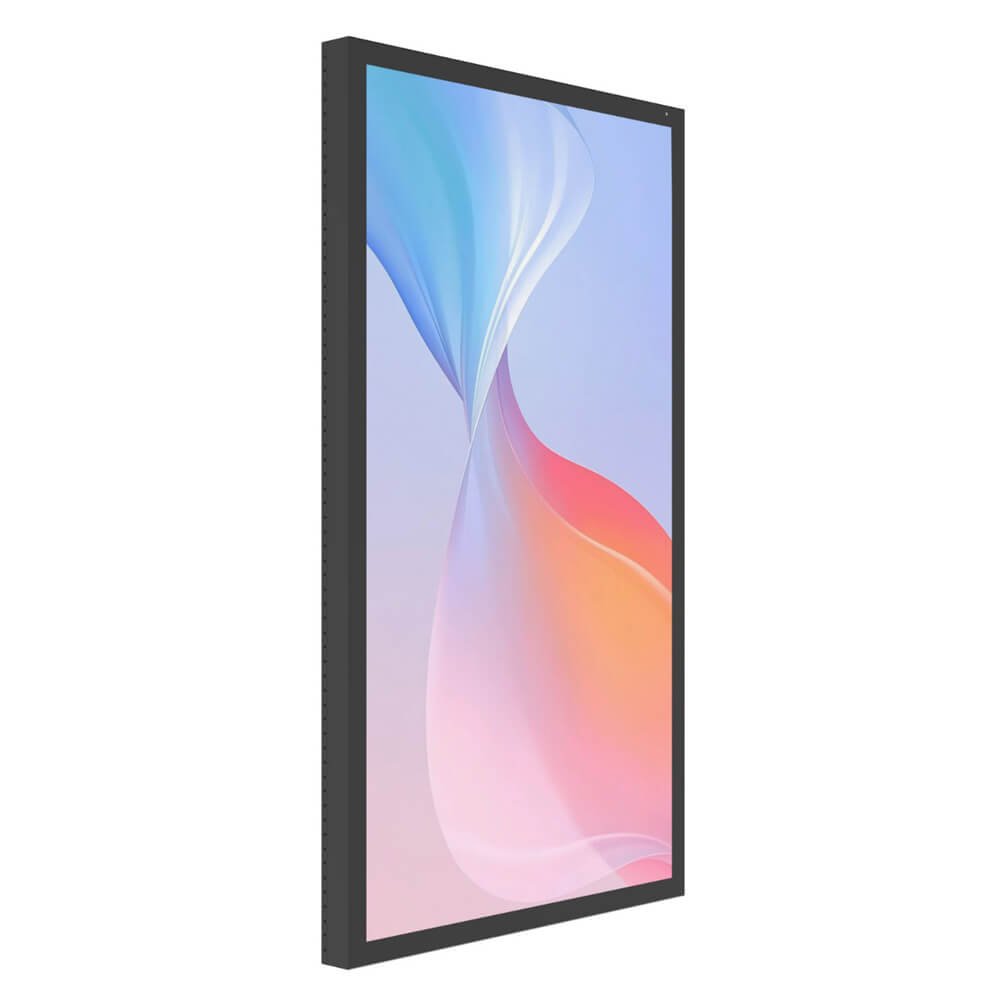
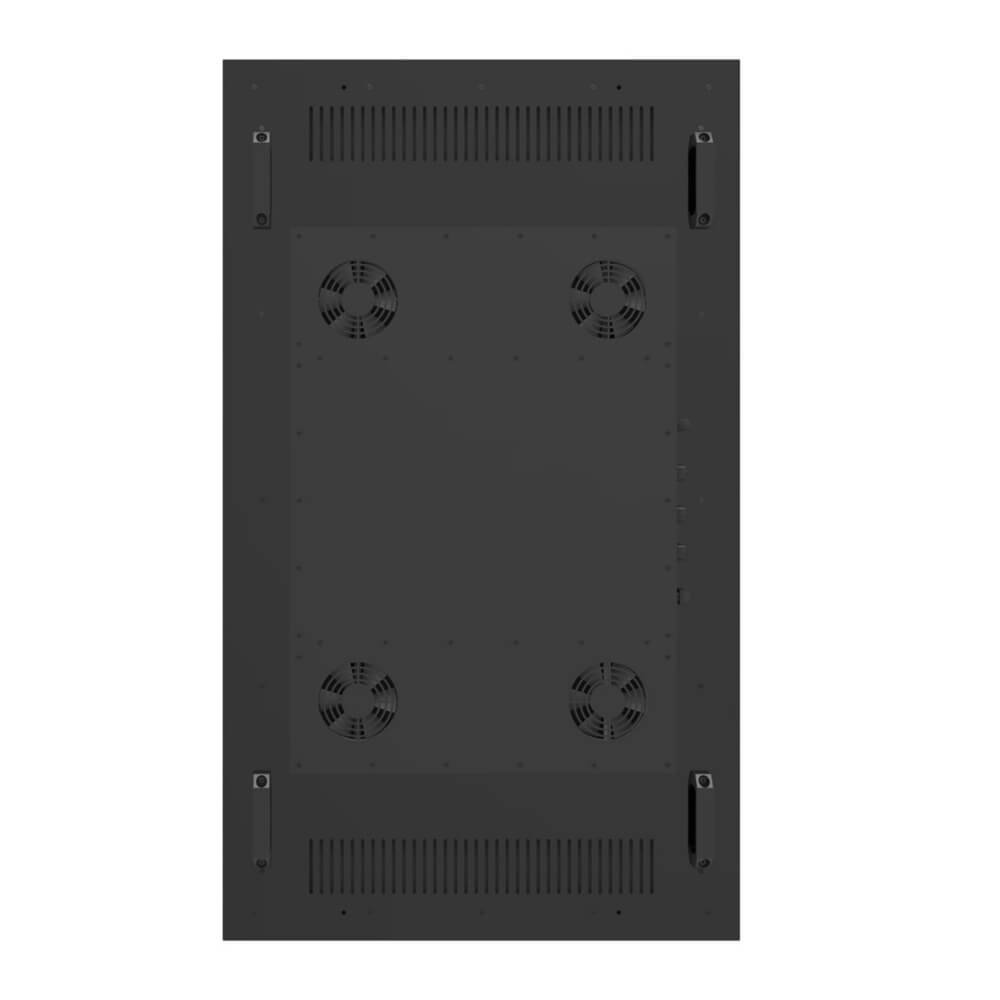
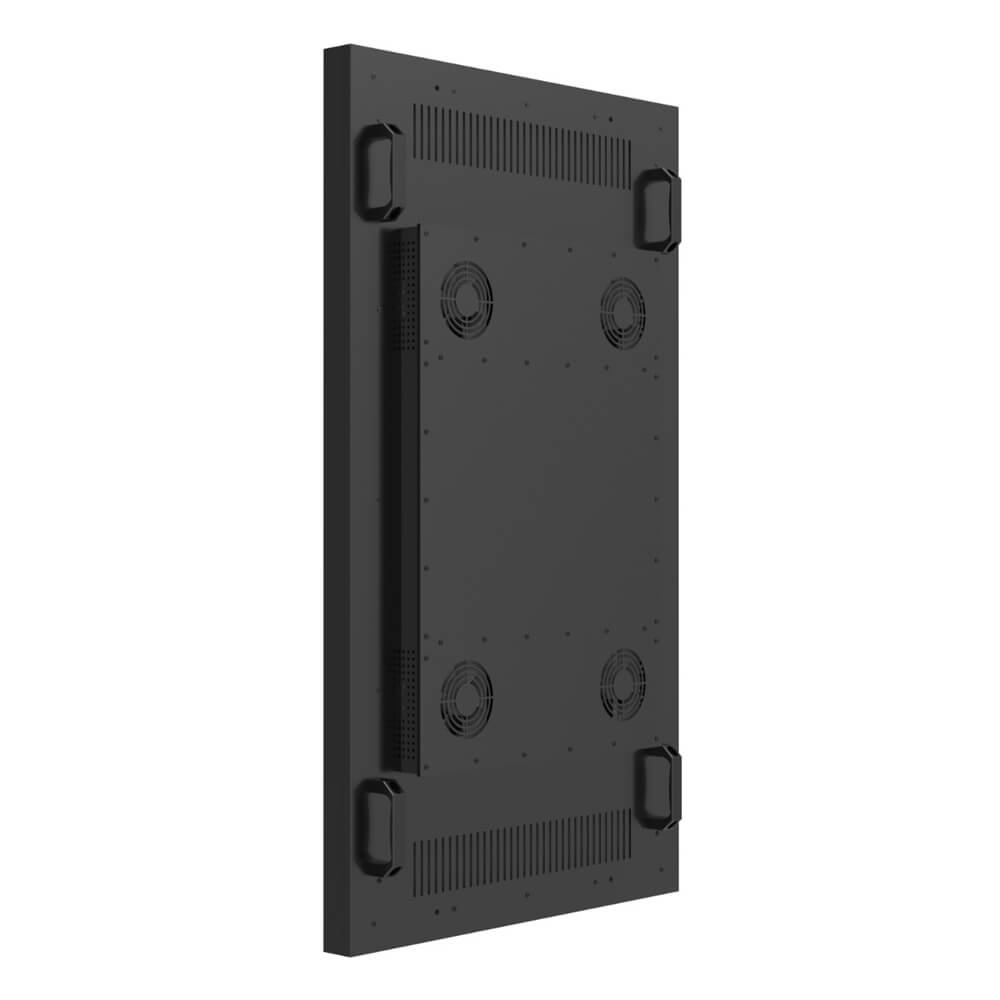
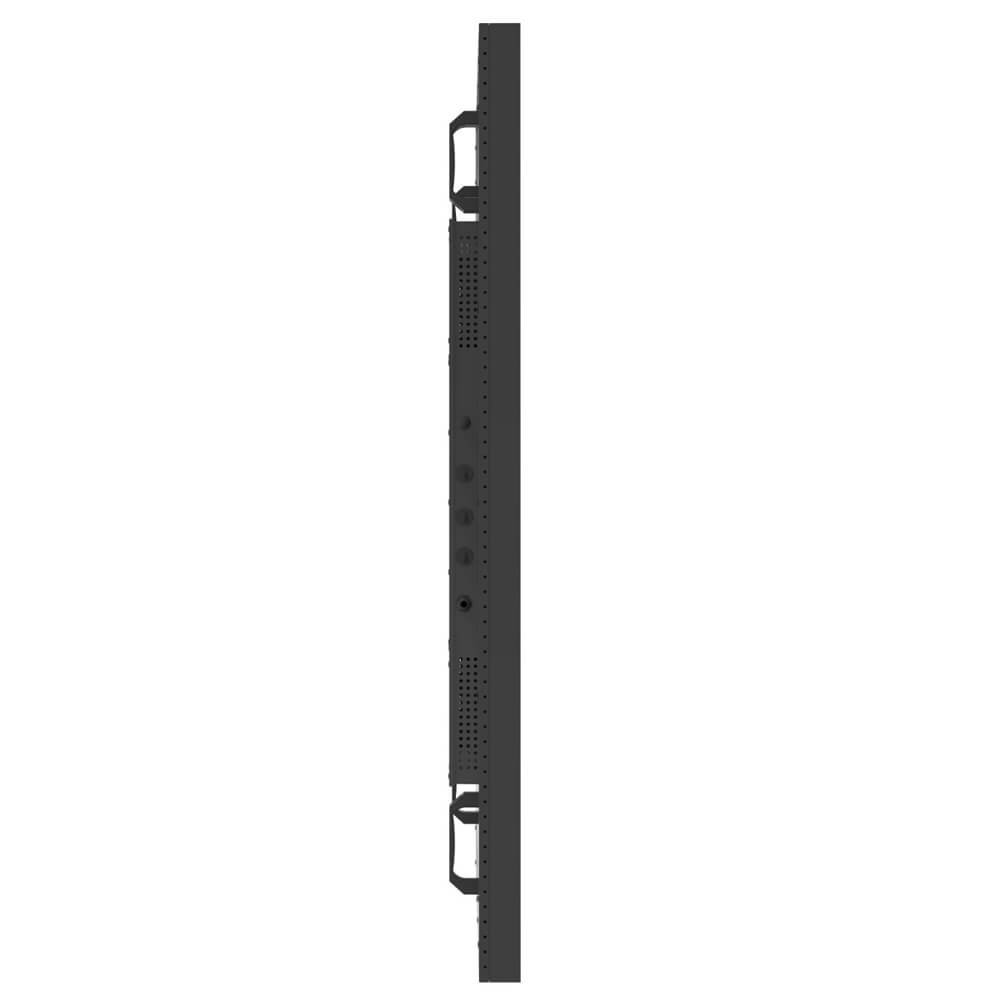
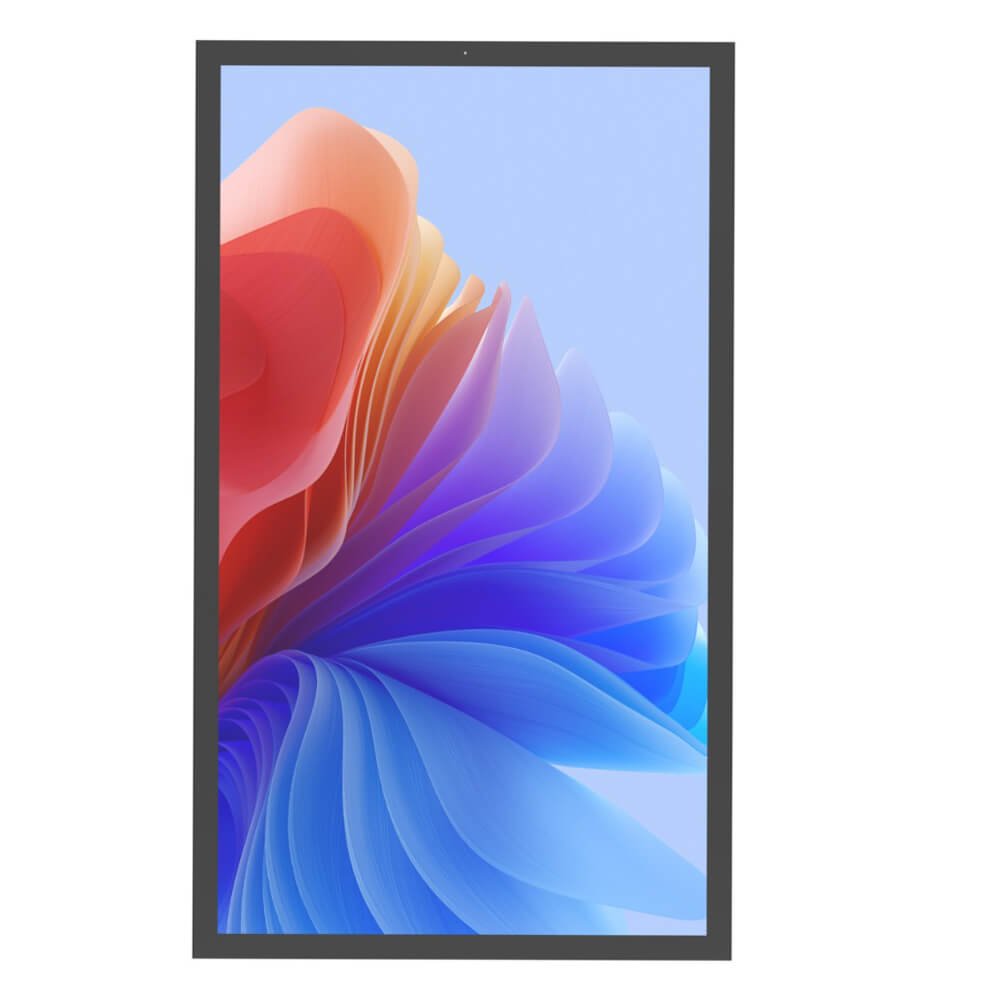
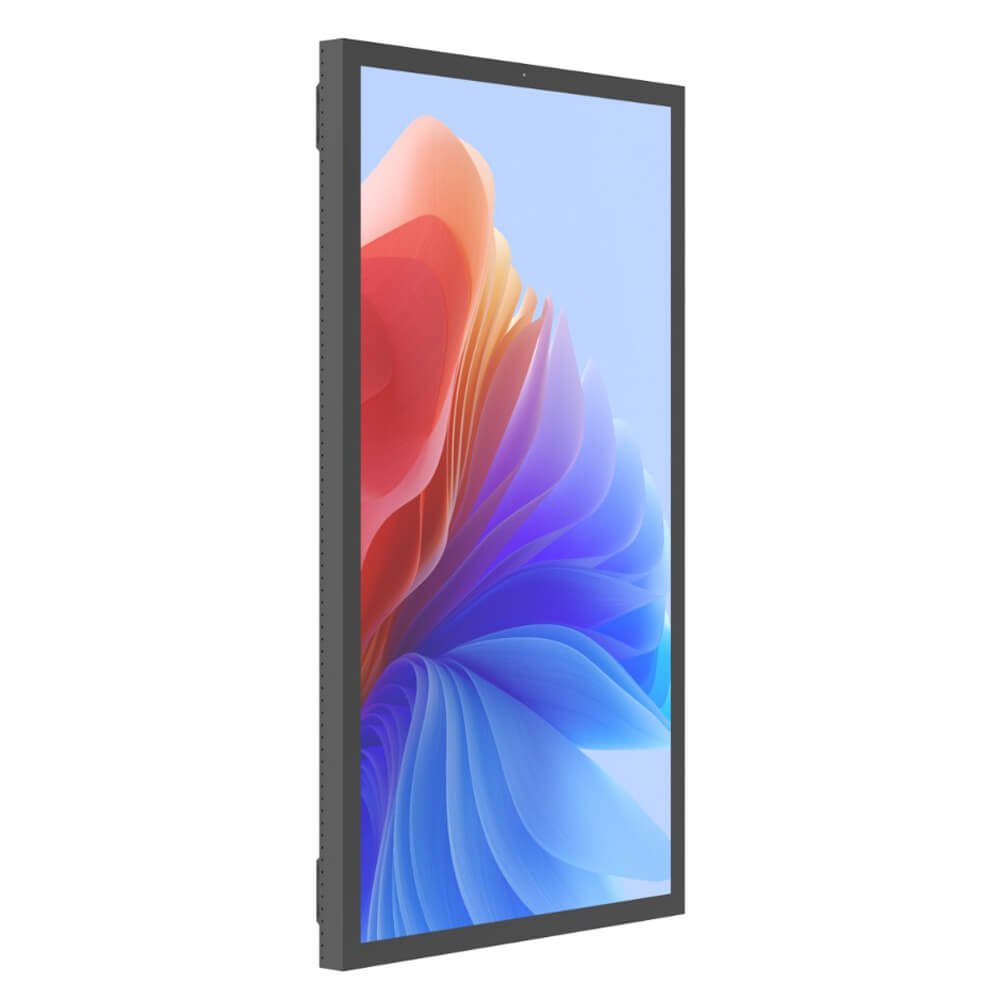
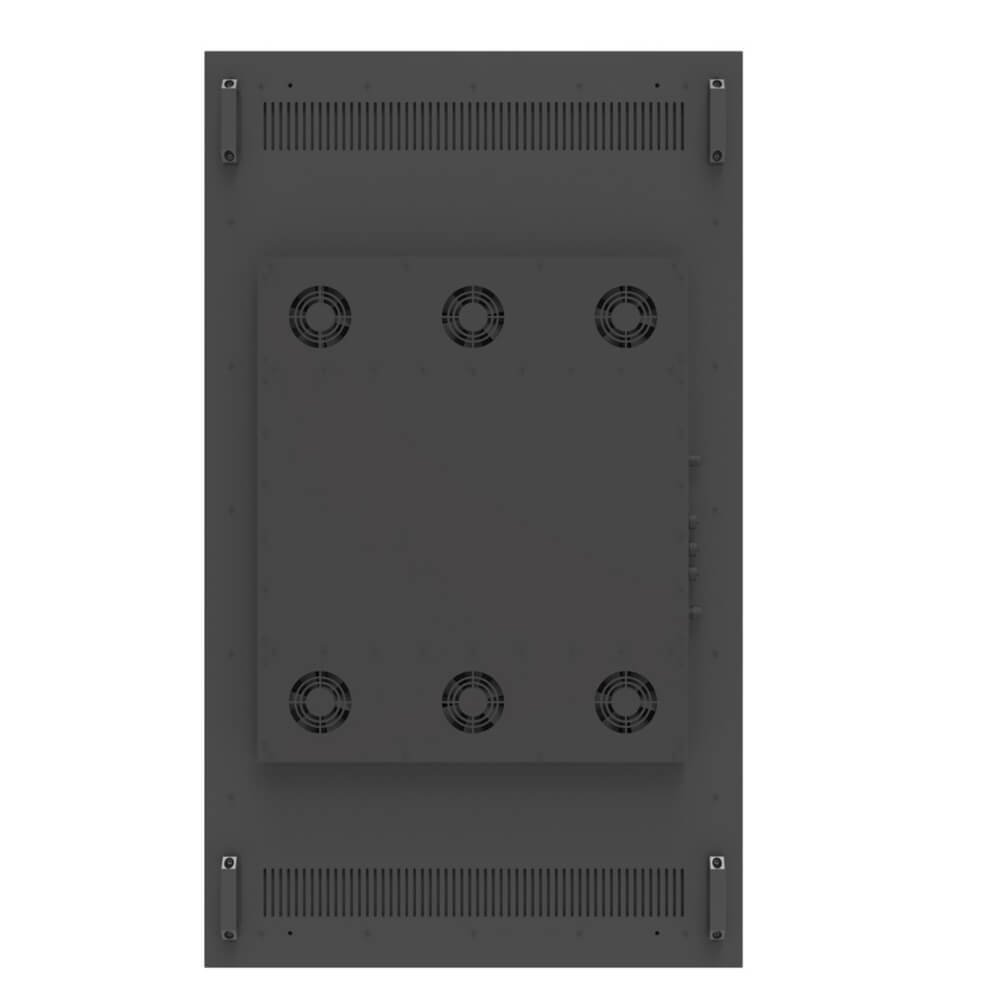
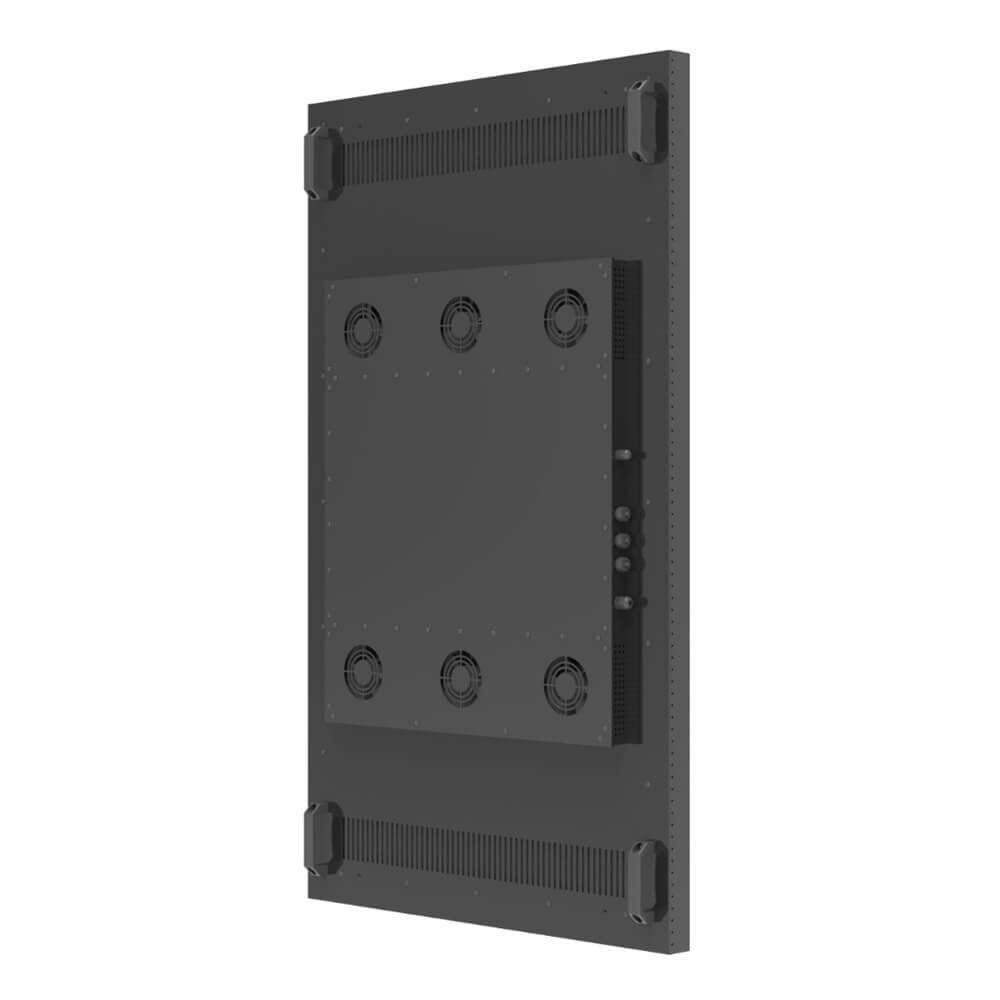
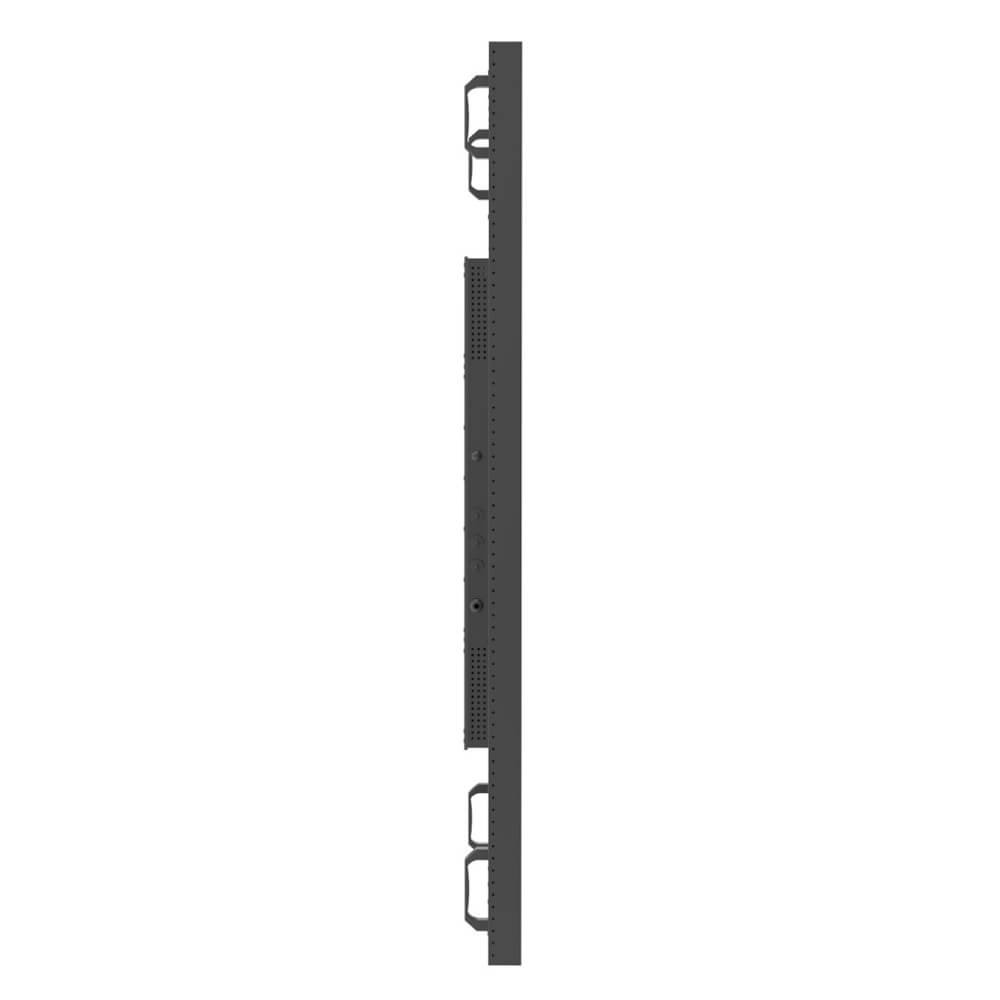
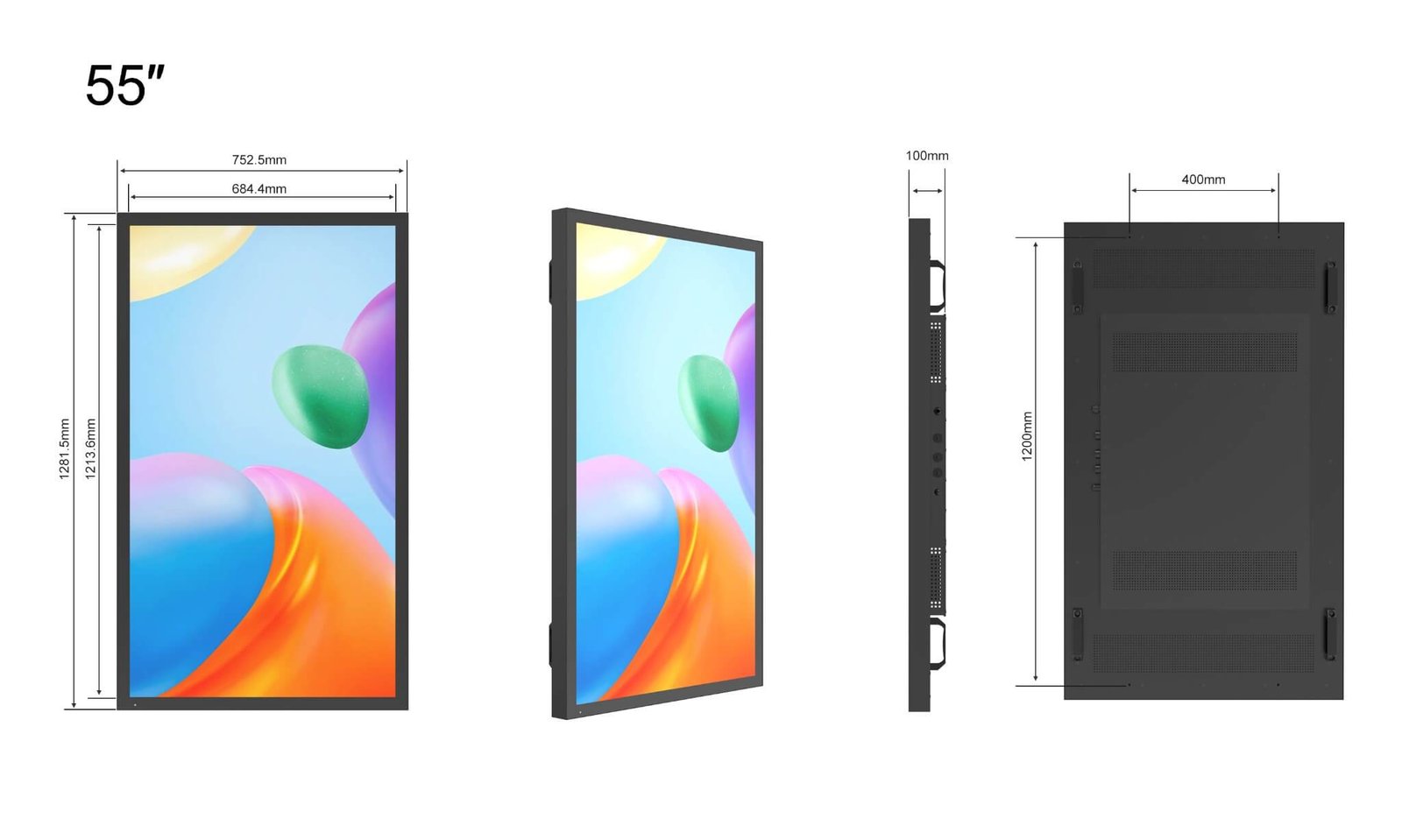
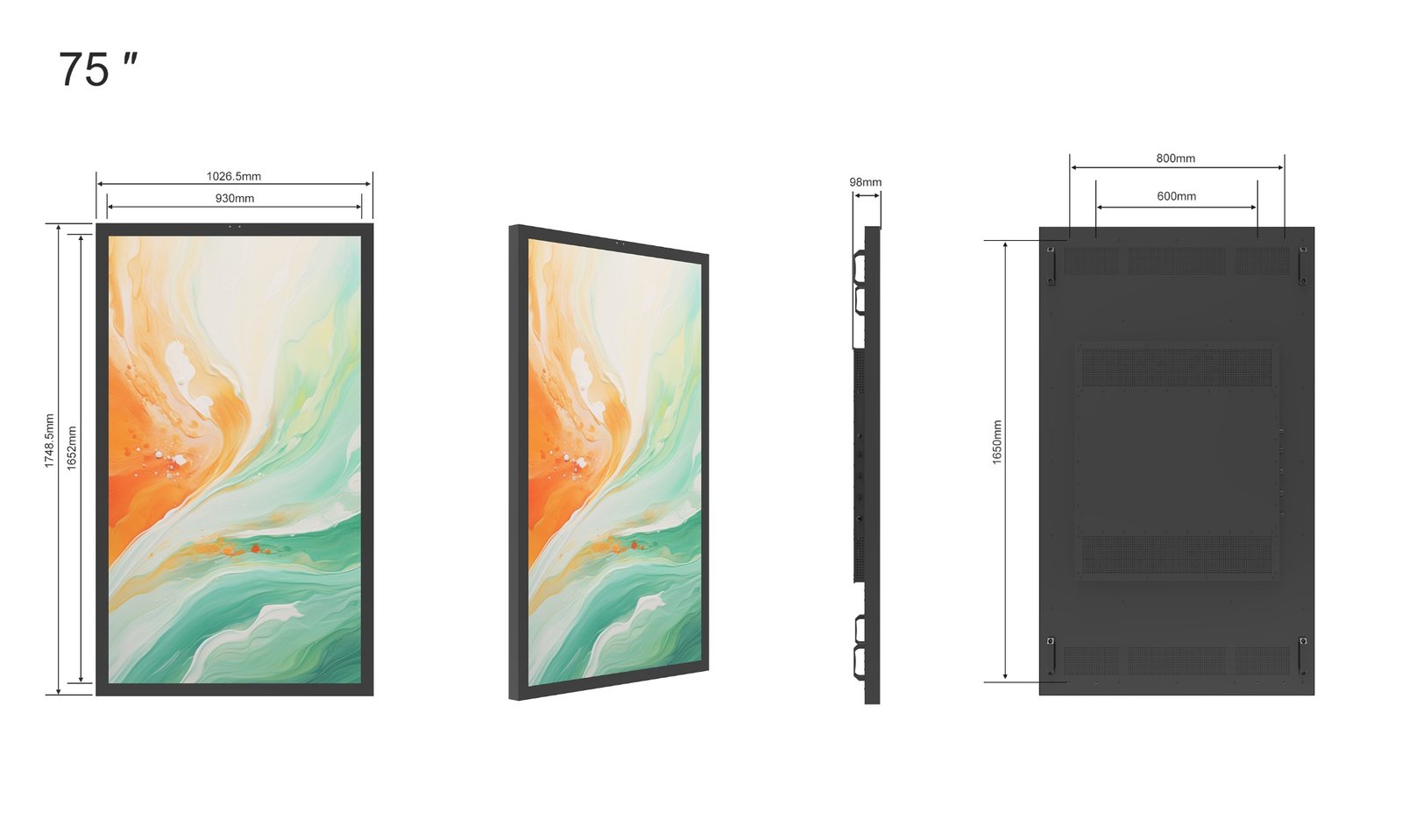
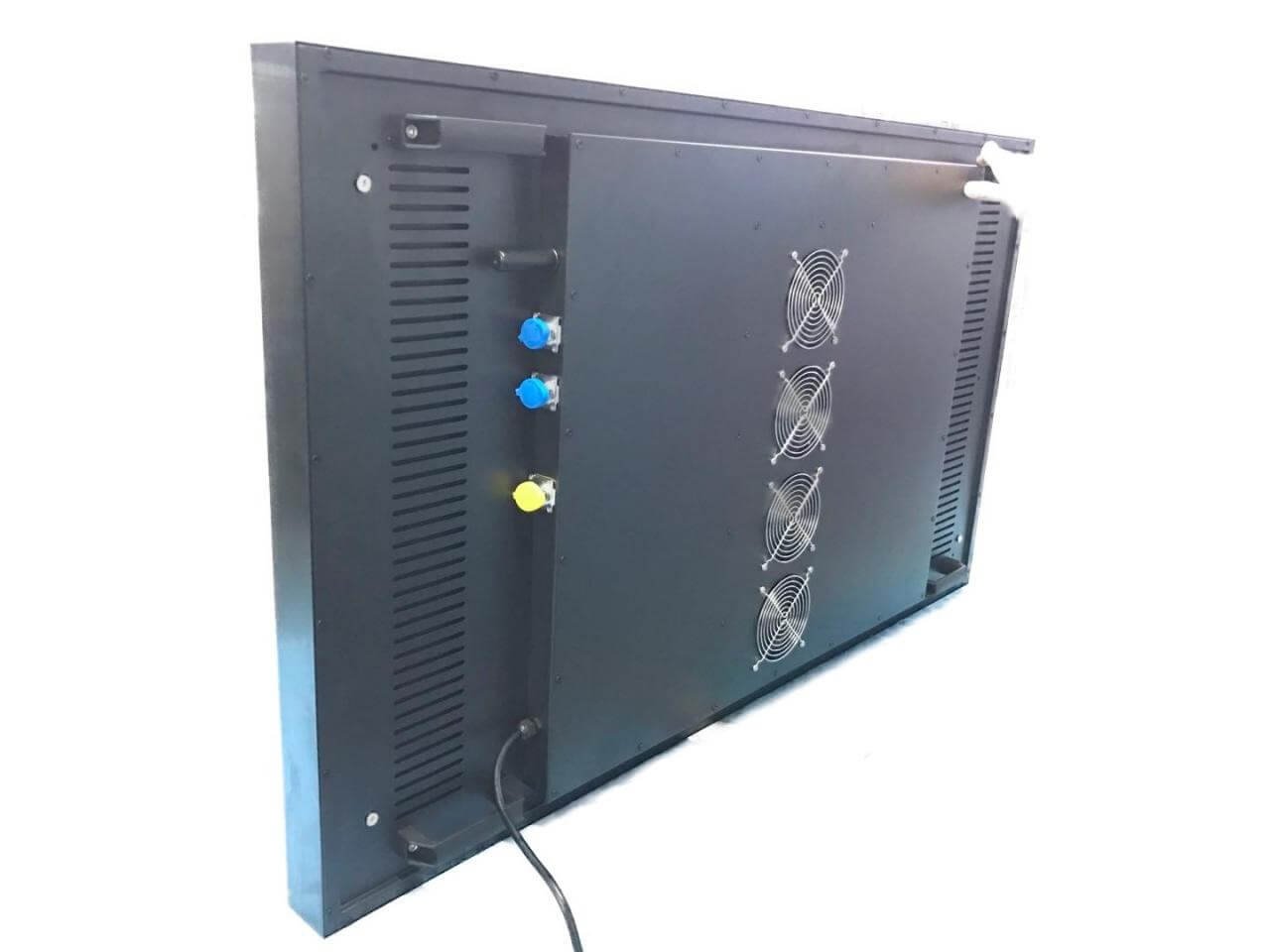
The illustrated updated 55 and 75-inch enclosure versions use fanless cooling with an aluminum heat sink. This cooling approach is available only for configurations that meet the required thermal conditions; suitability must be confirmed against brightness, ambient temperature, solar exposure and installation clearance. The aluminum heat sink transfers heat from internal components and dissipates it without cooling fans. The earlier enclosure versions use traditional built-in cooling fans. Front, rear and side views help you compare enclosure design, service access and installation clearances.
| Updated Enclosure | Enclosure W × H × D (mm) | Display Area W × H (mm) | Rear Mounting Centres H × V (mm) |
|---|---|---|---|
| 55 inch | 752.5 × 1281.5 × 100 | 684.4 × 1213.6 | 400 × 1200 |
| 75 inch | 1026.5 × 1748.5 × 98 | 930 × 1652 | 800 × 1650; additional horizontal 600 shown |
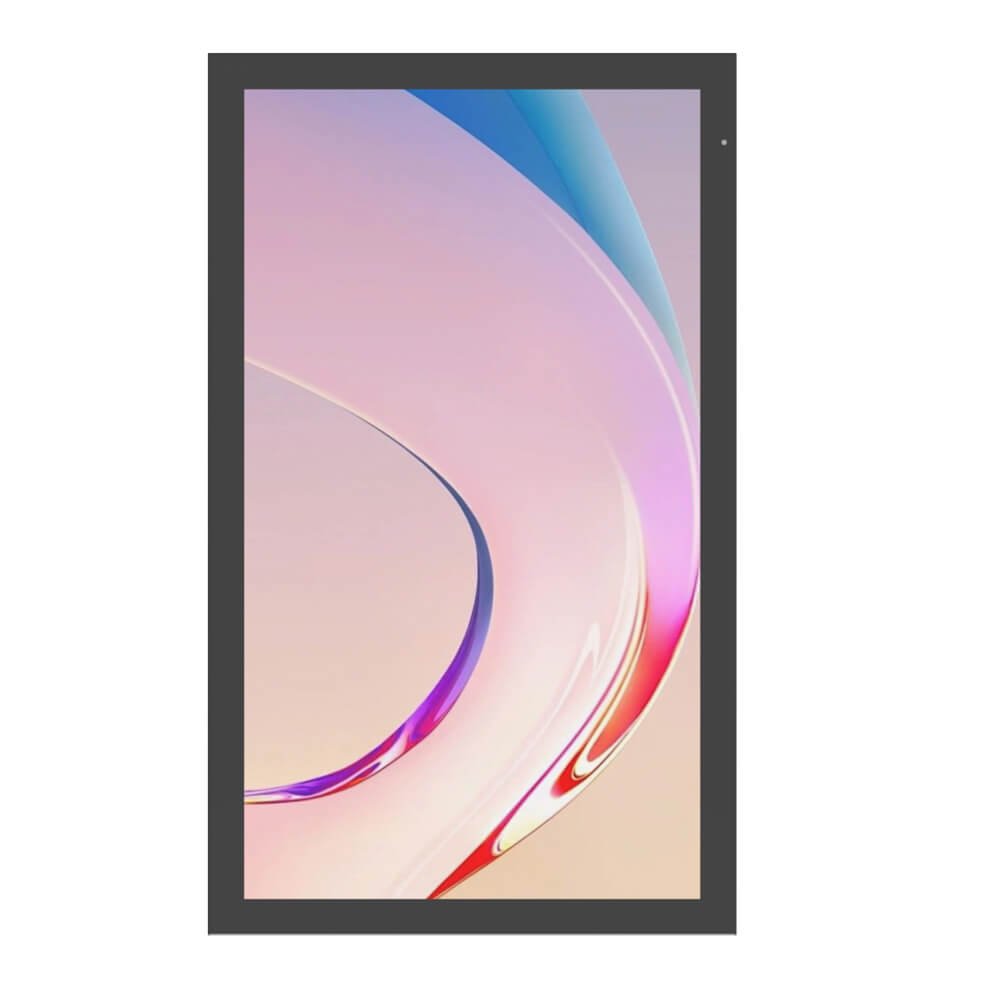
Updated enclosures use different body dimensions from the earlier drawings. Match your purchase and mounting plan to the exact version. The 55-inch front-angle product is shown in the hero above.


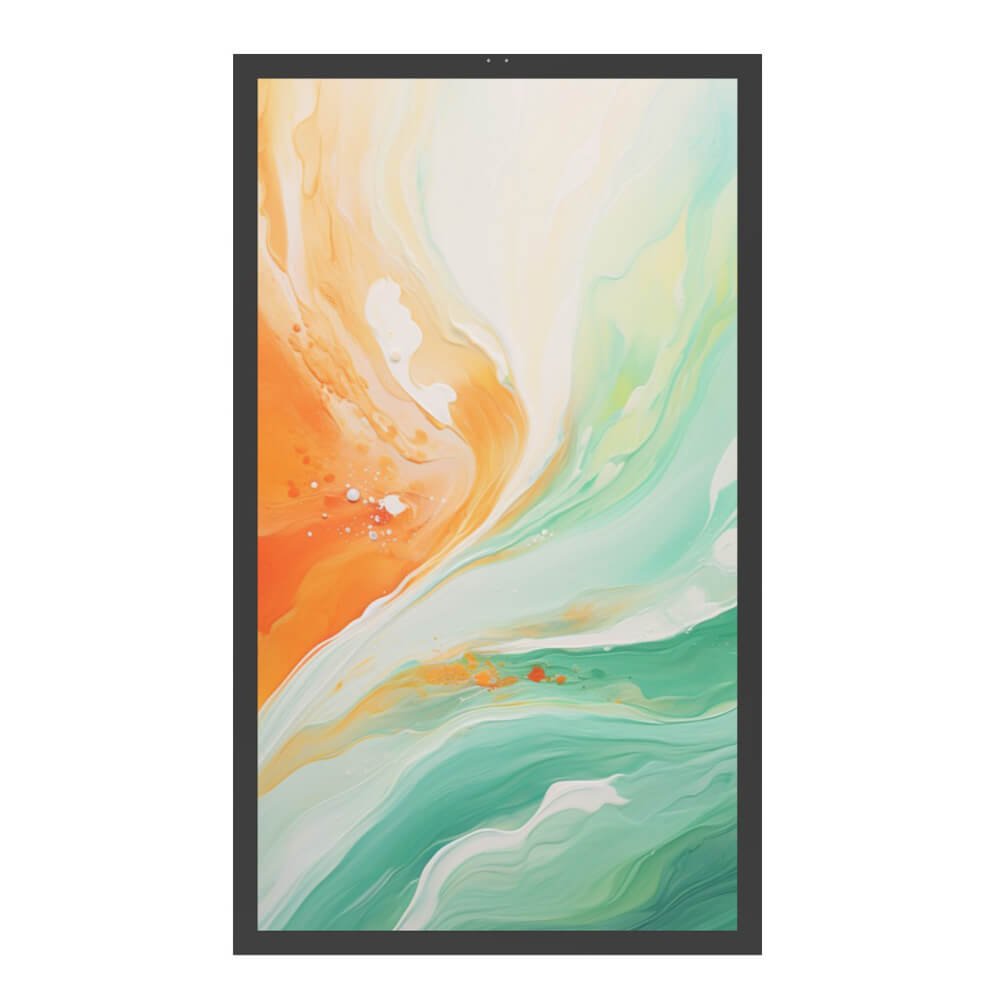
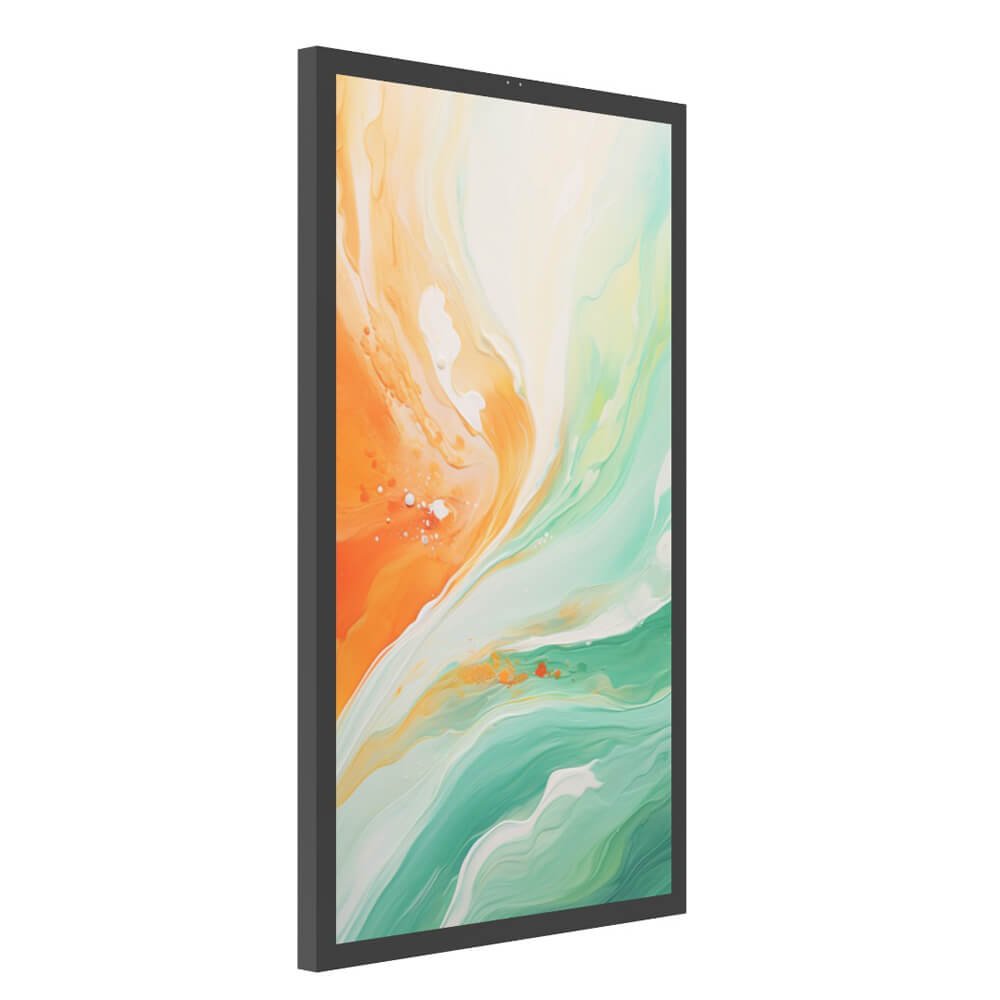
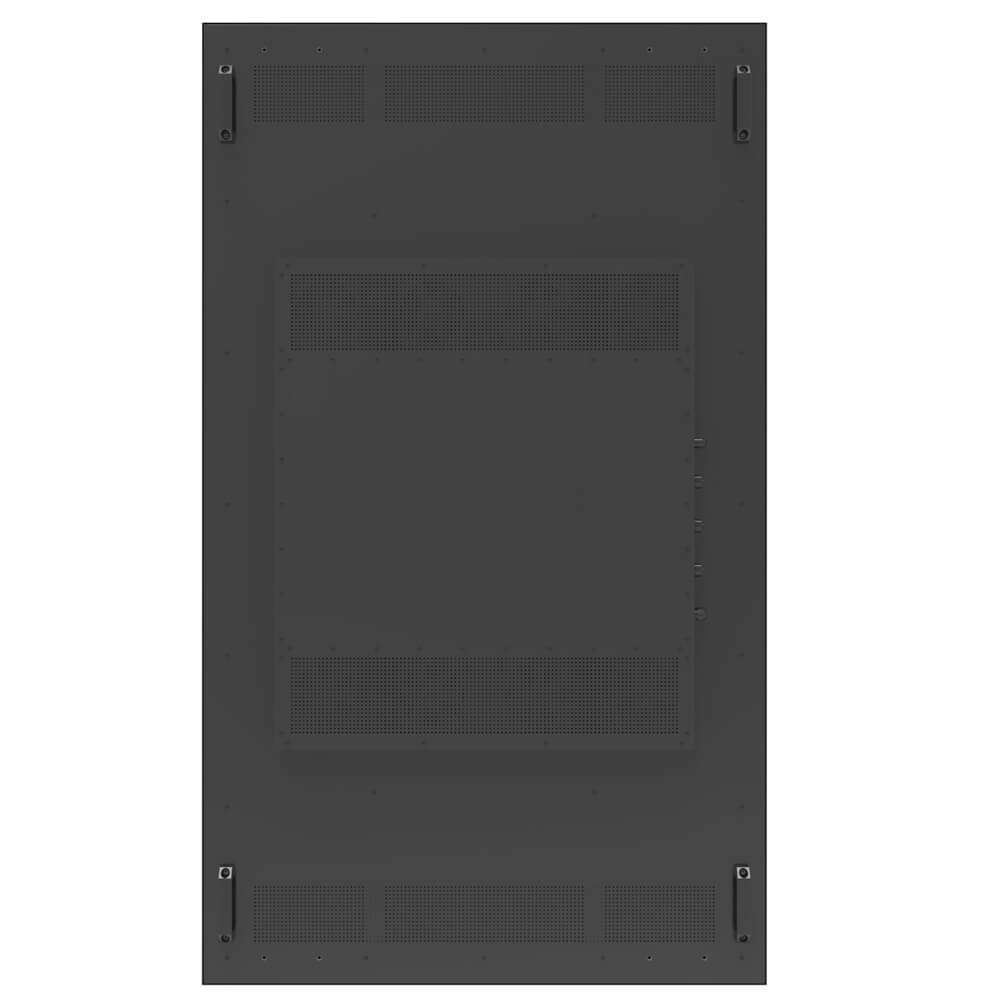
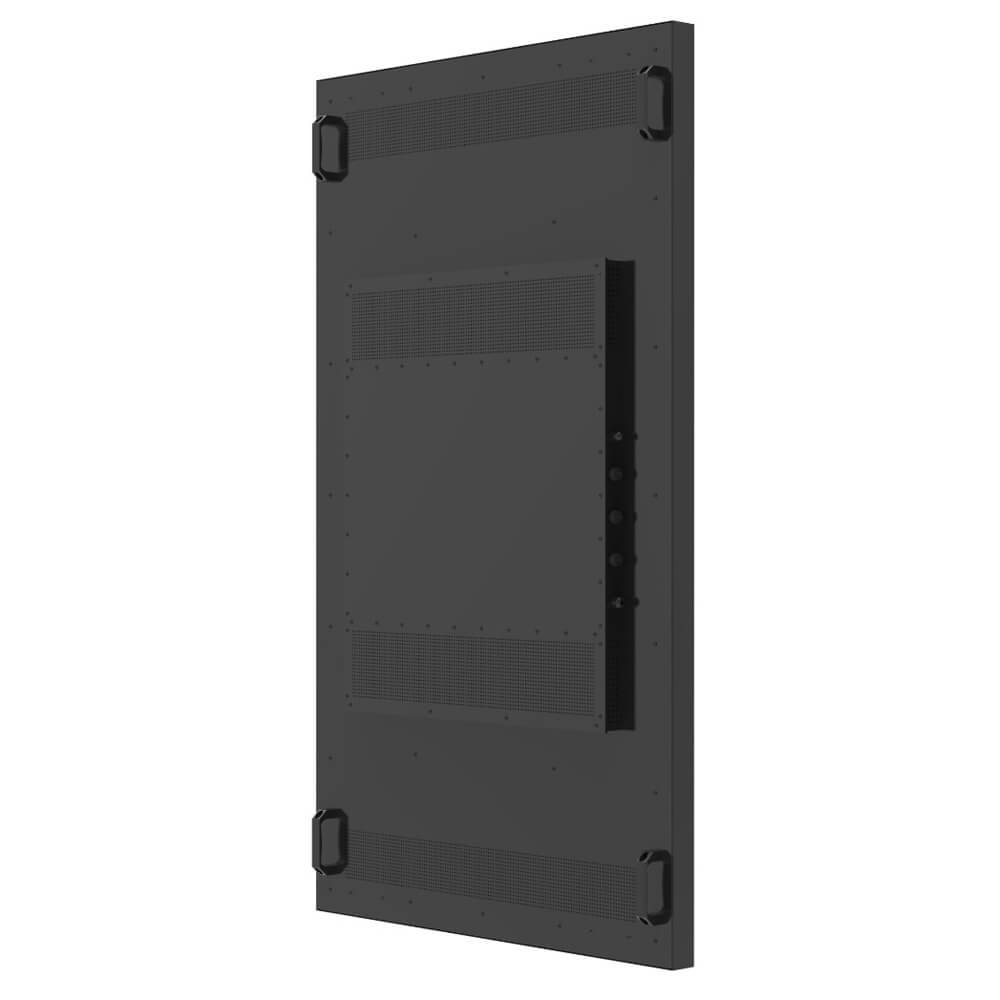
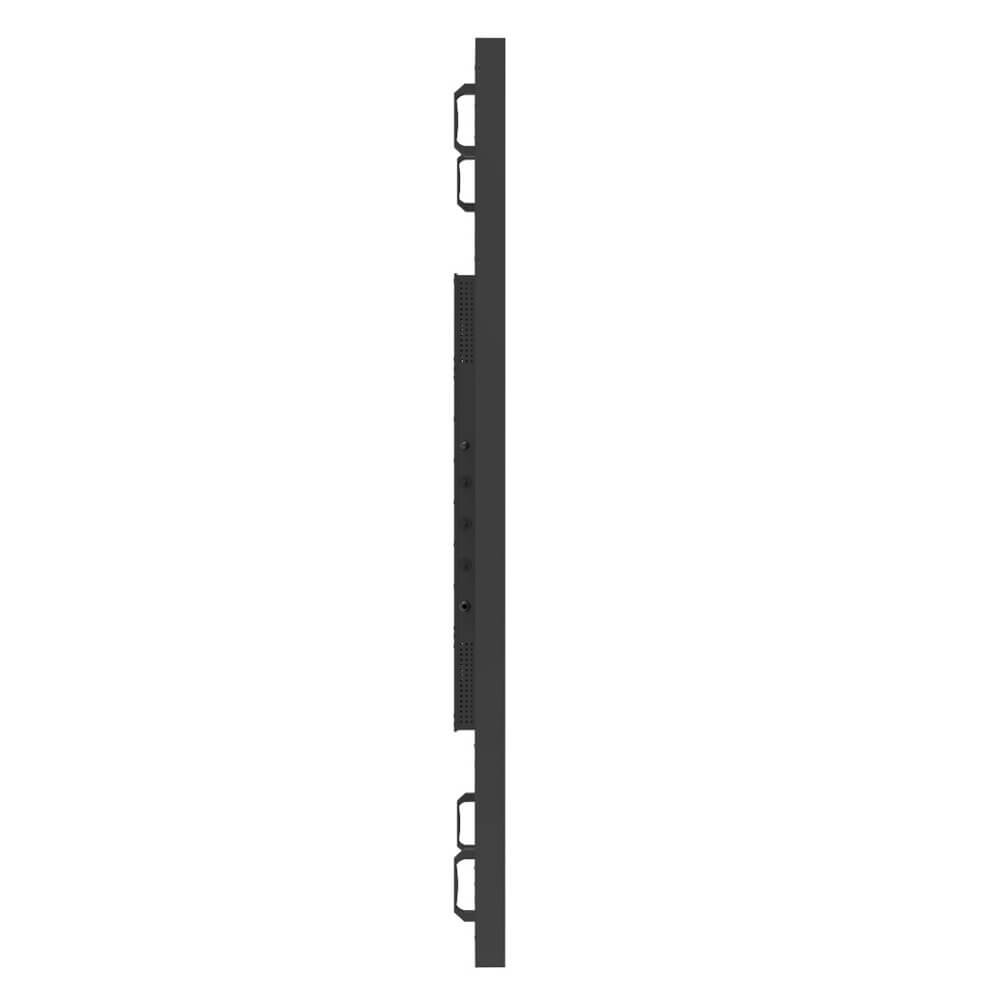
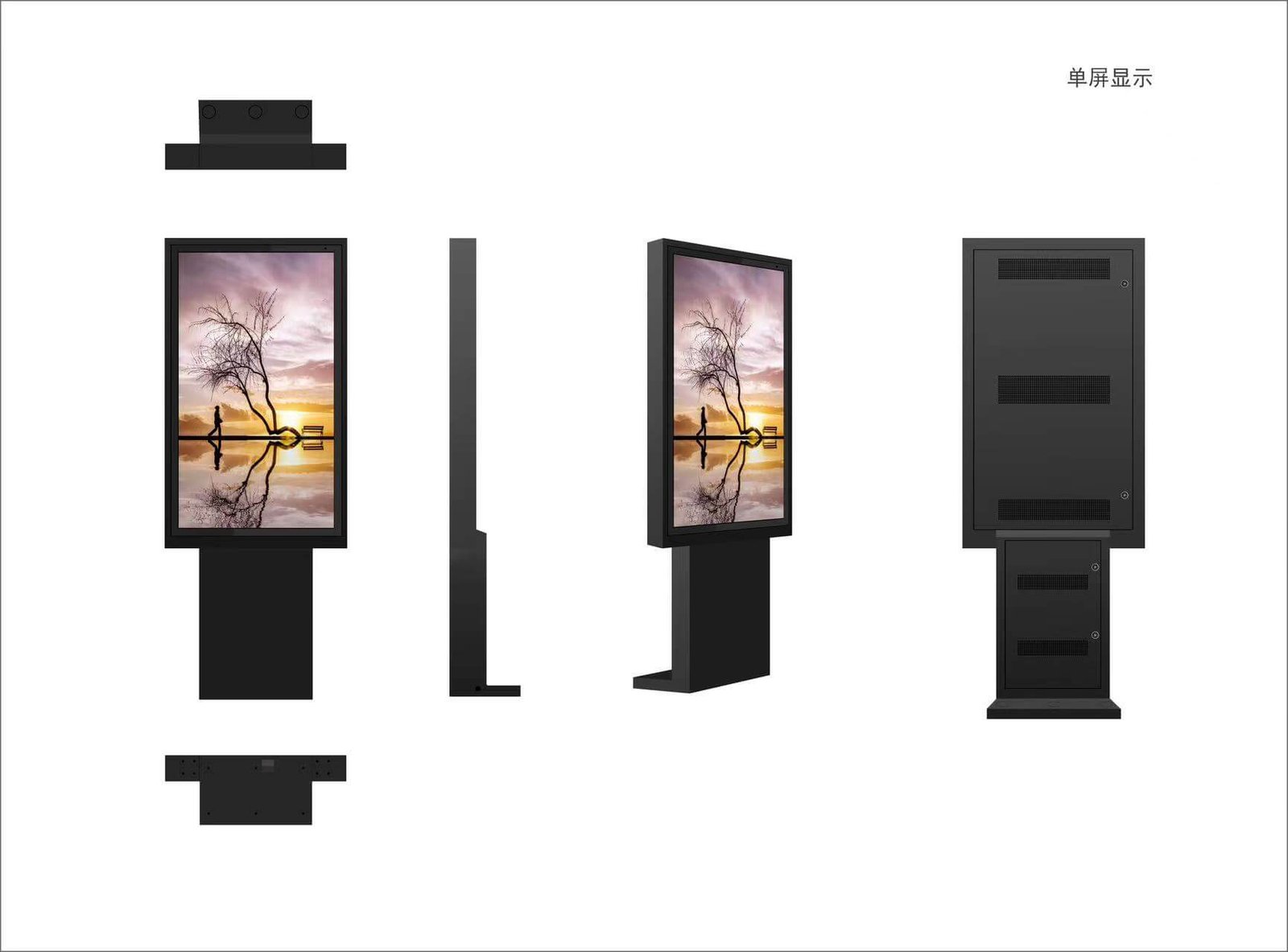
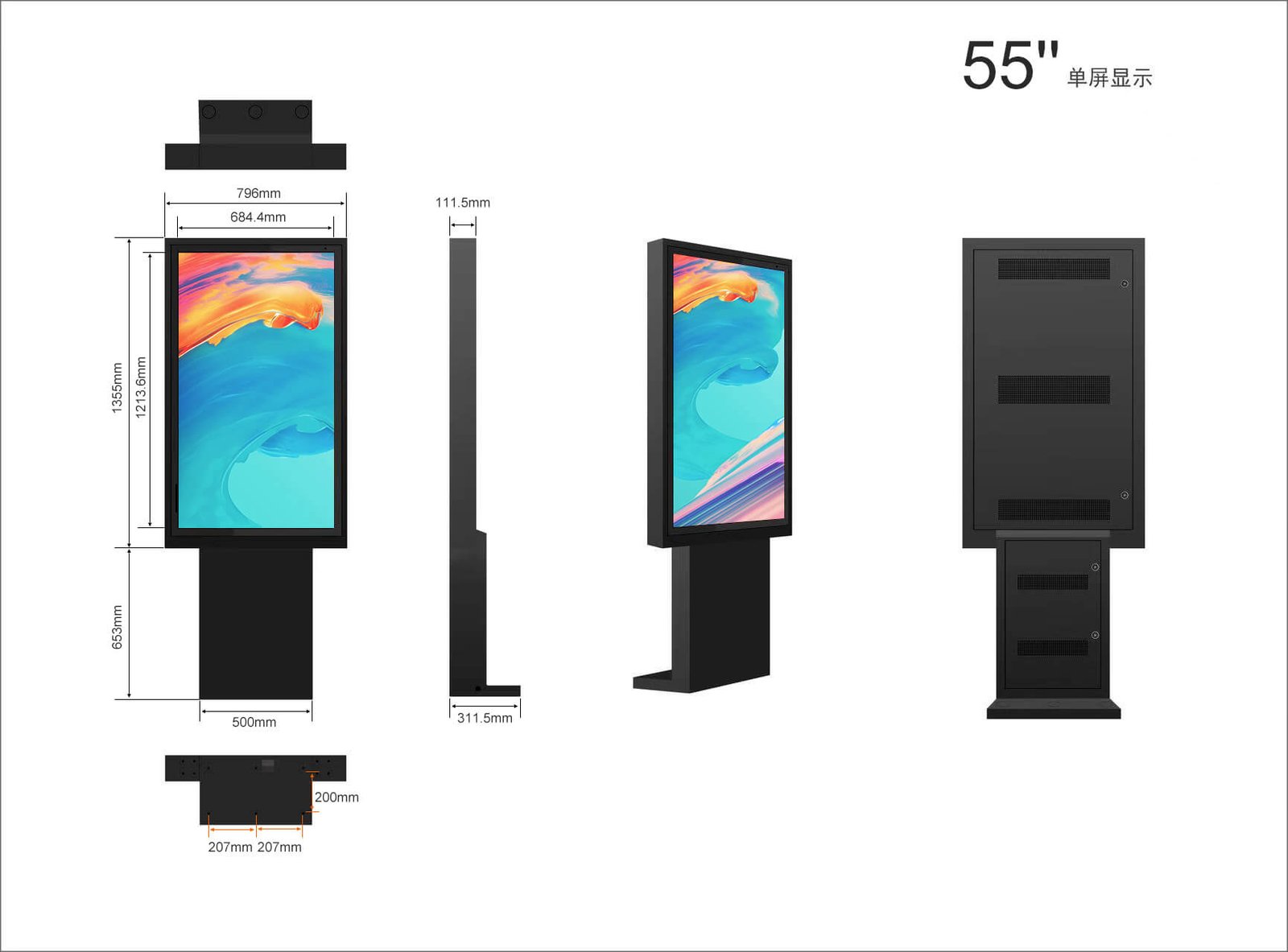
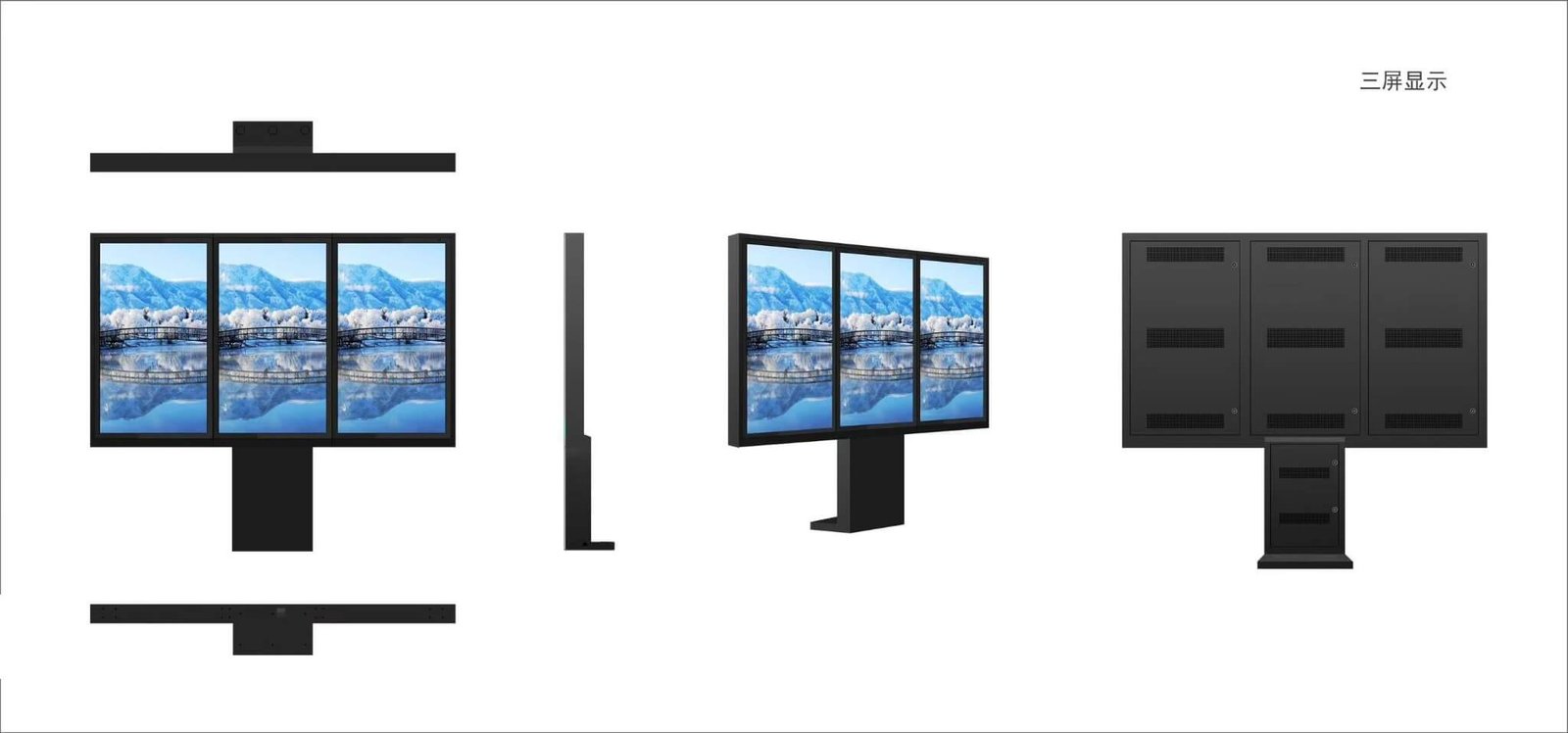
Present menus, offers and ordering information with one, two or three portrait screens. Review content layout, driver viewing position, screen spacing, brightness control and maintenance access together.
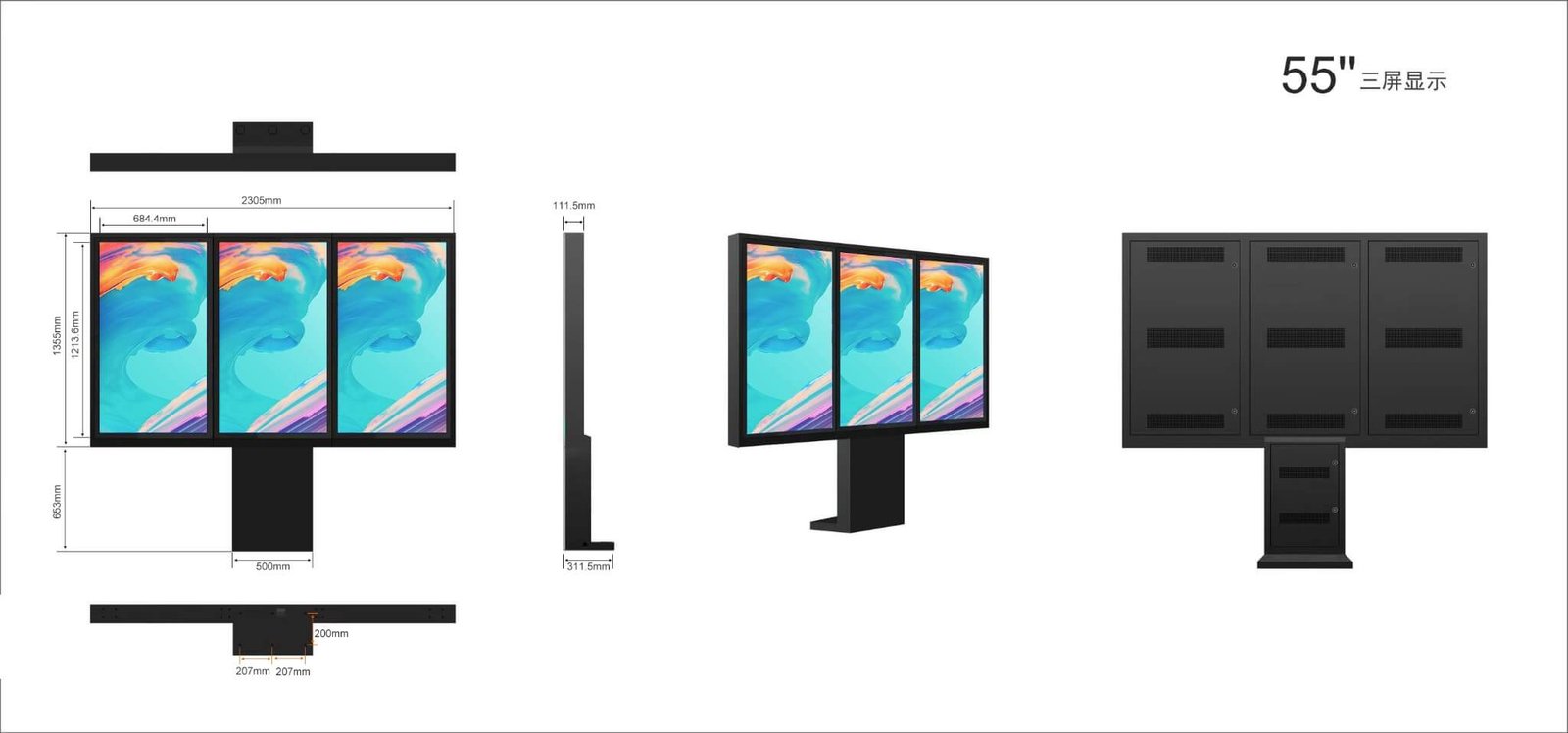
| 55-Inch Menu System | Screen Count | Display Assembly W × H × D (mm) | Pedestal Height (mm) | Overall Height (mm) | Base Depth (mm) |
|---|---|---|---|---|---|
| Single-screen | 1 | 796 × 1355 × 111.5 | 653 | 2008 | 311.5 |
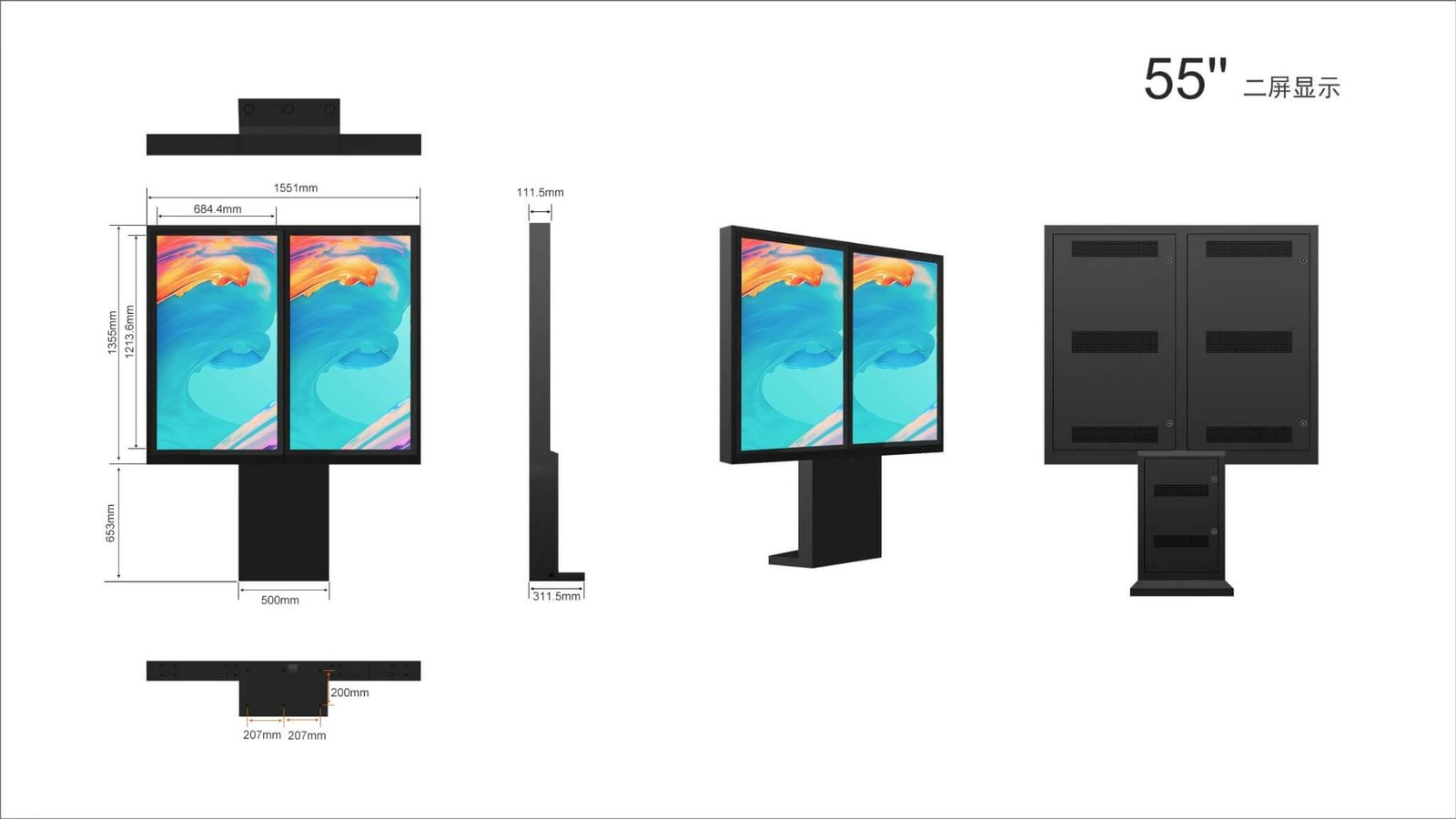
| Dual-screen | 2 side-by-side | 1551 × 1355 × 111.5 | 653 | 2008 | 311.5 |
| Triple-screen | 3 side-by-side | 2305 × 1355 × 111.5 | 653 | 2008 | 311.5 |
Each 55-inch screen area is shown as 684.4 × 1213.6 mm. Pedestal width is 500 mm. Overall height of 2008 mm is calculated from the drawing’s 1355 mm display assembly plus 653 mm pedestal height. Confirm baseplate, anchoring and foundation details for the selected site.
Dual- and triple-screen menu boards place two or three screens side-by-side facing one audience. A double-sided display has screens facing opposite directions. The menu systems shown here are side-by-side configurations.
DisplayMan offers high-brightness outdoor TV configurations for landscape viewing and wall-mounted installations. The four reference models below feature 4K resolution and 1500–2000 nit brightness options. Custom sizes and industrial-grade configurations can be reviewed according to project requirements.
Designed for home patios, gardens and outdoor entertainment spaces. The standard reference configuration uses an IP55-rated enclosure and is supplied without tempered cover glass. Size, brightness and TV or display-controller options are selected for the installation.
A commercial configuration with an IP65-rated enclosure, full optical bonding and tempered protective glass. Intended for commercial outdoor viewing where the front assembly and environmental protection need to match the project requirements.
Both residential and commercial outdoor TV designs can be developed to meet IP65 requirements. The final rating applies to the specified complete assembly and must be confirmed for the ordered configuration. The model table below describes the IP55 reference configuration; its standard-grade panel and absence of tempered glass do not describe the IP65 commercial version.
| No. | Model | Size | Aspect Ratio | Active Display Area W × H (mm) | Resolution (pixels) | Brightness Options |
|---|---|---|---|---|---|---|
| 1 | FSTV550-D20-Z | 55 inch | 16:9 | 1209.6 × 680.4 | 3840 × 2160 | 1500–2000 nits |
| 2 | FSTV650-D20-Z | 65 inch | 16:9 | 1428.4 × 803.5 | 3840 × 2160 | 1500–2000 nits |
| 3 | FSTV750-D20-Z | 75 inch | 16:9 | 1649.6 × 927.9 | 3840 × 2160 | 1500–2000 nits |
| 4 | FSTV860-D20-Z | 86 inch | 16:9 | 1895 × 1065.9 | 3840 × 2160 | 1500–2000 nits |
Customization is available according to customer requirements, including review of an industrial-grade configuration. IP55 does not mean submersible protection. The IP55 reference configuration has no tempered cover glass; the IP65 commercial configuration includes full optical bonding and tempered protective glass. Touch, brightness, mounting and environmental requirements must be confirmed for the final assembly. Backlight MTBF is a reliability reference, not a guaranteed service life for the complete display.
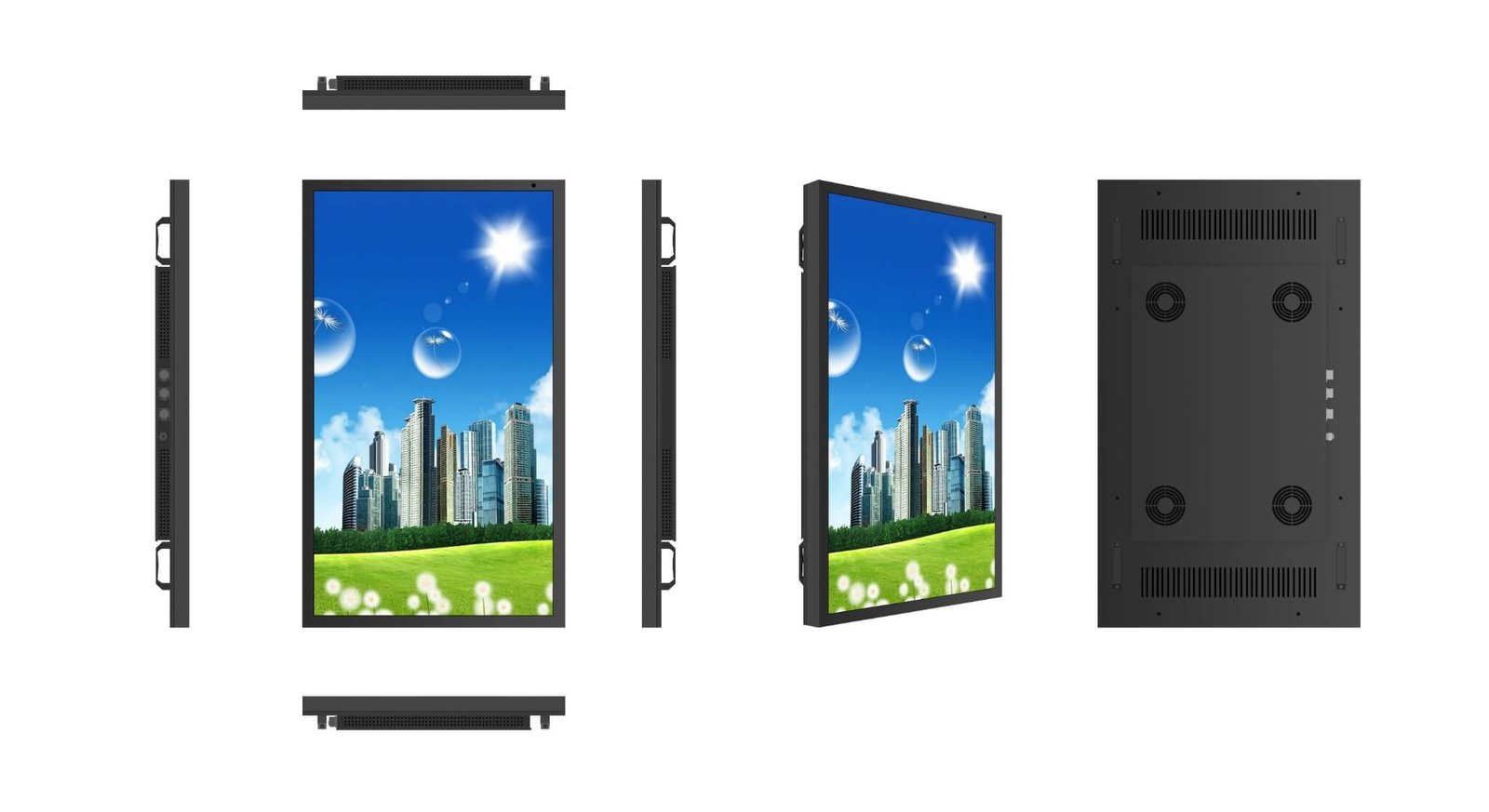
Review floor-standing signage, enclosed monitor assemblies and front/rear product references. Enclosure appearance does not establish an IP rating or confirm touch capability; the selected configuration determines these specifications.
Open sky, street lighting, nearby glass and reflected sunlight change the required visible contrast.
Sun direction affects visibility and creates additional LCD and enclosure heat.
Glass treatment, air gap and viewing angle influence readability as much as panel brightness.
Screen size, resolution, text size and content layout must match the real audience distance.
Manual, scheduled or sensor-based dimming can reduce glare and power after dark.
Higher luminance increases backlight power and thermal load inside the outdoor enclosure.
The correct solution balances luminance, reflection, front glass, solar loading, thermal control, viewing angle and content.
Seals, roof design, drainage, cable glands and access panels must control water paths.
Ventilated systems require suitable filtration and a practical filter-maintenance plan.
Temperature changes may create internal moisture even when rain cannot enter.
Materials, coating, fasteners and finish should match the local environment and service life.
Front glass, locks, concealed fasteners and enclosure strength must suit public-facing use.
Front, rear or side maintenance must remain possible without compromising weather sealing.
IP65 commercial outdoor configurations and IP55 outdoor TV reference configurations have different protection specifications. Confirm the rating of the complete ordered assembly, including the front, doors, cable entries and cooling structure. Installation must preserve the specified sealing and drainage. An IP rating alone does not establish suitability for continuous operation in every climate.
Direct sun can raise the front-glass, LCD surface and internal air temperature.
High-brightness LED backlights create continuous internal heat during operation.
The illustrated updated enclosure versions use an aluminum heat sink to dissipate heat without cooling fans. This approach is suitable only where the selected configuration and operating conditions meet the thermal requirements.
Fanless cooling does not mean the entire display is maintenance-free. Brightness, ambient temperature, solar exposure and installation clearance must be reviewed before confirming this configuration.
The earlier enclosure versions use traditional built-in fans for forced-air cooling. Fan quantity and layout depend on the model; the six-fan rear view describes the illustrated unit only.
Sealed or demanding environments may require closed-loop or active cooling.
Cold climates may require heaters, controlled startup and component selection for low temperatures.
Maximum and minimum temperature, sun direction, daily operating hours, altitude, humidity and enclosure color all affect the final design.
Outdoor High Brightness Displays are configured by project. The following table defines the engineering scope rather than one universal model.
| Item | Project Direction |
|---|---|
| Display Size | Selected from available commercial LCD platforms and the installation structure |
| Orientation | Portrait or landscape, subject to LCD and thermal confirmation |
| Brightness | Project-specific according to sunlight, reflection, viewing distance, front glass and heat |
| Enclosure | Wall-mounted, floor-standing, pole-mounted, double-sided, embedded or custom outdoor housing |
| Front Glass | Tempered or laminated safety glass with optional printing and AG / AR / AF treatment |
| Thermal Control | Illustrated updated enclosure versions: fanless cooling with an aluminum heat sink, subject to thermal suitability. Earlier enclosure versions: built-in cooling fans. Confirm cooling against brightness, ambient temperature, solar exposure and installation clearance. |
| Weather Protection | IP65 commercial outdoor configurations available; IP55 outdoor TV reference configurations are listed separately. Confirm the complete assembly rating and installation requirements for the selected model. |
| Media System | Android, Windows, external media player, USB playback, HDMI input or CMS |
| Content Control | Local playback, scheduled playback, remote update or multi-location management |
| Dimming | Manual, scheduled or ambient-light-based brightness control |
| Touch | Optional outdoor PCAP or project-specific touch system |
| Power | Project-specific input, internal distribution, protection, grounding and surge strategy |
| Operating Schedule | Daily or continuous operation is confirmed for the selected configuration against ambient temperature, solar exposure, thermal capacity, component duty cycle and maintenance requirements. |
| Maintenance | Front, rear or side service access according to installation and enclosure design |
The product images on this page illustrate signage configurations. Touch, glove operation, rain rejection and optical bonding must be confirmed for the selected model. For interaction-led projects, review Outdoor Waterproof Touch Screen Displays.
Interactive operation for public kiosks, wayfinding, ticketing and service terminals.
Touch tuning must consider water, droplets, wet fingers and accidental input.
Glove thickness and required touch sensitivity should be confirmed for the application.
Glass thickness, safety, strength, impact resistance and optical performance must be balanced.
Can reduce internal reflection and improve front-assembly strength and readability.
Screen height, reach, wheelchair access, viewing angle and local accessibility requirements matter.
Review Outdoor Waterproof Touch Screen Displays when touch interaction is a primary requirement rather than an optional feature.
Commercial streets, plazas, entrances, shopping centers and public advertising.
City announcements, community information, public notices and emergency messages.
Bus stops, railway stations, airports, parking areas, schedules and wayfinding.
Outdoor menus, promotions, ordering information and restaurant campaigns.
Fuel prices, forecourt advertising, service information and convenience-store promotion.
Entrances, outdoor plazas, commercial corridors and event spaces.
Public service information, guidance, community communication and digital infrastructure.
Visitor guidance, announcements, safety information and outdoor communications.
Factories, logistics yards, ports, energy sites and operational outdoor areas.
Illustrative scenes show signage placement at a transport station, drive-through lane, coffee shop and restaurant entrance.
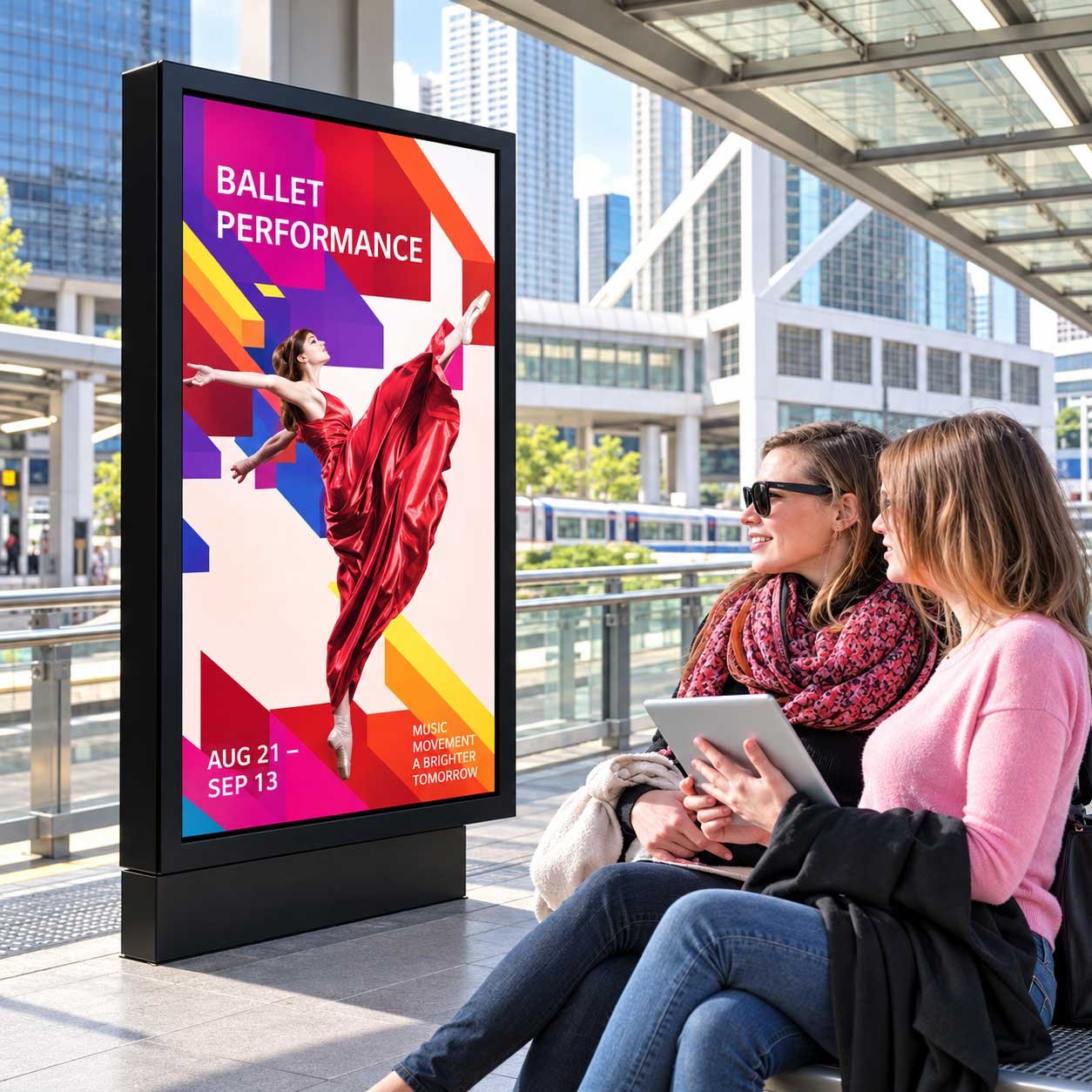
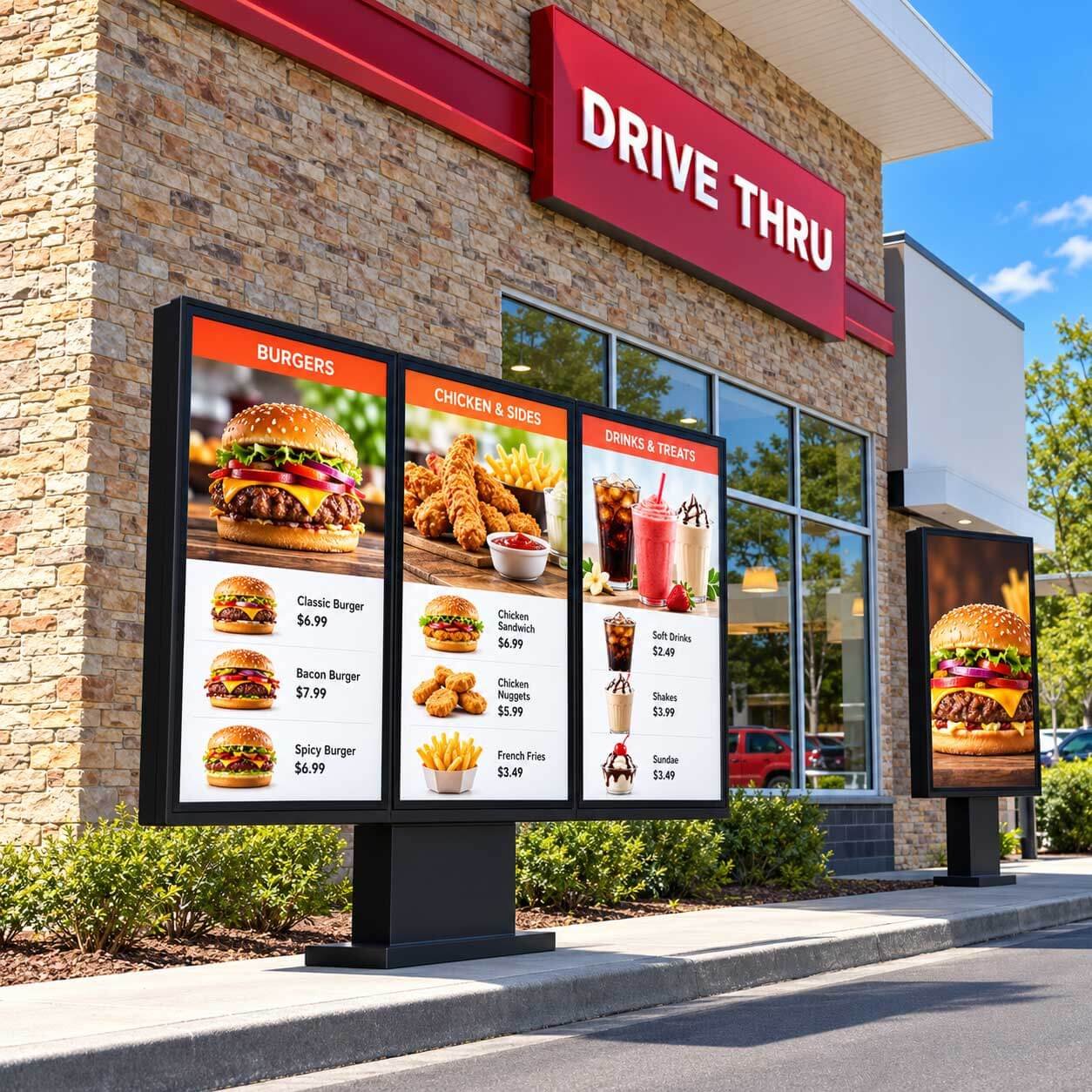
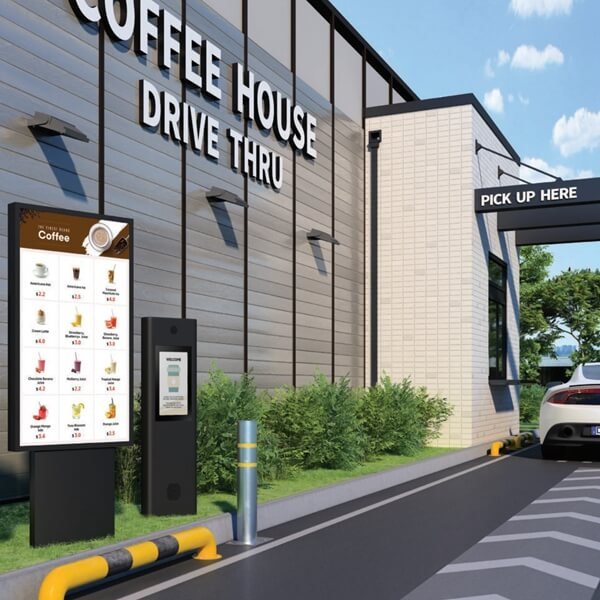
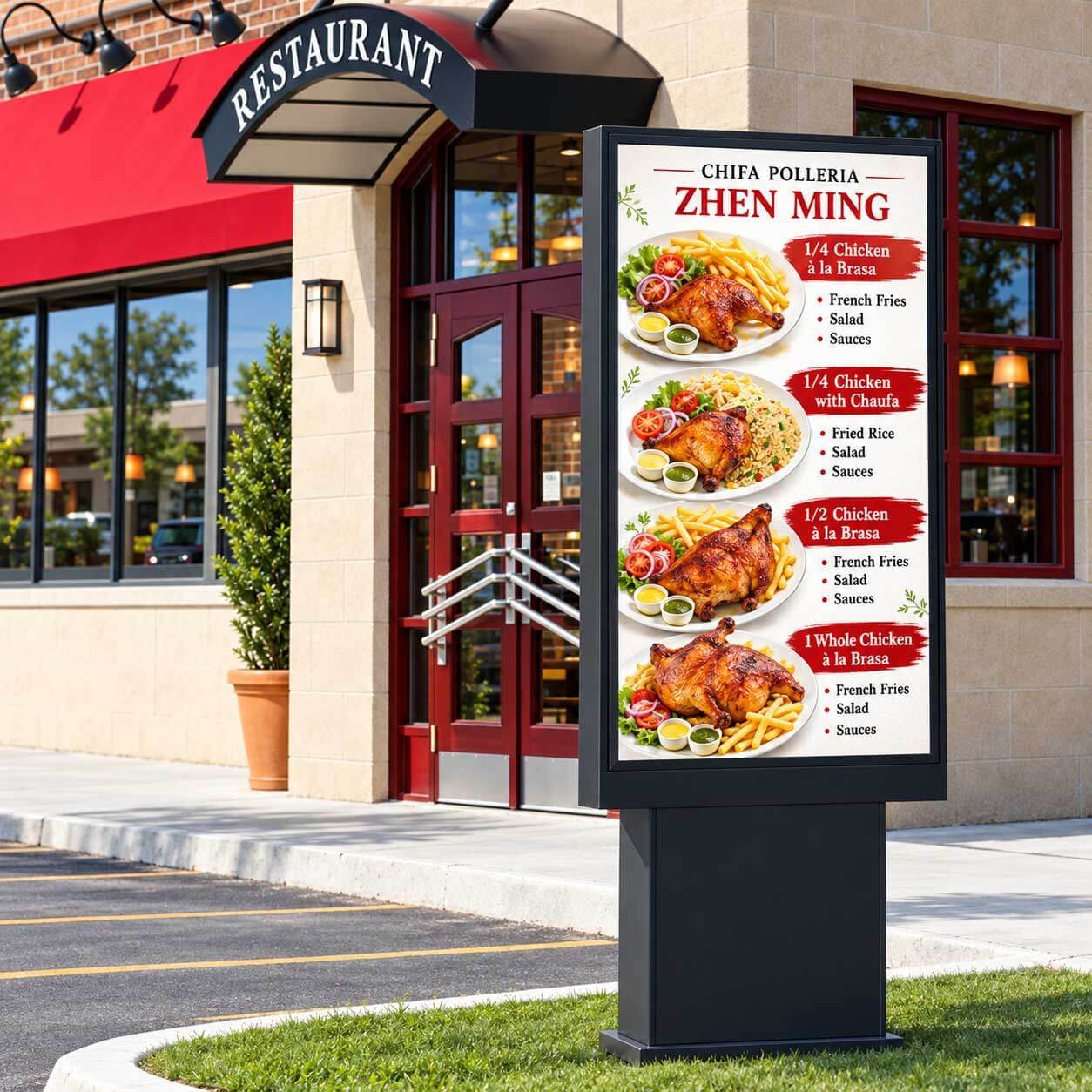
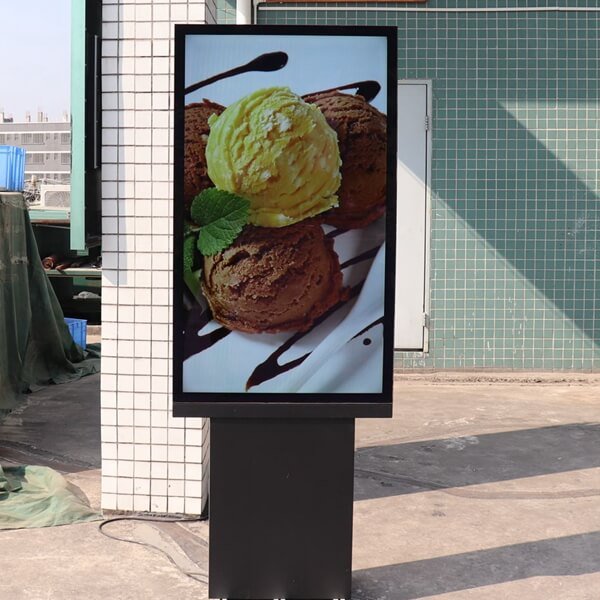
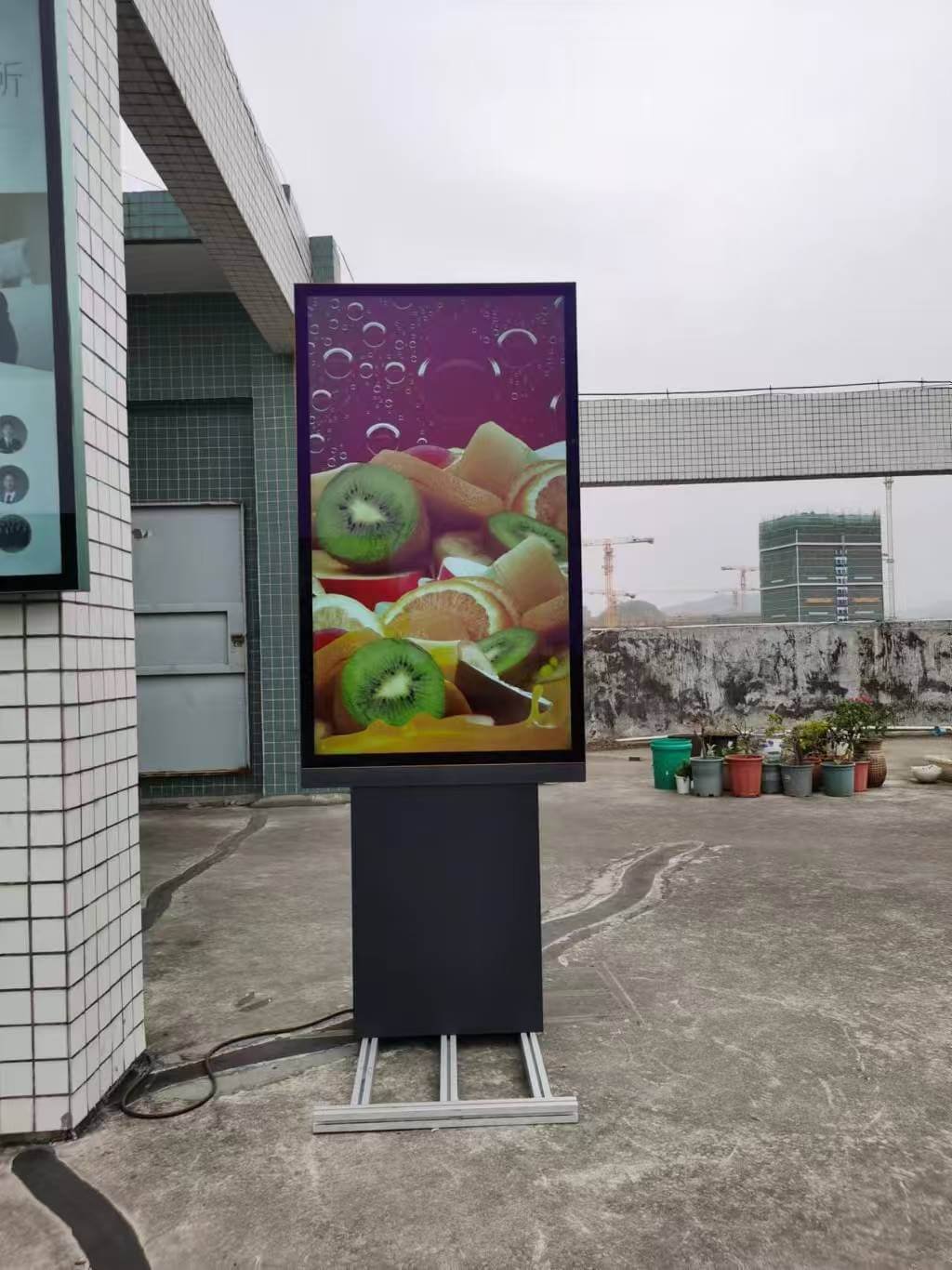
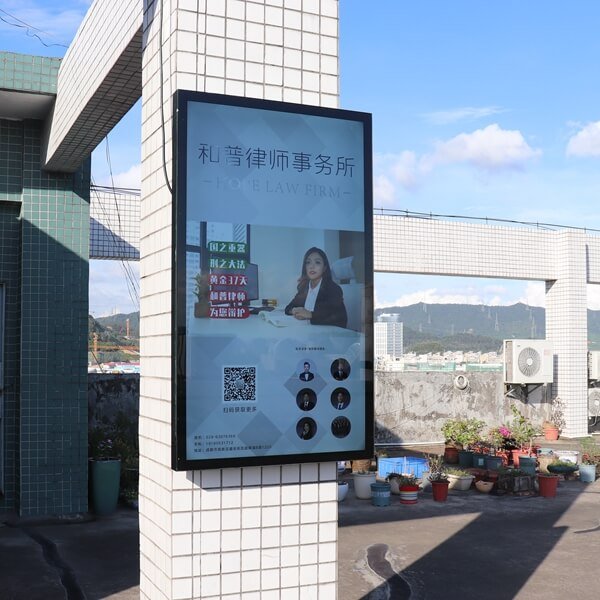
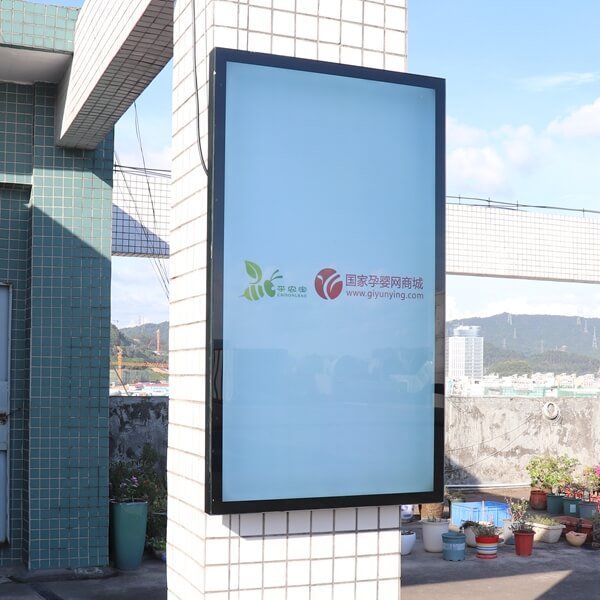
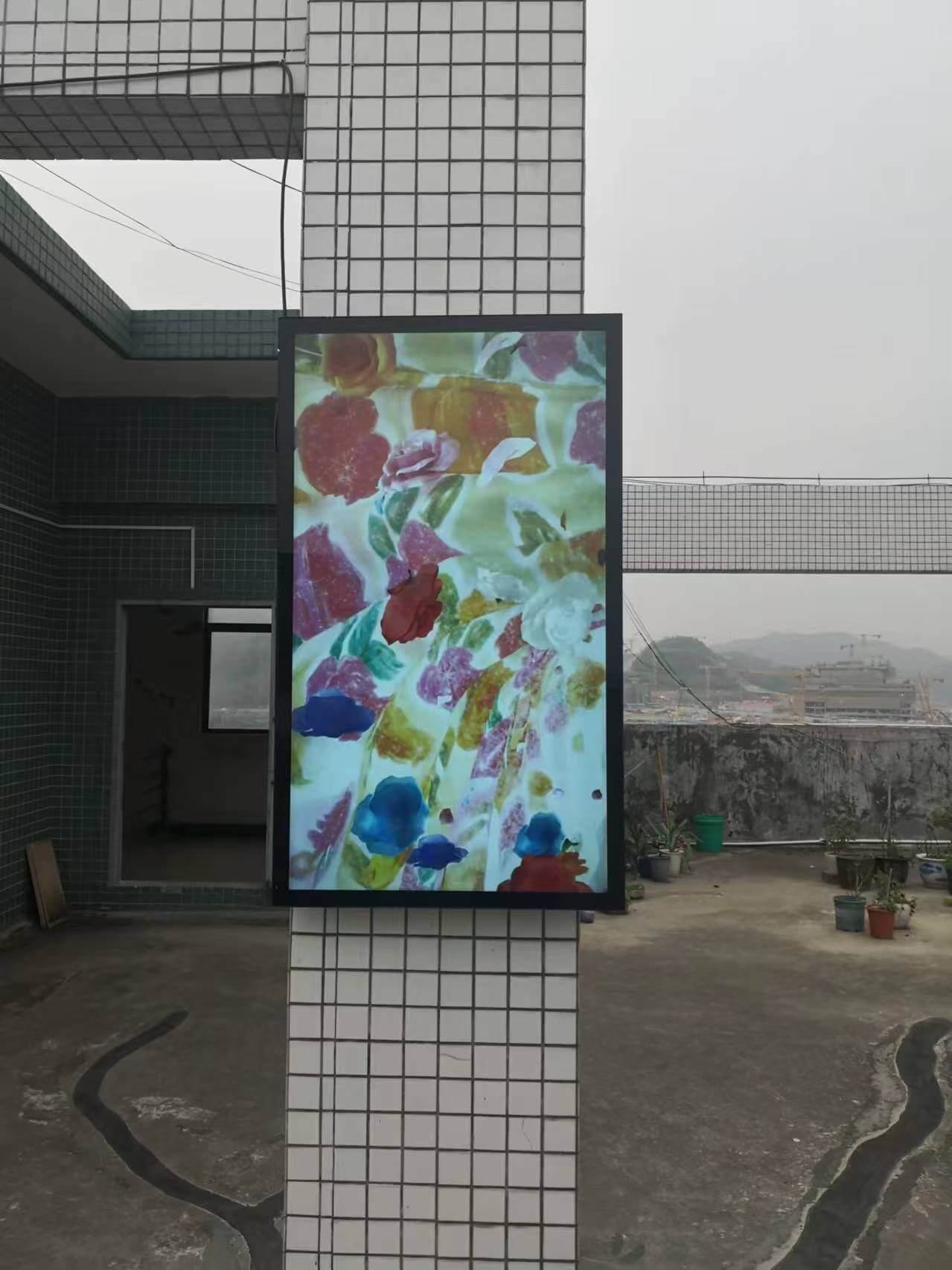
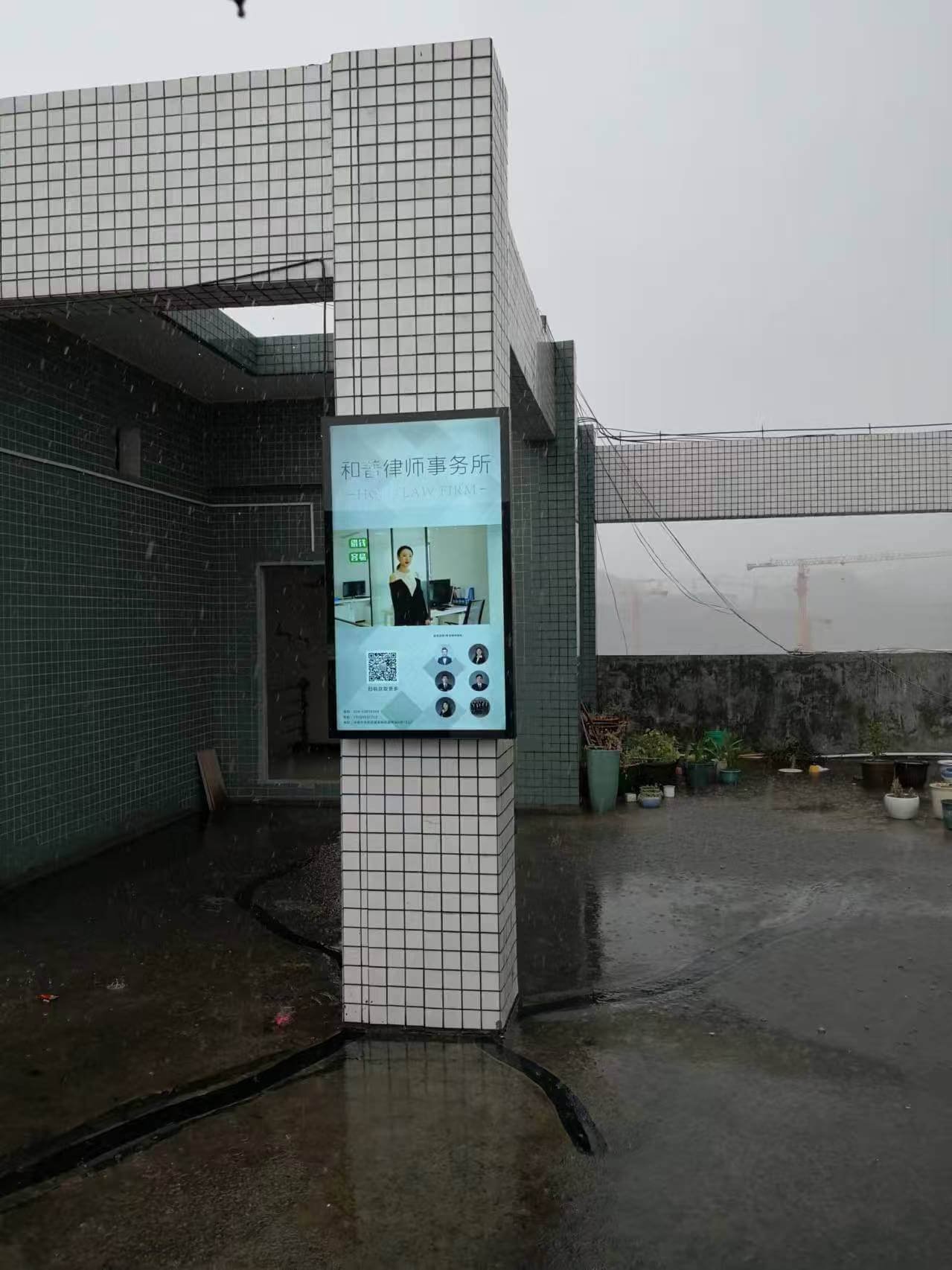
Wall-mounted displays, freestanding menu signage and side-by-side menu-board structures in the supplied photo collection. Review the installation position, available service space and mounting approach for your project.

| Factor | Outdoor High Brightness Display | Window Facing Display | Open Frame High Brightness Monitor | Outdoor Waterproof Touch Screen Display |
|---|---|---|---|---|
| Main Use | Outdoor public display | Indoor display facing outside viewers | OEM embedded display integration | Outdoor interaction and self-service |
| Enclosure | Finished outdoor protective housing | Slim commercial indoor housing | Open metal frame or simplified chassis | Embedded assembly with protected front panel or complete enclosed monitor |
| Weather Protection | Integrated into the finished display | Provided by the building | Provided by the customer’s equipment | Front-panel or full-enclosure protection as specified; confirm the IP rating for the complete assembly |
| Installation | Outdoor or semi-outdoor | Indoors near storefront glass | Inside a machine, kiosk or cabinet | Public kiosk, wayfinding or service terminal |
| Main Customer | Signage operators, retailers and public projects | Retailers, banks, restaurants and real estate offices | OEMs, kiosk builders and equipment manufacturers | Kiosk integrators and public-service projects |
| Main Engineering Concern | Sunlight, weather, thermal control, structure and uptime | Glass reflection, solar heat and audience direction | Mechanical, electrical and front-assembly integration | Water protection scope, touch performance, glass, accessibility and environmental reliability |
Full outdoor, semi-outdoor, covered, coastal, dusty, cold, hot or high-humidity environment.
Sun direction, viewing distance, audience movement, text size and content type.
Wall-mounted, floor-standing, double-sided, pole-mounted, embedded or custom.
Temperature, rain, dust, condensation, cooling, corrosion and public-impact risk.
USB, HDMI, Android, Windows, CMS, remote control and optional touch.
Foundation, wall strength, lifting, power, grounding, access, spare parts and local service.
Foundation, wall strength, wind load, lifting, anchoring, electrical work, grounding, permits and final installation safety must be handled or approved by qualified local professionals.
| Related Page | When to Visit |
|---|---|
| High Brightness LCD Displays | Overview of the complete High Brightness LCD product family |
| Open Frame High Brightness Monitors | OEM embedded high-brightness display assemblies |
| Window Facing Displays | Indoor signage facing storefront glass and street viewers |
| Outdoor Waterproof Touch Screen Displays | Waterproof touch screen displays for kiosks, EV chargers and public self-service terminals |
| Outdoor High Brightness Display Solutions | Application and system-level outdoor display planning |
| Rugged Outdoor Terminal Solution | Public terminals, kiosks and equipment requiring stronger integration |
| Optical Bonding Display Solution | Reduce reflection and improve front-assembly performance |
| High Brightness vs Normal Display | Evaluate luminance, reflection, viewing and thermal requirements |
| Outdoor vs Indoor Display | Confirm the correct product route for the real environment |
| Digital Signage Displays | Commercial signage, media players and content systems |
| All-in-One Touch Display PCs | Integrated computing and touch display systems |
| Transparent LED Displays | Large-format transparent outdoor and architectural media alternatives |
It is a complete outdoor LCD display system combining a high-brightness panel, protected enclosure, front glass, thermal control, power, controller and mounting structure for outdoor or semi-outdoor use.
Yes. A Window Facing Display is installed indoors behind glass. An Outdoor High Brightness Display is built as a weather-protected finished product for outdoor or semi-outdoor installation.
Yes. An Open Frame High Brightness Monitor is an embedded display engine for integration into the customer’s equipment. An Outdoor High Brightness Display includes a finished outdoor enclosure and environmental protection.
It can be configured for strong daylight and sunlight-readable applications, but brightness, reflection, LCD temperature, solar loading, viewing direction and cooling must be reviewed together.
No. Excessive luminance increases power, heat and night glare. The correct solution provides enough daytime visibility and supports suitable dimming and thermal control.
Outdoor models can be designed with weather-resistant structures, but the final IP level depends on the complete enclosure, seals, cable entries, ventilation system, drainage and project configuration.
IP65 configurations are available for commercial outdoor installations; the outdoor TV reference models on this page are IP55 configurations. Confirm the protection rating and environmental suitability of the complete ordered unit. Rain and dust exposure, temperature, solar loading and operating hours must match the selected design, and installation must preserve sealing, drainage, cable protection and service access.
The illustrated updated enclosure versions use fanless cooling with an aluminum heat sink, while the earlier versions use traditional built-in cooling fans. Fanless cooling eliminates cooling-fan noise, removes fan servicing and replacement tasks, and reduces mechanical failure points by eliminating rotating fan components. It is suitable only for configurations that meet the thermal requirements; brightness, ambient temperature, solar exposure and installation clearance must be reviewed. The entire display still requires appropriate maintenance.
The design may require sealing, drainage, ventilation, heaters, dehumidification or controlled air exchange. Condensation risk must be reviewed from temperature, humidity and operating cycle.
Yes. Outdoor touch can be added for kiosks, wayfinding, ticketing and public terminals. For interactive projects, explore Outdoor Waterproof Touch Screen Displays. Confirm front-panel or full-enclosure protection for the selected configuration. Wet-touch operation, glove support, glass thickness, optical bonding and false-touch rejection are reviewed separately.
Yes. Double-sided outdoor displays can serve pedestrian traffic from both directions, but they require additional structural, thermal, power and maintenance planning.
Yes. Wall-mounted, floor-standing, pole-mounted, embedded, double-sided and project-specific structures can be reviewed.
Yes. Android, Windows, external media players or networked CMS systems can support scheduled playback, remote updates and multi-location management.
Continuous operation can be reviewed, but the selected LCD, backlight, cooling, power system and maintenance plan must be configured for the required duty cycle.
Outdoor front glass may include tempered or laminated safety glass with project-specific thickness, printing and optional AG, AR or AF treatment.
Yes. Optical bonding can improve readability, reduce internal reflection and strengthen the front assembly, but glass size, service strategy and outdoor temperature must be reviewed.
DisplayMan can support product and structure review. Local foundations, wall strength, lifting, anchoring, electrical work, grounding, permits and final installation safety should be handled by qualified local professionals.
Please provide screen size, installation location, sunlight direction, outdoor exposure, temperature range, mounting method, touch requirement, operating hours, content system, quantity, destination, certifications and schedule.
Send us the screen size, installation location, sunlight direction, outdoor exposure, temperature range, mounting method, touch requirement, operating hours, content system, quantity, destination, certifications and schedule.
We will review the suitable LCD platform, enclosure, front glass, thermal control, protection structure, mounting, system and maintenance method for the real environment.
An outdoor display is a complete system. Brightness, weather protection, thermal control, structure, power, maintenance and local installation must be planned together.