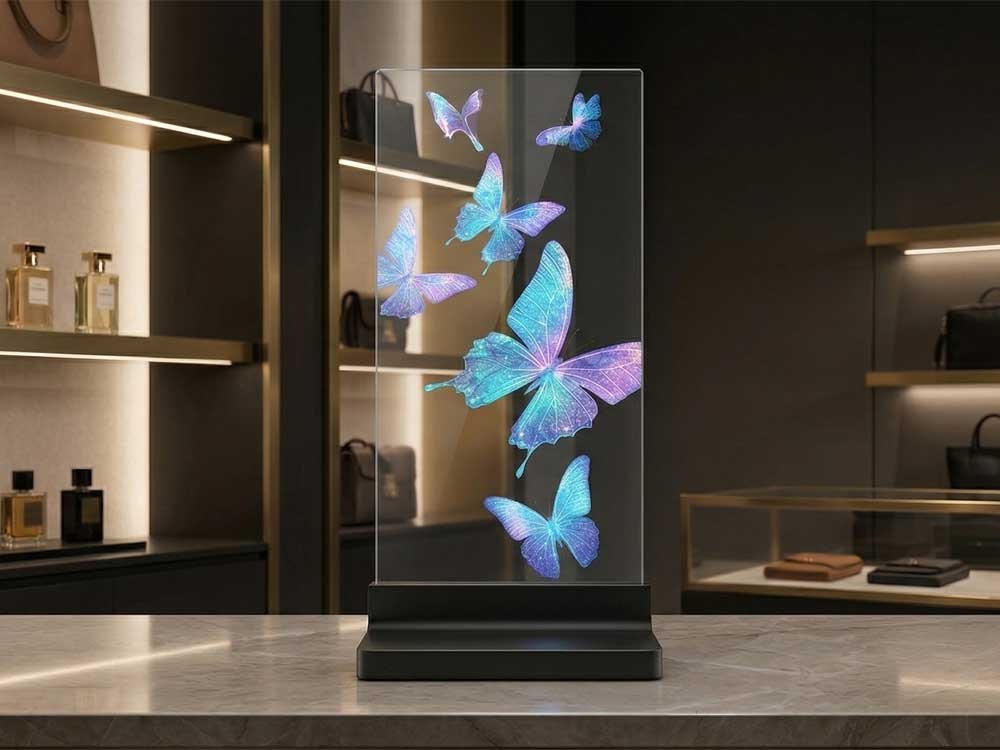
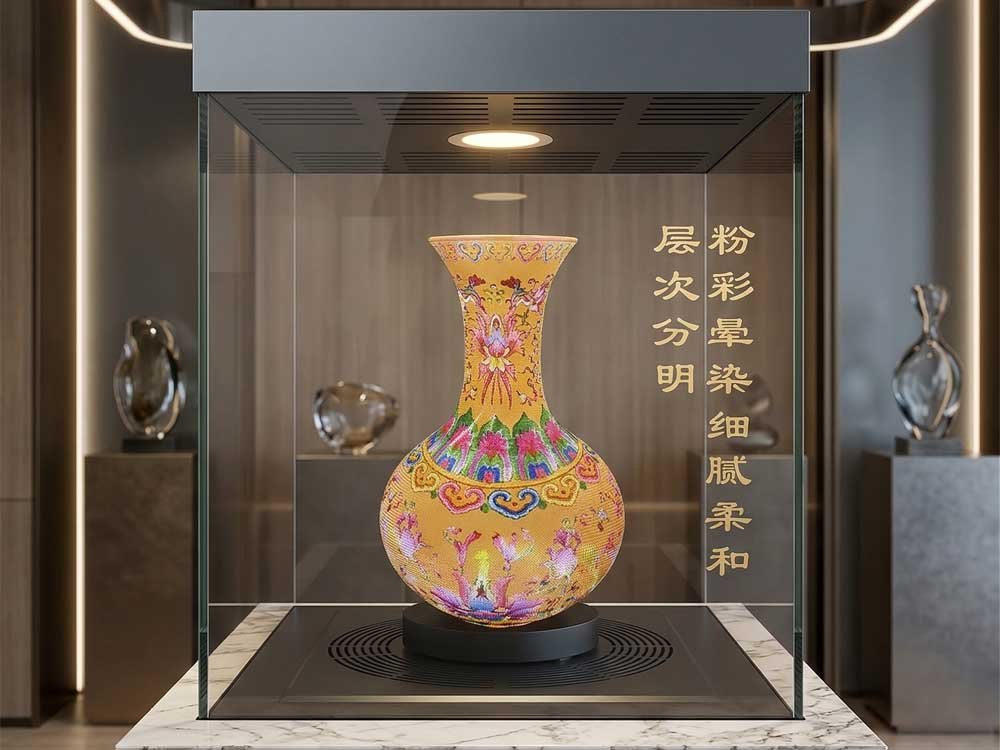
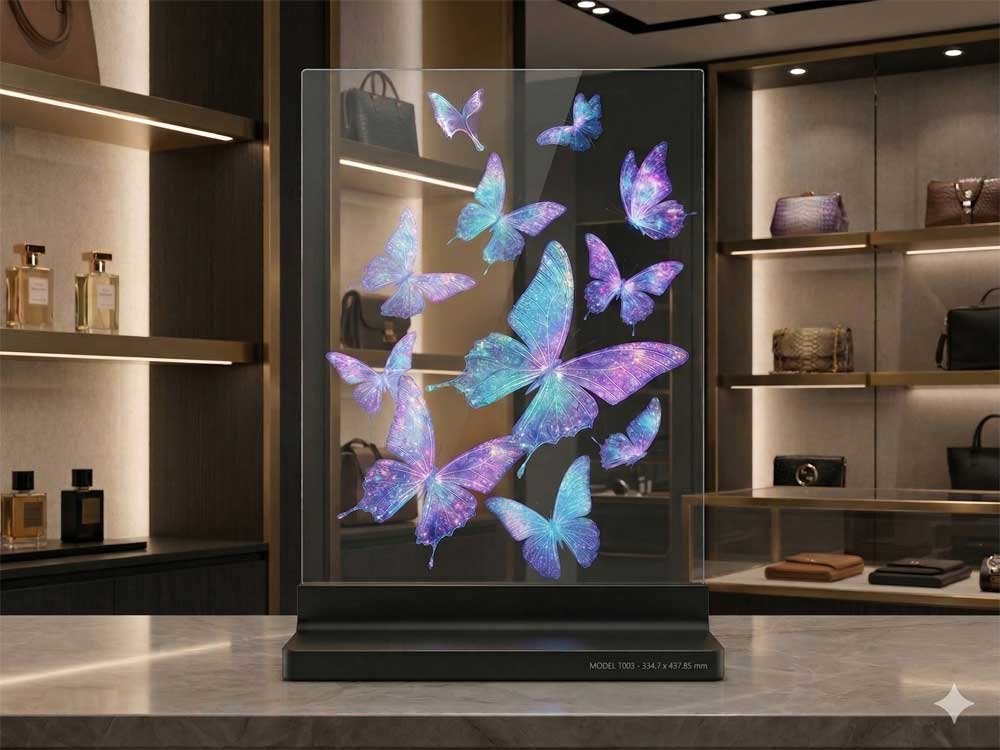
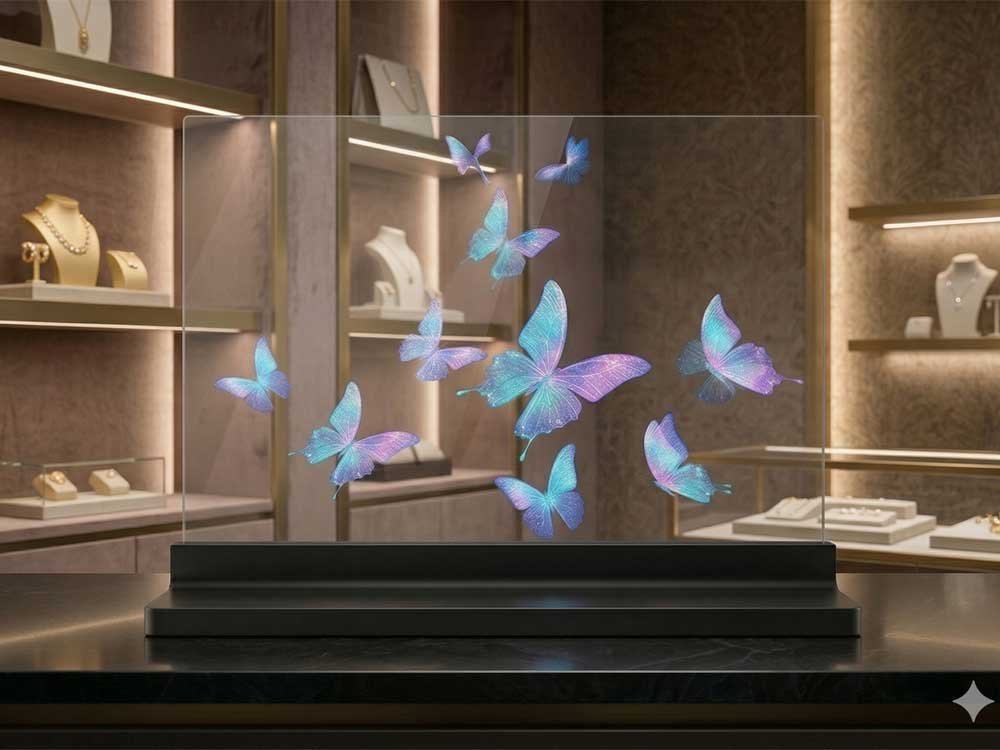
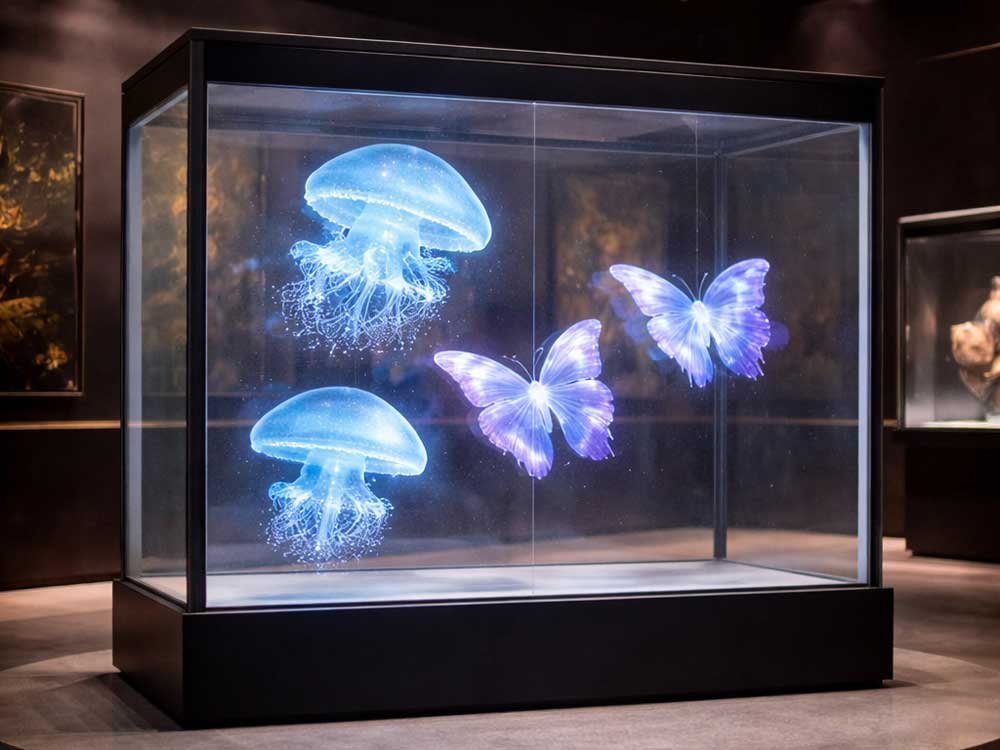
Stronger Bright-Environment Direction
Selected Transparent Micro LED models offer substantially higher brightness than many transparent OLED products, making the technology relevant to premium retail and bright indoor environments.
Engineered by the Manufacturer for High-Impact Environments
Purpose-built transparent Micro LED displays designed for >60% transmittance, industrial-grade brightness, and zero-burn-in longevity.
As a manufacturer, DisplayMan delivers transparent systems engineered to perform reliably under high ambient light and continuous 24/7 operation, where visual clarity and long-term stability are critical.
At DisplayMan, we specialize in creating innovative Transparent LED Displays that seamlessly integrate with your environment. Ideal for architectural facades, retail spaces, and dynamic advertising, our displays offer high-definition visuals while maintaining transparency. Discover how DisplayMan’s cutting-edge technology can elevate your space with captivating, interactive experiences.
9.4-inch (Model T001): Our most compact powerhouse featuring an incredible 3,000 nits of brightness for high-detail luxury displays.
| Parameter | Specification |
|---|---|
| Model | T001 |
| Resolution | 768 × 840 |
| Dynamic Contrast Ratio | 1,000,000:1 |
| Viewing Angle | 120° / 178° |
| Transmittance | >60% |
| Brightness | 3000 cd/m² |
| Color Gamut | 115% |
| Lifetime | 100,000 hours |
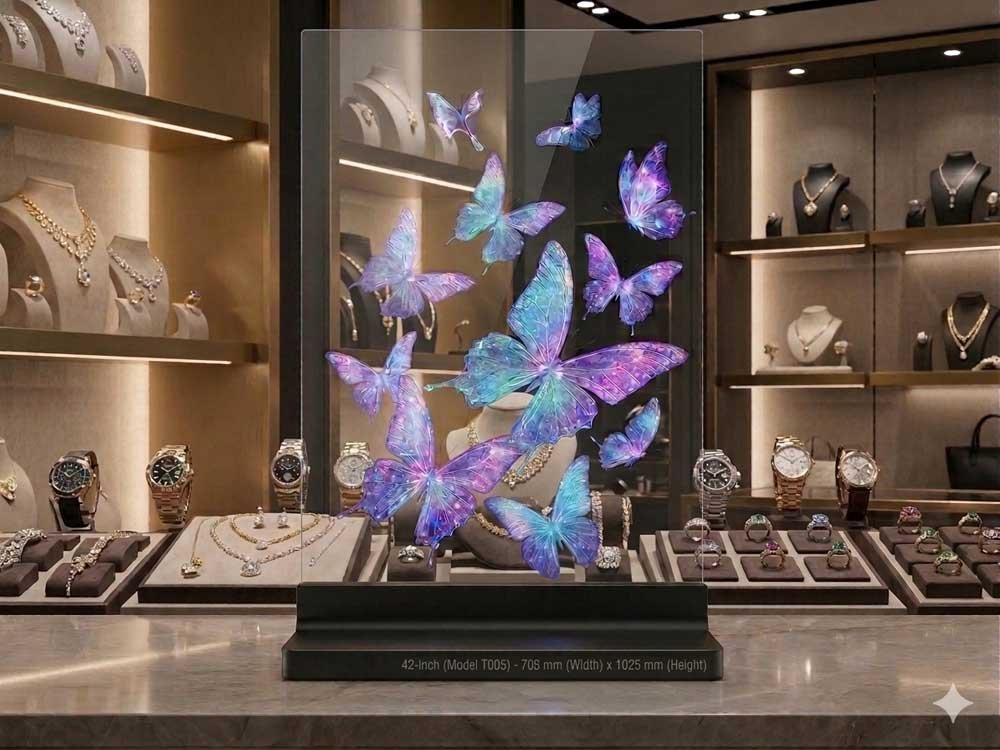
42-inch (Model T005): High-impact commercial display designed for luxury boutique showcases, measuring 706 mm (Width) x 1025 mm (Height).
| Parameter | Specification |
|---|---|
| Model | T005 |
| Resolution | 960 × 1080 |
| Dynamic Contrast Ratio | 1,000,000:1 |
| Viewing Angle | 120° / 178° |
| Transmittance | >60% |
| Brightness | >800 cd/m² |
| Color Gamut | 115% |
| Lifetime | 100,000 hours |
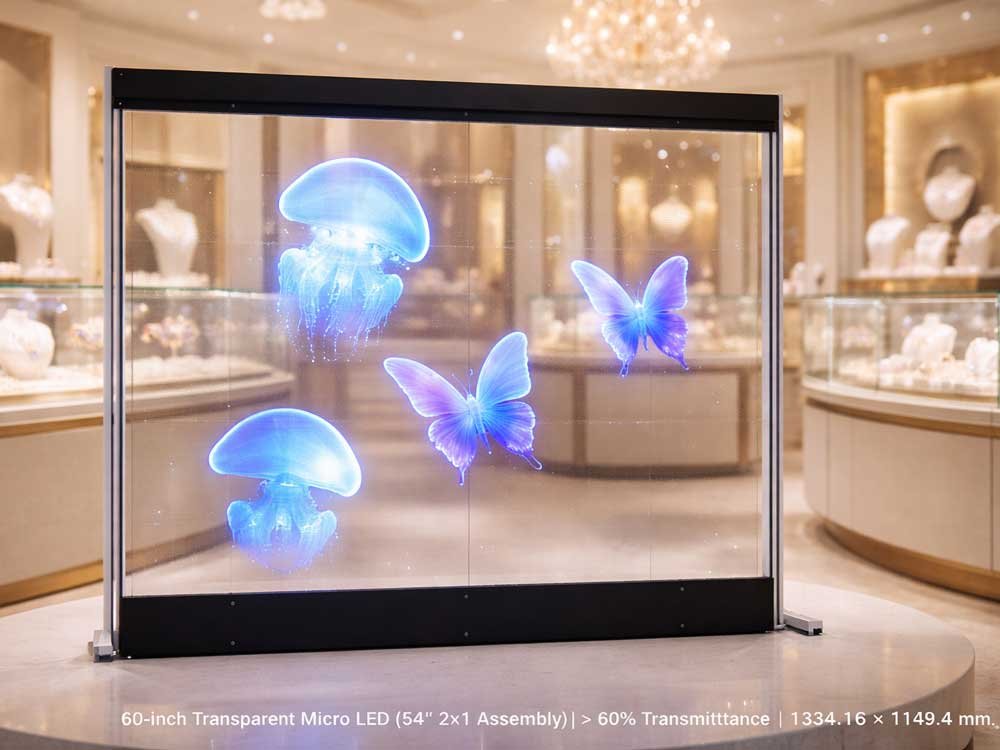
60-inch (54″ 2×1 Assembly | Model T007): High-definition 1920 x 1080 resolution achieved through precision module tiling, with dimensions of 1334.16 mm (Width) x 1149.4 mm (Height).
| Parameter | Specification |
|---|---|
| Model | T007 |
| Resolution | 1920 × 1080 |
| Dynamic Contrast Ratio | 1,000,000:1 |
| Viewing Angle | 120° / 178° |
| Transmittance | >60% |
| Brightness | 1200 cd/m² |
| Color Gamut | 115% |
| Lifetime | 100,000 hours |
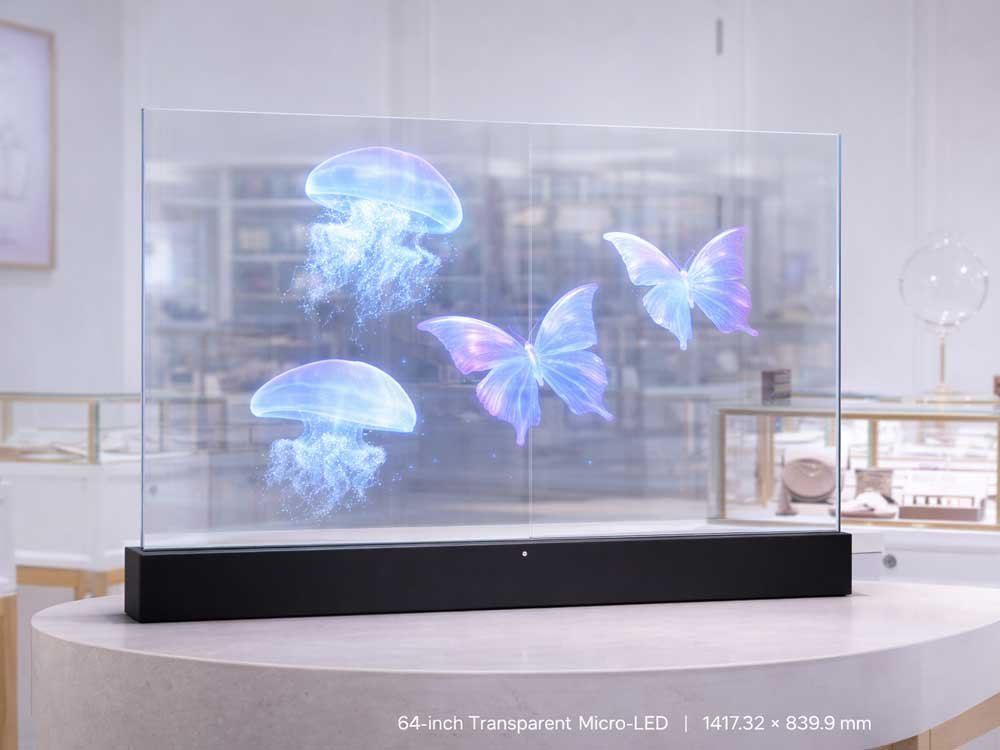
64-inch (Model T008): Ultra-wide format designed for expansive digital storefronts and galleries. This model features a physical footprint of 1417.32 mm (Width) x 839.9 mm (Height).
| Parameter | Specification |
|---|---|
| Model | T008 |
| Resolution | 1920 × 540 |
| Dynamic Contrast Ratio | 1,000,000:1 |
| Viewing Angle | 120° / 178° |
| Transmittance | >60% |
| Brightness | >800 cd/m² |
| Color Gamut | 115% |
| Lifetime | 100,000 hours |
83-inch (Model T009): Flagship seamless glass wall for monumental architectural and corporate installations. This display is achieved through a precision 2 x 1 assembly of 64-inch modules, creating a grand visual canvas with physical dimensions of 1412 mm (Width) x 1650 mm (Height).
| Parameter | Specification |
|---|---|
| Model | T009 |
| Resolution | 1920 × 1080 |
| Dynamic Contrast Ratio | 1,000,000:1 |
| Viewing Angle | 120° / 178° |
| Transmittance | >60% |
| Brightness | >800 cd/m² |
| Color Gamut | 115% |
| Lifetime | 100,000 hours |
The Expert Answer: Yes, especially for commercial and luxury environments. While OLED is known for “inky blacks,” it uses organic materials that decay, leading to burn-in and a limited lifespan (often only 3 years in high-use settings).
The Expert Answer: Unlike traditional LEDs or LCDs that use a backlight, a Micro LED display is self-emissive. Every single pixel is made of three microscopic LEDs (Red, Green, Blue) that produce their own light.
The Expert Answer: Currently, there are two main hurdles: Cost and Manufacturing Complexity.
The Expert Answer: Absolutely. Mini LED is still just an LCD with a better backlight; it still requires a liquid crystal layer to block light, which limits transparency and contrast (causing “blooming” or halos).
Stop relying on laboratory specs and see the real-world difference. In this side-by-side test, the limitations of traditional Transparent OLED (T-OLED) become undeniable:
• The Clarity Gap: Notice the “gray haze” on the OLED screen. Our Micro LED eliminates this “milky” film, delivering a transparency that feels like pure glass.
• The Brightness Battle: See how the OLED image washes out under studio lights. DisplayMan maintains vivid, punchy colors that demand attention even in high-ambient light.
• The “Floating” Effect: Watch how our $1,000,000:1$ contrast allows black pixels to disappear completely, making the content look like a holographic projection rather than a screen.
Transparent Micro LED combines self-emissive LED pixels with a transparent display structure so digital content can appear while physical products, exhibits or architecture remain visible behind the screen.
DisplayMan reviews Transparent Micro LED projects for premium retail, luxury showcases, museums, exhibitions, corporate showrooms, technology displays and selected bright indoor or window-facing applications.
Transparent Micro LED should be selected when the project value justifies higher brightness, high transparency, self-emissive image performance and a more refined transparent visual effect. For budget-sensitive or more standardized projects, Transparent OLED, Transparent LCD or Transparent LED may be more practical.
The following models and reference specifications are public product information and can be used for initial project selection. Final availability, pricing, lead time, controller configuration, mechanical structure and integration details should still be confirmed before order.
| Model | Size Direction | Resolution | Brightness | Transparency | Typical Use |
|---|---|---|---|---|---|
| T001 | 9.4 inch | 768 × 840 | 3000 cd/m² | >60% | Small product display, luxury showcase, compact transparent visual projects |
| T002 | 16.1 inch | 240 × 540 | >600 cd/m² | >60% | Shelf-edge display, product label overlay, compact wide-format display |
| T003 | 20 inch | 480 × 540 | >600 cd/m² | >60% | Modular square-format transparent display |
| T004 | 30 inch | 960 × 540 | >600 cd/m² | >60% | Mid-size transparent display for retail, exhibition and showcase projects |
| T005 | 42 inch | 960 × 1080 | >800 cd/m² | >60% | Vertical display, product showcase and high-end display window |
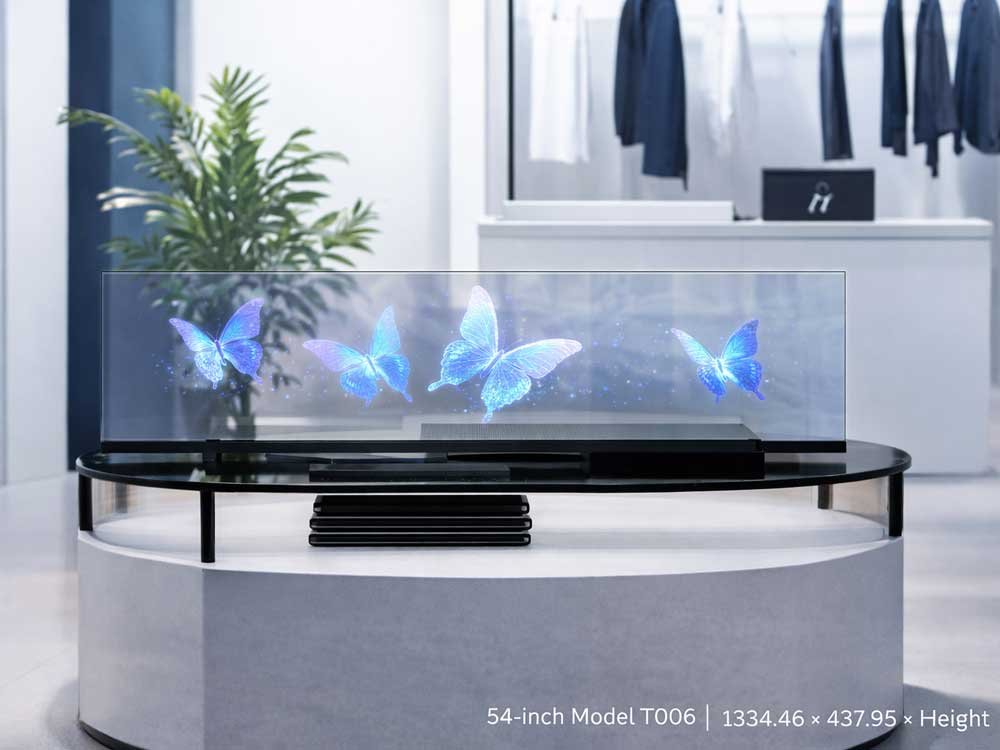
| T006 | 54 inch | 1920 × 540 | >600 cd/m² | >60% | Ultra-wide transparent display for showrooms and panoramic visual content |
| T007 | 60 inch | 1920 × 1080 | 1200 cd/m² | >60% | Full HD assembled transparent display system |
| T008 | 64 inch | 1920 × 540 | >800 cd/m² | >60% | Large-format ultra-wide transparent display |
| T009 | 83 inch | 1920 × 1080 | >800 cd/m² | >60% | Large assembled transparent display wall for flagship projects |
Dynamic contrast ratio: 1,000,000:1 · Color gamut: 115% · Lifetime reference: 100,000 hours · Signal input: HDMI / DP project review · Installation: frame, hanging, cabinet, showcase or custom structure review.
The model table above is public. What still requires project confirmation is the final controller / receiving architecture, electrical interface, mechanical integration, protection glass, cable routing, assembly structure, detailed lead time and final quotation.
Transparent Micro LED is still a new and rapidly developing technology, but the public product information on this page — including model names, sizes, resolutions, brightness, transparency and reference lifetime — can be shown openly. The information we do not publish is the much deeper 30–40 page engineering documentation used for detailed integration and product development.
Model number, size, resolution, brightness, transparency, lifetime reference, application direction and high-level technology comparison can be shown publicly.
Final availability, exact controller configuration, mechanical structure, integration scope, quantity pricing and lead time are confirmed according to the real project.
Complete 30–40 page specifications, detailed electrical interface information, pin definitions, timing, internal architecture, full mechanical drawings and other deep engineering documents are not published openly.
| Information Type | Public Website | Qualified Project / Engineering Review |
|---|---|---|
| Model number / size / resolution | Yes — public | Confirmed again before order |
| Brightness / transparency / lifetime reference | Yes — public reference | Final selected-platform confirmation |
| Application & selection logic | Yes | Project-specific recommendation |
| Micro LED vs OLED / LCD / Transparent LED comparison | Yes | Detailed comparison for the actual project |
| General price positioning | Yes — Micro LED is significantly more expensive | Final quotation based on size / quantity / integration scope |
| Full 30–40 page datasheet | No | Shared selectively when technically necessary |
| Detailed electrical interface / pin / timing information | No | Shared during engineering integration |
| Controller / receiving architecture details | Not in full | Shared for the selected configuration |
| Mechanical drawings / CAD / internal structure | Not in full | Shared selectively during project engineering |
| BOM / process / test details / unreleased revisions | No | Internal or NDA-controlled where applicable |
Transparent OLED and Transparent LCD have mature standard documentation that can often be shared immediately. Transparent Micro LED public specifications can also be shown, but the deeper engineering package is controlled because the technology is newer, integration is more project-specific and the detailed documents contain much more implementation information.
Transparent Micro LED is a self-emissive transparent display technology. Unlike LCD, it does not require a backlight. Unlike OLED, it uses inorganic LED emitters rather than organic light-emitting material.
Selected Transparent Micro LED models offer substantially higher brightness than many transparent OLED products, making the technology relevant to premium retail and bright indoor environments.
Micro LED avoids the organic emitter structure used by OLED and can be a better direction where long operating time, repeated logos or static content are important.
High transparency and self-emissive pixels allow digital labels, animation and product storytelling to appear in front of physical objects without using a conventional opaque display panel.
Transparent Micro LED is most appropriate where transparency, image impact and project value are all important.
Jewelry, watches, cosmetics, fashion and electronics where product information or animation should appear without hiding the physical item.
Digital overlays, labels and storytelling in front of artifacts, models or exhibits while preserving the view through the display.
Technology demonstrations, brand experiences and premium visitor spaces where a conventional opaque screen would weaken the visual design.
Selected bright indoor and window-facing applications where transparent OLED brightness may not provide enough visual impact.
Short-term premium presentations where a compact transparent display becomes part of the product or exhibition design.
Automotive-style, HUD-style, marine, aviation-style and special technical concepts should be reviewed as project engineering rather than assumed to be standard products.
Transparent Micro LED and Transparent OLED can both create premium see-through digital experiences, but they occupy very different positions in the market. Transparent OLED is the more mature and commercially practical premium product. Transparent Micro LED is the higher-performance, higher-cost engineering platform for projects where brightness, transparency, long operating life, modular size options or visual impact justify a much larger investment.
In DisplayMan's published Micro LED vs Transparent OLED comparison, Transparent Micro LED can be roughly 10–15× more expensive than Transparent OLED depending on size, configuration and project scope. This does not mean Micro LED is the automatic “better buy.” It means the project must gain enough value from brightness, transparency, modularity, long-term operating stability or premium visual impact to justify the additional cost. If those advantages are not needed, Transparent OLED is usually the more rational choice.
Higher-brightness directions, high transparency, inorganic self-emissive pixels, broader modular size engineering and stronger suitability for demanding premium installations.
More mature standard products, especially around 55 inches, lower acquisition cost, simpler specification and a well-established premium indoor transparent-display format.
A dim showroom, standard 55-inch signage project and a bright flagship showcase should not automatically use the same transparent display technology.
| Factor | Transparent Micro LED | Transparent OLED | What It Means for the Buyer |
|---|---|---|---|
| Emitter Technology | Inorganic self-emissive Micro LED pixels | Organic self-emissive OLED pixels | Both eliminate the LCD-style backlight, but their material systems, lifetime behavior and manufacturing economics are different. |
| Market Position | Premium / emerging / project-based | Premium / mature commercial product | OLED is easier to specify for standard projects; Micro LED needs stronger technical and commercial justification. |
| Typical Acquisition Cost | Extremely high; DisplayMan's published project comparison indicates approximately 10–15× OLED in some configurations | High, but much lower than Transparent Micro LED | Budget should be discussed early, before detailed Micro LED engineering begins. |
| Main Product Sizes | Reference directions from 9.4″ through 83″ assembled systems | Main project sizes 30″ / 48″ / 55″ / 77″ | Micro LED offers more modular engineering directions; OLED offers fewer but more mature standard formats. |
| Mainstream Commercial Size | No single dominant standard size; model selection is project-driven | 55″ is the practical mainstream commercial starting point | If a 55″ transparent screen already fits the project, OLED normally deserves first review. |
| Brightness Direction | Reference models from >600 cd/m² up to 3000 cd/m² depending on model | Standard-model brightness specifications are available for mature Transparent OLED products | Micro LED becomes more compelling as ambient light increases. |
| Transparency Direction | >60% on selected reference models | Standard-model transparency data is available for mature OLED products | Micro LED can reduce the visual presence of the display and make the background object feel less obstructed. |
| Lifetime Direction | Reference direction up to 100,000 hours on selected models | Mature model lifetime data can be shared for Transparent OLED | Long-duration commercial operation can strengthen the Micro LED business case, but project economics still need calculation. |
| Static Content Risk | Inorganic emitter structure provides stronger resistance to image retention | Static logos / repeated UI require OLED content-management consideration | Applications with fixed branding or long operating hours benefit more from Micro LED's material advantages. |
| Close-View Image Character | Premium direct-emissive transparent effect; exact appearance depends on model and pixel structure | Smooth, mature transparent OLED image character | OLED remains highly attractive in controlled indoor spaces where brightness is not the problem. |
| Large / Unusual Size Engineering | Modular assembly can create additional size directions around available modules | Primarily limited by available OLED panel sizes and tiling architectures | Micro LED offers more size-engineering freedom, but not unlimited free-size customization. |
| Integration Complexity | More project-specific: model, structure, controller, signal, power, assembly and protection | More standardized product / signage / cabinet integration | Micro LED normally requires more engineering review before order. |
| Best Environment | Premium bright indoor, flagship retail, showcase, museum, showroom and special high-value projects | Controlled indoor premium signage, cabinets, museums, showrooms and interactive transparent applications | Ambient light and project value should drive the decision. |
Transparent Micro LED pricing is not explained by brightness alone. The cost comes from the manufacturing platform, semiconductor process, transfer/yield challenge, specialized glass structure, relatively low production volume and the amount of engineering built into each finished system.
Selected DisplayMan Transparent Micro LED models are specified from above 600 cd/m² up to 3000 cd/m². This gives Micro LED a much stronger direction for bright showrooms, intense retail lighting and selected window-facing environments where a transparent image otherwise risks looking washed out.
Transparent OLED is a mature product family with standard-model brightness specifications that can be shared openly. In a controlled showroom, museum, cabinet or indoor signage environment, that may already be sufficient — and the lower purchase cost can make OLED the better commercial choice.
Transparency should not be evaluated as one percentage alone. The visible tint of the substrate, ambient reflections, brightness of illuminated content, black-background behavior and the object behind the display all affect the perceived result.
With >60% transmittance on selected models and much higher luminous output, Micro LED can make illuminated pixels stand out while unlit areas reveal more of the background. This is one reason premium retail and technology-showcase projects may justify the cost even when both technologies are technically “transparent.”
| Requirement | Better Starting Point | Why |
|---|---|---|
| Standard 55″ premium transparent signage | Transparent OLED | 55″ is a mature commercial OLED direction with practical structures and established product forms. |
| Compact 9.4″ or 16.1″ transparent module | Transparent Micro LED | Micro LED provides compact module directions not covered by mainstream large Transparent OLED signage. |
| 30″ premium display | Compare both | Both technologies can be relevant; ambient light, required transparency, budget and content determine the better choice. |
| 60″–83″ assembled transparent project | Micro LED project review | Available Micro LED assembly directions provide additional large-format configurations. |
| 77″ standard premium large format | Transparent OLED first | A standard 77″ OLED product may be commercially simpler if its brightness and structure are sufficient. |
| Very large storefront / façade | Transparent LED instead | For very large area and long viewing distance, transparent LED film / mesh / glass systems are normally more economical and scalable. |
Transparent OLED has the lower initial purchase price, but applications with long daily operating hours, fixed logos, repeated UI elements or very bright ambient conditions should also consider image-retention management, expected lifetime, content policy and future replacement strategy. Transparent Micro LED starts from a much higher capital cost, so its longer-life and stability advantages only create commercial value when the installation will actually use them.
Micro LED can offer a much stronger lifetime direction, but the initial price premium is so large that the buyer should calculate the project around operating hours, expected service life, replacement difficulty, downtime value and brand impact. A project running eight hours per day in a controlled showroom may reach a different conclusion from a flagship installation operating long hours every day.
| Project Scenario | Transparent Micro LED | Transparent OLED | Recommended Direction |
|---|---|---|---|
| Luxury watch / jewelry showcase under strong spotlights | Excellent | Possible but brightness may be limiting | Micro LED if the premium visual effect justifies cost |
| 55″ museum or showroom signage in controlled lighting | Technically strong but expensive | Excellent and mature | Transparent OLED |
| Flagship store near bright glass frontage | Strong candidate | Needs careful brightness review | Micro LED or Transparent LED depending size |
| Interactive premium indoor signage | Touch integration project review | Mature touch / signage configurations available | Transparent OLED first unless brightness drives Micro LED |
| Long-hour static technical interface / repeated logo | Strong material / lifetime direction | Requires content-management strategy | Micro LED if lifetime economics justify premium |
| Budget-sensitive transparent advertising | Poor commercial fit | Still premium | Review Transparent LED or Transparent LCD |
| Very large transparent wall | Possible in selected modular assemblies but expensive | Tiling possible but costly / structurally complex | Transparent LED usually deserves first review |
The useful question is: Which performance advantages will the project actually use, and are those advantages worth the price difference? Transparent Micro LED is the premium engineering choice when its brightness, transparency, stability or modularity creates measurable project value. Transparent OLED remains the more practical premium solution for many standard indoor transparent-display applications.
View Transparent OLED Displays → View Transparent Micro LED Displays →
| Factor | Transparent Micro LED | Transparent LCD |
|---|---|---|
| Light Generation | Self-emissive | Requires backlight / illuminated structure |
| Visual Direction | Premium floating-content transparent effect | Controlled transparent panel effect inside illuminated cabinets |
| Best For | Luxury showcases, museums, premium transparent installations | Refrigerators, vending machines, transparent cabinets and controlled light-box systems |
| Cost Direction | Much higher | More practical for many commercial cabinet projects |
| Factor | Transparent Micro LED | Transparent LED Display |
|---|---|---|
| Pixel / Structure Direction | Fine transparent Micro LED display structure | Film, strip, mesh, framed or glass-integrated transparent LED systems |
| Viewing Distance | Closer premium viewing possible on selected models | Often more practical for larger areas and longer viewing distances |
| Typical Use | Luxury showcases, museums, corporate showrooms | Retail windows, malls, glass façades, events and architectural installations |
| Cost / Area Direction | Very high | Usually more scalable for large transparent display areas |
Micro LED and Mini LED are different technologies. Mini LED is normally used to improve LCD backlighting. Micro LED is a self-emissive display technology.
| Factor | Micro LED | Mini LED |
|---|---|---|
| Technology Role | Self-emissive display pixel | LCD backlight technology |
| Needs LCD Layer | No | Yes |
| Transparent Display Direction | Can be engineered into transparent display systems | Not a true transparent display technology by itself |
| Main Use | Premium direct-emissive displays | High-performance LCD backlighting |
Transparent Micro LED should be reviewed as a complete display system, not only as a panel.
Transparent Micro LED is not a simple drop-in replacement for Transparent OLED, Transparent LCD or Transparent LED. Installation space, structure, power, signal, content and budget should be reviewed before project confirmation.
The transparent background should be treated as part of the visual design.
Full-screen opaque-style video can reduce the value of transparency. Content should preserve visibility of the product or space behind the display whenever possible.
Transparent Micro LED is customizable around available models and modular assembly rules, but it is not a completely free-size display technology.
Available Micro LED model sizes and assembly rules should be confirmed before developing the surrounding frame, cabinet or installation system. A requested physical size that does not fit available platform rules may require the project to change size or use another transparent display technology.
The public model range can be used for initial selection, but the final recommendation should still consider viewing distance, content, installation space, budget and the mature alternative products available for the same application.
| Project Requirement | Recommended Direction |
|---|---|
| Small luxury product showcase | 9.4″ or 16.1″ Micro LED model review |
| Product label overlay / shelf-edge effect | 16.1″ Micro LED model review |
| Mid-size retail / exhibition object | 20″ or 30″ Micro LED model review |
| Vertical showcase / premium display window | 42″ Micro LED model review |
| Panoramic product storytelling | 54″ or 64″ Micro LED model review |
| Full HD transparent display effect | 60″ or 83″ assembled Micro LED review |
| Large flagship project | 83″ or project-based assembled Micro LED system review |
| Standard 55″ indoor transparent signage | Transparent OLED normally deserves first review |
| Refrigerator, vending machine or illuminated cabinet | Transparent LCD is usually more practical |
| Large-area storefront / architectural transparent display | Transparent LED normally deserves first review |
| Portable exhibition / roadshow display without transparency requirement | Portable Foldable LED Poster may be much more economical |
| Curved column / cylindrical display without transparency requirement | Flexible LED / Cylindrical LED may be more practical |
| Budget-sensitive transparent display | Review Transparent OLED, Transparent LCD or Transparent LED instead |
Many customers are attracted to Transparent Micro LED because the technology looks new and impressive. But the application often does not require Micro LED. A mature alternative may provide most of the customer-visible value with lower cost, faster availability, easier documentation and lower engineering risk.
If Transparent Micro LED is too expensive, too early-stage, unavailable in the required configuration or unnecessary for the real application, DisplayMan can redirect the project to a more mature product instead of ending the discussion. The goal is to solve the display requirement — not to force Micro LED into every transparent-display project.
Controlled indoor premium transparency → Transparent OLED. Cabinet / vending / refrigerator → Transparent LCD. Large glass area → Transparent LED. Glass film effect → Transparent LED Flexible Film. No transparency needed → High Brightness LCD / Video Wall / Portable LED / Flexible LED depending on the application.
Continue from what you already know: the transparent display technology, the engineering problem, or only the final use case.
Choose when the transparent-display technology direction is already clear.
Transparent OLED DisplaysMore mature premium transparent display products, including standard 30″ / 48″ / 55″ / 77″ directions.Transparent LED DisplaysBetter suited to larger transparent commercial areas, storefronts and long-distance architectural visual projects.Transparent LED Flexible Film ScreenThin, lightweight transparent LED film direction for suitable glass and selected curved-surface installations.Transparent LCD Display CabinetMore practical for illuminated showcases, vending machines, refrigerators and cost-sensitive transparent cabinets.High Brightness DisplaysReview when transparency is not essential and daylight readability is the primary requirement.Choose when the project-integration problem is clearer than the final product choice.
Bespoke & Custom Display SolutionsFor project-specific transparent display integration, housing, mechanics, protection and system architecture.OEM / ODM Display Engineering & PrototypingFeasibility, mechanical integration, prototype validation and repeatable system engineering.Transparent LED SolutionsUse when the project needs to compare film, glass, framed, rental or custom transparent LED alternatives.All Display SolutionsBrowse DisplayMan solution routes across transparent, outdoor, custom and interactive display systems.Choose when the venue is known but the display technology is still being compared.
Exhibition, Events & ShowroomsPremium exhibition objects, launches, immersive displays and technology showcases.Corporate & Office EnvironmentsCorporate showrooms, reception areas, visitor centers and technology demonstrations.All Display ApplicationsBrowse applications by real use case before fixing the transparent display technology.Know the display technology? Continue to Products. Know the integration problem? Continue to Solutions. Know only the use case? Continue to Applications.
For transparent-display projects, installation photos, viewing conditions, physical product placement and budget often determine whether Transparent Micro LED, Transparent OLED, Transparent LCD or Transparent LED is the correct direction.
A Transparent Micro LED Display is a self-emissive transparent display that uses microscopic LED pixels to show digital content while allowing light to pass through the display structure.
No. Mini LED is normally used as an LCD backlight technology. Micro LED is a self-emissive display technology in which the display pixels emit light directly.
It depends on the project. Transparent Micro LED can offer higher brightness and stronger resistance to image retention, but it is more expensive and more project-based. Transparent OLED is usually more mature and practical when a standard transparent OLED size fits the requirement.
Usually no. Transparent Micro LED is a premium transparent display technology. Transparent LED, transparent LCD or conventional digital signage may be more practical when budget is the primary constraint.
Selected models can be reviewed for bright indoor and window-facing environments. Brightness, reflection, installation position, ambient light, power, structure and content should be reviewed together.
Sometimes, but not automatically. Micro LED is more compelling when brightness, long operating time and premium transparent visual effect are the main priorities. Transparent OLED can be more practical when standard size, maturity and cost matter more.
No. Transparent Micro LED follows available model sizes and modular assembly rules. Larger assembled systems can be reviewed around available modules, but it is not a fully free-size display technology.
Touch integration may be reviewed for selected projects, but it is not a standard feature for every model. Touch, cover glass and mechanical integration should be confirmed early.
No. Micro LED is self-emissive and does not require the LCD-style backlight used by transparent LCD systems.
High-contrast graphics, floating text, product labels, brand animation, technical overlays and transparent-background motion graphics generally work better than treating the display like a conventional opaque TV.
Public information includes the model range, physical size, resolution, brightness, transparency, reference lifetime, application direction and general technology comparison. What is not publicly distributed is the complete deep engineering package such as 30–40 page specifications, detailed electrical interfaces, pin definitions, timing, internal architecture and full mechanical documentation.
Provide required display size, application, installation environment, viewing distance, brightness and transparency targets, content type, signal source, installation structure, quantity, budget range, shipping destination and target schedule.
Transparent Micro LED is still an early-stage, lower-volume technology with demanding semiconductor transfer, precision glass, yield control, calibration and system-integration requirements. Exact pricing is project-specific and is not published as a public price list.
No. The premium is justified only when brightness, transparency, operating stability, modular platform options or flagship visual impact solve a requirement that mature Transparent OLED, Transparent LCD or Transparent LED cannot solve more economically.
Transparent OLED is normally the first product to review because 55 inches is its mainstream commercial size. Transparent Micro LED should be considered if brightness, transparency, operating life or another specific performance requirement makes the higher project cost worthwhile.
Transparent Micro LED is often the stronger direction because selected models offer substantially higher brightness. However, for very large window areas, Transparent LED may be more economical and scalable than either Micro LED or OLED.
The public model specifications on this page can be shared openly. A complete 30–40 page engineering datasheet is normally provided only when a qualified project needs that level of technical detail for integration or evaluation.
Transparent OLED is a mature commercial product family with stable standard sizes and published specifications. Transparent Micro LED is still evolving, and not every available or upcoming platform is publicly released.
General price positioning can be discussed openly, including that Transparent Micro LED is much more expensive than mature Transparent OLED. Final pricing still depends on model, quantity, structure, controller, integration scope, shipping destination and schedule, so a project quotation is required.
For controlled indoor premium transparent projects, review Transparent OLED first. For refrigerators, vending machines and illuminated cabinets, review Transparent LCD. For large glass areas, review Transparent LED or Transparent LED Flexible Film. If transparency is not essential, High Brightness LCD, Video Wall, Portable LED Poster or Flexible LED may provide a better commercial solution.
Not for normal high-level product discussions. For selected unreleased platforms, detailed engineering documents or confidential project information, an NDA can be used when necessary.

Send the required display size, application, installation environment, viewing distance, brightness requirement, content type, signal source, quantity, budget range and project schedule.
Transparent Micro LED has public product specifications, but the deep engineering package is project-controlled. Send the real application first. If Micro LED is justified, DisplayMan will confirm the appropriate available platform and provide the relevant technical and commercial information. If it is not justified, we will recommend Transparent OLED, Transparent LCD, Transparent LED or another more practical display product.
Provide the required size, application, viewing distance, installation environment, brightness / transparency requirement, preferred model if known, quantity, budget and schedule.
Please share your application, display size, quantity and project background. We will review the most practical display direction.