Indoor Fine Pitch LED Displays

Engineered by the Manufacturer for Professional Indoor Applications

Precision-built indoor small-pitch LED displays designed for long-term operation, visual consistency, and project-level customization.

As a manufacturer, DisplayMan delivers stable, high-resolution LED display systems for demanding indoor environments where image quality and reliability matter.

p1.25 module front and rear 45 degree bevel indoor small spacing led displays

P-Series Indoor Fine Pitch LED Displays

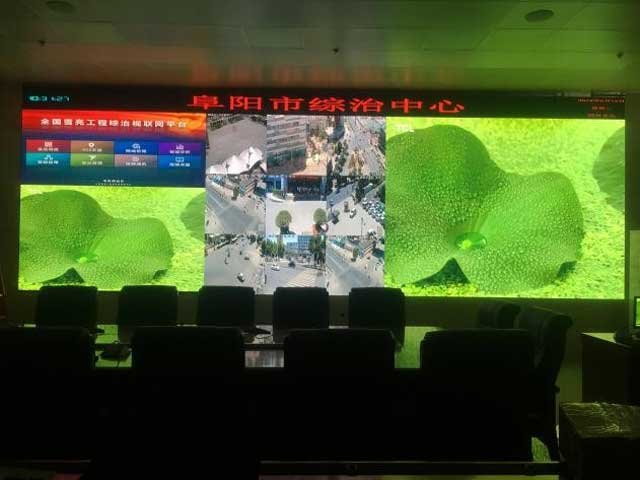
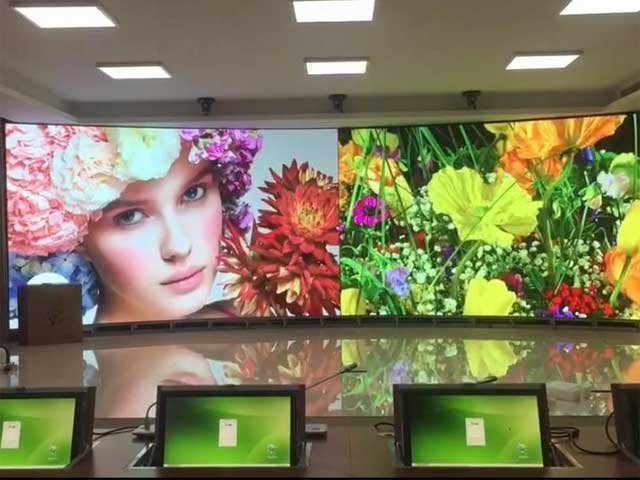
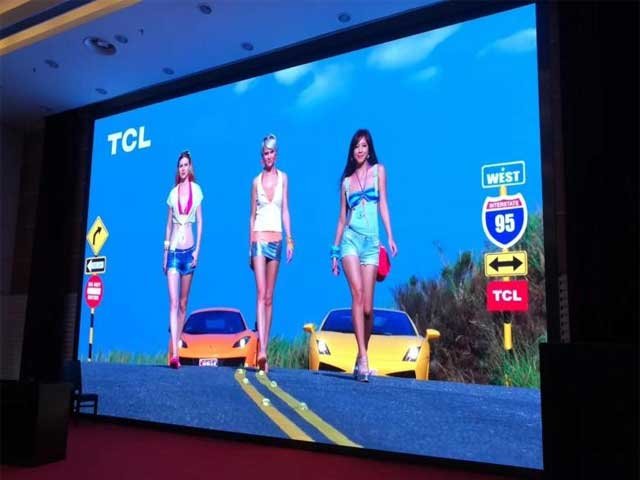
DisplayMan’s P-Series is a standard Indoor Fine Pitch LED product line covering P1.25, P1.53, P1.86, P2.0 and P2.5. These displays are designed for seamless indoor video walls in control rooms, boardrooms, showrooms, broadcast studios, retail spaces, exhibitions and other professional interiors.

Indoor Fine Pitch LED Displays are also widely described as Indoor Small Spacing LED Displays. Both terms refer to modular LED video walls using small pixel pitches for close and medium viewing distances.

The P-Series uses a standardized 320 × 160 mm module platform and matching 640 × 480 mm-class cabinets, making it suitable for repeatable project design, quotation, installation and spare-parts planning.

Standard P-Series Product Range

P1.25 / P1.53 / P1.86 / P2.0 / P2.5
Choose the pitch according to viewing distance, content detail, total screen size and project budget. The smallest pitch is not automatically the best choice.

P1.25, P1.53, P1.86, P2.0 and P2.5 Indoor LED Displays

These five standard pixel pitches form the core P-Series. The product platform stays consistent while pixel density, scan mode, cabinet resolution, refresh rate and power change by pitch.

P1.25 Module: 320 × 160 mm Module Resolution: 256 × 128 Refresh: ≥3840 Hz Cabinet: 640 × 480 mm Control rooms, broadcast studios, high-detail data visualization and premium close-view walls
P1.53 Module: 320 × 160 mm Module Resolution: 208 × 104 Refresh: ≥3840 Hz Cabinet: 640 × 480 mm Boardrooms, executive meeting spaces, showrooms and premium presentation walls
P1.86 Module: 320 × 160 mm Module Resolution: 172 × 86 Refresh: ≥3840 Hz Cabinet: 640 × 480 mm Retail, exhibitions, commercial video walls and multi-purpose indoor displays
P2.0 Module: 320 × 160 mm Module Resolution: 160 × 80 Refresh: ≥3840 Hz Cabinet: 640 × 480 mm Conference halls, training rooms, monitoring and enterprise display systems
P2.5 Module: 320 × 160 mm Module Resolution: 160 × 80* Refresh: ≥1920–3840 Hz Cabinet: 640 × 480 mm Large indoor signage, malls, public interiors and longer-distance viewing
Pixel PitchModule SizeModule ResolutionRefresh RateCabinet SizeCabinet ResolutionBest For
P1.25320 × 160 mm256 × 128≥3840 Hz640 × 480 × 63.5 mm512 × 384Control rooms, broadcast studios, high-detail data visualization and premium close-view walls
P1.53320 × 160 mm208 × 104≥3840 Hz640 × 480 × 63 mm416 × 312Boardrooms, executive meeting spaces, showrooms and premium presentation walls
P1.86320 × 160 mm172 × 86≥3840 Hz640 × 480 × 63 mm344 × 256Retail, exhibitions, commercial video walls and multi-purpose indoor displays
P2.0320 × 160 mm160 × 80≥3840 Hz640 × 480 × 63 mm320 × 240Conference halls, training rooms, monitoring and enterprise display systems
P2.5320 × 160 mm160 × 80*≥1920–3840 Hz640 × 480 × 63 mm256 × 192Large indoor signage, malls, public interiors and longer-distance viewing
P2.5 Source-Datasheet Note

The source specification lists P2.5 module resolution as 160 × 80 while the matching 640 × 480 cabinet is listed as 256 × 192. Because these two source values do not map consistently, the P2.5 module-resolution figure should be reconfirmed in the final project / contract specification before order.

P-Series Technical Specifications

LED Module Specifications

PitchModule SizeSource Module ResolutionScan ModeSignal InterfacePower ConnectorProtection
P1.25320 × 160 mm256 × 1281/64HUB3204P / 90°IP3X
P1.53320 × 160 mm208 × 1041/52HUB754P / 90°IP3X
P1.86320 × 160 mm172 × 861/43HUB754P / 90°IP3X
P2.0320 × 160 mm160 × 801/40HUB754P / 90°IP3X
P2.5320 × 160 mm160 × 80*1/32HUB754P / 90°IP3X

Optical & Display Performance

ParameterReference SpecificationApplies To
Brightness≤500 cd/m²All P-series reference models
Grayscale≥13 bitAll P-series reference models
Color Temperature6500K–8500KAll P-series reference models
Contrast≤4000:1As stated in source specification
Brightness AdjustmentManual / automatic / software-controlledAll P-series reference models
Frame Rate60 fpsAll P-series reference models
Point-by-Point CalibrationBrightness + chromaticity calibrationAll P-series reference models

Power & Refresh Rate

PitchWorking VoltagePeak PowerAverage PowerRefresh Rate
P1.25DC 4.5–5 V≤25 W / module10–15 W / module≥3840 Hz
P1.53DC 4.5–5 V≤15 W / module8–10 W / module≥3840 Hz
P1.86DC 4.5–5 V≤13.5 W / module5–10 W / module≥3840 Hz
P2.0DC 4.5–5 V≤12 W / module5–10 W / module≥3840 Hz
P2.5DC 4.5–5 V≤12 W / module5–10 W / module≥1920–3840 Hz

Operating Environment

ParameterReference Specification
Operating Temperature-10°C to +60°C
Operating Humidity35%–75% RH, non-condensing
Usage EnvironmentIndoor
Module ProtectionIP3X
Cabinet ProtectionIP5X
Final Contract Specification Governs

LED parameters can vary with module version, driver IC, receiving-card configuration and project requirements. Final production specifications should be confirmed in the project datasheet / contract specification.

How to Choose P1.25, P1.53, P1.86, P2.0 or P2.5

Pixel pitch should be selected from the real viewing condition—not from the assumption that the smallest number is always better.

Pixel PitchViewing DirectionBest Content / ApplicationsSelection Logic
P1.25Ultra-close professional viewingFine text, dense data, high-resolution dashboardsHighest pixel density in this P-series
P1.53Close professional viewingBoardrooms, showrooms, premium presentationStrong balance of detail and system investment
P1.86Close-to-medium commercial viewingRetail, exhibitions, commercial video wallsVersatile commercial option
P2.0Medium indoor viewingConference, training, monitoringPractical clarity / cost balance
P2.5Longer indoor viewingLarge signage, malls, public interiorsEfficient for larger screen areas
Higher Pixel Density

Choose a Smaller Pitch When

  • Viewers stand closer to the display
  • Fine text or dense data must remain clear
  • The wall has a relatively small physical size but needs high total resolution
  • Broadcast / camera-facing content requires fine image detail
  • Premium visual quality is more important than lowest project cost
Larger Screen Efficiency

Choose a Larger Pitch When

  • Viewing distance is longer
  • The display area is large
  • Content is mainly video / advertising rather than fine text
  • Budget efficiency is important
  • Ultra-fine pixel density would not create a meaningful visible benefit

Structural Composition of a P-Series Indoor LED Display

A P-Series project has three levels: the LED module, the LED cabinet and the complete video-wall system. Understanding these levels avoids the common mistake of treating “module”, “cabinet” and “screen” as the same product.

Display Layer

1. LED Module

The 320 × 160 mm module is the basic image-building unit.

  • LED pixel array
  • PCB
  • Driver IC
  • HUB320 or HUB75 signal interface
  • 4P / 90° power connector
  • Module-level protection: IP3X
Structural Layer

2. LED Cabinet

Multiple modules are installed into a 640 × 480 mm-class cabinet with signal and power electronics.

  • Cabinet frame
  • LED modules
  • Receiving card
  • Power supplies
  • Internal data cables
  • Internal power cables
  • RJ45 system input
  • Cabinet protection: IP5X
System Layer

3. Complete LED Wall

Multiple cabinets form the final indoor display system.

  • Video processor / sending card
  • Cabinet matrix
  • AC power distribution
  • Data distribution
  • Mounting steel structure
  • Control software
  • Calibration
  • Spare parts

Complete Indoor Fine Pitch LED Video Wall System

The P-Series module is the core display component, but a professional project must be designed and quoted as a complete system.

LED Module320 × 160 mm P-series image module
LED Cabinet640 × 480 mm structural display unit
Receiving CardCabinet-level signal distribution
Power SupplyDC power conversion and distribution
Sending Card / ProcessorVideo input, scaling and wall mapping
Data + Power CablesCabinet interconnection
Mounting StructureWall / frame alignment and support
Calibration + ServiceUniformity, maintenance and spare parts

Matching P-Series Cabinet Platform

PitchCabinet SizeCabinet ResolutionSignal InputPower TerminalProtection
P1.25640 × 480 × 63.5 mm512 × 384RJ453 × U-shaped terminalIP5X
P1.53640 × 480 × 63 mm416 × 312RJ453 × U-shaped terminalIP5X
P1.86640 × 480 × 63 mm344 × 256RJ453 × U-shaped terminalIP5X
P2.0640 × 480 × 63 mm320 × 240RJ453 × U-shaped terminalIP5X
P2.5640 × 480 × 63 mm256 × 192RJ453 × U-shaped terminalIP5X

Screen size: calculated from cabinet quantity and orientation.

Total resolution: calculated from cabinet resolution × cabinet matrix.

Processor: selected according to final total pixels, signal sources and content layout.

Maintenance: front or rear service access should be confirmed before structural design.

Why the P-Series Works for Professional Indoor Video Walls

Seamless Display Surface

LED modules and cabinets create one continuous visual canvas without the fixed panel bezels of an LCD video wall.

13-Bit Grayscale

The reference specification lists ≥13-bit grayscale for the P1.25–P2.5 product family.

High Refresh Options

P1.25–P2.0 are specified at ≥3840 Hz; P2.5 is specified at ≥1920–3840 Hz.

Point-by-Point Calibration

The source specification includes brightness and chromaticity point-by-point calibration for wall uniformity.

Adjustable Brightness

Manual, automatic and software-controlled brightness adjustment is included in the reference specification.

Modular Serviceability

Modules, receiving cards, power supplies and cabinets can be serviced independently within the complete display system.

Indoor Fine Pitch LED Project Engineering

Standard P-Series modules reduce product uncertainty, while the project is customized around the screen size, cabinet matrix, structure, control system and installation.

Pixel Pitch

Choose from P1.25, P1.53, P1.86, P2.0 and P2.5 according to viewing distance, content and budget.

Screen Size

Final width and height are calculated from cabinet/module geometry. The closest practical finished size should be confirmed before quotation.

Total Resolution

Cabinet count × cabinet resolution determines the final wall resolution and processor load.

Viewing Distance

Fine text and dashboards may justify a smaller pitch than video-only content at the same distance.

Refresh Rate

P1.25–P2.0 reference modules are ≥3840 Hz; P2.5 is ≥1920–3840 Hz in the source specification.

Brightness & Color

Indoor brightness is ≤500 cd/m² reference, with 13-bit grayscale, 6500K–8500K color temperature and point-by-point calibration.

Maintenance

Front or rear maintenance strategy must be confirmed before the supporting wall and cabinet access are finalized.

Control System

Processor, sending card, receiving cards and source inputs must be sized around total wall resolution.

Power Distribution

Peak/average module power, cabinet count and total wall area determine AC/DC distribution requirements.

Mechanical Structure

Wall flatness, cabinet alignment, support tolerances and installation method influence seam visibility and final image quality.

Spare Parts

Spare LED modules, receiving cards and power supplies should be included for long-term serviceability.

Packaging & Logistics

Cabinet count, spare-part quantity and destination should be reviewed together for export packing and shipment planning.

Practical Customization Boundary

For most projects, DisplayMan uses a stable standard P-Series module and cabinet platform. Customization is mainly the overall screen size, cabinet layout, supporting frame, processor, maintenance method, cable routing, spare parts and installation rather than developing a new pixel pitch from zero.

Typical P-Series Indoor LED Applications

Control Rooms

P1.25 / P1.53 are strong directions for fine data, dashboards and close monitoring.

Boardrooms & Conference Spaces

P1.53 / P1.86 / P2.0 can provide a seamless presentation wall for enterprise environments.

Broadcast & Studios

High-refresh P-Series options support professional content and camera-facing environments subject to final configuration.

Retail & Showrooms

P1.86 / P2.0 are practical for premium commercial walls viewed from close-to-medium distance.

Exhibitions

Modular cabinets allow large, seamless visual surfaces to be built around booth and wall dimensions.

Malls & Public Interiors

P2.0 / P2.5 are useful where overall screen area and longer indoor viewing distances are more important.

Indoor LED Video Walls vs Indoor LCD Video Walls

Choosing the Right Display Technology for Professional Indoor Projects

Indoor Fine Pitch LED video walls and indoor LCD video walls can both create large visual surfaces, but they are built very differently. Fine-pitch LED is a modular, cabinet-based display system designed around a continuous image surface and project-specific wall dimensions. LCD video walls are assembled from finished LCD panels and are often selected when lower initial investment or simpler panel-based deployment is the stronger priority.

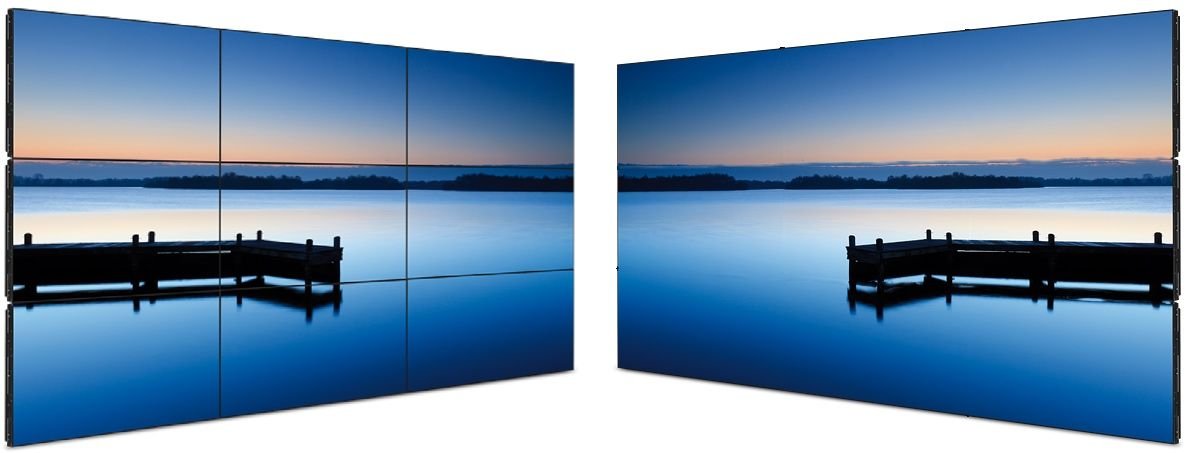
Indoor LED Video Walls vs Indoor LCD Video Walls comparison
Indoor LED Video Walls vs Indoor LCD Video Walls — visual comparison for technology selection.

Side-by-Side Comparison

Category Indoor Fine Pitch LED Video Wall Indoor LCD Video Wall
Screen Seam / Bezel Seamless visual surface with no fixed panel bezel lines Visible bezel lines remain between LCD panels
Screen Size Flexibility Highly flexible within module and cabinet geometry; suitable for custom wall dimensions and aspect ratios Built from fixed LCD panel sizes, so final dimensions are constrained by panel geometry
Close Viewing Strong close-view performance when the correct fine pixel pitch is selected High native pixel density, but bezel lines remain visible across the wall
Image Continuity One continuous canvas for dashboards, maps, video and presentation content Content is visually interrupted by physical panel borders
Brightness & Color Uniformity Can be calibrated as one complete LED wall using point-by-point brightness and chromaticity correction Individual panels can develop visible brightness or color differences as they age
Black Level / Contrast Strong contrast potential, influenced by LED package, pixel pitch, surface treatment and ambient light Black level is influenced by LCD panel type and backlight system
Maintenance Module-, receiving-card- and power-supply-level service; front maintenance is available on selected systems Panel-level replacement is common when a display unit fails
Future Service / Replacement Modular service is convenient, but spare modules from the same production batch should be planned to preserve color consistency Matching an older LCD panel model may become difficult after product discontinuation
Custom Wall Shape / Size Well suited to wide, narrow, panoramic or non-standard rectangular display walls Less flexible because the wall is based on fixed finished-panel dimensions
Initial Investment Usually higher, especially at smaller pixel pitches Usually lower for standard panel-based video walls
Long-Term Cost Depends on operating hours, power, spare parts, maintenance strategy and project lifetime Depends on panel replacement, backlight aging, model availability and maintenance strategy
Best Fit Mission-critical, premium and seamless large-format indoor display walls Budget-sensitive projects where panel bezels are acceptable

When an Indoor LCD Video Wall Still Makes Sense

  • Initial budget is the primary constraint
  • The wall is relatively small
  • Visible bezel lines are acceptable
  • The project uses standard panel-based dimensions
  • The display is not the visual centerpiece of the space

LCD video walls remain a practical solution when the project does not require a truly seamless visual surface.

When Indoor Fine Pitch LED Is the Stronger Choice

  • Seamless visual continuity is important
  • Viewers are close to the wall
  • Content includes fine text, dashboards or dense data
  • Custom screen dimensions are required
  • The display operates for long daily hours
  • Front module-level maintenance is preferred
  • The display is a mission-critical or premium visual system

For these projects, fine-pitch LED is normally evaluated as a complete engineered display wall rather than as a collection of individual screens.

Typical Use-Case Comparison

Application Typical Technology Direction Why
Control Room / Command Center Indoor Fine Pitch LED Seamless dashboards, maps and dense real-time information
Broadcast Studio Indoor Fine Pitch LED Continuous image surface and high-refresh configurations
Executive Boardroom Indoor Fine Pitch LED or All-in-One LED Premium presentation without panel bezels
Brand Showroom / Enterprise Lobby Indoor Fine Pitch LED Custom dimensions and stronger architectural integration
Cost-Sensitive Small Video Wall LCD Video Wall Lower initial investment when bezel lines are acceptable
Simple Multi-Screen Monitoring LCD Video Wall or individual LCD displays Suitable when seamless continuity is not essential

DisplayMan Selection View

For professional indoor projects, we normally recommend comparing the technologies based on viewing distance, visual continuity, screen dimensions, operating hours, maintenance strategy and total project lifetime rather than only the initial purchase price.

If the display is a mission-critical control surface, a premium presentation wall or a major architectural visual feature, Indoor Fine Pitch LED is usually the stronger long-term direction. If budget is the dominant factor and panel bezels are acceptable, an LCD video wall can still be the more economical solution.

P-Series vs Other LED Product Directions

Indoor Fine Pitch LED vs All-in-One LED

FactorP-Series Indoor Fine Pitch LEDAll-in-One LED Display
Product FormProject-built modular LED video wallIntegrated finished LED display
SizeCustom width / height within cabinet geometryStandard finished sizes
InstallationProject structure and system engineering requiredMore standardized deployment
Best ForControl rooms, custom walls, professional installationsMeeting rooms needing a ready integrated display

Indoor Fine Pitch LED vs Outdoor LED

FactorP-Series Indoor Fine Pitch LEDOutdoor Fine Pitch LED
EnvironmentIndoorOutdoor / semi-outdoor
Brightness≤500 cd/m² referenceMuch higher brightness required
ProtectionIP3X module / IP5X cabinet referenceOutdoor weatherproof design required
StructureIndoor cabinet + mounting frameOutdoor-rated cabinet / sealing / structure
Best ForControl rooms, boardrooms, retail interiorsOutdoor signage, façades and public display

When the P-Series Is the Right Product

Recommended

Good Fit

  • Permanent indoor seamless LED wall
  • P1.25–P2.5 viewing-distance range
  • Control room / command center
  • Boardroom / conference wall
  • Broadcast studio
  • Retail flagship / showroom
  • Exhibition or public indoor display
  • Project needing custom width / height from standard cabinets
Different Product Direction

Choose Another LED Product When

  • Outdoor / weather-exposed installation
  • Temporary stage or rental application
  • Portable trade-show / roadshow poster display is required
  • XR virtual-production stage is the main requirement
  • Sphere / Christmas tree / special artistic shape is required
  • Flexible / curved module is required
  • Customer wants a ready standard-size integrated LED product
  • Lowest initial cost makes LCD video wall more practical

What Information Should You Provide for a P-Series Quote?

Visual

Display Requirement

  • Screen width × height
  • Installation location
  • Typical / minimum viewing distance
  • Preferred pitch: P1.25 / P1.53 / P1.86 / P2.0 / P2.5 if known
  • Content type: text / dashboard / presentation / video
  • Required resolution if known
  • Site photos
  • Ambient-light condition
Engineering

System Requirement

  • Wall / structure drawing
  • Front or rear maintenance
  • Signal sources
  • Video processor requirement
  • Power condition
  • Installation method
  • Quantity / number of walls
  • Spare-parts requirement
  • Project schedule
  • Installation-support requirement
Do Not Send Only a Square-Meter Quantity

A reliable LED-wall quotation needs the pixel pitch, screen dimensions, cabinet matrix, processor, structure, maintenance method and spare-parts scope. Site photos and viewing distance are often more useful than only asking for a $/m² price.

P-Series Indoor Fine Pitch LED FAQ

What is an Indoor Fine Pitch LED Display?

It is an indoor modular LED video wall using small pixel-pitch LED modules to create a seamless large-format image surface for close or medium viewing.

Is Indoor Fine Pitch LED the same as Indoor Small Spacing LED?

Yes. Fine Pitch LED is the more natural English industry term; Indoor Small Spacing LED is another common description of the same product category.

Which P-series models does DisplayMan offer on this page?

The standard reference P-series includes P1.25, P1.53, P1.86, P2.0 and P2.5.

What is the standard module size?

The P-series reference module size is 320 × 160 mm for all five listed pixel pitches.

What is the reference cabinet size?

The matching cabinet platform is approximately 640 × 480 × 63–63.5 mm depending on pitch.

Which pixel pitch should I choose?

Start with viewing distance and content type, then review total wall size, target resolution and budget. Smaller pitch is not automatically the best project choice.

Is P1.25 always better than P2.5?

No. P1.25 offers higher pixel density for close viewing, while P2.5 is more efficient for larger indoor screens viewed from farther away.

What brightness is used for the P-series?

The source specification lists indoor brightness at ≤500 cd/m² for the P1.25, P1.53, P1.86, P2.0 and P2.5 reference modules.

What refresh rate is available?

The source specification lists ≥3840 Hz for P1.25, P1.53, P1.86 and P2.0, and ≥1920–3840 Hz for P2.5.

Can the LED wall be customized to my room?

Yes. We normally keep a stable module/cabinet platform and customize total screen size, cabinet count, mounting structure, processor, maintenance method and installation around the site.

Can the system use front maintenance?

Selected indoor cabinet systems can support front maintenance. The service method should be confirmed before wall structure design.

Can this Indoor P-series be used outdoors?

No. These reference modules are specified for indoor use. Outdoor projects require a different brightness, weather protection and cabinet design.

Is Indoor Fine Pitch LED better than an LCD video wall?

It is better when seamless presentation, custom wall dimensions and one continuous visual surface are important. LCD may be more practical when initial cost is the main priority.

What is included in a complete LED wall?

A complete system can include LED modules, cabinets, receiving cards, power supplies, sending card or video processor, data/power cables, mounting structure, calibration and spare parts.

Why should I not ask only for a square-meter price?

The same square-meter area can use different pitches, cabinet counts, processors, structures, maintenance methods and spare parts. A reliable project quotation needs the complete system scope.

What should I provide for a quotation?

Please provide screen width × height, installation location, viewing distance, preferred pitch if known, content type, wall/site photos, maintenance requirement, quantity and project schedule.

Start Your P-Series Indoor LED Project

Send the wall dimensions, viewing distance, site photos and application. We can help select the right P-Series pitch and calculate the cabinet layout.

P1.25, P1.53, P1.86, P2.0 or P2.5? You do not need to decide from pitch alone. DisplayMan can compare the required wall resolution, viewing distance, content, cabinet count and project budget before confirming the system.

Send Your Display Requirement

Please share your application, display size, quantity and project background. We will review the most practical display direction.