Where Brightness Can Be Lost
- Polarizers
- Beam splitters
- Reflective optics
- Combiners
- Pancake folded paths
- Lens coatings
- Other optical elements

Turn a Compact Micro OLED Image Source Into a Usable Virtual Image
DisplayMan offers Birdbath, Pancake, EVF and project-based near-eye optical modules that combine a Micro OLED image source with the optical path needed to create a usable virtual image.
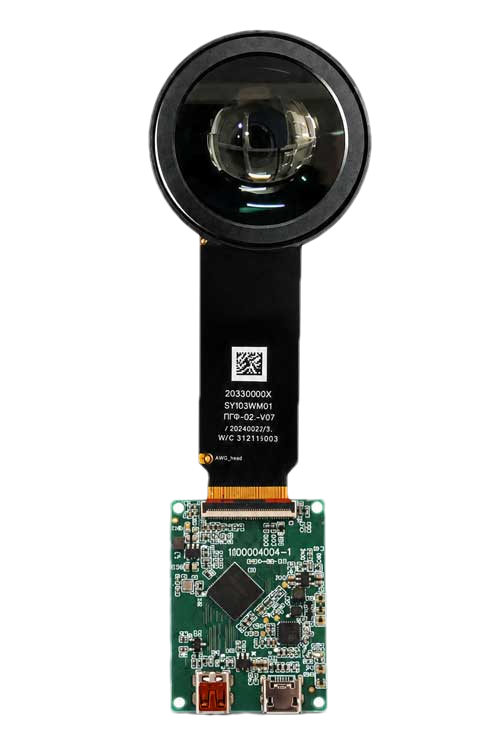
4 OPTICAL ENGINE TYPES
Explore a product type below, or send your optical and mechanical requirements and let us help you choose.
DisplayMan supports Micro OLED optical engine directions for AR glasses, VR headsets, electronic viewfinders, smart eyewear, professional imaging and other near-eye display systems.
An optical engine combines the Micro OLED image source with lenses, prisms, mirrors, combiners or folded optical structures so the very small display can be viewed as a usable virtual image.
This page focuses on Micro OLED + optics. The Micro OLED display module is the image source; the driver board handles electronics; the optical engine creates the final viewing path within the near-eye system.
The optical engine sits between the Micro OLED image source and the user’s eye. Its job is to magnify, redirect and position the image while maintaining usable brightness and image quality.
Micro OLED Display → Optical Engine → Virtual Image → User’s Eye
DisplayMan’s current optical-engine portfolio is organized into four base product directions: Birdbath Optical Engine, Pancake Optical Engine, EVF Optical Module and Other Near-Eye Optical Modules.
Different Micro OLED sizes, resolutions, driver-board interfaces, field-of-view options and derived mechanical configurations are treated as project variants rather than separate optical-engine types.
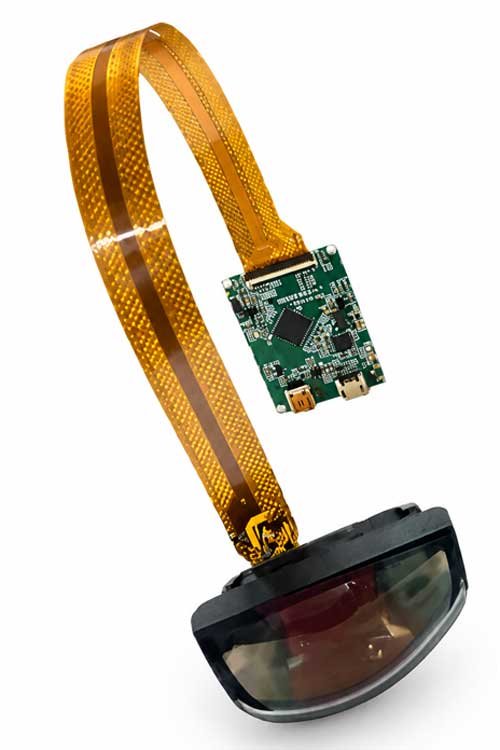
Birdbath optics use a reflective optical path and are commonly reviewed for AR prototypes, smart eyewear development, technology demonstrations and selected semi-transparent near-eye systems.
The Micro OLED brightness, field of view, combiner size, eye relief, optical efficiency, mechanical thickness and display alignment must be reviewed as one system.
Explore Birdbath Optical Engines →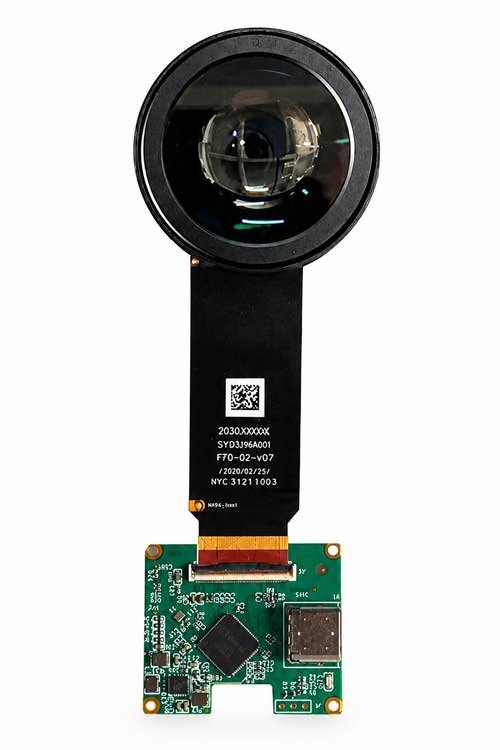
Pancake optics use a folded optical path to reduce the distance between the Micro OLED and the user’s eye. They are commonly reviewed for compact VR headsets, wide-FOV systems and premium binocular products.
Because the optical path can introduce substantial light loss, source brightness, polarization, lens design, field of view, eye box and alignment should be confirmed together.
Explore Pancake Optical Engines →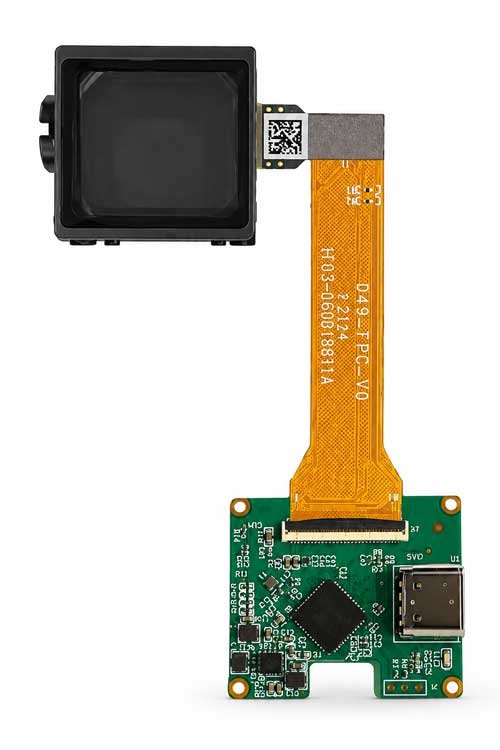
An EVF optical module presents a compact focused image directly through an eyepiece. It suits cameras, drones, professional imaging equipment, inspection instruments and other compact optical viewers.
Resolution, contrast, low latency, focus adjustment, eye relief, image clarity and mechanical reliability are the main review points.
Explore EVF Optical Modules →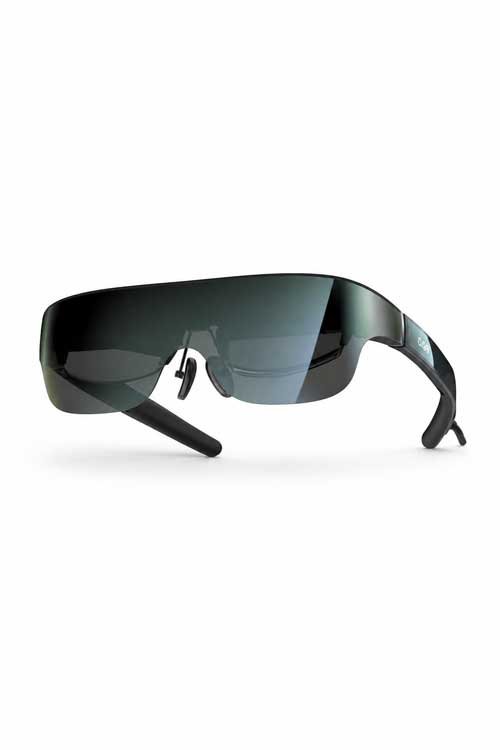
This direction covers smart glasses, PGlass-style modules, compact monocular viewers and non-standard optical systems that do not fit a conventional Birdbath, Pancake or EVF architecture.
Selection starts from the final application, viewing method, required field of view, mechanical envelope, source brightness and available optical platform.
Explore Other Near-Eye Optical Modules →The optical engine should never be selected from one specification alone. Field of view, eye box, eye relief, display size, brightness and mechanical space are interdependent.
Application → Optical Architecture → FOV → Eye Box / Eye Relief → Display Size → Resolution → Brightness → Mechanical Integration
Micro OLED source brightness should not be confused with the final brightness seen by the user.
Enclosed EVF systems may tolerate lower source brightness, while AR, HUD and Pancake systems can require substantially stronger Micro OLED brightness because the optical path loses more light.
The final image should be evaluated through the complete optical engine, not from the Micro OLED luminance value alone.
Birdbath or other compact AR optical directions where brightness, transparency, FOV and mechanical weight must be balanced.
Pancake optical systems for compact binocular headsets and high-FOV near-eye viewing.
EVF optical modules for cameras, drones, professional imaging and inspection devices.
Compact near-eye optical systems combined with low-latency display and binocular electronics.
Project-based optical review where brightness, virtual image distance, distortion and external light are critical.
Selected microscope, inspection, imaging and professional optical devices where compact viewfinder modules are required.
| Project Requirement | Recommended Direction | Key Factors to Confirm |
|---|---|---|
| AR prototype / semi-transparent near-eye display | Birdbath optical engine review | Brightness, FOV, combiner, eye relief, thickness |
| Compact VR headset | Pancake optical engine review | Brightness, optical efficiency, polarization, FOV, eye box |
| Camera or drone viewfinder | EVF optical module | Resolution, contrast, eye relief, focus, low latency |
| Smart glasses prototype | Project AR optical module review | Weight, FOV, brightness, mechanical volume |
| Single-eye optical instrument | EVF / monocular optical module review | Eye relief, magnification, focus, enclosure space |
| Dual-eye AR / VR / FPV | Binocular optical-engine system review | Left/right matching, FOV, eye box, IPD, mechanics |
| Non-standard optical path | Project-based optical module review | Display model, lens path, mechanical drawing, target virtual image |
| Not sure which optical architecture to use | Near-Eye Display Solution review | Application, display, electronics, FOV, mechanics, budget |
Most projects should begin with an available Micro OLED and compatible optical-engine direction. Full optical development from zero can require substantial optical design, tooling and validation, so the practical scope should be confirmed before the project is committed.
Continue within the Micro OLED product cluster.
Micro OLED DisplaysParent product family covering display modules, driver boards and optical engines. Micro OLED Display ModulesSelect the Micro OLED image source before freezing the optical engine. Micro OLED Driver BoardsMatch HDMI, Type-C, MIPI, RGB or other host electronics to the selected display.Choose the system page when the architecture is not yet fixed.
Near-Eye Display SolutionDisplay + electronics + optics + mechanics review for AR, VR, EVF, FPV and optical devices.Start from the final device when the correct optical engine is not yet known.
Micro OLED for ARBirdbath and project-based augmented-reality optical directions. Micro OLED for VRPancake and high-FOV binocular optical systems. Micro OLED for EVFCompact viewfinder optics for imaging systems. Micro OLED for FPVCompact low-latency near-eye viewing systems. Micro OLED for HUDNear-eye HUD and specialized virtual-image optics. Micro OLED for Medical OpticsViewfinder and eyepiece modules for professional instruments.Send the lens drawing, FOV, eye relief, eye box, mechanical envelope or prototype photos together with the Micro OLED model. This is the fastest way to review optical-engine compatibility.
MICRO OLED OPTICAL ENGINE FAMILY
A Micro OLED optical engine combines a Micro OLED image source with lenses, prisms, mirrors, combiners or other optical structures to create a usable virtual image for near-eye viewing.
No. The Micro OLED display module is the image source. The optical engine adds the optical path and mechanical alignment required to magnify, position and present the image to the user’s eye.
DisplayMan can review Birdbath, Pancake, EVF, Pglass-style AR modules and selected project-based optical engine directions according to the final application.
Birdbath optics are commonly reviewed for AR prototypes and selected semi-transparent near-eye systems where a reflective optical path is suitable.
Pancake optics are commonly reviewed for compact VR and wide-FOV near-eye systems where a folded optical path helps reduce the physical thickness of the device.
An EVF optical module combines a compact Micro OLED image source with viewfinder optics for cameras, drones, professional imaging devices and selected inspection instruments.
Important parameters include field of view, eye box, eye relief, exit pupil, virtual image distance, optical efficiency, distortion, brightness, mechanical size, weight and display alignment.
Not necessarily. The final perceived brightness depends on losses through lenses, beam splitters, polarizers, combiners, folded optics and other elements in the optical path.
No. Field of view must be reviewed together with eye box, eye relief, display size, resolution, brightness, mechanical space and the final application.
Project-based mechanical structure, display matching, cable direction, optical alignment and selected optical parameters can be reviewed. The practical scope depends on the available optical platform and project requirements.
Not always. The display, driver electronics and optical engine are related system elements, but the exact configuration should be confirmed for each project.
Provide the application, preferred Micro OLED model if known, field of view, eye box, eye relief, brightness requirement, optical architecture preference, mechanical size limitation, monocular or binocular requirement, quantity and project stage.
Send the application, Micro OLED model, field of view, eye box, eye relief, optical architecture and mechanical size limitation.
The optical engine determines how the Micro OLED image becomes a usable virtual image.
Micro OLED Display → Optical Engine → Virtual Image → User’s Eye