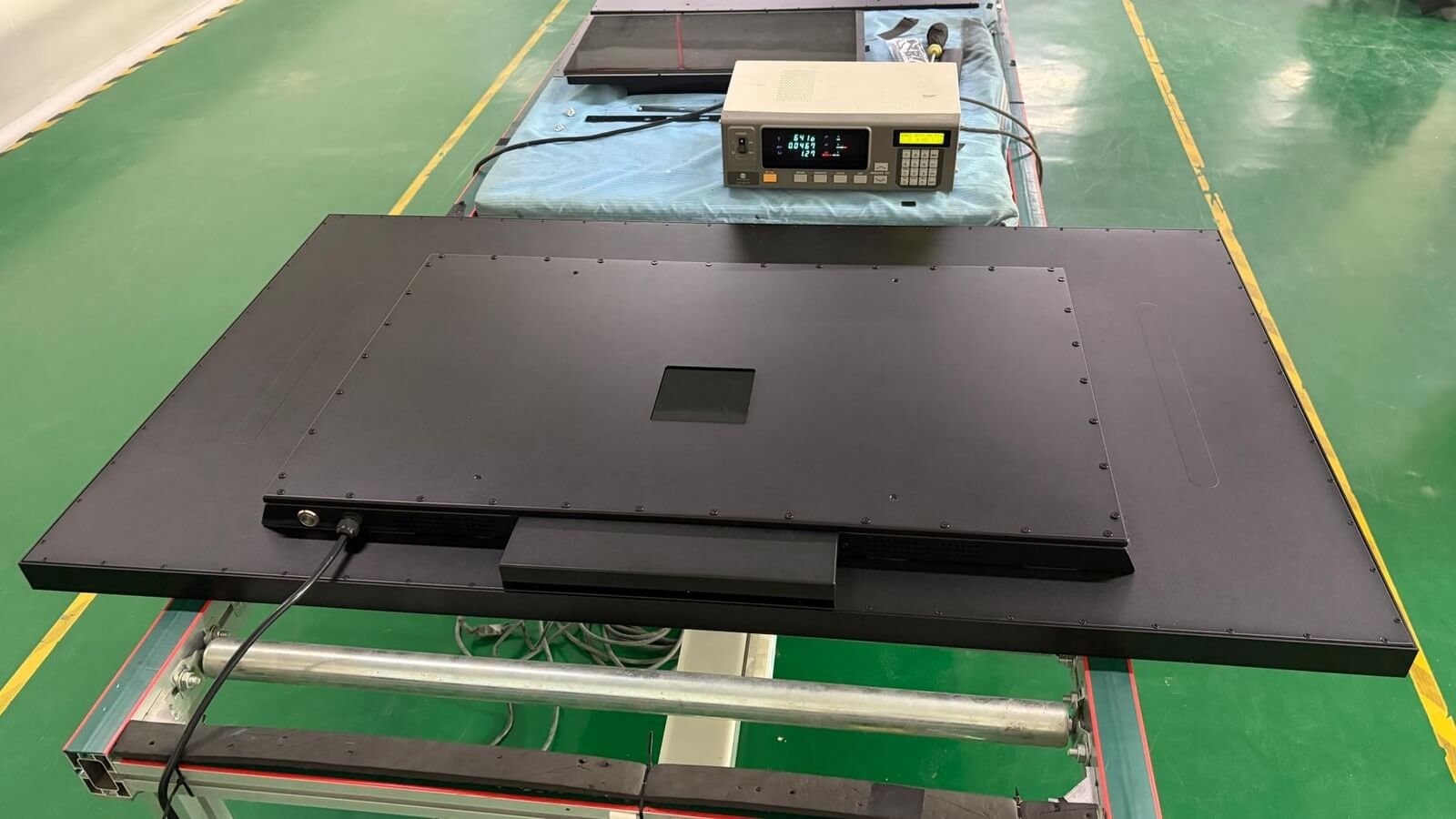
High Brightness LCD Display Engineering

Mini-LED Backlit LCD Displays

Configure brightness, local dimming and enclosure protection around your application.

DisplayMan develops high-brightness LCD systems for OEM equipment, outdoor-facing installations and complete display terminals. The LCD panel forms the image; an engineered LED backlight supplies the light. Select Mini-LED local dimming when bright highlights and deep-looking dark areas must appear in the same scene.

LCD Imaging PanelConfigurable LED Backlight10.1″–98″ Size DirectionsOEM Integration
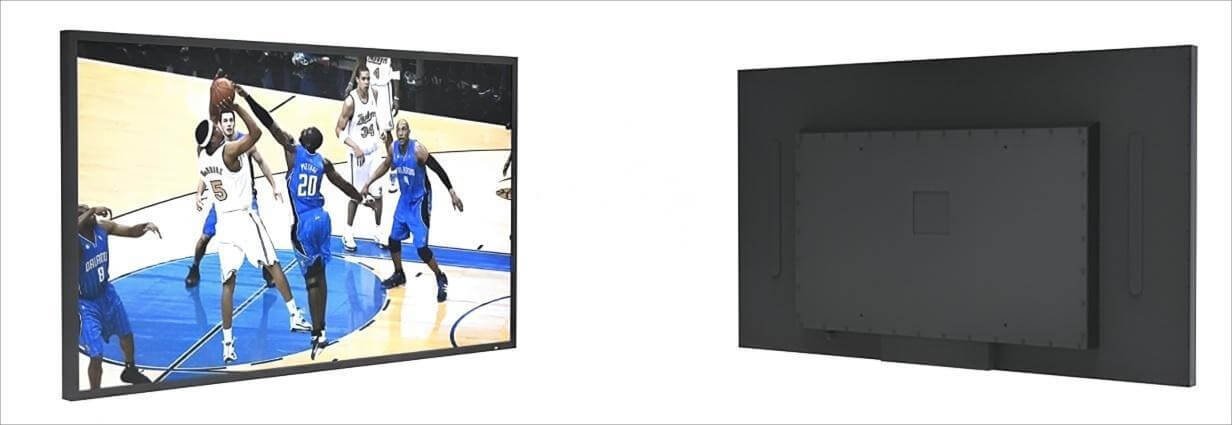
Outdoor TV front view — enclosure and application reference

What Is a Mini-LED Backlit LCD Display?

A Mini-LED backlit LCD display uses an LCD panel to create the image and a dense array of smaller LEDs behind it to provide light. Depending on the design, groups of LEDs can be controlled as local dimming zones. Dark parts of the picture can receive less backlight while bright parts receive more, improving perceived contrast and highlight control.

Mini-LED describes the backlight, not the LCD pixels. Its independent zone control is the central advantage for high-contrast video, whereas simply increasing the power or density of a conventional backlight mainly addresses overall brightness. The LCD panel, backlight, optical films, LED driver, heat path and display controller must be selected together. The number of LEDs and the number of independently controlled zones are different specifications. A high-brightness LCD with conventional LED light bars is another valid engineering option, but increased LED density or an aluminum frame alone does not establish a Mini-LED local-dimming specification.

Comparison 1: Conventional LCD vs Mini-LED LCD

Both displays use an LCD panel to form the image. The critical difference in these two configurations is how the LED backlight responds to the picture.

A conventional LCD with a single, uniformly controlled backlight illuminates the screen broadly. The LCD pixels attenuate light in dark parts of the image, but the backlight behind those areas remains on. The result can be less convincing blacks when a bright object and a dark background appear together. A high-power conventional backlight can still provide good daylight readability; high brightness by itself does not create local contrast.

A Mini-LED LCD with local dimming divides its backlight into independently controlled zones. For example, the supplied showroom board describes a 55-inch 4K Mini-LED display with 512 zones. Its controller can increase output behind a bright subject while lowering output behind darker parts of the scene. This can deliver bright highlights, deeper-looking blacks and higher perceived contrast in mixed scenes. It does not mean that 512 zones equal 512 pixels, or that every dark pixel is completely black.

Review pointConventional LED-backlit LCDMini-LED local-dimming LCD
Image-forming layerLCDLCD
Backlight controlBroadly controlled as one system in the configuration compared hereIndependently controlled zones
Bright object on a dark sceneBacklight also remains active behind dark areasBright and dark zones receive different light levels
Black appearanceLimited by LCD light blockingImproved by dimming dark zones; LCD leakage may remain
Primary strengthSustained brightness with a simpler backlight architectureHigh brightness and stronger scene contrast

A conventional LED-backlit LCD can also be engineered with multiple dimming zones. This comparison describes an undimmed or broadly controlled architecture, not every conventional LCD ever produced. The supplied photo does not state whether the 1500-nit reference has any dimming zones. The visible difference depends on the specific panel, optical stack, zone count and algorithm.

Comparison 2: Mini-LED LCD vs OLED

Mini-LED LCD approaches the bright-and-dark contrast once associated mainly with OLED, but the two technologies control light at different levels.

Mini-LED LCD still has an LCD image layer and an LED backlight. The backlight can brighten, dim or turn off in groups. Even with hundreds or thousands of zones, a small bright object and an adjacent dark pixel can occupy the same zone; LCD leakage and light spreading can produce a visible halo.

OLED is self-emissive. Each pixel produces its own light and can turn off independently, giving pixel-level black without a backlight. That is a real technical difference. Mini-LED can substantially close the practical contrast gap while offering a strong high-brightness LCD route, but it should not be described as identical to OLED or guaranteed to eliminate blooming.

Review pointMini-LED local-dimming LCDOLED
Image-forming technologyLCDSelf-emissive pixels
Light controlBacklight zonesIndividual pixels
Black beside a small bright objectLight spill or halo may remainUnlit pixels can remain black
High-brightness designDepends on LEDs, optics, power and thermal engineeringDepends on the selected OLED panel and use conditions
Color performanceDepends on panel, LED spectrum, filters, optional quantum dots and calibrationDepends on panel materials and calibration

Mini-LED local dimming primarily addresses contrast and highlight control. It does not automatically solve every color difference with OLED. Compare measured color gamut, color accuracy, brightness, black level, viewing conditions, power, expected operating life and price for the actual models being considered.

DisplayMan’s Technology View: Choose the Right Tool

01

OLED — Thin Profiles & Pixel-Level Black

For years, OLED looked like the natural next step beyond LCD because each pixel can emit its own light and turn off independently. It remains particularly compelling when a product needs a very thin or lightweight display, pixel-level black and a premium visual presentation.

02

Mini-LED LCD — Brightness & Backlight Control

Mini-LED local dimming has made the LCD route much more competitive in applications that need both high brightness and strong scene contrast. It builds on a mature LCD manufacturing ecosystem while adding finer backlight control. For a buyer, the result is a real choice between performance, enclosure, operating conditions and project cost rather than an automatic move away from LCD.

03

Engineering Trade-offs — Review the Application

OLED brightness, image retention risk and lifetime should be evaluated against the actual panel, content, temperature and duty cycle, especially for bright, long-running commercial installations. These are engineering considerations, not a claim that every OLED product has the same limit or that the technology cannot improve. Likewise, Mini-LED LCD has its own trade-offs in thickness, energy use, thermal design and zone-level halo.

04

MicroLED — A Separate Self-Emissive Route

Direct-view, opaque MicroLED is another promising self-emissive route: it uses LED emitters as the image pixels instead of an LCD panel or a Mini-LED backlight. It should not be confused with the Mini-LED backlit LCD on this page. MicroLED development continues, while large-scale manufacturing yield, transfer, repair and cost still constrain many projects. The best technology is the one that meets the application’s viewing conditions, size, runtime, visual target and budget today.

Outdoor TV Configurations & Enclosure References

DisplayMan can review conventional LED-backlit LCD TVs and Mini-LED-backlit LCD TVs as separate configurations. These product views illustrate the outdoor TV enclosure and viewing format; a front or rear photo alone does not establish the backlight technology or local-dimming specification.

Conventional LCD Outdoor TV

IP55 residential patio configurations and IP65 commercial configurations with full optical bonding and tempered protective glass are available for project review. Conventional high-brightness LED backlighting does not imply Mini-LED local dimming.

Mini-LED Outdoor TV

An IP55 Mini-LED outdoor TV configuration is a separate backlight option. Confirm the model, local-dimming zone count, brightness and controller before selection. Outdoor TV configurations can be designed to meet IP65 requirements; the final complete-unit rating must be confirmed for the ordered design.

Outdoor TV — Mini-LED Configuration Sizes & Models

All four outdoor TV models below can be configured with a Mini-LED backlight. The table lists their screen sizes, active display areas, 4K resolution and 1500–2000 nit brightness options. Confirm the selected backlight architecture, local-dimming zone count, sustained and peak brightness, controller and outdoor protection configuration for the quotation. A model number alone does not define the final backlight specification.

No.ModelSizeAspect RatioActive Display Area W × H (mm)Resolution (pixels)Brightness Options
1FSTV550-D20-Z55 inch16:91209.6 × 680.43840 × 21601500–2000 nits
2FSTV650-D20-Z65 inch16:91428.4 × 803.53840 × 21601500–2000 nits
3FSTV750-D20-Z75 inch16:91649.6 × 927.93840 × 21601500–2000 nits
4FSTV860-D20-Z86 inch16:91895 × 1065.93840 × 21601500–2000 nits

55-Inch Outdoor Waterproof Display Demonstration

This side-by-side showroom video demonstrates Comparison 1: conventional high-brightness LED-backlit LCD versus Mini-LED local-dimming LCD. It does not show OLED. It is a useful visual starting point for comparing backlight architectures; video playback and showroom lighting are not a controlled brightness, contrast or color measurement.

Video: Side-by-side showroom demonstration of a 55-inch Mini-LED outdoor waterproof display and a 55-inch high-brightness outdoor LCD. The display board lists 2000 nits and 512 dimming zones for the Mini-LED reference, versus 1500 nits for the other reference. Final specifications depend on the selected model.
Reference-board specification55″ Mini-LED reference55″ high-brightness LED reference
Resolution3840 × 21603840 × 2160
Advertised brightness2000 nits1500 nits
BacklightMini-LED local dimmingHigh-brightness LED
Dimming zones512, as displayed on the boardNot stated on the board
Protection claimIP65 complete unitIP65 complete unit
Cooling shownBuilt-in fanBuilt-in fan
Platform shownGoogle TV OSGoogle TV OS

These are values visible on the supplied showroom board, not verified DisplayMan model specifications. Confirm rated brightness method, zone count, IP test scope and software license in the final datasheet and quotation.

Two Backlight Directions

Mini-LED With Local Dimming

Smaller, densely distributed LED emitters and a compatible driver can support independently controlled backlight zones. This direction is suitable when an application needs strong highlights together with improved dark-scene detail, such as premium outdoor-facing video, showrooms or high-contrast presentation. Ask for the actual emitter specification, zone count, dimming behavior, full-screen brightness and peak brightness for the selected model. More zones can improve control, but optical design and algorithms also affect the result.

High-Brightness LED Backlight

A direct-lit, high-power LED light-bar arrangement on a thermally designed metal structure can be configured for a target output without necessarily offering Mini-LED local dimming. LED power, distribution, current, color temperature, optical mixing and heat removal are reviewed together. This can be a practical route for sunlight-facing information displays, industrial equipment and outdoor enclosures when sustained readability matters more than scene-by-scene local dimming.

DisplayMan can review a project target across approximately 500 to 5000 nits as an engineering range. It is not a promise that every panel size, housing or LED arrangement can reach 5000 nits. A higher target may require a different LCD panel, optical stack, power supply, cooling method and enclosure depth; the achievable rated brightness and lifetime must be verified at the complete-unit level.

Mini-LED Backlit LCD Display Sizes

Sizes Available: 10.1″, 12.1″, 14″, 15.6″, 19″, 21.5″, 32″, 43″, 49″, 55″, 65″, 75″, 86″ and 98″. Custom sizes are available for engineering review.

The LCD panel size is the starting point. DisplayMan can configure the backlight, driver, optical structure, thermal design, controller and housing for a project. The availability of genuine Mini-LED emitters, local-dimming zones, target brightness and waterproof complete units must be confirmed for each size. This size list describes project directions; it does not mean every dimension is stocked as a finished Mini-LED product.

55″ demonstration: The pictured 55-inch outdoor reference illustrates a 4K, 512-zone Mini-LED local-dimming system. Its configuration must not be applied to other screen sizes without a separate specification.

How the Display System Is Built

LCD panel

Select resolution, operating temperature, optical transmission and interface for the application.

LED source

Determine conventional high-brightness LED or genuine Mini-LED emitters, layout, power and optional local dimming.

Optical stack

Match diffuser, reflector and other films to achieve uniformity without excessive light loss.

Thermal path

Use a suitable metal structure, heat spreading and active or passive cooling where required.

Driver and power

Verify LED current, zone-control electronics, power supply capacity and dimming behavior.

Control and media

Select HDMI, Android, Windows, controller board or customer-supplied signal system as appropriate.

Enclosure and cover

Design glazing, sealing, condensation control, service access and cable exits for the installation.

Engineering Choices: Brightness, Heat and Protection

Brightness & Image Performance

Brightness must be specified carefully. State whether a figure is typical white, full-screen sustained, peak HDR or measured at a particular point. Brightness is not determined by LED count alone: LCD transmission, optical efficiency, drive current, temperature, dimming algorithm and power limits all matter. For a storefront or outdoor installation, review the ambient light, anti-reflection treatment, orientation, operating hours and temperature before choosing a number.

Heat & Operating Reliability

An aluminum frame can improve the thermal path, but a complete thermal design still depends on LED board construction, interface materials, airflow, enclosure temperature and power density. Higher drive current can increase heat and affect lifetime. LED density and color temperature are configurable within the optical, electrical and mechanical limits of the chosen platform.

Enclosure & Outdoor Protection

IP65 applies to the tested complete enclosure and its sealed interfaces, not to a bare LCD or backlight. Confirm front versus full-unit protection, ventilation strategy, connector seals, installation orientation and maintenance method against the actual quoted assembly.

Applications for Mini-LED and High-Brightness LCDs

Outdoor waterproof displays

Complete weather-protected screens for plazas, retail exteriors and public-facing information. Review sunlight, rain, heat load and service access together.

Window-facing displays

LCD screens behind shop glazing where sunlight and internal reflections can reduce visibility. Select brightness and cover treatment based on the actual window.

OEM open-frame monitors

Integrate a high-brightness LCD into vending machines, kiosks, charging equipment or industrial cabinets. The machine maker’s enclosure determines the final environmental protection.

Premium indoor presentation

Use Mini-LED local dimming when video contrast and controlled highlights are a priority in showrooms, control environments or exhibition displays.

Holographic cylinder terminals

A selected LCD and light-source arrangement can form part of a cylindrical digital-human terminal; the reflective optical structure and apparent image require separate engineering.

How to Choose the Right Configuration

  1. Define the installation: indoor, behind glass, semi-outdoor or fully exposed.
  2. Specify the viewing task: text/data readability, video impact, dark-scene contrast or mixed content.
  3. Define brightness correctly: target sustained output, peak behavior and measurement conditions.
  4. Decide whether local dimming is required; if yes, request emitter and zone specifications.
  5. Confirm LCD size, resolution, orientation, signal input and operating hours.
  6. Review heat, IP protection, optical bonding, cover glass and maintenance access.
  7. Verify a production sample against the agreed acceptance criteria before volume supply.

When Each Route Fits

Choose a Mini-LED local-dimming LCD when simultaneous bright highlights and deep-looking blacks are important enough to justify the more complex backlight and control architecture. Choose a high-brightness LED-backlit LCD when the project is driven chiefly by sustained daylight visibility and a clear cost and thermal target. Both use an LCD imaging panel; neither should be confused with a direct-view LED video wall.

What Information Should You Provide?

Share the details below so DisplayMan can select the display architecture, define the integration scope and prepare a useful quotation. If a specification is still open, describe the intended result and we can review the options.

Application & Installation

Describe the use, indoor or outdoor location, direct sunlight or window exposure, portrait or landscape orientation, viewing distance and daily operating hours. Include site photographs and expected ambient temperature.

Size & Mechanical Fit

Provide screen size, resolution, available space, active display opening, maximum enclosure depth, mounting method and service access. For a replacement, include the existing model and mechanical drawings.

Brightness & Local Dimming

State the target sustained brightness and any HDR peak target separately. Confirm whether local dimming is required, the desired visual effect and any zone-count target. A reference video or image helps explain the intended picture quality.

Controller, Inputs & Touch

Specify external video inputs or embedded interfaces, source equipment, operating system and playback requirements. Include touch needs, cover-glass thickness, optical bonding and any custom front-glass printing.

Protection & Validation

State IP55 or IP65 requirements and whether protection applies to the front or the whole unit. Include rain, dust, solar exposure, installation constraints, required certifications and any customer acceptance tests.

Quantity, Budget & Schedule

Provide prototype and production quantities, target budget, destination country, required sample date and production schedule. Note any packaging, branding or long-term model availability requirements.

What Is Included in a Project?

The project scope is agreed before quotation. A display module, an open-frame monitor and a complete outdoor TV have different supply boundaries; the quotation identifies the included hardware, optional work and acceptance requirements.

LCD & Backlight Assembly

Selected LCD panel, conventional LED or Mini-LED backlight, optical films and matched LED driver. Brightness, local-dimming zones, resolution and power limits are confirmed for the selected configuration.

Display Control & Connectivity

The agreed AD controller, TV board or embedded computing platform, together with the specified inputs, power connections and cables. Operating-system features and software integration are listed separately where required.

Glass, Touch & Optical Bonding

Optional tempered cover glass, surface treatment, touch sensor and controller, optical bonding and custom front-glass details. These items are included only when specified in the quotation.

Thermal Structure & Enclosure

The agreed frame, heat path, cooling components, housing, sealing and mounting provisions. A quoted full-unit IP rating applies to that complete assembly; it does not automatically apply to an embedded module.

Engineering & Acceptance

Mechanical drawings, interface information and the agreed sample validation or inspection scope. Any brightness, thermal, environmental or compliance testing is defined with its conditions and deliverables before confirmation.

Packaging & Delivery Support

Agreed protective packaging, handling information and shipment arrangements. Mounting accessories, on-site installation, content software and local electrical work are included only if expressly listed in the supply scope.

FAQ

What Mini-LED Backlit LCD display sizes can be reviewed?

LCD panel size directions include 10.1″, 12.1″, 14″, 15.6″, 19″, 21.5″, 32″, 43″, 49″, 55″, 65″, 75″, 86″ and 98″, plus other custom sizes. The Mini-LED backlight, zone count, brightness, housing and availability must be confirmed for each proposed model. The size list does not mean all sizes are stocked as finished waterproof displays.

Is Mini-LED a different image-forming panel from LCD?

No. In this product category, the LCD forms the image and Mini-LED refers to a backlight option behind it.

Does a 512-zone Mini-LED LCD produce the same perfect black as OLED?

No. Mini-LED turns down or switches off groups of backlight LEDs, while OLED can switch off individual pixels. A Mini-LED LCD can deliver much stronger contrast than an undimmed conventional LCD, but LCD leakage and halo around small bright objects can remain.

Does Mini-LED automatically solve every color difference compared with OLED?

No. Local dimming mainly improves control of bright and dark picture areas. Color gamut and accuracy also depend on the LCD panel, LED spectrum, color filters or quantum-dot layer, processing and calibration. Compare tested models, not only technology names.

Does adding more LEDs make an LCD a Mini-LED display?

Not necessarily. The emitter package, layout, driver and local-dimming design must be confirmed. A dense high-power LED light-bar backlight can be a high-brightness LCD without being a Mini-LED local-dimming system.

Do all Mini-LED configurations have 512 dimming zones?

No. The supplied 55-inch demonstration board lists 512 zones for that reference. Zone count varies by model and must be specified in the quotation.

Can you supply a 55-inch outdoor waterproof display?

Yes. We can review a 55-inch outdoor waterproof display project, including a Mini-LED local-dimming direction. The offered unit’s brightness, IP scope, cooling and interfaces are confirmed in its model-specific datasheet and quotation.

Can the brightness be customized from 500 to 5000 nits?

That is a project review range, not a universal performance guarantee. Achievable brightness depends on the LCD, optics, LEDs, power, heat management and enclosure. We confirm a target after engineering assessment and testing.

Is IP65 a rating of the LCD panel?

No. An IP rating applies to the tested enclosure or complete unit under stated conditions. A bare panel or open-frame monitor does not inherit the rating of an outdoor housing.

Is the 2000-nit value peak or sustained brightness?

The photograph does not specify the measurement method. Request the model datasheet and test method before treating it as sustained full-screen brightness.

Can you supply a custom size or OEM integration?

Yes, subject to panel availability, thermal design, tooling, MOQ and engineering review. Share the installation and performance requirements for an appropriate proposal.

Configure Your High-Brightness LCD Project

Need a Mini-LED Backlit LCD Display or Outdoor Waterproof Monitor?

Tell us where the screen will operate, its size, brightness target, viewing conditions, local-dimming needs and enclosure format. We will review the LCD panel, LED source, thermal design, controller and protection level as one system.

For an accurate comparison, specify sustained brightness, peak brightness, dimming zones and complete-unit IP protection separately. These values belong to the selected model and its test conditions.

Send Your Display Requirement

Please share your application, display size, quantity and project background. We will review the most practical display direction.