IPS TFT LCD Displays – Wide Viewing Angle & True Color Precision

When every detail matters, visibility must be flawless from every direction.

DisplayMan’s IPS TFT LCD Displays deliver consistent color accuracy, contrast, and brightness up to 178°, making them ideal for industrial, automotive, and medical devices that demand visual reliability.

Engineered for both performance and longevity, our IPS modules combine true-color technology, fast response times, and customization flexibility — ensuring your screen looks perfect, no matter who’s viewing it.

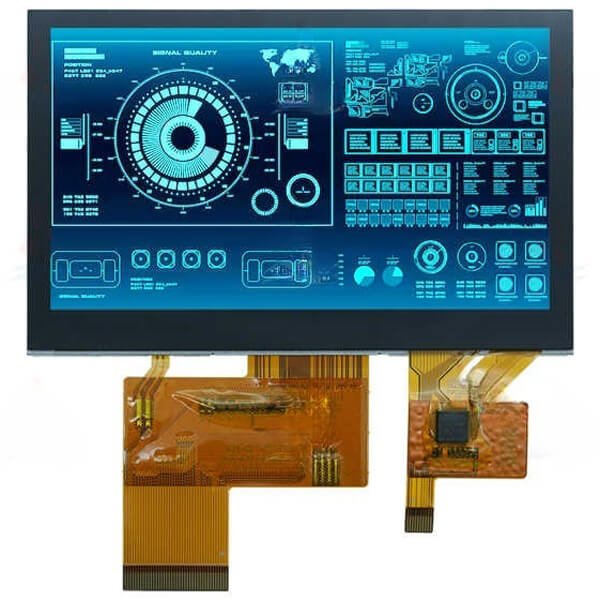
7.0 inch high brightness ips 800x480 rgb interface tft lcd module

🖼️ Showcase of DisplayMan IPS TFT LCD Displays

Discover DisplayMan’s advanced range of IPS TFT LCD modules, engineered for products that demand exceptional color accuracy, wide viewing angles, and premium visual performance.

From medical devices, industrial controllers, and automotive interfaces to smart appliances, IoT terminals, and consumer electronics, IPS technology delivers superior clarity, consistent colors, and distortion-free viewing from every direction.

This showcase highlights the full selection of our IPS display sizes, resolutions, brightness options, and customization capabilities — including touch integration, high-brightness upgrades, optical bonding, anti-glare/anti-reflection treatments, and fully customizable mechanical and interface designs.

Whether you need a standard IPS module or a custom-engineered solution tailored to your enclosure, temperature requirements, and UI experience, this collection demonstrates the visual excellence and design flexibility DisplayMan brings to modern TFT LCD technology.

Explore the displays designed for applications where perfect viewing angles and color fidelity truly matter.

SpecificationDetails
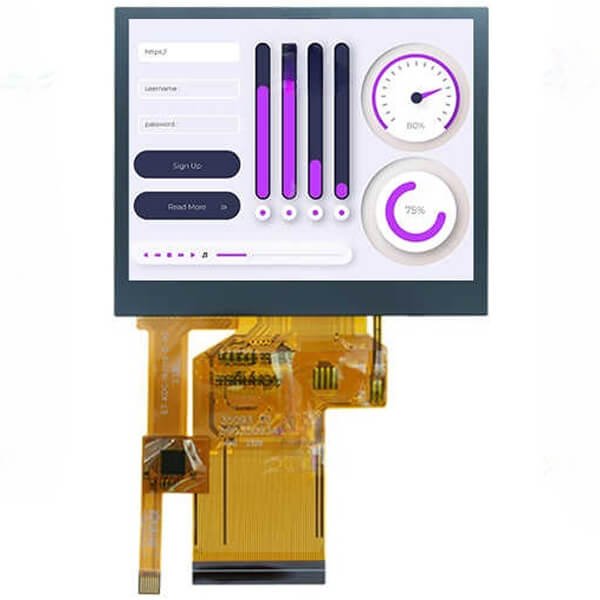
Product Name3.5″ IPS TFT LCD with Capacitive Touch
Part NumberKD035LQFPA093-04-C036A
Resolution320 × 240
Display TypeIPS, Normally Black
Controller ICST7272A
Brightness800 cd/m²
Touch PanelCapacitive Touch
Touch ICFT6336G
InterfaceRGB (16/18/24-bit)
Operating Temp.–30°C to +85°C
SpecificationDetails
Product Name4.3″ IPS TFT LCD with Capacitive Touch
Part NumberKD043WQFPA142-01-C037D
Resolution480 × 272
Display TypeIPS, Normally Black
Controller ICST7282A
Brightness650 cd/m²
Touch PanelCapacitive Touch (5-point)
Touch ICFT5446U
InterfaceRGB (24-bit)
Operating Temp.–30°C to +80°C
SpecificationDetails
Product Name5.0″ IPS TFT LCD with Capacitive Touch
Part NumberKD050WVFPA018-C020A
Resolution800 × 480
Display TypeIPS, Normally Black
Controller ICHX8678C / HX8249A
Brightness630 cd/m²
Touch PanelCapacitive Touch (5-point)
Touch ICGT911
InterfaceRGB (16/18/24-bit)
Operating Temp.–30°C to +85°C
SpecificationDetails
Product Name5.7″ IPSTFT LCD with Capacitive Touch
Part NumberKD057VGFLA012A-C004A
Resolution640 × 480
Display TypeIPS TFT, Normally Black
Controller ICJD9168S
Brightness600 cd/m²
Touch PanelCapacitive Touch (5-point)
Touch ICGT911
InterfaceLVDS (8-bit)
Operating Temp.–30°C to +80°C
SpecificationDetails
Product Name5.9″ IPS TFT LCD with Resistive Touch
Part NumberKD059WVFPD001-RTP
Resolution840 × 512
Display TypeIPS, Normally Black
Controller ICJD9168S
Brightness830 cd/m²
Touch PanelResistive Touch
InterfaceRGB (16/18/24-bit)
Input Voltage3.3V
Operating Temp.–30°C to +80°C
SpecificationDetails
Product Name6.2″ IPS TFT LCD
Part NumberKD062VGFPA003-01
Resolution640 × 240
Display TypeIPS, Normally Black
Controller ICST5043AA / ST5894AA
Brightness900 cd/m²
Touch PanelNone
InterfaceRGB (16/18/24-bit)
Input Voltage3.3V
Operating Temp.–30°C to +85°C
SpecificationDetails
Product Name7.0″ IPS TFT LCD
Part NumberKD070WVFLA035A
Resolution800 × 480
Display TypeIPS, Normally Black
Controller ICRM533C0 / RM577C1
Brightness1119 cd/m²
Touch PanelNone
InterfaceLVDS (6/8-bit)
Input Voltage3.3V
Operating Temp.–30°C to +85°C
SpecificationDetails
Product Name10.1″ IPS TFT LCD
Part NumberKD101HDFLD054
Resolution1280 × 800
Display TypeIPS, Transmissive, Normally Black
Controller ICEK79202D
Brightness1000 cd/m²
Touch PanelNone
InterfaceLVDS (8-bit)
Input Voltage3.3V
Operating Temp.–30°C to +85°C
SpecificationDetails
Product Name21.5″ IPS TFT LCD with Capacitive Touch
Part NumberKD215FHFLA026-C005B
Resolution1920 × 1080
Display TypeIPS, Normally Black
Brightness400 cd/m²
Contrast Ratio1300 : 1
Touch PanelCapacitive Touch
Touch ICILI2510
InterfaceDual-Channel LVDS
Operating Temp.–20°C to +80°C

Wide Viewing Angle TFT LCD Modules for Industrial, Medical, Commercial and OEM Products

DisplayMan supplies IPS TFT LCD Displays for products that require wider viewing angles, stable color performance and more consistent images than standard TN TFT LCD modules.

Typical applications include industrial HMI, medical equipment, control panels, commercial terminals, smart devices, automotive systems, handheld equipment and OEM products viewed from different positions.

This page focuses on IPS TFT LCD modules and module-level integration—not complete monitors or finished terminal products.

An IPS TFT LCD Project Can Include

  • Standard IPS TFT LCD module selection
  • Size, resolution and brightness review
  • Capacitive or resistive touch integration
  • AG, AR or AF cover glass
  • Optical bonding or air bonding
  • RGB, LVDS, MIPI or controller-board review
  • FPC, connector and cable integration
  • Mechanical and replacement compatibility review
Core Product Positioning

IPS is selected mainly for wide viewing angle and image stability. It does not automatically mean high brightness, industrial grade, touchscreen, outdoor use or special display shape.

Reference IPS TFT LCD Product Lineup

The following modules are reference examples. Final availability, LCD model, dimensions, brightness, interface, touch structure and lifecycle must be reconfirmed for each project.

Reference Size Resolution Reference Brightness Touch Option Reference Interface Typical Use
3.5" IPS TFT LCD320 × 240800 cd/m²Capacitive touchRGBCompact control panels, handheld devices and small instruments
4.3" IPS TFT LCD480 × 272650 cd/m²Capacitive touchRGBIndustrial HMI, smart-home panels and embedded devices
5.0" IPS TFT LCD800 × 480630 cd/m²Capacitive touchRGBCommercial terminals, control panels and equipment interfaces
5.7" IPS TFT LCD640 × 480600 cd/m²Capacitive touchLVDSIndustrial equipment, measurement devices and medical instruments
5.9" IPS TFT LCD840 × 512830 cd/m²Resistive touchRGBIndustrial control, gloved-hand use and instrument panels
6.2" IPS TFT LCD640 × 240900 cd/m²No touchRGBBar-style equipment UI, automotive and industrial products
7.0" IPS TFT LCD800 × 4801119 cd/m²No touchLVDSHigh-brightness HMI, industrial control and outdoor-facing devices
10.1" IPS TFT LCD1280 × 8001000 cd/m²OptionalLVDSCommercial terminals, industrial panels and embedded systems
21.5" IPS TFT LCD1920 × 1080400 cd/m²Capacitive touchDual-channel LVDSLarger equipment displays, commercial interfaces and custom systems
Reference Data Is Not a Final Quotation Specification

Selection must also consider outline dimensions, active area, viewing direction, FPC position, connector, voltage, timing, touch, mounting, temperature and long-term availability.

What Is an IPS TFT LCD Display?

Wide Viewing Angle

Viewed From Different Positions

IPS technology helps the image remain readable when users view the screen from the side, above or below.

Color Stability

Reduced Color Shift

IPS helps reduce visible color change or image inversion when the viewing position changes.

Product Selection

Not a Universal Upgrade

IPS should be selected when viewing-angle performance matters—not simply because it is perceived as a premium label.

Core Line

IPS TFT LCD Displays are selected when viewing angle and image stability are more important than using the lowest-cost standard TFT LCD.

Why Choose an IPS TFT LCD?

Wider Viewing Angle

Useful when the user is not always positioned directly in front of the screen.

More Stable Color

Supports graphical interfaces, indicators, charts, images and dashboards viewed from different angles.

Better Shared Viewing

Suitable for equipment used by multiple operators or users approaching from different positions.

Modern UI Compatibility

Provides a more consistent visual result for icons, colored controls and dynamic interface elements.

Touch Integration

Can be integrated with capacitive or resistive touch according to the application.

Cover Glass and Bonding

Can be combined with custom cover glass, AG/AR/AF treatment and optical bonding.

Key Engineering Factors Beyond IPS

1

Brightness

IPS does not define backlight strength. Bright indoor, window-facing and outdoor-facing projects require a separate brightness and thermal review.

2

Resolution and UI

Resolution should match text size, graphics, viewing distance, content detail and processor performance.

3

Interface Compatibility

RGB, LVDS, MIPI and HDMI are not interchangeable automatically. Timing, voltage, pin definition and controller architecture must match.

4

Operating Temperature

Standard IPS selection does not automatically guarantee industrial temperature performance. The exact module specification must be confirmed.

5

Mechanical Integration

Outline dimensions, active area, mounting points, connector, FPC direction, glass size and enclosure clearance must be reviewed.

6

Lifecycle and Replacement

Availability, long-term supply, approved alternatives and compatibility strategy matter for industrial and OEM programs.

Touch Panel, Cover Glass and Optical Integration

Capacitive Touch Panels

Suitable for direct-finger operation, modern UI and custom cover-glass products.

Resistive Touch Panels

Can be useful for stylus, pressure operation, selected gloves and industrial workflows.

Optical Bonding

Reduces the air gap, improves visual depth and reduces internal reflection.

AG Cover Glass

Reduces glare in bright indoor and industrial environments.

AR Cover Glass

Reduces reflection for premium visibility and front-glass applications.

AF Cover Glass

Reduces visible fingerprints on frequently touched products.

IPS and Touch Are Separate Decisions

The LCD viewing-angle technology, touch sensor, touch controller, cover glass, printing and bonding must be selected and validated as separate but connected parts of the display assembly.

Custom IPS TFT LCD Support

  • IPS TFT LCD size and resolution
  • Brightness requirement
  • Touch or non-touch configuration
  • Capacitive touch panel
  • Resistive touch panel
  • AG, AR or AF cover glass
  • Optical bonding or air bonding
  • RGB, LVDS, MIPI or HDMI review
  • Controller-board matching
  • FPC and connector position
  • Mechanical outline
  • Mounting structure
  • Operating temperature
  • Backlight adjustment
  • Existing LCD replacement
  • Project-based module integration
  • Custom cable and connector assembly
  • Sample and batch-production review
Customization Boundary

For most IPS projects, use an existing standard IPS module first and customize touch, cover glass, brightness, bonding, controller, cable and mechanics around it. When shape or harsh-environment requirements dominate, another TFT LCD product direction may be more suitable.

Typical Applications

Industrial HMI Panels

Machine interfaces viewed by operators from different standing positions.

Medical and Laboratory Equipment

Stable presentation of values, charts, images and interface controls.

Handheld Terminals

Displays viewed from changing angles during field or portable use.

Smart Home Panels

Wall-mounted control panels installed at different heights and viewing positions.

Commercial Terminals

Interactive equipment and customer-facing interfaces used from different directions.

Access Control Devices

Entrance, attendance and visitor terminals with changing user height and position.

Automotive and Transportation

Displays viewed from different seats and angles inside vehicles or equipment.

Test Instruments

Graphical data, values and controls in professional instruments.

Custom OEM Electronics

Project-specific IPS modules with touch, glass, bonding and interface integration.

IPS TFT LCD Product Comparisons

IPS TFT LCD vs TN TFT LCD

FactorIPS TFT LCDTN TFT LCD
Viewing AngleWider and more stableNarrower viewing angle
Color ShiftLower color shift from side viewingMore visible color change or inversion
Image StabilityBetter for shared or multi-angle viewingSuitable for simple front-view applications
CostUsually higherUsually lower
Best ForIndustrial, medical, commercial and multi-angle useCost-sensitive products with fixed front viewing
Selection LogicChoose when viewing angle and color stability matterChoose when cost is the priority and viewing angle is not critical

IPS TFT LCD vs High Brightness TFT LCD

RequirementMore Suitable DirectionReason
Wide viewing angle and stable colorIPS TFT LCD DisplaysIPS addresses viewing-angle and image-stability performance
Better readability under strong ambient lightHigh Brightness TFT LCD DisplaysHigh brightness addresses backlight output and visibility
Wide viewing angle plus strong brightnessHigh Brightness IPS TFT LCD reviewBoth panel technology and backlight must be considered
Outdoor-facing equipmentHigh Brightness TFT LCD with optical and enclosure reviewBrightness, reflection, heat and protection matter together

IPS Technology vs Special Display Shape

Main RequirementMore Suitable Product PageSelection Logic
Standard shape with wide viewing angleIPS TFT LCD DisplaysViewing angle is the key requirement
Long and narrow displayBar Type TFT LCD DisplaysMechanical shape is the key requirement
Round product openingCircular TFT LCD DisplaysRound shape is the key requirement
Square active areaSquare TFT LCD DisplaysSquare layout is the key requirement
Harsh environment and lifecycleIndustrial TFT LCD DisplaysReliability and environment are the key requirements
Touch-focused display assemblyTFT LCD Touch Screen DisplaysTouch integration is the key requirement

How to Select the Right IPS TFT LCD

1

Confirm Why IPS Is Needed

Different viewing positions, shared use, stable color, graphical UI or another real viewing-angle requirement.

2

Select Size and Resolution

Active area, outline dimensions, aspect ratio, viewing distance, text size and graphics detail.

3

Confirm Brightness and Environment

Indoor, bright indoor, window-facing, outdoor-facing, operating temperature and backlight heat.

4

Define Touch and Optics

Capacitive or resistive touch, cover glass, AG/AR/AF treatment and optical bonding.

5

Match Interface and Mechanics

RGB, LVDS, MIPI, HDMI controller, connector, FPC, mounting and cable direction.

6

Validate Lifecycle and Production

Availability, replacement strategy, quantity, sample testing, budget, schedule and acceptance criteria.

When This Product Is the Right Choice

Suitable For

  • Wide-viewing-angle TFT LCD modules
  • Stable images from different positions
  • Better color consistency than typical TN TFT LCD
  • Industrial HMI displays
  • Medical and laboratory displays
  • Commercial terminal displays
  • Capacitive or resistive touch integration
  • Custom cover glass
  • Optical bonding review
  • RGB, LVDS, MIPI or HDMI interface review
  • Standard or semi-custom OEM modules
  • Replacement projects needing better viewing-angle performance

May Require Another Product Route

  • The only priority is the lowest cost
  • A TN TFT LCD already meets the viewing requirement
  • The product requires a long narrow display
  • The product requires a circular display
  • The product requires a square display
  • A complete monitor with enclosure is required
  • A transparent display is required
  • Ultra-low-power reflective performance is required
  • Direct sunlight is the main issue without brightness review
  • Harsh industrial lifecycle requirements dominate the project
Adjacent TFT LCD Product Pages

Choose Another TFT LCD Direction When IPS Is Not the Main Requirement

IPS is the correct page when viewing angle and image stability are the main buying reasons. If brightness, shape, industrial reliability or touch integration is more important, use the corresponding product page.

Product PageChoose This When
TFT LCD DisplaysYou need the main TFT LCD category and general module selection
High Brightness TFT LCD DisplaysYou need better visibility under strong ambient light
Bar Type TFT LCD DisplaysYou need a long, narrow or stretched display shape
Circular TFT LCD DisplaysYou need a round display for meters, knobs or product interfaces
Square TFT LCD DisplaysYou need a square active area for instruments or compact UI
Industrial TFT LCD DisplaysYou need wide temperature, lifecycle and reliability review
TFT LCD Touch Screen DisplaysYou need a touch-focused TFT LCD assembly

What Information Should You Provide?

LCD Requirement

  • Required LCD size
  • Resolution and aspect ratio
  • Viewing-angle requirement
  • Brightness target
  • Existing LCD model if replacing

Touch, Optics and Interface

  • Touch or non-touch
  • Capacitive or resistive touch
  • Cover-glass dimensions and treatment
  • Optical bonding requirement
  • RGB, LVDS, MIPI or controller-board requirement

Environment and Commercial

  • Operating temperature
  • Application and working environment
  • Mechanical drawing and mounting limits
  • Quantity and destination
  • Budget and project schedule
Replacement Projects

Send the original LCD model, datasheet, photos, interface details, mechanical drawings and sample information. The same diagonal size does not guarantee electrical or mechanical compatibility.

FAQ

What is an IPS TFT LCD Display?

An IPS TFT LCD is a TFT LCD module designed for wider viewing angles, more stable image quality and better color consistency than a typical TN TFT LCD.

Is IPS always better than TN?

No. IPS is generally better for viewing angle and color stability, while TN can still be suitable for cost-sensitive products viewed mainly from the front.

Does IPS mean high brightness?

No. IPS describes the LCD viewing-angle and color-stability characteristics. High brightness depends mainly on the backlight design. Some IPS modules are also high brightness, but the two requirements must be reviewed separately.

Does IPS automatically mean industrial grade?

No. Industrial suitability also depends on operating temperature, lifecycle, reliability, interface, vibration, power, mechanical design and long-term supply.

Does IPS automatically include touch?

No. IPS describes the LCD panel technology. Capacitive or resistive touch is a separate option that must be integrated and tested.

Can IPS TFT LCD modules be used outdoors?

They can be integrated into outdoor-facing products, but outdoor readability also depends on brightness, reflection control, cover glass, optical bonding, enclosure design, thermal design and environmental protection.

Can DisplayMan add a capacitive touch panel?

Yes. Capacitive touch, custom cover glass, printed borders, controller and bonding can be reviewed for selected IPS TFT LCD modules.

Can DisplayMan add a resistive touch panel?

Yes. Resistive touch can be reviewed for selected industrial, stylus or gloved-hand applications.

Can optical bonding be provided?

Yes. Optical bonding can be reviewed for selected IPS TFT LCD projects to reduce the air gap, improve contrast and reduce internal reflection.

What interfaces are available?

Common interfaces include RGB, LVDS and MIPI. HDMI can be supported through a suitable controller board for selected projects. The final interface depends on the exact LCD module.

Can you match a controller board?

Yes. When the customer mainboard does not directly support the LCD interface, DisplayMan can review a matching controller board or signal-conversion direction.

What is the best application for IPS TFT LCD?

IPS TFT LCD is suitable when users may view the screen from different directions or when stable image and color performance are important.

When should I choose a High Brightness TFT LCD instead?

Choose High Brightness TFT LCD when the main requirement is visibility under strong ambient light. Some projects need both IPS viewing angle and high brightness.

When should I choose a Bar, Circular or Square TFT LCD instead?

Choose a shape-specific product when the main requirement is a long narrow, round or square mechanical opening. IPS is a viewing-angle direction, while Bar, Circular and Square describe the display shape.

Can you replace an existing TN TFT LCD with an IPS module?

Potentially, but compatibility must be reviewed. Size, active area, interface, timing, voltage, connector, mounting, touch and controller must all match.

Can the brightness be customized?

Brightness and backlight direction can be reviewed for suitable projects. Feasibility depends on LCD size, optical structure, power, heat, mechanical space, lifetime target and quantity.

What information is required for quotation?

Please provide LCD size, resolution, brightness, viewing-angle requirement, touch, interface, cover glass, optical bonding, operating temperature, mechanical dimensions, application, quantity and schedule.

What should be confirmed before sample production?

The exact LCD model, dimensions, interface, timing, voltage, touch, glass, bonding, backlight, operating environment, mounting and acceptance criteria should be confirmed before sample production.

Start Your IPS TFT LCD Project

Send us the LCD size, resolution, brightness, viewing-angle requirement, touch, interface, cover glass, operating environment, mechanical limits, quantity and schedule.

DisplayMan will review whether a standard IPS TFT LCD module is suitable or whether another TFT LCD direction better matches the product.

IPS is about wide viewing angle and image stability. Brightness, industrial reliability, touch, shape, interface and environmental protection must still be reviewed separately.

Send Your Display Requirement

Please share your application, display size, quantity and project background. We will review the most practical display direction.