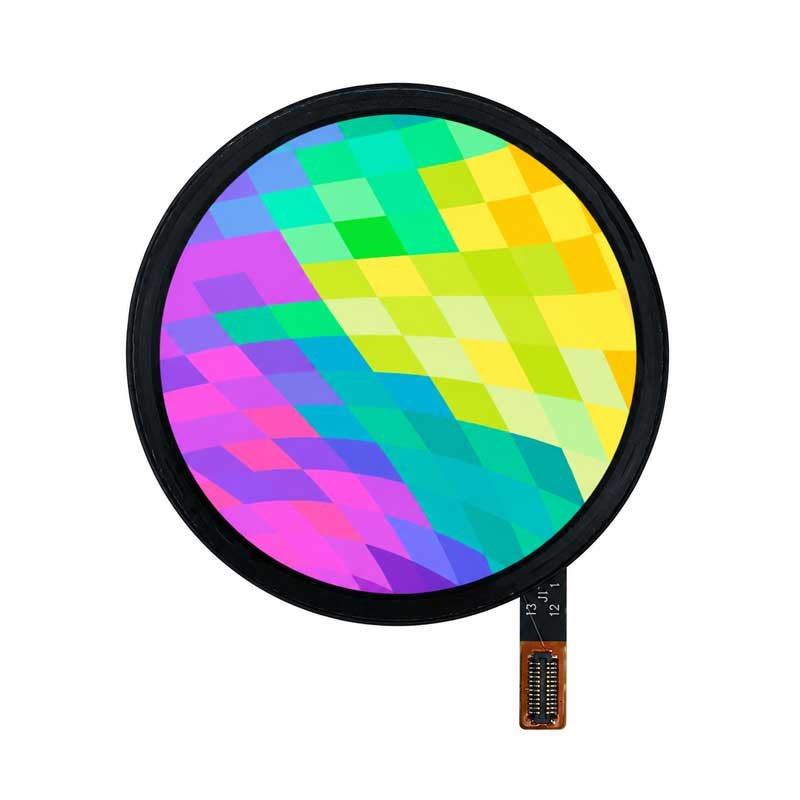
AMOLED · round touch
1.7″ Round AMOLED
Part No. KD017VGOSN010-C006A
- Resolution: 466 × 466
- Interface: QSPI
- Touch: Capacitive
Review for integration: Round cover lens, touch stack, FPC exit and mounting fit.

DisplayMan helps review AMOLED, PMOLED and flexible OLED options around your display, electrical and mechanical requirements.
Discuss FPC, connectors, touch panels, cover glass and replacement requirements, starting with a suitable standard module where possible.
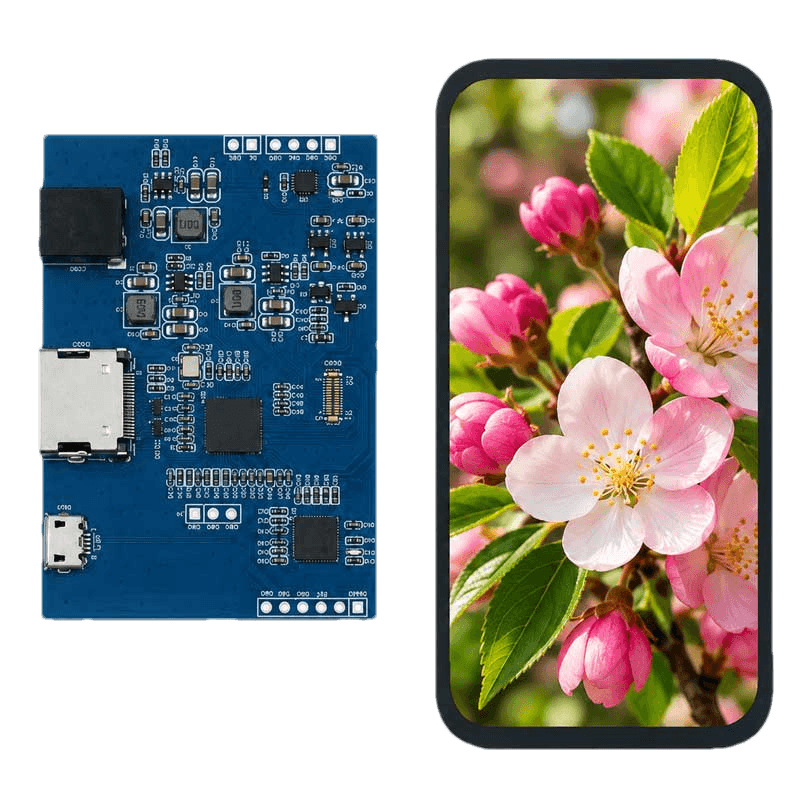
DisplayMan provides Custom OLED Display support for OEM products that need practical customization and integration based on existing AMOLED, PMOLED or Flexible OLED modules.
In most projects, customers do not need a completely new OLED panel from zero. The practical requirement is usually to make an existing OLED module fit the product electronics, front-panel design and mechanical structure.
DisplayMan can review module selection, FPC direction, connector matching, pin definition, interface, touch, cover glass, lens structure, optical bonding, replacement and mechanical integration.
Custom OLED at DisplayMan means practical module-level customization and integration support—not unlimited new OLED panel development from zero.
Start with a reference module whose size, resolution, display technology and interface fit the product. These six AMOLED and three PMOLED examples show different shapes, sizes and integration structures that can be discussed for an OEM project.
AMOLED · round touch
Part No. KD017VGOSN010-C006A
Review for integration: Round cover lens, touch stack, FPC exit and mounting fit.
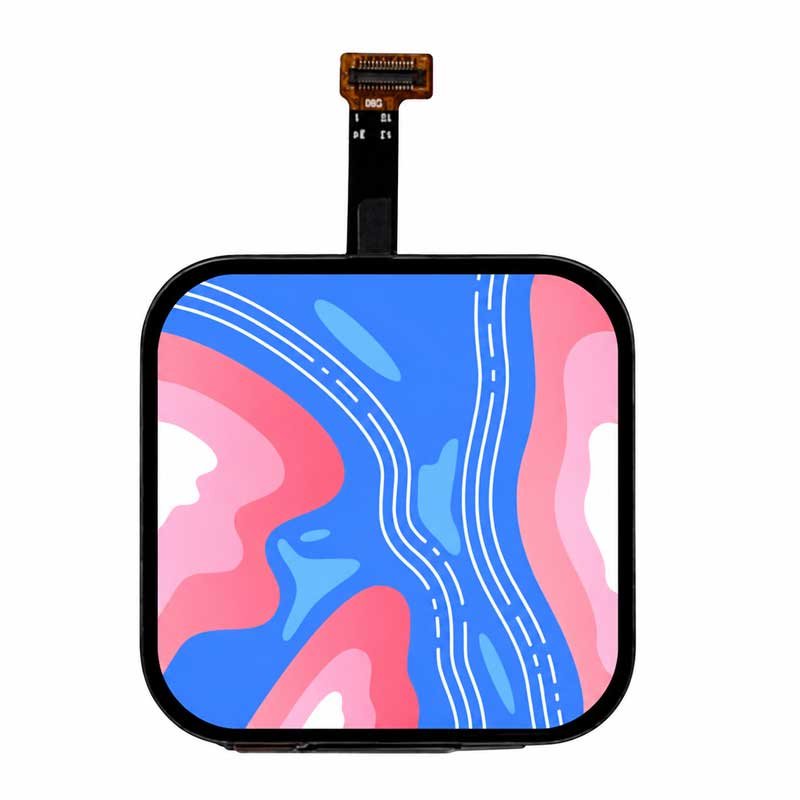
AMOLED · square touch
Part No. KD021WVOSN009-C003B
Review for integration: Touch cover lens, printed border, FPC routing and enclosure fit.
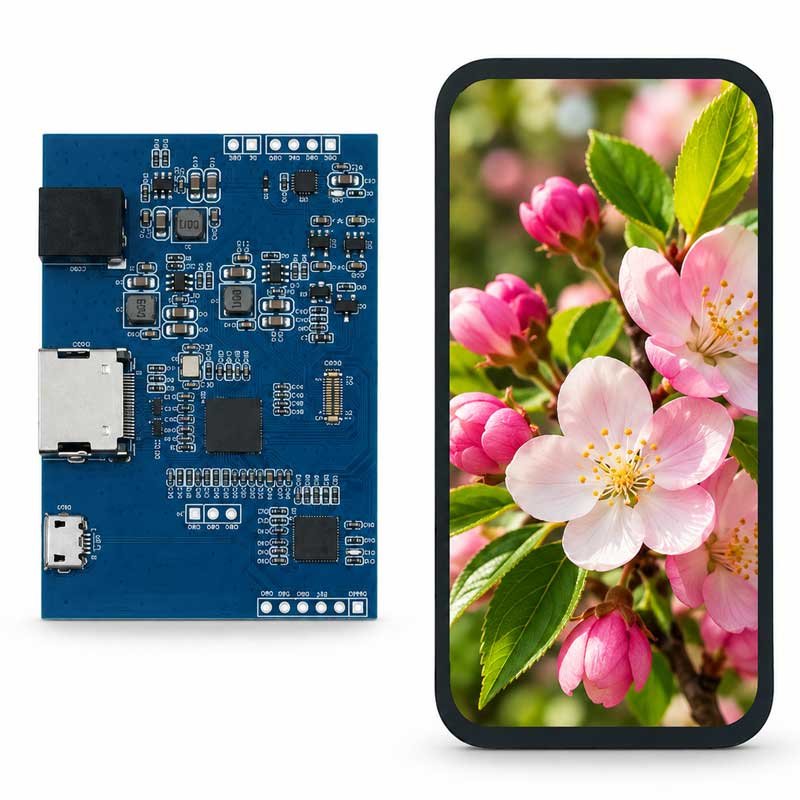
AMOLED · HDMI kit
Part No. KD041HDOIN002-C000-HDMI
Review for integration: Driver board placement, power, cable routing and housing.
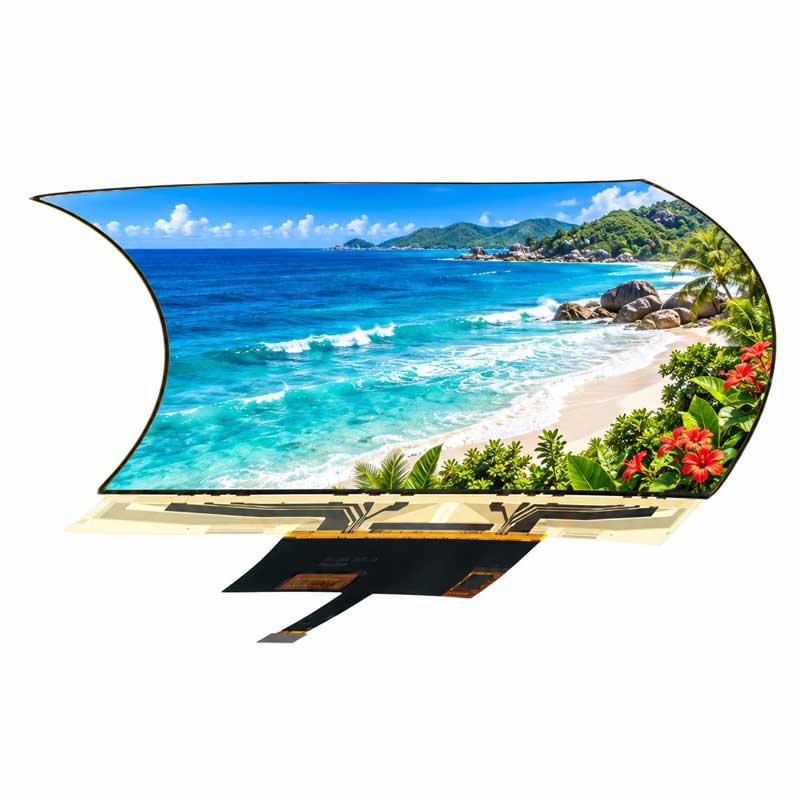
Flexible AMOLED
Part No. DXQ8D001
Review for integration: Static curvature, support, FPC exit and touch stack feasibility.
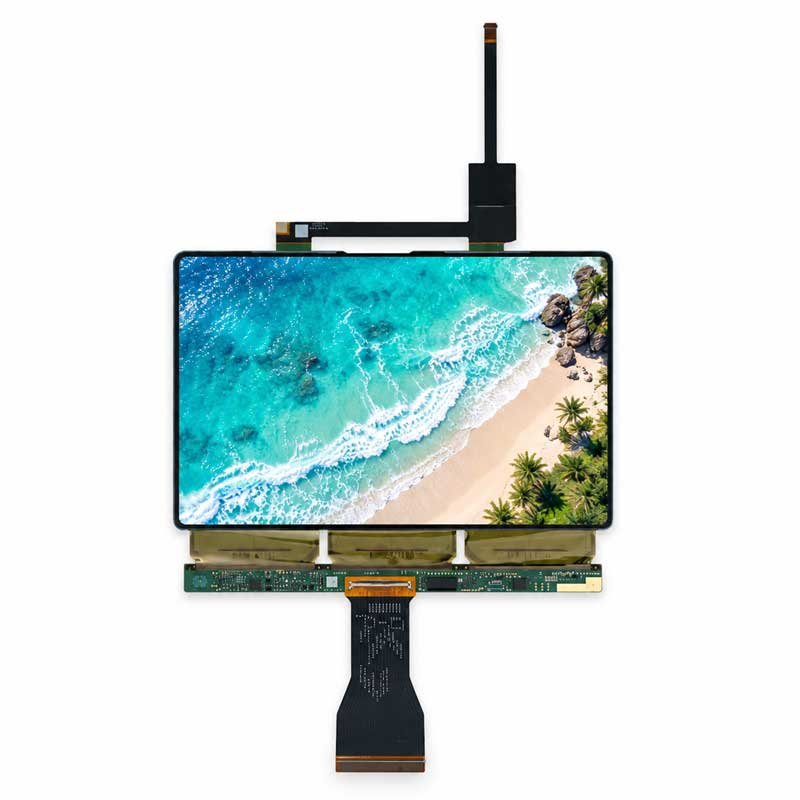
AMOLED · landscape
Part No. KD090WQOEN010-C000
Review for integration: eDP cable routing, front cover and landscape mounting.
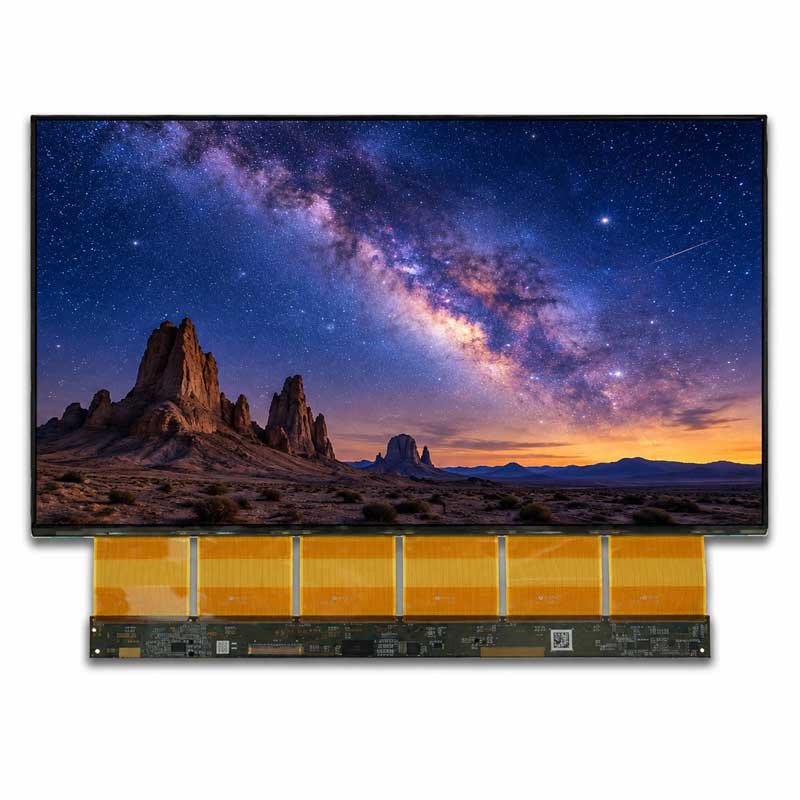
AMOLED · large format
Part No. KD156UHOEN018
Review for integration: Controller electronics, cover/touch feasibility, mounting and thermal design.
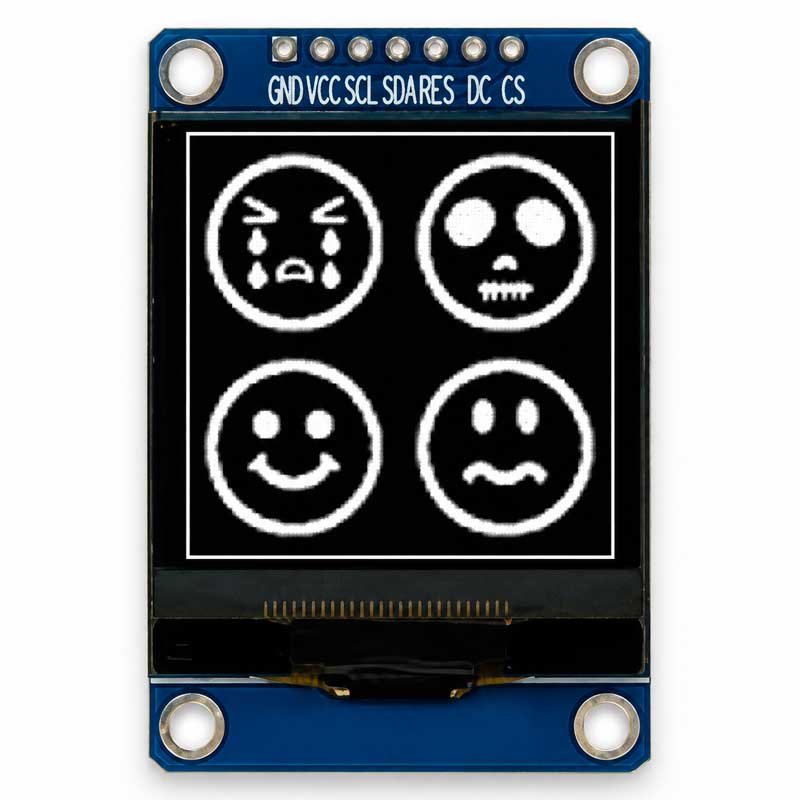
PMOLED · square
Part No. KD015SQOSN013
Review for integration: Monochrome icon layout, host wiring and PCB mounting.
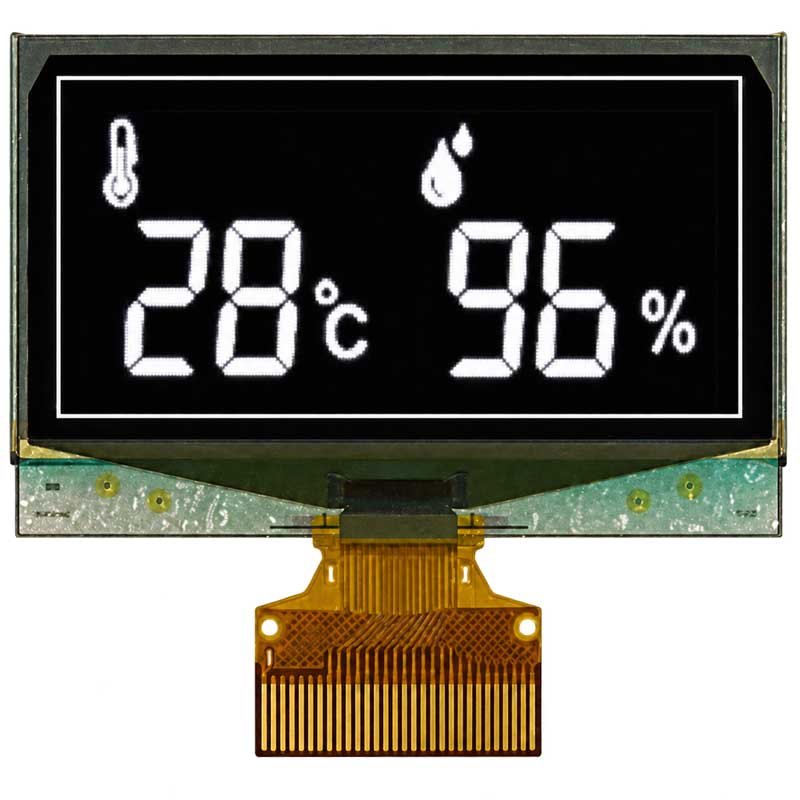
PMOLED · FPC
Part No. KD0154WEOLN006
Review for integration: FPC exit, connector, pin definition and front-panel window.
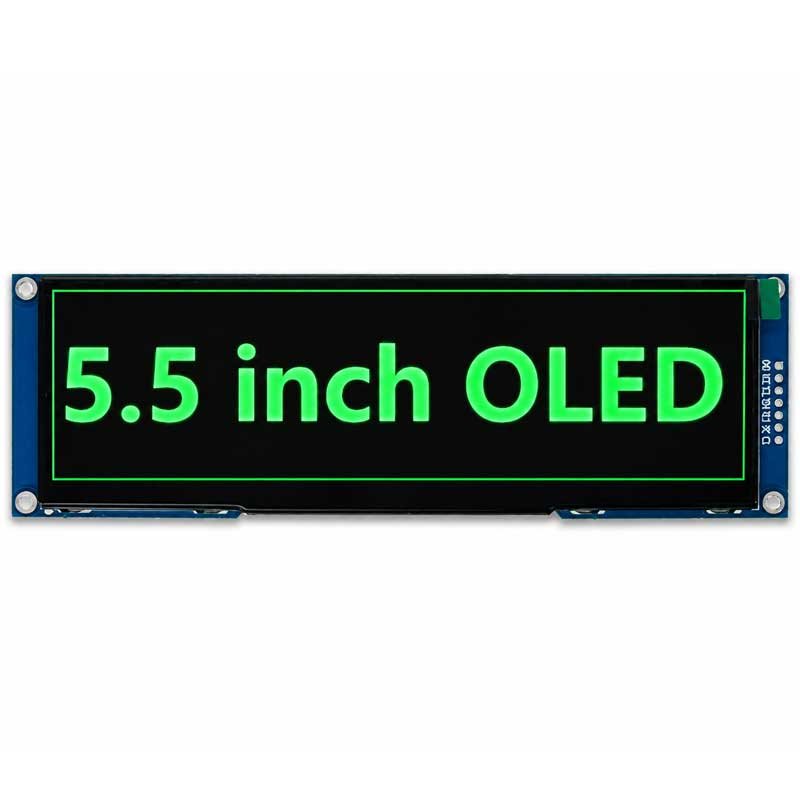
PMOLED · long strip
Part No. KD055SCOSN025
Review for integration: Long-strip display window, connector/wiring and mounting structure.
Share your target dimensions, display content, interface and controller, mechanical drawing, FPC/connector requirements, touch and cover-glass design, expected quantity and project schedule. Availability of a specific change, tooling, MOQ and validation requirements depend on engineering review. These photos show reference configurations; they do not imply that every feature can be altered.
The first step is not to develop a new panel. It is to review whether an existing OLED module can be adapted to the product.
| Custom OLED Direction | Best For | Selection Logic |
|---|---|---|
| Custom AMOLED Displays | Full-color smart devices, handheld terminals, medical electronics and compact products | Use when full-color OLED image quality and active-matrix performance are required |
| Custom PMOLED Displays | Instruments, meters, controllers and simple status displays | Use when a small monochrome or simple graphic OLED is required |
| Custom Flexible OLED Displays | Wearables, curved devices, special product ID and bendable structures | Use when a thin, curved or flexible OLED structure is required |
| OLED with Custom FPC / Connector | OEM products with fixed PCB or enclosure structure | Use when the standard OLED is close but the FPC direction or connector does not fit |
| OLED with Touch and Cover Glass | Smart devices, medical electronics, commercial terminals and control panels | Use when display, touch and front-cover structure must be integrated |
| OLED Replacement Review | Existing product maintenance and redesign | Use when an old OLED must be replaced or updated |
Use an existing OLED module whenever possible. Review FPC, connector, touch, cover glass, bonding and mechanical integration when the standard module is close but not ready to fit the product.
Custom OLED usually starts from an available OLED module rather than a completely new panel design.
The goal is to make the OLED fit the customer PCB, connector, front lens, enclosure and assembly process.
AMOLED, PMOLED or Flexible OLED can be reviewed according to the product requirement.
| Customization Item | What Can Be Reviewed | Typical Purpose |
|---|---|---|
| OLED Type | AMOLED, PMOLED, Flexible OLED | Select the correct OLED technology direction |
| Display Size | Standard OLED module size review | Match product display opening |
| Resolution | Existing module resolution or project review | Match UI content and system capability |
| FPC Direction | Length, exit direction and bending space | Fit PCB and enclosure structure |
| Connector | Type, pitch and position | Match customer mainboard |
| Pin Definition | Pinout review or replacement comparison | Support replacement or redesign |
| Interface | MIPI, SPI, I2C, eDP or project-based review | Match customer electronics |
| Touch Panel | Capacitive touch review for selected modules | Add user-input function |
| Cover Glass / Lens | Shape, thickness, printed border and surface treatment | Match front-panel appearance |
| Optical Bonding | OLED + touch + cover glass bonding | Improve structural and optical integration |
| Mechanical Outline | Module size, active area and mounting space | Fit product enclosure |
| Flexible Structure | Bending radius, direction and support structure | Support curved or bendable product design |
| Replacement Review | Old model comparison, sample and drawing review | Replace discontinued or unavailable modules |
Not every OLED size, shape, interface, FPC or bending structure can be customized freely. Feasibility depends on OLED type, available module source, driver IC, FPC design, connector structure, tooling, MOQ, schedule and environment.
For most projects, DisplayMan recommends starting from an existing standard OLED module.
This reduces development cost, lead time and technical risk. If size, resolution, OLED type and interface already fit, the project can move to integration-level customization.
Most custom OLED projects should begin with standard OLED module selection and then move to integration-level customization.
A completely new panel size or outline can require new masks, panel-process development, driver matching, yield evaluation and a long qualification cycle. Tooling investment may run to millions or tens of millions of RMB, depending on the design and factory process. This is an indicative scale, not a quotation.
New panel development generally requires a high MOQ, committed volume, sufficient budget and panel-factory engineering approval. Exact minimum quantities, costs and timing must be assessed for the specific project.
DisplayMan focuses on module-level custom OLED support based on available OLED platforms.
For prototypes, small batches and typical OEM volumes, select an existing AMOLED, PMOLED or flexible OLED platform first, then review FPC, interface, touch, cover glass, driver board and mechanical changes around it. A wholly new panel outline is a separate large-scale development program.
For full-color OLED image quality, high contrast and active-matrix performance.
For small OLED text, icons, simple graphics and status information.
For curved, bendable, thin or lightweight product structures.
A common custom-OLED need is adapting FPC direction, connector position or pin definition to an existing PCB or enclosure.
Capacitive touch can be reviewed for selected AMOLED and Flexible OLED modules.
Many projects need a custom front lens rather than a new OLED panel.
Replacement requires more than matching screen size.
FPC or connector modification is not always possible for every OLED module. Feasibility depends on module structure, supplier capability, quantity and engineering review.
| Factor | Standard OLED Displays | Custom OLED Displays |
|---|---|---|
| Product Basis | Existing OLED module | Existing module plus integration customization |
| Size | Fixed by standard model | Standard size preferred; special size reviewed by project |
| FPC | Standard direction and length | Direction and connector review when feasible |
| Interface | Standard module interface | Interface matching or controller review possible |
| Touch | Optional only for selected models | Touch and cover-glass integration review |
| Cover Glass | Not always included | Custom lens, printing and bonding review |
| Mechanical Fit | Customer adapts product structure | OLED integration reviewed for customer product |
| Cost | Lower and faster | Higher and project-based |
| Risk | Lower | Higher depending on customization depth |
| Best For | Products that can use existing modules | Products with fixed mechanical or electrical requirements |
| Selection Logic | Use when standard module fits | Use when standard module cannot directly fit |
| Factor | Module-level Custom OLED | Fully Custom OLED Panel |
|---|---|---|
| Development Basis | Existing OLED module | New OLED panel design |
| Typical Work | FPC, connector, touch, cover glass, bonding and mechanical fit | New panel mask, pixel design, OLED process and driver matching |
| Cost | Project-based but more practical | Very high |
| MOQ | Lower than full panel development | Usually very high |
| Lead Time | Shorter | Much longer |
| Risk | Manageable with proper review | High development and yield risk |
| Best For | Most OEM integration and replacement projects | Very large projects with strong budget and volume |
| DisplayMan Focus | Yes, normal custom OLED support | Not the normal service scope |
| Requirement | Custom OLED Displays | Custom LCD Displays |
|---|---|---|
| Display Effect | Self-emissive OLED with high contrast | LCD with backlight or reflective structure |
| Small Simple Display | PMOLED possible | Segment LCD or monochrome LCD often practical |
| Full-color UI | AMOLED possible | TFT LCD often more cost-effective |
| Flexible Structure | Flexible OLED available | Flexible LCD is limited and different |
| Static Content | Burn-in risk must be reviewed | LCD is usually better for long static UI |
| Cost Direction | Often higher | Often more flexible for cost-sensitive projects |
| Sunlight Readability | Needs review | Reflective or high-brightness LCD may be better |
| Best For | Premium compact products, wearables and curved displays | Industrial HMI, segment displays and cost-sensitive devices |
| Selection Logic | Choose when OLED visual or flexible structure is required | Choose when cost, static UI, sunlight readability or lifecycle is more important |
Custom OLED is not always better than Custom LCD. The right technology depends on content, environment, lifecycle, cost and mechanical structure.
Decide first whether the project should use AMOLED, PMOLED or Flexible OLED based on size, color, UI complexity, flexibility, interface and cost.
Existing OLED modules should be checked first. Special sizes may require higher MOQ, tooling and deeper review.
MIPI, SPI, I2C, eDP, pin definition and controller feasibility should be confirmed before sample preparation.
FPC direction, length, bending clearance, connector type and pin definition must match the PCB and enclosure.
Touch, cover glass and bonding affect optical performance, thickness, strength and final assembly.
The OLED module must match the housing, mounting method, PCB space and assembly process.
Static content, brightness, operating hours and temperature should be reviewed for OLED lifetime and image retention.
Long-term supply, alternatives and replacement planning should begin early for OEM production.
| Project Requirement | Recommended Direction |
|---|---|
| Full-color OLED display | AMOLED Displays |
| Small monochrome OLED display | PMOLED Displays |
| Curved or bendable structure | Flexible OLED Displays |
| Custom FPC or connector | Custom OLED Displays |
| Custom cover glass or touch | Custom OLED Displays |
| Old OLED replacement | Custom OLED Replacement Review |
| See-through display effect | Transparent OLED Displays |
| Long static industrial display | Industrial TFT LCD Displays or Monochrome LCD Displays |
| Lowest practical display cost | TFT LCD Displays or PMOLED Displays |
Use a standard AMOLED, PMOLED or Flexible OLED page when the existing module already fits. Use Custom OLED when FPC, connector, touch, cover glass, replacement or mechanical integration is the real requirement.
For replacement projects, provide the original OLED sample or clear photos of both sides so FPC, connector, driver IC, pin definition and mechanical structure can be checked.
Select a related OLED page, or return to the top of this page.
A Custom OLED Display is an OLED module or integration project adapted to match a customer product structure, interface, FPC direction, touch panel, cover glass or replacement requirement.
Not usually. Most projects start from an existing OLED module and customize FPC, connector, touch, cover glass, interface or mechanical integration.
Yes. Module selection, interface, FPC direction, connector, touch panel, cover glass, bonding and mechanical integration can be reviewed.
Yes. FPC, connector, driver IC, interface, PCB structure, cover lens and replacement matching can be reviewed.
Yes. Bending radius, bending direction, FPC, cover lens, touch structure and mechanical integration can be reviewed.
New panel development is technically possible in the industry, but it requires very high tooling cost, high MOQ, long development time and panel-level engineering.
FPC direction, length and connector matching can be reviewed for selected OLED projects, depending on module structure, supplier capability and quantity.
Yes. Capacitive touch can be reviewed for selected AMOLED and Flexible OLED modules.
Yes. Custom shape, printed border, AG, AR, AF and bonding structure can be reviewed according to product design.
Yes. Please provide the old model number, datasheet, photos, FPC details, connector, pin definition and sample if available.
It can be reviewed, but OLED lifetime, static UI, brightness, temperature, operating hours and supply stability must be checked carefully.
Please provide size, resolution, OLED type, interface, FPC direction, connector, touch, cover glass, mechanical drawing, quantity and application environment.
Send us the OLED type, size, resolution, interface, FPC direction, connector, touch requirement, cover-glass design and product structure.
DisplayMan will review whether an existing OLED module is suitable or whether practical custom OLED integration is required.
Custom OLED does not usually mean developing a new OLED panel from zero. The practical path is to start from an existing AMOLED, PMOLED or Flexible OLED module and adapt the integration around it.