Turn Floral Forms into Programmable Visual Experiences
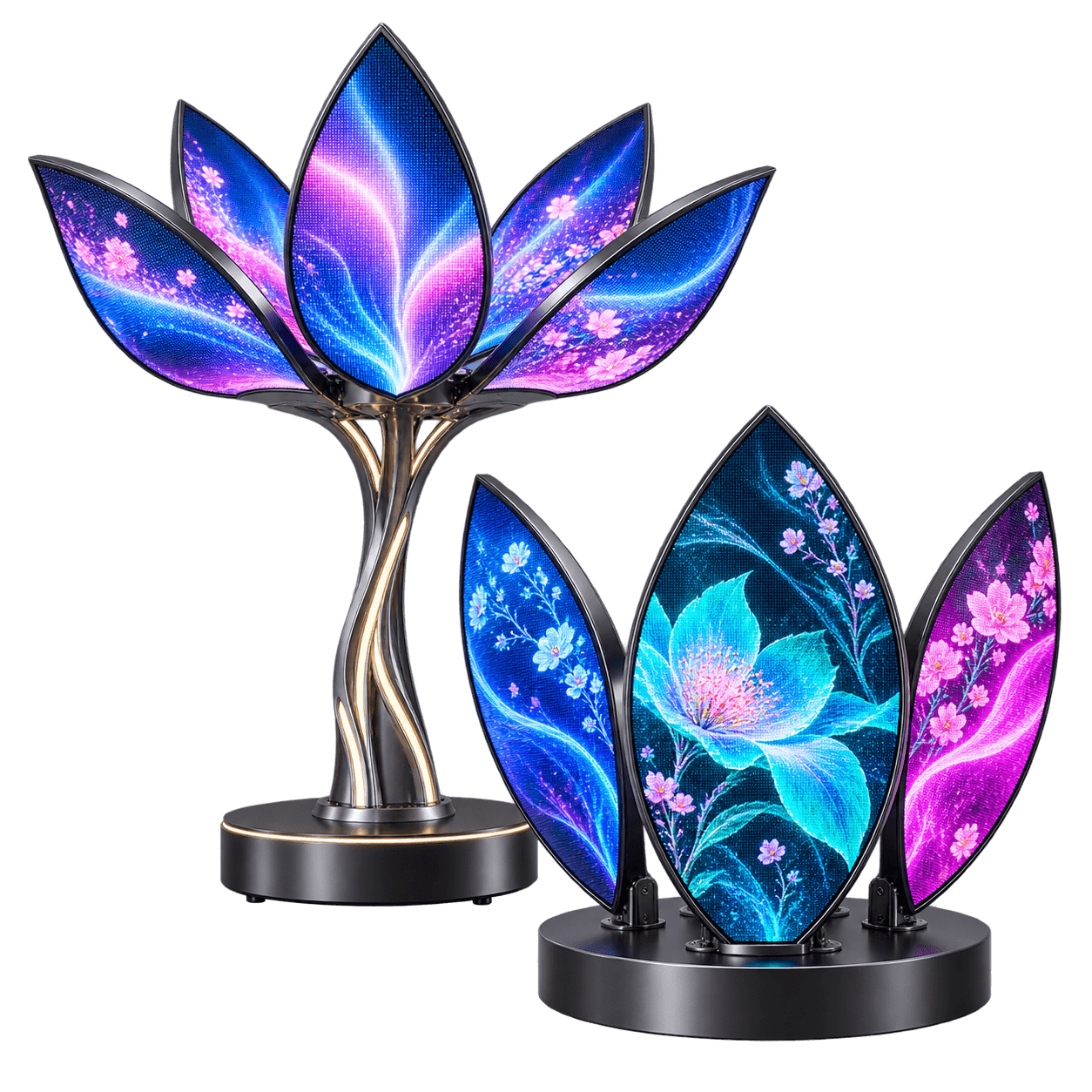
DisplayMan develops flower-shaped LED sculptures, individual petal screens and floral tunnel installations for exhibitions, brand environments and architectural features. Petal outlines and layered arrangements give digital content a distinctive physical form.
Choose a complete flower on a stem, a freestanding petal composition or a sequence of floral arches. Geometry, viewing direction, LED coverage and support structure are reviewed together to create a practical display configuration.
Flower & Lotus FormsCustom Petal ScreensFloral Tunnel ConceptsMapped Digital Content
The defining feature is the physical display geometry. Floral graphics can change while the flower or petal silhouette remains recognizable.
A Screen Built Around a Floral Outline
A flower-shaped LED display uses shaped screen surfaces to create a blossom, lotus or other floral composition. The petals may be flat, gently curved or assembled in several planes. A conventional rectangular screen showing flowers is a different product: here, the outline and placement of the active panels form part of the design. Reference images establish the visual direction, while dimensional drawings define the actual construction.
Individual Petals and Complete Sculptures
A petal screen can be used independently or grouped with others on a common base. A complete flower combines a crown, stem and support structure, with selected areas carrying LED content. Neither approach requires every surface to be active. Decorative rear panels, edge trims and stems can help complete the shape while keeping electronics and service access manageable.
Floral Tunnels and Repeated Frames
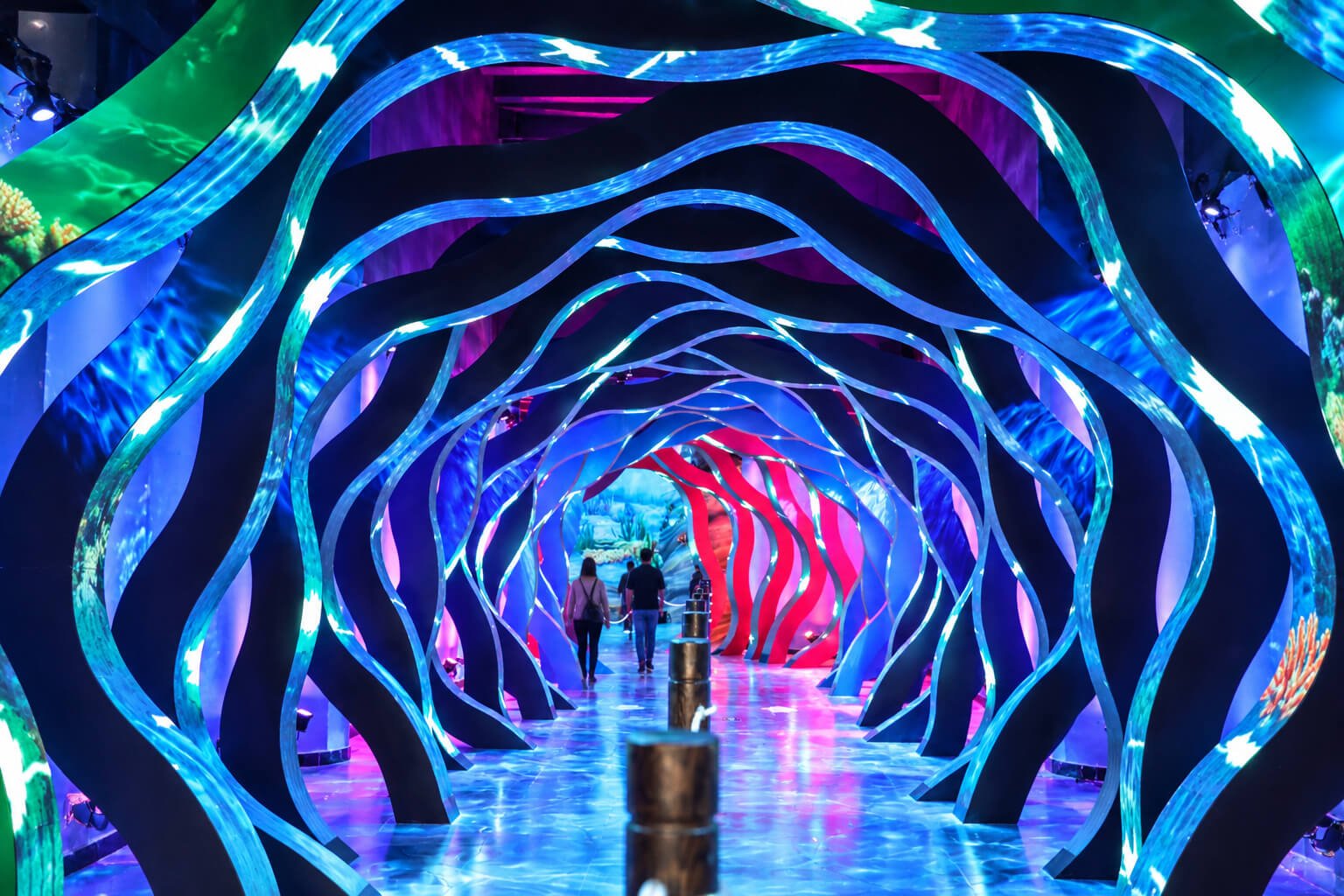
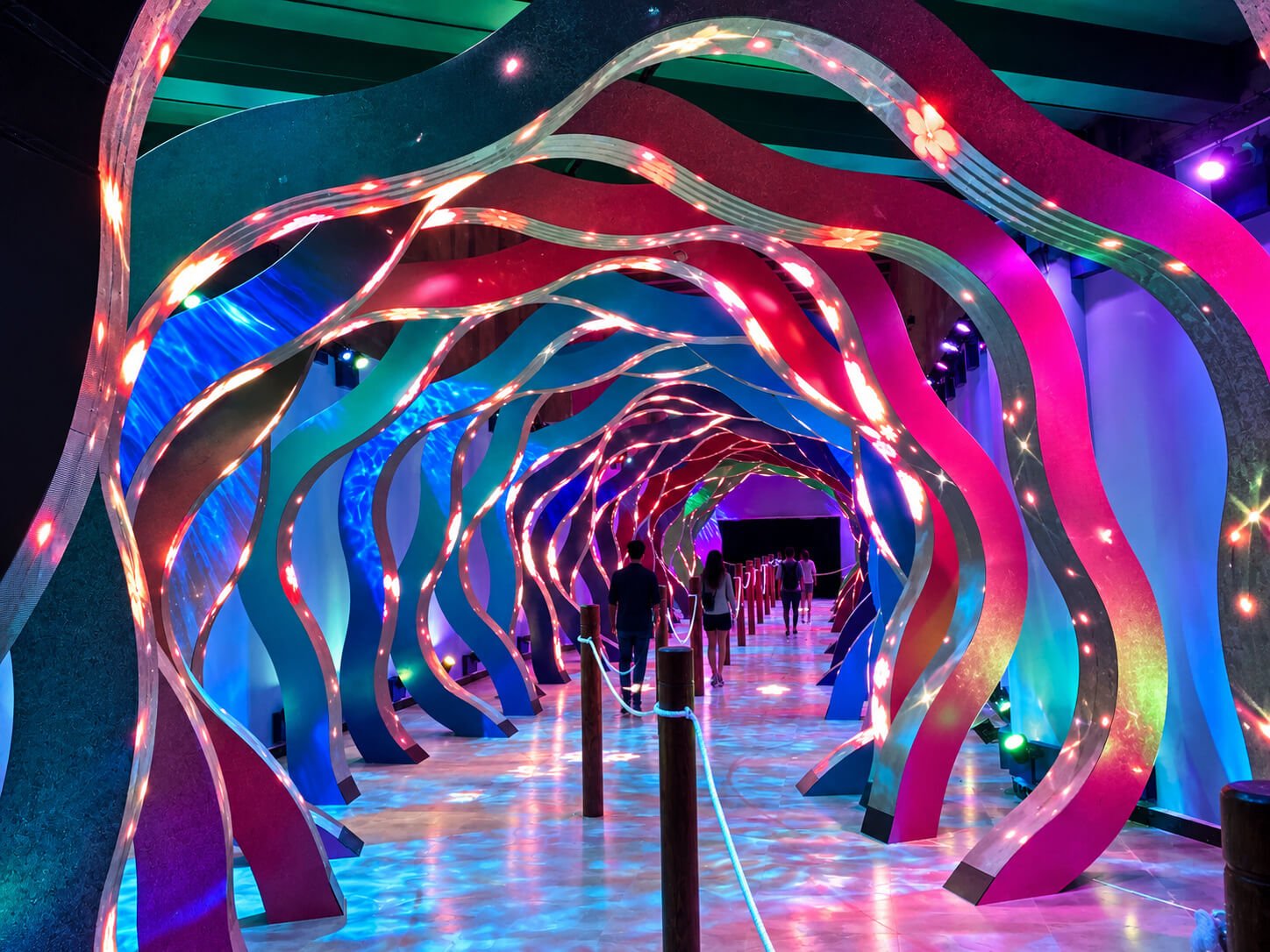
A tunnel can repeat flower-like or undulating petal outlines along a visitor route. This creates depth through successive layers rather than one central sculpture. LED coverage may be on the face, inner edge or selected curved bands. The clear passage, spacing between frames and audience approach direction need to be defined alongside the screen concept.
Static Structure or Mechanical Movement
A flower can appear to bloom through video animation while its physical petals stay fixed. Actual opening and closing requires a separate mechanical design. Reference filenames or changing colors do not establish a motion specification. If movement is required, define it explicitly so the structure, drives, controls and maintenance arrangement can be assessed together.
Main Flower & Petal LED Display Directions
Start with the installation format and how people will encounter it.
Flower and Lotus LED Sculptures
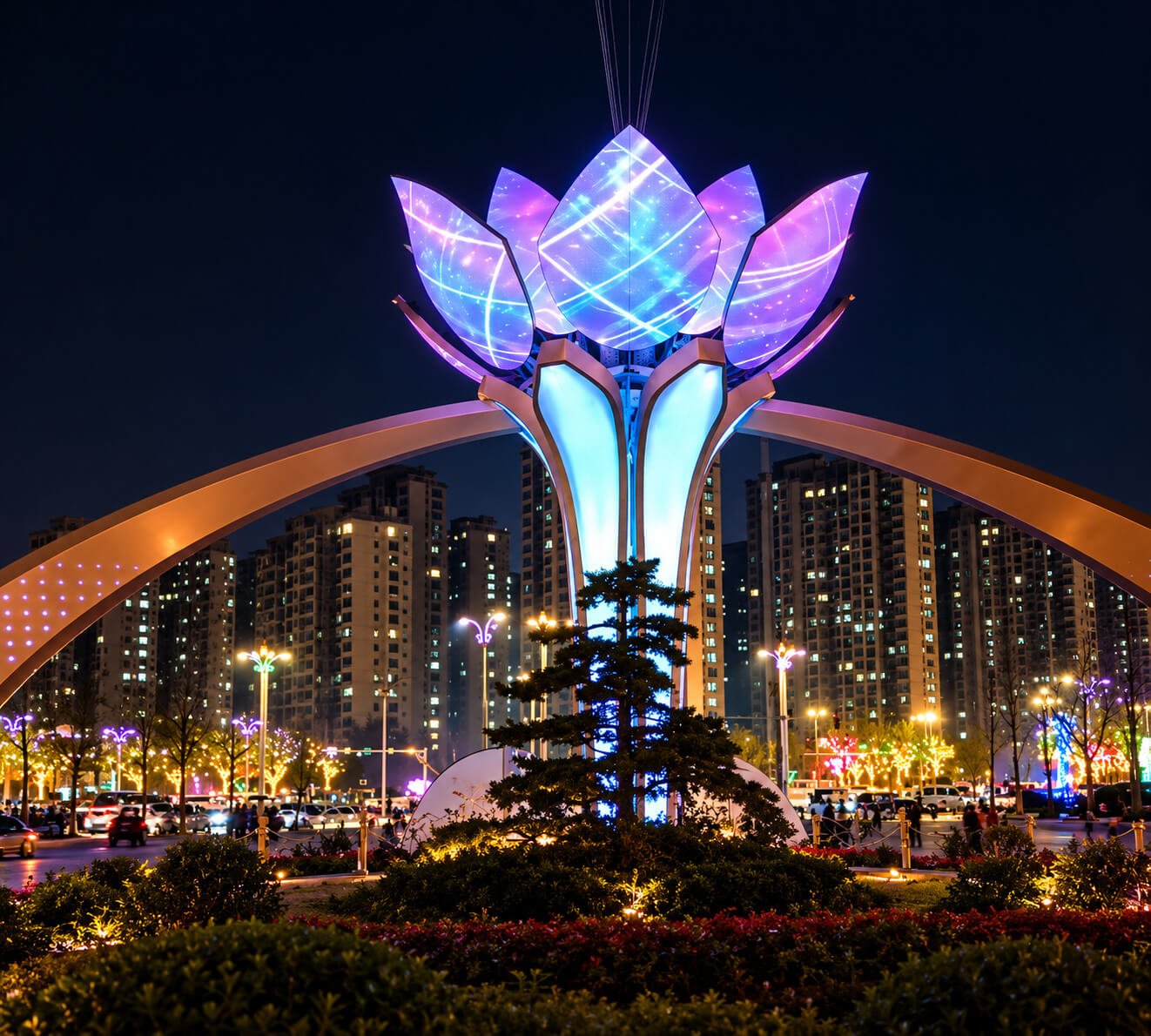
A raised floral crown creates a recognizable focal point for an open interior, entrance or landscape feature. Petal angle and height determine whether visitors see the screen faces clearly. A taller stem can improve visibility from a distance but may make nearby viewers look at the underside. Review the main viewing positions before fixing the overall proportions.
Freestanding Petal Screen Groups
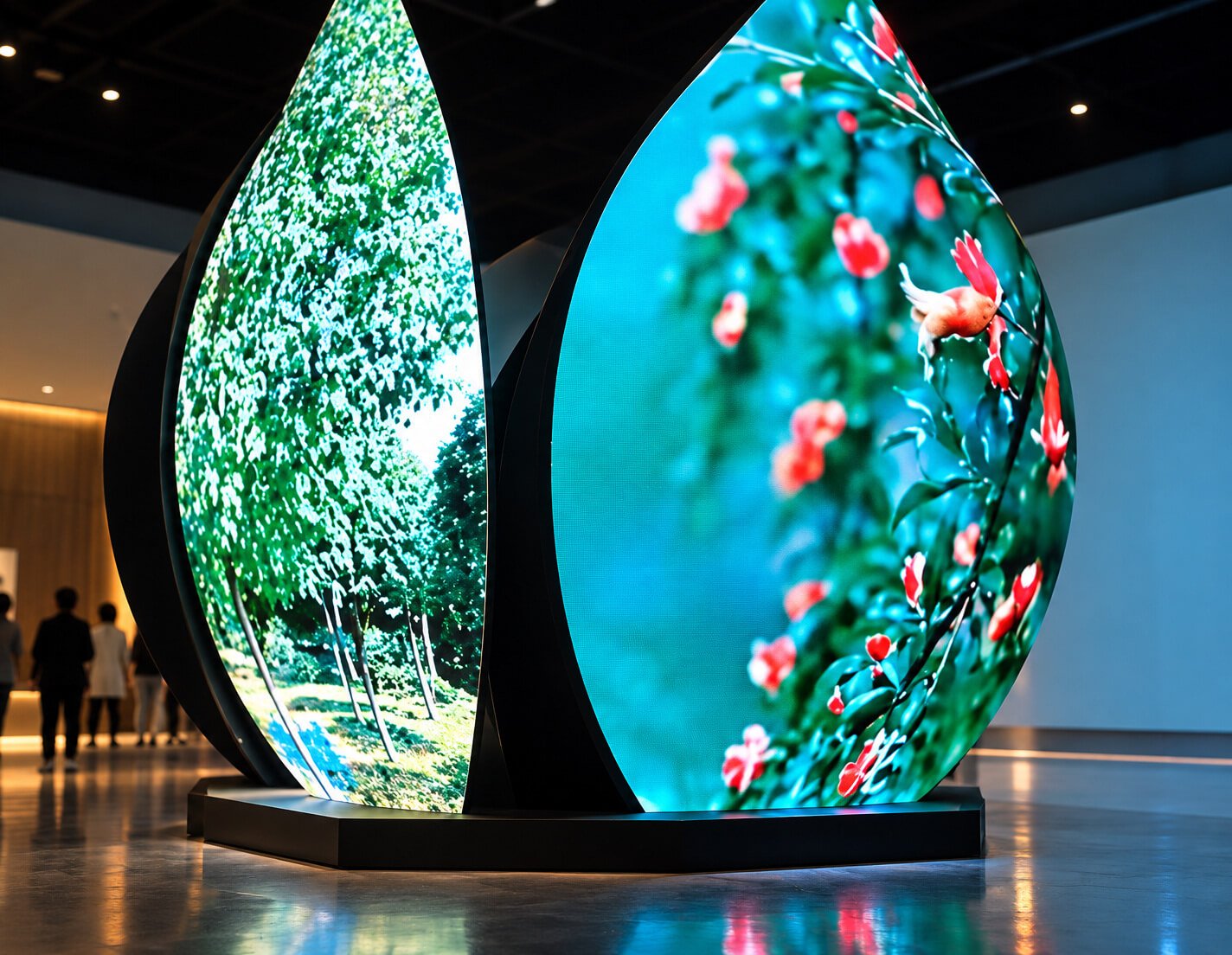
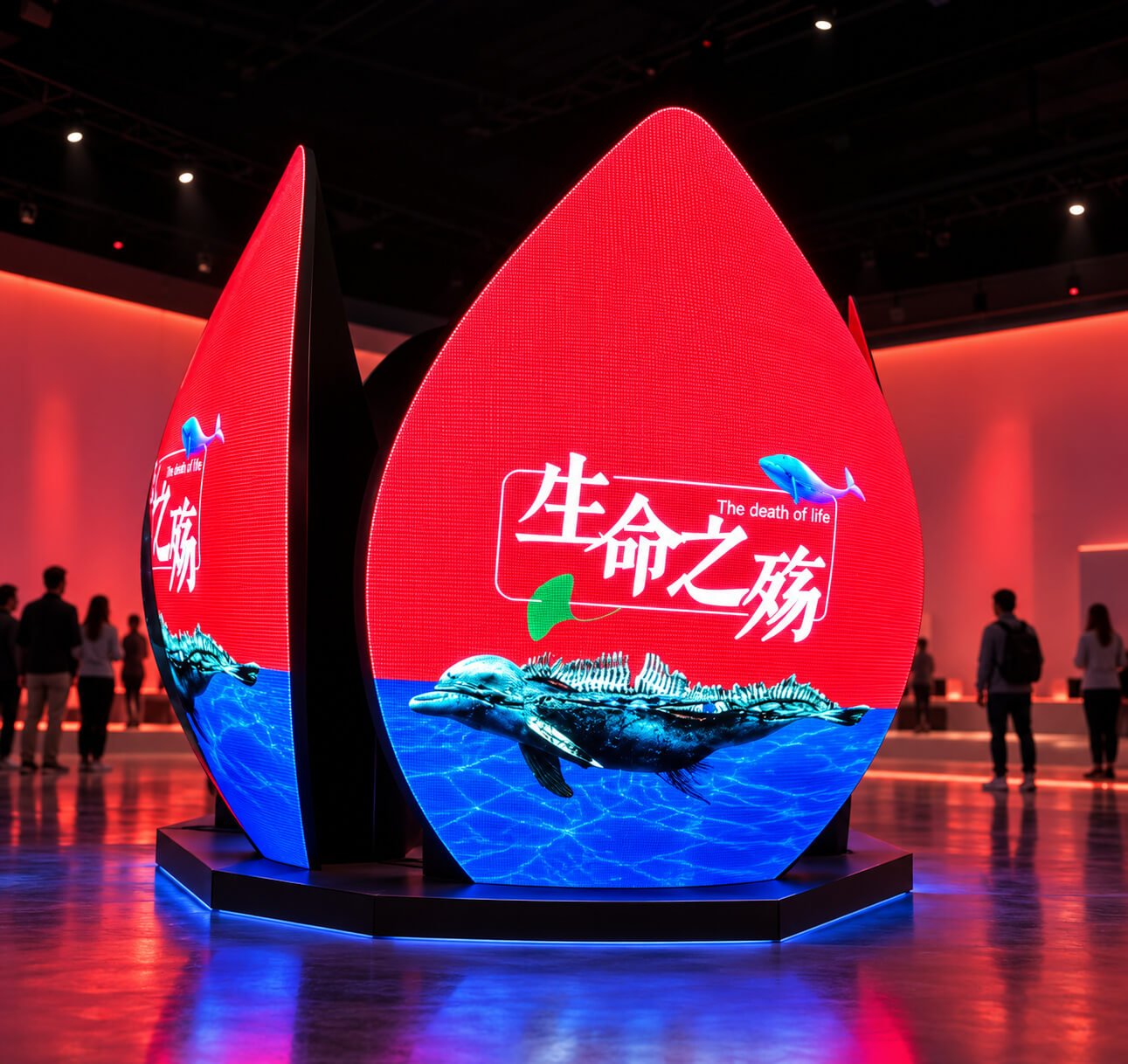
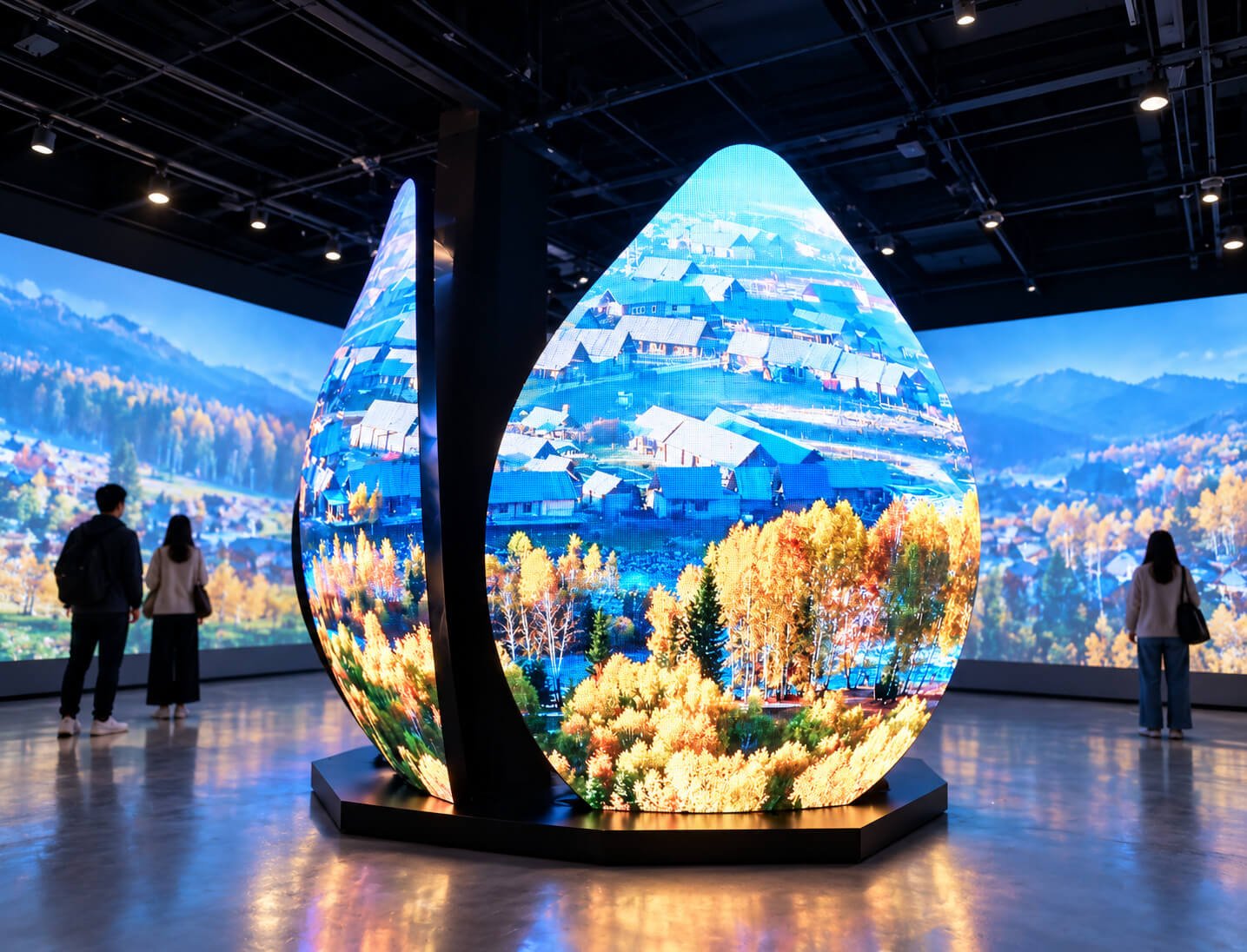
Two or more pointed petal panels can create a compact sculptural composition. Each face can carry its own content or participate in a coordinated scene. The base should accommodate supports and service access without dominating the design. Panel overlap needs careful review because a visually attractive arrangement can hide significant portions of the active surface.
Single Petal Feature Screens
An individual petal can work as a shaped digital feature where a complete flower would occupy too much space. Its broad center can carry a logo, product image or short message, while the narrow tip is better suited to supporting graphics. Define whether the rear is decorative or also an active display before selecting the structure.
Flower-Shaped Tunnel Installations
Repeated floral frames can turn a circulation route into a changing visual environment. The sequence, frame spacing and visible LED faces determine the experience. For a walk-through installation, coordinate the clear opening, floor transitions, cable routes and maintenance access with the venue. The display design should support the intended route through the space.
Layered Petal Backdrops
Petal surfaces can be arranged around a presentation area, entrance or central product. This creates a shaped backdrop without requiring a tall stem or enclosed tunnel. Decide whether the panels operate as independent surfaces or one coordinated composition. Sightlines and overlap should be reviewed from the audience’s actual positions.
Custom Botanical Forms
A bespoke brief may combine petals, leaves, stems or abstract floral curves. Share a sketch or 3D model to define the intended geometry rather than relying only on a botanical name. Different parts can use different construction approaches. A practical concept often concentrates LED coverage where visitors will see it most clearly.
Flower & Petal LED Display: 8 Design References
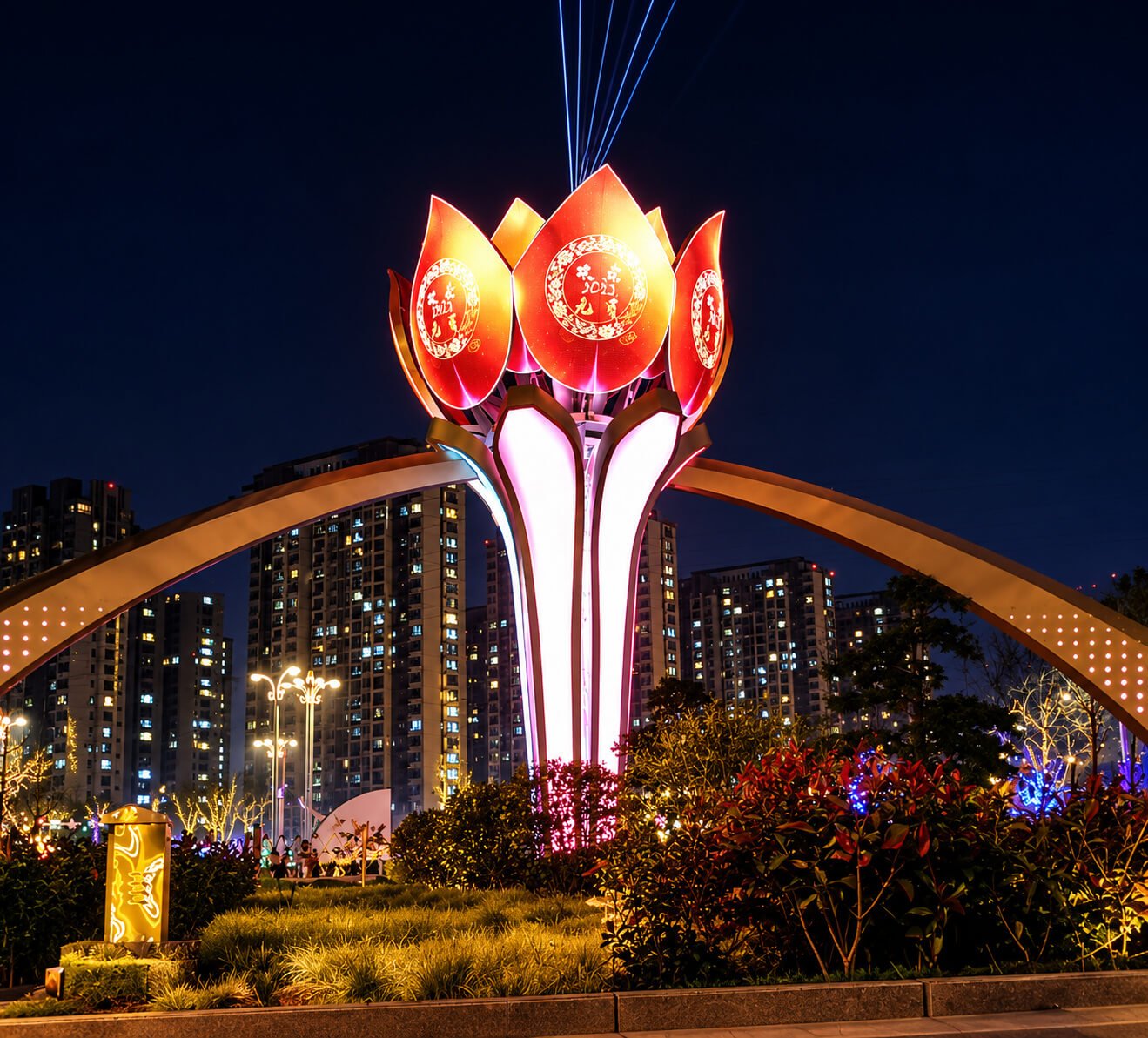
Explore floral tunnels, freestanding petal groups and elevated flower sculptures. These redrawn references illustrate shape and content directions. Final dimensions, active surfaces and any mechanical movement are defined for each project.
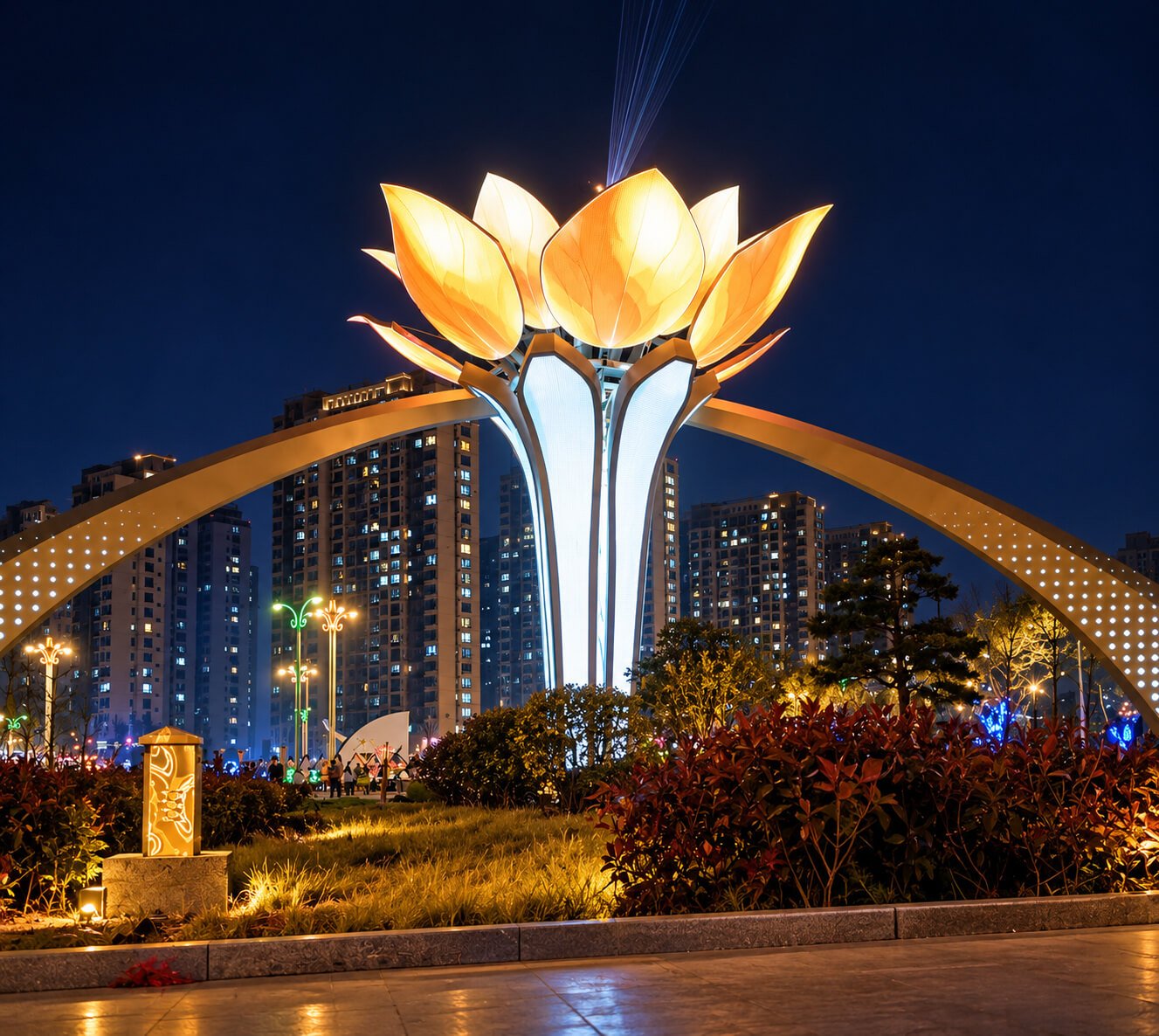
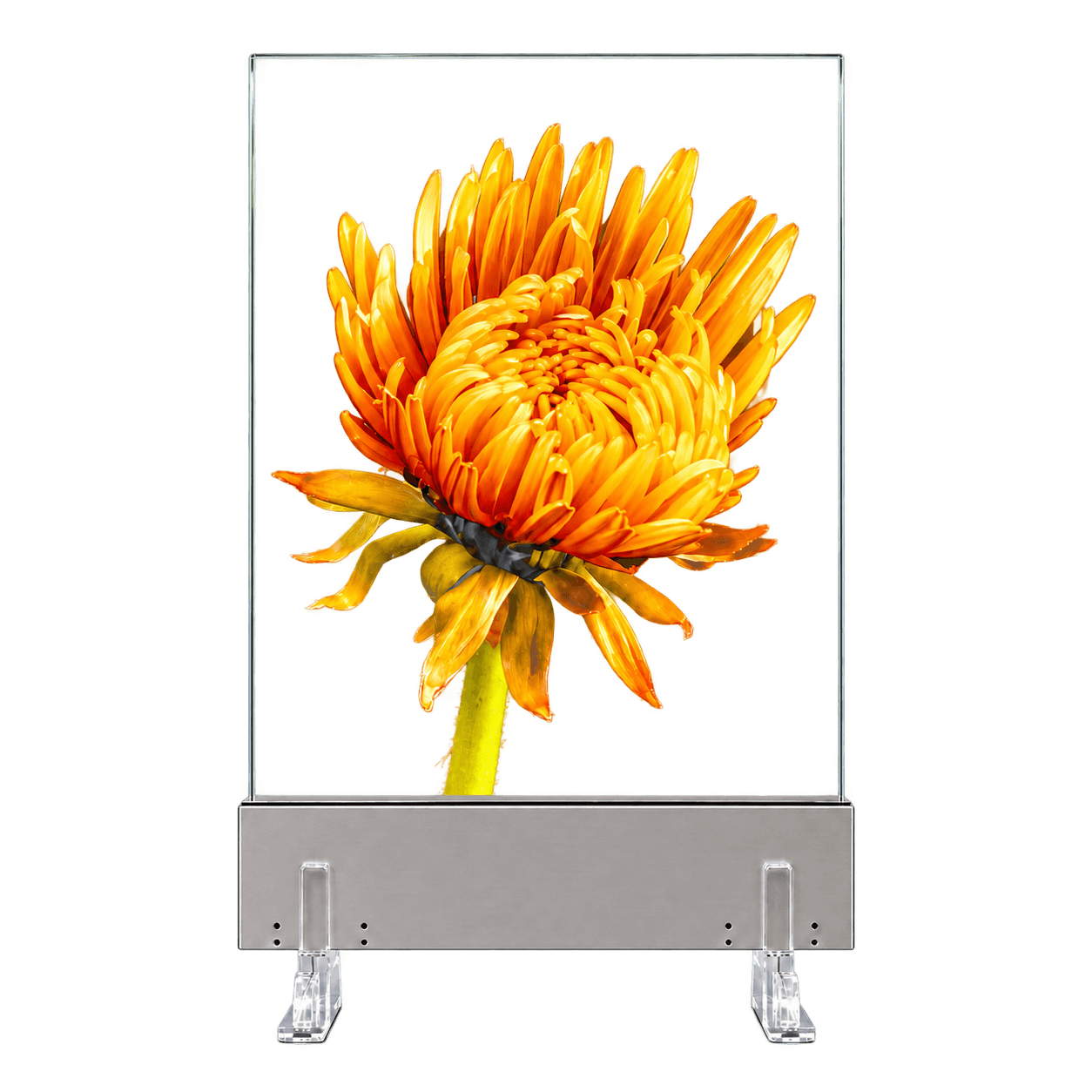
Golden content highlights the open-flower silhouette and its elevated presentation.
Size, Petal Geometry & Pixel Pitch Selection
Overall height alone does not define the display. The crown, individual panels and audience positions determine the usable visual area.
Define the Complete Envelope
Provide overall height, crown width, stem dimensions and base footprint for a flower sculpture. For petal groups, include each panel’s height, width, angle and spacing. For tunnels, specify the clear opening and installation length. Include the supporting structure and service space so the proposal reflects the complete assembly.
Choose Flat or Curved Petals
A flat shaped panel and a curved petal can produce different visual effects and require different module arrangements. Tight bends, pointed tips and transitions need detailed review. A flexible module should not be assumed to fit every compound curve. The proposed layout may combine standard sections, shaped modules and decorative edge details.
Mark Active LED Coverage
Identify front, rear, inner and outer surfaces separately. A two-sided petal is not the same configuration as a front-facing screen with a decorative rear cover. Consider what visitors can actually see before requesting full coverage. Stems and narrow edges can remain structural or decorative when video content adds little value there.
Match Pitch to Viewing Distance
Pixel pitch should suit the nearest audience position, screen size and intended artwork. A petal’s narrow tip provides fewer pixels than its broad center, even at the same pitch. Small lettering or detailed logos should be reviewed against the actual pixel map. Choose resolution for the content purpose rather than treating finer pitch as the only design goal.
Check Overlap and Viewing Angles
Layered petals can conceal one another, especially when seen from the side or below. Review front, side and approach views before approving the arrangement. Important messages should occupy surfaces that remain visible during normal use. A three-dimensional preview helps identify hidden areas but should be followed by checks on the assembled display.
Review the Venue Conditions
Indoor installations, sheltered entrances and exposed outdoor sites need different configurations. Provide ambient lighting, operating hours and site photographs. Outdoor suitability requires confirmation of the selected equipment and structure. An outdoor reference image is useful for appearance, but does not establish the specification of a new project.
Structure, Modules & System Engineering
A successful floral display combines a recognizable outline with practical supports, electronics and maintenance access.
Petal Outline and Module Layout
The outline should be developed alongside the module arrangement. Pointed tips and tapered edges may require custom PCB shapes, carriers or non-active trims. Confirm where the active pixels end and where the housing begins. This avoids expecting a perfect botanical edge from a module layout that cannot physically reach every part of the silhouette.
Stem, Crown and Base
A tall flower transfers the crown’s weight through its stem into the base or site connection. A petal cluster distributes loads differently and may use individual panel supports. Review connection points, assembly joints and cable routing as one system. The final support design must reflect the selected geometry and installation conditions.
Power Distribution and Cooling
Petal housings need space for their electrical components and a suitable thermal arrangement. Cabling through stems and shared bases should remain serviceable. Confirm where power enters the installation and how equipment is accessed. The final electrical configuration depends on the selected LED area, operating conditions and control system.
Controller and Multiple Surfaces
A single shaped panel may use a relatively simple playback arrangement. A complete crown or tunnel can require several mapped surfaces with coordinated content. Define whether panels operate independently, share one composition or synchronize with other venue equipment. Confirm the controller, inputs and content workflow before production.
Mechanical Blooming Options
If petals must physically open, close or change angle, specify the desired motion as a separate requirement. The design must account for drives, joints, moving cables, operating clearances and maintenance. Static LED animation can offer a blooming visual effect without changing the hardware position. Compare these approaches against the project’s actual experience goals.
Environmental Configuration
Outdoor projects need review of exposure, drainage, corrosion conditions, temperature and structural loads. Petal orientation can create surfaces where water collects, making geometry relevant to environmental design. Indoor versions can prioritize close-view finish and controlled lighting. Required performance and protection targets should be recorded in the agreed specification.
Content Mapping for Flowers, Petals & Tunnels
Digital artwork should follow the final active surfaces and viewing positions. The shape creates opportunities, but also limits where detailed information can appear.
Use the Broad Center for Key Messages
Place a logo, product image or short phrase within the widest visible part of a petal. The narrow tip and curved edges work better with supporting color, motion and textures. Avoid placing essential information across the gap between two separate petals. Content should remain understandable when only one part of the sculpture is visible.
Coordinate the Petals as a Composition
A flower crown can use synchronized color changes, outward-flowing motion or a sequence that moves from one petal to another. Confirm the order and orientation of each screen in the pixel map. A conventional rectangular video usually needs adaptation to avoid awkward cropping or repeated fragments across the surfaces.
Design Tunnel Content for Movement
Visitors experience a floral tunnel over time as they walk through successive frames. Repeated graphics can reinforce depth, while coordinated sequences can draw attention along the route. Review the effect from both entry directions where relevant. The mapping should identify each frame and active face so content is delivered to the intended location.
Separate Animated Blooming from Physical Motion
Video can create light waves or changing petals that suggest a blossom opening. This is a content treatment, not proof of mechanical movement. If physical petals also move, the media and motion sequences need a defined control relationship. Agree which system is responsible for triggering and timing the experience.
Adjust Color and Brightness to the Space
Floral forms can support vivid colors, but the final treatment should suit the surroundings. A bright retail interior and a dark exhibition room need different visual settings. Review reflections on nearby materials and the appearance of adjacent displays. Include representative camera checks if photography or filming is an important part of the project.
Plan Campaign Updates
The physical shape can remain in place while content changes for launches, seasons or events. Keep an approved mapping template so new artwork follows the same surface boundaries. Define who produces content, who uploads it and who operates the installation. This makes the display easier to maintain as a reusable brand feature.
Typical Flower & Petal LED Applications
Choose the arrangement around audience flow, available space and the purpose of the content.
Exhibitions and Brand Showrooms
Petal screens can form a distinctive stand feature or support storytelling along a visitor route. Compact groups suit product zones, while larger crowns can identify a space from a distance. Temporary installations need a practical assembly and packing plan. Confirm venue restrictions and access before finalizing a large sculptural form.
Retail Atriums and Product Launches
A floral display can introduce changing themes without rebuilding the physical feature for each campaign. Position key screen faces toward the main approach direction. Allow sufficient space around the base and consider how the sculpture looks from upper levels or nearby walkways. The best arrangement follows the actual visitor sightlines.
Corporate Experience Centers
Flower and petal forms can support a visual identity within reception and demonstration spaces. The content can range from abstract brand colors to themed product storytelling. Plan daily operation and maintenance as carefully as the launch presentation. Review the appearance of the structure when the screen is switched off.
Cultural and Themed Environments
Lotus and other floral forms can support a venue’s visual theme. The shape should be defined by the approved design rather than assumed from a flower name alone. Where visitors need to read detailed information, provide it on a suitable screen or sign positioned for comfortable viewing.
Walk-Through Installations
Floral frames can create a sequence between entrance and destination. Define the clear passage, audience capacity assumptions and floor interfaces with the venue team. Content can emphasize depth and direction while the structure remains visually open. Service access and cable protection need to be planned without obstructing the intended route.
Outdoor Sculptural Features
A raised flower or petal composition can act as a landscape focal point. The scale, viewing distance and orientation affect the usable screen areas. Outdoor versions require a site-specific configuration and support arrangement. Confirm installation responsibilities and access for future servicing before the structure is fabricated.
Transport, Installation & Maintenance
Design the assembly for its journey to the site and for the people who will operate it afterward.
Segment Large Crowns and Frames
A large flower may need detachable petals and a segmented stem. Tunnels can use repeated transportable frames. Confirm packing dimensions, lifting points and the available assembly area. Module and structural joints should allow alignment and electrical connection in a workable order.
Coordinate Site Connections
Clarify who supplies the base connection, supporting structure, electrical feed and any building work. A temporary exhibition base and a permanent outdoor foundation require different arrangements. The equipment drawings should match the agreed site interface so installation does not depend on assumptions discovered at delivery.
Keep Replacement Parts Accessible
Define the service direction for LED modules and internal electronics before finalizing rear covers and trims. Overlapping petals should not make routine replacement unnecessarily difficult. A tall crown may require planned lifting access. Agree the spare-parts list with attention to any custom-shaped modules.
Commission with Representative Content
Review panel alignment, mapping orientation, brightness, synchronization and controls on the assembled installation. Use artwork similar to the intended campaign rather than only test patterns. Check the main visitor viewpoints and record any intentionally inactive areas. Where physical movement is included, its acceptance checks belong in the agreed project scope.
Define the Handover Package
Agree the drawings, mapping files, controller settings and operating instructions to be supplied. A clear module identification system helps with future replacement. Content production, uploading and site maintenance responsibilities should be explicit, particularly when several contractors contribute to the final installation.
Consider Repeated Use
For displays that will travel between events, discuss packing, handling and assembly frequency early. Delicate tips, decorative stems and custom joints need appropriate protection. A design optimized for a permanent installation may need changes before it becomes suitable for repeated touring or rental use.
What Drives Flower & Petal LED Display Cost?
Compare proposals by the active screen area, construction and complete supply scope.
Petal Geometry and Coverage
The number of petals, their size and curvature, and single- or double-sided coverage affect the configuration. Tapered outlines and complex edges can add custom components. A decorative rear or stem may simplify the project when those surfaces do not need video content. Confirm the active boundary on the drawing.
Custom Development and Quantity
Custom modules, carriers, fixtures and structural parts can introduce development work. Clarify which components reuse an existing design and which require new fabrication. For multiple units, distinguish initial engineering from repeat production. A one-off sculpture and a repeatable series should not be compared solely by their overall height.
Motion and Synchronization
Physical opening petals, coordinated tunnel playback and integration with other systems require additional scope. Identify these functions separately from the basic LED structure. A static flower with changing graphics may meet the brief without a moving mechanism. The decision should follow the intended experience and operating resources.
Installation and Delivery
Packing, transport segmentation, environmental configuration and site work can materially change the proposal. Clarify shipping, lifting equipment, local electrical work and installation support. State whether the quotation covers equipment supply or additional project services so alternatives can be compared accurately.
Compare Related Custom LED Forms
A floral shape is most useful when its silhouette supports the project’s visual purpose.
Flower vs Tree-Shaped Installation
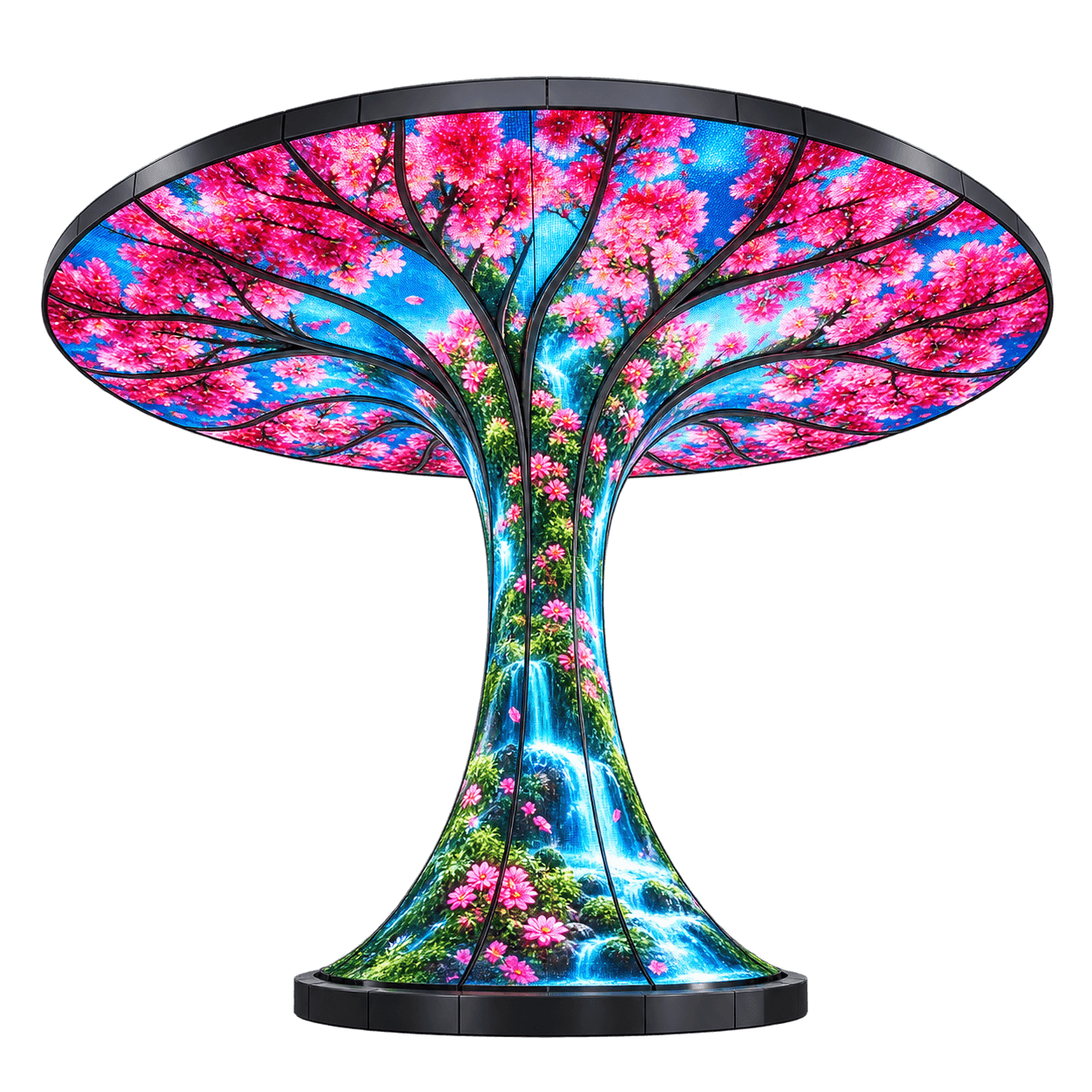
A flower emphasizes a crown of petals, while a tree emphasizes branches and canopy. The two can share botanical content but need different structures. Select the form that suits the available footprint, height and intended viewing direction. Treat tree-shaped displays as a separate design brief.
Petal Group vs Conventional Screen
Petals create a sculptural feature and can divide content into several visual zones. A rectangular screen provides a more regular canvas for detailed presentations. Where both purposes matter, combine a shaped feature with a separate information display rather than forcing long text into narrow petals.
Floral Tunnel vs Circular Ring
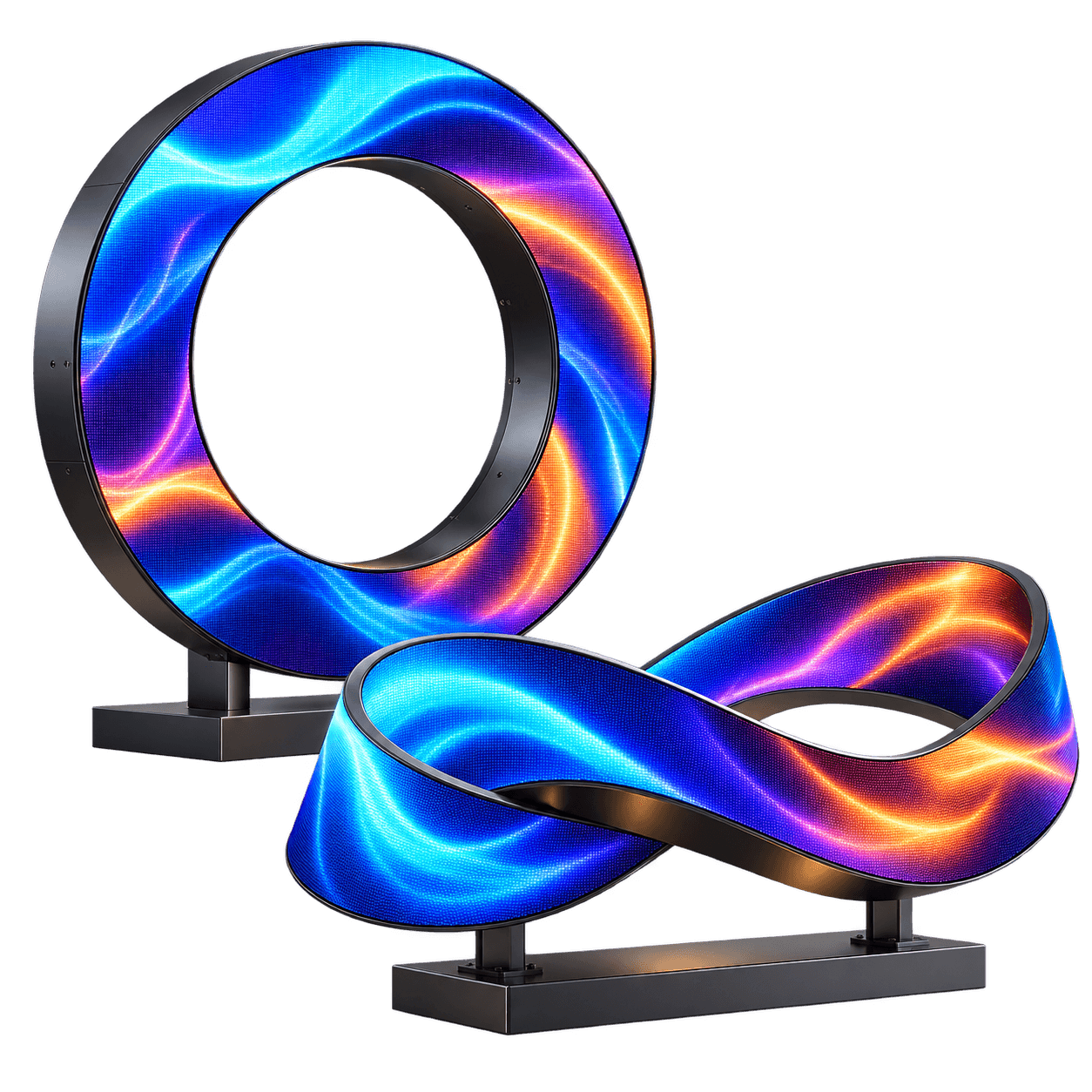
A floral tunnel repeats a shaped opening across several frames. A ring can provide a simpler circular outline or a single sculptural object. Compare the desired route through the space and the number of active surfaces. Explore Ring & Möbius LED Displays →
A clear shape and site brief allows the geometry, display coverage and system requirements to be reviewed together.
Geometry and Installation Brief
Send a sketch, reference image or 3D model, overall height and width, petal dimensions, panel quantity and arrangement. Mark active surfaces and desired curvature. Include the base or stem concept, installation environment, site photos and access dimensions. For tunnels, specify clear passage dimensions and total length.
Content and Commercial Brief
Provide viewing distances, example artwork, control requirements, quantity, destination and target schedule. Identify any mechanical movement or synchronization explicitly. DisplayMan can use this information to review module layout, supports and control scope before preparing a project-specific proposal.
It is a display whose active panels and supporting structure form a flower-like silhouette. The petals may be flat, curved or arranged in several planes.
Can petal screens be used individually?
Yes. A petal can be a standalone feature or part of a group. Dimensions, support method and active sides should be defined for each configuration.
Can you reproduce a specific flower or lotus design?
Send reference artwork, dimensions and preferably a 3D model. Feasibility depends on the geometry, module layout, supports and service access.
Do all petals physically open and close?
No. Many installations use fixed petals with animated content. Physical movement requires a separately specified mechanical and control system.
Can the petals display content on both sides?
Two-sided coverage can be reviewed. Front and rear surfaces need separate LED area, electronics, mapping and maintenance planning.
Can the display be installed outdoors?
Outdoor configurations require assessment of exposure, drainage, temperature, brightness and structural conditions. The required configuration must be confirmed for the site.
What pixel pitch is suitable?
Select pitch according to viewing distance, petal size and content detail. Narrow tips have limited usable pixels, so important text should remain in broader visible areas.
Can different petals show different content?
The control system can be selected for independent or coordinated playback. Confirm the required behavior and content workflow before finalizing the system.
Can you create a floral LED tunnel?
A repeated floral-frame installation can be reviewed with the clear opening, frame spacing, length, active faces and site requirements defined.
How are flower-shaped displays maintained?
The design should provide access to modules and internal electronics. Tall crowns and overlapping petals require a practical service method agreed before production.
Can content change for different campaigns?
Compatible artwork can be updated through the selected playback system. New content should follow the approved pixel map and visible panel boundaries.
What do you need for a quotation?
Provide the shape reference, dimensions, petal arrangement, active sides, viewing distance, environment, support method, content requirements, quantity, destination and schedule.
Develop a Floral LED Display for Your Space
Send your flower or petal reference, dimensions, viewing positions and installation setting. DisplayMan can review the LED coverage, module layout, supports and content mapping for your project.
Start with the silhouette and the visitor experience. Petal arrangement, screen visibility, support structure and maintenance access should work together before the final configuration is selected.
Provide your flower or petal drawing, dimensions, panel arrangement, active surfaces, installation setting, content requirements, quantity and schedule.
Send Your Display Requirement
Please share your application, display size, quantity and project background. We will review the most practical display direction.