How to Choose the Right Rental LED Display
Choosing the right Rental LED Display is not about picking the lowest price or the smallest pixel pitch — it is about matching the screen to how it will actually be used.
Different events place very different demands on an LED system. A screen that works perfectly for a conference may be the wrong choice for a concert, touring show or outdoor festival if viewing distance, cabinet platform, brightness, camera performance or setup workflow are not considered together.
DisplayMan therefore reviews the following decision factors before recommending a rental LED configuration.
Selection Factor 01
Viewing Distance
The closer the audience, the finer the pixel pitch normally needs to be. Longer viewing distances allow wider pixel pitches and can significantly improve project economics.
- Short viewing distance → finer pitch for sharper detail
- Medium viewing distance → balance detail and rental cost
- Long viewing distance → wider pitch for stronger cost efficiency
Why It Matters: The right pitch avoids both overspending and visible image compromise.
Selection Factor 02
Indoor or Outdoor Environment
The environment determines brightness, weather protection, cabinet design, thermal load and installation requirements.
- Indoor events prioritize image detail, controlled brightness and camera performance
- Outdoor events require higher brightness, weather resistance and stronger structural planning
- Power, cable protection and heat management become more important outdoors
Why It Matters: Indoor and outdoor rental systems are not interchangeable without trade-offs.
Selection Factor 03
Screen Size & Aspect Ratio
Rental screens are rarely one fixed standard size. Cabinet format and screen geometry should be planned around the event space and future reuse.
- Optimize 500×500 / 500×1000 cabinet layout
- Match aspect ratio to stage, booth or content design
- Plan cabinet quantity around future screen configurations
Why It Matters: Good cabinet planning increases flexibility across future rental projects.
Selection Factor 04
Camera Use — Broadcast, Filming & Streaming
If the screen will be filmed, streamed or broadcast, camera-facing performance becomes a major part of the specification.
- High-refresh configurations such as 3840Hz-class or higher can be selected where required
- Low-brightness grayscale performance should remain stable
- Color consistency and cabinet calibration become more important
- Scan mode, camera shutter and frame rate should be reviewed together
Why It Matters: A camera-friendly system can deliver higher rental value and more reliable results for premium clients.
Selection Factor 05
Setup Time & Crew Size
Labor cost, event access windows and setup frequency directly affect rental profitability.
- Available installation and teardown time
- Crew size and technical skill level
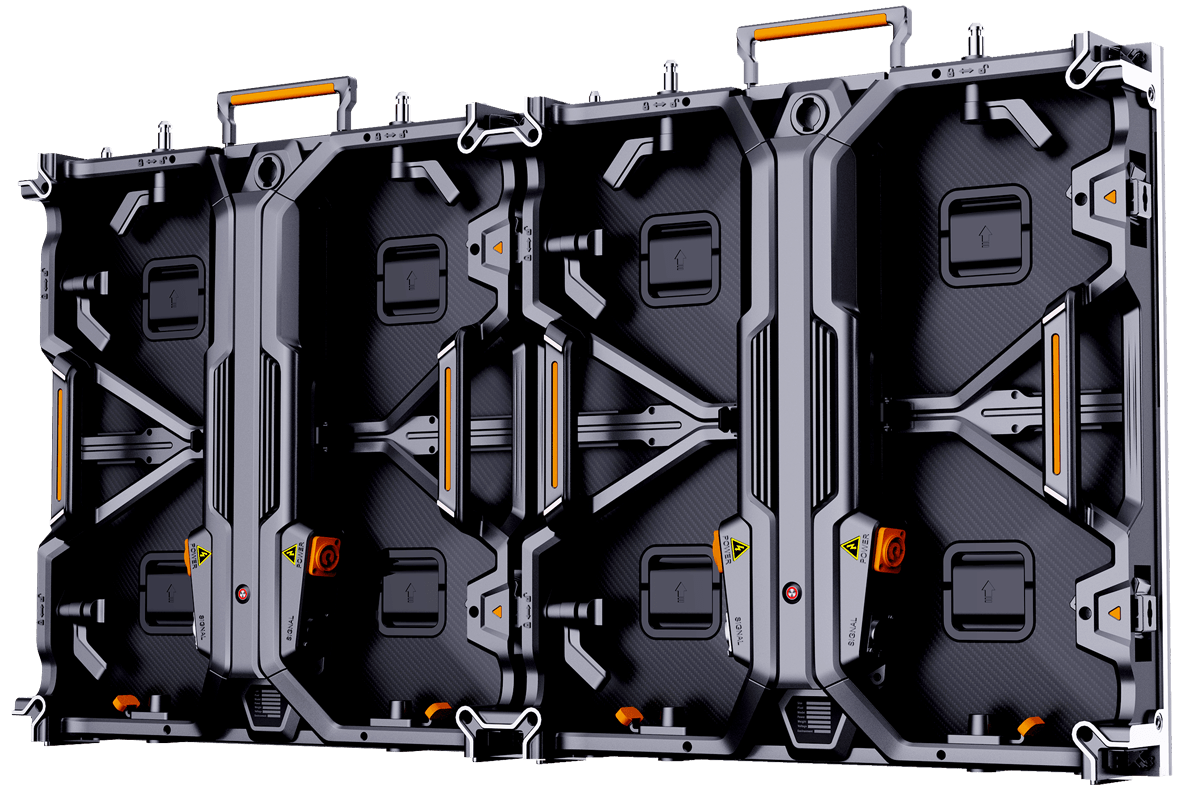
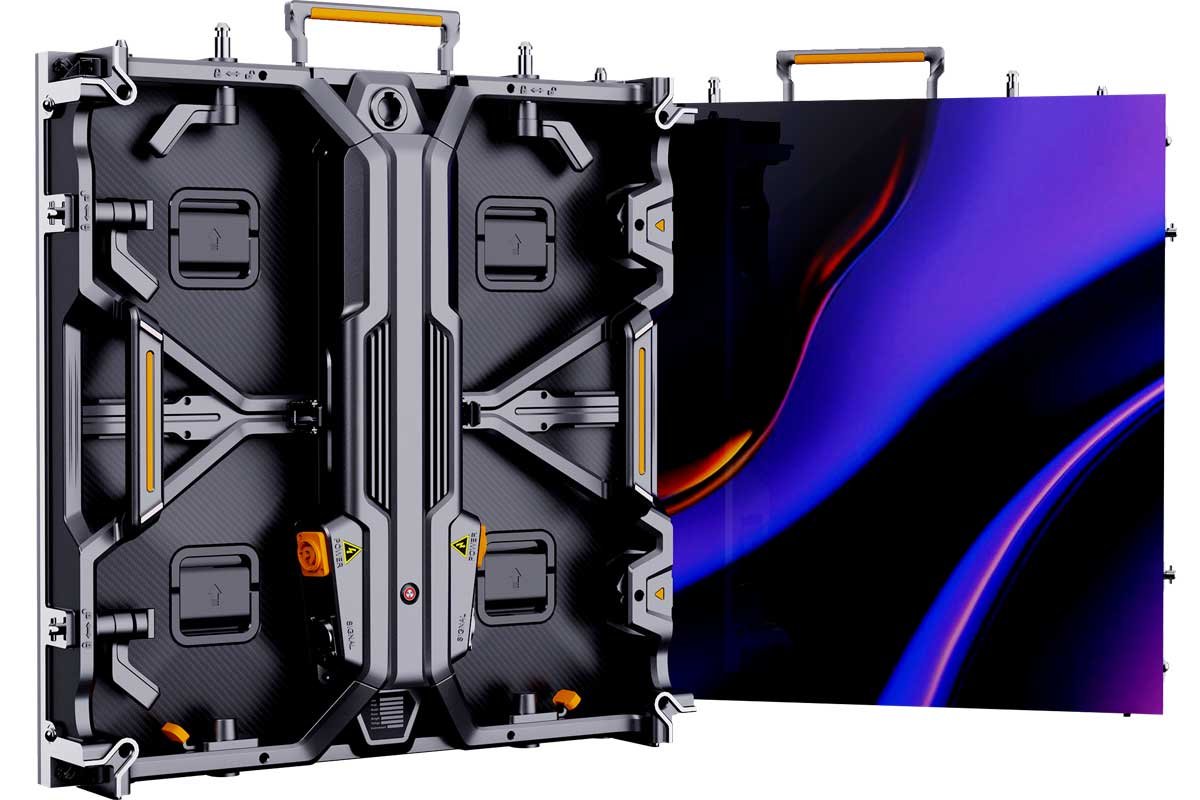
- Cabinet weight, handles and quick-lock design
- Frequency of setup, teardown and transport
Why It Matters: Faster setup can reduce labor cost and increase equipment utilization across more events.
Selection Factor 06
Rental Fleet Strategy
For AV rental companies, one purchase should support many future jobs rather than only the first event.
- Cabinet interchangeability
- Mixed 500×500 / 500×1000 compatibility where available
- Flight cases and spare-parts planning
- Future inventory expansion
Why It Matters: The best rental system is the one that remains commercially useful across many different projects.
Selection PrincipleStart with the real event workflow — viewing distance, indoor/outdoor conditions, screen size, camera use, setup time and future inventory needs — then choose pixel pitch and cabinet format. Not the other way around.
Rental LED Display FAQ
What is a Rental LED Display?
A Rental LED Display is a modular LED video wall system engineered for repeated temporary installation, dismantling, transportation and reuse. Its cabinet, locks, handles, service access and transport protection are optimized for event workflows.
Does DisplayMan provide local event screen rental service?
This page focuses on rental-grade LED display hardware and complete systems for AV rental companies, event production teams and project buyers. Local rental service, event crew and venue installation are separate project requirements.
What cabinet sizes are common for rental LED?
500 × 500 mm and 500 × 1000 mm are common rental cabinet formats. Some platforms also support 1000 × 500 mm or special creative formats. Mechanical compatibility must be confirmed before mixing cabinet sizes.
Why are 500 × 500 and 500 × 1000 cabinets popular?
500 × 500 cabinets give flexible sizing and are convenient for curved or compact screens, while 500 × 1000 cabinets reduce cabinet count and speed large-wall assembly. A compatible mixed platform can improve rental-fleet flexibility.
What pixel pitch should I choose?
Typical rental directions include P1.5–P1.9 for premium close-view indoor events, P2.6/P2.9 for general indoor rental, P3.9 for universal stage and indoor/outdoor use, and P4.8 for larger outdoor or longer-distance projects.
What factors should I consider before choosing a Rental LED Display?
Start with viewing distance, indoor or outdoor use, target screen size and aspect ratio, camera or broadcast requirements, setup time, crew size and long-term rental-fleet strategy. Pixel pitch and cabinet format should then be selected around those real operating conditions.
Is P3.9 still useful for rental LED?
Yes. P3.9 remains a practical rental direction for stages, touring, concerts and larger event walls where viewers are farther away and cost, durability and screen size matter.
Can rental LED screens be curved?
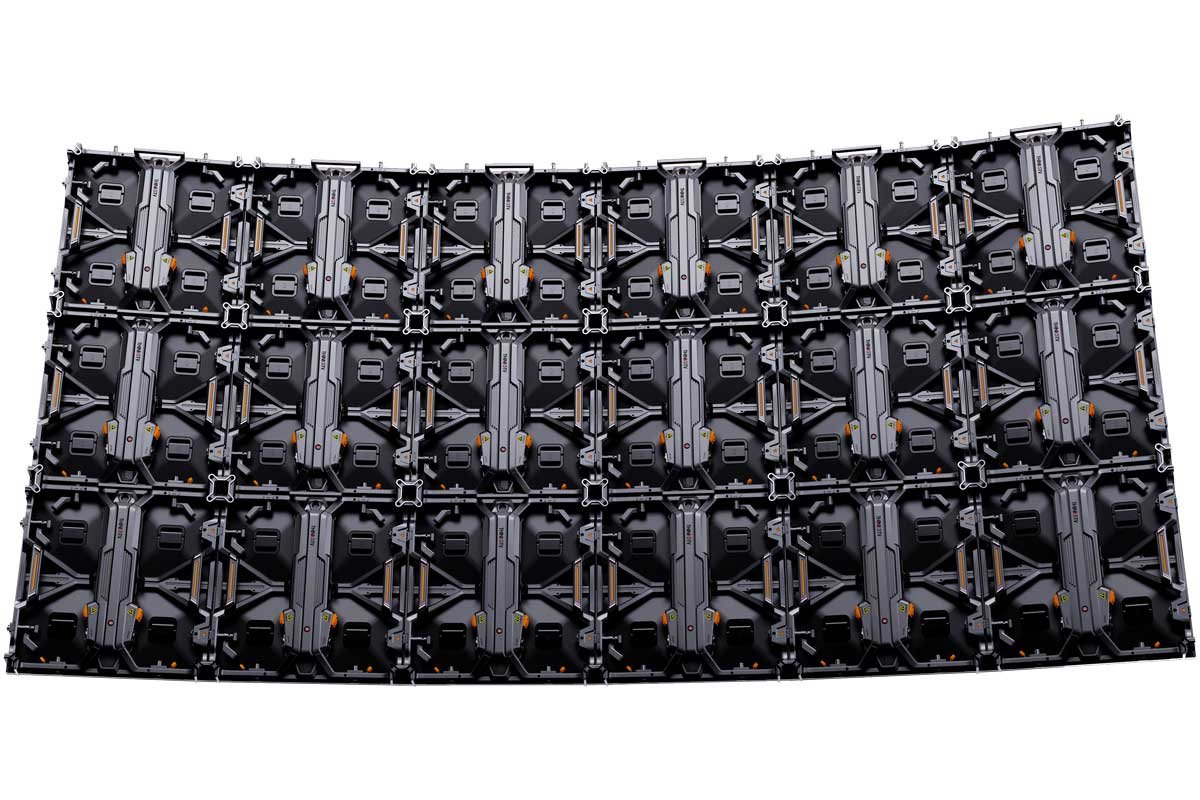
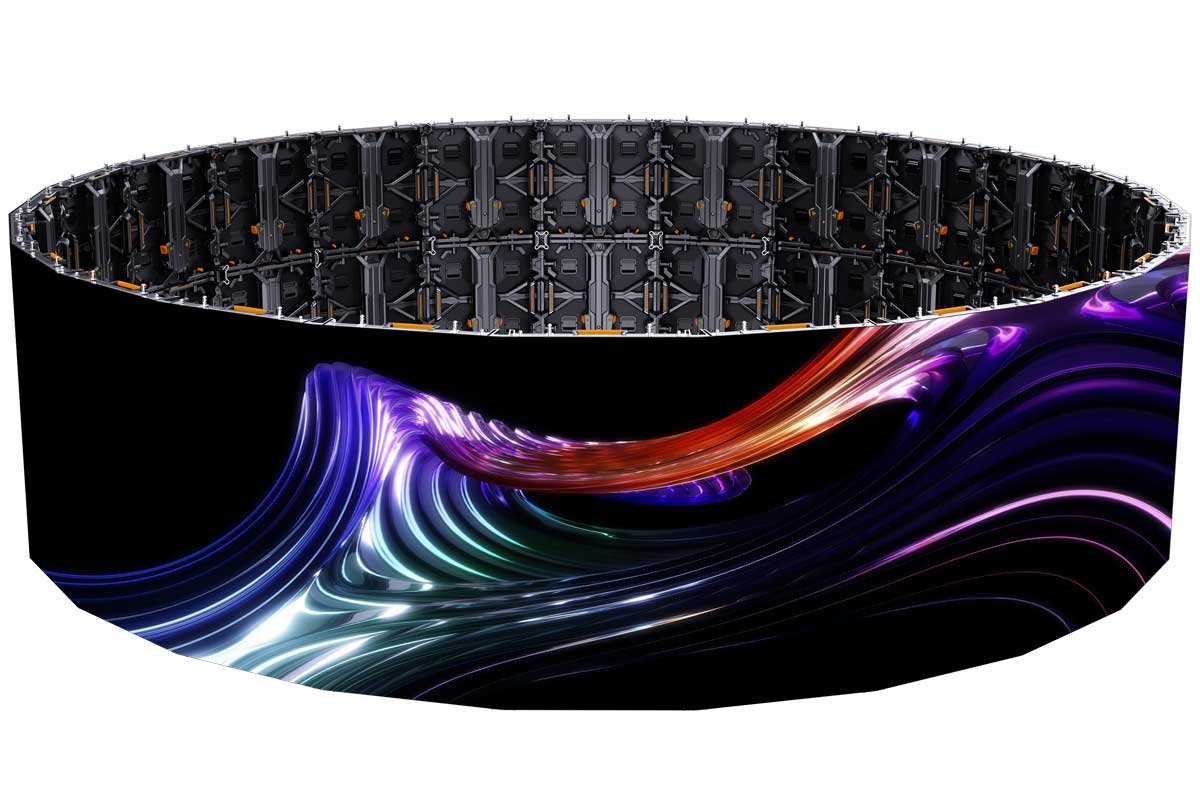
Yes, selected cabinet platforms support concave or convex configurations through angle-adjustable locks or dedicated curved cabinets. The supported angle range must be confirmed for the exact series.
Can rental LED create 90-degree corners or L-shaped screens?
Selected platforms can use dedicated corner or right-angle cabinet solutions. This is project-specific and should be confirmed before screen geometry and content are finalized.
Can rental LED be front service?
Yes, selected rental cabinets support front service, rear service or both. The maintenance direction depends on module and cabinet design.
Why are quick locks important?
Quick locks reduce assembly and teardown time and help crews build repeatable cabinet alignment under event time pressure.
Do rental LED displays need flight cases?
For repeated transport and rental inventory, flight cases are strongly recommended to protect cabinets, modules and connectors during loading, trucking and storage.
What spare parts should an AV rental company keep?
A practical spare package normally includes LED modules, power supplies, receiving cards, power/data cables and service tools. Quantity depends on total inventory and event risk.
What refresh rate is required for filming?
Camera-facing projects should use a high-refresh configuration, but refresh rate alone is not enough. Scan mode, grayscale, calibration, brightness, camera shutter and frame rate should also be reviewed.
Can any rental LED display be used for XR?
No. A camera-friendly rental screen is not automatically XR-ready. XR virtual production requires stricter control of refresh, scan, color, calibration, latency, synchronization and production workflow.
Can rental LED be used outdoors?
Yes. Outdoor rental systems must be selected for brightness, weather protection, cabinet strength, rigging, power safety, heat, wind-load planning and cable protection.
Can I use rental LED as a permanent display?
It is technically possible in some cases, but a fixed-install LED system is usually more efficient for a permanent screen. Rental hardware is optimized for movement, fast assembly and repeated deployment.
What is more important than pixel pitch for a rental fleet?
Cabinet durability, lock reliability, alignment, serviceability, spare-parts availability, flight-case packing, controller compatibility and long-term cabinet interchangeability can matter as much as pixel pitch.
Should I buy only 500 × 500 cabinets?
Not necessarily. A rental fleet may benefit from 500 × 500 for flexibility, 500 × 1000 for faster large-wall build, or a compatible mixed system. The best inventory depends on the buyer’s typical events and screen sizes.
How should a touring rental system be specified?
Touring systems should prioritize cabinet strength, repeatable locks, edge protection, flight cases, labeling, spare parts, cable management and fast field service, in addition to image quality.
What are the four DisplayMan Rental LED Display series?
DisplayMan organizes Rental LED Displays into four product directions: FN Series for premium indoor rental, UN Series for universal indoor rental, FW Series for outdoor performance rental, and UW Series for universal outdoor rental.
What is the difference between FN and UN Rental LED Displays?
FN is positioned toward premium indoor and closer-view event work, while UN is positioned as a broader universal indoor rental platform for flexible AV rental inventory. The final model should still be selected from viewing distance, camera requirements and project budget.
What is the difference between FW and UW Rental LED Displays?
FW is positioned toward higher-demand outdoor performance applications such as concerts and festivals, while UW is positioned toward versatile, scalable outdoor rental inventory. Final brightness, ingress protection and cabinet configuration should be confirmed by model.
What is the difference between Rental LED and a Portable Foldable LED Poster?
Rental LED uses modular cabinets that can be repeatedly assembled into different screen sizes, stage walls, hanging systems or ground-stack configurations. Portable Foldable LED Poster Displays are finished vertical products designed around folding, transport and fast reuse at exhibitions, roadshows and product launches. Choose Rental LED for reconfigurable event walls; choose the Foldable LED Poster for a compact mobile vertical display.
What information is needed for quotation?
Provide indoor/outdoor use, screen width and height, viewing distance, event type, camera/streaming requirement, preferred pitch if known, flat/curved/corner requirement, hanging or ground support method, cabinet quantity, flight cases, spare parts and project schedule.