Flexible LED: Standard Curvature
- Standard flexible LED modules
- Normally no dedicated custom PCB tooling
- Best for cylinders, columns and single-axis curves
- Minimum radius governed by selected module
- More repeatable and product-like
Crafted for Impact in Any Environment
DisplayMan specializes in custom LED displays that elevate your space, from dynamic retail and event installations to high-end advertising solutions. Designed for reliability and innovation, our displays are made to captivate, engage, and leave a lasting impression.
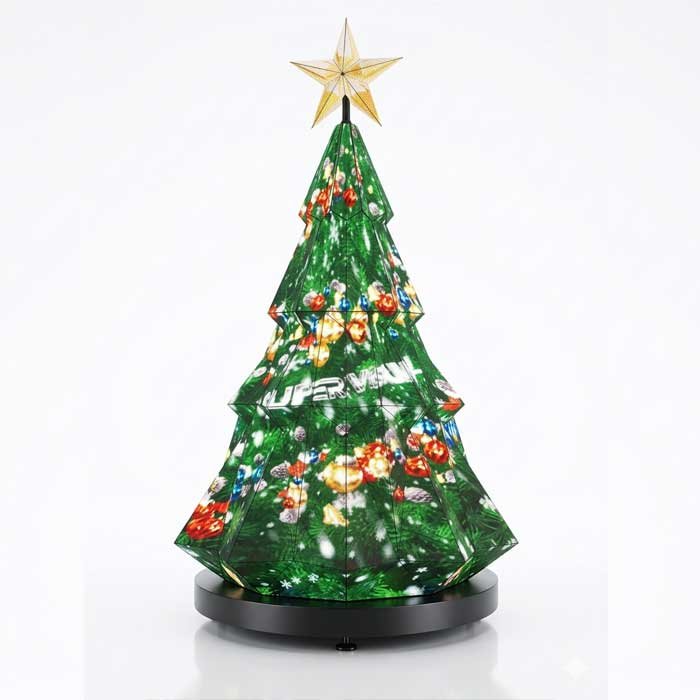
360° Festive Digital Centerpiece
Description: This specialized 3D structure utilizes precision-cut triangular modules to create a seamless, tiered conical surface. It transforms traditional holiday decor into a high-definition digital experience, displaying realistic evergreen textures and dynamic brand messaging.
Ideal For: Luxury mall atriums, hotel lobbies, and public plazas.
Key Feature: Custom Geometric Stitching for a seamless, wrap-around focal point.
At DisplayMan, we don’t just manufacture screens; we engineer digital landmarks. Our portfolio is a testament to what happens when cutting-edge optoelectronics meet architectural imagination. This gallery showcases a selection of our global installations, where we have pushed the boundaries of physics and pixel mapping to turn ambitious brand visions into breathtaking 3D realities.
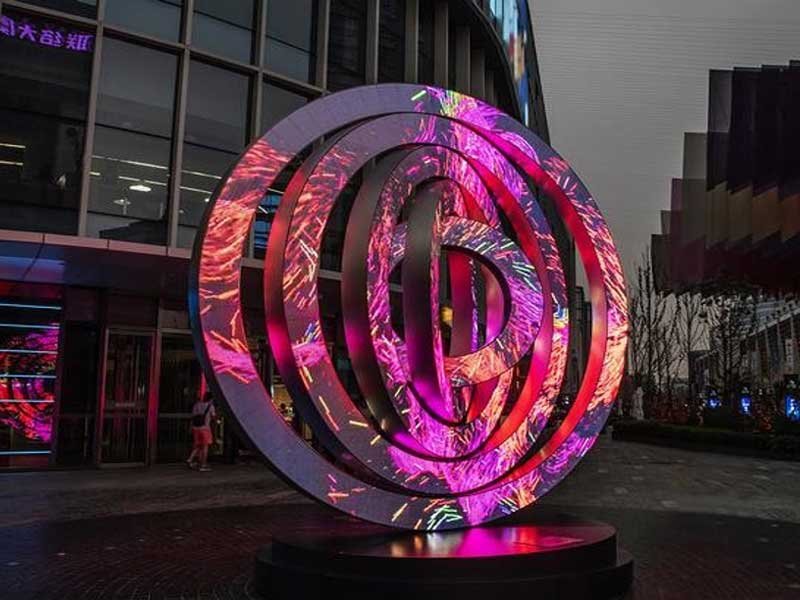
Project Overview: Completed in May 2020 at Beijing Vanke SOHO, the “Wangjing Date Eye” is a world-renowned landmark that redefines the intersection of architecture and digital media. Designed by a prestigious Italian creative team, this installation has become a global icon of kinetic digital art.
Engineering Excellence: The structure consists of five interlocking circular LED rings, meticulously aligned to create a sense of depth and movement. The true technical breakthrough lies in the inner rotating rings, which seamlessly display synchronized fluid video content while in physical motion.
Technical Highlights: * Custom Circular PCBS: Utilizing high-precision curved LED modules to achieve a perfect 360° circular finish without visible gaps.
Kinetic Integration: Sophisticated mechanical engineering allows the inner rings to rotate smoothly while maintaining flawless signal and power transmission for uninterrupted video playback.
Fluid Visual Synchronization: Advanced media server mapping ensures that the “flowing” content moves in perfect harmony with the physical rotation of the sculpture.
The Result: A mesmerizing, “living” landmark that captures the spirit of modern Beijing, providing an unforgettable visual experience for millions of visitors.
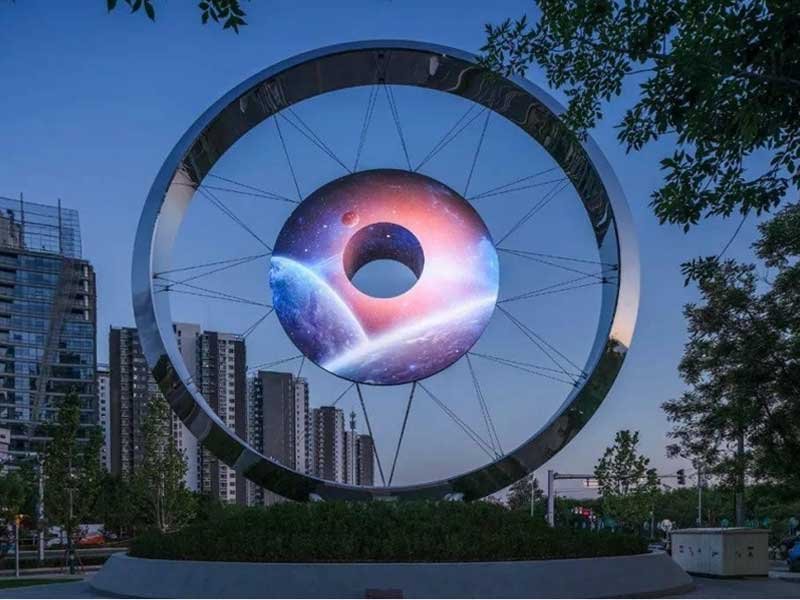
Project Overview: Situated at the intersection of Wangjing West Road and Futong West Avenue in Beijing, this landmark sculpture is inspired by the “Ping’an Kou” (a traditional Chinese jade safety buckle). Affectionately known by our engineering team as the “Digital Donut,” it has quickly become a premier fashion and technology landmark in the city.
Engineering Excellence: To achieve the perfectly smooth, curved surface of a circular jade buckle, DisplayMan developed nine unique types of custom-shaped LED modules. This level of customization ensures a seamless, gap-free visual experience across the entire structure.
Technical Specifications:
Resolution: High-performance Outdoor P6 Solution.
Customization: 9 bespoke irregular module designs.
Scale: Total display area of 126 square meters.
Durability: Engineered for outdoor environments, featuring high brightness and superior weather resistance.
The Result: A mesmerizing fusion of traditional Chinese symbolism and ultra-modern digital media that serves as a vibrant gateway to the Wangjing district.
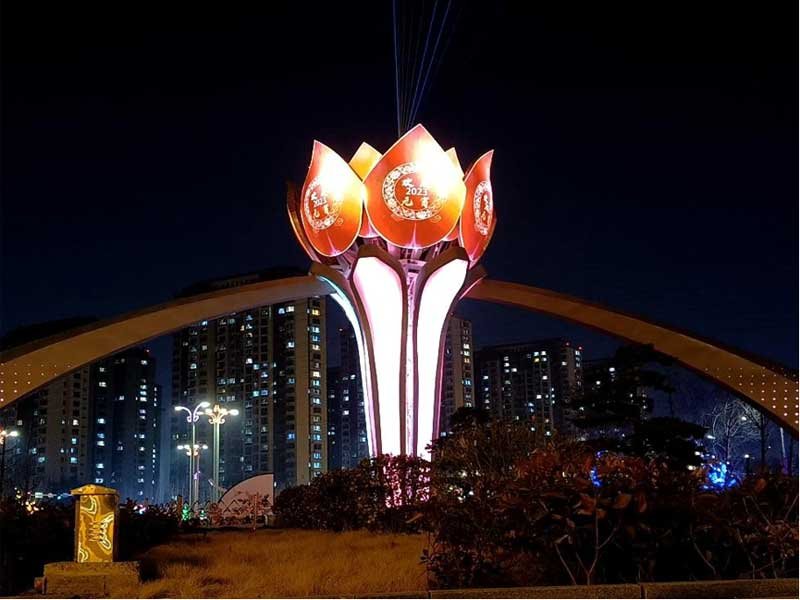
Project Overview: Located at Yuejili Park, this massive sculpture spans 48 meters in width and stands 14 meters high. The centerpiece is a magnificent “Digital Rose” consisting of 12 double-layered petals and a central stamen.
Mechanical Innovation: This project is a masterpiece of kinetic engineering, featuring a custom mechanical transmission system that allows the LED petals to physically open and close, mimicking a blooming flower.
Engineering Excellence: To maintain a seamless image across moving, curved surfaces, DisplayMan engineered 84 unique types of bespoke irregular LED modules.
Technical Specifications:
Resolution: High-definition Outdoor P4 Solution.
Complexity: 84 custom module designs for precise curvature.
Integration: Seamless synchronization between mechanical motion and video playback.
The Result: A landmark installation that transforms from a sculpture into a living, breathing digital performance, captivating visitors with its graceful movement and vibrant colors.
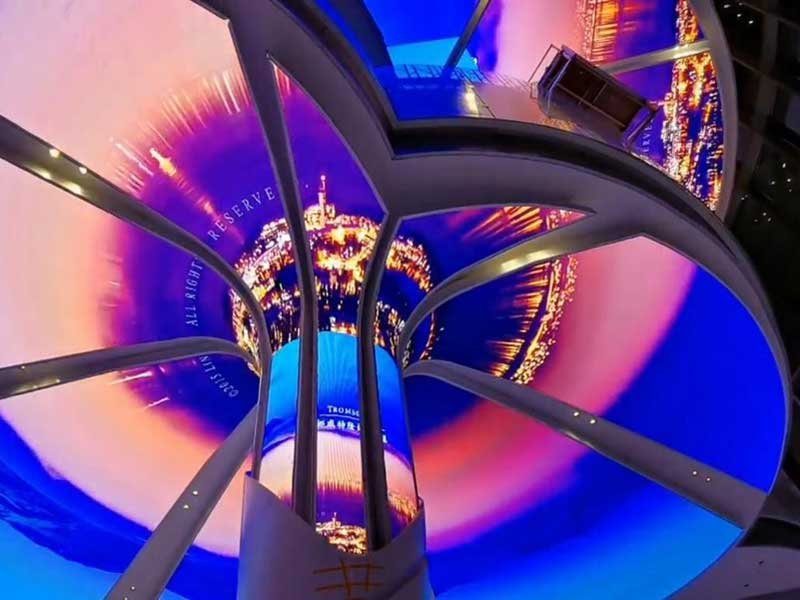
Project Overview: Completed in December 2020 at Chengdu Shimao Plaza, this “Tech Tree” has become a premier social media landmark. The structure features seven massive digital “leaves” that branch out to create an immersive canopy for visitors.
Engineering Excellence: To achieve the organic, tapering curves of the leaves, DisplayMan developed 84 unique sets of custom-shaped LED PCB boards. This ensures the content flows smoothly from the “trunk” to the tips of the leaves without any visual breaks.
Technical Specifications:
Resolution: High-performance Indoor P5 LED.
Visual Quality: High refresh rate of 3,840Hz+ for flicker-free photography and video.
Premium Components: Equipped with Nationstar Gold Wire LED lamps for superior color consistency and long-term reliability.
The Result: A breathtaking fusion of nature-inspired design and high-end electronics that transforms a commercial space into a futuristic digital forest.
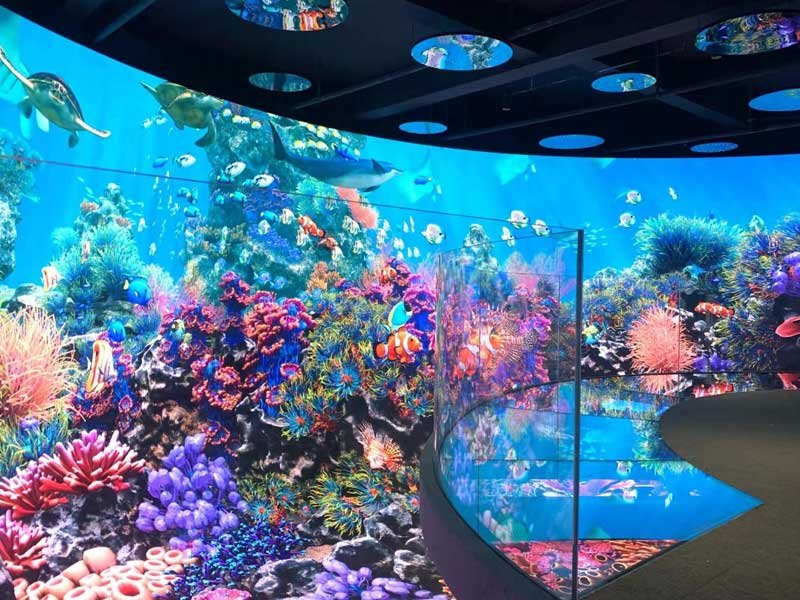
Project Overview: Completed in September 2021, this massive 170sqm indoor P3 spherical “Bowl Screen” was engineered to envelop visitors in a seamless, high-definition underwater world.
Patented Innovation: This installation utilizes specialized Naked-Eye 3D Spherical technology (Patent No. 201921825935.8). The unique concave curvature provides a profound sense of depth, making marine life appear to swim directly around the audience.
Engineering Excellence: Building a concave sphere requires extreme precision. DisplayMan developed 26 sets of custom-designed irregular PCBs to ensure every pixel aligns perfectly along the complex compound curves, achieving a zero-gap finish.
The Result: A world-class “Deep Sea” immersion that perfectly combines patented structural engineering with breathtaking 3D visuals.
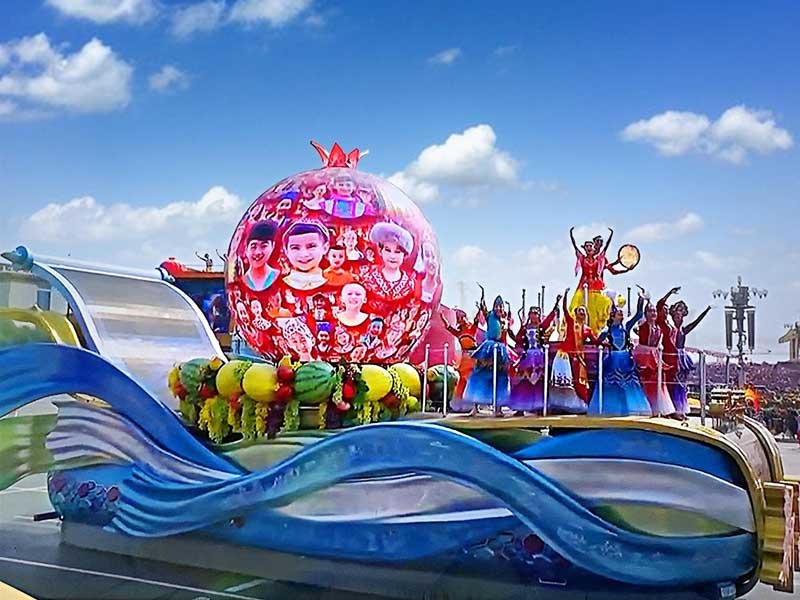
Project Overview: This iconic installation features a massive 4.2-meter diameter Outdoor P6 Sphere, topped with a custom-engineered “Pomegranate Blossom” created from 20 bespoke irregular LED modules.
The “Zero-Failure” Standard: Designed for high-stakes public events, the entire display system features Full 1:1 Redundancy (Double Backup). This includes dual control systems, dual power supplies, dual distribution cabinets, dual control computers, and dual video processors to ensure uninterrupted performance.
Safety & Durability: To meet the strictest public safety standards, all materials used in the construction carry a Class A Fire Rating or higher.
Engineering Excellence: Combining a perfect 360° spherical surface with complex floral “petal” modules, this project demonstrates DisplayMan’s ability to deliver artistic beauty without compromising industrial-grade reliability.
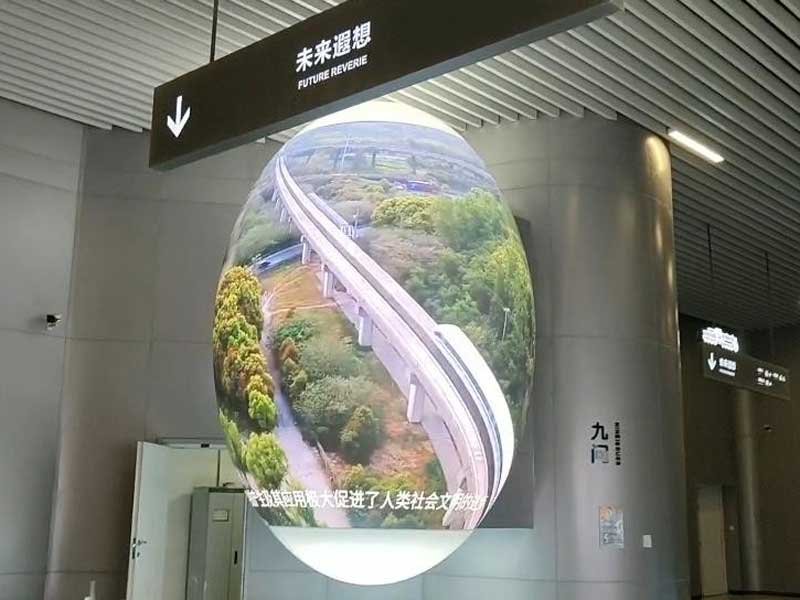
Project Overview: Located in the Jiangxi Provincial Science and Technology Museum, this unique Elliptical “Egg” LED Display serves as a focal point for the “Future Reverie” exhibition. Its organic shape symbolizes birth and the origin of innovation.
Engineering Excellence: Unlike a standard sphere, an egg shape features varying radii. DisplayMan engineered custom-tapered flexible modules to maintain a consistent pixel density across the steeper curves at the top and the wider girth at the center.
Technical Integration: To achieve a “floating” effect, the display is seamlessly integrated into the museum’s architecture. It features a high-definition interior P3 pitch, ensuring that text and complex scientific visuals remain sharp from any viewing angle.
The Result: A captivating, high-tech digital sculpture that perfectly aligns with the museum’s mission to inspire curiosity and futuristic thinking through advanced display technology.
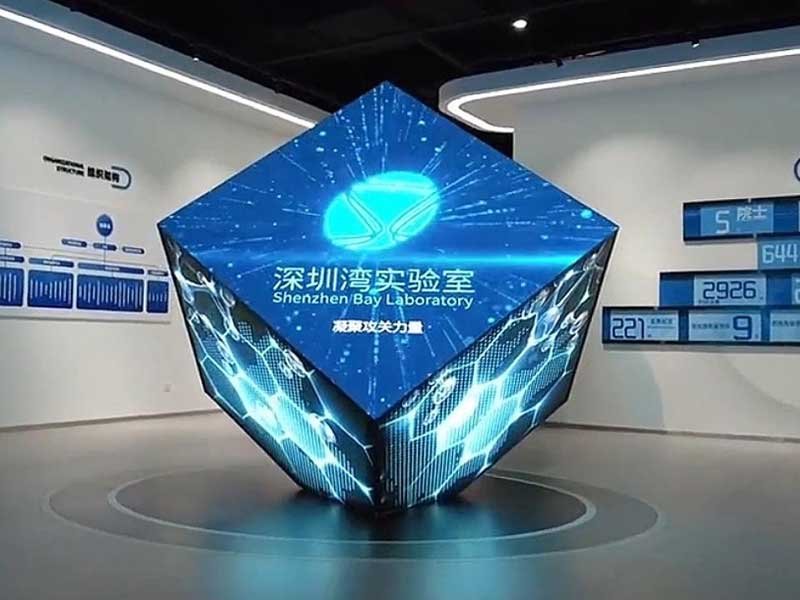
Project Overview: Located at the Shenzhen Bay Laboratory, the “Life Cube” is a multi-dimensional LED installation designed to visualize complex biological data. Standing on a single vertex, the cube creates a gravity-defying visual effect that symbolizes the cutting-edge nature of the facility.
Engineering Excellence: This project features specialized 90° Seamless Corner Technology. By using precision-cut mitered modules, DisplayMan eliminated the black “bezel” lines usually found at the edges of cube displays, allowing content to flow uninterrupted across all six faces.
Technical Integration: The display utilizes a high-density indoor P2.5 pitch to ensure that scientific text and intricate molecular 3D models are rendered with absolute clarity for researchers and visitors alike.
The Result: A powerful symbol of scientific innovation that combines structural stability with high-definition motion graphics, perfectly reflecting the laboratory’s commitment to “Gathering Research Power.”
Custom LED Displays — also known as Creative LED Displays — are shape-driven LED systems developed for projects where a normal rectangular screen cannot deliver the intended visual experience. The LED surface, mechanical structure, content mapping and installation are engineered together around the final physical form.
DisplayMan supports creative LED projects ranging from standardized curved geometries such as cylinders and cubes to compound-curved spheres, vase forms, product replicas, letter/video logos, seasonal structures and software-defined mascot characters.
DisplayMan presents eight featured product families because they cover the most useful engineering directions. They are starting points for product selection, not the limit of our Custom / Creative LED capability. Other rings, branded objects, sculptures and project-specific forms can also be evaluated.
These eight families organize Custom / Creative LED by real engineering behavior — flat faces, constant-radius curves, compound curvature, changing diameter, shape-specific PCB fill or software-defined character mapping.
| Product Family | Geometry / Product Logic | Best For | Module / Engineering Direction | Typical Size Logic |
|---|---|---|---|---|
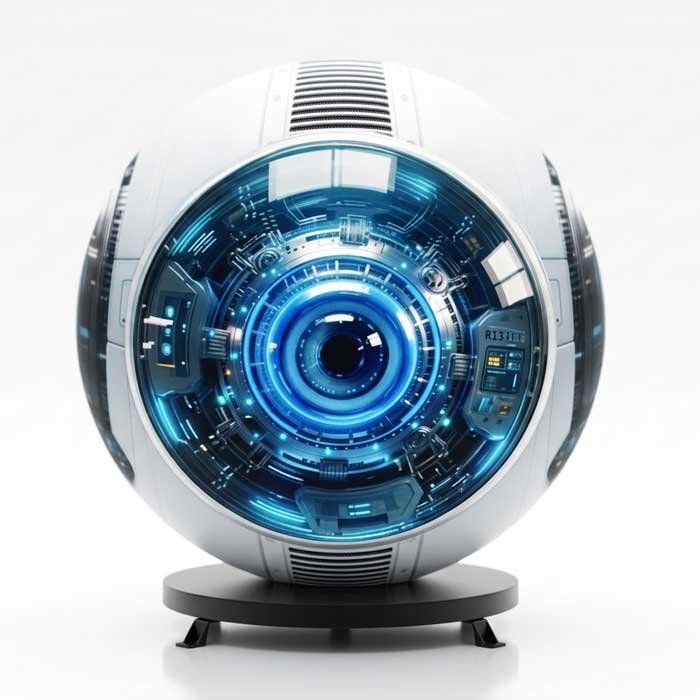
| Sphere LED Display | True 360° compound-curved LED sphere | Globes, landmarks, museums, atriums, science and digital art | Custom spherical segmentation; new diameter/pitch may require dedicated PCB/module/tooling | Normally approx. 2 m+ for fully custom development; smaller only where mature existing tooling exactly matches |
| Christmas Tree Shaped LED Display | Conical / tiered seasonal 3D LED structure | Malls, hotels, public plazas, seasonal events, landmarks | Changing circumference, tiers, custom structure and content mapping | Usually large-format; approx. 2 m+ is the practical normal direction |
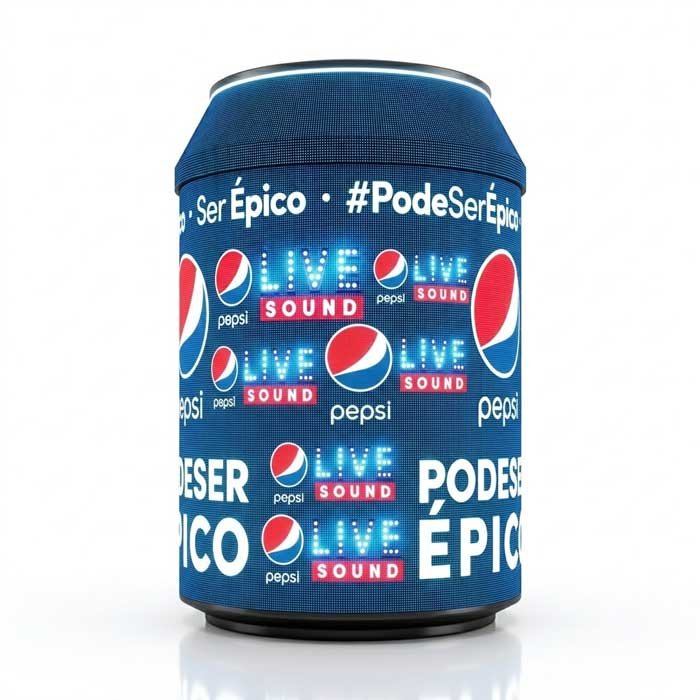
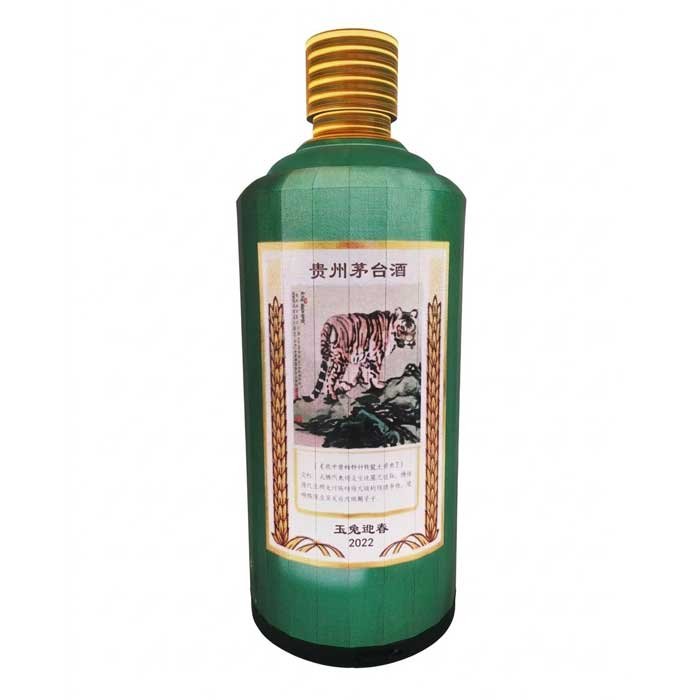
| Can-Shaped LED Display | Cylinder-based branded can / bottle / product-replica form | Retail campaigns, beverage brands, exhibitions, product launches | Straight cans may use standard flexible modules; neck/shoulder/tapered replicas may need custom zones | Straight can can be relatively compact; complex bottle/product replicas usually benefit from larger size |
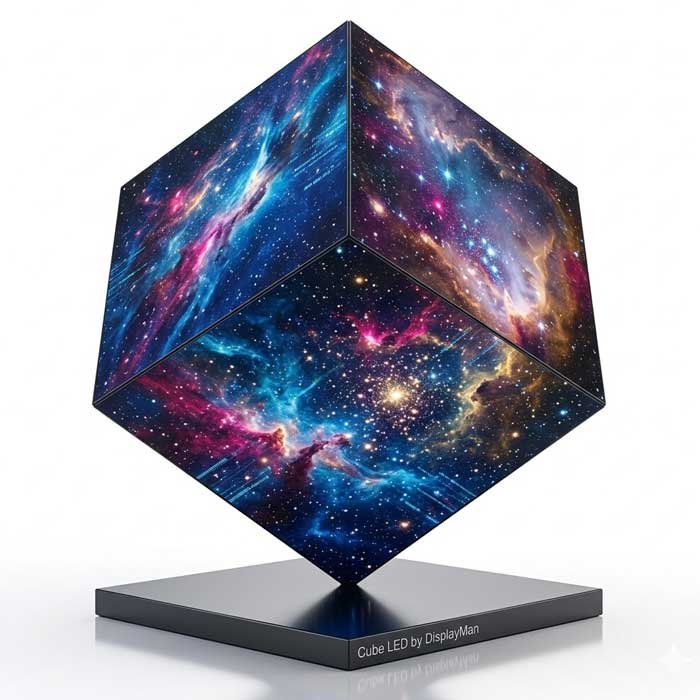
| Cube LED Display | Multi-face flat LED cube with precision 90° corners | Retail, events, exhibitions, digital art, multi-face branding | Flat faces + corner engineering; compact cubes can use standardized module sizes | Can be much smaller than 2 m because faces are planar |
| Cylindrical LED Display | Constant-radius 360° or partial-wrap curved LED | Columns, pillars, airports, retail, showrooms, events | Normally standard flexible LED modules + cylindrical supporting frame | No 2 m rule; minimum diameter depends mainly on safe module bending radius |
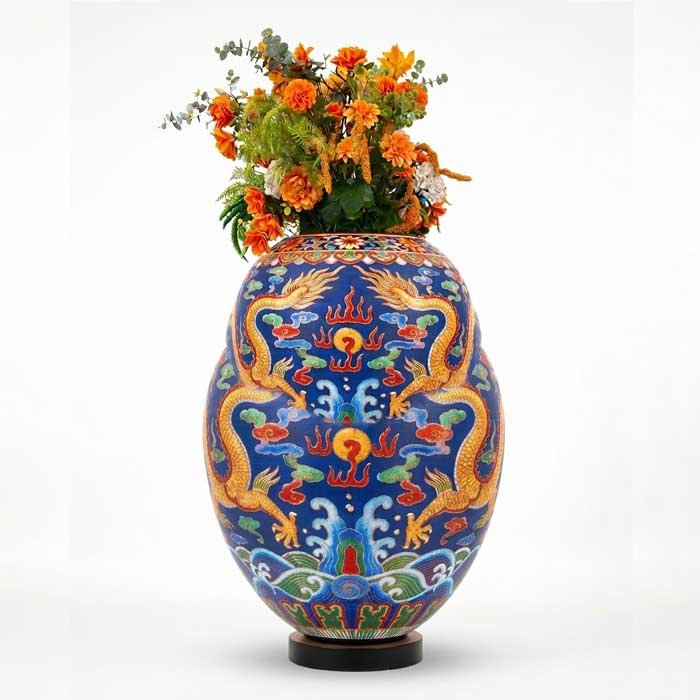
| Vase-Shaped LED Display | Changing-diameter artistic 3D LED body | Hotels, museums, cultural venues, lobbies, digital art | Multi-zone curvature, tapered PCB/module segmentation, internal skeleton and artistic mapping | Normally approx. 2 m+; smaller sizes require special engineering review |
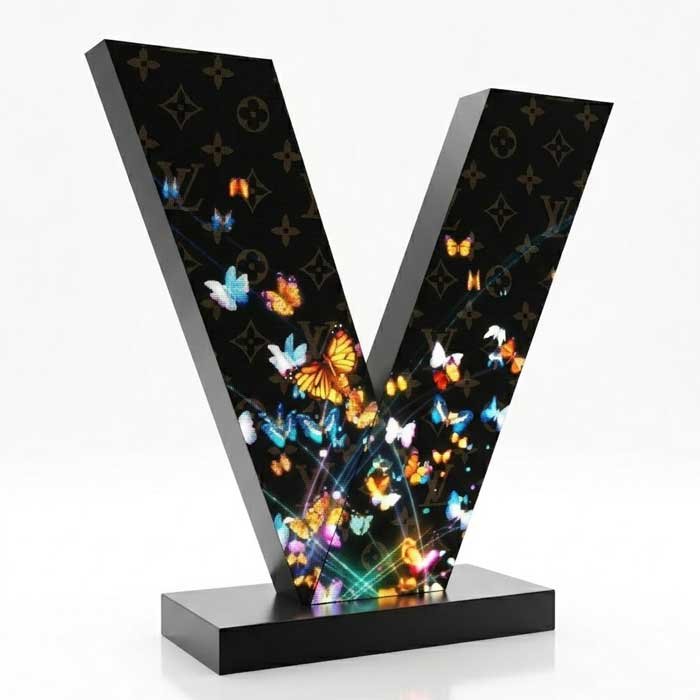
| Letter-Shaped LED Display | Full-color video letters, logos, numbers and symbols | Branding, retail, exhibitions, corporate lobbies, events | Standard/flexible/custom PCB fill depending stroke width, curves, corners and inner openings | Can be relatively compact; minimum is governed by stroke width and pixel/module geometry |
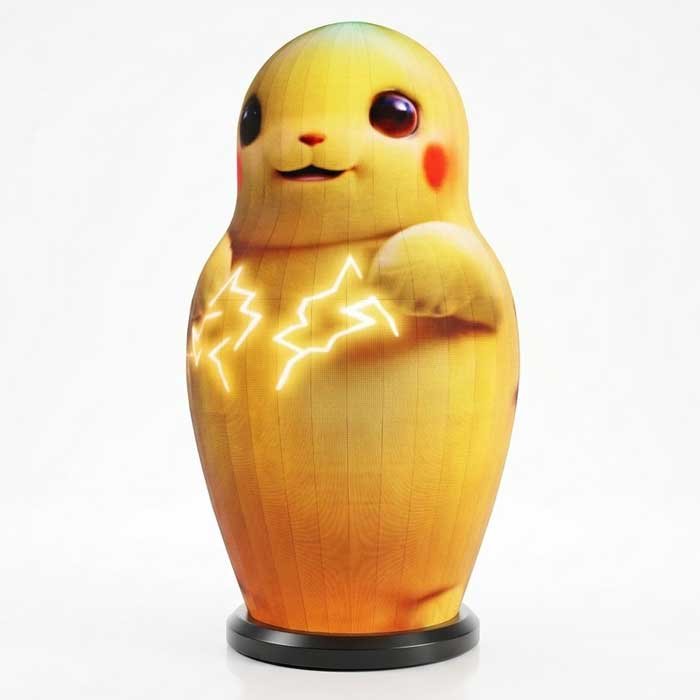
| Mascot & Character Shaped LED Display | Semi-spherical head + vase-like body + software-defined character identity | Mascots, animals, cartoon figures, cultural characters, branded IP | Standardized 3D character body + content mapping software; P1.25 commonly offers best overall value | Normally approx. 2 m+ so narrowing head/body module rings can close properly; 3–5 m+ can be engineered |
Other creative forms — rings, crowns, torches, flowers, artistic sculptures, branded objects and one-off 3D concepts — can be evaluated inside the broader Custom LED Displays capability without creating a separate product page for every possible shape.
These two categories overlap, but they are not the same. Flexible LED describes a module technology; Custom LED describes the complete shape-driven product or project.
| Category | Core Definition | Typical Shapes | Tooling Logic | Choose It When |
|---|---|---|---|---|
| Flexible LED Display | Curved surface product using standard flexible LED modules | Cylinders, columns, single-axis curves, arcs, some waves | Normally no dedicated custom PCB tooling if the selected module radius works | Choose when the core problem is bending a standard LED surface |
| Custom / Creative LED Display | Shape-driven complete display system | Sphere, vase, product replica, tree, character, letters, sculptures and other special forms | May require custom PCB/module geometry, masks, metal structure, CNC/formed parts, jigs, tooling and mapping | Choose when the display shape itself is a primary part of the product |
A simple cylindrical display may be assembled from mature flexible LED modules and a supporting frame. Tooling and NRE become more important when the geometry requires new PCB shapes, new module segmentation, masks, special mechanical parts or prototype validation.
The term “custom LED” covers very different engineering workloads. A cylinder built from flexible modules is fundamentally different from a fully custom sphere, vase or one-off sculpture.
| Engineering Level | Typical Examples | Primary Build Strategy | Commercial Impact |
|---|---|---|---|
| Standardized Geometry | Cylinder, some compact cubes, straight can forms | Standard flexible or flat LED modules + supporting frame | Lower NRE; more repeatable hardware |
| Geometry with Custom Structure | Christmas tree, larger cubes, some product replicas | Standard modules combined with dedicated frame, trim and content mapping | Moderate project engineering |
| Custom Segmented 3D Geometry | Sphere, vase, complex bottle/product replica | Multiple PCB/module zones, changing curvature, custom skeleton and mapping | Higher NRE and development effort |
| Software-Defined Character Platform | Mascot & Character Shaped LED | Standardized rounded head/body platform + mapped character content | Hardware can be repeatable while character identity changes in software |
| Fully Free-Form Creative LED | Unique sculptures, organic landmark objects, one-off artistic forms | Project-specific 3D model, custom module segmentation, structure, mapping and prototyping | Highest engineering/NRE risk; project feasibility must be reviewed early |
Custom PCB development, special module sizes, formed structure, tooling, mapping and prototype work may all be required before a repeatable product can be manufactured.
There is no single minimum size for all Custom LED products. The practical minimum depends on whether the shape uses flat faces, a constant-radius flexible surface, or a closed compound-curved surface that must physically converge and close.
| Product Direction | Typical Size Direction | Why |
|---|---|---|
| Sphere | Normally approx. 2 m+ for fully custom development | Compound curvature and polar closure need enough PCB/module segments to form a smooth closed surface |
| Vase | Normally approx. 2 m+ | Changing circumference and narrow closing zones need enough physical room for module segmentation |
| Mascot & Character | Normally approx. 2 m+; 3–5 m+ practical | Semi-spherical head and tapered body need enough circumference for module rings to close properly |
| Christmas Tree | Usually large-format; approx. 2 m+ practical direction | Conical/tiered segmentation, structural stability and visual proportion become more practical at larger scale |
| Complex Bottle / Product Replica | Normally larger format for highly shaped replicas | Neck, shoulder, taper and compound zones need usable segmentation area |
| Cylinder | Can be much smaller | Minimum diameter is determined mainly by flexible-module bending radius and service structure |
| Cube | Can be compact | Flat faces reduce geometric closure difficulty; corner engineering is the main constraint |
| Letter / Logo | Can be compact if geometry allows | Narrowest stroke, inner holes, PCB/module width and readable pixel area govern minimum size |
For spheres, vases, characters and similar closed 3D surfaces, shrinking the structure reduces the circumference available for PCB/module segmentation. Eventually the segments cannot close smoothly, or the result becomes visibly faceted and difficult to manufacture. This is why approximately 2 meters and above is a common practical direction for many complex Creative LED projects.
A Custom LED project should be developed as one system. The LED surface cannot be separated from the physical geometry, structure, mapping and installation.
| Engineering Factor | Why It Matters |
|---|---|
| Concept / Reference Shape | Reference image, sketch, CAD or 3D model defines the intended visual object. |
| Physical Geometry | Diameter, height, changing radius, edge angles, stroke widths or body proportions determine the real LED surface. |
| Pixel Pitch | Selected from viewing distance, overall size, local feature width, content detail and budget. |
| Module / PCB Strategy | May use standard flat modules, flexible modules, custom tapered PCBs, triangular sections, multiple PCB sizes or hybrid zones. |
| Surface Closure | Closed 3D forms such as spheres, vases and characters must provide enough circumference for module segments to meet cleanly. |
| Mechanical Skeleton | Internal steel/aluminum structure controls final geometry, module alignment, service access and installation loads. |
| Power Distribution | Irregular shapes need structured power zoning, cable routing, grounding and heat management. |
| Control System | Receiving cards, controller/sender, media player or processor must match the mapped pixel layout. |
| Content Mapping | The actual pixel map is rarely a normal rectangle; graphics must be prepared for the final geometry. |
| Service Access | Module, PSU and receiving-card access should be designed before the outer shell is frozen. |
| Transport & Assembly | Large creative displays may need sectional fabrication, protective packing, lifting points and on-site alignment. |
| Prototype / Validation | New module geometry, new diameter or unusual curvature may require prototype validation before batch production. |
A successful Custom LED project is built through close collaboration between creative vision and practical engineering. From the first reference image or 3D concept to production, delivery and final commissioning, DisplayMan follows a structured five-stage roadmap to reduce technical risk, control development cost and turn complex display ideas into manufacturable systems.
Every project begins with the shape, environment and installation conditions. Our engineering team reviews your reference images, drawings, CAD files or 3D models together with display dimensions, viewing distance, indoor or outdoor conditions, installation method and project schedule.
Confirm whether the concept can use standard LED modules, flexible modules, custom PCB segmentation or a hybrid structure, while defining pixel pitch, structural framework, power distribution and service strategy.
Feasibility review, preliminary technical direction, recommended display configuration and project quotation.
Once the basic concept is confirmed, the display geometry is translated into a practical LED structure. For complex spheres, vases, product replicas, characters and other 3D forms, module segmentation, surface closure, structural support and pixel mapping are reviewed together.
Where required, 3D drawings, structural layouts, renderings or prototype components can be prepared to help confirm proportions, appearance and assembly logic before full production.
Resolve the major visual and mechanical questions before tooling or batch production begins.
3D / mechanical design review, module layout, structural concept, pixel-map direction and prototype or sample validation where required.
After the design is approved, production moves into PCB/module manufacturing, structural fabrication, electronics integration and system assembly.
Depending on the project, this may include custom PCBAs, flexible LED modules, CNC-machined or formed metal structures, dedicated assembly fixtures, masks, power/control systems and other project-specific mechanical components.
Maintain dimensional consistency, electrical stability, module alignment and repeatable visual performance across the complete display.
Completed LED display system, factory inspection and functional testing according to the final project specification before shipment.
Large or complex Creative LED displays may need to be divided into multiple structural sections for international transportation and final site assembly.
DisplayMan reviews packaging, lifting points, assembly sequence, cable routing and installation hardware as part of the project. Export documentation and applicable product compliance documentation can also be prepared according to the final configuration and destination market.
Make sure the display arrives safely and can be reassembled efficiently at the installation site.
Export packaging, sectional assembly plan, wiring / installation information, project documentation and applicable compliance documents.
The project continues through installation and commissioning. Depending on project scope, DisplayMan can provide remote engineering support and project-specific installation guidance for structural assembly, module alignment, control-system configuration, content mapping and final display calibration.
On-site technical support can also be evaluated for selected projects where required.
Bring the display from factory-tested hardware to a properly assembled and visually calibrated final installation.
Installation guidance, system configuration support, commissioning assistance, spare-parts planning and after-sales technical support.
From feasibility and 3D engineering to production, logistics and commissioning, each stage is designed to identify technical issues before they become expensive changes on site.
“Tooling cost” in a Creative LED project does not mean only plastic injection molds. Depending on the geometry, development cost can include electrical, mechanical, manufacturing and content-engineering work.
| NRE / Tooling Item | What It May Include |
|---|---|
| Custom PCB Development | New PCB shapes, tapered segments, special module sizes or multiple zones |
| SMT / Assembly Jigs | Fixtures needed to assemble non-standard PCBs consistently |
| Masks / Housings | Special LED masks, covers or module carriers required by unusual geometry |
| Molds / Formed Parts | Project-specific molded, thermoformed or shaped components where applicable |
| CNC / Metal Structure | Custom skeletons, rings, frames, ribs, brackets and structural shells |
| Mapping & Calibration | Pixel map creation, irregular canvas configuration, character/3D content conversion and seam calibration |
| Prototype Validation | Trial assembly and geometry verification for new custom module/structure combinations |
| Engineering Documentation | Mechanical drawings, module layout, wiring, installation segmentation and service planning |
The engineering, prototype, custom PCB, structure, mapping and validation cost may all be loaded into a single system. This can make a one-off Creative LED project look expensive compared with a standard LED wall.
Once the module geometry, structure, mapping and process are validated, NRE can be amortized across more units. The unit economics therefore improve significantly when the same design is repeated.
Pixel pitch should be selected together with the physical shape. Viewing distance matters, but so do local module width, curvature, surface closure, total resolution, power density and budget.
| Viewing / Project Direction | Typical Pitch Direction | Typical Use |
|---|---|---|
| Close-view Fine Pitch | P1.25–P2 class direction | Premium indoor creative displays, characters, letters, small-detail artwork and close-view installations |
| General Indoor Creative | P1.5–P3 class direction | Most indoor custom structures, malls, exhibitions, retail and event projects |
| Large Indoor / Medium Distance | P2.5–P4 class direction | Larger spheres, trees, cylinders, product replicas and atrium installations |
| Outdoor / Long Distance | P3–P10+ project direction | Large exterior landmarks, public installations and long viewing distances |
For a character, sphere or vase, the selected pitch must still fit the available custom PCB/module segmentation. For a cylinder, the module must also satisfy the safe bending radius. For letters, stroke width must provide enough usable pixel area.
A normal 16:9 video may be technically playable but visually wrong on an irregular object. Custom LED content should be prepared against the final pixel map, seam positions and viewing direction.
| Custom LED Type | Content Mapping Direction |
|---|---|
| Sphere Mapping | Spherical or latitude/longitude-style content distribution with polar distortion management |
| Cylinder Mapping | Panoramic wrap-around canvas, seam planning and continuous horizontal motion |
| Cube Mapping | Independent faces, synchronized faces or content designed to visually cross 90° corners |
| Vase Mapping | Changing circumference and vertical scale require zone-aware artistic content |
| Letter / Logo Mapping | Irregular active pixel area with masked regions and shape-specific content safe zones |
| Mascot / Character Mapping | Faces, expressions, arms, clothing, fur, logos and animation are positioned against the exact 3D head/body pixel map |
| Product Replica Mapping | Brand artwork must align with neck, shoulder, sidewall, front logo area and changing body width |
| Christmas Tree Mapping | Content must follow the conical/tiered body and remain readable from expected viewing angles |
The most successful Creative LED projects are not simply unusual screens playing ordinary videos. The physical object and the digital content are designed as one visual system.
Custom LED is most valuable where a memorable physical object creates more value than a normal rectangular screen.
Large spheres, trees, characters, cylinders and artistic installations become focal points in multi-level public spaces.
Can-shaped replicas, letters, logos, cubes and character displays turn the brand itself into the media object.
Creative shapes create booth landmarks, launch moments and synchronized digital centerpieces.
Spheres, vases, characters and artistic structures can support storytelling, data visualization and digital art.
Vase, sphere, logo and sculptural LED installations can serve as permanent architectural media features.
Characters, themed objects and large creative structures support immersive environments and branded experiences.
Columns, cylinders, suspended spheres and landmark structures can transform architectural elements into digital media.
Large outdoor or indoor custom LED sculptures can become destination-scale visual landmarks.
| Factor | Custom / Creative LED Display | Standard LED Video Wall |
|---|---|---|
| Physical Shape | Special 2D/3D geometry; shape is part of the visual concept | Flat rectangular display |
| Module Strategy | Standard, flexible, custom PCB or hybrid depending geometry | Standard cabinets/modules |
| Mechanical Engineering | Project-specific and often substantial | More standardized |
| Content Mapping | Often required | Standard rectangular video |
| NRE / Tooling | May be significant | Usually limited |
| Production Time | Longer and geometry-dependent | More predictable |
| Maintenance | Must be designed around the custom structure | Standardized front/rear service options |
| Best For | Brand landmarks, art, immersive installations and distinctive objects | Normal advertising, presentation and general video display |
If the customer only needs efficient advertising, presentation or general video playback, a standard LED wall is usually more economical and easier to maintain. Custom LED is justified when the physical form itself is part of the experience, branding or architecture.
Custom LED projects often begin from different starting points. Some customers already know the display technology, some know the engineering problem, and others only know the venue or visual objective. Use the route that best matches the current project stage.
Choose a product page when the display technology or finished-product direction is already clear.
Flexible LED DisplaysStandard flexible LED modules for columns, cylinders, concave/convex walls, arcs and compatible wave-shaped surfaces.Indoor Fine Pitch LED DisplaysPermanent flat indoor LED walls when general-purpose seamless video is more important than a special physical form.Outdoor Fine Pitch LED DisplaysFixed outdoor LED walls where daylight visibility, weather protection and conventional rectangular video are the priority.Rental LED DisplaysModular event LED walls for repeated setup, teardown, touring and screen-size reconfiguration.Portable Foldable LED Poster DisplaysFoldable vertical LED posters for exhibitions, roadshows and product launches when a compact reusable finished display is more practical than a custom 3D object.XR LED DisplaysCamera-workflow LED systems for virtual production where synchronization, tracking and render architecture matter.All-in-One LED DisplaysIntegrated large-format LED systems for meeting rooms, premium presentation spaces and selected cinema projects.Choose a solution page when the geometry, prototype, outdoor or system-integration problem is clearer than the final product.
Bespoke & Custom Display SolutionsFor projects where physical geometry, structure, control, content and installation must be engineered as one custom system.OEM / ODM Display Engineering & PrototypingFeasibility, custom PCB/module development, prototype structures, validation and repeatable product engineering.Outdoor High Brightness Display SolutionsFor custom outdoor projects where daylight visibility and environmental engineering are major constraints.All Display SolutionsBrowse DisplayMan engineering and system-integration routes across LED, LCD, touch and custom displays.Choose an application page when the venue or business use case is known but the final display form has not been fixed.
Exhibition, Events & ShowroomsCreative landmarks, product launches, experiential booths, museums and temporary branded environments.Corporate & Office EnvironmentsCorporate lobbies, visitor centers and architectural media where a distinctive object strengthens brand identity.Outdoor & Public Display SystemsOutdoor creative installations where wind, drainage, anchoring, weather sealing and maintenance require deeper review.All Display ApplicationsBrowse DisplayMan applications by real use case before fixing the final display technology or physical form.Know the display type? Continue to Products. Know the engineering problem? Continue to Solutions. Know only the use case? Continue to Applications.
This keeps the Custom LED page focused on shape-driven Creative LED product engineering, while giving customers a clear route to Flexible LED, permanent Indoor / Outdoor LED, Rental LED, Foldable LED Posters, XR and integrated All-in-One systems.
For Creative LED, a reference image or 3D concept is often more valuable than asking only for a price per square meter. DisplayMan first determines whether the geometry can use standard modules, flexible modules or custom PCB segmentation, then reviews structure, pitch, mapping and commercial feasibility.
A Custom LED Display is a shape-driven LED display system in which the physical display form is part of the visual concept. It may use standard flat modules, flexible modules, custom PCB geometry, special structures, content mapping and project-specific installation engineering.
Yes. DisplayMan uses Custom LED Display and Creative LED Display to describe the same broad product category: non-standard LED display systems created around special physical forms and visual concepts.
No. They are eight practical product families that help customers start selection. Custom LED is not limited to these shapes; other rings, sculptures, branded objects and project-specific forms can be reviewed.
No. A cylindrical LED display can often use standard flexible modules and a supporting frame without dedicated PCB tooling. More complex spheres, vases, product replicas or artistic structures may require custom PCBs, jigs, masks, molds, CNC parts or special structures.
Flexible LED is primarily a curved display technology using bendable standard modules. Custom LED refers to the complete shape-driven display project. Flexible modules may be one of the building blocks inside a Custom LED system.
Not all of them. Cylinders, cubes and some letters can be relatively compact. Compound-curved closed forms such as spheres, vases and character platforms usually need larger dimensions so the module segments can form and close smoothly.
At larger dimensions there is more circumference and surface area for PCB/module segmentation. This helps compound-curved surfaces close properly and reduces polygonal distortion while providing enough pixels for useful content.
Yes. Many creative LED structures can be engineered at 3–5 meters or larger. Larger systems usually need sectional fabrication, transport planning, lifting and on-site assembly.
Pixel pitch depends on shape, size, viewing distance and budget. Fine indoor projects may use P1.25–P2 class pitches, while larger or longer-distance structures can use P2.5, P3, P4 or wider pitches.
No. Smaller pitch increases pixel density and cost, but the correct choice must also fit the physical module geometry, viewing distance, heat/power design and content requirements.
It can include custom PCB development, SMT/assembly jigs, masks, molds, formed parts, CNC/metal structure, mapping, prototype validation and engineering documentation. It is broader than plastic injection tooling alone.
The engineering, NRE, structure and validation costs are concentrated into one unit. With higher quantities, those development costs can be amortized across more systems.
Yes. This is especially powerful for cylinders, cubes, spheres and standardized character platforms. The physical hardware can remain the same while mapped digital content is changed.
It typically uses a semi-spherical or ellipsoidal head combined with a tapered vase-like body. The character identity is created mainly through software mapping, so eyes, expressions, arms, clothing, fur and branding can change digitally.
The narrowing rings around the head and body need enough circumference for the custom LED modules to close into a continuous 3D surface. Approximately 2 meters and above is the normal practical direction.
Often yes. A straight cylindrical can can use flexible LED modules if the diameter is compatible. More realistic bottles or product replicas with necks, shoulders and changing diameter may need custom module zones.
Yes. Letter and logo displays are governed more by stroke width, inner holes, pixel pitch and PCB/module geometry than by an overall 2-meter rule.
Yes. A cylinder is normally built from flexible modules, so the practical minimum is determined mainly by the safe bending radius of the selected module and the supporting structure.
Usually yes. Spheres, cylinders, vases, letters, characters and product replicas all benefit from content designed for their actual pixel map rather than a normal rectangular video.
Yes, selected projects can be engineered for outdoor use with suitable LED modules, brightness, sealing, drainage, thermal design, corrosion protection, wind load and structural anchoring.
DisplayMan normally follows five controlled stages: technical discovery and feasibility, 3D engineering and visual validation, precision fabrication and quality control, packaging/logistics/documentation, and installation/commissioning support. The exact deliverables depend on the final project scope.
Provide the target shape, reference image or 3D model, dimensions, viewing distance, indoor/outdoor environment, pixel pitch if known, installation method, quantity, content concept, project schedule, site information and budget range if available.

Send the target shape, dimensions, viewing distance, installation environment and reference artwork. DisplayMan can review whether the concept should use standard flexible modules, custom PCB segmentation, dedicated structure, mapped content or a more practical standard LED alternative.
Custom LED is not about making a screen unusual for its own sake. The right project combines shape, LED technology, structure, content mapping, serviceability and commercial feasibility into one repeatable display system.
Provide the reference shape, target dimensions, viewing distance, indoor/outdoor environment, installation method, preferred pitch if known, quantity, content concept and project schedule.
Please share your application, display size, quantity and project background. We will review the most practical display direction.