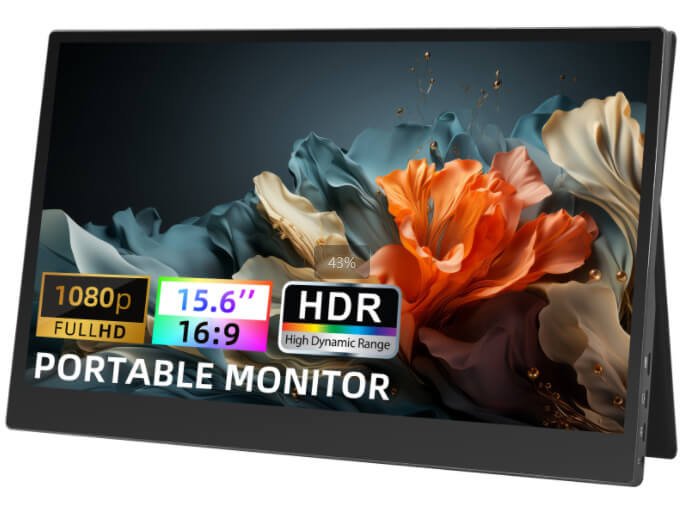
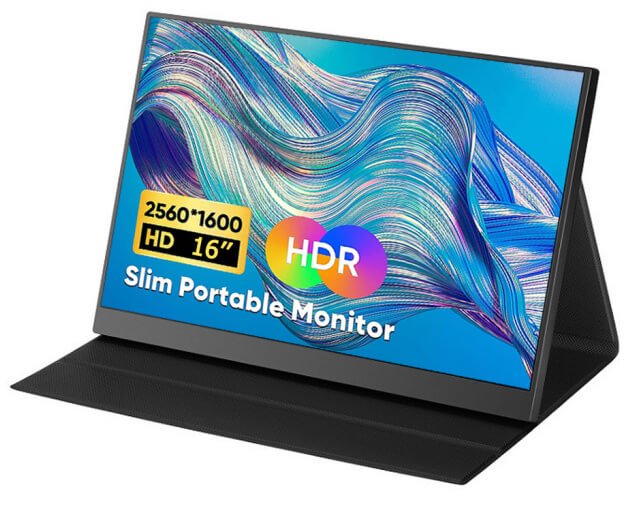
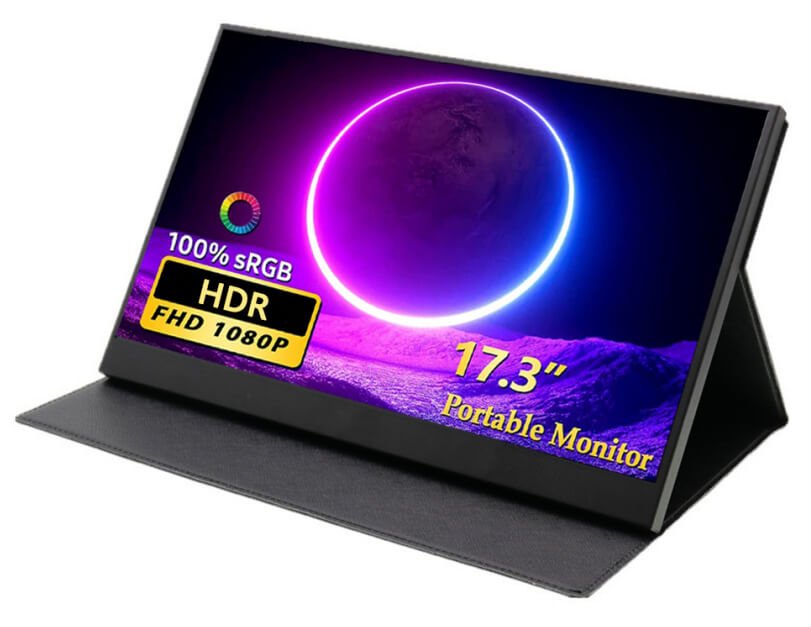
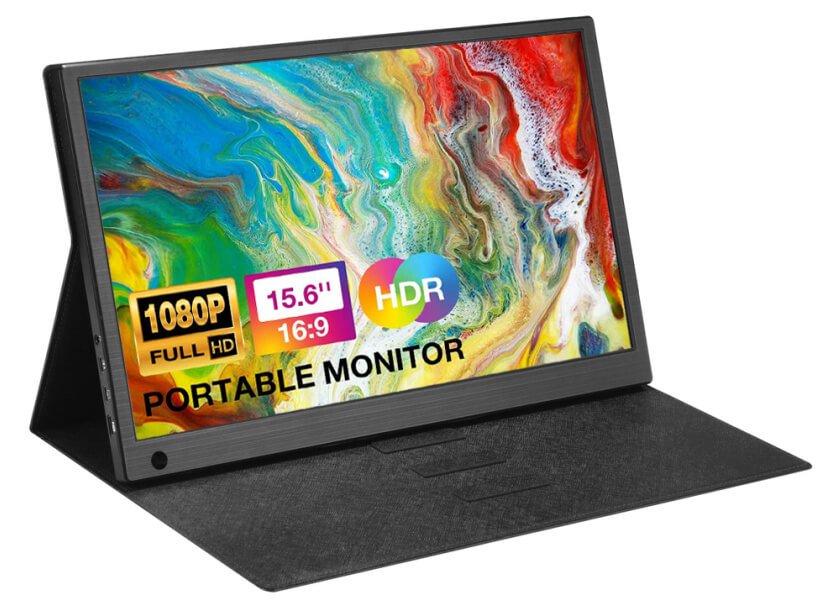
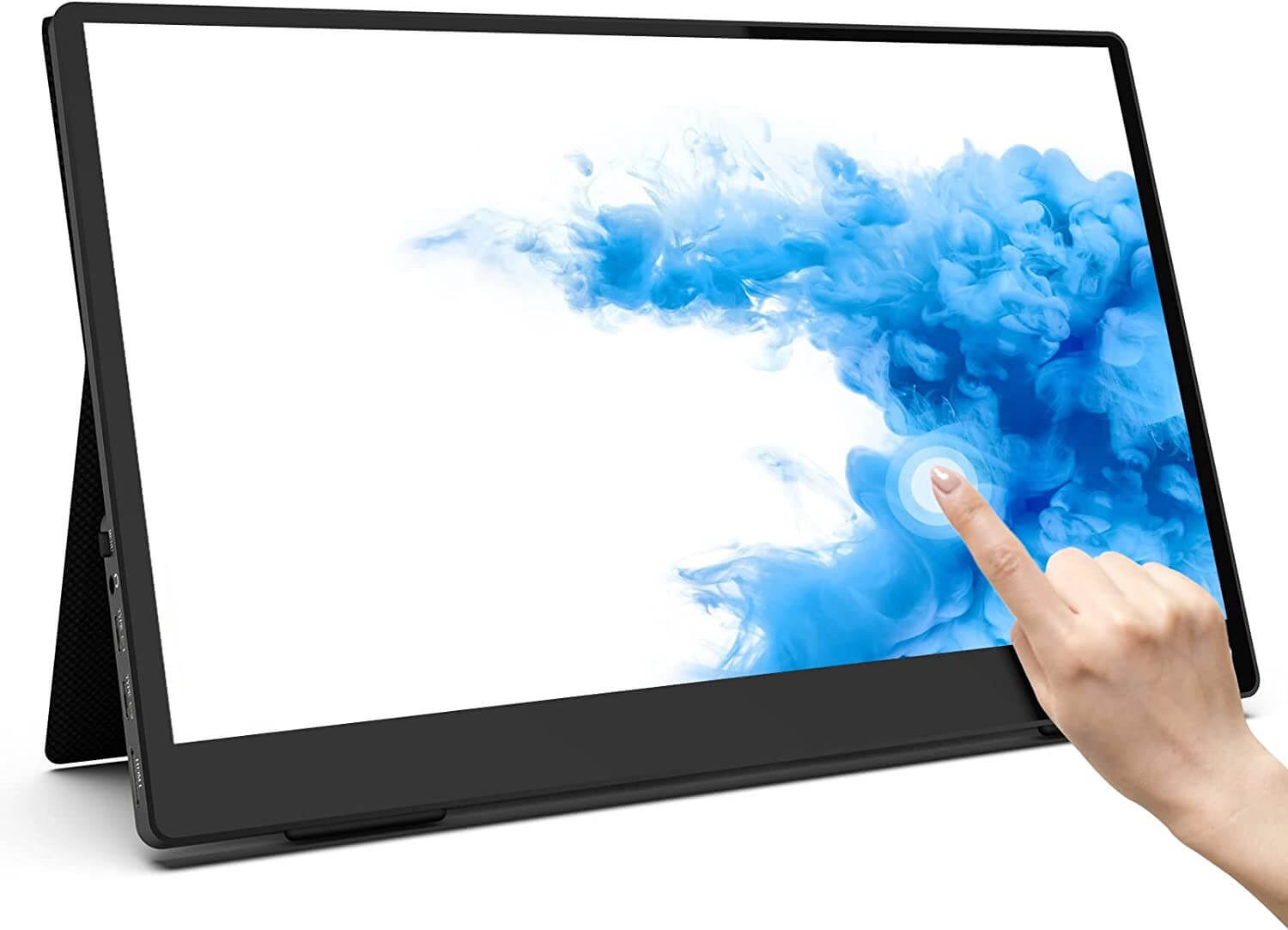
A Portable LCD Monitor is a slim external display designed to connect to a laptop, mini PC, game console, camera, industrial device or another signal source.
It is mainly used as a second screen, temporary display, mobile workstation display, presentation screen, gaming display or engineering test monitor.
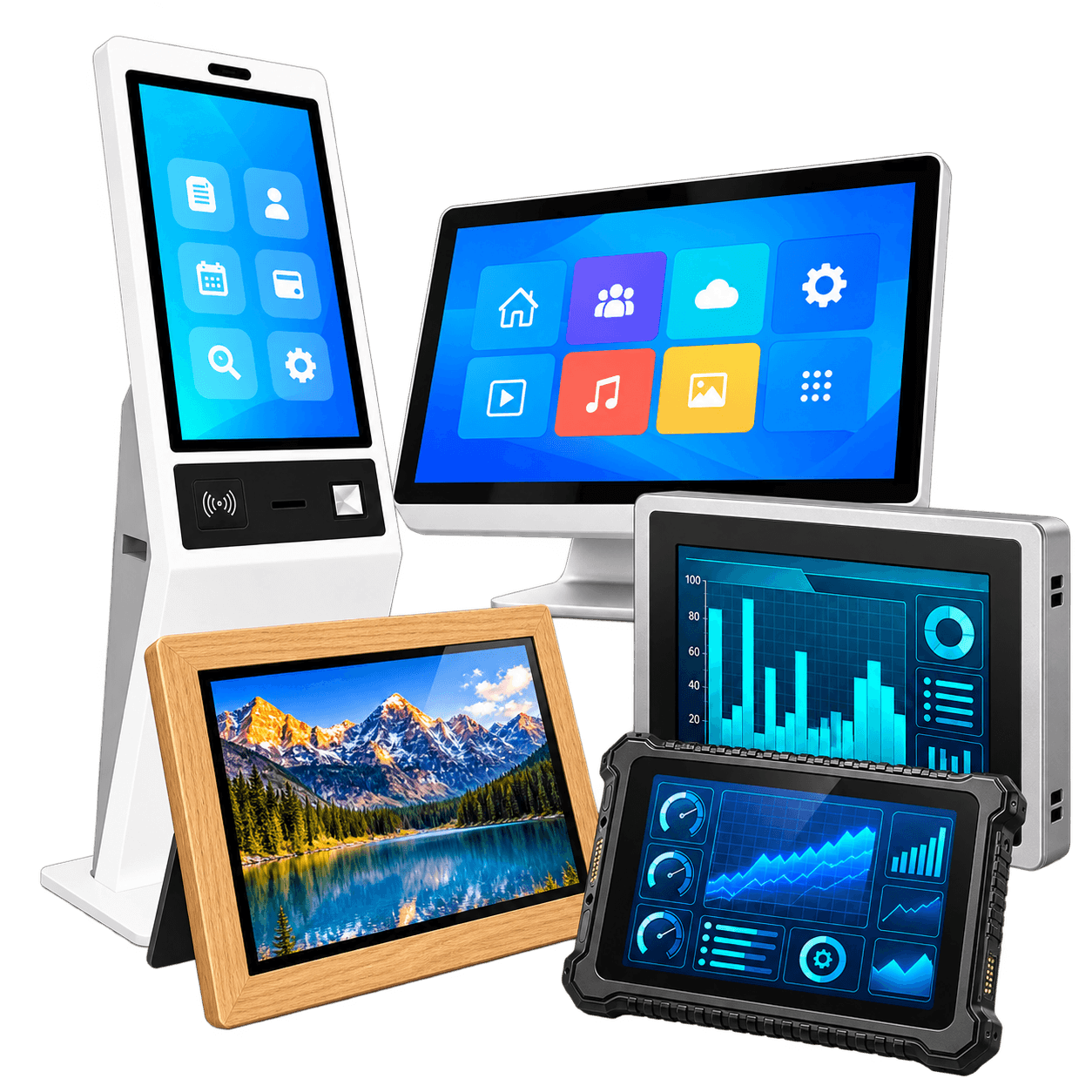
For DisplayMan, this product belongs to Touchscreen All-in-One Terminals → Consumer & Light Commercial OEM. It is an OEM-ready display accessory, not a standalone computing terminal.
Portable LCD Monitor = external display. Commercial Tablet All-in-One PC = display, touch, computing and operating system in one fixed terminal.
| Product Direction | Typical Size | Resolution Direction | Best For | Key Difference |
|---|---|---|---|---|
| 13.3" Portable Monitor | 13.3" | Full HD / selected higher-resolution platforms | Compact travel, presentations and lightweight second-screen use | Smallest and most portable size in the main series |
| 15.6" Portable Monitor | 15.6" | Full HD / 2K / selected 4K platforms | Laptop extension, office work, remote work, travel and gaming | Mainstream portable-monitor size |
| 16" Portable Monitor | 16" | Full HD / 2K / selected 4K platforms | Modern mobile workspace, design review and premium positioning | Larger workspace with a slim format |
| 17.3" Portable Monitor | 17.3" | Full HD / 2K / selected 4K platforms | Gaming, presentations, engineering tests and mobile workstations | Larger viewing area |
| Touch Portable Monitor | Project-based | Selected Full HD / 2K / 4K platforms | Interactive presentation, control, testing and POS support | Adds touch communication and front-glass integration |
| OEM Portable Monitor | Project-based | Project-based | Private label, branded accessories and batch retail projects | Custom logo, housing, cables, accessories and packaging |
Suitable for frequent travel, compact laptop bags and basic second-screen use.
The most common direction for laptop extension, office work, business travel and gaming.
A larger productivity area with modern aspect-ratio and premium-model potential.
Suitable for gaming, presentations, testing and mobile workstation applications.
Useful for testing, control, POS support and interactive presentations when the source system supports touch input.
Choose Commercial Tablet All-in-One PCs when the product must run applications independently.
The source device must support DisplayPort Alternate Mode or another compatible video-output mode.
The source device or adapter must provide enough power for the selected brightness, speakers and operating mode.
Possible only when the source supports video and sufficient power through the same Type-C connection.
One connection may carry video while another USB Type-C port or adapter supplies power.
Provides broad compatibility with laptops, mini PCs, cameras, game consoles and test equipment.
A touch model normally requires a separate USB data path even when HDMI carries the image.
A Type-C port may support power, data, video or only some of these functions. Source-device compatibility must be checked before confirming one-cable operation.
| Configuration | Best For | Important Considerations |
|---|---|---|
| 1920×1080 Full HD | Office, travel, presentations, gaming and general external-display use | Best balance of cost, compatibility and performance |
| 2K Resolution | Sharper office work, design review and premium portable-monitor projects | Source output, scaling and interface bandwidth must support the selected mode |
| 4K Resolution | Premium media, design and high-detail applications | Higher panel cost, power use, bandwidth and source-performance requirement |
| 60Hz | Office, presentation, travel, video and general display | Mainstream and widely compatible |
| Selected High Refresh | Gaming and high-motion content | LCD, controller board, input interface, cable and source must support the same mode |
A monitor may support a high resolution or a high refresh rate without supporting the maximum of both simultaneously. Confirm the required resolution, refresh rate and interface together.
Suitable for common Windows, Android and Linux interaction when the source system and drivers are compatible.
HDMI or Type-C carries the image; USB data is used for touch communication depending on the configuration.
Selected OEM projects can review cover-glass size, printing, logo and touch-controller integration.
Touch point count, gestures and driver behavior depend on the source operating system.
Video compatibility does not automatically guarantee touch support. The source system must accept external touch input.
Review Touch vs Non-Touch Display before adding cost and cables to a product that is mainly used as a second screen.
Portable LCD Monitors are selected from available LCD, controller and housing platforms. Final specifications depend on the model, panel, source compatibility, touch, refresh rate, accessories and quantity.
| Item | Project Direction |
|---|---|
| Screen Size | 13.3" / 15.6" / 16" / 17.3" |
| Panel Type | IPS direction, subject to selected panel |
| Resolution | 1920×1080, 2K or selected 4K platforms |
| Refresh Rate | 60Hz or selected high-refresh platforms |
| Brightness | Selected according to LCD platform and target use; portable models are normally for indoor environments |
| Touch | Optional projected capacitive touch on selected platforms |
| Signal Input | USB Type-C, HDMI or project-specific combination |
| Audio | Built-in speakers and optional headphone output depending on model |
| Housing | ABS or aluminum direction depending on platform and positioning |
| Power | USB Type-C power or external adapter depending on source and monitor requirement |
| Battery | Normally no built-in battery; special designs require separate review |
| Stand | Foldable cover, integrated stand or project-specific desktop support |
| Accessories | Signal cables, power cable, optional adapter, cover, stand and manual |
| OEM | Logo, housing color, cable set, accessories, labels, manual and packaging |
Cable specification affects resolution, refresh rate, touch, power and user experience. The final cable set should be validated with the intended source devices.
| Factor | Portable LCD Monitor | Commercial Tablet All-in-One PC | Digital Signage Display |
|---|---|---|---|
| Main Function | External display | Touch display with built-in computing | Commercial content playback |
| Built-In Operating System | No | Android, Linux or Windows | Android, Windows or media-player system |
| Source Device | Required | Normally not required for standalone application use | Built-in or external media source |
| Installation | Portable, desktop or temporary | Wall, desktop, VESA, embedded or kiosk | Wall, floor-standing, open frame or kiosk |
| Typical Size | 13.3"–17.3" | 10.1"–32" | Commercial sizes from compact to large format |
| Touch | Optional | Common | Optional |
| Best For | Laptop extension, travel, gaming, presentation and testing | Business interaction, room control, kiosk and OEM terminals | Advertising, public information and managed media |
Review Commercial Tablet All-in-One PCs for standalone touch computing and Digital Signage Displays for managed commercial media.
Document comparison, coding, design review, remote work and mobile productivity.
Sales, engineering, presentations and temporary dual-screen work outside the office.
Portable console and laptop gaming with project-specific refresh-rate requirements.
Customer meetings, trade shows, demonstrations and compact sales displays.
Video preview and field monitoring when the camera output is compatible.
Compact computers, portable workstations and temporary system setup.
Control-board debugging, field service, signal testing and equipment setup.
Temporary promotion, compact product display and customer-facing information.
Portable teaching, dual-screen learning and demonstration support.
Consumer-electronics and accessory brands requiring branded portable-display products.
Laptop, phone, mini PC, console, camera or equipment—and their real video outputs.
Balance portability, workspace, image detail, source performance and cost.
Type-C video, HDMI, one-cable operation, separate power and adapter requirements.
60Hz or selected high refresh, non-touch or touch, plus operating-system compatibility.
ABS or aluminum, cover, stand, cables, adapter and protective packaging.
Test the final monitor, cables, touch, power and source devices before mass production.
| Stage | Main Work | Output |
|---|---|---|
| 1. Requirement Review | Size, source devices, resolution, refresh rate, touch, housing, accessories and quantity | Recommended monitor platform |
| 2. Compatibility Review | Type-C, HDMI, power, touch, source systems and cable requirements | Confirmed interface architecture |
| 3. OEM Definition | Logo, housing color, accessories, cover, labels, manual and packaging | Approved customization files |
| 4. Sample Production | Assembly, firmware, cable set, accessory set and initial testing | Evaluation sample |
| 5. Customer Validation | Image, resolution, refresh, touch, audio, power and source compatibility | Approved sample and change list |
| 6. Batch Production | BOM control, assembly, aging, inspection and packaging | Consistent OEM batch products |
A monitor specification alone cannot guarantee one-cable operation, touch, power or the highest signal mode with every laptop, phone, console or camera.
| Related Page | When to Visit |
|---|---|
| Touchscreen All-in-One Terminals | Overview of Consumer, Light Commercial, Enterprise and Industrial terminal products |
| Commercial Tablet All-in-One PCs | When built-in computing, applications and fixed installation are required |
| Digital Photo Frames | When independent photo and video playback is more important than external video input |
| Digital Signage Displays | When CMS, commercial content playback and fixed deployment are required |
| All-in-One Touch Display PC Solution | For integrated touch, computing and application systems |
| Industrial All-in-One PC Solution | When rugged embedded computing and industrial I/O are required |
| Custom LCD Module Solution | When the final product requires a custom embedded LCD rather than a finished monitor |
| Custom Touch Glass Solution | For project-specific touch sensor, cover glass and controller integration |
| OEM/ODM Display Engineering & Prototyping | For custom product definition, samples and batch-production workflow |
| Corporate & Office Environments | Laptop extension, office productivity and presentation applications |
| Exhibition, Events & Showrooms | Portable demonstrations, presentations and product-review displays |
| Industrial Equipment & HMI | Temporary testing, debugging and equipment display applications |
A Portable LCD Monitor is a slim external display that connects to a laptop, mini PC, game console, camera, industrial device or another signal source through USB Type-C, HDMI or another supported interface.
No. A Portable LCD Monitor is primarily an external display. It does not normally include Android, Linux or Windows computing. For a standalone commercial terminal, choose a Commercial Tablet All-in-One PC.
Most Portable LCD Monitors use external power through USB Type-C or a power adapter. A built-in battery is not the standard configuration and must be reviewed as a special project.
The main product directions are 13.3, 15.6, 16 and 17.3 inches. Final availability depends on the LCD panel, resolution, refresh rate, touch requirement, housing and quantity.
Full HD, 2K and 4K directions can be reviewed depending on model availability, source-device compatibility, cost target and project positioning.
Selected high-refresh-rate platforms may support 144Hz. The LCD panel, controller board, input interface, cable and source device must all support the required resolution and refresh rate.
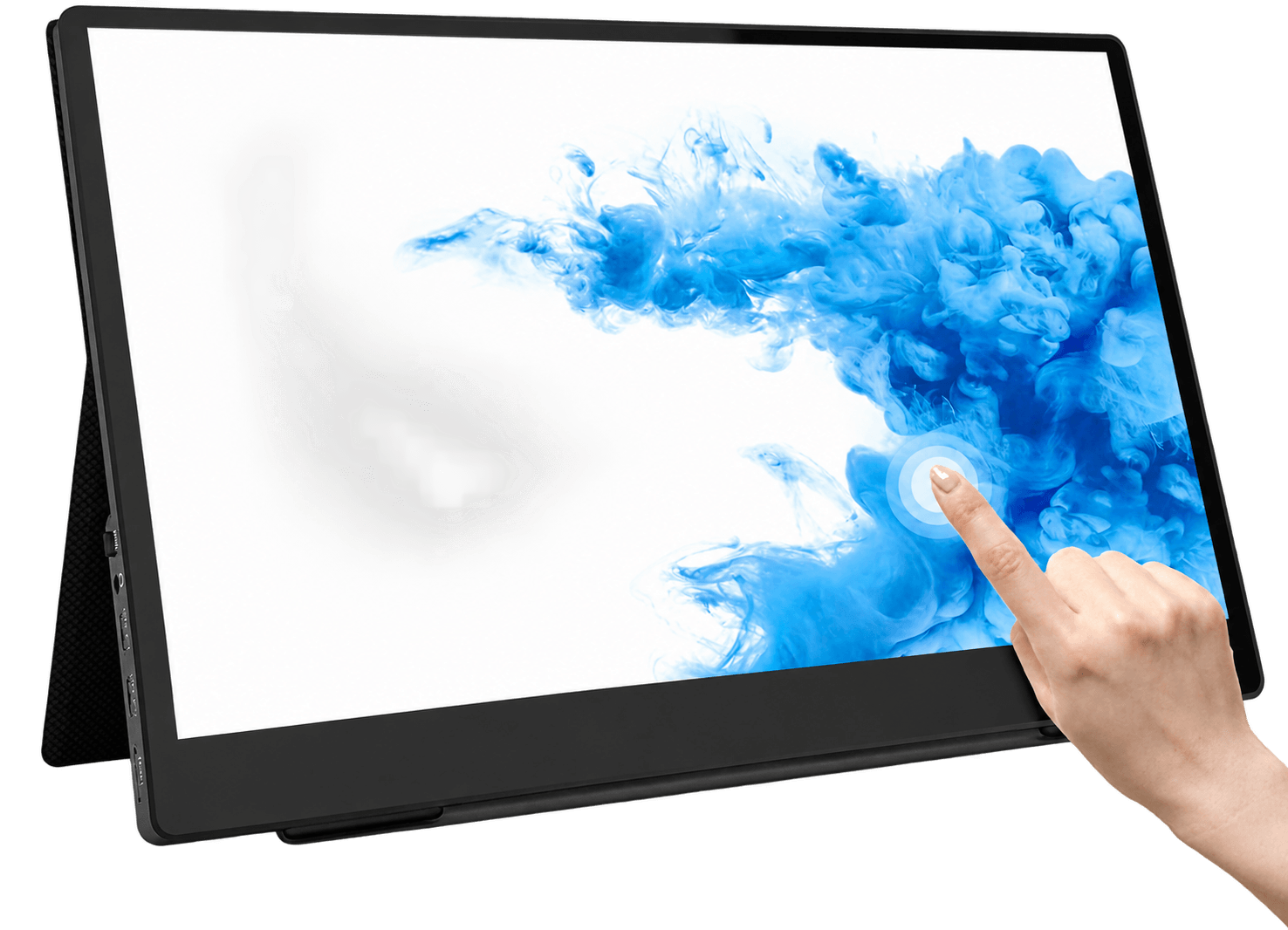
Yes. Touch can be reviewed for selected models. Touch communication is normally separate from the video signal and may require an additional USB connection.
Sometimes. The source device must support USB Type-C DisplayPort Alternate Mode and provide enough power. Some devices require one cable for video and another for power.
Only when the phone supports compatible video output through USB Type-C or another adapter solution. A USB Type-C connector alone does not guarantee video output.
Yes, through a compatible HDMI input and separate power connection. Console resolution and refresh rate should match the monitor configuration.
Yes, when the camera provides a compatible HDMI output. Connector type, resolution, frame rate and power arrangement should be confirmed.
No. USB Type-C is only the connector shape. A port may support power, data, video or a combination. The exact protocol must be confirmed.
Yes. ABS and aluminum housing directions can be reviewed depending on model, appearance, weight, structural requirement and target price.
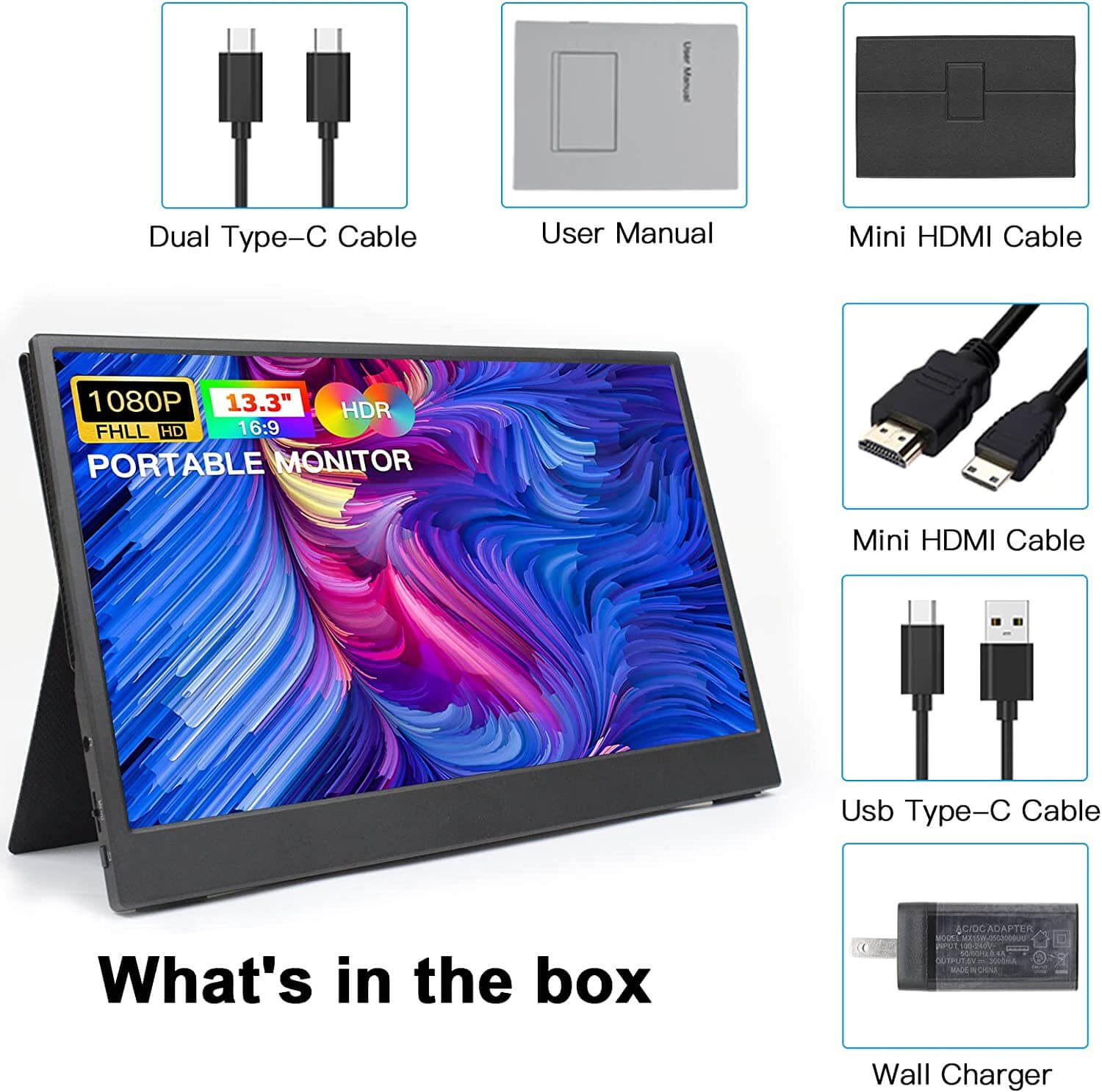
The cable set may include HDMI, USB Type-C to Type-C, USB Type-C to USB-A and a user guide. A power adapter, protective cover, stand or additional cables may be optional.
A Portable Monitor requires an external source device. A Commercial Tablet All-in-One PC includes computing, an operating system, network functions and fixed commercial installation support.
A Portable Monitor is designed for temporary or mobile external display use. A Digital Signage Display is designed for commercial content playback, fixed installation, media management and longer deployment schedules.
Yes. Logo, housing color, accessories, cable set, protective cover, manual, labels and private-label packaging can be reviewed for batch projects.
Please provide screen size, resolution, refresh rate, touch requirement, input interfaces, source devices, housing preference, accessories, logo, packaging, quantity, destination, certifications and target schedule.

Send us the screen size, resolution, refresh rate, touch requirement, input interfaces, source devices, housing preference, accessories, logo, packaging, quantity, destination, certifications and target schedule.
We will recommend a suitable monitor platform and confirm the practical compatibility, cable, accessory and OEM customization scope.
The correct Portable LCD Monitor must match the source device, video protocol, power arrangement, signal mode, touch requirement and cable set—not only the screen size.
Please share size, resolution, refresh rate, touch, source devices, interfaces, power, accessories, branding, quantity and schedule.
Please share your application, display size, quantity and project background. We will review the most practical display direction.