FAQ
What is a Custom Small-size Transparent OLED Display?
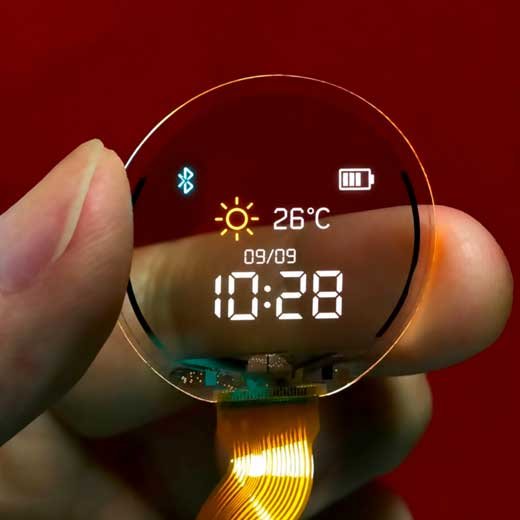
It is a project-based transparent self-emissive display direction, generally reviewed for under-10-inch OEM products that need fixed icons, segments, numbers, symbols, warning marks, status bars or other limited information.
Is this a standard off-the-shelf display module?
No. It is not normally available as a standard low-cost module. Display content, size, FPC, interface, structure, tooling, quantity and commercial feasibility must be reviewed before sample development.
What size range can be reviewed?
Under-10-inch projects can be reviewed. Final feasibility depends on the content layout, transparent area, FPC position, electronics, product structure, tooling budget and production quantity.
Can it show a full graphic user interface?
Full graphic dot-matrix customization is not the normal direction for this product category. If the project needs freely changing UI, images or complex graphics, TFT LCD or a standard OLED module is usually more practical.
Can it play full-color video?
Video playback is not the recommended direction for custom small-size Transparent OLED. Transparent OLED Signage, Transparent LCD, TFT LCD or Transparent Micro LED should be reviewed instead.
Which content types are most practical?
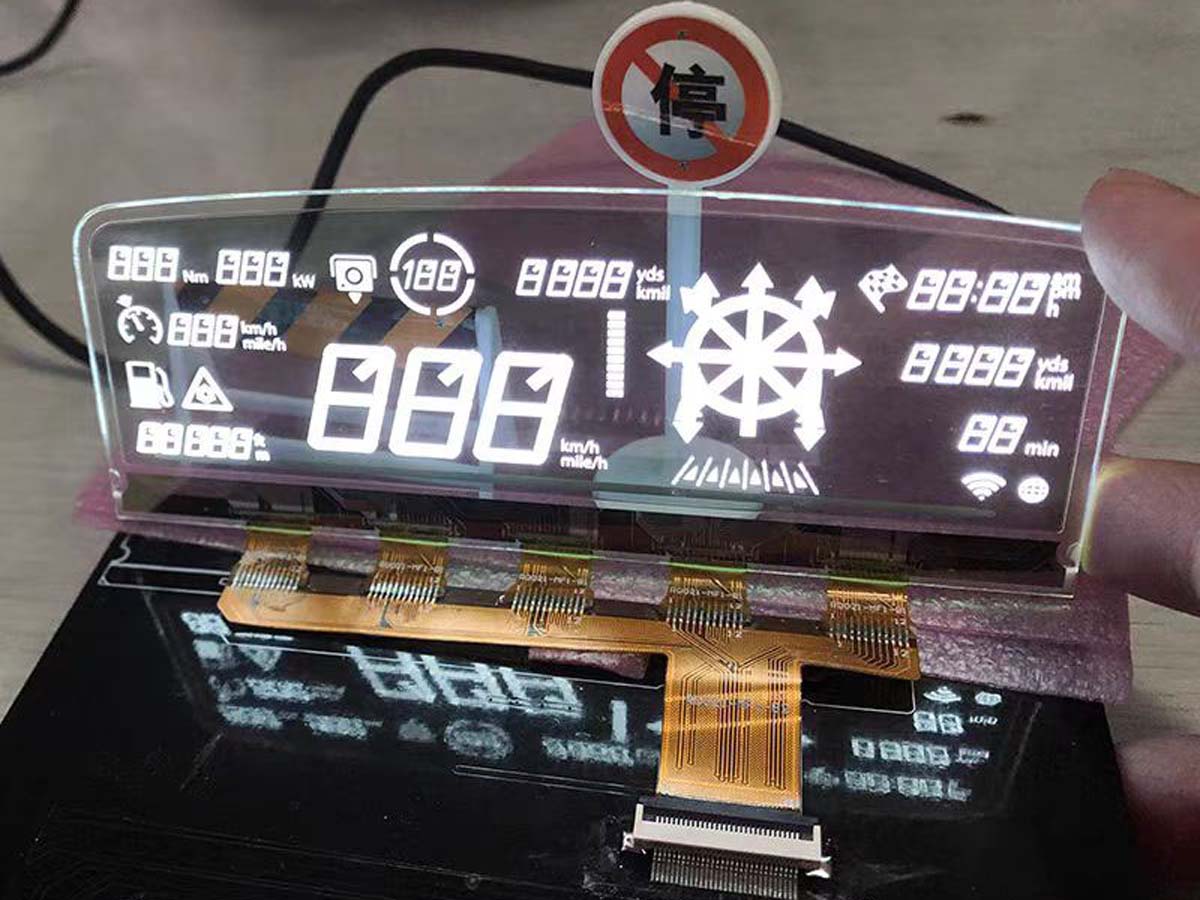
Fixed icons, segments, numeric values, units, warning marks, mode indicators, battery or level bars, status symbols and limited text areas are the most realistic directions.
Can the icon and segment layout be customized?
Yes. Icon, segment, number, symbol and status-zone layouts can be reviewed according to technical feasibility, tooling, quantity and product structure.
Can the FPC and connector position be customized?
FPC direction, length, exit position and connector location can be reviewed according to the display design, customer main board and available assembly space.
Can it use SPI or I2C?
SPI, I2C or another project-specific interface may be reviewed, but the final driving method depends on the display architecture, content and customer electronics.
Can it be used for automotive applications?
Selected automotive indicator concepts can be reviewed, but temperature, lifetime, visibility, vibration, reliability, qualification requirements and production quantity must be evaluated carefully.
Can it be used for medical or laboratory equipment?
Selected limited-information applications can be reviewed. Readability, reliability, certification, cleaning, operating environment and long-term supply requirements must be confirmed.
Is it cheaper than a standard OLED or TFT LCD?
Usually not. Custom Transparent OLED requires specialized feasibility review, tooling and project-based production, so it is generally more expensive than standard OLED, TFT LCD or segment LCD solutions.
Why is tooling cost required?
Custom display content, electrodes or segment layout, FPC, interface, tooling and production process may all require project-specific development.
Can I order only one low-cost sample?
A one-piece low-cost sample is usually not practical. Sample development normally requires the customer to support the necessary engineering and tooling cost.
What MOQ is required?
MOQ depends on size, content, tooling, supplier feasibility and production process. It must be reviewed case by case together with the annual quantity plan.
What information is needed for a feasibility review?
Please provide the content drawing, outer size, visible and active areas, transparent window, product structure, FPC direction, interface, voltage, operating environment, sample and annual quantity, tooling budget and target unit price.