
Explore custom anti-fingerprint cover glass for touch panels, LCD and OLED displays. DisplayMan helps match the AF treatment, glass design, printing and bonding method to your product and surface durability requirements.
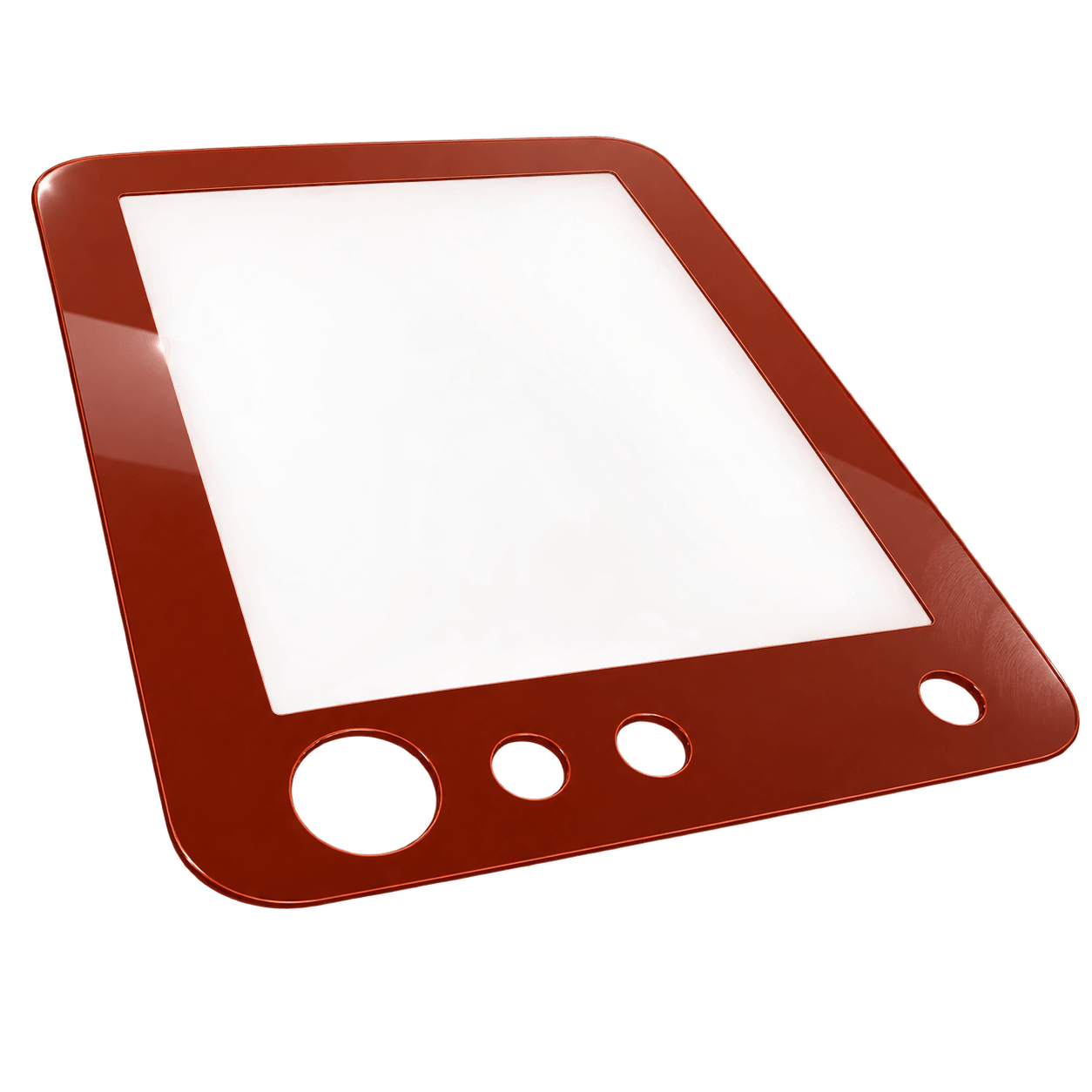
DisplayMan supplies AF Cover Glass for capacitive touch panels, TFT LCD modules, OLED displays, handheld devices, medical equipment, commercial terminals, public-use touch screens and OEM electronic products.
AF means Anti-Fingerprint. It is a surface coating used to reduce visible fingerprint marks, improve surface smoothness and make the glass easier to clean.
Customization can include glass size, thickness, AF process, surface smoothness, water contact angle, oil resistance, abrasion resistance, printing, chemical strengthening, AG + AF, AR + AF, bonding and enclosure matching.
Choose AF Cover Glass when a product needs a cleaner touch surface, smoother finger operation and easier maintenance. AF reduces fingerprints but does not make the glass permanently fingerprint-free.
The correct AF direction depends on touch frequency, cleaning method, product appearance, coating durability, optical structure, bonding and environment.
| Product Direction | Best For | Selection Logic |
|---|---|---|
| AF Cover Glass for Touch Panels | Capacitive touch panels and frequent-touch interfaces | Selected when fingerprint resistance and smooth finger operation are required |
| AF Cover Glass for TFT LCD | Touch LCD modules, control panels and commercial terminals | Selected when the front glass needs easier daily cleaning |
| AF Cover Glass for OLED Displays | OLED modules, transparent OLED and premium display products | Selected when the product needs a cleaner front-glass appearance |
| AF Cover Glass for Public Terminals | Kiosks, POS systems, access control and vending machines | Selected when many users touch the same surface |
| AF Cover Glass for Handheld Devices | Portable terminals, medical handheld products and smart devices | Selected when frequent finger operation creates visible marks |
| AG + AF Cover Glass | Bright environments and frequent-touch surfaces | Selected when glare reduction and easier cleaning are both required |
| AR + AF Cover Glass | Premium frequent-touch displays | Selected when optical clarity and fingerprint resistance are both required |
| Custom AF Cover Glass | OEM products with special size, shape, printing, process or bonding requirements | Selected when standard cover glass cannot match the product structure |
AF Cover Glass is a surface-treated cover glass. For touch input, it must be combined with a Capacitive Touch Panel, selected Resistive Touch Panel structure or a complete touch-display assembly.
AF coating reduces the visibility and adhesion of oily fingerprint marks and smudges.
The front surface is generally easier to wipe during regular product maintenance.
AF improves the surface but cannot keep glass permanently free from fingerprints.
Helps keep frequent-touch products visually cleaner during daily use.
Useful for public terminals, medical equipment and commercial products.
Can improve the finger-sliding experience on capacitive touch panels.
Suitable for kiosks, POS, access control, smart panels and handheld devices.
AG + AF and AR + AF can be reviewed for combined optical and maintenance needs.
Glass, coating, printing, strengthening, touch and bonding can be customized together.
A common anti-fingerprint direction for surface smoothness and easier cleaning.
Normally reviewed when stronger wear resistance and longer coating life are required.
| Factor | Coated AF | Plated AF |
|---|---|---|
| Process | Common surface-coating direction | Higher-durability plated or project-specific direction |
| Cost Direction | Usually lower | Usually higher |
| Wear Resistance | Depends on coating system | Normally reviewed for stronger durability |
| Best For | General commercial and consumer-style products | Higher-use or higher-durability products |
| Selection Logic | Choose by cost, touch frequency and required life | Choose when abrasion and cleaning durability have higher priority |
AF process should be selected according to product use, touch frequency, cleaning method, abrasion, required coating life, cost and quantity.
| Parameter | What It Affects | Engineering Note |
|---|---|---|
| Surface Smoothness | Finger sliding and touch feel | Should match the required user experience |
| Fingerprint Resistance | Visibility and adhesion of finger marks | Must be evaluated under real handling conditions |
| Water Contact Angle | Surface repellency to water droplets | Useful as one indicator but not a complete AF specification |
| Oil Resistance | Adhesion and cleanability of oily marks | Important for frequent-touch and handheld products |
| Abrasion Resistance | Coating life after repeated touching or wiping | Test conditions should match actual use |
| Cleaning Durability | Performance after repeated cleaning | Cleaning agent, cloth and frequency must be considered |
| Light Transmittance | Display brightness and optical loss | Should match the LCD or OLED optical target |
| Glass Thickness | Strength, weight and capacitive-touch sensitivity | Thicker glass may require PCAP retuning |
A high water contact angle does not automatically guarantee strong fingerprint resistance or long coating life. Oil resistance, abrasion, cleaning durability, surface feel and real-use testing also matter.
AF coating can reduce fingerprints and improve cleanability, but its performance depends on coating process, usage, abrasion, cleaning method, product environment and the complete glass stack.
Resistive touch uses pressure through a flexible surface, so AF must be reviewed with the complete top-film structure.
| Bonding Direction | Description | Main Review Factors |
|---|---|---|
| Air Bonding | AF Cover Glass or touch assembly is mounted with an air gap | Cost, dust sealing, internal reflection, rework and support |
| Frame Bonding | Perimeter adhesive is used around the viewing area | Bonding width, flatness, dust control and enclosure pressure |
| Optical Bonding | AF Cover Glass or touch assembly is bonded directly to the display | Optical clarity, bubbles, material compatibility, yield, sealing and repairability |
| Factor | AF Cover Glass | AG Cover Glass |
|---|---|---|
| Full Name | Anti-Fingerprint | Anti-Glare |
| Main Function | Reduce fingerprints and improve cleanability | Reduce glare by diffusing reflected light |
| Main Target | Surface cleanliness and touch feel | Optical readability under bright light |
| Surface Effect | Smooth, easier-to-clean surface | Matte or low-glare surface |
| Common Use | Frequent-touch products and public terminals | Bright environments and industrial displays |
| Can Combine | Yes | AG + AF can be reviewed |
| Factor | AF Cover Glass | AR Cover Glass |
|---|---|---|
| Full Name | Anti-Fingerprint | Anti-Reflective |
| Main Function | Reduce fingerprints and improve cleanability | Reduce surface reflection |
| Main Target | Surface cleanliness | Optical clarity |
| Common Use | Touch panels and public-use products | Premium displays and optical applications |
| Can Combine | Yes | AR + AF can be reviewed |
| Selection Logic | Choose for easier cleaning | Choose for lower reflection |
| Item | AF Cover Glass | Custom Touch Panel Glass |
|---|---|---|
| Product Scope | Cover glass with anti-fingerprint coating | General custom cover glass or front lens |
| Main Purpose | Reduce fingerprints and improve cleanability | Customize size, shape, thickness, printing and structure |
| Touch Function | No touch function by itself | No touch function unless integrated with a sensor |
| Best For | Frequent-touch surfaces and public terminals | General front-glass customization |
| Selection Logic | Choose when AF coating is required | Choose when general custom glass is required |
| Factor | AF Cover Glass | Standard Clear Glass |
|---|---|---|
| Fingerprint Visibility | Reduced and easier to clean | Fingerprints and oil marks are more visible |
| Touch Feel | Can provide smoother finger sliding | Standard glass surface feel |
| Cleaning | Usually easier | Requires normal wiping |
| Coating Durability | Must be reviewed | No AF coating to wear |
| Cost Direction | Higher due to AF process | Lower |
| Selection Logic | Choose when frequent handling and cleaning matter | Choose when standard surface performance is sufficient |
Kiosks, directories and shared interactive screens.
Frequent-use commercial interfaces and entry systems.
Frequently cleaned touch and display surfaces.
Portable devices exposed to constant finger operation.
Control panels requiring easier maintenance.
Public-use touch products with regular cleaning.
Touch or non-touch front-glass integration.
Frequently handled display surfaces.
Matching original size, coating, printing and bonding.
Describe touch frequency, users, cleaning method and visible-surface requirements.
PCAP, selected resistive touch, TFT LCD, OLED or non-touch cover glass.
Balance abrasion, coating life, cleaning frequency, cost and quantity.
Size, thickness, strengthening, windows, holes, border, logo and tolerance.
AG + AF, AR + AF, air, frame or optical bonding.
Check fingerprint visibility, cleaning, touch feel, abrasion, optics, fit and durability.
The correct route depends on whether the project needs fingerprint resistance, glare control, reflection reduction, touch sensing or a complete touch-display assembly.
| Project Requirement | Recommended Product Direction |
|---|---|
| Fingerprint resistance and easier cleaning | AF Cover Glass |
| Glare reduction in bright environments | AG Cover Glass |
| Lower reflection with clearer glass appearance | AR Cover Glass |
| Main touch-component and cover-glass selection | Custom Touch Panels & Cover Glass |
| PCAP sensor, FPC and controller IC | Capacitive Touch Panels |
| Pressure touch and legacy replacement | Resistive Touch Panels |
| TFT LCD module with touch integrated | Touch Screen TFT LCD Displays |
| Touch-to-display optical bonding | Optical Bonding Display Solution |
Please describe the product, number of users, daily touch frequency, cleaning agent, wiping material, cleaning frequency and expected coating life.
AF Cover Glass is anti-fingerprint cover glass. It uses a surface coating to reduce visible fingerprint marks, oil stains and smudges, improve surface smoothness and make the glass easier to clean.
No. AF coating can reduce fingerprint visibility and improve cleanability, but it does not make the glass completely or permanently fingerprint-free.
No. AF Cover Glass is a surface-treated cover glass. Touch function requires a capacitive touch sensor, resistive touch structure, FPC, controller IC or a complete touch-display assembly.
AF coating reduces the surface energy of the glass, helping oil, moisture and fingerprints spread less strongly and making the surface easier to wipe.
Coated AF is a common cost-effective direction. Plated AF is normally reviewed when stronger wear resistance and longer coating life are required, although cost is usually higher.
No. The correct process depends on touch frequency, abrasion, cleaning method, durability target, cost and quantity.
Water contact angle is one indicator of surface repellency. A higher contact angle generally means water forms a more rounded droplet and spreads less on the surface.
No. Contact angle is only one parameter. Fingerprint visibility, oil resistance, abrasion resistance, cleaning durability, touch feel and coating life must also be considered.
Oil resistance describes how strongly oily fingerprints and smudges adhere to the surface and how easily they can be removed.
Abrasion resistance describes how well the AF coating maintains its performance after repeated touching, wiping or mechanical wear.
Yes. AG plus AF can be reviewed when the product needs both glare reduction and easier cleaning.
Yes. AR plus AF can be reviewed when the product needs both reflection reduction and fingerprint resistance.
A combined AG plus AR plus AF structure can be reviewed for selected projects, but process compatibility, optical performance, surface feel, durability, cost and quantity must be evaluated.
Yes. AF Cover Glass is commonly used with capacitive touch panels because users touch the front glass directly. Coating durability, glass thickness, touch sensitivity, bonding and cleaning should be reviewed together.
Selected structures can be reviewed, but resistive touch normally uses a flexible pressure-sensitive top surface. Matte anti-glare or anti-Newton-ring treatment may be more practical for many resistive-touch applications.
Yes. AF Cover Glass can be used for touch or non-touch TFT LCD, OLED and transparent OLED products when the front surface is frequently handled or cleaned.
Yes. Chemical strengthening can be reviewed according to glass size, thickness, holes, edge distance, strength target and production process.
Yes. Black border, white border, logo, icons, button marks, windows and multi-color back-side printing can be reviewed.
Yes. AF Cover Glass can be air bonded, frame bonded or optically bonded with a capacitive touch panel, TFT LCD or selected OLED module.
Please provide glass size, thickness, 2D drawing, viewing window, AF process preference, durability target, water contact angle if known, oil resistance, abrasion requirement, cleaning method, strengthening, printing, holes, notches, edge treatment, AG or AR combination, matched touch panel or display, bonding method, environment, quantity and replacement sample if available.
Send us the glass size, thickness, 2D drawing, AF process, water contact angle, oil resistance, abrasion target, cleaning method, printing, strengthening, combined treatment, bonding, matched touch panel or display, quantity and schedule.
DisplayMan will review whether coated AF, plated AF, AG + AF, AR + AF or another front-glass direction better matches the product use and durability target.
AF Cover Glass is an anti-fingerprint surface treatment, not a touch function. It reduces visible marks and improves cleaning, but the coating will still wear according to touch frequency, abrasion, cleaning and environment.