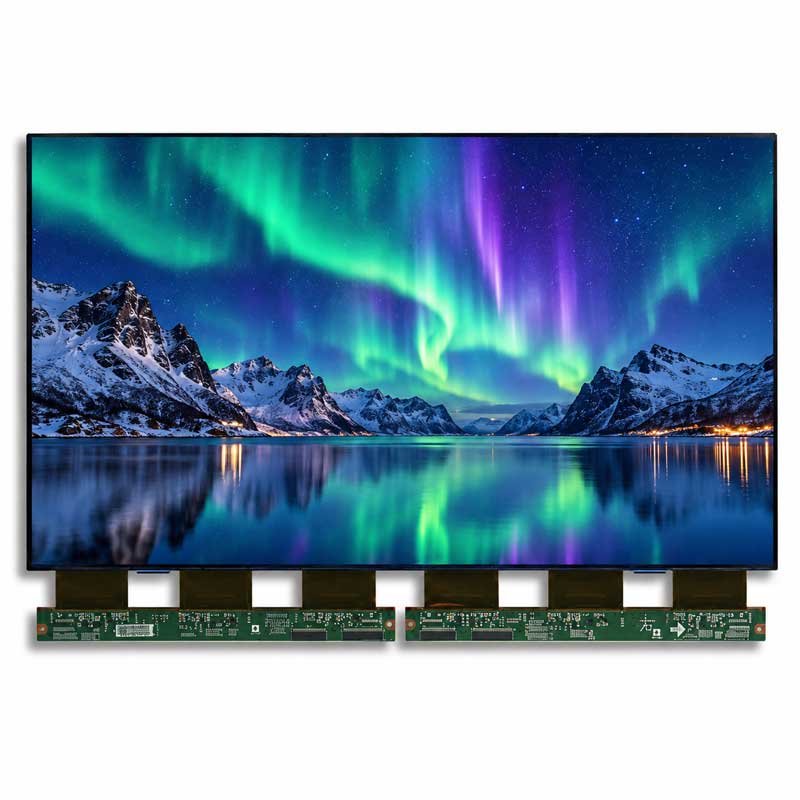
DisplayMan supplies AMOLED Displays for products that require high contrast, thin structure, fast response and full-color image performance in small to medium display sizes.
AMOLED display modules are commonly used in smart wearables, handheld devices, medical instruments, smart controllers, industrial terminals, consumer electronics, automotive interfaces and custom OEM products where visual quality and compact module structure are important.
This page focuses on AMOLED display module selection and module-level customization. DisplayMan can review AMOLED size, resolution, interface, brightness, touch panel, cover glass, FPC direction, controller board and mechanical integration according to your project requirement.
The following models are reference examples. Final availability and specifications should be confirmed according to your size, resolution, interface, brightness, touch requirement and mechanical structure.
| Reference Size | Resolution | Interface | Module Direction | Typical Use |
|---|---|---|---|---|
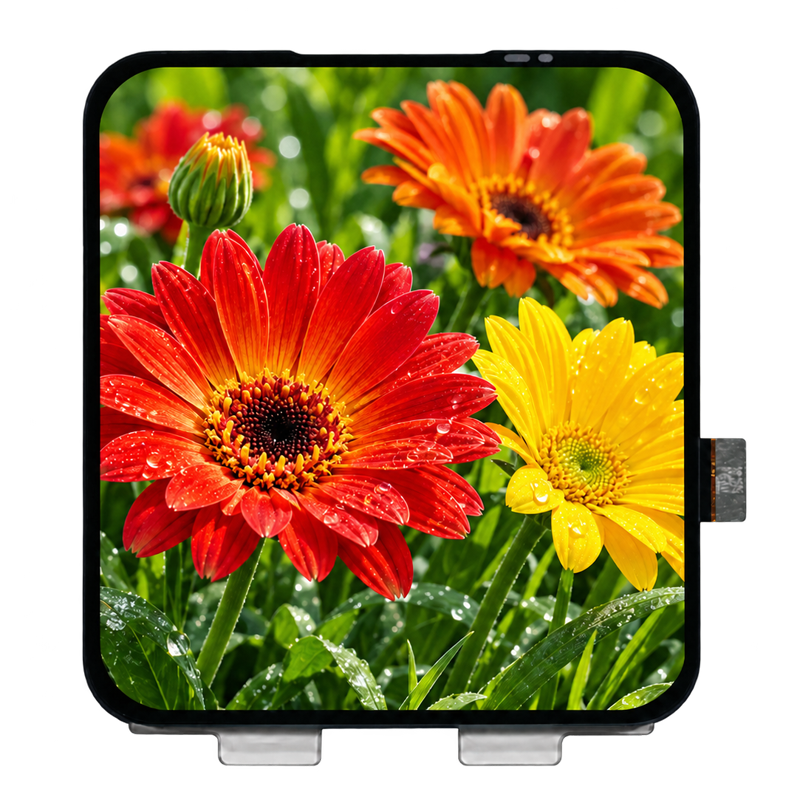
| 0.95″ AMOLED Display | 180 × RGB × 120 | Project-based review | Small rectangular AMOLED module | Wearables, compact instruments, small smart devices |
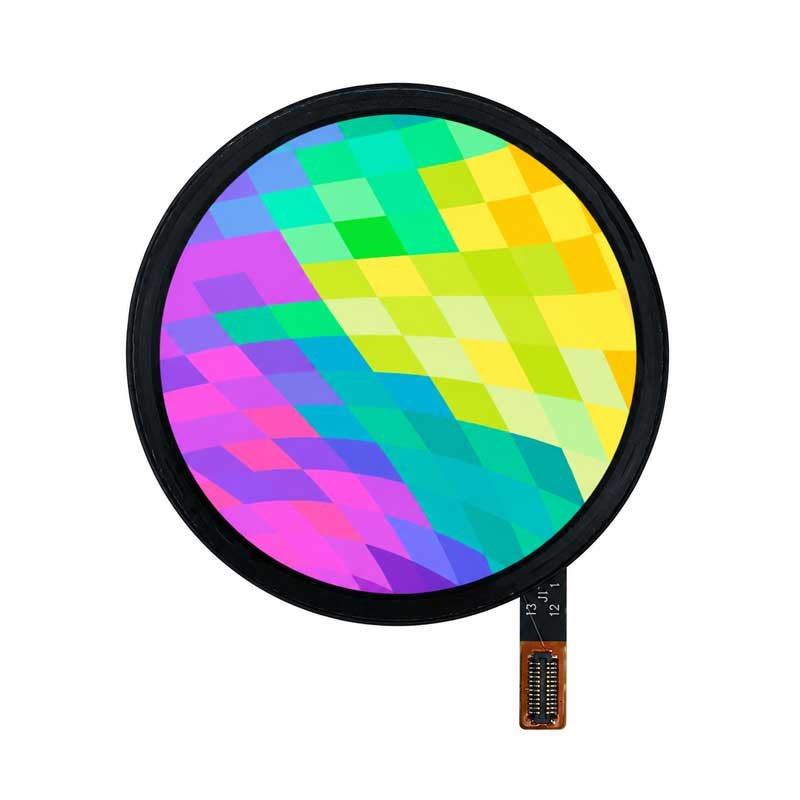
| 1.2″ Round AMOLED Display | 390 × RGB × 390 | MIPI / SPI | Small round AMOLED module | Smart watches, round controllers, compact consumer devices |
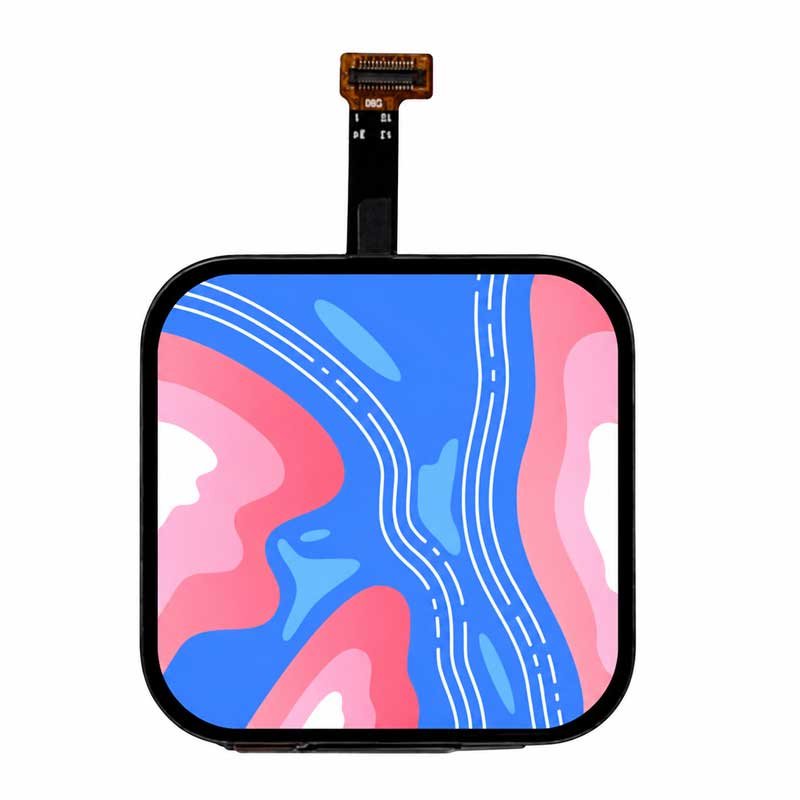
| 1.41″ AMOLED Display | 320 × RGB × 360 | MIPI | Compact portrait AMOLED module | Wearables, smart devices, handheld electronics |
| 1.78″ AMOLED Display | 368 × RGB × 448 | MIPI / SPI | Small full-color AMOLED module | Smart terminals, handheld products, compact UI devices |
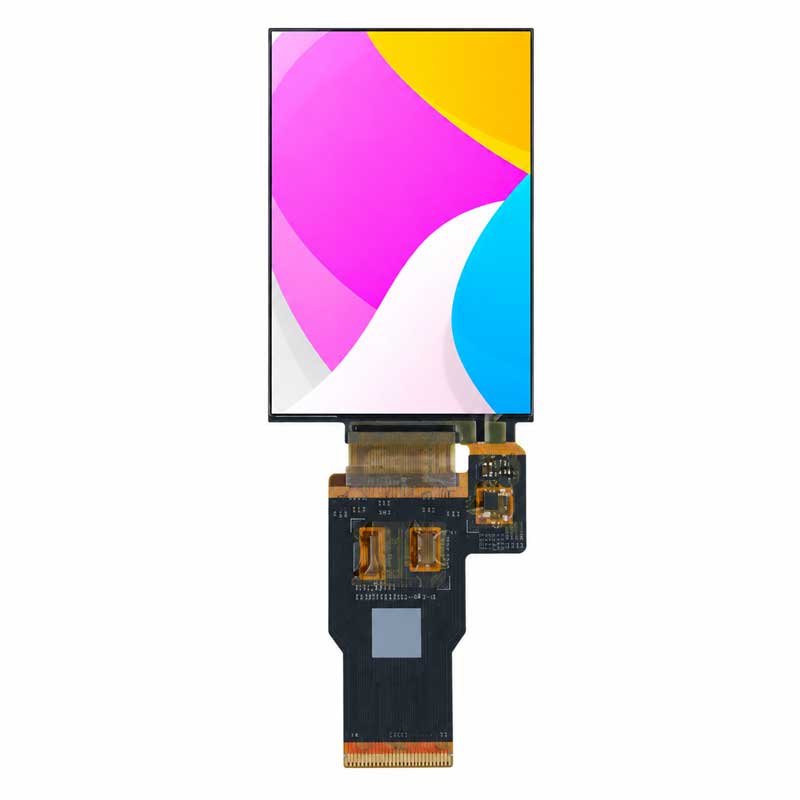
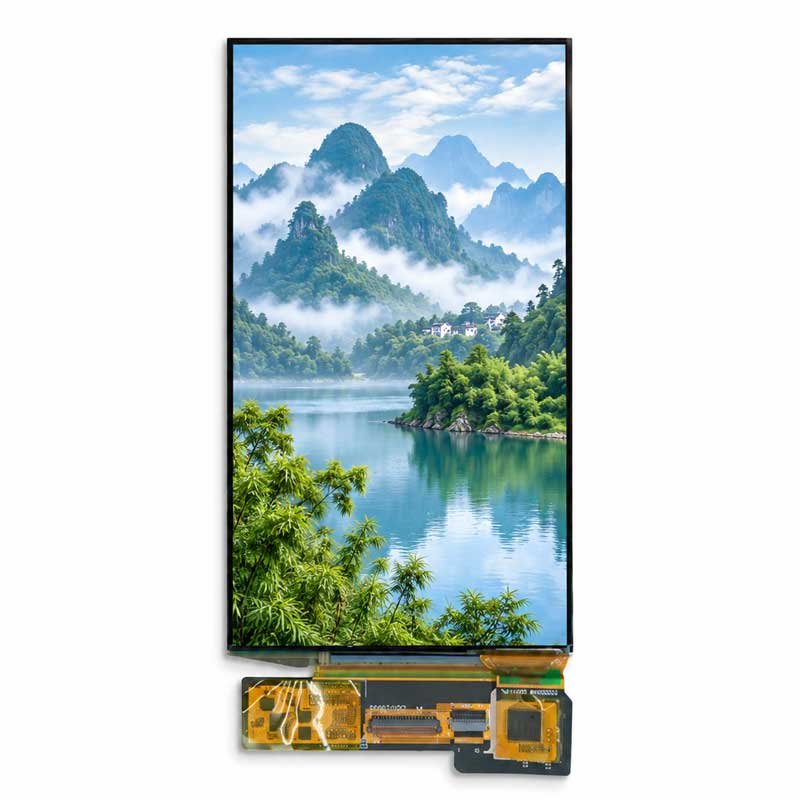
| 5.5″ AMOLED Display | 720 × RGB × 1280 | MIPI 4 lanes | Medium-size AMOLED module | Smart devices, medical terminals, handheld equipment, custom OEM products |
AMOLED display selection should not be based only on size or resolution. For OEM projects, brightness, interface, FPC position, touch structure, cover glass, power design, mechanical space, content type, operating environment and supply stability should also be reviewed.
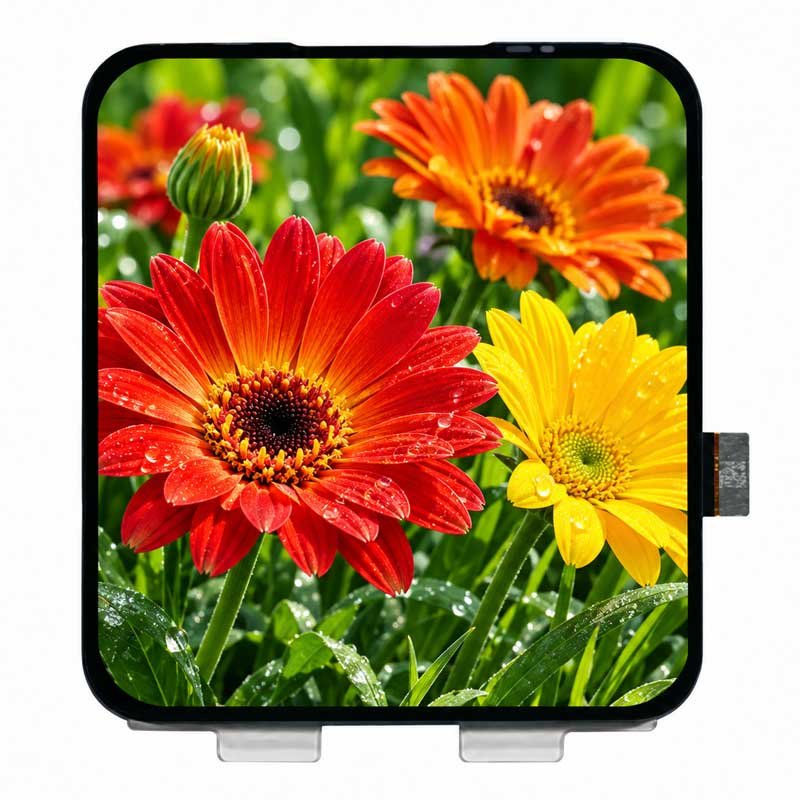
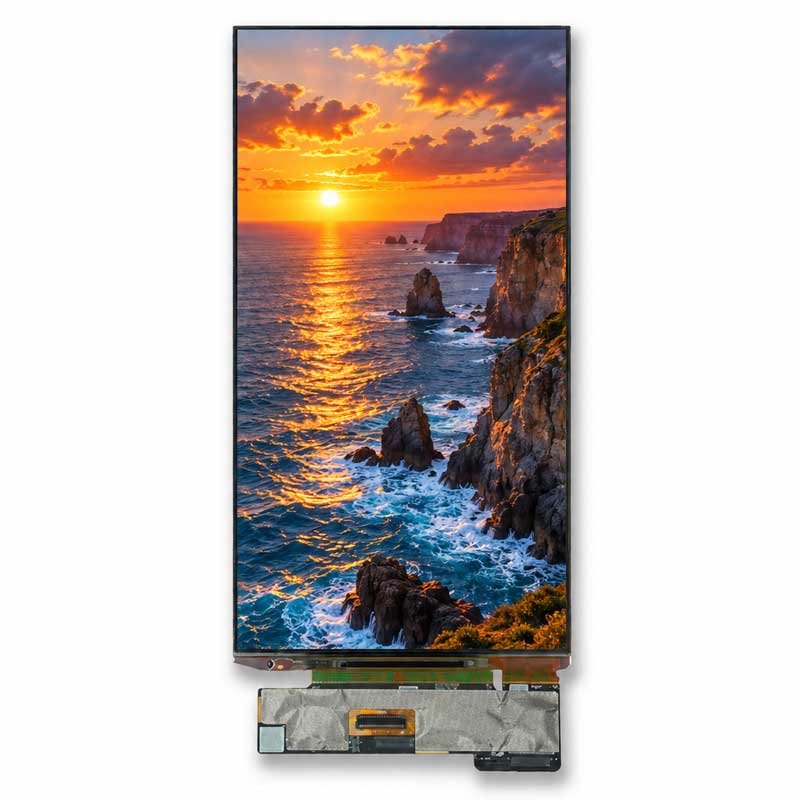
Compact AMOLED display module for smart wearables, handheld electronics, instruments and small embedded devices.
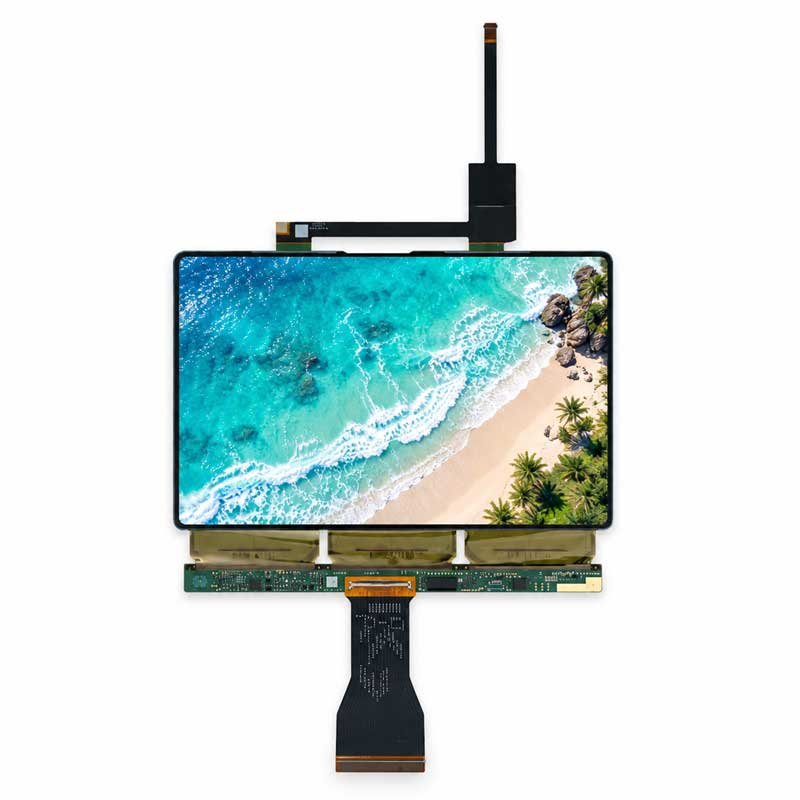
Round AMOLED module for smart watches, circular controllers, wearable products and compact round interfaces.
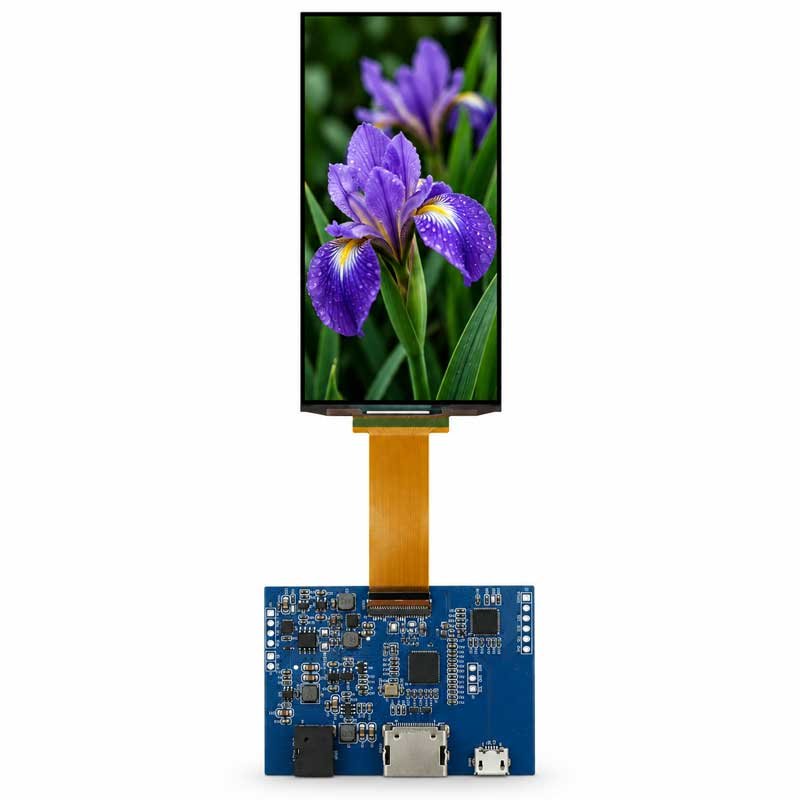
Portrait-format AMOLED display for handheld devices, medical electronics, smart terminals and compact user interfaces.
AMOLED display module for larger handheld equipment, commercial devices, medical terminals and custom OEM products.
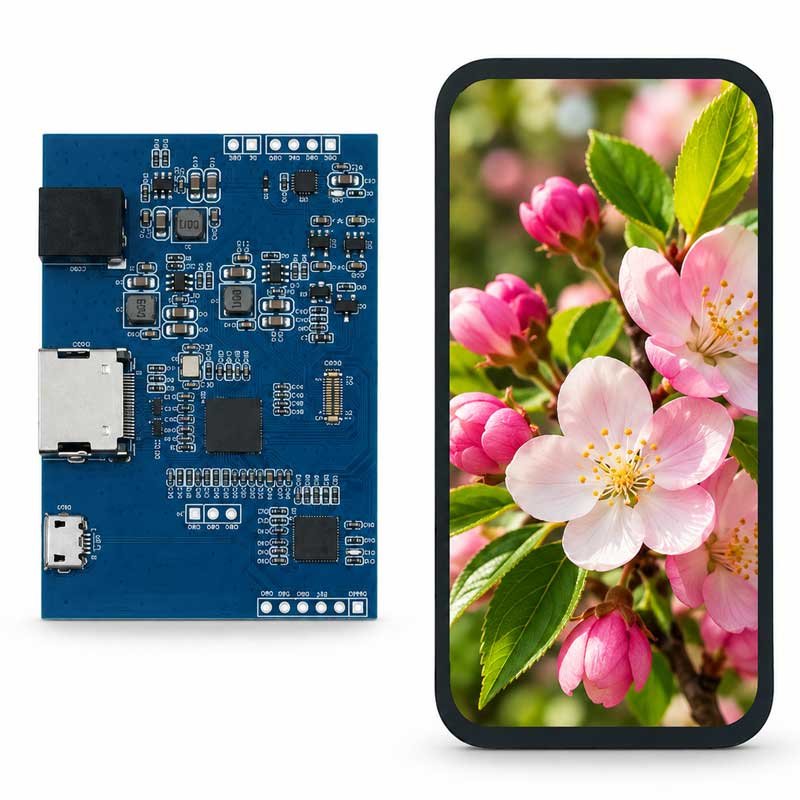
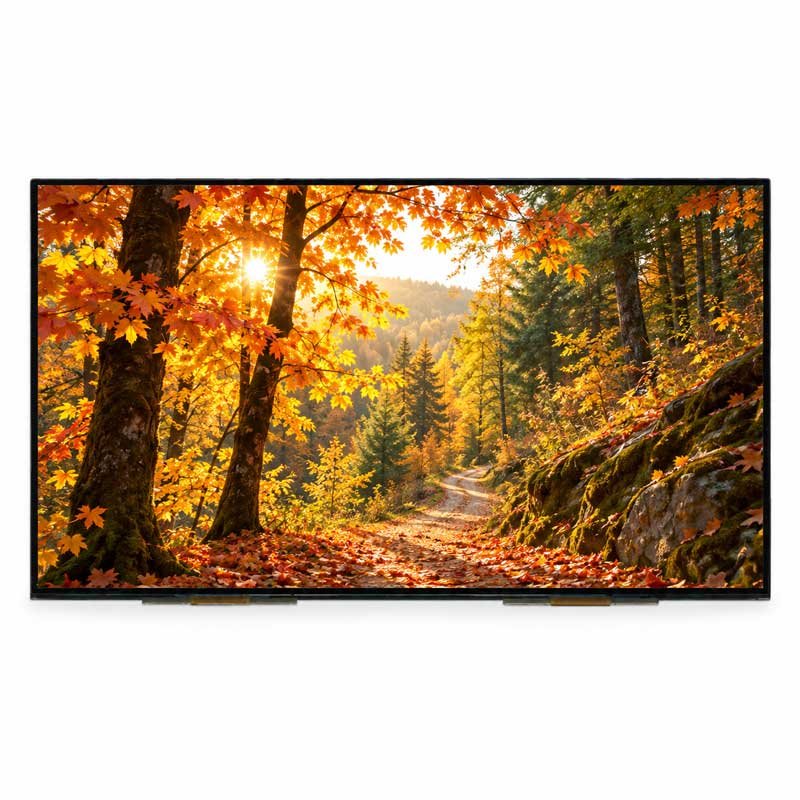
AMOLED display integrated with capacitive touch panel for interactive smart devices and compact terminals.
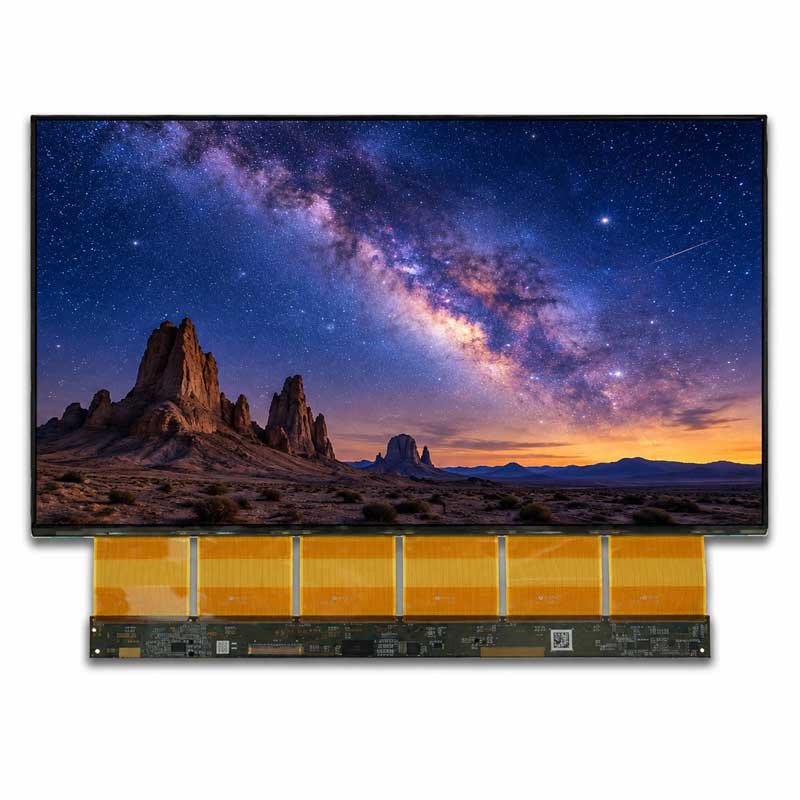
AMOLED module review with cover glass, FPC direction, interface matching and mechanical structure support.
AMOLED means Active-Matrix Organic Light-Emitting Diode.
Unlike LCD modules, AMOLED displays do not require a separate backlight. Each pixel emits light by itself. This gives AMOLED displays high contrast, thin module structure and fast response.
Compared with PMOLED displays, AMOLED uses an active-matrix backplane to control pixels more precisely. This makes AMOLED more suitable for full-color images, higher resolution, dynamic UI and medium-size display modules.
AMOLED displays are commonly selected when a product needs better visual performance than basic LCD or PMOLED modules, but still requires compact size and OEM-level integration.
AMOLED Displays are selected when the product needs full-color OLED image quality, compact structure and active-matrix display performance.
AMOLED pixels emit light individually. When a pixel is off, it can produce very dark black compared with backlit LCD structures. This is useful for dark UI, high-contrast icons, premium visual interfaces and low-light viewing.
Because AMOLED does not need a traditional LCD backlight, the display module can be thinner and lighter than many LCD module structures. This is useful for wearables, handheld devices and space-limited designs.
AMOLED displays support full-color images, icons, graphics, animations and modern UI layouts. They are suitable for products where visual quality and interface appearance are important.
AMOLED technology provides fast pixel response, which is useful for dynamic UI, animation, wearable interfaces and smooth visual transitions.
AMOLED displays are available in different shapes and structures, including rectangular, portrait, round and flexible options depending on the selected module.
AMOLED and PMOLED are both OLED display technologies, but they are used for different product requirements.
| Factor | AMOLED Displays | PMOLED Displays |
|---|---|---|
| Driving Method | Active-matrix pixel control | Passive-matrix row and column scanning |
| Display Type | Usually full-color | Often monochrome or simple graphic display |
| Size Direction | Small to medium sizes | Usually small sizes |
| Resolution | Higher resolution possible | Lower resolution, simple UI |
| UI Content | Images, icons, animation, rich UI | Text, icons, simple graphics, status display |
| Interface | Commonly MIPI, SPI or project-based | Commonly I2C, SPI, parallel or segment-style control |
| Cost Direction | Usually higher | Usually more economical for small simple displays |
| Best For | Wearables, handheld devices, smart products, advanced UI | Instruments, meters, controllers, simple status displays |
| Selection Logic | Choose when full-color OLED performance is needed | Choose when the product needs small, simple, low-power OLED display |
Choose AMOLED when your product needs full-color, higher-resolution and more dynamic OLED display performance. Choose PMOLED when the product only needs a small monochrome or simple graphic OLED display.
AMOLED describes the display driving technology. Flexible OLED describes the physical structure of the OLED display.
Some flexible OLED displays are also AMOLED displays, but not every AMOLED display is flexible.
| Requirement | AMOLED Displays | Flexible OLED Displays |
|---|---|---|
| Main Focus | Full-color active-matrix OLED display module | Bendable, curved or flexible physical structure |
| Mechanical Structure | Usually rigid or semi-rigid unless specified | Designed for curved or flexible product structures |
| Best For | Smart devices, instruments, handheld products, compact UI | Wearables, curved surfaces, special product ID, flexible structure |
| Selection Logic | Choose when OLED image quality is the key requirement | Choose when bending, curvature or flexible structure is the key requirement |
Choose AMOLED Displays when the main requirement is OLED image performance. Choose Flexible OLED Displays when the main requirement is bendable or curved display structure.
AMOLED Displays are usually selected from existing OLED module options. Custom OLED Displays are reviewed when the project requires special size, FPC, interface, touch, cover glass, mechanical structure or display format that cannot be solved by standard modules.
| Requirement | More Suitable Direction |
|---|---|
| Existing AMOLED module can fit the product | AMOLED Displays |
| Need custom FPC or connector direction | Custom OLED Displays |
| Need special cover glass or touch integration | Custom OLED Displays |
| Need flexible or curved structure | Flexible OLED Displays |
| Need simple monochrome OLED | PMOLED Displays |
| Need project-based OLED replacement | Custom OLED Displays |
| Need special mechanical integration | Custom OLED Displays |
Use standard AMOLED Displays when an existing module can fit. Use Custom OLED Displays when the product structure, interface or integration requirement cannot be solved by a standard AMOLED module.
AMOLED and TFT LCD are different display technologies. AMOLED uses self-emissive pixels, while TFT LCD uses a liquid crystal panel with a backlight.
| Factor | AMOLED Displays | TFT LCD Displays |
|---|---|---|
| Light Source | Self-emissive pixels | Backlight required |
| Black Performance | Better black level | Depends on LCD structure and backlight |
| Thickness | Can be thinner | Usually thicker due to backlight |
| Power Behavior | Efficient for dark UI | Power depends more on backlight setting |
| Static UI Risk | Burn-in risk should be considered | Usually better for long static UI |
| Cost and Availability | More limited and often higher cost | Wider availability and lower cost options |
| Best For | Premium UI, wearables, smart devices, compact products | Industrial HMI, cost-sensitive products, long static display |
| Selection Logic | Choose when OLED visual performance is important | Choose when cost, supply and static UI reliability are more important |
AMOLED is useful for high-contrast, compact and premium visual products. TFT LCD may be more practical for cost-sensitive, long-lifecycle or static industrial UI applications.
AMOLED modules are not available in every size. Standard available sizes should be reviewed first before considering custom development. Resolution should match the UI content, processor capability and interface bandwidth.
Many AMOLED modules use MIPI or SPI interfaces. The final interface depends on the selected module and the customer’s mainboard. For prototype or PC-based testing, controller board feasibility can be reviewed, but not every AMOLED module has a ready HDMI board.
Capacitive touch can be reviewed for selected AMOLED modules. Touch design depends on module size, cover glass, touch IC, FPC layout, bonding method and the customer’s system interface.
Cover glass can be customized for selected projects. Common requirements include glass thickness, black border printing, shape, edge treatment, AG / AR / AF coating and bonding structure.
FPC direction, connector position and bending space are important for compact products. If the product enclosure is already fixed, mechanical drawing should be provided before module confirmation.
AMOLED brightness, power consumption and lifetime are related to UI content, average picture level, driving settings and operating environment. Products with high brightness, long daily operation or static content should be reviewed carefully.
AMOLED module availability can change faster than some industrial TFT LCD modules. For OEM projects, long-term supply, replacement planning and lifecycle risk should be considered before mass production.

For most AMOLED projects, DisplayMan recommends using existing standard AMOLED modules first. Customization usually focuses on touch panel, cover glass, bonding, FPC direction, connector, interface matching and mechanical integration. Fully custom AMOLED development may require higher MOQ, longer lead time, tooling cost and deeper engineering feasibility review.
AMOLED customization is usually module selection and integration work. Fully custom AMOLED panel development should be reviewed carefully according to project quantity, budget and technical feasibility.
| Project Requirement | Recommended Direction |
|---|---|
| Full-color OLED module | AMOLED Displays |
| Small monochrome OLED | PMOLED Displays |
| Curved or bendable OLED structure | Flexible OLED Displays |
| Special FPC, touch, cover glass or mechanical integration | Custom OLED Displays |
| Transparent display effect | Transparent OLED Displays |
| Long static industrial UI | TFT LCD / Industrial TFT LCD review |
| Lowest display cost | Standard TFT LCD or PMOLED review |
| Wearable-style high contrast display | AMOLED Displays |
| Simple status display | PMOLED Displays |
| Premium curved product design | Flexible OLED Displays |
If AMOLED Displays are not the exact direction, the following OLED product pages may be more suitable.
| Product Page | Choose This When |
|---|---|
| OLED Displays | You need the main OLED product category and general OLED technology selection |
| PMOLED Displays | You need a small monochrome OLED display for simple text, icons or status information |
| Flexible OLED Displays | You need a bendable, curved or flexible OLED display structure |
| Custom OLED Displays | You need custom FPC, interface, touch, cover glass, mechanical integration or replacement review |
| Transparent OLED Displays | You need a see-through OLED display for retail, exhibition, cabinet or transparent signage applications |
AMOLED Displays are the right page when the main requirement is full-color active-matrix OLED display performance. If the main requirement is simple monochrome display, flexibility, transparency or custom integration, another OLED page may be more suitable.
To recommend a suitable AMOLED Display, please provide the following information as completely as possible.
For AMOLED projects, please also explain whether the product will show fixed icons, static menus or long-duration high-brightness content. This helps us review OLED lifetime and burn-in risk.
An AMOLED Display is an active-matrix OLED display module. Each pixel emits light by itself, and the active-matrix structure allows better control for full-color, higher-resolution and dynamic display content.
AMOLED is one type of OLED display. OLED is the broader technology category. AMOLED uses active-matrix driving and is commonly used for full-color smart device displays.
AMOLED is more suitable for full-color, higher-resolution and dynamic UI applications. PMOLED is more suitable for small monochrome or simple graphic displays.
Some AMOLED displays are flexible, but not all AMOLED modules are flexible. If bending or curved structure is required, the project should be reviewed under Flexible OLED Displays.
Yes. Selected round AMOLED modules can be reviewed for smart watches, circular controllers, wearable products and compact round interfaces.
Capacitive touch can be reviewed for selected AMOLED modules. Touch feasibility depends on module size, cover glass, touch IC, FPC direction and mechanical design.
Standard AMOLED modules are preferred when available. Fully custom AMOLED development depends on tooling cost, MOQ, technical feasibility and project budget.
AMOLED can be used in selected industrial or professional products, but static UI, operating hours, brightness, temperature, lifetime and supply stability should be reviewed carefully.
Yes, AMOLED can have image retention or burn-in risk if static content stays on the screen for long periods. UI design and driving strategy should be reviewed for products with fixed icons or long static display.
Common AMOLED interfaces include MIPI and SPI, depending on the selected module. Controller board options should be reviewed project by project.
Some AMOLED projects may support controller board review, but not every AMOLED module has a ready HDMI board. Interface matching should be confirmed before sample preparation.
Please provide size, resolution, interface, touch requirement, cover glass requirement, mechanical drawing, quantity, application environment and expected UI content.
Tell us your required size, resolution, interface, touch requirement, cover glass design and product structure.
DisplayMan can help you review whether a standard AMOLED Display module is suitable, or whether Flexible OLED, PMOLED or Custom OLED would better match your project.
For AMOLED projects, we review module availability, interface, FPC direction, touch panel, cover glass, brightness, mechanical fit, lifecycle risk and static UI burn-in risk before recommending a solution.