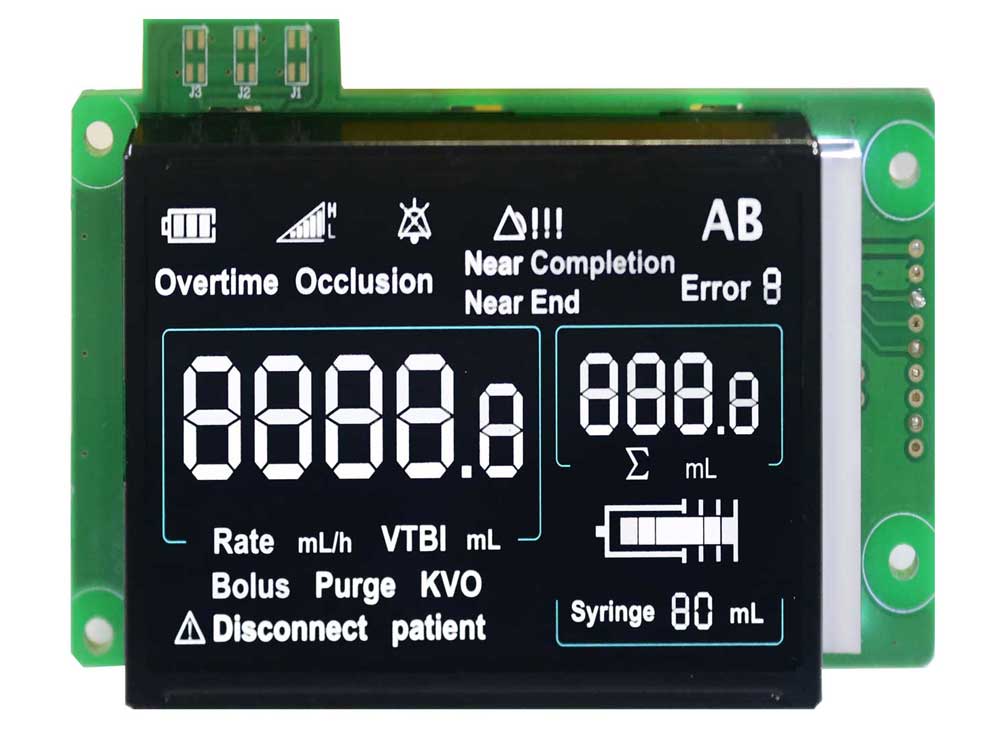
VA Segment COB LCD for Medical Equipment
| Display Type | VA / Segment |
|---|---|
| Display Size | Customized |
| Display Mode | Negative |
| Display Effect | Black Background and White Letters |
| Structure | COB LCD Module |
| Application | Medical Equipment |

Bring LCD glass, a PCB and bonded driver IC together in a module for your OEM device. DisplayMan supports segment, character and graphic display projects with backlight, connector, interface and mechanical customization.
DisplayMan supplies COB LCD Displays for OEM products that require a stable monochrome LCD module with LCD glass, PCB, bonded driver IC and optional LED backlight.
COB LCD modules are commonly used in meters, industrial controllers, medical devices, power equipment, home appliances, audio equipment, HVAC controls, test instruments and replacement projects.
COB is a module structure—not a display content type. A COB LCD module can be designed as a segment LCD, character LCD, graphic LCD or selected dot matrix LCD depending on the application.
Choose COB LCD Displays when the project needs a PCB-based monochrome LCD module with stable structure, flexible assembly and integrated driver, connector or backlight functions.
More than 100 new prototypes are developed every month. The six examples below showcase selected product features and customization directions.
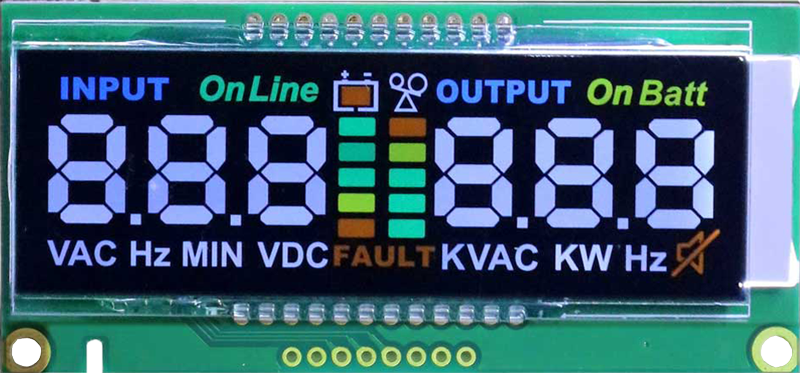
| Display Type | VA / Segment |
|---|---|
| Display Size | Customized |
| Display Mode | Negative |
| Display Effect | Black Background and White Letters |
| Structure | COB LCD Module |
| Application | Medical Equipment |
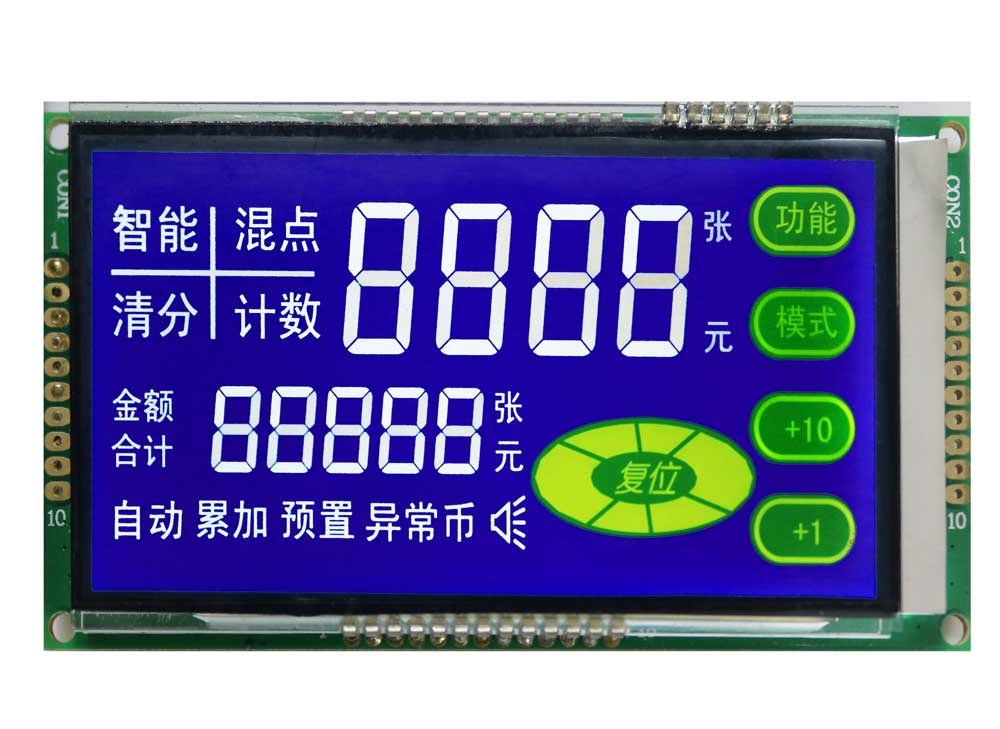
| Display Type | STN / Segment |
|---|---|
| Display Size | Customized |
| Display Mode | Negative |
| Display Effect | Blue Background and White Letters with Green Silk Printing |
| Structure | COB LCD Module with Touch Button |
| Application | Cash Counting Machine |
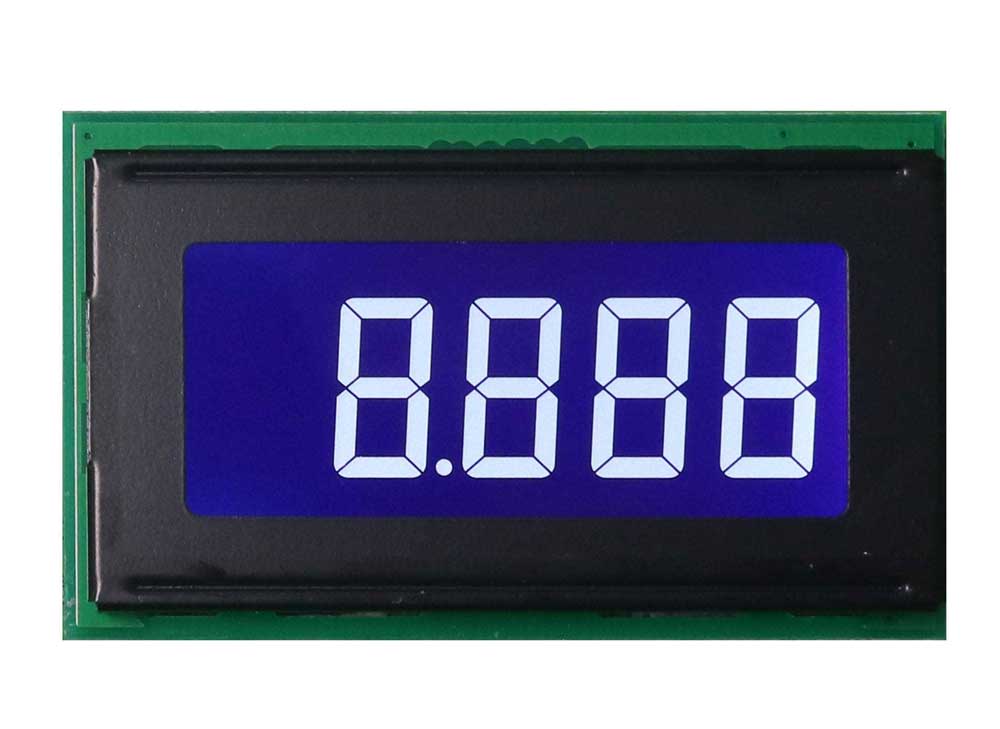
| Display Type | STN / Segment |
|---|---|
| Display Size | Customized |
| Display Mode | Negative |
| Display Effect | Blue Background and White Letters |
| Structure | COB LCD Module |
| Application | Fueling Equipment |
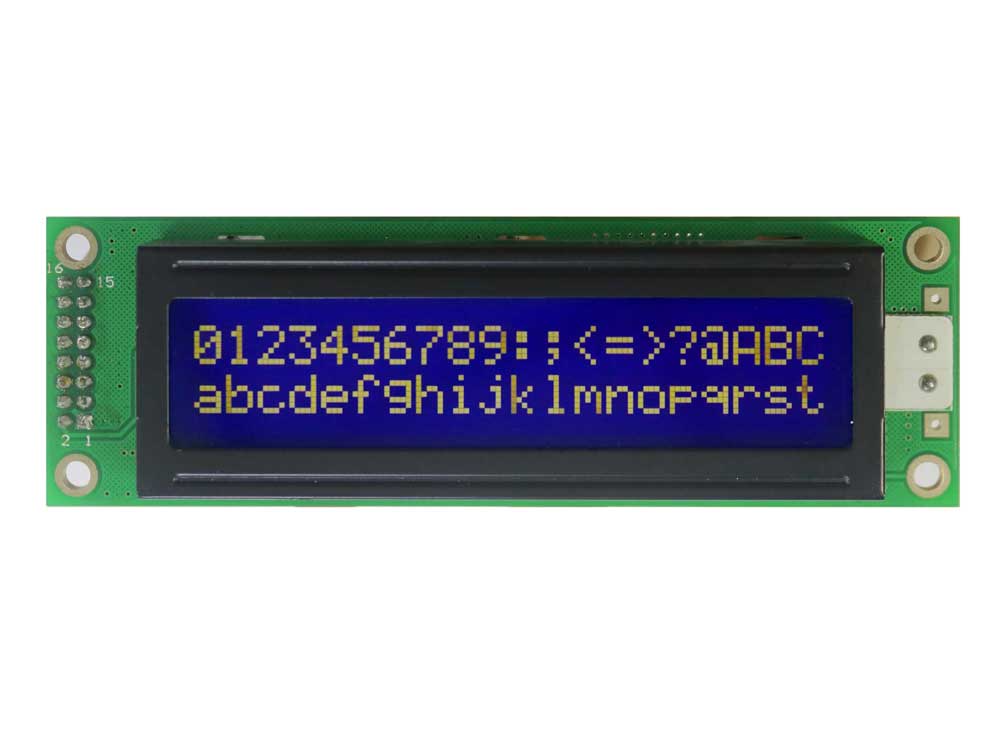
| Display Type | FSTN / Dot-matrix |
|---|---|
| Display Size | Customized |
| Display Mode | Negative |
| Display Effect | Blue Background and Yellow Letters |
| Structure | COB LCD Module |
| Display Format | 20 × 2 Character LCD Module |
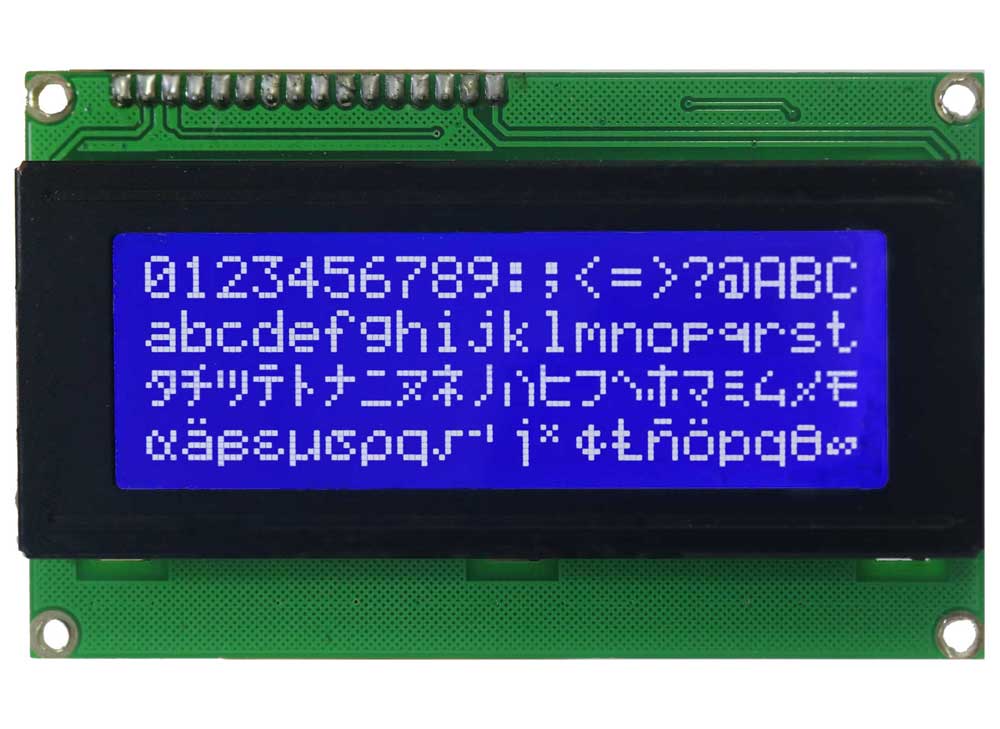
| Display Type | FSTN / Dot-matrix |
|---|---|
| Display Size | Customized |
| Display Mode | Negative |
| Display Effect | Blue Background and White Letters |
| Structure | COB LCD Module |
| Display Format | 128 × 32 Graphic LCD Module |
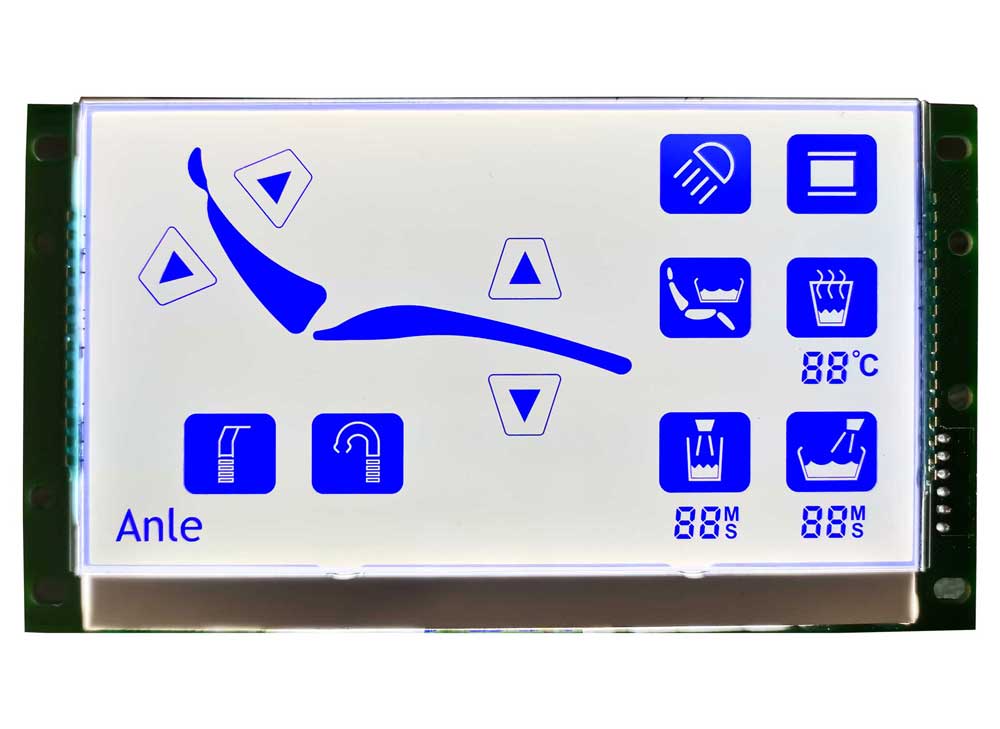
| Display Type | STN / Segment |
|---|---|
| Display Size | Customized |
| Display Mode | Positive |
| Display Effect | Grey Background and Blue Letters |
| Structure | COB LCD Module with Touch Button |
| Application | Water Equipment |
The correct COB LCD direction depends on display content, module structure, size, interface, backlight, cost and product integration.
| COB LCD Direction | Best For | Selection Logic |
|---|---|---|
| COB Segment LCD Module | Meters, appliances, control panels and fixed icons | Choose when the display uses fixed digits, icons, symbols and status indicators |
| COB Character LCD Module | Simple text, numbers and fixed menu rows | Choose when the product needs character rows such as 16×2 or 20×4 |
| COB Graphic LCD Module | Icons, menus and pixel-based monochrome UI | Choose when more flexible monochrome content is required |
| COB LCD with LED Backlight | Indoor products, low-light operation and negative displays | Choose when the LCD requires illumination behind the glass |
| COB LCD with Touch Buttons | Control panels, appliances and equipment interfaces | Choose when simple touch-button functions should be integrated into the PCB or front panel |
| Custom COB LCD Module | OEM products with special PCB, connector, mounting or backlight | Choose when a standard monochrome LCD module cannot fit the product structure |
COB LCD should not be selected only by display content. If the project needs a compact thin module, COG may be more suitable. If it needs flexible PCB-level assembly and connector integration, COB may be the better direction.
The LCD glass provides the segment, character, graphic or matrix display area.
The driver IC is bonded directly onto the PCB and protected as part of the module assembly.
The LCD glass connects to the PCB through a zebra, PIN or other project-specific structure.
COB LCD Displays are selected when the project needs a mature PCB-based monochrome LCD module with flexible structure and assembly options.
LCD glass, PCB, driver IC and mechanical support can be integrated into a mature module design.
The PCB can include connector matching, driver circuits, backlight control, mounting and touch buttons.
COB can support segment, character and selected graphic monochrome displays.
COB can be more practical than compact COG structures when the module needs a larger PCB or multiple integrated functions.
LED backlight, light guide, printed mask, touch buttons and front-panel integration can be reviewed.
Existing COB modules can be reviewed when the old sample, PCB, connector and display details are available.
COB LCD customization is practical for LCD glass, PCB, backlight, connector, display mode and mechanics. It is not automatically the best structure for very thin products or very fine-pitch high-resolution graphics.
| Factor | COB LCD Display | COG LCD Display |
|---|---|---|
| IC Position | Driver IC bonded on PCB | Driver IC bonded directly on LCD glass |
| Main Structure | LCD glass + PCB + IC + connection structure | Compact glass-based module with IC on glass |
| Module Thickness | Usually thicker | Usually thinner and more compact |
| PCB Flexibility | Higher PCB-level integration flexibility | Reduced PCB structure and footprint |
| Connector and Circuit Integration | More flexible for connectors, backlight and additional functions | Better for compact products with limited space |
| Best For | Larger modules, custom PCB, backlight, buttons and complex assemblies | Thin products and space-limited designs |
| Selection Logic | Choose when PCB integration and stable structure matter | Choose when compact size and lower thickness matter |
Choose COB LCD when the project needs a stable PCB-based module. Choose COG LCD when the product needs a thinner and more compact glass-based module.
COB is a module-structure classification. Segment, Character, Graphic and Dot Matrix describe the display content or pixel organization. These classifications can overlap.
| Display Type | What It Describes | Can It Use COB Structure? | Typical Content |
|---|---|---|---|
| Segment LCD Displays | Fixed digits, icons, symbols and status indicators | Yes | Numbers, fixed labels, battery icons and custom symbols |
| Character LCD Displays | Fixed character rows and character-cell layouts | Yes | Letters, numbers, menus and simple text |
| Graphic LCD Displays | Pixel-based monochrome graphics | Yes, for selected designs | Icons, menus, charts and flexible UI |
| Dot Matrix LCD Displays | Matrix-arranged pixels or characters | Yes, depending on driver and structure | Text, symbols and low-resolution graphics |
A segment LCD can be built as a COB LCD module. A graphic LCD can also use COB construction. The content type and module structure should be selected together.
Energy meters, water meters, gas meters, blood-pressure meters and test instruments.
Glucose meters, diagnostic products and professional healthcare equipment.
Control panels, automation products, power equipment and machine interfaces.
Power supplies, battery chargers, energy-control devices and electrical equipment.
Air-conditioning controllers, home appliances and environmental controls.
Audio systems, amplifiers, receivers and custom monochrome control products.
Cash counting machines, fueling equipment and commercial controllers.
Purifiers, filtration equipment and water-control systems.
Custom replacement projects where the old PCB, connector, backlight and display content must be matched.
Segment, character, graphic or dot matrix content; digits, icons, text and update flexibility.
TN, HTN, STN, FSTN or VA; positive or negative; reflective, transmissive or transflective.
Viewing area, glass outline, PCB outline, mounting holes, component space and product enclosure.
Driver IC, multiplex ratio, I2C, SPI, parallel, PIN, zebra, connector and pin definition.
Backlight color, brightness, light guide, silk printing, touch buttons and support frame.
Operating range, sample testing, tooling, quantity forecast, acceptance criteria and production timing.
COB LCD is the correct product when PCB-based module structure is the main buying reason. If content type or compact structure matters more, use the corresponding product page.
| Product Page | Choose This When |
|---|---|
| Monochrome LCD Displays | You need the main monochrome LCD product entry and general selection |
| Character LCD Displays | You need fixed rows of letters, numbers or simple text |
| Graphic LCD Displays | You need pixel-based graphics, icons or flexible monochrome UI |
| Segment LCD Displays | You need custom digits, icons, symbols or fixed low-power content |
| Dot Matrix LCD Displays | You need matrix-style text or graphics |
| COG LCD Displays | You need a thinner module with driver IC bonded directly on glass |
Send the original LCD glass, PCB, connector, pin definition, driver information, backlight, photos and sample when possible. Matching only the viewing area is not enough.
MONOCHROME LCD FAMILY
Visit a category page for product images, specifications and integration options.
A COB LCD Display is a monochrome LCD module in which the driver IC is bonded directly onto the PCB. The module normally includes LCD glass, PCB, driver IC, connection structure and optional LED backlight.
No. COB describes the module structure. The display content can be segment, character, graphic or dot matrix depending on the project.
COB bonds the driver IC on the PCB, while COG bonds the driver IC directly onto the LCD glass. COB normally provides more PCB-level integration flexibility, while COG is usually thinner and more compact.
Choose COB LCD when the project needs a stable PCB-based module with flexible connector, backlight, mounting, touch-button or circuit integration.
Choose COG LCD when product space is limited and a thinner, more compact glass-based module is more important than PCB-level flexibility.
Yes. Segment LCD describes the display content, while COB describes the module structure. A custom segment LCD can be assembled as a COB LCD module.
Yes. Character LCD modules such as fixed text-row displays commonly use PCB-based COB construction.
Yes. Selected monochrome graphic LCD modules can use COB construction when PCB-level integration, backlight and connector flexibility are required.
Yes. LED backlight color, brightness, light guide, current and mechanical structure can be reviewed according to the project.
Yes. Capacitive touch buttons or other front-panel functions can be reviewed for selected projects, depending on PCB and front-panel design.
COB LCD projects can use TN, HTN, STN, FSTN or VA LCD technology depending on contrast, viewing angle, display color, multiplex ratio and cost.
Positive or negative display modes and reflective, transmissive or transflective optical modes can be reviewed.
The interface depends on the driver IC and PCB design. I2C, SPI, parallel, segment-driver output or another project-based interface can be reviewed.
Yes. PCB outline, mounting holes, connector position, pin header, cable direction and component layout can be reviewed according to the product structure.
Yes. Please provide the original module, photos, drawings, PCB outline, connector, pin definition, display content, backlight and product information.
COB can be used in compact products, but when the smallest thickness and footprint are critical, COG LCD may be more suitable.
COB modules are normally thicker and larger than COG modules, and highly customized PCB, IC and connector structures can make replacement more project-specific.
Please provide display content, LCD size, viewing area, LCD technology, positive or negative mode, optical mode, backlight, PCB outline, connector, interface, temperature, quantity, schedule and available drawings or samples.
Send us the LCD size, display content, LCD technology, display mode, PCB structure, backlight, connector, interface, temperature, quantity and schedule.
DisplayMan will review whether a COB LCD module is the right structure or whether a COG, Segment, Character or Graphic LCD direction better matches the product.
COB LCD is a PCB-based module structure. The final product direction must also consider display content, thickness, backlight, connector, mounting and production quantity.