Micro OLED Displays — Precision in Every Pixel

Engineered and manufactured by DisplayMan, our Micro OLED displays deliver ultra-high pixel density, true-black contrast, and lightning-fast response for AR/VR headsets, optical instruments, and next-generation near-eye systems.

Experience the brilliance of micro-scale technology designed for tomorrow’s visual innovation.

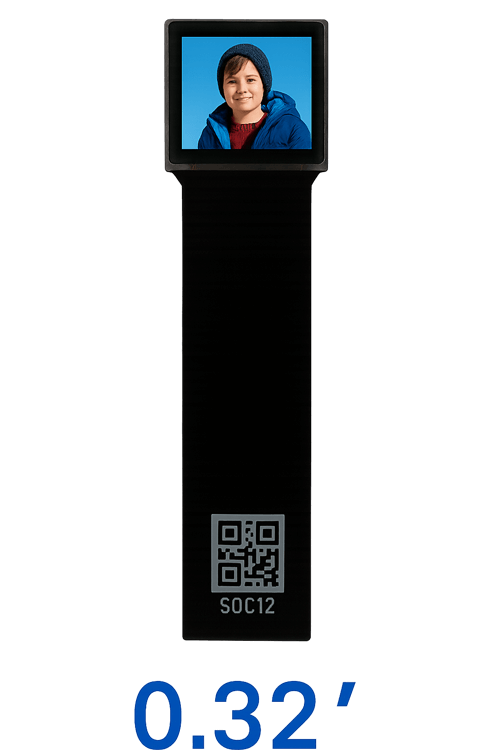
0.32 inch micro oled

✨ Showcase of Micro OLED Displays

Discover the brilliance that fits in the smallest spaces.

DisplayMan’s Micro OLED Displays redefine visual clarity and precision — delivering ultra-high resolution, deep contrast, and instant response in screens smaller than a postage stamp. Perfect for AR/VR optics, HUDs, scopes, and next-generation wearables, these micro displays bring cinematic quality to the most compact devices.
ParameterSpecification
Display Size0.32″
Resolution800 × 600 (SVGA)
Luminance (Brightness)2000 cd/m²
InterfaceMIPI / RGB
Display TypeMicro OLED (Silicon-based)
Aspect Ratio4:3
Color Depth24-bit (16.7M colors)
Response Time< 1 ms
Contrast Ratio>100,000:1
Operating Temperature-20°C ~ +70°C
Typical ApplicationNear-eye display, FPV goggles, micro optics, wearable HUD
ParameterSpecification
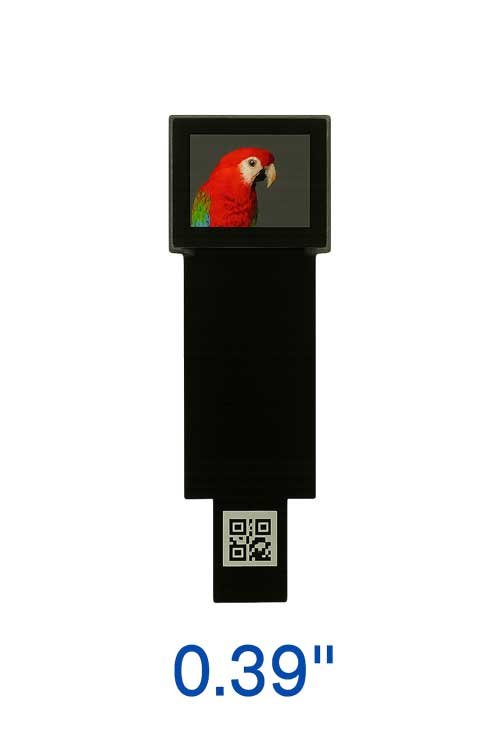
Display Size0.39″
Resolution1024 × 768 (XGA)
Luminance (Brightness)600 cd/m²
InterfaceRGB
Display TypeMicro OLED (Silicon-based)
Aspect Ratio4:3
Color Depth24-bit (16.7M colors)
Response Time< 1 ms
Contrast Ratio>100,000:1
Operating Temperature-20°C ~ +70°C
Typical ApplicationCamera EVF, microscope, FPV system, optical viewfinder
ParameterSpecification
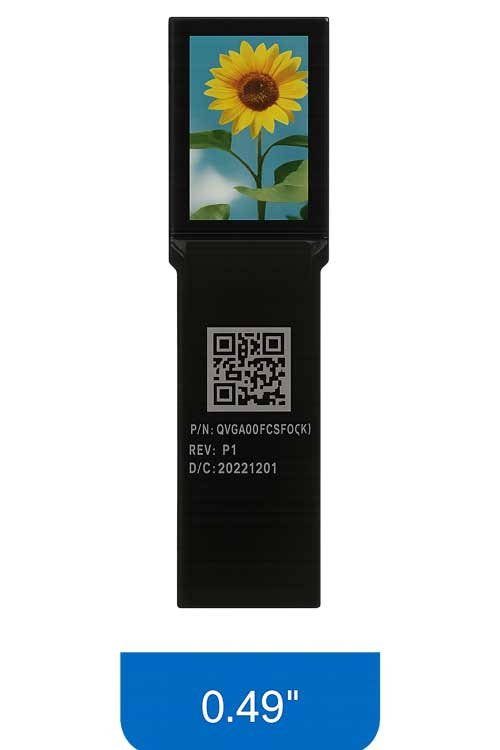
Display Size0.49″
Resolution1920 × 1080 (Full HD)
Luminance (Brightness)1800 / 3000 / 20000 cd/m² (configurable options)
InterfaceMIPI
Display TypeMicro OLED (Silicon-based)
Aspect Ratio16:9
Color Depth24-bit (16.7M colors)
Response Time< 1 ms
Contrast Ratio>100,000:1
Operating Temperature-20°C ~ +70°C
Typical ApplicationAR glasses, HUD systems, EVF modules, optical R&D
ParameterSpecification
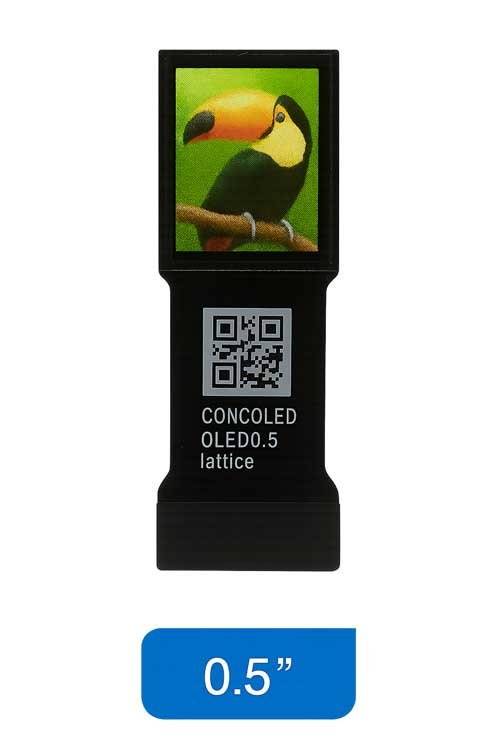
Display Size0.5″
Resolution1600 × 1200 (UXGA)
Luminance (Brightness)1000 cd/m²
InterfaceMIPI
Display TypeMicro OLED (Silicon-based)
Aspect Ratio4:3
Color Depth24-bit (16.7M colors)
Response Time< 1 ms
Contrast Ratio>100,000:1
Operating Temperature-20°C ~ +70°C
Typical ApplicationAR/VR headsets, near-eye modules, medical imaging, optical R&D
ParameterSpecification
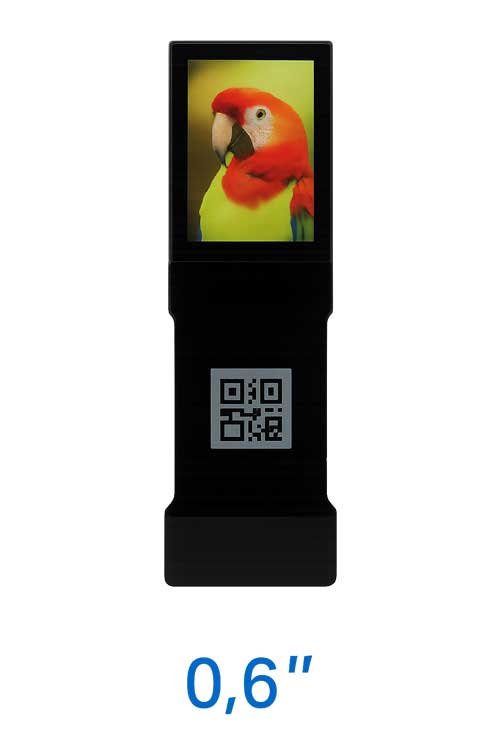
Display Size0.6″
Resolution1920 × 1080 (Full HD)
Luminance (Brightness)6000 cd/m²
InterfaceMIPI
Display TypeMicro OLED (Silicon-based)
Aspect Ratio16:9
Color Depth24-bit (16.7M colors)
Response Time< 1 ms
Contrast Ratio>100,000:1
Operating Temperature-20°C ~ +70°C
Typical ApplicationAR headsets, optical research, high-brightness outdoor systems, HUD modules
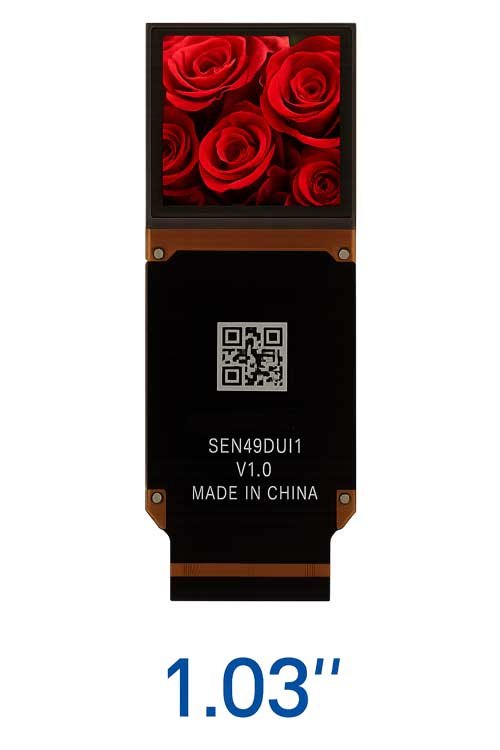
ParameterSpecification
Display Size1.03″
Resolution2560 × 2560 (2.5K)
Luminance (Brightness)1800 / 3000 / 20000 cd/m² (configurable options)
InterfaceMIPI
Display TypeMicro OLED (Silicon-based)
Aspect Ratio1:1 (Square)
Color Depth24-bit (16.7M colors)
Response Time< 1 ms
Contrast Ratio>100,000:1
Operating Temperature-20°C ~ +70°C
Typical ApplicationVR headsets, near-eye displays, optical R&D, compact high-FOV imaging systems
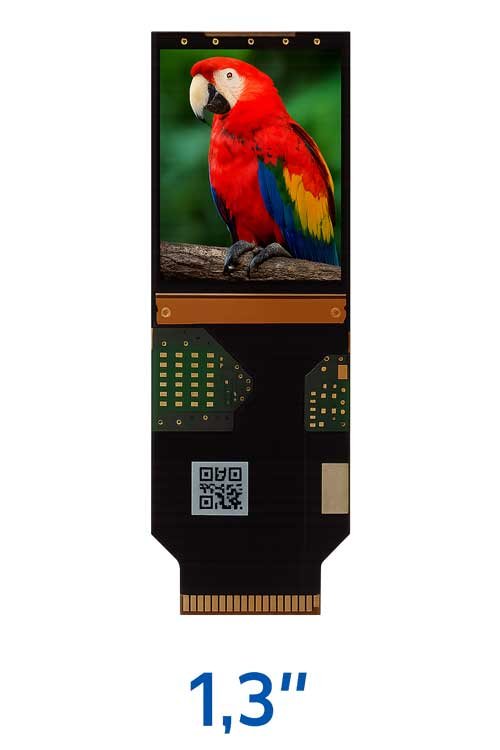
ParameterSpecification
Display Size1.3″
Resolution3552 × 3552 (3.5K)
Luminance (Brightness)4000 cd/m²
InterfaceMIPI
Display TypeMicro OLED (Silicon-based)
Aspect Ratio1:1 (Square)
Color Depth24-bit (16.7M colors)
Response Time< 1 ms
Contrast Ratio>100,000:1
Operating Temperature-20°C ~ +70°C
Typical ApplicationAR/VR optical systems, FPV headsets, professional imaging, high-end wearable optics

🔍 Micro OLED vs Micro LED — Future vs Present Technology


While both are next-generation self-emissive display technologies, they serve very different applications. Here’s a clear comparison:


⚖️ Comparison Table

FeatureMicro OLEDMicro LED
Light SourceOrganic emissive material on silicon backplaneInorganic micro-scale LED chips
Pixel Size~4–10 μm (ultra-fine)~20–100 μm (larger)
Resolution (PPI)Extremely high (up to 4000+ PPI)Limited by chip size & transfer
Brightness500–5,000 nits (sufficient for near-eye)10,000–100,000 nits (outdoor capable)
Contrast Ratio>100,000:1 (true blacks)High, but lower than OLED
Response TimeMicrosecondsNanoseconds
LifetimeShorter (organic materials, esp. blue)Very long (inorganic stability)
ManufacturingMature, silicon wafer-basedVery complex (mass transfer challenge)
Cost TodayHigh but commercially viableExtremely high, still experimental
Typical SizeSub-2″ microdisplays (0.39″, 0.7″, 1.3″)Any size possible (modular tiling)
Main ApplicationsAR/VR glasses, FPV headsets, HUDs, night vision, medical opticsLarge video walls, prototype AR/VR optics, future automotive displays
Commercial StatusMass-produced (Sony, BOE, Seeya, etc.)Early stage, limited pilot production

💡 Key Takeaways

  • Micro OLED = Today’s solution for high-resolution near-eye displays (AR/VR, HUD, FPV).
  • Micro LED = Future ultra-bright displays, but still limited by manufacturing cost and yield.
 

⚖️Micro OLED vs Conventional Displays — The Performance Leap

DisplayMan’s Micro OLED technology represents a new generation of high-precision imaging — surpassing both traditional LCD and standard OLED displays in resolution, depth, and efficiency.

Below is a quick comparison highlighting why Micro OLED has become the leading choice for AR/VR, HUD, and other near-eye systems.


FeatureMicro OLEDLCDRegular OLED
🧠 Pixel DensityUp to 4000 ppi — ultra-fine detail for compact optics< 500 ppi~1000 ppi
🌈 Contrast RatioInfinite (True Black) — each pixel emits or shuts off light independently1000:1~10,000:1
Response Time< 1 ms — zero motion blur or lag10 ms~5 ms
🔋 Power EfficiencyExcellent — self-emissive, no backlight requiredModerate (requires backlight)Good
📏 ThicknessUltra-thin — typically < 1 mmThick (multiple backlight layers)Thin
🪟 Transparency / IntegrationHighly compatible with optical and transparent modulesLimitedPartial
🎯 Precision AlignmentDirect silicon control for sub-pixel accuracyDifficultModerate
🧩 System IntegrationSeamless with compact driver boardsBulky and complexRequires flexible substrates


With unmatched pixel density, true-black contrast, and sub-millisecond response, Micro OLED displays redefine visual performance — enabling lighter, thinner, and more immersive optical systems than ever before.

⚠️ Conventional Displays Can’t Keep Up With the Future

The world is moving toward smaller, smarter, and more immersive displays — but traditional LCD and OLED technologies are hitting their physical limits.

When designers and engineers push for thinner form factors, higher resolutions, and true optical integration, conventional displays simply can’t keep pace.

Here’s why:

Standard LCDs rely on backlights that wash out in bright environments, while conventional OLEDs struggle with reflective glare and reduced contrast under sunlight.

Constant backlighting and suboptimal emission efficiency drain batteries fast, limiting runtime for portable and wearable devices.

As pixel pitch shrinks, LCDs and OLEDs face distortion, color non-uniformity, and yield loss — making compact or curved designs nearly impossible.

Conventional panels are bulky and incompatible with AR lenses, HUD optics, or transparent glass modules, forcing designers to trade optical quality for size.

The result?

Even the most advanced product concepts — smart glasses, compact HUDs, next-gen scopes, or micro projection systems — are often forced to compromise between image quality and size.

That’s the innovation gap Micro OLED Displays are built to close.

🔬 What Exactly Is a Micro OLED Display?

A Micro OLED (Organic Light-Emitting Diode) display is an advanced self-emissive technology that integrates millions of organic pixels directly onto a silicon backplane.

By combining semiconductor precision with organic light emission, Micro OLED delivers extraordinary resolution, contrast, and speed — all within a display thinner than a credit card.

Unlike conventional OLEDs that rely on glass substrates and external driver ICs, Micro OLED fuses the driving circuit and emissive layer into a single silicon chip.

This compact architecture achieves pixel densities exceeding 4000 ppi, resulting in images of unprecedented sharpness and depth.

1. No Backlight Required — Ultra-Thin, Lightweight Design

Each pixel in a Micro OLED generates its own light.

Without a backlight or diffuser, the display becomes ultra-thin, lightweight, and mechanically simple — ideal for miniaturized or integrated optical systems.

🌈 2. True Black Levels and Infinite Contrast Ratio

Because pixels can completely switch off, Micro OLED achieves absolute black and infinite contrast.

Bright highlights and deep shadows coexist in perfect harmony, delivering lifelike color depth and visual realism unmatched by LCD or standard OLED.

3. Ultra-Fast Response Time (<1 ms)

Each organic pixel reacts in microseconds, ensuring instant image transitions with no ghosting or motion blur.

This responsiveness produces exceptional clarity and stability, maintaining visual fidelity under rapid movement or high frame rates.

🔋 4. Higher Power Efficiency

Micro OLEDs emit light only where needed — no wasted energy in dark areas.

This architecture dramatically reduces power consumption and heat output, extending device longevity and enabling sustainable high-performance operation.

.

🧠 5. Integrated Silicon Backplane — Intelligent Control and Uniformity

The CMOS silicon substrate acts as both a physical foundation and a smart controller.

Each pixel has its own driver transistor, allowing precise brightness modulation, excellent uniformity, and low latency signal control.

This deep integration creates a seamless connection between electronics and optics, setting Micro OLED apart from all other display technologies.

In essence, Micro OLED is not just a smaller display — it’s a micro-engine of light, combining precision electronics and organic brilliance to redefine the boundaries of visual design.


⚙️ The Core of DisplayMan Micro OLED Technology

Engineered for the most demanding visual systems, DisplayMan’s Micro OLED displays combine microscopic precision with macro-level impact.

Every specification has been optimized to deliver maximum clarity, brightness, and responsiveness, setting a new benchmark for compact display performance.


⚙️ Key Performance Highlights

FeatureDescription
🧩 Ultra-High Pixel Density (Up to 4000 ppi)Each pixel measures just a few micrometers wide, enabling cinematic detail even in screens under one inch. This extreme density ensures text, icons, and imagery remain perfectly crisp at any magnification.
🌈 True Black & Infinite Contrast RatioSelf-emitting pixels turn fully off when not in use — delivering absolute black and infinite contrast. Ideal for applications requiring precise luminance control or high optical depth.
🔆 High Brightness Output (Up to 3000 nits)Top-emission architecture and advanced optical coatings allow superior light-extraction efficiency. Displays remain vivid and readable even in bright ambient environments.
Ultra-Fast Response Time (< 1 ms)Pixel-level control with microsecond switching ensures zero motion blur or image ghosting, producing flawlessly smooth visuals for high-speed imaging or real-time projection.
🎨 Wide Color Gamut (100% DCI-P3 / Customizable)Micro OLED achieves professional-grade color fidelity, covering a full cinema-level gamut for accurate, vibrant, and lifelike rendering.
🔋 High Power EfficiencyEmission-on-demand technology means power is consumed only where light is emitted. This drastically lowers energy usage and thermal output, enhancing device longevity.
💻 Integrated Silicon BackplaneEach pixel is individually driven by embedded CMOS transistors for ultra-precise grayscale control, high uniformity, and low latency.
📏 Thin & Lightweight Module DesignWithout a backlight or diffuser layers, the entire module is less than a millimeter thick — ideal for compact systems and optical assemblies.
Long Operational LifetimeAdvanced organic materials and robust encapsulation deliver stable luminance and color performance over thousands of hours of continuous use.
🛠️ Customizable Interfaces & SizesAvailable in multiple configurations (LVDS, MIPI, HDMI) and form factors. Custom designs supported to match your optical, mechanical, or electrical requirements.


Summary Line:

Every DisplayMan Micro OLED is built for precision, performance, and production scalability — turning light itself into a controllable, intelligent medium.

🔷 Near-Eye Display Solution

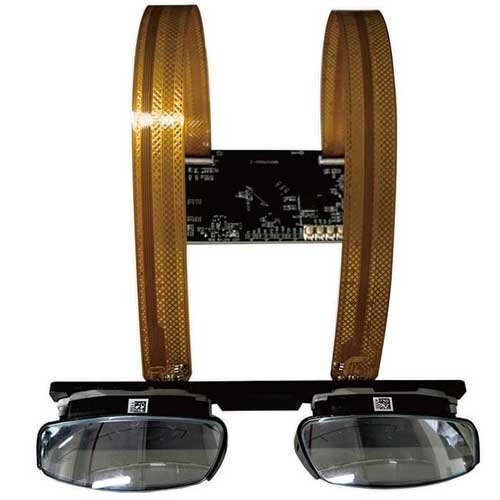
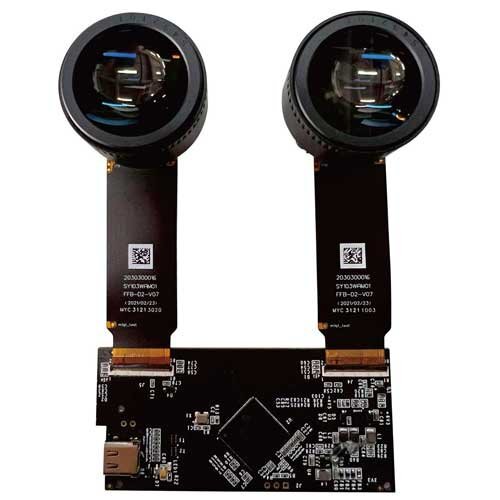
DisplayMan provides a fully integrated near-eye display solution — combining our in-house Micro OLED panels with dedicated driver boards designed for perfect electrical and optical matching.

From signal input to final image output, every component is engineered to work together as one seamless system.

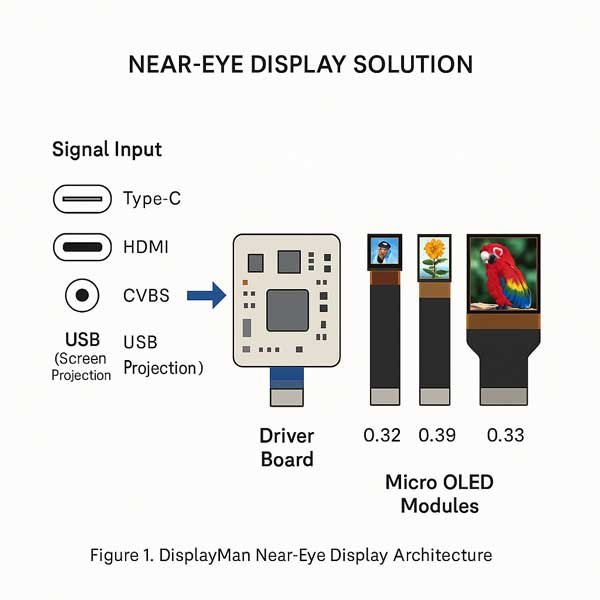
🖥️ System Architecture Overview

Multiple input interfaces — Type-C, HDMI, CVBS, and USB (Screen Projection) — connect through DisplayMan’s custom driver boards to deliver precise signals for Micro OLED modules ranging from 0.32″ to 1.3″.

This architecture ensures direct compatibility between display and electronics, simplifying development and integration.

🧩 System Composition

  • Signal Input: Type-C / HDMI / CVBS / USB
  • Driver Board Layer: Custom-designed control boards developed by DisplayMan for each OLED specification
  • Display Output: Micro OLED panels (0.32″–1.3″) with ultra-high pixel density and true-black contrast


📘 Transition to Next Section

Together, the Micro OLED panel and driver board form the foundation of DisplayMan’s near-eye display ecosystem.

In the following section, you’ll learn more about our driver board solutions — designed to bring micro-scale displays to life with precision control and flexibility.

🟩 DisplayMan Driver Board Solutions

To unlock the full performance of our Micro OLED displays, DisplayMan designs and manufactures a comprehensive lineup of dedicated driver boards.

Each board is optimized for electrical stability, high-speed data transmission, and precise image control — forming the essential link between signal input and micro-scale optical output.

Our driver boards support a wide range of interfaces and configurations, ensuring seamless integration across various optical systems and development environments.


⚙️ Product Range Overview

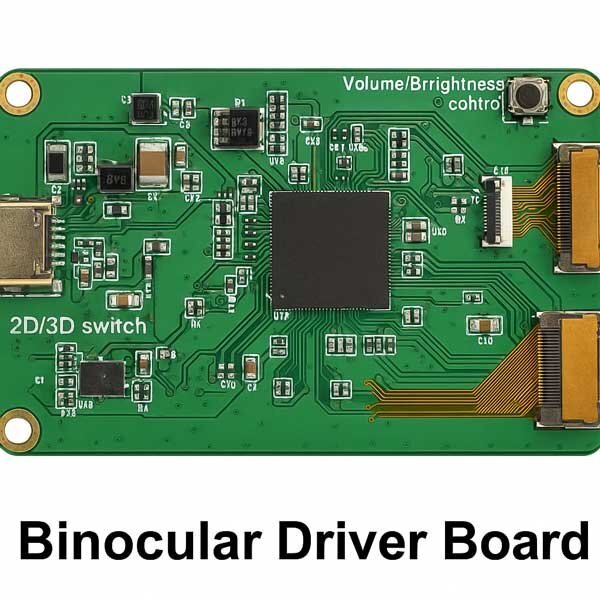
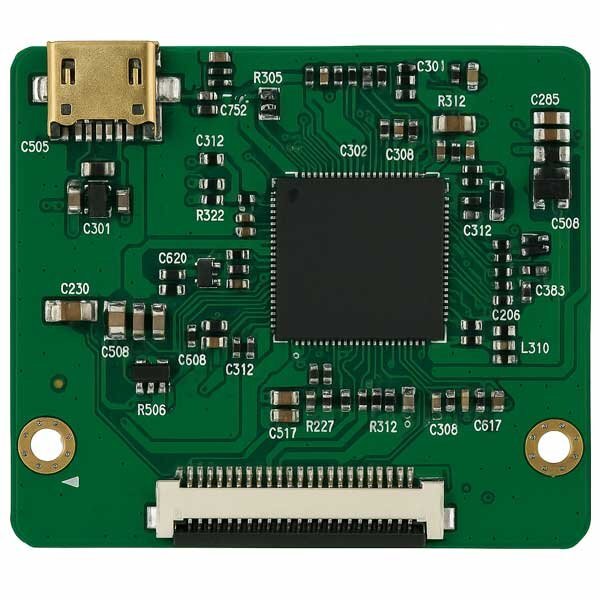
binocular driver board

🔹 Binocular Driver Boards

  • Designed for dual-display systems such as AR/VR headsets or stereo viewers
  • Interfaces: Type-C / Micro HDMI
  • Features: 2D / 3D switch, brightness & volume control
  • Max Resolution: Up to 5120 × 2560 @ 90 Hz (3D)

monocular driver board

🔹 Monocular Driver Boards

  • Compact single-display solutions for head-mounted optics, scopes, and portable devices
  • Interfaces: HDMI / CVBS / Micro HDMI / Type-C
  • Max Resolution: 2560 × 2560 @ 60 Hz
  • Features: Mini size, low power, stable signal performance

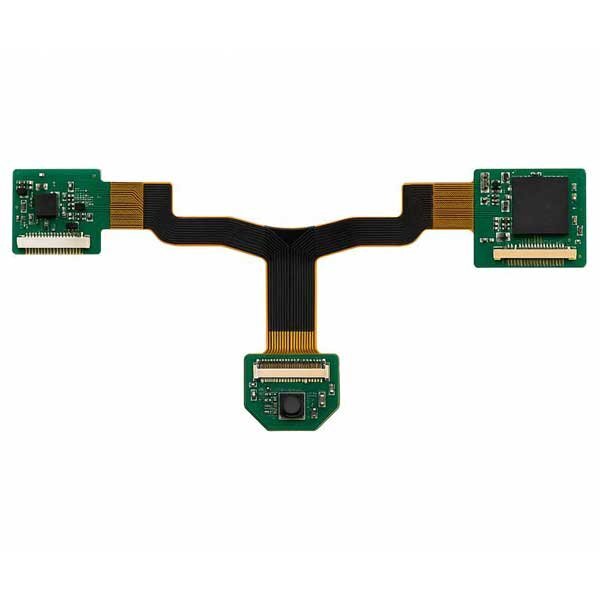
rigid flex pcb board

🔹 Rigid-Flex PCB Boards

  • Flexible PCB architecture allows bendable, lightweight integration
  • Ideal for compact optical modules or space-limited systems
  • Interface: Type-C
  • Max Resolution: 2D 1920 × 1080 @ 75 Hz | 3D 3840 × 1080 @ 75 Hz

🔌 System Integration Capability

Every DisplayMan driver board is tested and calibrated to operate flawlessly with our Micro OLED panels.

Together, they form a plug-and-play system that simplifies optical alignment, signal conversion, and system integration for prototype and mass-production use alike.


🏭 Summary Line

DisplayMan provides both the display panel and the driving electronics — delivering a complete, ready-to-integrate near-eye display platform for engineers and product developers worldwide.

🔷 Optical Engine — Bringing Micro OLED to Life

Introduction

A Micro OLED display is incredibly compact — typically smaller than a coin — yet capable of producing ultra-high-resolution images.

However, because it sits just millimeters away from the eye, the image it generates is too close and too small to be seen clearly by human vision.

That’s where the Optical Engine comes in.

This precision optical module magnifies, focuses, and directs the image from the Micro OLED so that it appears as a large, bright, and comfortable virtual display floating in front of your eyes.

At DisplayMan, we design and manufacture both the Micro OLED panel and the Optical Engine that projects it — delivering a perfectly matched, fully integrated near-eye visual solution.


🧠 What Is an Optical Engine?

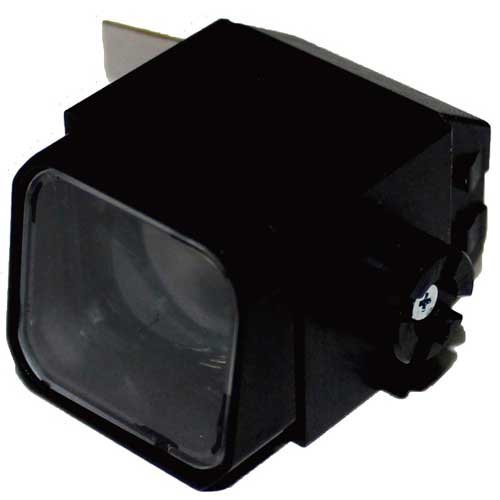
An Optical Engine is a self-contained optical assembly that integrates:

  • 🔹 A Micro OLED display — the core image source, producing high-resolution visuals.
  • 🔹 A precisely engineered set of lenses, mirrors, or optical coatings — responsible for magnifying and shaping the light path.
  • 🔹 A mechanical housing — which aligns and stabilizes all optical components to maintain image fidelity and focus accuracy.

In practical terms, the Optical Engine acts as the “eye module” of a near-eye system — transforming electrical signals into a visually immersive experience.

It’s the optical bridge that turns microscopic pixels into a lifelike image that feels several meters away — just like watching a large display, but within a few centimeters of your eye.


🔩 How It Works

  1. Signal In – A DisplayMan driver board receives image data from a host device (e.g., HDMI, MIPI, or Type-C) and transmits precise control signals to the Micro OLED.
  2. Display Output – The Micro OLED converts those signals into light, producing a high-resolution image at micro scale.
  3. Optical Projection – Inside the Optical Engine, a lens system magnifies and projects that image into the eye’s focal range, creating a virtual screen that appears naturally distant and comfortable to view.

💡 In simple terms: the Optical Engine is what makes a tiny Micro OLED panel look like a giant, crystal-clear display — floating right before your eyes.


🔍 How It Fits in the Full Near-Eye System

StageFunctionExample
Driver BoardConverts video signal to Micro OLED control signalsHDMI / Type-C driver board
Micro OLED DisplayGenerates the image with ultra-high pixel density0.49″, 0.6″, 1.03″, etc.
Optical EngineMagnifies and projects the image into the viewer’s eyesBirdbath, Pancake, EVF, Pglass-1C
Near-Eye DeviceThe complete product that uses all these modulesAR glasses, VR headsets, camera EVFs, etc.

This vertical integration allows DisplayMan to synchronize every layer of the visual system — ensuring electrical, optical, and mechanical harmony.

🧩 Why DisplayMan Optical Engines Stand Out

Each of these optical engines — Birdbath, Pancake, EVF, and Pglass-1C — represents a different balance between form factor, field of view, and optical complexity.

Together, they cover the entire spectrum of near-eye applications — from research-grade prototypes to mass-produced wearable systems.

birdbath

🔹 1. Birdbath

Display Size: 0.49″ / 0.6″  FOV: 43° / 43.5°  Resolution: 1920×1080

A classic reflective optical engine that uses semi-transparent mirrors to project bright, high-contrast images.

Ideal for AR prototypes, head-mounted displays, and optical R&D environments requiring simplicity and optical stability.

pancake

🔹 2. Pancake

Display Size: 1.03″  FOV: 90°  Resolution: 2560×2560

A folded-lens optical design that utilizes polarization elements to shorten the light path.

Enables ultra-compact VR headsets with a wide field of view, high image uniformity, and excellent edge-to-edge clarity.

evf

🔹 3. EVF (Electronic Viewfinder)

Display Size: 0.4″  FOV: 30°  Resolution: 1440×1080

A miniature optical viewfinder module optimized for professional cameras, drones, and imaging devices.

Delivers precise color reproduction, high brightness, and low latency for accurate real-time framing and monitoring.

pglass 1c

🔹 4. Pglass-1C

Display Size: 0.49″  FOV: 41°  Resolution: 1920×1080

An integrated optical engine designed for AR smart-glasses prototypes.

Lightweight, thin, and optimized for outdoor visibility, it provides balanced optical performance for wearable applications.

🚀 Summary Line

DisplayMan Optical Engines complete the near-eye display chain — from signal input to optical projection — providing a turnkey platform for AR/VR developers, optical engineers, and system designers.

Whether for headsets, viewfinders, or next-generation smart optics, DisplayMan delivers the visual precision that brings your Micro OLED to life.

🌍 Applications of DisplayMan Micro OLED

DisplayMan’s Micro OLED displays and custom driver boards bring unmatched visual precision to a wide range of industries — from immersive reality to scientific imaging.

Compact, power-efficient, and capable of ultra-high pixel density, our displays redefine what’s possible in near-eye and professional optical systems.

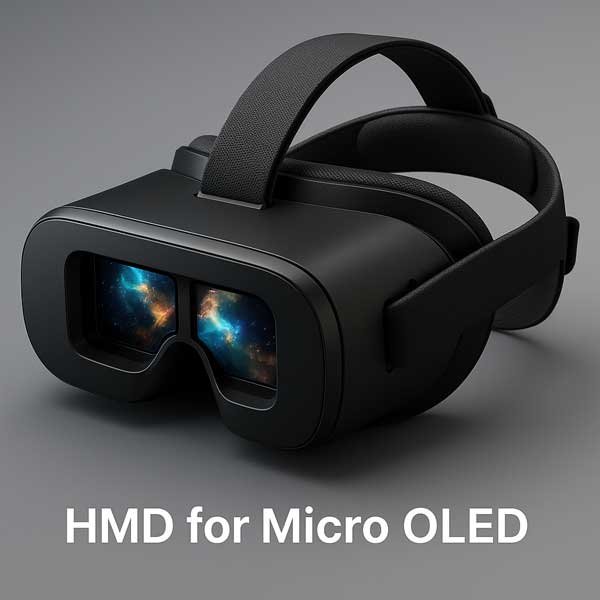
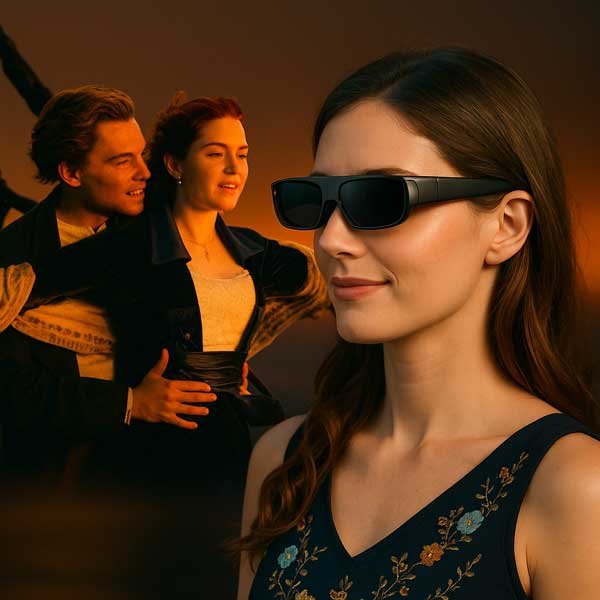
🕶️ HMD (Head-Mounted Display)

DisplayMan’s Micro OLED panels provide crystal-clear imagery for head-mounted displays, enabling lightweight form factors and extended wear comfort.

Their ultra-high pixel density eliminates the “screen-door effect,” while sub-millisecond response ensures smooth motion for simulators, industrial training, and defense visualization systems.

🎮 VR (Virtual Reality)

For VR headsets, clarity and latency are everything.

Our Micro OLED technology delivers true-to-life color, infinite contrast, and refresh rates up to 90 Hz, resulting in immersive, fatigue-free virtual environments for gaming, education, and simulation.

DisplayMan’s driver boards and optical compatibility make integration straightforward for VR developers.

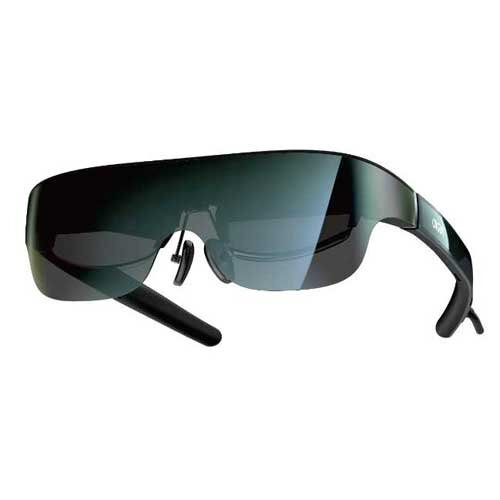
👓 Video Glass / Smart Glass

Micro OLED modules transform video glasses into true cinematic devices, projecting vivid full-HD or 2K visuals in an ultra-light design.

Perfect for portable cinema, private display, or remote operation, DisplayMan’s driver boards support multi-interface input such as Type-C and HDMI for plug-and-play use.

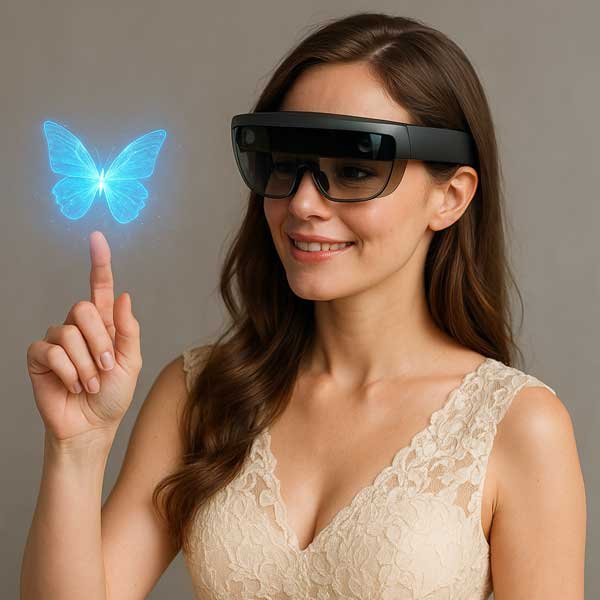
🌐 AR (Augmented Reality)

In augmented-reality eyewear, compactness and brightness determine usability.

Micro OLED’s thin form factor and high luminance allow transparent or semi-transparent optical systems with excellent outdoor readability.

DisplayMan offers ready-to-integrate AR optical engines supporting both birdbath and pancake architectures.

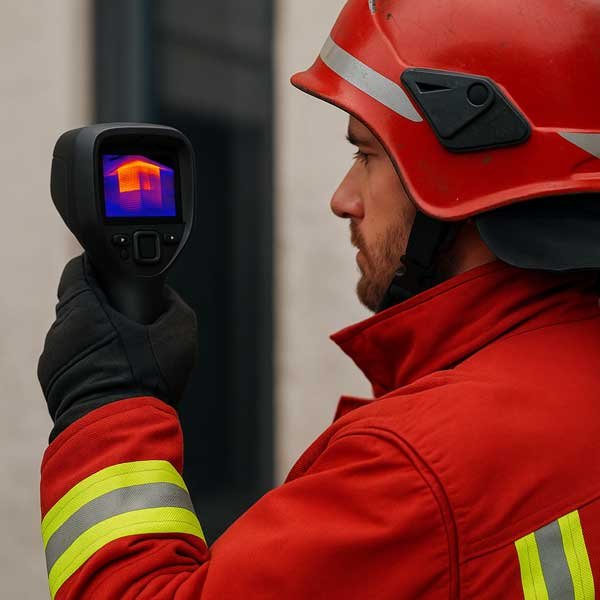
🌡️ Infrared Thermal Camera

Infrared cameras require displays that handle high dynamic range and fine detail.

Micro OLED’s wide grayscale range and low power make it ideal for thermal imaging in industrial monitoring, firefighting, and energy diagnostics.

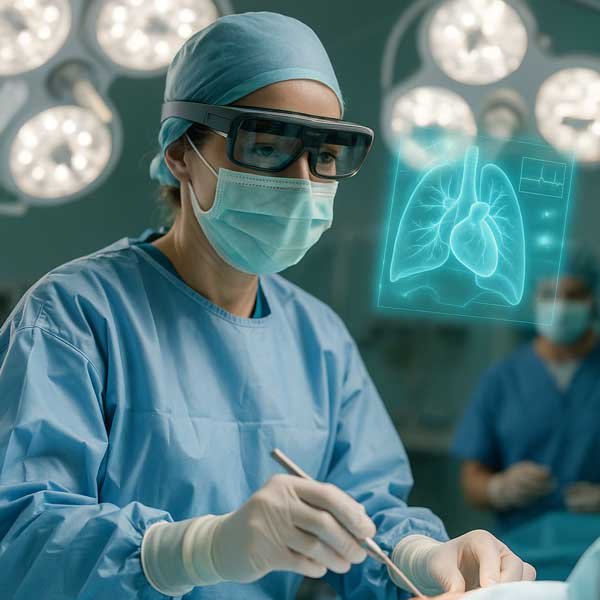
🏥 Medical Imaging Systems

DisplayMan’s Micro OLED panels deliver true-to-life color accuracy, deep contrast, and ultra-fast response, enabling surgeons and clinicians to visualize critical details with precision.

Ideal for endoscopy, surgical guidance, and diagnostic imaging equipment, they ensure stable brightness and reliability under continuous use.

⚙️ Design & Industrial Inspection

Designers and engineers rely on real-time detail and true color when viewing microstructures.

Micro OLED’s sharp focus, consistent color temperature, and fast refresh make it ideal for industrial measurement, micro-fabrication, and inspection systems that demand visual precision.

📸 EVF (Electronic Viewfinder)

Micro OLED is now the gold standard for camera EVFs used in DSLRs, cinema cameras, and drones.

With high pixel density and true-black rendering, DisplayMan’s panels deliver perfect framing accuracy and low-power operation for professional photographers and cinematographers.

🎯 Electron-Sight (Night Vision / Tactical Optics)

Micro OLED modules deliver ultra-high contrast, low noise, and sub-millisecond response — exactly what tactical optics need. In electron-sight systems they provide crisp target recognition in low-light and IR conditions, fast refresh for moving targets, and low power draw for long field operation. Compact size and rugged packaging let designers integrate Micro OLED into rifle sights, weapon-mounted optics, and handheld thermal/imaging viewers without adding bulk or weight.

🔭 Telescope (Astronomy & Precision Observation)

For telescopes and observational instruments, Micro OLED electronic eyepieces offer bright, high-resolution views of celestial targets with excellent contrast and color fidelity. They make it easier to identify faint stars, planetary detail, and deep-sky structure while providing real-time digital overlays (crosshairs, data readouts). The small form factor and high pixel density enable lightweight eyepiece modules that preserve optical alignment and improve viewing comfort during long observation sessions.

🔬 Microscope Systems

For digital and optical microscopes, clarity and uniformity are essential.

DisplayMan Micro OLED displays offer high pixel density, consistent luminance, and sharp image reproduction, making them perfect for biological research, material inspection, and precision measurement.

Every frame reveals the finest structures — with uncompromised optical accuracy.

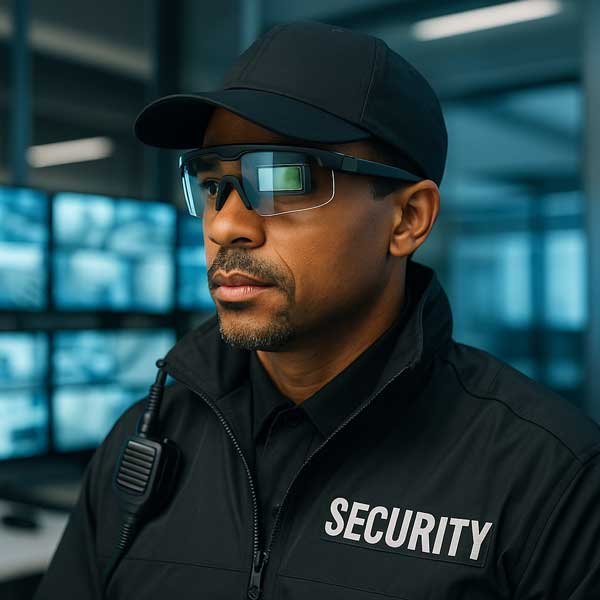
👮 Security & Law Enforcement

For portable surveillance and wearable systems, Micro OLED provides lightweight and energy-efficient viewing with superior readability and clarity.

DisplayMan’s integrated driver solutions simplify system design for both handheld and head-mounted displays used by security professionals.

🚁 FPV (First-Person View & Drones)

In drone racing and FPV systems, latency can mean victory or failure.

Micro OLED’s < 1 ms response time and rich color depth provide real-time visual feedback with zero delay, helping pilots and engineers maintain full situational awareness.

🧠 Engineering Customization Options

Every project begins with a vision — and at DisplayMan, our mission is to make that vision work perfectly in hardware.

We understand that each client’s optical system, mechanical design, and electronic environment are unique.

That’s why we offer comprehensive engineering customization covering the entire chain — from driver board design and firmware optimization to optical simulation and production validation.

Our team bridges display science and system engineering, ensuring that every Micro OLED module we deliver integrates seamlessly into your product, both functionally and visually.

Whether you’re developing AR glasses, camera viewfinders, or near-eye optical instruments, DisplayMan provides the precision engineering backbone that turns your concept into a stable, manufacturable solution.

⚙️ Custom Interface Boards

Every Micro OLED system requires precise electrical matching between the display and the host platform.

DisplayMan’s engineering team develops dedicated interface boards that seamlessly connect to your system using MIPI, HDMI, LVDS, Type-C, or other custom protocols.

We optimize each design for signal integrity, timing accuracy, and low EMI, ensuring stable performance even at high refresh rates.

Whether you’re integrating into a compact AR headset or a high-bandwidth optical module, our boards are built to meet your exact mechanical footprint, pin definition, and power constraints.

💡 Brightness & Color Tuning

Image performance is not only about resolution — it’s about how light behaves inside your optical system.

DisplayMan provides custom brightness and color calibration services, including fine adjustment of gamma curves, color temperature, white balance, and luminance uniformity.

Our engineers can simulate and adjust display parameters according to your optical coatings, projection path, and viewing distance, ensuring color accuracy and visual comfort even under varying ambient light conditions.

🔍 Optical Simulation & Mechanical Integration

To achieve perfect image projection, optical alignment between the display and lenses is critical.

DisplayMan’s mechanical and optical engineers perform optical path simulation (FOV, MTF, distortion analysis) and offer CAD support for mounting, heat dissipation, and optical sealing.

We help you reduce iteration cycles by validating optical parameters and mechanical fit before prototyping — achieving faster time-to-market and lower development risk.

Our experience spans birdbath, pancake, EVF, and waveguide-based systems, so we can tailor the optical integration to your exact product architecture.

🧪 Prototype to Production

From early engineering samples to full production, DisplayMan provides a controlled transition process.

We start with small-batch validation for optical performance, power consumption, and thermal stability, then move toward pilot runs and mass production under ISO-certified procedures.

Each stage follows a traceable quality pipeline — including aging tests, color calibration, and yield optimization.

You receive a consistent, reproducible product that maintains brightness uniformity, electrical stability, and mechanical precision from the first prototype to the 10,000th unit.

.

🔌 Electrical Firmware Support

DisplayMan offers optional firmware customization for customers who require more control over display behavior.

We can adjust gamma tables, initialization codes, refresh timing, frame sequence, 2D/3D switching, or add low-level command support for your embedded system.

This ensures your Micro OLED works perfectly within your processor, driver IC, and optical synchronization requirements — reducing integration time and improving system reliability.

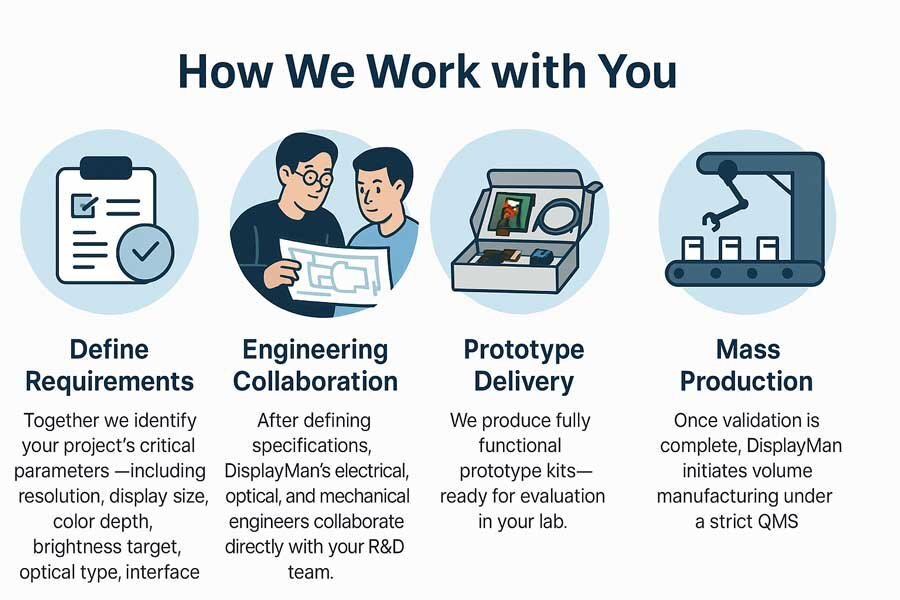
🔧 How We Work with You

1. Define Requirements

Together we identify your project’s critical parameters — including resolution, display size, color depth, brightness target, optical type, and interface requirements. Our engineers review your concept and recommend suitable panel models, driver options, and initial integration schemes.

2. Engineering Collaboration

After defining specifications, DisplayMan’s **electrical, optical, and mechanical engineers** collaborate directly with your R&D team. We provide electrical schematics, mechanical drawings, optical simulations, and interface definitions to ensure every component communicates correctly and fits precisely within your design envelope.

how displayman brings your vision to life a complete engineering to production process for micro oled solutions

3. Prototype Delivery

We produce fully functional **prototype kits**, including the Micro OLED module, driver board, and connection cables — ready for evaluation in your lab. Our technical team supports you during testing, helping with firmware updates, optical alignment, and performance tuning until your prototype reaches production quality.

4. Mass Production

Once validation is complete, DisplayMan initiates **volume manufacturing** under a strict QMS (Quality Management System). We implement batch testing, parameter locking, and AQL inspections to guarantee **consistent yield, brightness, and color uniformity** across all shipped units. Every product batch comes with a full traceability report, giving you long-term reliability and confidence in supply continuity.

💬 Talk to Our Engineer

Share your concept — we’ll help you turn it into a manufacturable Micro OLED solution with the precision and reliability DisplayMan is known for.

What People Say

💬 What Our Partners Say

From startups to established engineering firms, professionals worldwide rely on DisplayMan for reliable Micro OLED technology and responsive technical support.

Here’s what our partners are saying:

❓ Frequently Asked Questions – Micro OLED Displays

A1: Micro OLED panels are built on a silicon backplane, allowing extremely high pixel density (several thousand PPI), self-emissive pixels (no backlight needed), ultra-fast response times (<1 ms) and true-black contrast with minimal thickness.

A2: Because near-eye systems require very small form factors, high resolution, and very fast response without visible pixel grid or blur. Micro OLED delivers on all of these — making it perfect for immersive optics.

A3: Yes — while performance is excellent, manufacturing is more complex and costly than standard panels. Also, thermal management, driver electronics, and optimizing brightness for optical systems require careful design.

A4: You’ll need three key elements — a driver board (HDMI/MIPI/LVDS/Type-C), the Micro OLED module itself, and an optical engine (lenses/mirrors) to present the image at a comfortable viewing distance. Proper integration ensures alignment, uniformity, and performance.

A5: Yes — with the right design. Because there is no backlight and the pixels emit their own light, brightness and optical coupling are key. Some modules already target high brightness levels for outdoor use.