Single Screen
Single Flexible OLED Display Form
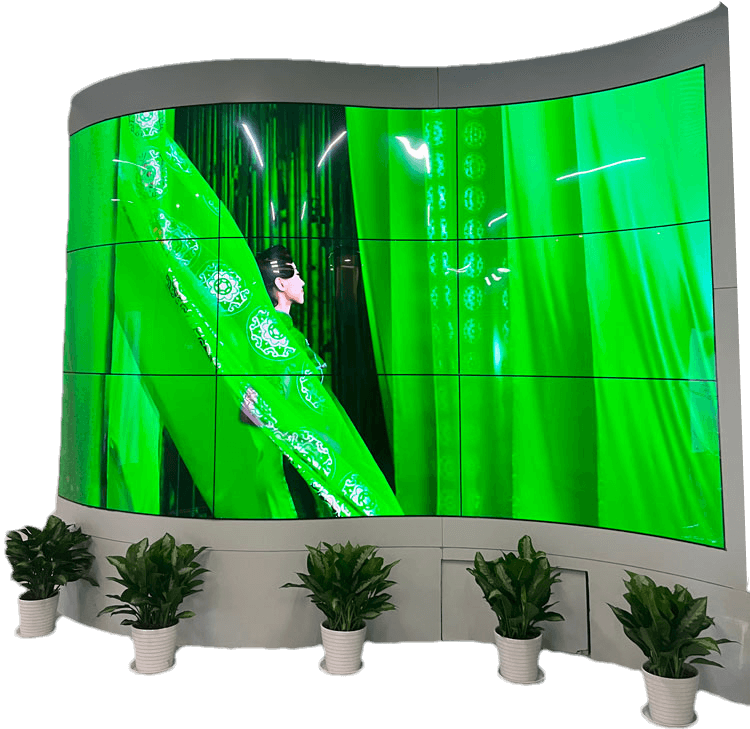
One large flexible OLED display shaped into a custom curved installation.

From compact modules for wearables, medical devices and EV interfaces to 65-inch curved panels and multi-screen installations, DisplayMan supplies flexible OLED displays and complete integration support.
DisplayMan supplies ten compact and medium flexible OLED sizes for OEM products and four large flexible OLED sizes for curved commercial display systems.
For wearables, handheld equipment, medical devices, EV interfaces and embedded curved products.
Large 4K OLED panels for floor-standing, wall-mounted, S-shaped, wave-shaped and multi-panel installations.
Flexible OLED is one product family with a wide range of use cases—from compact OLED modules inside wearables and embedded devices to large custom-shaped OLED displays for retail, exhibitions, museums, showrooms and architectural spaces.
Customers do not need to know in advance whether their project should be classified as a “small Flexible OLED” or a “large Flexible OLED.” Start with the application, target size, available space or desired shape. DisplayMan can then route the project to the correct module or display-system direction.
The common technical foundation is a flexible OLED structure: self-emissive pixels, a flexible substrate, a TFT backplane and thin-film encapsulation allow the display to be much thinner and more shape-adaptable than a conventional backlit LCD.
For compact OEM products, we focus on module integration. For large commercial displays, we can also design the curvature, structure, panel layout and final display shape.
See how large flexible OLED panels can be engineered into single-screen, dual-screen and nine-screen display forms.
One large flexible OLED display shaped into a custom curved installation.
Two coordinated curved OLED displays create a stronger spatial presentation.
Nine large panels combine into a custom multi-screen sculptural display.
A Flexible OLED Display is an OLED display built with a flexible panel structure that allows the screen to follow a controlled curved form within the mechanical limits of the specific panel.
OLED pixels emit their own light, so no separate LCD backlight is required. This enables a much thinner display structure and makes curved product designs possible.
Flexible OLED and AMOLED are not competing terms. AMOLED describes the active-matrix driving architecture; Flexible OLED describes the physical flexible structure. Many Flexible OLED products are Flexible AMOLED displays.
Curvable, not foldable. Single-axis bending only. The IC / driver area must not be bent.
The most important point is that Flexible OLED is not a soft sheet that can be bent in any direction. Every panel has a defined mechanical bending direction and a protected IC / driver area.
This simplified diagram shows the engineering concept: the display area curves along one specified axis, while the IC / driver side remains outside the bending zone.
The bending rule applies to each individual OLED panel. The final display system can still be engineered into much more complex visual forms by combining panel curvature with panel orientation, panel quantity and supporting structure.
Single-axis bending is a panel-level mechanical rule, not a limitation on the final display shape. A custom display can use one or multiple Flexible OLED panels to create concave, convex, S-shaped, wave-shaped, multi-panel curved, circular or other engineered forms.
The structure is one of the most important reasons Flexible OLED can achieve thin, curved and shape-adaptable products. The exact stack varies by manufacturer and module, but a typical Flexible AMOLED structure can be understood in three levels: the core OLED panel, optional optical / touch layers, and the electrical integration layer.
Flexible substrate: replaces the rigid glass foundation used in conventional rigid displays and provides the mechanical base for controlled curvature.
TFT backplane: drives the OLED pixels. It is an essential part of an active-matrix Flexible OLED and should not be omitted when explaining the panel structure.
OLED emissive layers: produce light directly at the pixel level, eliminating the thick backlight system required by LCD.
Thin Film Encapsulation: protects moisture-sensitive OLED materials while maintaining a thin structure compatible with flexible panel designs.
Touch, cover, IC and FPC: are where product-level integration begins. They can affect total thickness, usable curvature, edge geometry, connector placement and final assembly. The IC / driver side is non-bendable and must be protected by the mechanical structure.
The flexible substrate, TFT backplane, OLED emissive stack and TFE are core display-manufacturing technologies. They explain how Flexible OLED works, but they are not normally treated as freely customizable project layers.
For practical projects, customization mainly focuses on module and system integration: FPC, connector, interface, touch, cover lens, optical bonding, curvature, supporting structure, panel layout and installation.
DisplayMan’s Flexible OLED offering covers compact modules for OEM products and large-format OLED panels used in custom-shaped commercial display systems.
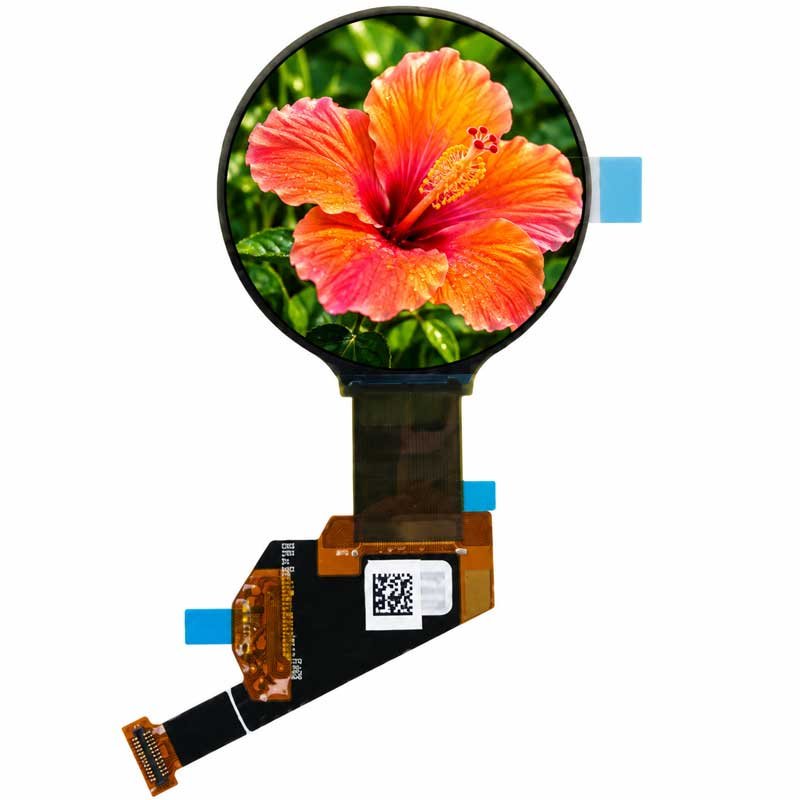
| Model | WJ014ZE-02A | Resolution | 400 × 400 |
| Interface | MIPI, 1 lane | Pins | 24 pins |
| Display Area | 35.4 × 35.4 mm | Outline | 38.6 × 40.5 × 0.71 mm |
| Brightness | 300 cd/m² | Pixel Density | 287 PPI |
| Touch | No touch | Frame Rate | 60 Hz |
| Operating Temp. | −20 to 60°C | Application | Wearable / circular UI |
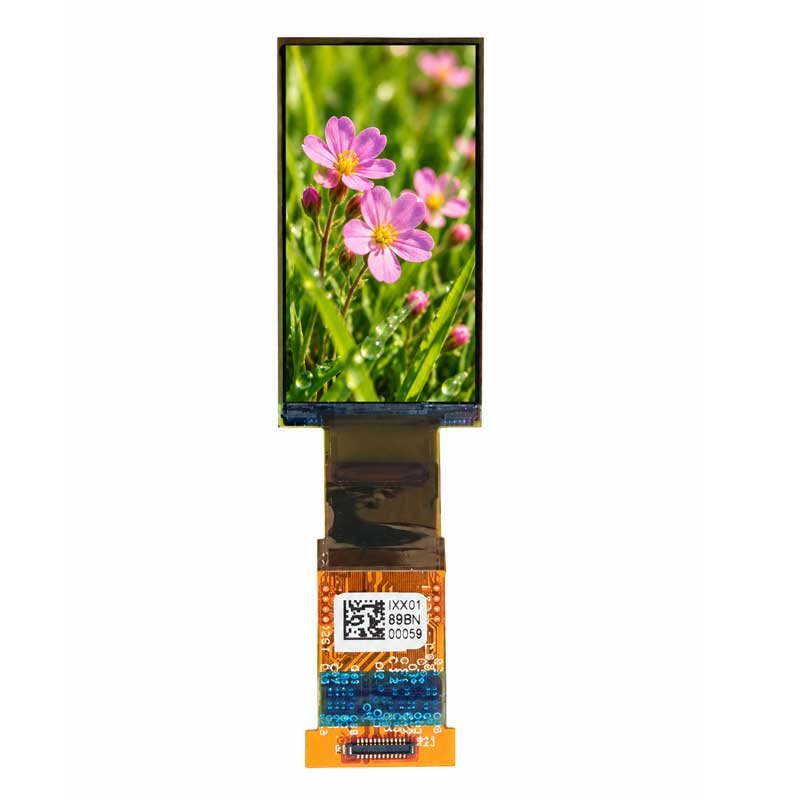
| Model | WJ015ZE-01A | Resolution | 120 × 240 |
| Interface | MIPI / SPI | Pins | 24 pins |
| Display Area | 16.92 × 33.84 mm | Outline | 20.16 × 38.94 × 0.87 mm |
| Brightness | ≤50 cd/m² | Pixel Density | 180 PPI |
| Touch | No touch | Frame Rate | 60 Hz |
| Operating Temp. | −20 to 60°C | Application | Wearable / compact UI |
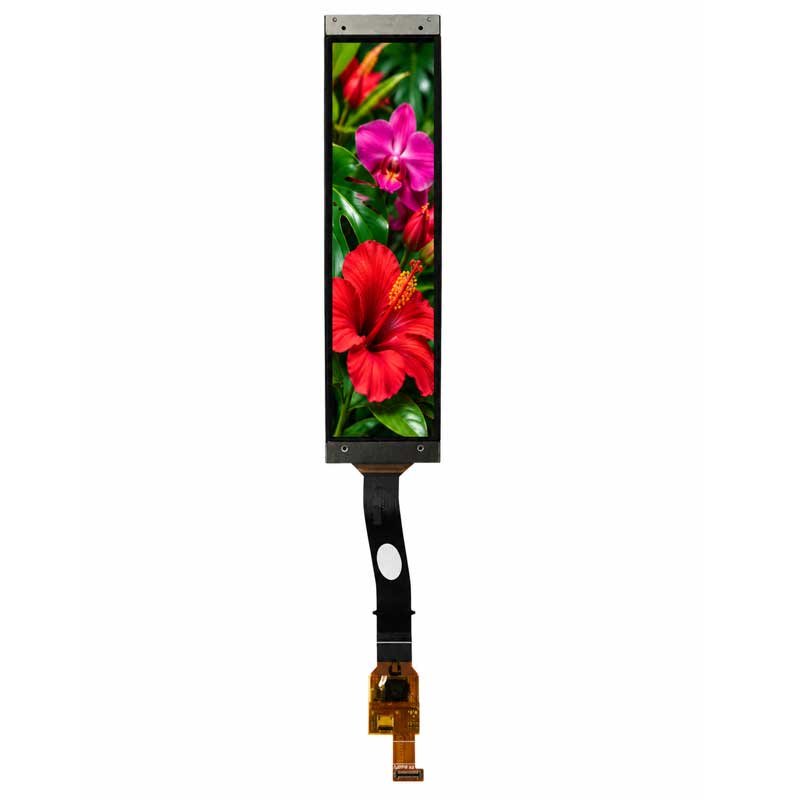
| Model | G1323TC10TFF-002 | Resolution | 192 × 960 |
| Interface | MIPI, 1 lane | Pins | OLED 30 / TP 7 |
| Display Area | 19.99 × 99.94 mm | Outline | 27.39 × 111.74 × 0.81 mm |
| Brightness | 350 cd/m² | Pixel Density | 244 PPI |
| Touch | On-cell CTP | Frame Rate | 42 Hz |
| Operating Temp. | −20 to 60°C | Application | Wearable / slim UI |
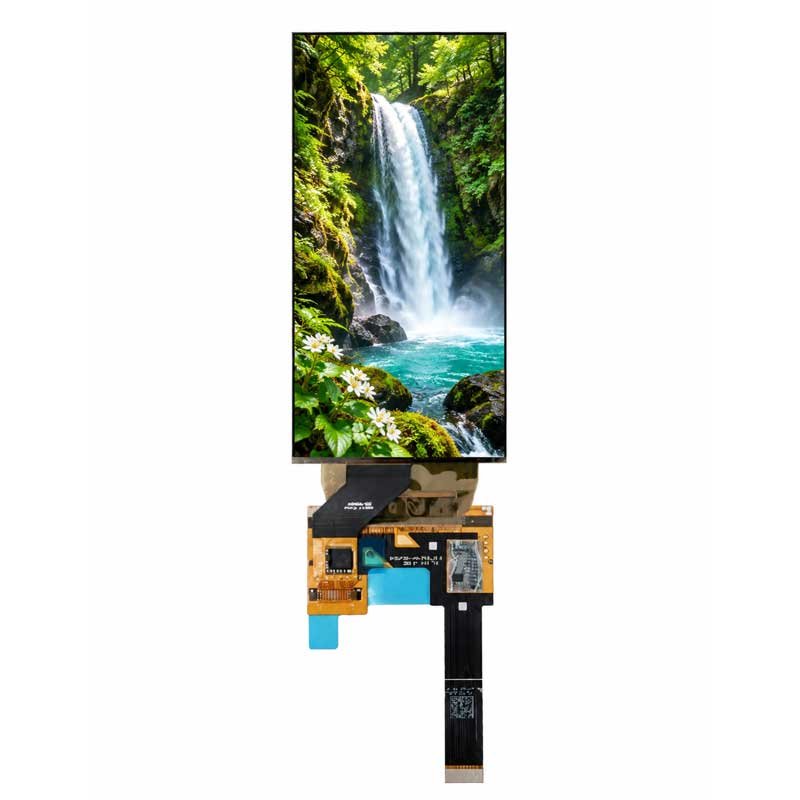
| Model | BF05FBM-AKO-7D00 | Resolution | 720 × 1520 |
| Interface | MIPI-DSI, 4 lanes | Pins | 40 pins |
| Display Area | 55.404 × 116.964 mm | Outline | 57.604 × 120.584 × 0.13 mm |
| Brightness | 350 cd/m² | Pixel Density | 330 PPI |
| Touch | On-cell CTP | Frame Rate | 60 Hz |
| Operating Temp. | −20 to 70°C | Application | Handheld / smart terminal |
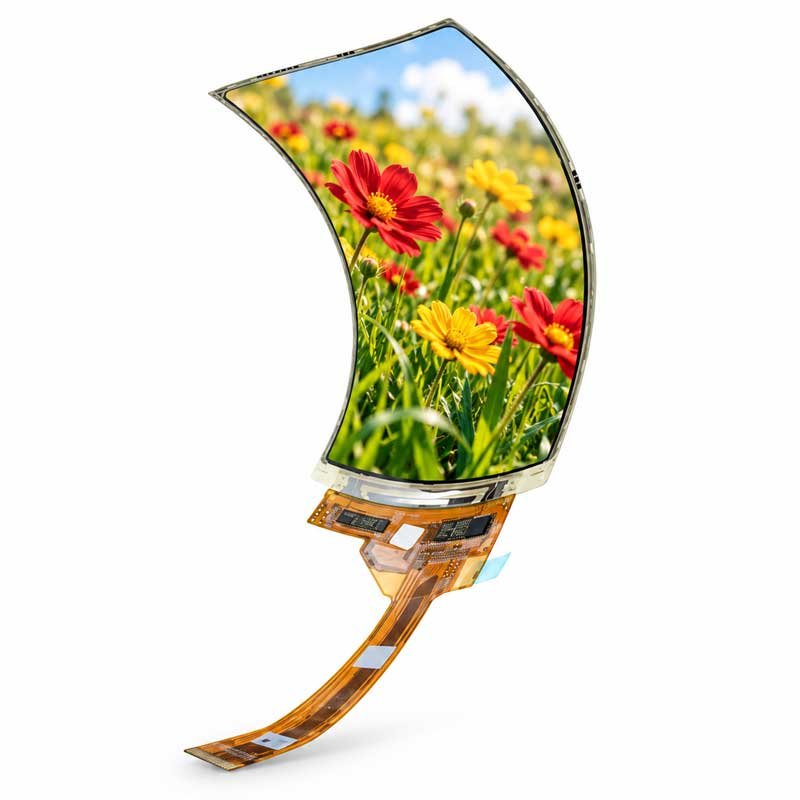
| Model | KD065FPOIN003 | Resolution | 1080 × 2400 |
| Interface | MIPI | Driver IC | RM692E5 |
| Panel Outline | 71.45 × 156.64 × 0.29 mm | Active Area | 69.55 × 154.56 mm |
| Brightness | 500 cd/m² | Contrast | 100,000:1 |
| Touch | No touch | Colors | 16.7 million |
| Operating Temp. | −20 to +70°C | Display | Flexible LTPS AMOLED |
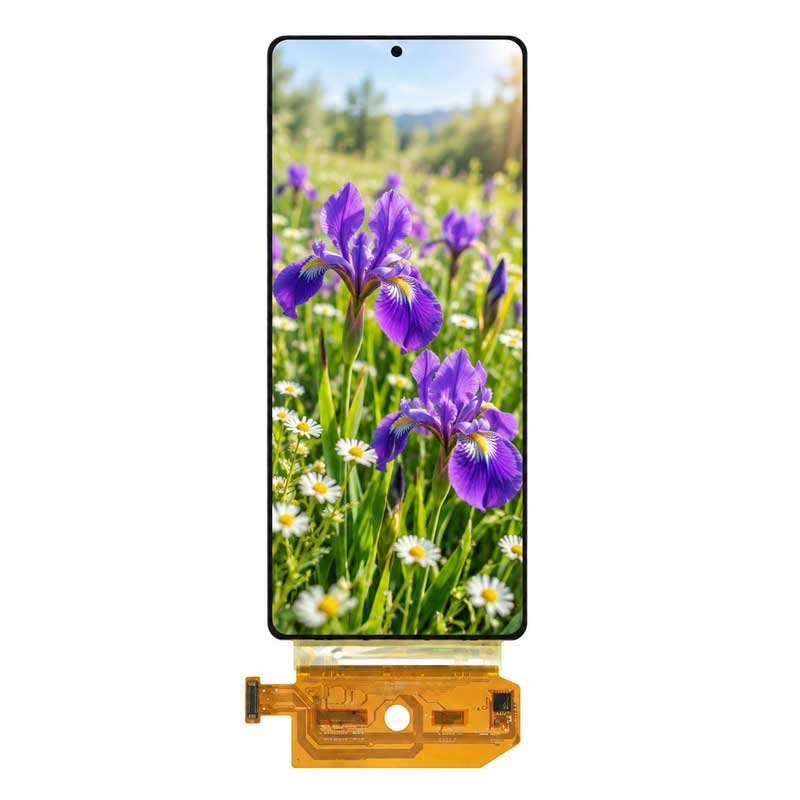
| Model | KD067FPOIN008-C0000 | Resolution | 1080 × 2400 |
| Interface | MIPI | Driver IC | VTDR6130 |
| Panel Outline | 71.532 × 156.700 mm | Supplier Overall Size | 71.53 × 200.59 × 0.33 mm |
| Active Area | 69.552 × 154.660 mm | Brightness | 500 cd/m² |
| Touch | Capacitive; I²C, CST7660S | Contrast | 500,000:1 |
| Operating Temp. | −20 to +70°C | Display | Flexible LTPS AMOLED |
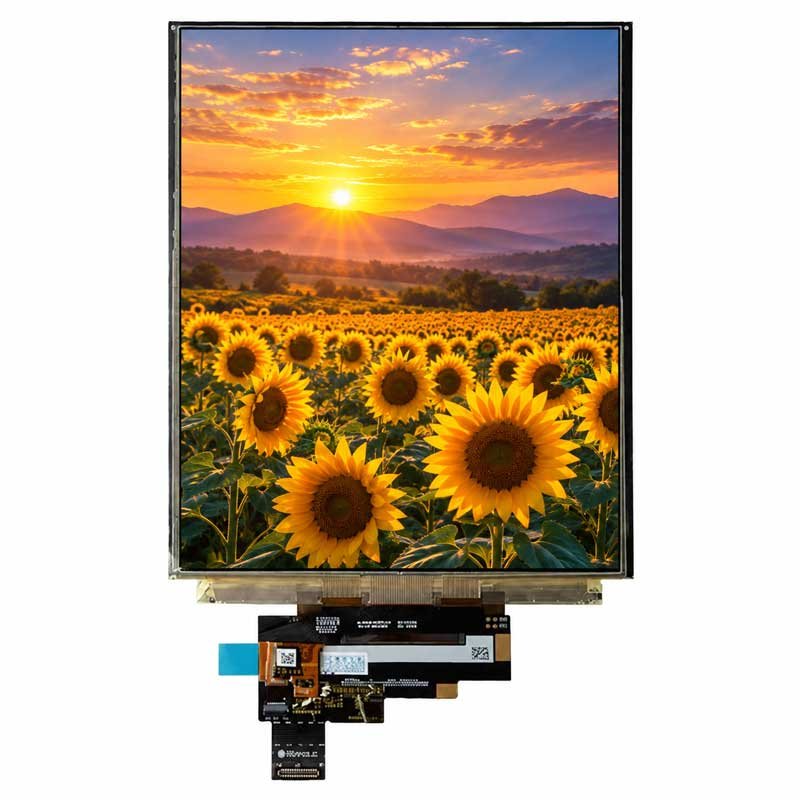
| Model | DXQRX7D801 | Resolution | 1440 × 1920 |
| Interface | Dual MIPI | Pins | 62 pins |
| Display Area | 118.8 × 158.4 mm | Outline | 128.8 × 170.5 × 0.362 mm |
| Brightness | 300 cd/m² | Pixel Density | 308 PPI |
| Touch | On-cell CTP | Frame Rate | 60 Hz |
| Operating Temp. | −20 to 70°C | Application | Curved product / exhibit |
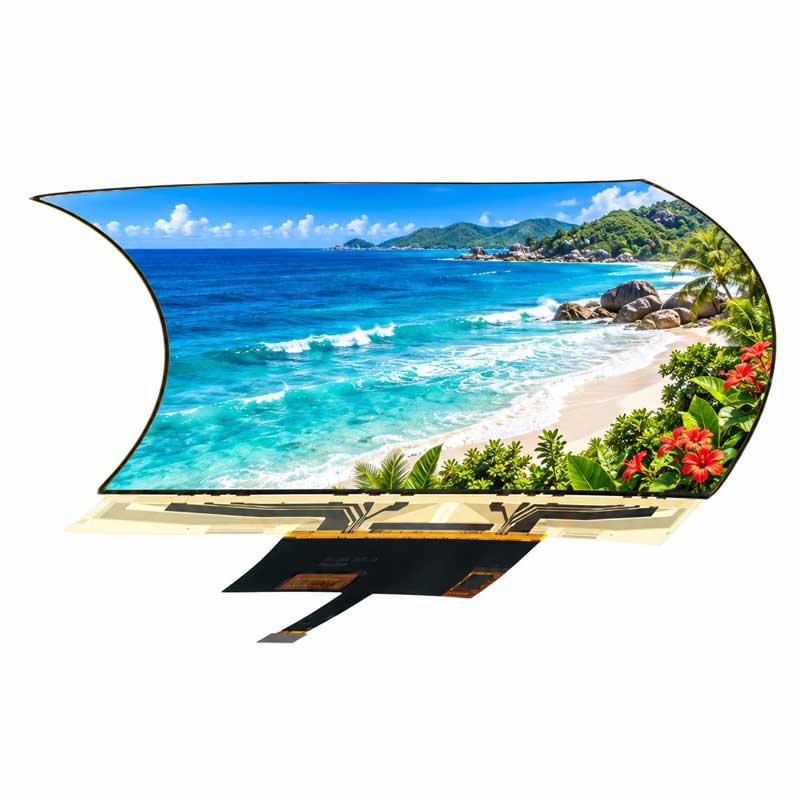
| Model | DXQ8D001 | Resolution | 2480 × 1860 |
| Interface | MIPI, 4 lanes | Pins | 46 pins |
| Display Area | 162.688 × 122.016 mm | Outline | 165.89 × 126.12 × 0.77 mm |
| Brightness | 430 cd/m² | Pixel Density | 388 PPI |
| Touch | On-cell CTP | Frame Rate | 60 Hz |
| Operating Temp. | −10 to 70°C | Application | Curved product / terminal |
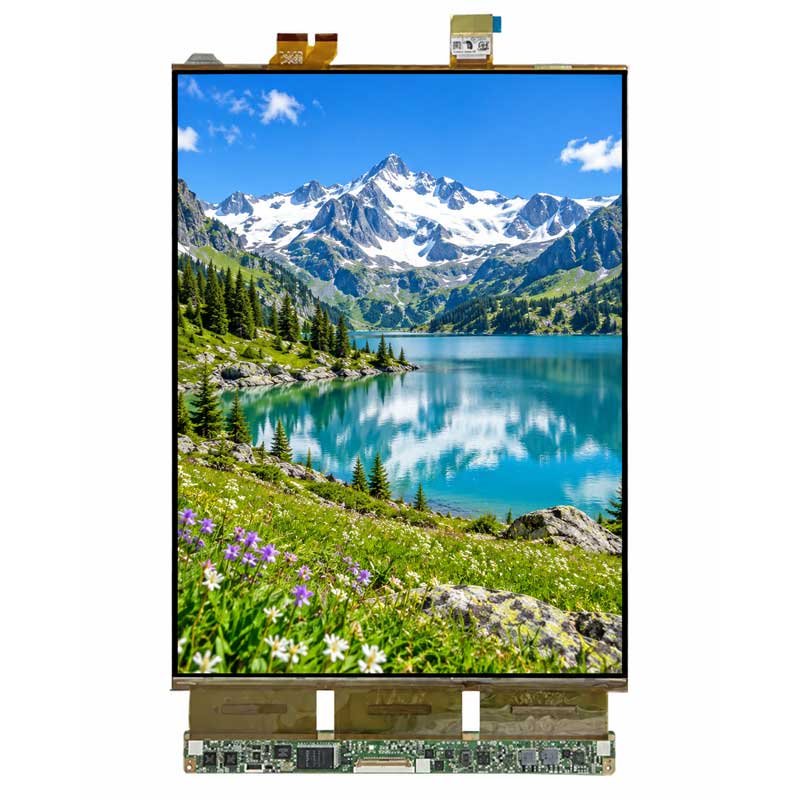
| Model | G1323TC10IFF-002 | Resolution | 1536 × 2048 |
| Interface | eDP 1.3, 4 lanes | Pins | 40 pins, 0.5 pitch |
| Display Area | 202.852 × 270.336 mm | Outline | 213.8 × 284.8 × 0.53 mm |
| Brightness | 300 cd/m² | Pixel Density | 192 PPI |
| Touch | On-cell CTP | Frame Rate | 60 Hz |
| Operating Temp. | 0 to 50°C | Application | Premium curved product |
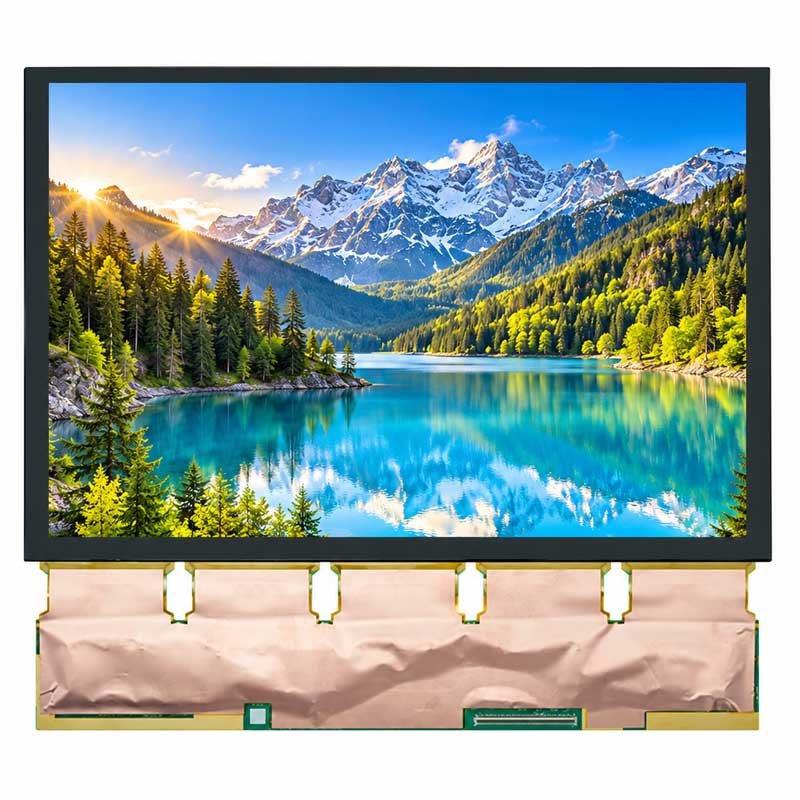
| Model | KD142QHOEN001-C001A | Resolution | 2650 × 1392 |
| Interface | eDP 1.4b | Touch | Capacitive touch |
| Module Outline | 343.63 × 186.63 × 6.44 mm max. | Active Area | 319.325 × 167.736 mm |
| Brightness | 650 cd/m² | Contrast | 10,000:1 |
| Viewing Area | 320.33 × 168.74 mm | Color Gamut | 100% NTSC typ. |
| Operating Temp. | −40 to +85°C | Controller IC | TBD |
| Size | Reference Model | Resolution | Interface | Touch | Typical Use |
|---|---|---|---|---|---|
| 1.39″ | WJ014ZE-02A | 400 × 400 | MIPI (1 lane) | No touch | Wearables / circular UI |
| 1.5″ | WJ015ZE-01A | 120 × 240 | MIPI / SPI | No touch | Wearables / compact UI |
| 4.01″ | G1323TC10TFF-002 | 192 × 960 | MIPI 1 lane | On-cell CTP | Wearables / slim UI |
| 5.1″ | BF05FBM-AKO-7D00 | 720 × 1520 | MIPI-DSI 4 lanes | On-cell CTP | Handheld / smart terminal |
| 6.5″ | KD065FPOIN003 | 1080 × 2400 | MIPI | No touch | Flexible handset / OEM |
| 6.67″ | KD067FPOIN008-C0000 | 1080 × 2400 | MIPI | Capacitive CTP | Flexible handset / OEM |
| 7.8″ | DXQRX7D801 | 1440 × 1920 | Dual MIPI | On-cell CTP | Curved product / exhibit |
| 8.0″ | DXQ8D001 | 2480 × 1860 | MIPI 4 lane | On-cell CTP | Curved product / smart terminal |
| 13.3″ | G1323TC10IFF-002 | 1536 × 2048 | eDP 1.3 / 4 lanes | On-cell CTP | Premium curved product |
| 14.2″ | KD142QHOEN001-C001A | 2650 × 1392 | eDP 1.4b | Capacitive CTP | Large format OEM |
Large-format project sizes can include 42″, 48″, 55″, 65″ and 77″ depending on current panel availability and project requirements. The 65″ platform is currently the most clearly defined reference for custom-shaped engineering.
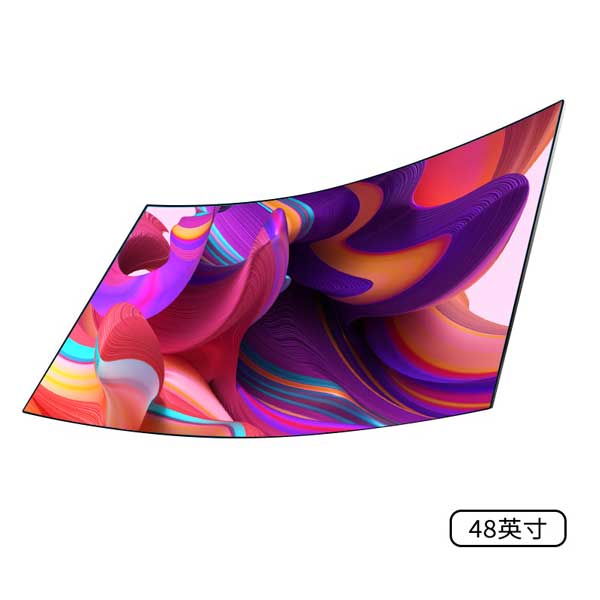
| Model | LE480PQW-HSB4 | Resolution | 3840 × 2160 |
| Brightness | 500 / 150 cd/m² | Color | 10-bit, 1.07B |
| Outline | 1063.96 × 607.34 × 0.79 mm | ||
| Weight | 1.51 kg | Status | Project-based |
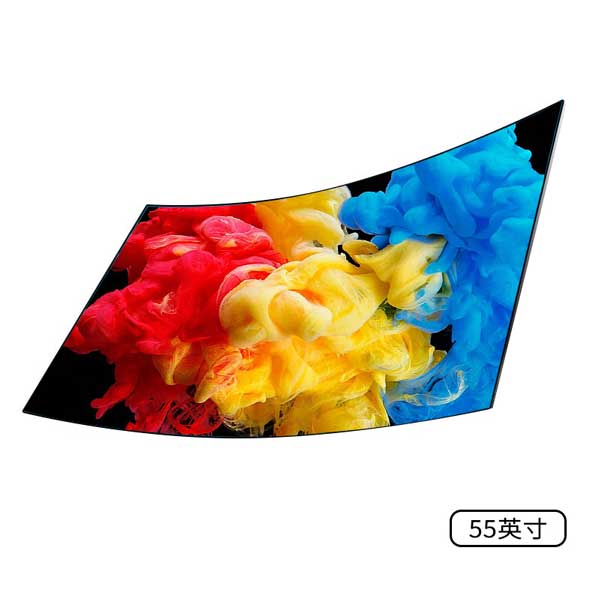
| Model | LE550PQW-HSE1 | Resolution | 3840 × 2160 |
| Brightness | 550 / 200 cd/m² | Color | 10-bit, 1.07B |
| Outline | 1219.0 × 694.7 × 0.79 mm | ||
| Weight | 2.0 kg | Status | Project-based |
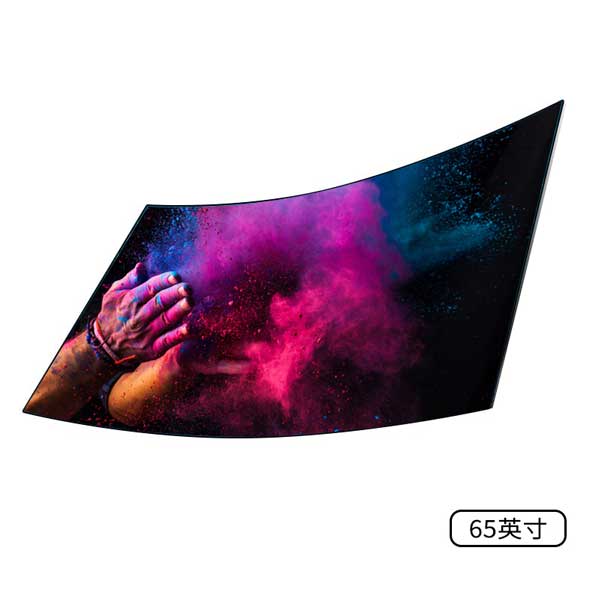
| Platform | 65-inch reference | Resolution | 3840 × 2160 |
| Brightness | 550 / 200 cd/m² | Color | 10-bit, 1.07B |
| Radius | R1500 minimum | Preferred | R1800 or larger |
| Direction | Core platform for custom-shaped installations | ||
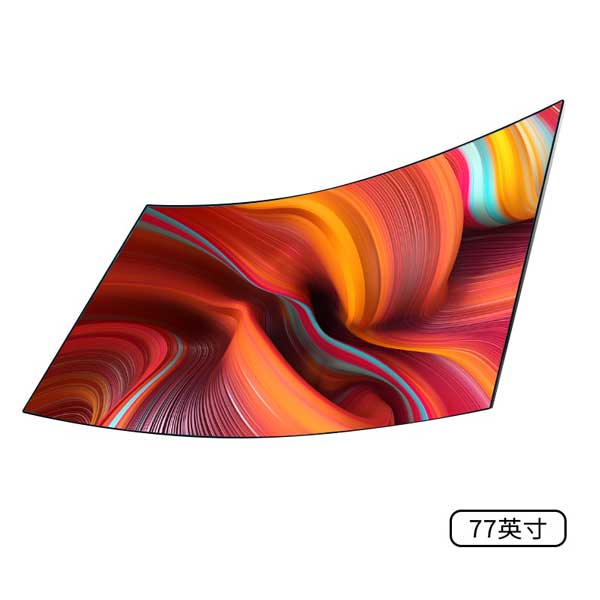
| Model | LE770PQW-HSE3 | Resolution | 3840 × 2160 |
| Brightness | 550 / 200 cd/m² | Color | 10-bit, 1.07B |
| Outline | 1708.48 × 973.22 × 0.79 mm | ||
| Weight | 4.0 kg | Status | Project-based |
| Size | Reference Status | Resolution Class | Typical Direction | Engineering Note |
|---|---|---|---|---|
| 42″ | Project-based | 4K class | Curved commercial / creative display | Confirm current panel availability |
| 48″ | Project-based | 4K class | Curved retail / exhibition display | Confirm current panel availability |
| 55″ | Project-based | 4K class | Curved wall / floor-standing display | Confirm current panel availability |
| 65″ | LE650PQY-HNA1 reference platform | 3840 × 2160 UHD | Core platform for custom-shaped installations | R1500 min. reference; R1800+ recommended |
| 77″ | Project-based | 4K class | Large immersive curved installation | Confirm current panel availability |
These images show product structures, powered-on viewing angles, mobile configurations and application concepts for large flexible OLED display systems.
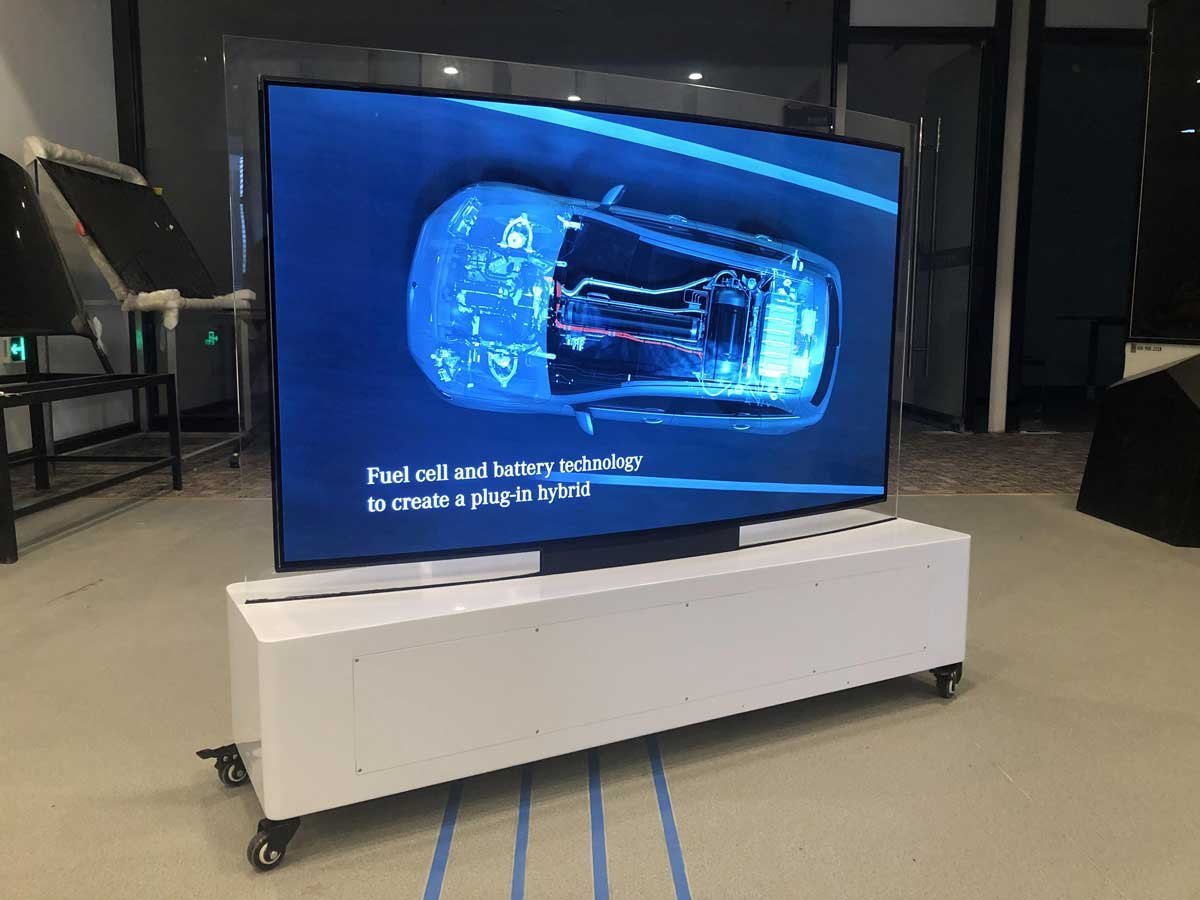
A powered-on 55-inch flexible OLED display presents automotive advertising on a smooth curved surface. Its self-emissive OLED image, deep black level and slim profile make it suitable for vehicle launches, branded showrooms and premium retail presentations.
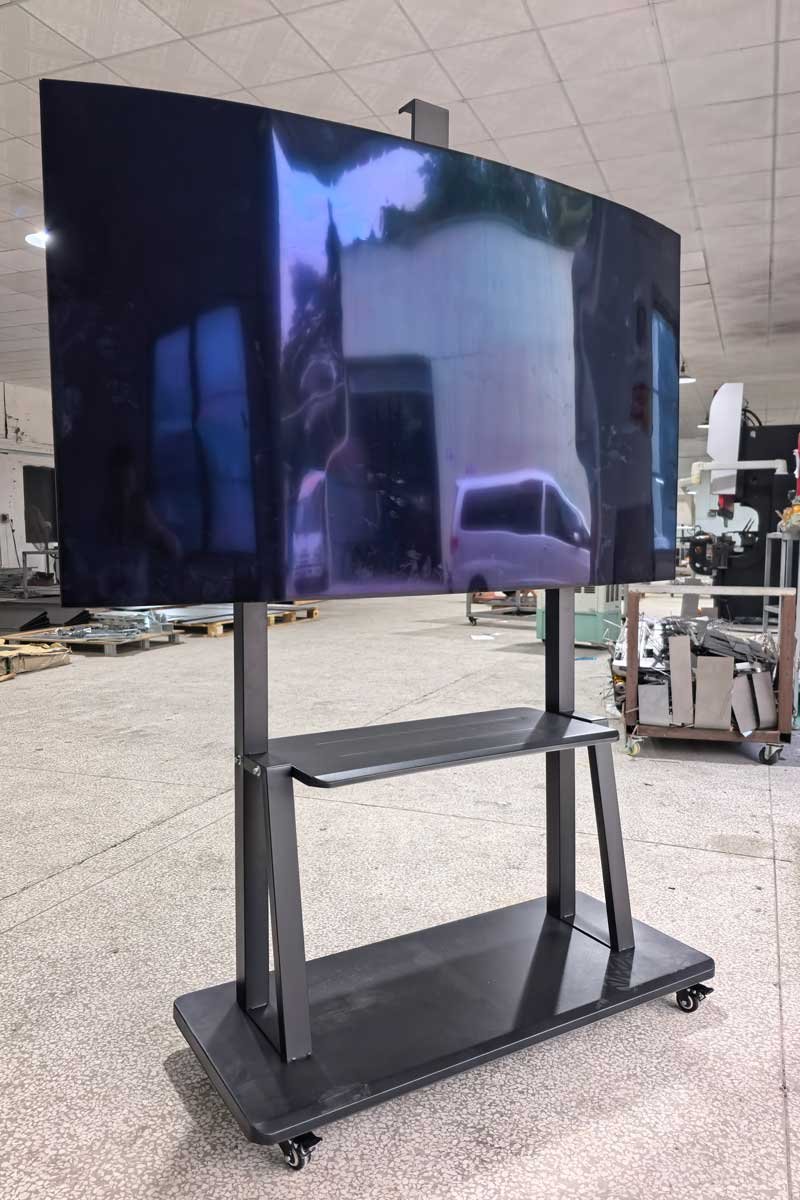
This 55-inch flexible OLED is integrated into a movable floor stand, combining a curved display surface with convenient repositioning. It is designed for showrooms, temporary events and exhibition spaces where the display layout changes frequently.
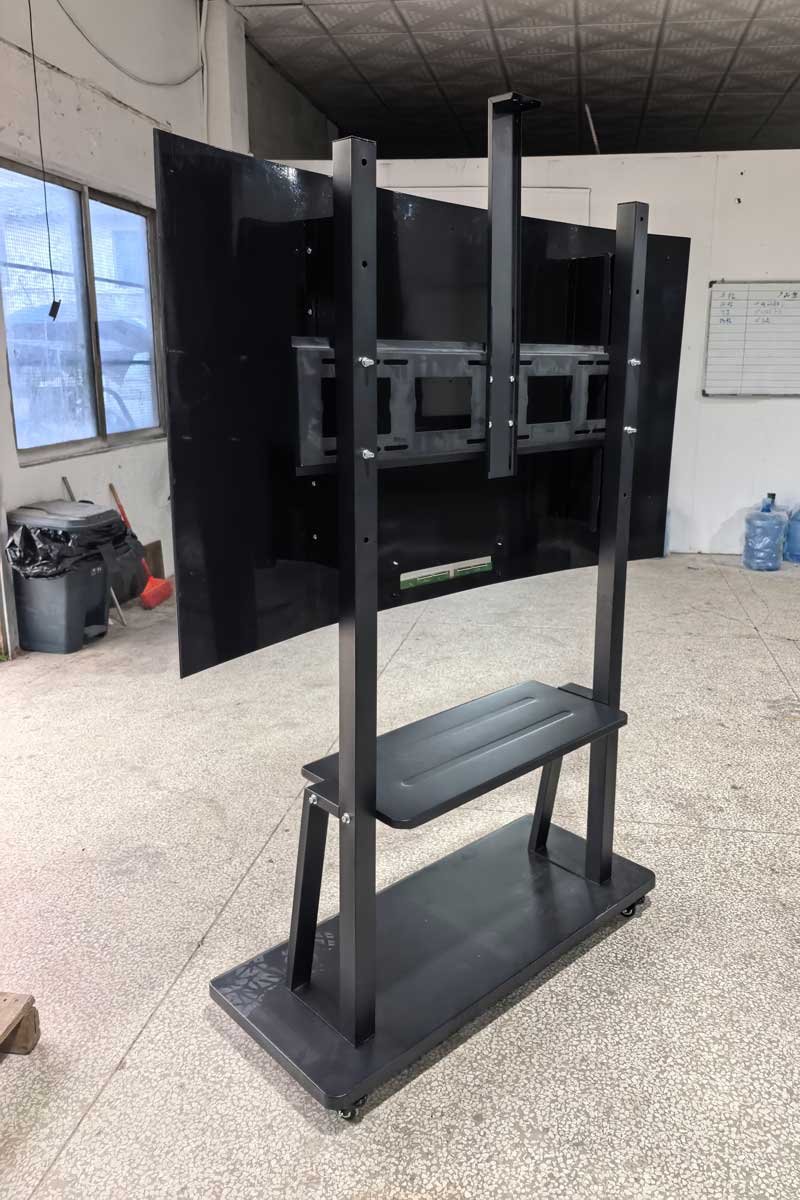
The rear view shows the engineered metal support used to hold the 55-inch OLED panel at a controlled radius. The structure distributes mechanical force, stabilizes the curve and protects the panel, driver area and connections during operation.
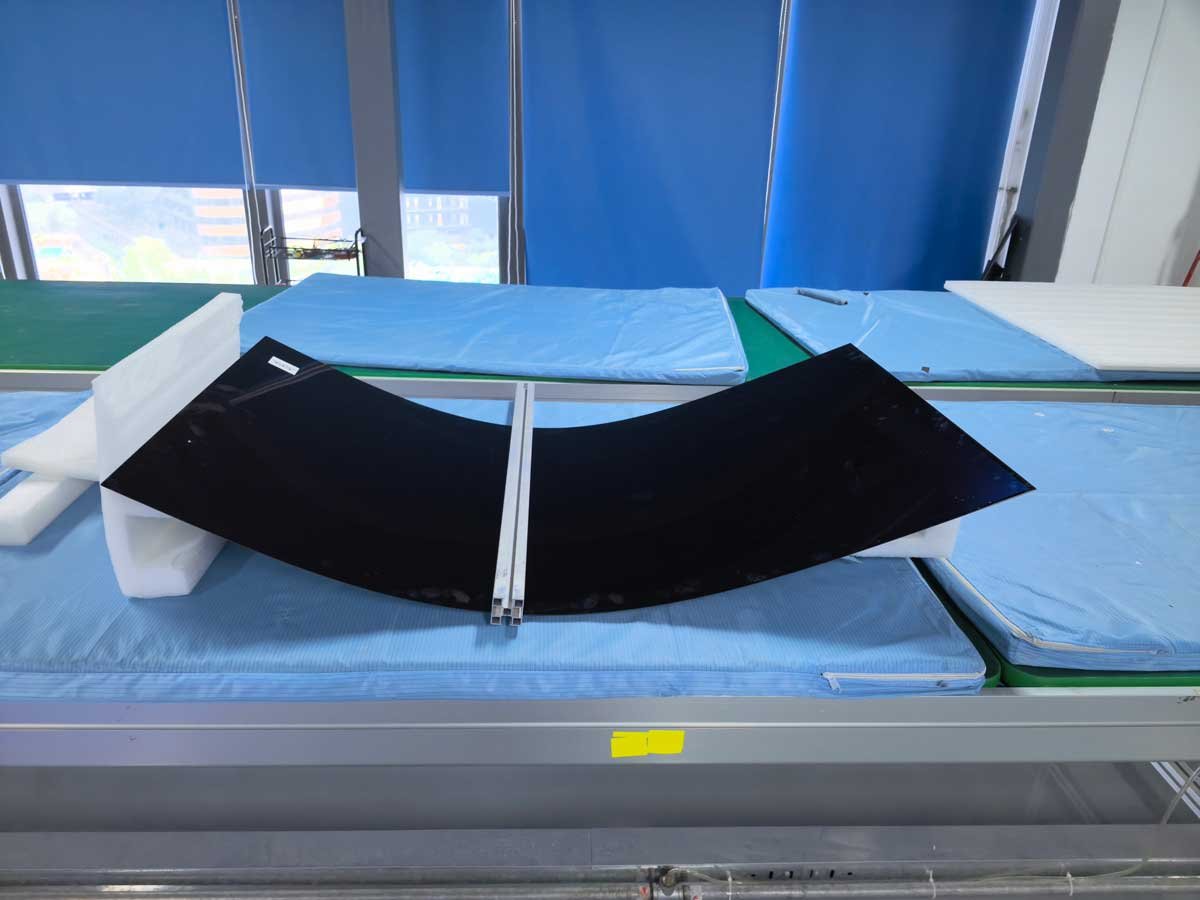
A controlled workshop test verifies the bending direction and achievable curvature of the 55-inch flexible OLED panel. The supporting fixture keeps the bending force even and avoids twisting or local stress on the ultra-thin panel.
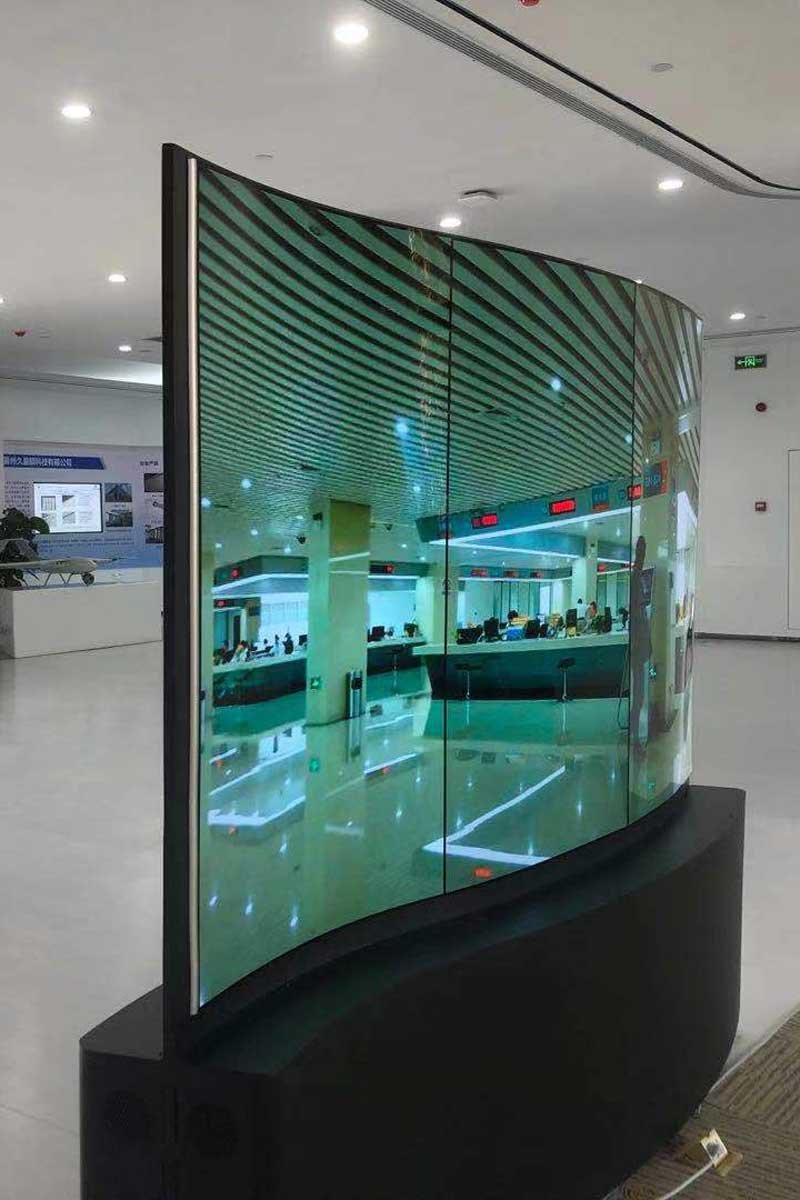
Three powered-on 65-inch flexible OLED panels are installed vertically in a single row to create a wide curved presentation. The side viewing angle clearly shows the continuous curvature, slim panel profile and synchronized large-format display effect.
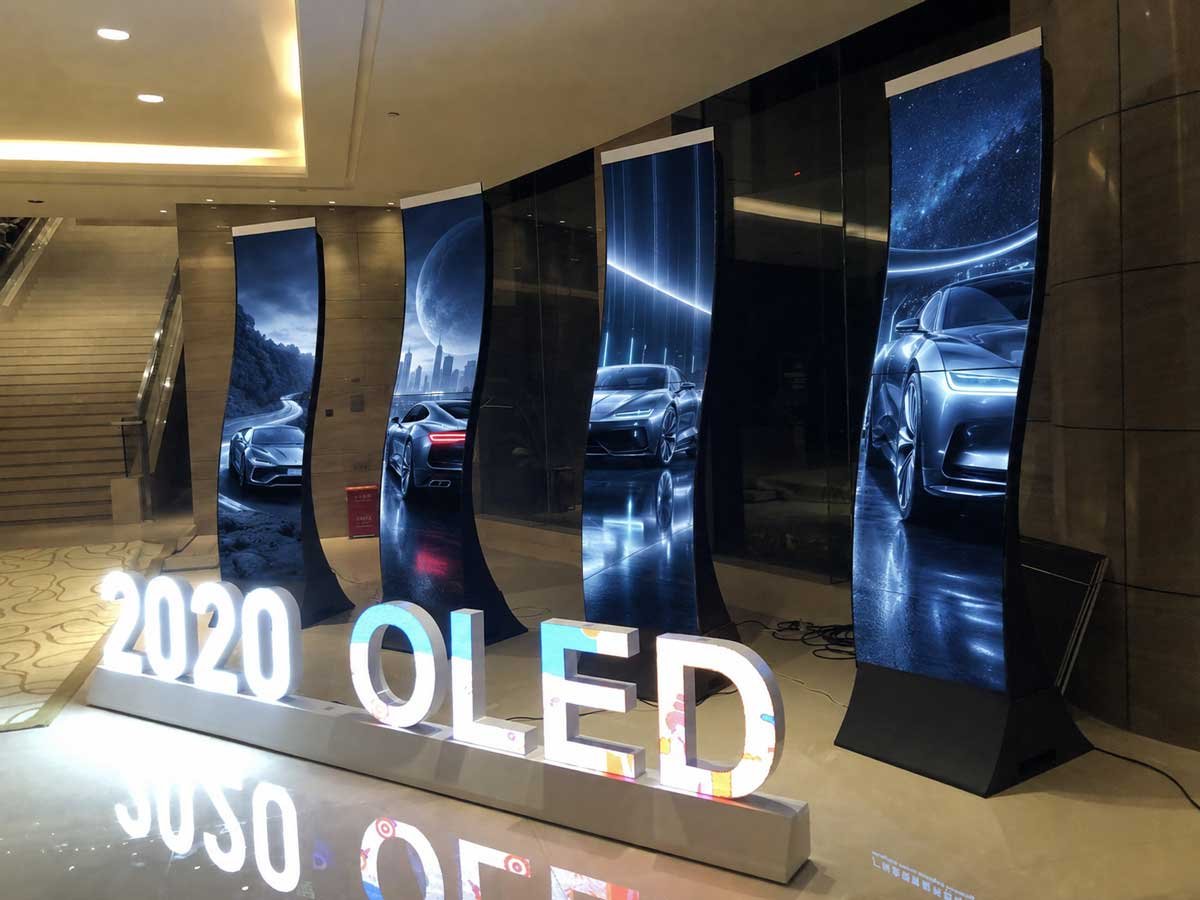
Each freestanding S-shaped unit is typically formed by two vertically stacked 55-inch flexible OLED panels. Multiple units can present synchronized or independent automotive content for launches, experience centers and premium showrooms.
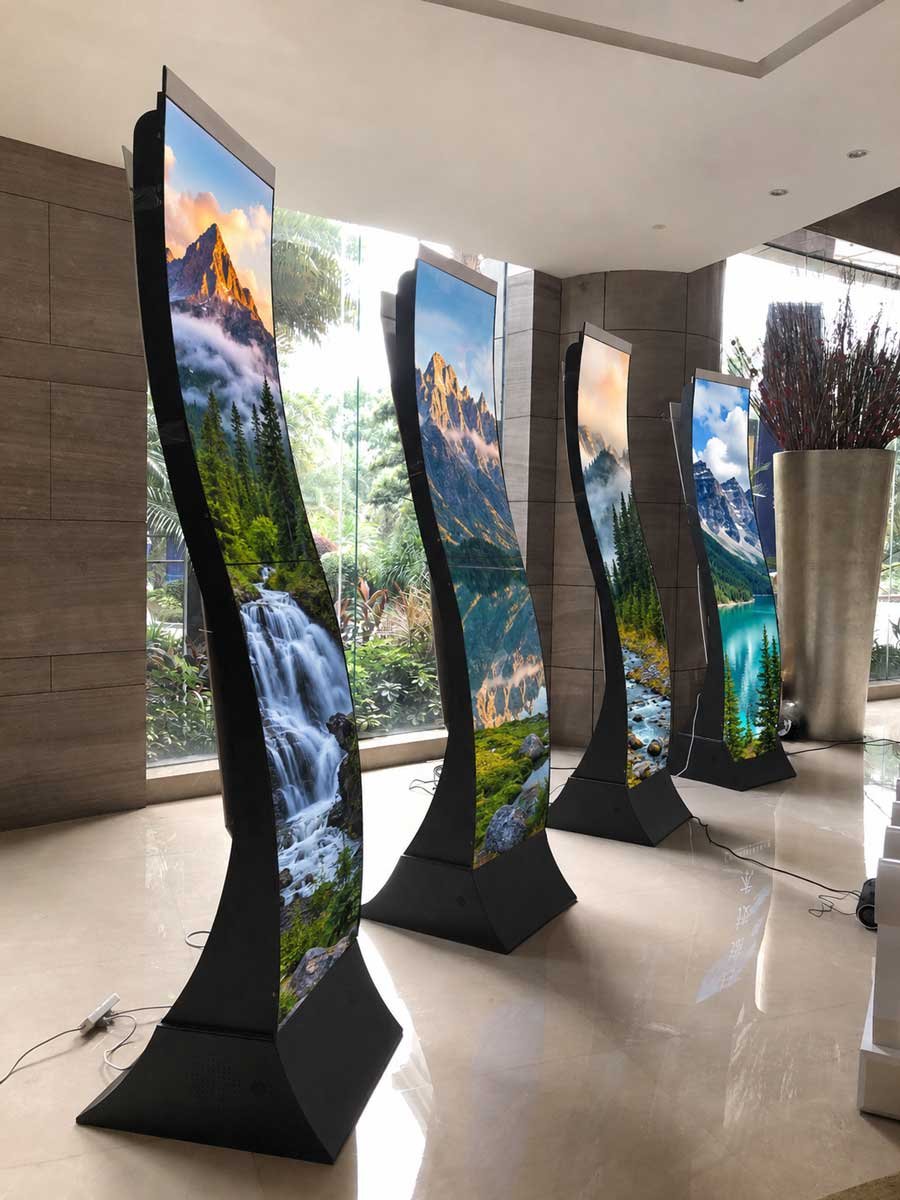
Two vertically arranged 55-inch flexible OLED panels create each tall S-shaped display surface. Scenic video highlights the high contrast, vivid color and flowing sculptural form while several displays work together as an installation.
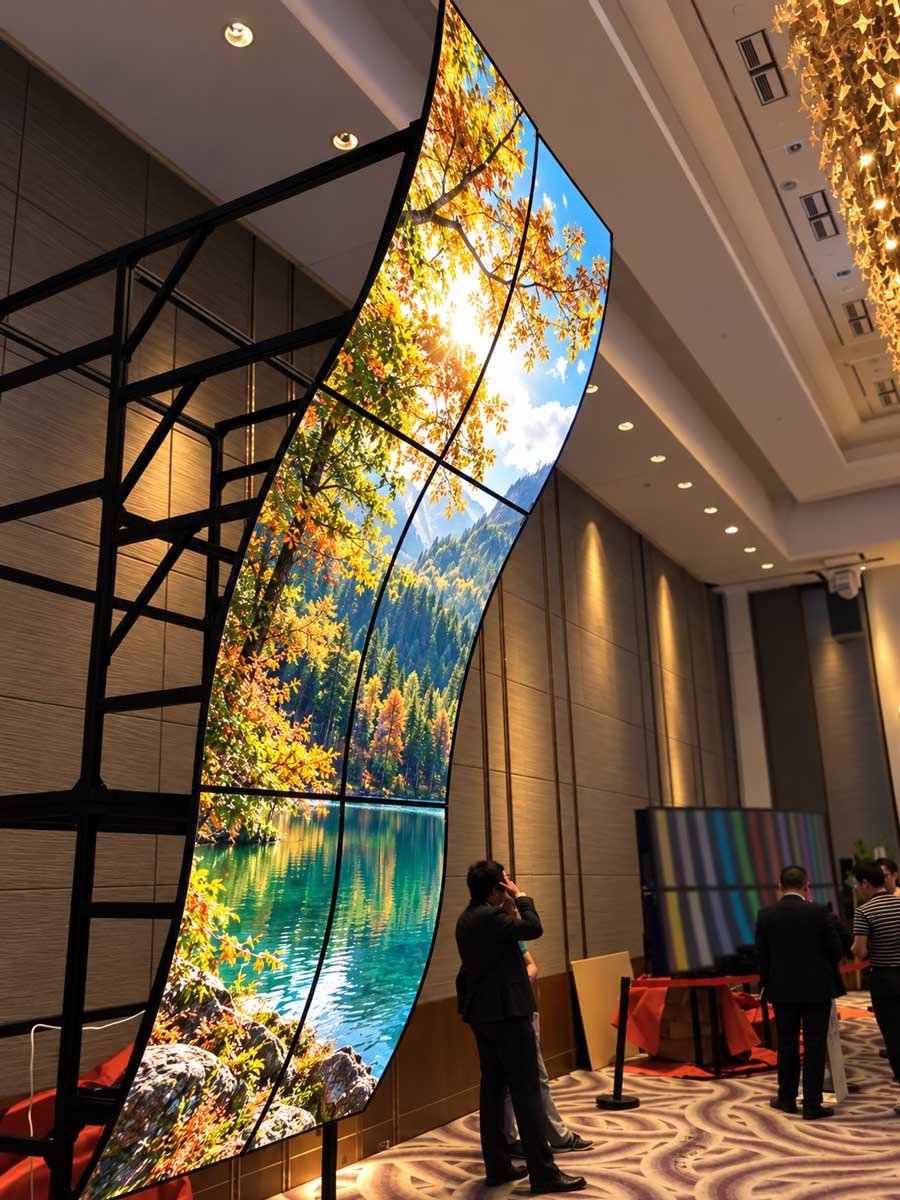
Six 77-inch flexible OLED panels are arranged in a 2×3 layout to create one large S-shaped video wall. A dedicated steel frame controls the panel radius, alignment and transitions, while synchronized signals turn the six panels into a unified immersive display surface.
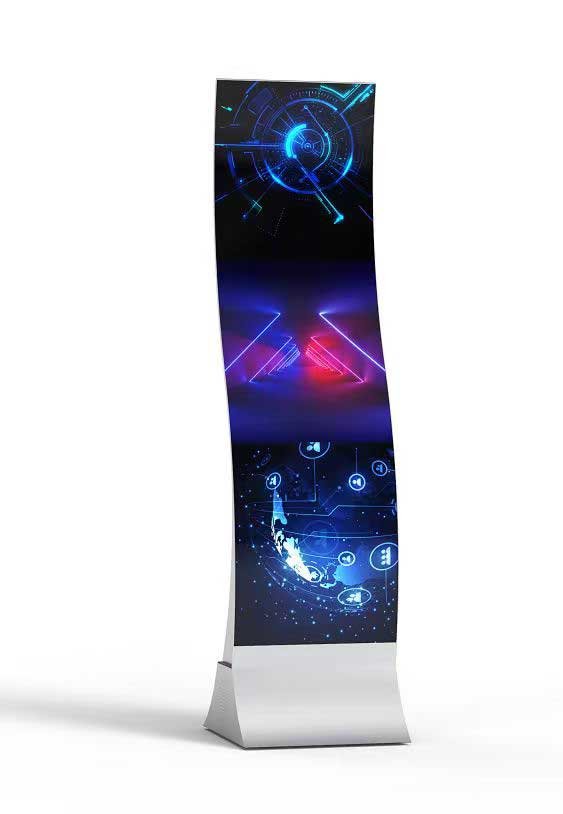
This self-contained S-shaped display is typically constructed from two 55-inch flexible OLED panels installed vertically, with a custom curved support and integrated floor base. It provides a tall digital canvas for retail, corporate reception areas and exhibition environments.
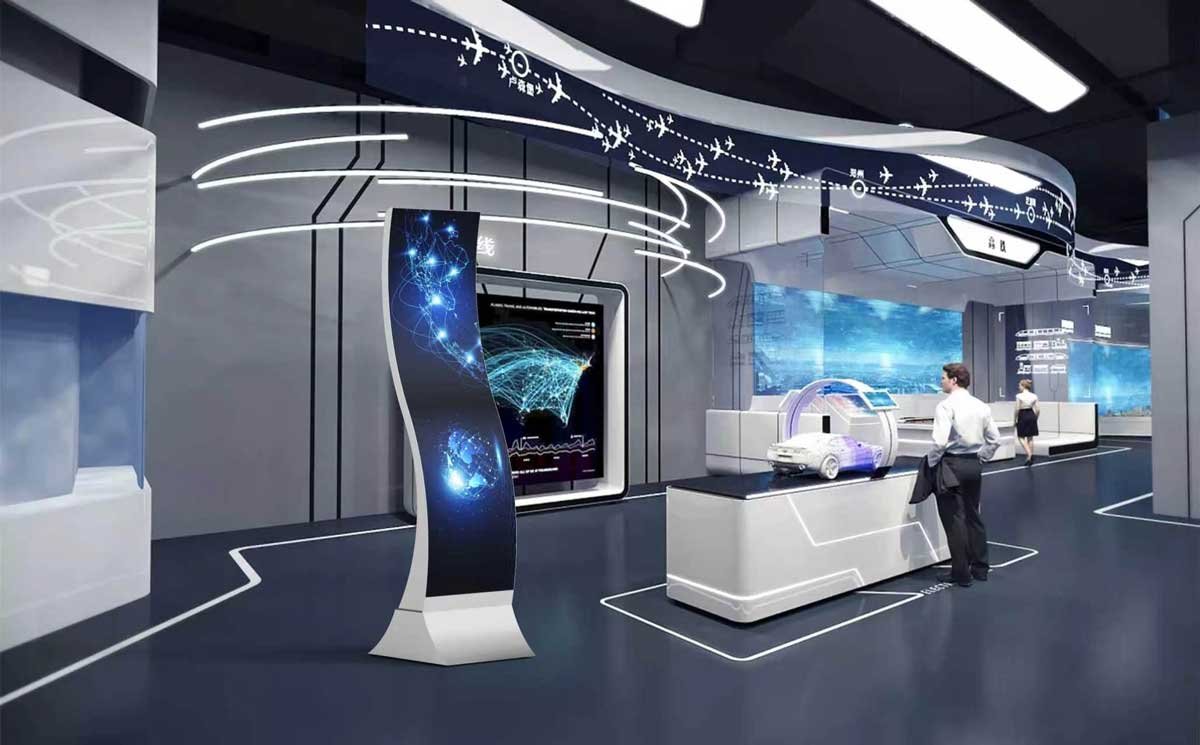
A pair of vertically stacked 55-inch flexible OLED panels forms a tall S-shaped information display. The installation can present digital maps, technical data and interactive visual storytelling in museums, innovation centers and technology exhibition halls.
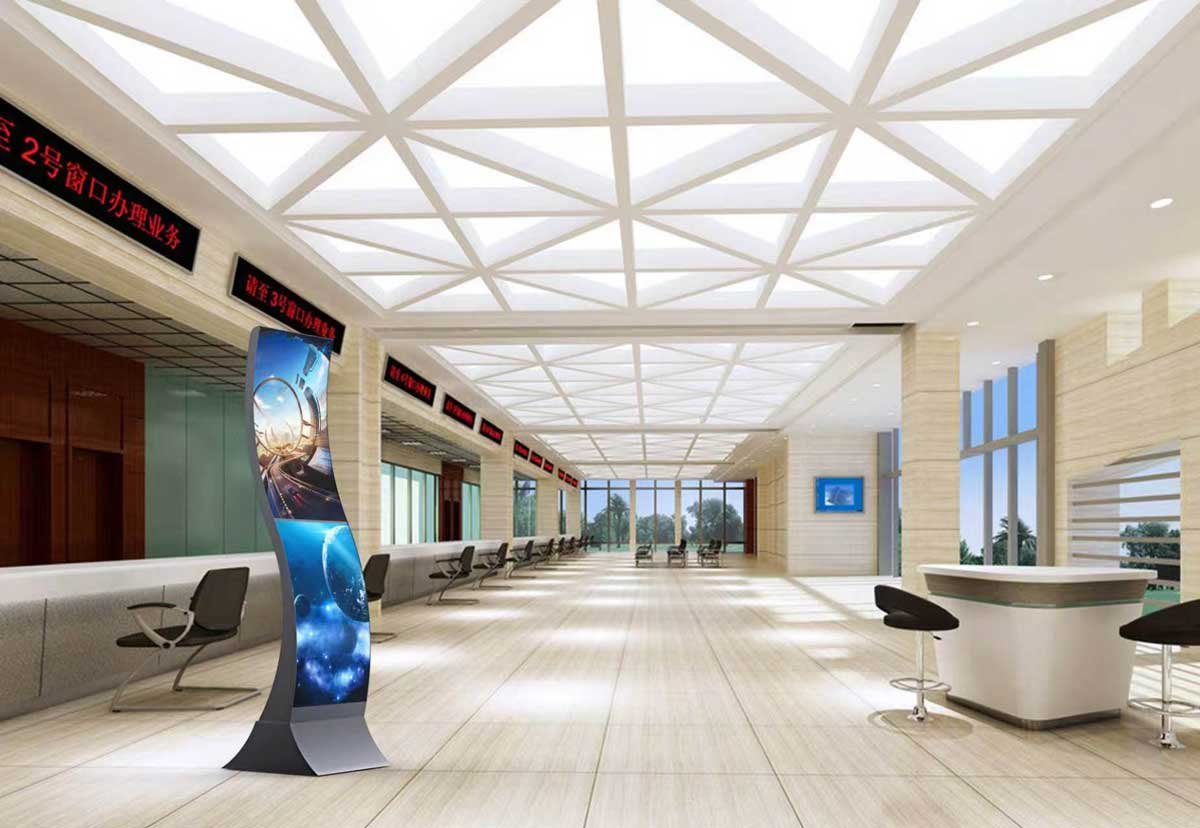
Two vertically arranged 55-inch flexible OLED panels create a high-visibility freestanding information terminal. It can display service guidance, queue information, public announcements and wayfinding content while occupying relatively little floor space.
Flexible OLED technology combines curved form factors, self-emissive image quality and versatile installation options for compact OEM products and large creative display projects.
These OLED panels are built on a bendable substrate, allowing the screen to follow a controlled curve or conform to a purpose-designed installation. This makes them suitable for immersive spaces, curved signage and artistic display environments where traditional flat panels fall short.
Because OLED is self-emissive and requires no separate backlight, the panel body can remain exceptionally slim and light. This simplifies transportation, installation and mechanical integration in premium retail, museum, showroom and OEM applications.
DisplayMan’s 48-inch, 55-inch, 65-inch and 77-inch flexible OLED references provide 3840 × 2160 resolution for detailed large-format images, smooth gradients and sharp commercial content. Compact OLED modules use size-specific resolutions shown in their individual specifications.
Self-emissive OLED pixels deliver rich colors, deep blacks and bright highlights without a conventional backlight. Selected large-format panels support a wide color gamut exceeding 100% DCI-P3 and very high contrast for premium visual presentation.
Touch functionality can be integrated on selected models, with up to 10-point capacitive touch available according to panel size and project structure. It supports interactive exhibitions, smart retail counters, control terminals and corporate presentation systems.
Flexible OLED panels can be wall-mounted, floor-standing or combined into multi-panel video walls. The supporting frame, curvature, panel layout and signal system can be engineered for creative shapes, curved arrangements and space-constrained environments.
OLED technology can reduce blue-light output compared with many conventional backlit displays and provides stable image presentation when properly driven. This supports comfortable viewing in museums, airports, public installations and other extended-use environments.
The slim panel and minimal visual structure complement contemporary architectural and interior-design concepts. Flexible OLED surfaces integrate into premium environments without the bulky depth normally associated with conventional display systems.
The absence of a separate backlight reduces component count and structural thickness. Efficient operation, lightweight construction and project-specific serviceable frames can help reduce material use, transport demands and overall installation impact.
The customer normally starts with one simple need—“I need a flexible OLED.” After the initial review, the project usually develops into one of two practical engineering paths.
The customer is developing a wearable, handheld, medical device, smart controller, curved terminal or another product that contains the OLED.
Typical commercial model: prototype + OEM production, normally with higher production quantities.
The OLED itself becomes a curved retail, exhibition, showroom, museum or architectural display. The final shape is part of the product being purchased. Each panel still follows the same single-axis bending rule, while the overall shape is created through curvature, panel orientation, panel quantity and supporting structure.
Typical commercial model: retail / project-based sale. One complete system, 2 × 3, 3 × 3 or another one-off installation is acceptable.
For large Flexible OLED projects, the most important customization is not the OLED pixel structure—it is the final display shape. Every individual panel still bends along one specified axis only, but the complete system can be engineered into many different forms.
Customers do not need to provide a finished curved-display drawing. Site dimensions, installation conditions and a visual concept are enough to begin the engineering review.
The 65-inch Flexible OLED is a core platform for large custom-shaped projects because it combines large visual area, ultra-thin OLED construction and controlled curved installation. Like the smaller Flexible OLED modules, it is not foldable, bends along one specified axis, and requires the IC / driver area to remain outside the bending zone.
| Display Size | Panel Model | Resolution | Panel Outline | Panel Thickness | Minimum Bending Radius | Recommended Design Radius |
|---|---|---|---|---|---|---|
| 65″ | LE650PQY-HNA1 | 3840 × 2160 UHD | 1442.28 × 819.82 mm | Approx. 0.8 mm | Approx. R1500 mm | R1800 mm or larger |
R1500 mm is the approximate minimum bending-radius reference. Because a larger radius means a gentler curve, R1800 mm or larger is generally preferred for safer long-term mechanical design when the project geometry allows it.
The OLED panel is the display platform. The project engineering is built around curvature, shape, supporting frame, panel layout, mounting, signal distribution and installation.
A large Flexible OLED installation is more than a flexible panel. The finished product is a complete mechanical and display system designed to hold the OLED at the intended curvature while providing signal, power, maintenance access and installation stability.
The supporting structure must maintain the required radius without creating damaging local stress, twisting or uneven support.
For 2 × 3, 3 × 3 and custom layouts, panel orientation, transitions, seam position and overall curve are designed as one system.
Wall fixing, floor base, rear access, transport, assembly sequence, signal routing and serviceability all influence the final shape.
Six large Flexible OLED panels form one continuous custom curved surface. Suitable for retail, exhibitions, showrooms and immersive commercial spaces.
Nine large Flexible OLED panels form a larger immersive curved display wall. The overall curvature and structural frame are engineered as one complete system.
Multiple Flexible OLED panels can be arranged around a circular support when the target diameter and panel radius are mechanically feasible.
Radius determines how tightly the panel is curved. Always review the specific module limit rather than assuming all Flexible OLEDs behave the same.
All current DisplayMan Flexible OLED products bend only along their specified axis. The panel must not be twisted into free-form two-axis curvature.
For compact modules, FPC length, exit direction, connector pitch and pinout can determine whether the OLED actually fits the product.
Touch and cover construction affect thickness, rigidity, optical performance and bending behavior, so they must be reviewed together.
Brightness, static content, operating hours and thermal conditions affect image retention and lifetime. Long static UI requires content strategy.
The IC / driver side is a non-bendable area. Supporting mechanics must keep bending stress away from the driver region, FPC root and electrical connection area.
| Factor | Flexible OLED | Rigid AMOLED | TFT LCD | Transparent OLED |
|---|---|---|---|---|
| Physical Structure | Flexible / curvable OLED structure | Normally rigid flat OLED | Rigid LCD stack | Transparent OLED structure |
| Backlight | No | No | Yes | No |
| Best Use | Curved products and custom-shaped displays | Flat premium color display | Cost-sensitive / industrial UI | See-through premium display |
| Main Design Question | Radius, shape, integration | Size, interface, touch | Brightness, interface, environment | Transparency, ambient light, placement |
| Large Custom Shapes | Strong fit | Limited | Not the main advantage | Possible but different product objective |
You do not need to classify the project before contacting us. Start with what you are trying to build.
| Your Requirement | Recommended Starting Point |
|---|---|
| I only know that I need a flexible / bendable OLED | Start with this Flexible OLED page and send us the target size or installation space. |
| Wearable, handheld, medical or embedded device | Use a small / medium Flexible OLED module and review interface, FPC, connector and touch. |
| S-shaped, wave-shaped, floor-standing or wall-mounted display | Use a large custom-shaped Flexible OLED display system. |
| 2 × 3 or 3 × 3 curved display wall | Use a multi-panel Flexible OLED video-wall structure. |
| Circular, ring-shaped or column-wrapping display | Use multiple large Flexible OLED panels with custom radius and supporting structure. |
| Flat full-color OLED is enough | AMOLED Displays may be the better choice. |
| Small simple monochrome OLED UI | PMOLED Displays may be more practical. |
| See-through OLED effect | Transparent OLED Displays is the correct direction. |
Send whatever information you already have. You do not need to know whether the project is “small Flexible OLED” or “large Flexible OLED” before contacting DisplayMan.
Site dimensions, photos and a general visual concept are enough for DisplayMan to start evaluating panel quantity, radius, shape and supporting structure.
Select a related OLED page, or return to the top of this page.
A Flexible OLED Display is an OLED display built with a flexible panel structure that allows controlled curvature or bending. The exact bending capability depends on the specific module or panel.
No. AMOLED describes the active-matrix driving architecture, while Flexible OLED describes the physical flexible structure. Many Flexible OLED displays are AMOLED.
No. DisplayMan Flexible OLED products are curvable / bendable, not foldable. They must not be sharply folded or creased.
A flexible substrate, TFT backplane, OLED emissive stack and thin-film encapsulation replace the rigid glass-based structure used in conventional rigid displays.
Yes, selected modules can use on-cell or add-on capacitive touch. Touch structure must be reviewed together with thickness, radius and cover-lens requirements.
Typical customization focuses on FPC, connector, pinout, interface, touch, cover lens, optical bonding and mechanical integration around an existing OLED module.
The main customization is the final display shape: curvature, supporting structure, panel layout, mounting method, multi-panel integration and installation design.
Yes. For large Flexible OLED projects, customers can provide the installation space, target dimensions, site photos and a visual concept. DisplayMan can help design the curvature and display structure.
For the current 65-inch reference platform, the approximate minimum bending radius is R1500 mm. R1800 mm or larger is generally recommended for safer long-term mechanical design. The panel bends only along its specified axis, and the IC / driver area must remain outside the bending zone.
Yes. Six-panel 2 × 3 and nine-panel 3 × 3 configurations can be designed as complete curved OLED display systems.
Yes. Multiple large Flexible OLED panels can be arranged around a circular or ring-shaped structure when the required diameter and panel radius are mechanically feasible.
No. Large custom-shaped Flexible OLED displays can be supplied as one complete retail or project-based installation.
Usually yes. Small Flexible OLED modules are commonly used as components inside OEM products, so prototype-to-volume planning is more important.
Not automatically. Outdoor use requires separate evaluation of brightness, UV exposure, temperature, moisture protection and mechanical enclosure.
Yes. OLED lifetime and image retention depend on content, brightness, operating time and thermal conditions. Long-duration static content should be reviewed.
No. Each panel can bend only along its specified single axis. It cannot be freely twisted or bent like fabric.
No. The IC / driver region is a non-bendable area and must be protected from bending stress in the final mechanical design.
If you do not know the exact module, send either your product size and interface requirements or your installation dimensions and target visual shape. We can route the project from there.
For compact products, send the target size, resolution, interface, FPC direction, touch requirement and quantity. For large custom displays, send the installation space, desired shape, site photos and project schedule.
DisplayMan can help review the OLED module, interface, touch and mechanical integration for OEM products, or the curvature, panel layout, supporting frame, signal system and installation method for large-format flexible OLED projects.
The right flexible OLED solution depends on display size, bending direction, minimum radius, protected IC area, interface, touch structure, final shape, supporting mechanics, installation method and project quantity.