

Outdoor Small Spacing LED Displays

Engineered by the Manufacturer for Real Outdoor Environments

Purpose-built outdoor small-pitch LED displays designed for high brightness, environmental durability, and long-term outdoor operation.

As a manufacturer, DisplayMan delivers outdoor LED display systems engineered to perform reliably under direct sunlight, heat, rain, and continuous operation, where visibility and stability are critical.

Key highlights

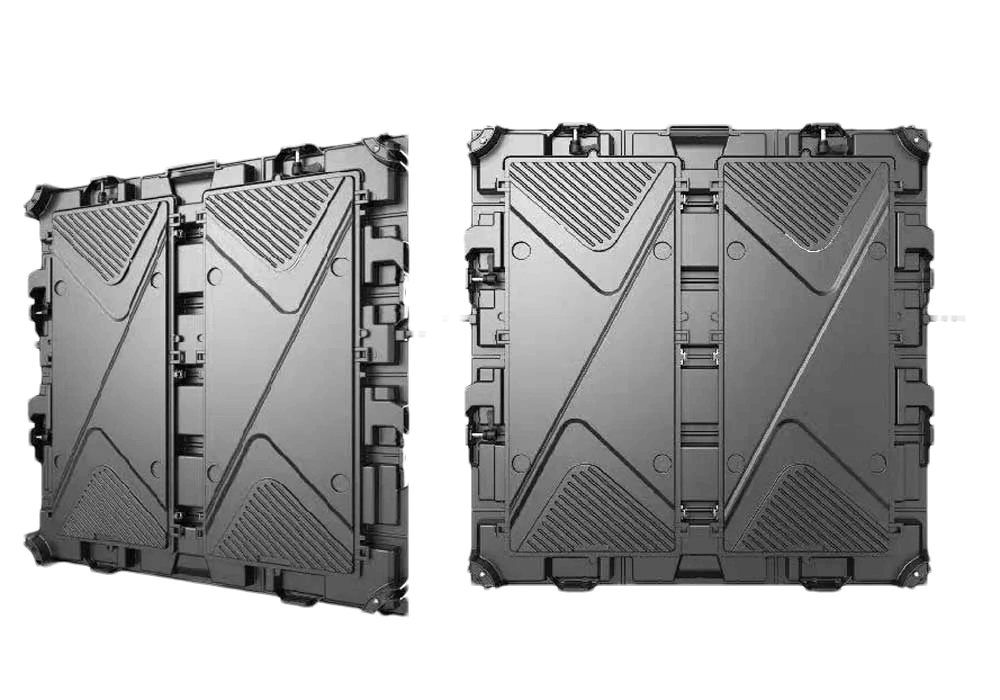
outdoor aluminum cabinet led display back view
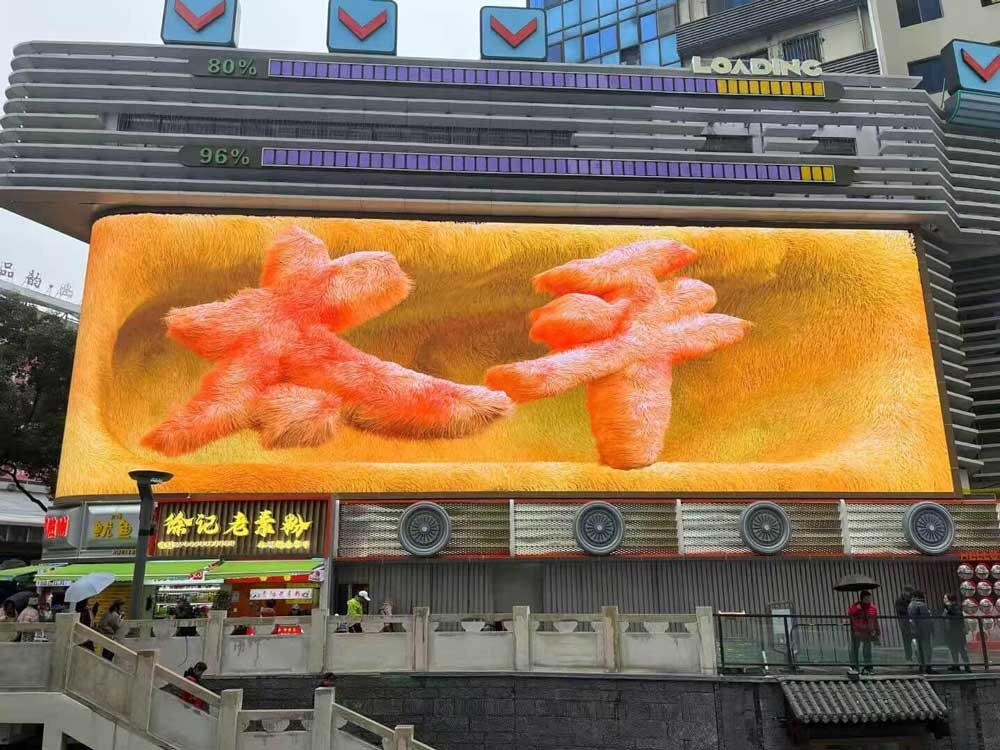
outdoor small pitch led façade display – commercial building (daytime)

What Is an Outdoor Small Spacing LED Display?

An Outdoor Small Spacing LED Display refers to an outdoor-rated LED screen with a small pixel pitch, typically ranging from P2 to P3, designed for short viewing distances in outdoor or semi-outdoor environments.

Unlike traditional outdoor LED displays (P4–P10), which are optimized for long-distance visibility, outdoor small spacing LED displays are engineered to deliver:

  • High image resolution at close range
  • Clear text and fine visual details
  • Sunlight-readable brightness
  • Stable operation under real outdoor conditions

In simple terms:

Outdoor small spacing LED displays solve the problem of close-view outdoor visibility that standard outdoor LED screens cannot handle.

🟦 Outdoor Small-Pitch LED Display Selection Guide

Pixel PitchRecommended Viewing DistanceTypical Applications
P2.0≥2 mUltra-close-view premium DOOH, landmark façades
P2.5≥2.5 mHigh-end commercial buildings, urban media walls
P3.0≥3 mCity centers, pedestrian areas
P4.0≥4 mCommercial façades, plazas
P5.0≥5 mStandard outdoor advertising
P6.0≥6–7 mCommercial outdoor displays
P8.0≥8 mLarge-area roadside displays
P10≥10 mLong-distance billboards

Key Performance Characteristics

Across the outdoor P2–P10 range, DisplayMan systems deliver:

  • Brightness: 4500–6500 nits adjustable
  • Refresh Rate: ≥1920Hz to ≥3840Hz (pitch dependent)
  • Gray Scale: ≥12bit per color
  • Viewing Angle: 120° horizontal / vertical
  • Protection: IP65 front, IP45 rear
  • Flatness: ≤0.5mm module-to-module
  • Operation: 7×24 continuous runtime

All specifications are designed for real-world outdoor deployment, not laboratory conditions.

How to Choose the Right Pixel Pitch for Outdoor Environments

Outdoor small-pitch LED displays combine high resolution with extreme environmental durability. Unlike indoor systems, outdoor applications must balance viewing distance, brightness, weather protection, and long-term stability under harsh conditions.

Selecting the correct pixel pitch is critical to performance, cost control, and reliability.

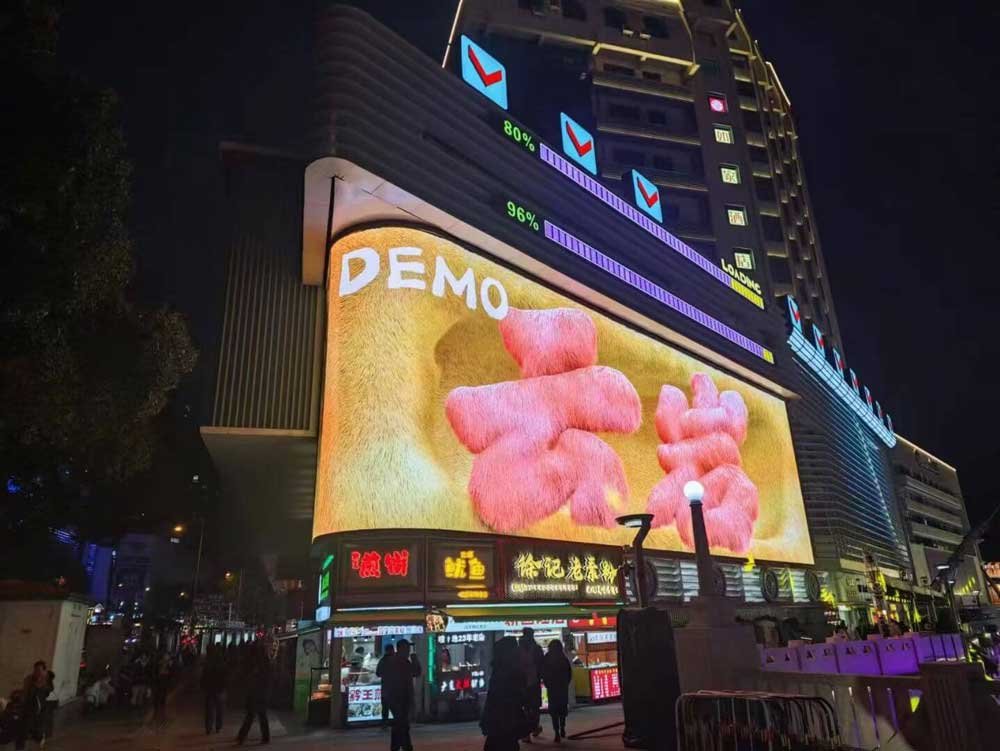
outdoor small pitch led façade display – nighttime visual performance

P2.0 / P2.5 — Ultra-Fine Detail for Close Outdoor Viewing

Recommended viewing distance:

  • P2.0: ≥ 2 meters
  • P2.5: ≥ 2.5–3 meters

Best suited for:

  • Outdoor shopfronts and brand façades
  • Premium DOOH and commercial entrances
  • Pedestrian areas with controlled viewing distance

Why choose P2.0 / P2.5:

P2.0 and P2.5 deliver extremely fine image detail for close viewing, but require high brightness (≥4000–5000 cd/m²) and strong thermal design. Ideal where image quality is prioritized over screen size.

⚠️ Best used in controlled sunlight or partial shade environments.

🌤️ P3.0  — Balanced Choice for Most Outdoor Projects

Recommended viewing distance: ≥ 3–5 meters

Best suited for:

  • Outdoor commercial signage
  • Building façades
  • Retail plazas and walkways

Why choose this pitch:

This range offers the best balance between clarity, brightness efficiency, and cost. It delivers sharp visuals at common outdoor viewing distances while maintaining stable performance under direct sunlight.

This is often the most widely specified range for outdoor small-pitch projects.

large outdoor led billboard with 3d visual effect – long distance viewing
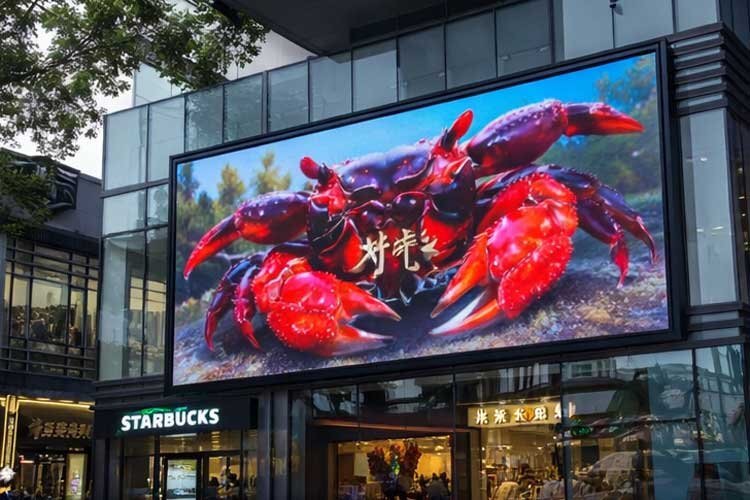
outdoor small pitch led display for retail advertising – crab promotion

🌇 P4.0 — Efficient Solution for Medium-Distance Viewing

Recommended viewing distance: ≥ 4–6 meters

Best suited for:

  • Outdoor information displays
  • Corporate campuses
  • Large storefront signage

Why choose P4.0:

P4.0 reduces pixel density while maintaining readability and brightness. It allows larger screen sizes with lower system cost and power consumption—ideal where audiences do not stand extremely close.

🌆 P5.0 — Scalable for Large Outdoor Display Areas

Recommended viewing distance: ≥ 5–8 meters

Best suited for:

  • Public squares
  • Outdoor event venues
  • Large architectural displays

Why choose P5.0:

Designed for scale and durability, P5.0 supports large display surfaces with excellent daylight visibility. It is often chosen when screen size and robustness matter more than ultra-fine detail.

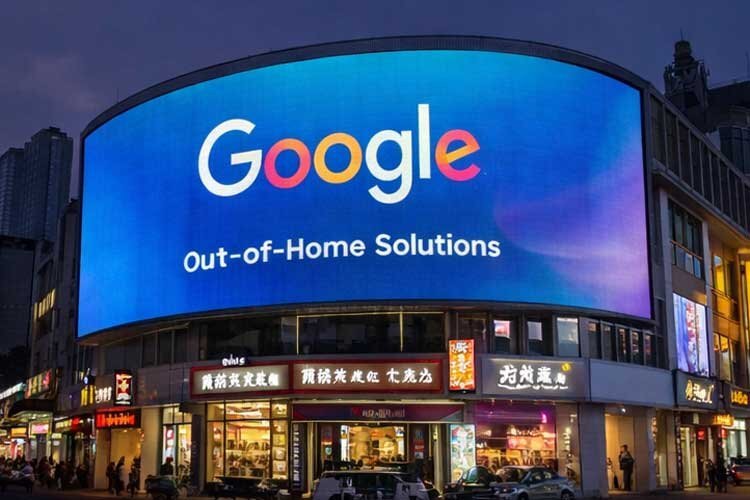
large scale outdoor digital billboard – google out of home advertising
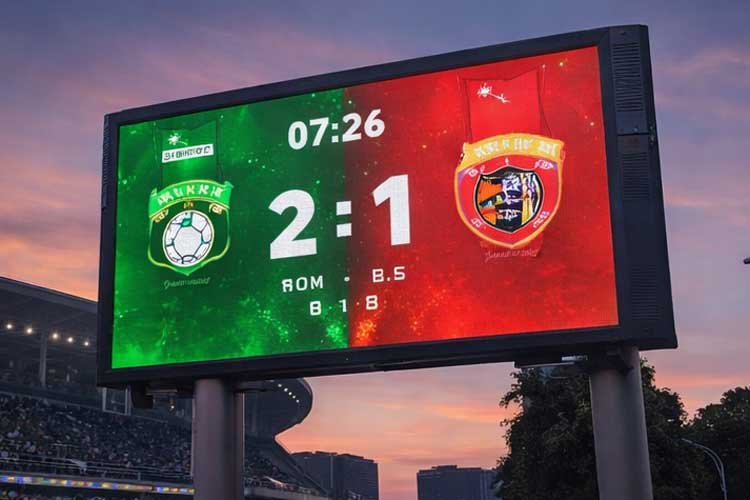
outdoor led sports scoreboard – live game broadcast in stadium

🌃 P6.0 — Optimized for Long Outdoor Viewing Distances

Recommended viewing distance: ≥ 6–7 meters

Best suited for:

  • Commercial outdoor advertising displays
  • Large building façades
  • Outdoor information and guidance screens

Why choose P6.0:

P6.0 is optimized for longer viewing distances where ultra-fine detail is no longer required, but brightness, stability, and cost efficiency become more important. It supports large screen sizes with lower pixel density, reducing system cost, power consumption, and thermal load while maintaining excellent outdoor readability.

This pitch is well suited for projects where viewers observe the screen from a distance and visual impact and reliability matter more than close-range detail.

🌉 P8.0 — High Visibility for Wide-Area Outdoor Coverage

Recommended viewing distance: ≥ 8 meters

Best suited for:

  • Roadside and arterial traffic displays
  • Large public spaces and open areas
  • High-mount outdoor advertising screens

Why choose P8.0:

P8.0 is designed for wide-area visibility and strong daylight performance. At these viewing distances, individual pixels are no longer perceptible, allowing large display surfaces to be built efficiently while keeping system complexity under control.

This pitch is often selected for outdoor installations that require:

  • High brightness and durability
  • Large screen coverage
  • Reliable operation under continuous outdoor exposure

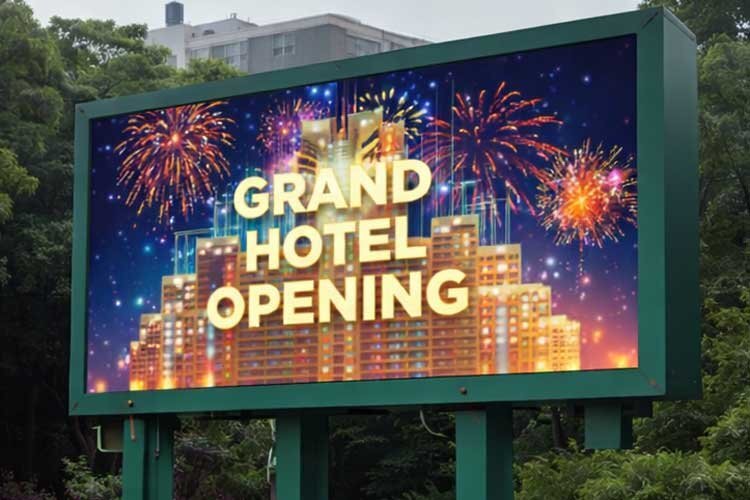
vibrant outdoor led display for grand hotel opening – event advertisement
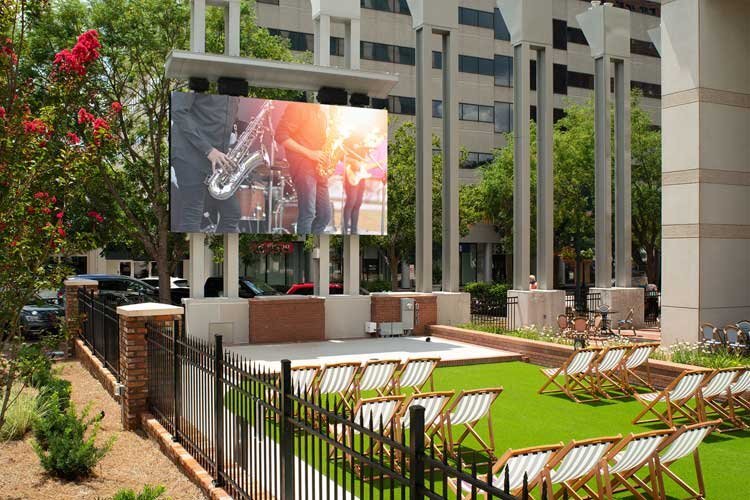
high brightness outdoor led display in urban plaza

🌌 P10 — Maximum Scale for Long-Distance Viewing

Recommended viewing distance: ≥ 10 meters

Best suited for:

  • Highway and long-distance billboards
  • Large-format outdoor advertising structures
  • High-mounted commercial LED displays

Why choose P10:

P10 prioritizes scale, brightness, and long-term durability over resolution. It enables the construction of very large outdoor LED billboards with excellent visibility at long distances, while keeping overall system cost and maintenance requirements manageable.

This pitch is ideal for applications where audience distance is fixed and controlled, and where coverage area and operational reliability are the primary considerations.

🟦 Why Outdoor Small Spacing LED Is a Technical Challenge

As pixel pitch decreases in outdoor environments, engineering complexity does not increase linearly—it increases exponentially. What works indoors at P1.8 or P2.5 becomes significantly more difficult when exposed to sunlight, rain, heat, dust, and long daily operating hours.

Outdoor small spacing LED systems must be engineered as fully integrated systems, not as scaled-down indoor products.

🔥 Higher Power & Heat Density

Smaller pixel pitch requires more LEDs per square meter. Outdoors, these LEDs must also operate at much higher brightness levels to remain visible under direct sunlight.

This combination dramatically increases:

  • Power density
  • Heat concentration within modules
  • Stress on LEDs, PCBs, and power supplies

Without optimized thermal design, excessive heat leads to brightness decay, color instability, and shortened lifespan.

🌈 Color Stability Under High Brightness

Outdoor small-pitch LED displays operate at 3,000–5,000+ cd/m², far above indoor levels. At these intensities:

  • LED wavelength shift becomes more pronounced
  • Color balance drifts faster over time
  • Grayscale uniformity is harder to maintain

Maintaining consistent color across thousands of high-density pixels requires precise LED binning, current control, and advanced calibration, especially for long-term outdoor use.

💧 IP65 Protection vs Maintenance Accessibility

Outdoor displays require IP65 or higher protection against water and dust. However, as pixel pitch decreases:

  • Module density increases
  • Service tolerances become tighter
  • Maintenance access becomes more complex

Designing a cabinet that is fully sealed yet still serviceable—often from the front—is a major engineering challenge in outdoor small spacing systems.

📐 Flatness & Mechanical Tolerance Control

At small pixel pitches, even tiny deviations in cabinet flatness or module alignment become visible as:

  • Brightness inconsistency
  • Color seams
  • Image distortion across large surfaces

Outdoor installations add mechanical stress from:

  • Wind load
  • Thermal expansion
  • Structural movement

Maintaining tight flatness tolerance across dense outdoor LED modules requires rigid cabinet design and precise assembly control.

🌦️ Long-Term Environmental Stress

Outdoor small-pitch LED displays must survive years of exposure to:

  • UV radiation
  • Rain and humidity
  • Dust and pollution
  • Daily and seasonal temperature cycles

These factors accelerate material aging, corrosion, and electronic fatigue. Without outdoor-specific materials and coatings, even high-resolution displays will degrade rapidly over time.

🧠 System-Level Engineering Is Mandatory

Because of these challenges, outdoor small spacing LED systems cannot be designed piecemeal. LEDs, modules, cabinets, power systems, and calibration must be engineered as one unified system.

This is why outdoor small spacing LED is not simply “indoor LED used outdoors”—it is a specialized engineering discipline.

DisplayMan approaches outdoor small spacing LED as a system-level challenge, ensuring stability, visibility, and reliability under real-world outdoor conditions—not just in controlled demonstrations.

🟦 Indoor vs Outdoor Small-Pitch LED Displays

Understanding the Real Differences Before You Specify

Small-pitch LED displays are used in both indoor and outdoor environments, but their design logic, performance priorities, and cost structure are fundamentally different. Choosing the wrong type can lead to unnecessary cost, visual discomfort, or long-term reliability issues.

🔍 Side-by-Side Comparison

CategoryIndoor Small-Pitch LEDOutdoor Small-Pitch LED
Primary EnvironmentControlled indoor lightingDirect sunlight, rain, dust
Typical Brightness300–600 cd/m²3,000–5,000+ cd/m²
Viewing DistanceVery close (1–4 meters)Medium to long (5 m+)
Pixel OptimizationFine grayscale & color accuracyHigh luminance & visibility
Refresh Rate FocusBroadcast & camera-safe performanceVisibility under daylight
Contrast PriorityHigh contrast for data & textSunlight readability
Thermal DesignLow heat, quiet operationHeavy thermal & power design
Weather ProtectionNot requiredIP65/IP67 waterproofing
Power ConsumptionLower, optimized for long indoor useHigher due to brightness
Cost StructureOptimized for precision & uniformityHigher BOM due to protection & power
Typical ApplicationsControl rooms, studios, boardroomsOutdoor signage, plazas, façades

🏢 Why Indoor and Outdoor Small-Pitch LEDs Are Not Interchangeable

Indoor small-pitch LED displays are specifically engineered to prioritize visual precision, comfort, and aesthetic appeal for indoor environments. These displays focus on offering an optimal viewing experience where visual quality and image refinement are of utmost importance, making them ideal for spaces where viewers spend extended periods.

Visual Precision and Comfort

Indoor small-pitch LEDs are built with extremely high color accuracy, ensuring that the color calibration is perfectly tuned to maintain consistency and vibrancy in controlled lighting conditions. The grayscale is finely tuned to produce smooth, detailed images with no visible artifacts even at very close viewing distances. This makes them perfect for environments like control rooms, conference halls, and luxury retail where every visual detail is critical.

Comfortable Brightness for Long Viewing Sessions

These displays are also designed with optimal brightness levels to ensure that the content remains visible without causing eye strain. Since indoor environments are usually well-lit or have controlled lighting, indoor LEDs are calibrated to avoid excessive brightness, which can lead to visual discomfort during long viewing sessions. The lower brightness (usually between 300–800 nits) is comfortable for these settings, allowing users to watch or interact with the display for extended periods without feeling fatigued.

Quiet, Low-Heat Operation

Indoor LED displays are engineered to operate quietly and with minimal heat generation, ensuring that they don’t disrupt the environment they’re placed in. Indoor spaces, especially conference rooms, showrooms, and offices, require technology that runs discreetly, maintaining a calm, professional atmosphere. Indoor displays often use passive cooling mechanisms that don’t generate excessive noise, a feature that’s essential in quiet, controlled settings.

Seamless Appearance at Close Distances

Because indoor small-pitch LEDs are designed for close-range viewing, their pixel pitch is optimized to provide seamless visuals at distances as close as 1–3 meters. These displays offer crisp details with no visible pixels, which is perfect for personal interactions, meetings, or high-end brand displays.

Why Outdoor LEDs Don’t Work the Same Indoors

When it comes to using outdoor small-pitch LEDs indoors, several issues arise:

  • Excessive Brightness and Eye Fatigue: Outdoor LED displays are built to be extremely bright (often 4500–6000 nits or more), which is essential for visibility in direct sunlight. However, this level of brightness is far too intense for indoor use and can lead to eye strain and discomfort, especially in low-light settings. Indoors, such high brightness becomes a major disadvantage, as it causes unnecessary glare and visual fatigue, disrupting the viewing experience.

  • Higher Power Consumption: Outdoor LEDs are designed to handle much higher power demands to cope with the extreme brightness needed for outdoor conditions. Indoors, where light levels are controlled, this excessive power consumption translates into higher operational costs and inefficiency. Indoor displays are designed to be energy-efficient, often with lower power consumption compared to outdoor units, which makes them a more cost-effective choice.

  • Unnecessary Cost: Outdoor LED displays are inherently more expensive due to the additional technologies required to withstand harsh weather conditions, such as UV resistance, high thermal tolerance, and waterproofing. When used indoors, these features are overkill and translate into higher upfront costs without providing additional benefits. In contrast, indoor LEDs are made to be more cost-effective while delivering excellent image quality and performance in indoor environments.

  • Reduced Image Refinement: The image quality of outdoor LEDs, while high, is typically less refined than that of indoor LEDs. Outdoor LEDs are designed with durability in mind rather than visual precision. As a result, they often feature lower pixel density and less detailed calibration, which can cause them to look rougher or less smooth when used indoors, where precision and subtlety are valued.

Conclusion: Choosing the Right Display for the Right Environment

In summary, indoor and outdoor small-pitch LEDs are not interchangeable because they are designed with fundamentally different priorities. Indoor LEDs focus on comfort, image refinement, and energy efficiency, while outdoor LEDs are engineered to withstand harsh environmental conditions and provide bright, durable performance in open spaces. Using the wrong type of display in an environment can lead to discomfort, increased costs, and compromised performance, which is why it’s essential to choose the right display for the specific conditions and needs of the space.

🌦️ Why Outdoor Small-Pitch LEDs Are Built Differently

Outdoor small-pitch LED displays are engineered with survivability as the primary concern, and image clarity as a close second. Unlike indoor displays, these outdoor solutions face a variety of harsh environmental factors that demand more robust design features.

Here’s why outdoor small-pitch LEDs are built to handle the toughest conditions:

1. Direct Sunlight & UV Exposure

Outdoor displays are exposed to constant sunlight that can reach up to 100,000 lux (compared to typical indoor lighting of 300–500 lux). This intense exposure requires the display’s LEDs and materials to withstand:

  • UV radiation from the sun that can degrade display quality over time
  • High levels of brightness (typically 4500–6000 nits) to be visible in direct sunlight without washing out the image

To achieve this, outdoor small-pitch LEDs use highly durable LED diodes, specialized coatings for UV protection, and high-quality optical materials that won’t fade or lose clarity.

2. Resistance to Rain, Dust, & Humidity

Outdoor LED displays are designed with sealed enclosures to prevent water and dust from damaging the electronics. This is critical, as outdoor units are often exposed to:

  • Heavy rain, which could otherwise seep into internal components
  • Dust storms and pollution, which degrade image quality and damage circuitry
  • Humidity that can cause internal condensation, leading to short circuits

To combat these threats, outdoor small-pitch LEDs feature IP65 or higher ratings (protection against high-pressure water jets and dust ingress), and are made from weather-resistant materials like rustproof aluminum or powder-coated steel.

3. Thermal Stress and Electrical Demands

Unlike indoor displays, which generally operate in temperature-controlled environments, outdoor LEDs must endure significant thermal stress:

  • Hot summers and cold winters, with temperature fluctuations between -10°C to 60°C
  • Higher power consumption, especially in fine-pitch models (P2–P3), which demand more energy to drive their high resolution

These factors generate extra heat that can damage components if not carefully managed. As a result, outdoor small-pitch LEDs are designed with:

  • Advanced cooling systems like passive or active fans to dissipate heat
  • Higher-quality thermal interface materials to prevent overheating and ensure long-term reliability
  • Constant-current drivers to balance power demands and ensure consistent brightness even as temperatures fluctuate

4. Longevity in Extreme Environments

Since outdoor installations are a significant investment, these displays are built to last. Lifetime reliability is paramount, and displays must perform consistently under extreme conditions for 10+ years.

Key factors that contribute to long-lasting performance include:

  • Enhanced LED lifetimes (over 100,000 hours)
  • Constant calibration to ensure pixel uniformity even with prolonged use in extreme conditions
  • Toughened glass or polycarbonate lenses to withstand impact, scratches, and harsh elements like hail or debris

5. Over-Engineered for Indoor Use

Due to these stringent outdoor requirements, outdoor small-pitch LEDs are built to a higher standard than indoor models. While they perform exceptionally well outdoors, they are often over-engineered for indoor spaces.

  • Costlier materials and technology are used to ensure weatherproofing, thermal management, and UV resistance
  • Increased brightness (4500 nits and above) can be unnecessary for indoor settings, yet these displays still deliver crisp, clear images indoors

This over-engineering means that while they excel in outdoor use, they can offer superior performance even in indoor environments where conditions are more controlled.

In Summary: Built for Toughness, Made to Last

Outdoor small-pitch LEDs are not just another display solution—they are built to survive in environments where traditional indoor displays would fail. From sunlight to storms, heat to humidity, and even electrical stress, these displays handle it all, offering unmatched reliability, brightness, and image quality under the harshest conditions.

This makes them ideal for outdoor use, and overkill for indoor settings—meaning that when you choose an outdoor small-pitch display, you’re investing in long-term performance no matter the conditions.


✅ Where Outdoor Small-Pitch LED Displays Are Used

Outdoor small and medium pixel-pitch LED displays are deployed where visibility, durability, and long-term stability are essential. In these environments, pixel pitch selection is driven by real viewing distance and usage patterns, not by specification chasing.

🏢 High-End Commercial Façades

Installed on retail buildings, corporate headquarters, and flagship stores, façade LED displays must deliver:

  • High brightness for daylight visibility
  • Precise color reproduction for brand content
  • Seamless appearance across large architectural surfaces

Small-pitch outdoor LED displays enable premium visual impact while integrating cleanly with building design.

📡 DOOH & Media Networks

Digital-out-of-home (DOOH) networks require displays that operate continuously and consistently across multiple locations.

Key requirements include:

  • Stable brightness and color over long operating hours
  • Reliable performance under varying weather conditions
  • Uniform appearance across networked screens

Correct pixel pitch selection ensures content remains clear without unnecessary cost or power consumption.

🚉 Transportation Hubs & Public Plazas

Airports, metro stations, and public squares demand displays that are readable at a range of distances and angles.

Outdoor LED systems in these spaces must:

  • Remain visible in direct sunlight
  • Withstand heavy environmental exposure
  • Provide clear information to moving audiences

Pixel pitch is selected based on typical pedestrian distance, balancing clarity and scale.

🏟️ Stadium Perimeters & Venues

Perimeter displays around stadiums and arenas are used for branding, sponsorship, and live information.

These installations require:

  • High impact at medium to long viewing distances
  • Robust mechanical and environmental protection
  • Stable operation during events and peak usage

Medium pixel-pitch outdoor LED displays are commonly specified to support large screen sizes with reliable performance.

🪧 Large-Scale Outdoor Billboards

Outdoor billboards prioritize scale, brightness, and durability over ultra-fine detail.

In these applications:

  • Viewing distances are long and controlled
  • Screen size efficiency is critical
  • Long-term operational stability matters more than resolution

Larger pixel pitch options enable cost-effective coverage of large areas while maintaining excellent daylight visibility.

🎯 Manufacturer Perspective

Across all outdoor applications, DisplayMan matches each pixel pitch to actual viewing distance and environmental conditions, ensuring:

  • Optimal visual performance
  • Controlled system cost
  • Long-term reliability in real outdoor operation

Rather than overspecifying resolution, this approach delivers practical, deployable outdoor LED solutions.

🟦 FAQ — Technical & Integration Considerations

Yes—when they are purpose-built for outdoor use.

Outdoor P2–P2.5 systems require significantly higher brightness driving, reinforced thermal management, and fully sealed cabinet structures. When these factors are engineered together, small-pitch LED displays can perform reliably in outdoor or semi-outdoor environments with close viewing distances.

The difference is mainly viewing distance and cost efficiency.

  • P4 supports closer viewing with higher image detail, making it suitable for pedestrian areas and architectural façades.
  • P5 is optimized for longer viewing distances and larger screen areas, offering better cost control and lower system complexity.

Both are widely used outdoors—the correct choice depends on how close viewers will realistically stand.

Yes.

With proper cabinet engineering, gasket design, and sealing structure, front-access maintenance can be achieved while maintaining IP65 front protection. This allows servicing from the display surface without compromising weather resistance.

Outdoor LED systems are typically designed for 7×24 continuous operation.

Stable performance depends on controlled thermal rise, power regulation, and component selection. When these are properly managed, long-term continuous operation is achievable without accelerated degradation.

For most commercial outdoor projects, P3 to P5 offers the best balance between:

  • Visual clarity
  • Viewing distance tolerance
  • Brightness efficiency
  • System cost

Ultra-fine pi