
F.A.Q.
Pixel pitch selection is primarily determined by viewing distance, but it should always be evaluated together with screen size, content type, and budget.
- Close viewing (1–2 m): P1.25 / P1.53
- Medium viewing (2–3 m): P1.86 / P2.0
- Longer indoor viewing (3–4 m+): P2.5
Beyond distance, factors such as whether the content includes fine text, data dashboards, or video, and whether the screen will operate for long hours, also influence the optimal choice.
Rather than defaulting to the smallest pitch, DisplayMan evaluates the actual viewing conditions to balance visual clarity, system cost, and long-term performance.
Yes. Indoor small-pitch LED displays are commonly used in environments that require extended or continuous operation, such as control rooms, command centers, and corporate monitoring spaces.
DisplayMan systems are engineered with:
- Controlled thermal design
- Stable power distribution
- Industrial-grade components
These measures ensure reliable performance during long daily operating hours, including 7×24 use when required.
Uniformity is achieved through factory-level calibration, not on-site adjustments alone.
Each LED module undergoes:
- Brightness calibration
- Color (chromaticity) calibration
- Consistency checks before shipment
This module-by-module calibration minimizes visible brightness differences, color shift, and seam artifacts when modules are assembled into large video walls, ensuring a clean and consistent image across the entire display.
In many professional indoor applications, yes.
Small-pitch LED video walls are often selected as a replacement for LCD video walls because they offer:
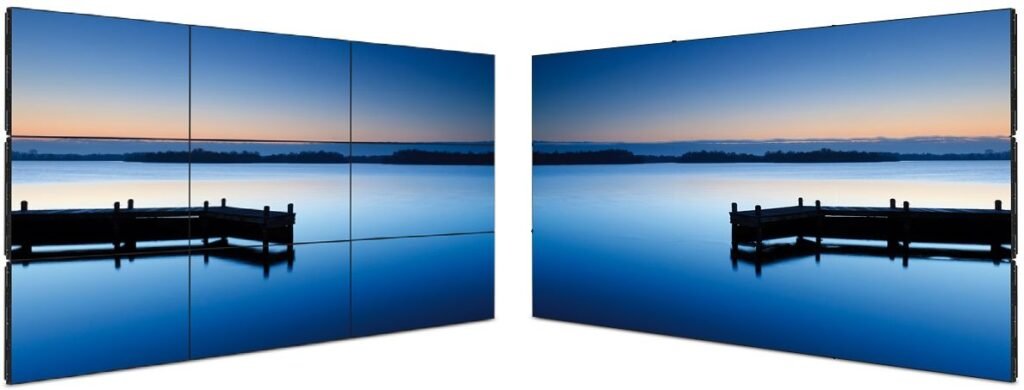
- Seamless images without bezels
- Greater flexibility in screen size and aspect ratio
- Easier long-term expansion
- More uniform appearance over time
For environments where visual continuity, data clarity, and scalability are important, indoor LED video walls provide a more future-proof solution than LCD systems.
To prepare an accurate proposal, the following information is typically helpful:
- Desired screen size (width × height or diagonal)
- Preferred pixel pitch (if known)
- Installation environment (room type, viewing distance, lighting)
- Intended usage (presentation, monitoring, video, broadcast, etc.)
- Any special requirements (front maintenance, redundancy, integration constraints)
If some details are not yet defined, our team can assist in refining the specifications and recommending a suitable configuration based on your project goals.
