Square TFT LCD Displays & Non-Standard Format Screens | DisplayMan

Modern product designs increasingly require displays that don’t fit traditional 4:3 or 16:9 rectangles.

Whether you’re building a compact device, a grid-based UI, or a product with a unique enclosure, DisplayMan’s Square & Non-Standard TFT LCD Displays give you the freedom to design without compromise.

Our modules combine precision geometry, IPS wide viewing, high brightness, and full customization β€” engineered to fit your product perfectly.


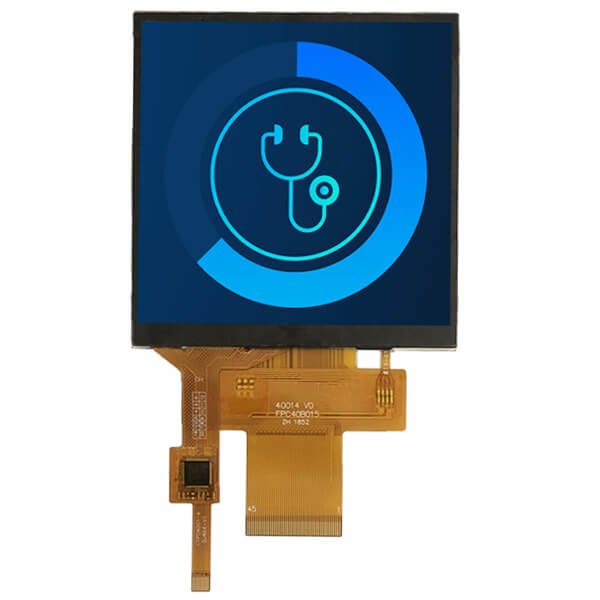
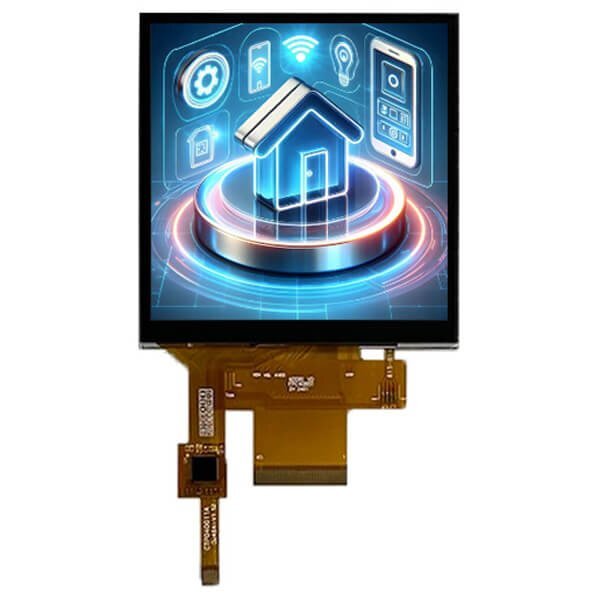
4.0 inch 720x720 serial screen can signal interface wide temperature lcd display module uart board

πŸ–ΌοΈ Showcase of DisplayMan Square TFT LCD Displays

Discover DisplayMan’s refined lineup of square-format TFT LCD modules, engineered for devices where a perfectly balanced display shape delivers both functional clarity and modern visual appeal.

From smart home panels and audio systems to industrial instruments, test equipment, and retail interfaces, these square displays provide exceptional versatility, sharp full-color graphics, and consistent visibility from all angles.

Our showcase highlights the full spectrum of available sizes, resolutions, brightness levels, and customization options β€” including touch integration, sunlight-readable upgrades, ultra-rugged designs, and fully customizable FPC, interface, and mechanical structures.

Whether you need a ready-to-use standard module or a custom square display precisely tailored to your enclosure and UI layout, this collection demonstrates the core capabilities DisplayMan brings to modern compact-format display design.
Key SpecificationDetails
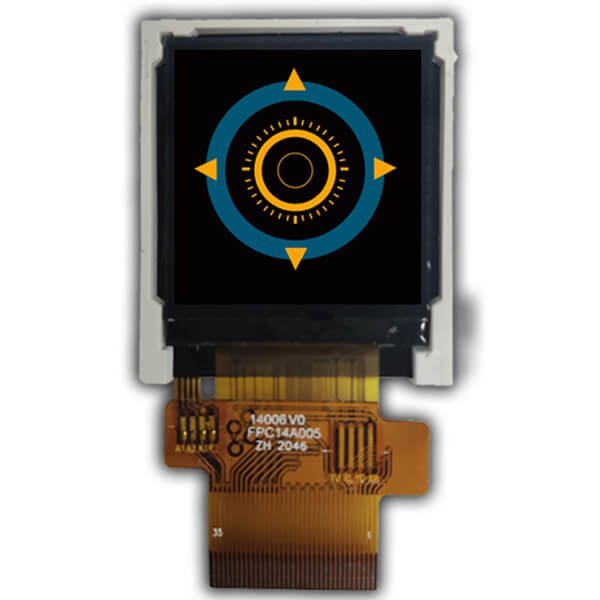
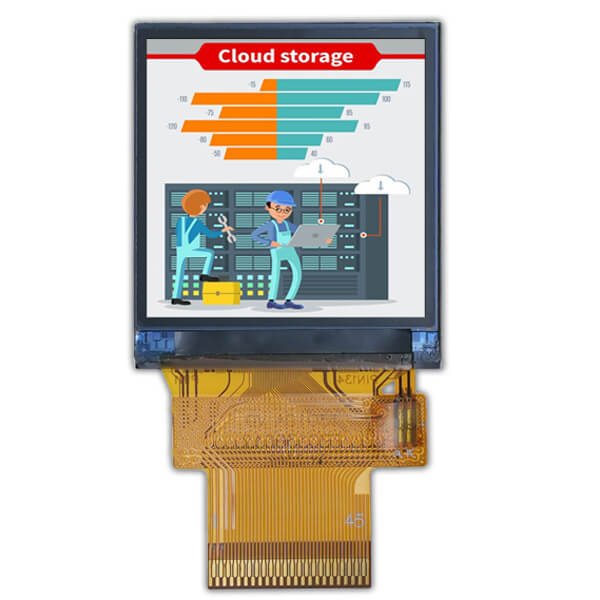
Product Name1.3″ 240Γ—240 Square TFT LCD (ST7789T3-G4 Controller)
Part NumberKD013QVFMD010A
Display TechnologyTFT LCD, Transmissive, Normally Black
Resolution240 Γ— 240
Brightness550 cd/mΒ²
Touch PanelNone
Interface TypeMCU / SPI / RGB (Multiple Interface Options)
Active Area (WΓ—H)23.40 Γ— 23.40 mm
Input Voltage3.3V
Operating Temperature–20Β°C to +70Β°C
Key SpecificationDetails
Product Name1.44″ 128Γ—128 IPS Square TFT LCD (ST7735S Controller)
Part NumberKD014QQFBN006
Display TechnologyIPS TFT LCD, Transmissive, Normally Black
Resolution128 Γ— 128
Brightness950 cd/mΒ²
Touch PanelNone
Interface Type8/16-bit MCU, 3-/4-Line Serial
Active Area (WΓ—H)25.50 Γ— 26.50 mm
Input Voltage3.3V
Operating Temperature–20Β°C to +70Β°C
SpecificationDetails
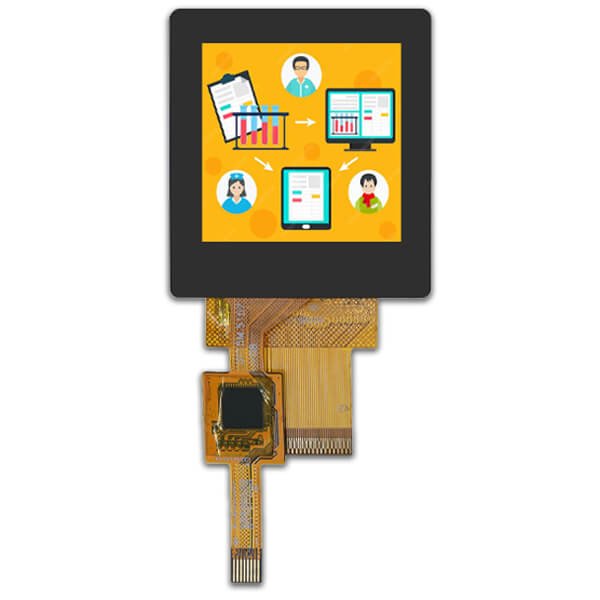
Product Name1.5″ Square IPS TFT LCD with Capacitive Touch
Part NumberKD015QVFMD020-C001D
Resolution240 Γ— 240
Display TypeIPS TFT, Normally Black
Brightness800 cd/mΒ²
Touch PanelCapacitive Touch (G+G)
InterfaceMCU / SPI / RGB
Active Area27.72 Γ— 27.72 mm
Input Voltage3.3V
Operating Temp.–20Β°C to +70Β°C
SpecificationDetails
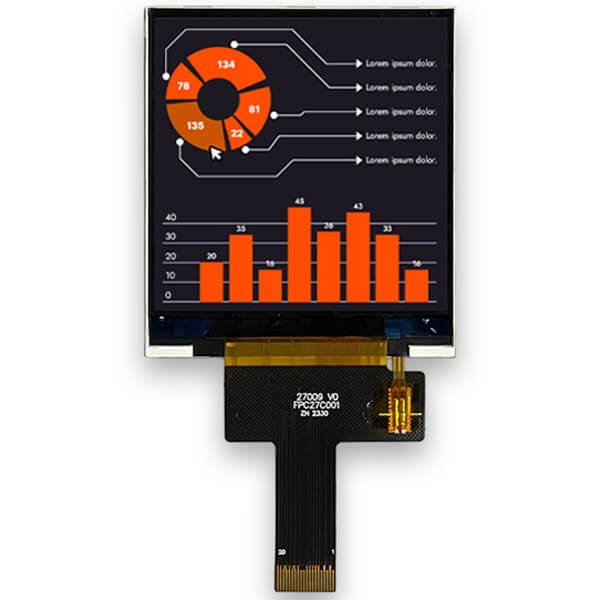
Product Name2.7″ Square TFT LCD (Wide Temperature)
Part NumberKD027HVFID009
Resolution320 Γ— 320
Display TypeTFT LCD, Normally Black
Brightness900 cd/mΒ²
Touch PanelNone
InterfaceMIPI
Active Area48.96 Γ— 48.96 mm
Input Voltage3.3V
Operating Temp.–30Β°C to +85Β°C
SpecificationDetails
Product Name3.4″ Square High-Brightness TFT LCD
Part NumberKD034WXFID001-SP002A-TypeC
Resolution480 Γ— 480
Display TypeTFT, Normally Black
Controller ICST7701S
Brightness950 cd/mΒ²
Touch PanelNone
InterfaceUSB Type-C
Active Area60.48 Γ— 60.48 mm
Operating Temp.–20Β°C to +70Β°C
 
SpecificationDetails
Product Name4.0″ Square IPS TFT LCD with Capacitive Touch
Part NumberKD040WXFPD014-C015C
Resolution480 Γ— 480
Display TypeIPS, Normally Black
Controller ICST7701S
Brightness850 cd/mΒ²
Touch PanelCapacitive Touch
Touch ICGT911
InterfaceRGB (16/18/24-bit)
Operating Temp.–30Β°C to +85Β°C
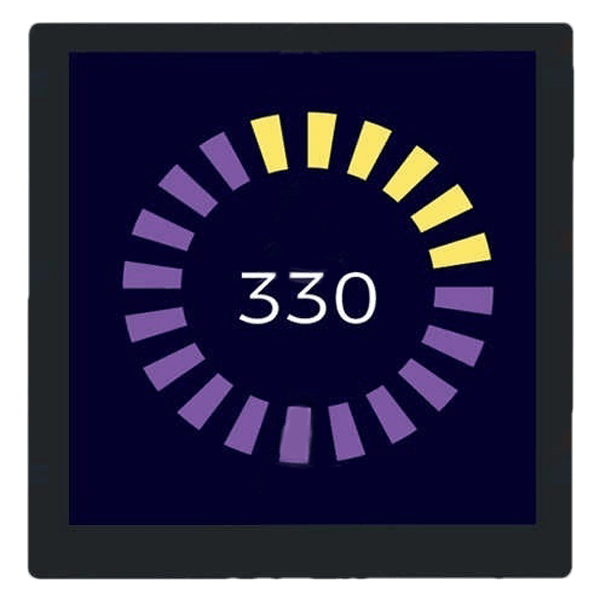
4.0 inch 320x320 st7796 spi+mcu+rgb interface square tft high brightness ips lcd capacitive touch display

🧩 What Is a Square / Non-Standard Format TFT LCD Display?

A square TFT LCD display uses a 1:1 aspect ratio (e.g., 240Γ—240, 320Γ—320, 480Γ—480), designed for applications where a rectangular screen wastes space or disrupts interface symmetry.

A non-standard format TFT display includes any module outside the conventional 4:3, 16:9, or smartphone aspect ratios β€” such as:

  • Square (1:1)
  • Ultra-narrow
  • Ultra-wide
  • Mini-bar
  • Custom dimensions tailored to your enclosure

These formats offer superior space efficiency, cleaner layouts, and modern UI flexibility.

Your product shouldn’t change to fit the display β€” the display should fit your product.

πŸ“Š Comparison: Square vs. Round TFT LCD Displays

πŸ”Ή Formats

  • Adafruit Square RGB 666 TTL TFT Display: A 3.4β€³ square TFT module with 480 Γ— 480 resolution in a 1:1 aspect ratio.
  • Adafruit Round RGB 666 TTL TFT Display: A 2.8β€³ circular TFT module with 480 Γ— 480 resolution in a fully round active area.

CriteriaSquare / Non-Standard Format TFTRound / Circular TFT
Geometry fitFits square or rectangular housings; better for grid UIs and compact form factorsPerfect for dial-style, gauge-style interfaces; optimized for circular enclosures
Screen utilisationMaximum use of active area in square layout β€” minimal wasted spaceEfficient for circular layouts, but may require optimisation of electronics for true circular area
Design flexibilityEasier to integrate with existing PCBs, rectangular housings, off-the-shelf partsOffers unique aesthetic and interface style; more specialised design
Mechanical complexity & costGenerally lower cost, easier supply chain and standard form factorsHigher manufacturing complexity (custom active area, unique backlight, glass shape) β†’ cost tends to be higher. RJY Display+1
Use-case suitabilityIdeal for handheld devices, IoT controllers, meters with square display needsIdeal for wearables, smartwatches, dials, gauges, and decorative interfaces where circular form is beneficial Rocktech+1
UI layout & user interactionGood for grid-based menus, dashboards, square icons, rectangular paginationExcellent for rotary menus, circular gesture input, gauge style visuals, ring charts
Visibility & performanceCan support wide viewing angles, high brightness, IPS, just like standard displaysSame performance is possible but internal manufacturing is more complex to maintain full fidelity across a circular shape Fannal+1
Brand / Premium impactProvides clean, modern look β€” less dramatic than circularStrong premium/innovative feel β€” circular displays often catch more attention
CustomizationMany standard square sizes available; non-standard aspect ratios also possibleMore bespoke; custom diameters and circular shapes often need tailored manufacturing
Supply chain & pricingMore mature supply chain, generally lower costCost premium due to speciality manufacturing and tighter tolerances for circular shape

βœ… Summary: When to Choose Each

  • Choose a Square / Non-Standard Format TFT if your product has:
    • A square or rectangular enclosure
    • Grid-based UI or lots of icons/data
    • Needs cost-effective integration, standard sizing
    • Less emphasis on β€œnovel form factor” but needs functional fit
  • Choose a Round / Circular TFT if your product has:
    • A circular housing or dial-style UI
    • A design where aesthetics, premium feel or rotary interaction matter
    • A requirement for unique interface form (smartwatch, gauge, rotational knob)
    • Budget and integration resources for a more specialised display solution

πŸ” Engineering Considerations & Trade-offs

  • Round displays often require custom backlights, polarizers, and glass shapes to maintain uniform brightness and color across a circular active area.
  • Square/non-standard formats may be simpler, but ensure your UI design leverages the available area effectively β€” avoid forcing a circular UI into a square display unless appropriate.
  • Consider interface & touch compatibility: both formats can support SPI, MIPI, RGB, touch overlaysβ€”but ensure driver board and mechanical fit are verified.
  • Cost vs differentiation: circular displays cost more, so weigh design benefit vs budget.

⚠️ The Problem with Standard Rectangular Displays

Traditional rectangular TFT LCDs were never designed for compact, symmetrical, or uniquely shaped products.

When engineers try to force a rectangle into a space that wasn’t made for it, problems appear immediately β€” in mechanical design, UI layout, and even user perception.

Below is what typically goes wrong:

Rectangular panels rarely match square housings or compact device footprints. This leaves: - unusable corner voids, - inefficient PCB layout, - bulky casing to hide unused areas. As a result, the device becomes larger than necessary, driving up **material cost** and **assembly complexity**.

A rectangular panel often becomes the limiting factor in product design: - forces designers to enlarge the enclosure just to fit the display - increases bezel width - creates uneven margins around the UI - complicates water resistance or sealing For consumer-facing products, this becomes a major **design flaw**.

Using a rectangular display inside a square or circular UI forces awkward compromises: - circular meters don’t align cleanly - grid or tile UIs waste corners - the UI looks β€œshrunk” to fit the rectangle - icons appear off-center or cropped This reduces **readability**, **intuitiveness**, and **overall user experience**.

To make a rectangular display *appear* square or round, engineers often must add: - masking layers - printed borders - custom glass shapes - thicker bezels to hide inactive areas This adds **time**, **cost**, and **risk of misalignment**, especially during mass production.

🟦 Why Choose Square & Non-Standard Displays?

Square and non-standard format TFT LCDs unlock design freedom that standard rectangular displays simply cannot offer.

They provide perfect geometric alignment, superior space efficiency, and cleaner UI layout for compact enclosures, modern devices, and specialized applications.

Below is a fully elaborated version of each advantage:

🟦 Perfect for Compact UIs

A 1:1 aspect ratio naturally suits interfaces that are organized around:

  • tile-based menus
  • grid dashboards
  • icon clusters
  • rotary-style menus
  • circular overlays inside square frames

Because the display geometry matches the UI geometry, designers can:

  • place icons symmetrically
  • reduce scrolling
  • maximize reading space
  • simplify GUI development

For many embedded products, this results in a far cleaner, more intuitive experience.

🟦 Efficient Use of Screen Real Estate

Rectangular displays waste pixel areas when placed into square enclosures or compact housings.

With square and non-standard panels:

  • every pixel contributes to data visualization
  • no corner areas are cropped or unused
  • bezel width becomes uniform
  • UI grids fit perfectly without distortion

This improves clarity, reduces housing size, and enhances interface consistency.

🟦 Modern, Symmetrical Appearance

Square displays create a minimalistic, balanced, and premium UI presentation β€” especially in products where aesthetics influence perceived quality.

Benefits include:

  • perfect symmetry
  • equal margins on all sides
  • seamless integration into modern device layouts
  • visually aligned UI elements

For medical devices, IoT controllers, consumer electronics, and scientific tools, symmetry communicates precision and professionalism.

🟦 Ideal for Specialized Equipment

Many instruments and tools were never meant to use rectangular displays.

Square TFT LCDs naturally fit the geometry of:

  • digital meters and gauges
  • environmental sensors
  • handheld instruments
  • portable analyzers
  • compact HMI panels
  • smart controllers
  • audio mixers and equalizers

These devices benefit from compact layouts and centered interfaces, making square/non-standard displays the most efficient choice.

*

🟦 Lower Mechanical Complexity

Using a rectangular screen in a square or atypical enclosure forces engineers to hide unused areas with:

  • printed masks
  • thick bezels
  • custom overlay shapes
  • shading films

Square/non-standard displays eliminate this work completely.

Advantages:

  • simpler enclosure design
  • fewer tolerance issues
  • cleaner visual alignment
  • reduced production time and cost
  • improved sealing and water resistance

The entire active area is usable, resulting in fewer parts and a more reliable assembly process.

Square & non-standard format TFT LCDs give you geometry that matches your enclosure, simplify UI design, and deliver a cleaner, more modern aesthetic β€” all while reducing mechanical and engineering overhead.


🌟 Key Advantages of DisplayMan Square TFT LCDs

Square TFT LCDs are more than just a different shape β€” they provide a fundamentally better fit for compact devices, grid-based interfaces, and modern industrial designs.

DisplayMan enhances this form factor with IPS clarity, high brightness, touch integration, and industrial-grade durability, creating displays that perform flawlessly in demanding real-world applications.

Below are the engineering advantages that make DisplayMan’s square and non-standard format TFTs the preferred choice for OEMs worldwide.

πŸ“ True 1:1 Square Geometry

Square TFT LCDs are purpose-built for devices that demand symmetry, compactness, and UI precision.

DisplayMan’s 1:1 aspect ratio ensures:

  • perfectly balanced layouts
  • uniform margins on all sides
  • easier icon and grid placement
  • more usable active area for compact housings

This geometry eliminates the wasted corner space common in rectangular screens, allowing designers to build smaller, more elegant enclosures without sacrificing display area.

πŸ‘οΈ Wide 178Β° IPS Viewing Angle

All square TFT modules use IPS technology, guaranteeing visual consistency from every direction.

Benefits include:

  • no color inversion
  • uniform brightness across angles
  • accurate data visibility for multi-user environments
  • ideal performance in handheld and portable tools

Whether viewed from above, below, or from the side, the UI remains crisp and legible β€” crucial for medical devices, industrial HMIs, and diagnostic instruments.

🌞 High Brightness Options

DisplayMan offers brightness configurations ranging from 300 to 1,000 nits.

This ensures:

  • excellent readability outdoors
  • strong visibility under factory lighting
  • stable performance in kiosks, controllers, and portable devices
  • compatibility with optical bonding and AR/AG coatings

High-bright models are engineered for reliable operation in sunlight, glare-heavy environments, and outdoor-facing products.

🎨 Vibrant, Full-Color Graphics

Our square displays deliver:

  • 16.7 million colors (24-bit RGB)
  • high contrast ratios
  • deep blacks & crisp whites
  • smooth gradients & precise fine-line graphics

This makes them perfect for:

  • waveform visualization
  • analytic dashboards
  • icon-based UIs
  • measurement readouts
  • modern graphical interfaces

Whether your application requires sharp data visualization or attractive consumer-grade graphics, DisplayMan square TFTs deliver superior visual performance.

πŸ–±οΈ Touch Options (PCAP / Resistive)

DisplayMan supports both touch technologies based on application needs:

PCAP (Projected Capacitive)

  • multi-touch gesture support
  • glass-on-glass or OCA bonding
  • premium appearance
  • ideal for consumer, medical, and smart devices

Resistive Touch

  • glove / wet conditions supported
  • cost-effective
  • precise single-point interaction
  • ideal for industrial, handheld, or test equipment

Each touch panel can be customized for thickness, cover glass printing, and bezel integration.

βš™οΈ Flexible Interface Support

Square TFT LCDs integrate seamlessly with modern and legacy systems.

Available interfaces include:

  • SPI (low pin count, lightweight)
  • RGB (high-speed parallel)
  • MCU (direct microcontroller integration)
  • MIPI DSI (high-resolution, low-power mobile interface)

DisplayMan can also supply:

  • custom driver boards
  • timing optimization
  • interface conversion solutions

This ensures plug-and-play compatibility across a wide variety of embedded platforms.

πŸ’ͺ Industrial-Grade Reliability

Every DisplayMan square TFT module is engineered for demanding environments:

  • wide temperature operation
  • vibration and shock resistance
  • UV-resistant optical materials
  • long-life LED backlights (50,000+ hours)
  • strict QC under ISO 9001 standards

These modules are built for 24/7 operation, making them ideal for medical devices, industrial controllers, field instruments, and mission-critical embedded systems.

🧭 Applications That Benefit from Square & Non-Standard TFT Displays

Square and special-format TFT LCDs shine in environments where space is limited, interfaces must remain clean, and geometry matters. Their 1:1 design and compact footprint make them ideal for a wide variety of embedded devices across consumer, industrial, and medical sectors.

πŸ”‹ Smart Devices & IoT Controllers

Square TFT displays integrate naturally into compact enclosures used for:

  • smart thermostats
  • home automation hubs
  • smart locks
  • multi-function IoT control pads

The symmetrical layout provides a premium, modern look, while the efficient use of space reduces enclosure size and simplifies PCB placement.

πŸ§ͺ Test & Measurement Equipment

Square and non-standard displays are ideal for:

  • waveform viewers
  • portable analyzers
  • digital meters
  • handheld diagnostic tools

The 1:1 ratio allows instrument data, charts, and numeric values to be displayed cleanly and centrally, improving operator accuracy and usability in field environments.

πŸŽ›οΈ Audio Equipment & Mixers

Professional and consumer audio gear benefit from:

  • symmetrical equalizer layouts
  • level meters
  • mode indicators
  • compact touchscreen menus

A square display offers a clean, precise UI that visually aligns with knobs, sliders, and rotary encoders commonly used in audio designs.

πŸ–₯️ Industrial HMI & Compact Control Panels

Square displays maximize visibility in small control panels, delivering:

  • well-organized menus
  • icon-based controls
  • real-time industrial data
  • alarms and process indicators

The geometry makes them ideal for tight spaces, modular HMIs, and distributed control nodes that cannot fit larger rectangular displays.

πŸ’Š Medical & Laboratory Devices

Medical handheld and benchtop devices require:

  • clear, unambiguous icons
  • grid-based readouts
  • stable color accuracy
  • compact integration

Square displays provide a clean, professional appearance with reliable IPS visibility, making them suitable for analyzers, diagnostic meters, imaging accessories, and portable medical tools.

πŸ•ΉοΈ Consumer Electronics

Modern gadgets, wearables, and personal devices use square displays for:

  • compact media interfaces
  • minimalistic icon grids
  • clean app menus
  • visual indicators

The modern, sleek shape makes consumer products look premium and future-ready, enhancing both functionality and visual appeal.

πŸ” Engineering FAQ – Square & Non-Standard Format TFT LCD Displays

DisplayMan offers true square formats (such as 1.3β€³ to 4.0β€³ diagonals) and fully custom aspect-ratios. If your product demands a unique geometry (e.g., 480Γ—480, 640Γ—640, or a 2:3 layout), we can engineer the panel to match your mechanical design specified in your drawings.

Yes β€” we provide brightness options up to 2,000 nits along with enhancements like optical bonding and anti-reflective coatings, making them suitable for strong ambient light, industrial settings, and outdoor-facing products.

Our modules support a wide range of standard interfaces including SPI, RGB, MCU, and MIPI DSI, and we also provide custom driver-board solutions when special timing or legacy interfaces are required.

Yes. We integrate both projected capacitive (PCAP) and resistive touch technologies. PCAP is ideal for sleek, consumer-grade UIs, while resistive works well in industrial environments, with gloves or in rugged conditions.

For custom display formats, the prototype phase is typically 6–8 weeks, followed by volume production in approximately 8–10 weeks, depending on the complexity of mechanical modifications, optical tuning, and the interface/driver board requirements.