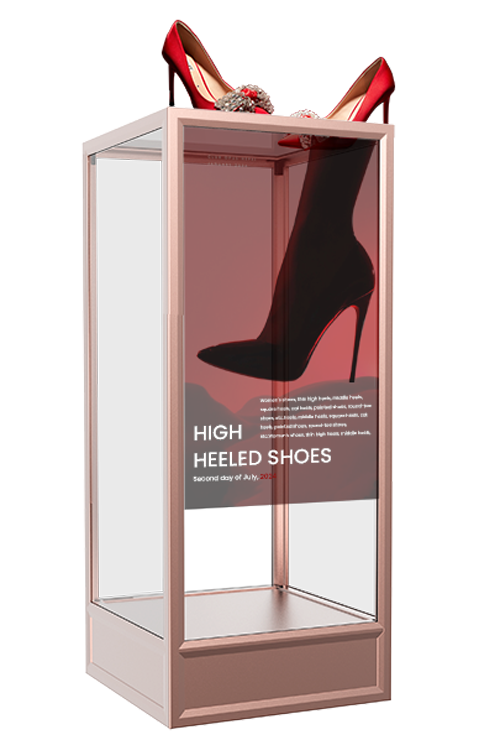
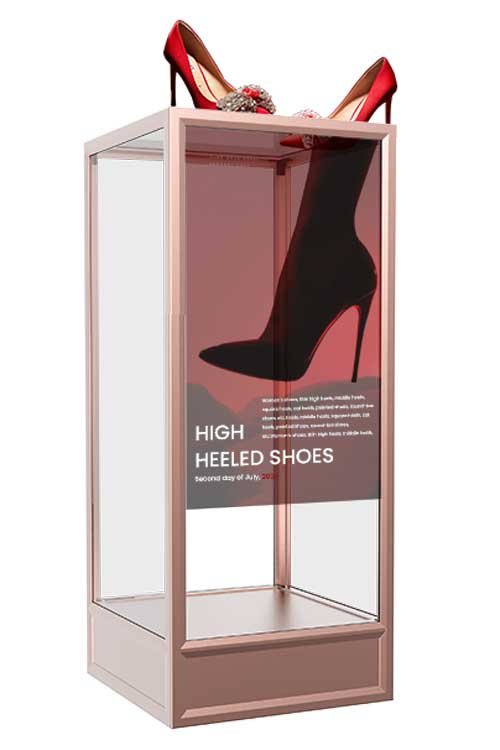
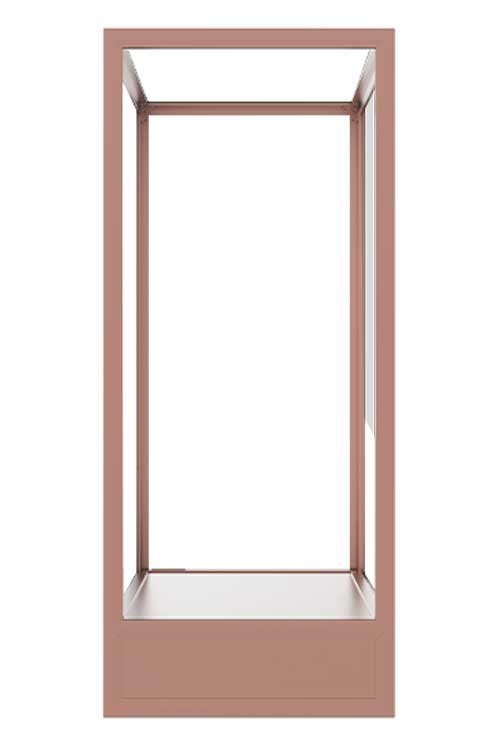
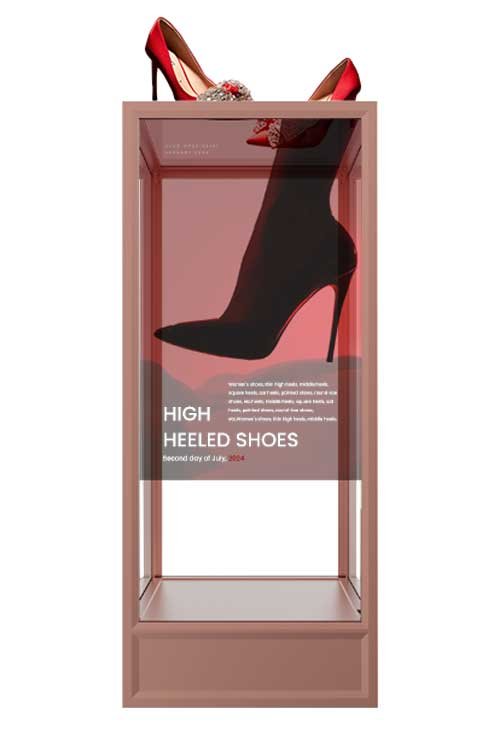
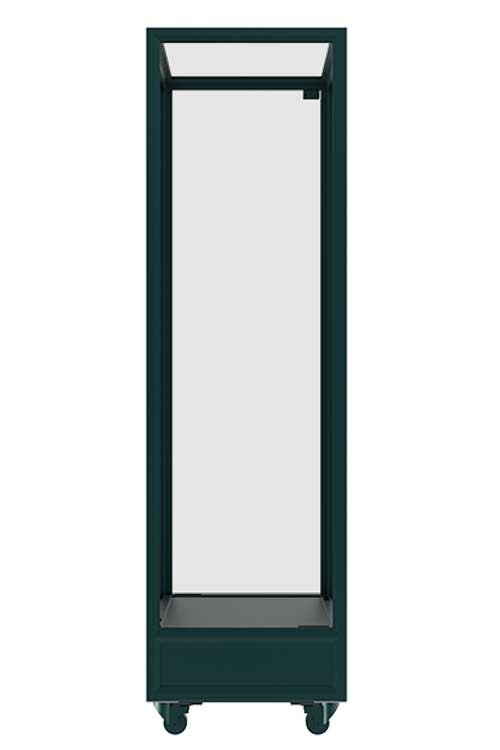
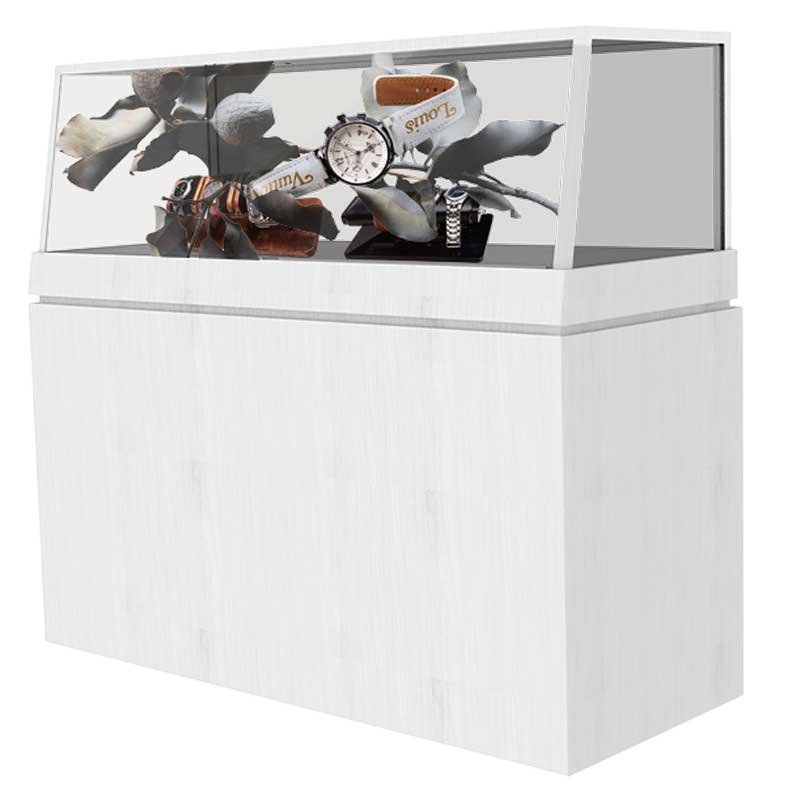
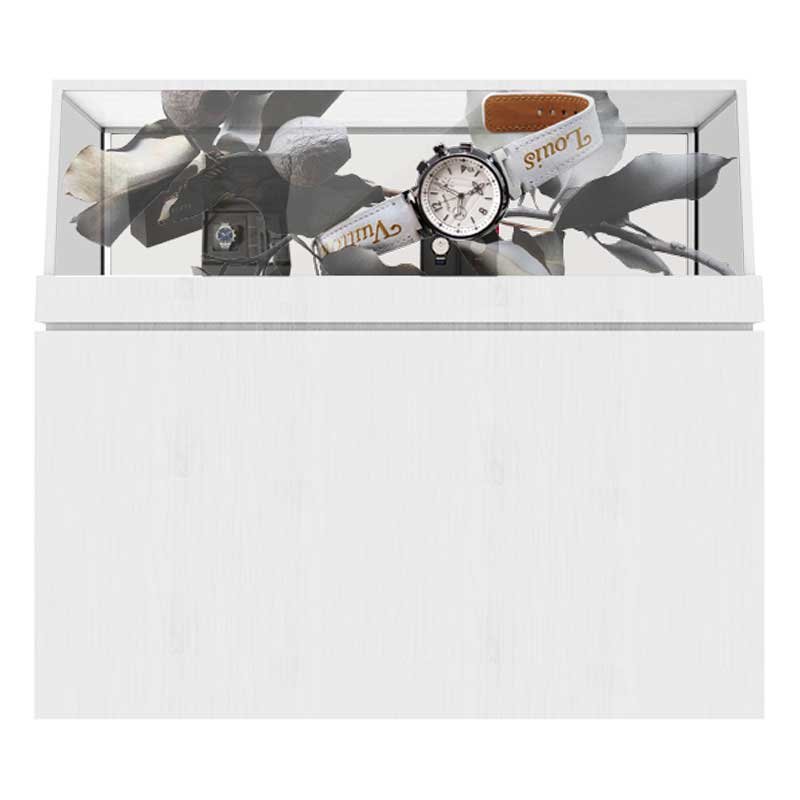
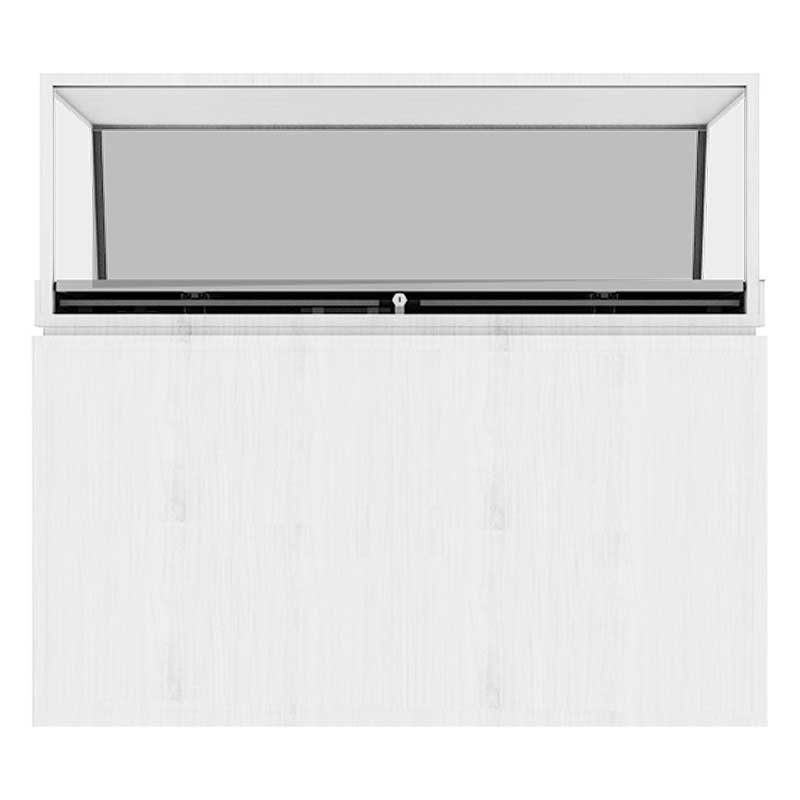
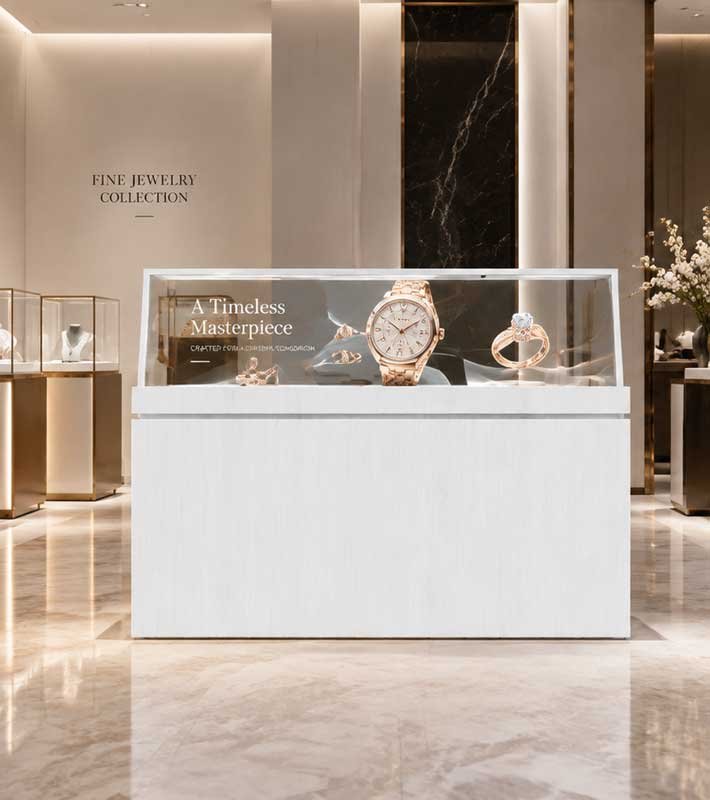
Experience the future of product presentation with DisplayMan’s cutting-edge Transparent OLED Display Cabinet — where real products and digital content appear as one. Perfect for luxury retail, museums, tech expos, and high-end showrooms.
🔹 ≥45% Transparency 🔹 4K OLED Clarity 🔹 Interactive & Customizable
🔹 Freestanding or Built-In 🔹 Designed for Impact
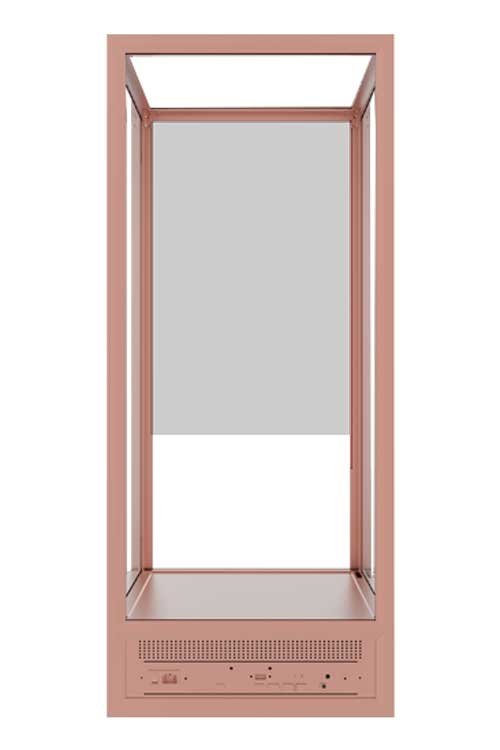
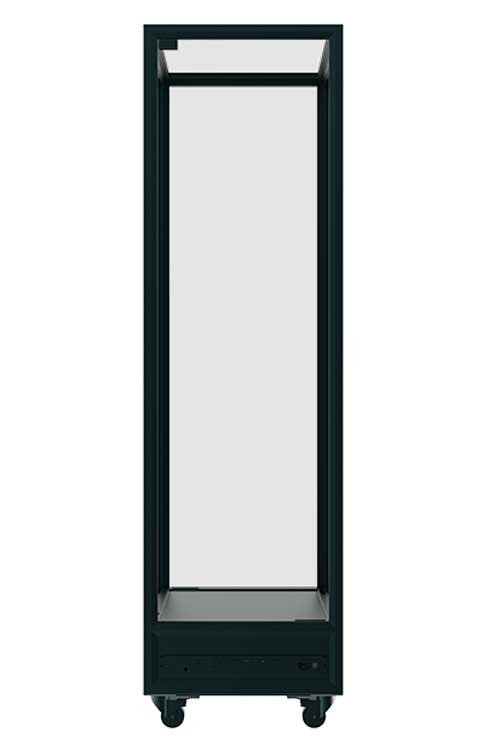
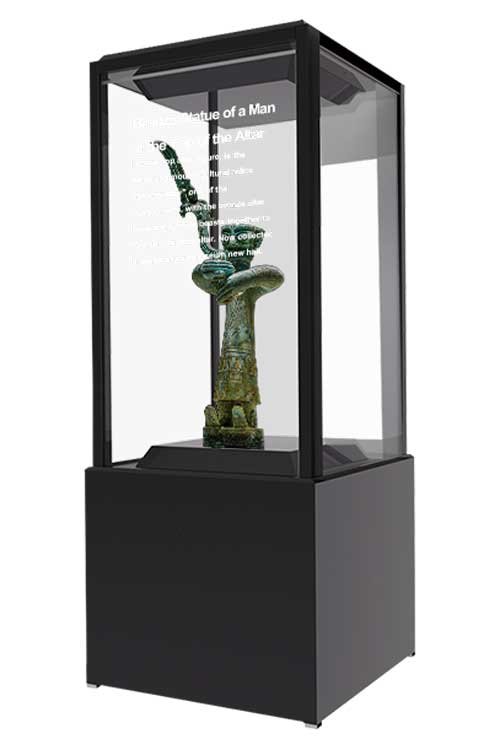
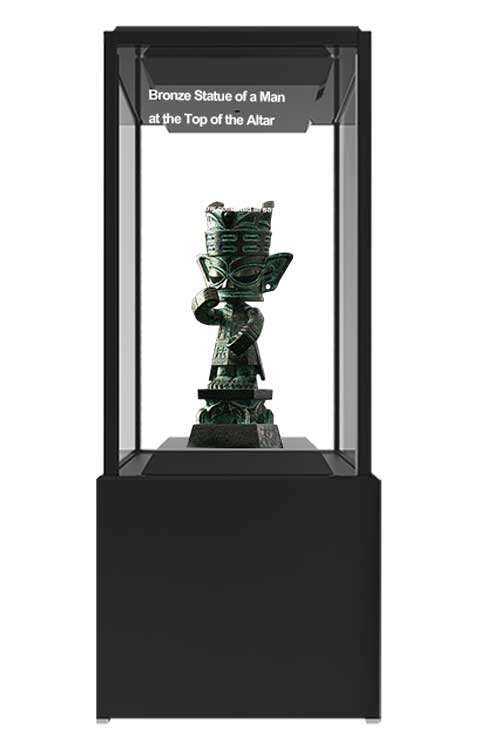
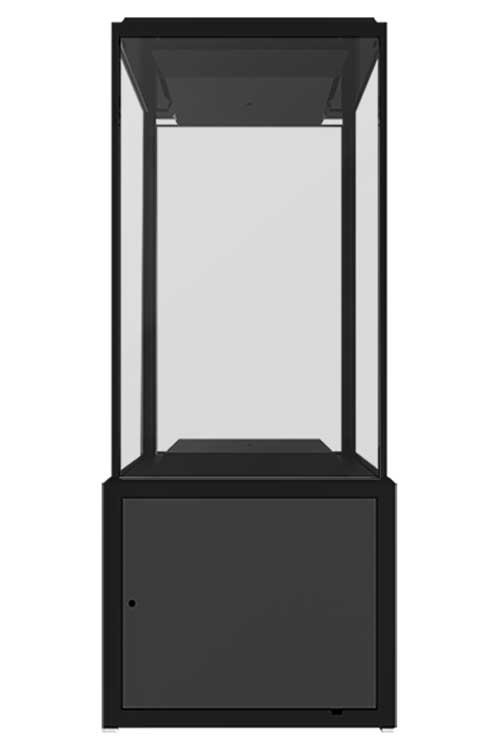
A Transparent OLED Display Cabinet is a premium showcase system that combines a self-emissive transparent OLED screen with a cabinet, display case, wine cabinet, museum showcase or product presentation structure.
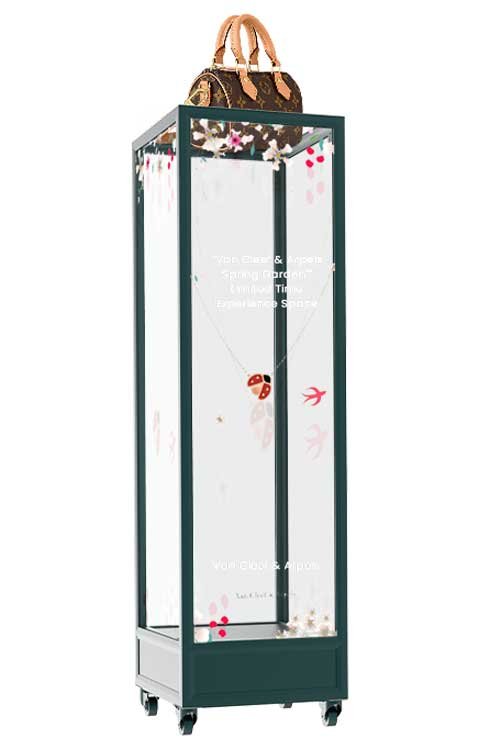
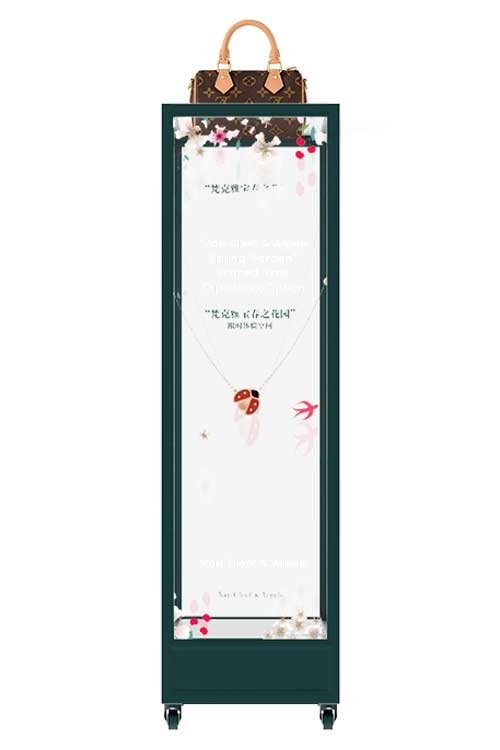
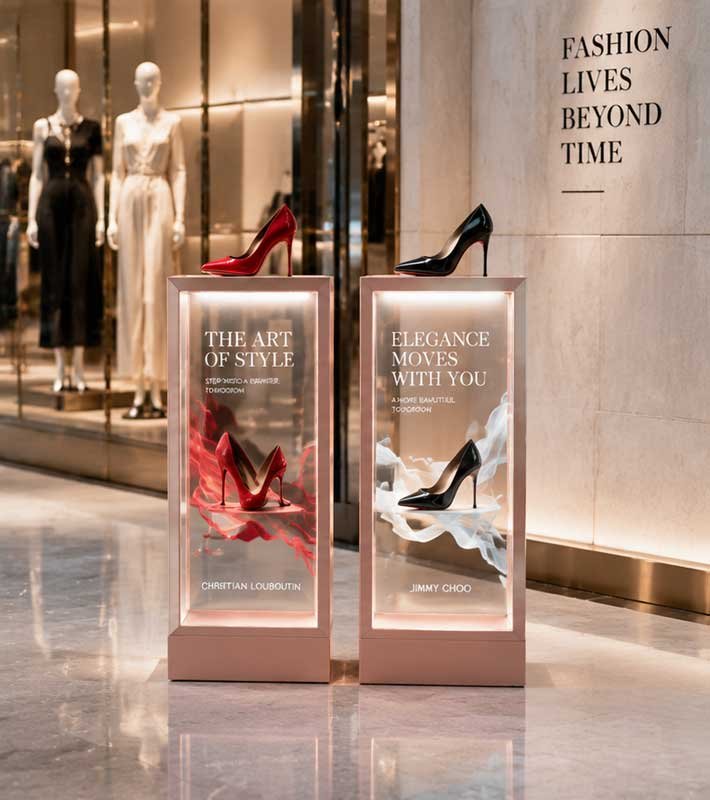
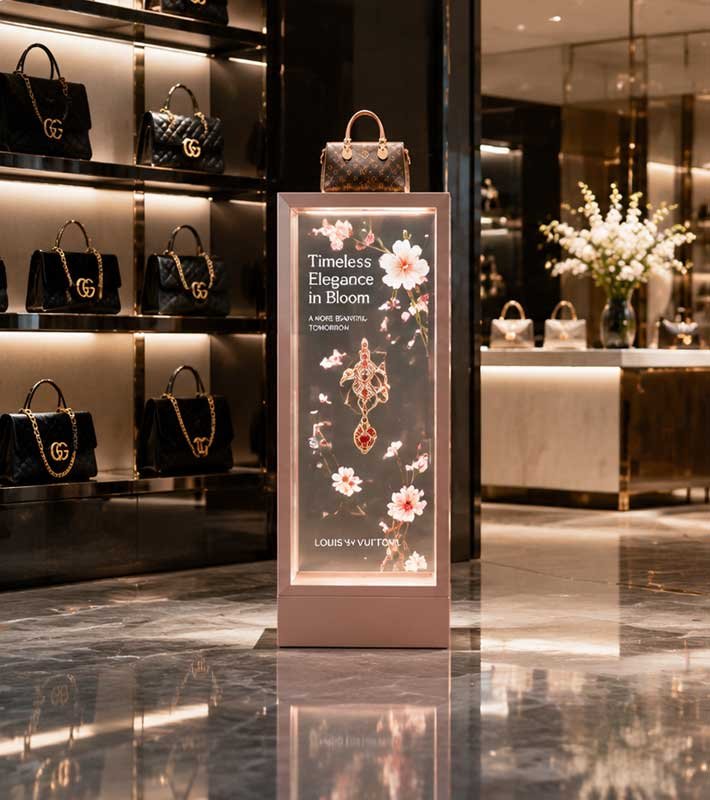
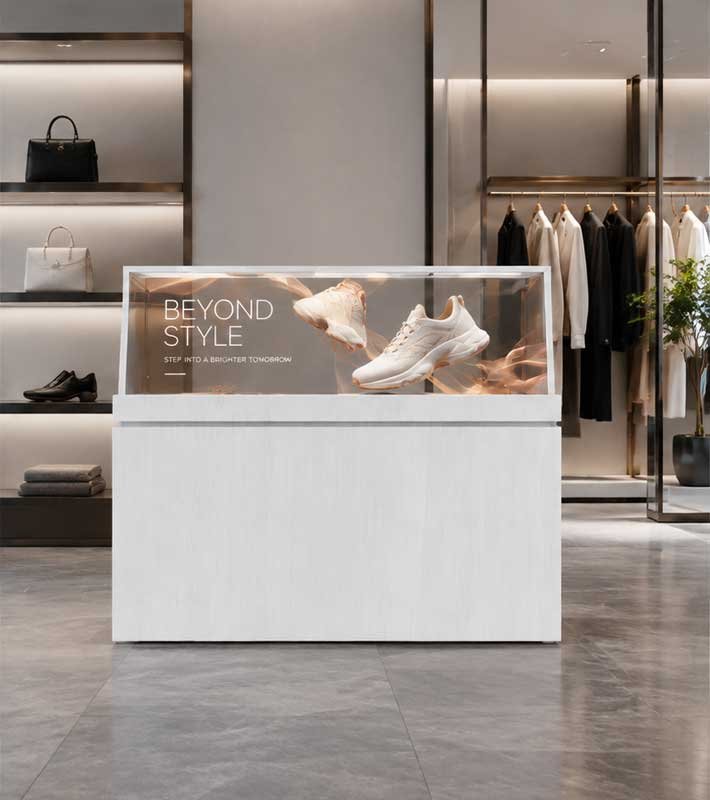
The real product remains visible inside or behind the cabinet while video, product information, animations, digital labels or interactive content appear on the transparent front surface.
Unlike standard digital signage, the physical product remains the center of the experience. Unlike a normal glass cabinet, the display surface becomes an active storytelling and customer-engagement layer.
Transparent OLED Display Cabinet is a premium product showcase that combines physical objects, self-emissive transparent display and digital storytelling in one complete cabinet system.
Transparent OLED is not selected only because it is transparent. It is selected when the cabinet needs a cleaner structure, darker interior, premium floating-content effect and stronger brand presentation than many traditional display technologies can provide.
The OLED panel creates its own image and does not need a strong rear lightbox for display generation.
The cabinet can remain darker when needed, which is useful for wine, spirits, museum objects and selected light-sensitive products.
Digital labels, graphics and videos appear as a visual layer around the product instead of looking like a separate conventional screen.
Without a bulky display lightbox, the cabinet can support a cleaner and more refined structure.
The physical product can remain protected while the transparent surface delivers brand, educational or sales information.
Touch, media player, CMS, camera, speaker, sensor and customer software can be reviewed according to the application.
Transparent OLED Cabinet is most valuable when the physical product is premium enough to justify a high-end digital showcase experience.
The cabinet type should be selected around the product, installation environment, viewing direction, protection requirement, content strategy and project budget. For general commercial evaluation, a 55-inch freestanding cabinet is usually the safest starting point.
A complete standalone showcase for retail stores, museums, exhibitions, galleries, product launches and corporate showrooms.
Integrated into a wall, furniture system, retail fixture or museum structure when the cabinet must become part of the interior design.
Designed for fine wine, premium spirits and collectible bottles where a darker, more controlled interior and luxury storytelling are important.
For watches, jewelry, perfumes, cosmetics, accessories, collectibles and limited-edition products.
For artifacts, cultural objects, science exhibits and historical displays that require digital explanation without hiding the real object.
For product browsing, digital labels, museum guides, product comparison, tasting information and customer self-service content.
A high-budget concept using multiple Transparent OLED panels for island displays and multi-direction viewing.
Designed around product size, cabinet material, installation structure, control system, touch, lighting and branding requirements.
| Cabinet Type | Best For | Main Engineering Focus |
|---|---|---|
| Freestanding Cabinet | Retail, museums, exhibitions and showrooms | Base stability, door access, product space, internal wiring and transportation |
| Built-In Cabinet | Luxury interiors, walls, furniture and museum installations | Installation dimensions, ventilation, service access and surrounding materials |
| Wine and Spirits Cabinet | Fine wine, premium spirits, hotels, clubs and duty-free retail | Temperature, humidity, light exposure, reflection and cooling integration |
| Jewelry and Luxury Cabinet | Watches, jewelry, perfume, cosmetics and luxury goods | Security, locking, product lighting, reflection and visitor distance |
| Museum Cabinet | Artifacts, cultural objects, models and science exhibits | Conservation, heat, light sensitivity, long-term operation and content readability |
| Interactive Cabinet | Smart retail, exhibitions, museums and customer self-service | Touch structure, software, user distance, front glass and maintenance |
| Multi-Sided Cabinet | Island displays and premium centerpieces | Screen synchronization, thermal design, cable routing and service access |
For most Transparent OLED Display Cabinet projects, 55 inches is the mainstream and most practical starting point. Other available OLED sizes can be reviewed when the product, cabinet structure or budget clearly requires a different format.
55 inches offers a strong display area and premium visual effect while keeping cabinet dimensions, product availability, transportation, installation and cost more realistic than larger formats.
It is suitable for wine cabinets, luxury retail, museum showcases, corporate showrooms, exhibitions and premium product launches.
30-inch, 48-inch, 77-inch or other available Transparent OLED formats may be reviewed according to product size, viewing distance, cabinet design and project budget.
For most commercial projects, it is more practical to customize the cabinet around an existing OLED panel than to develop a fully custom large-size panel.
Start with a 55-inch Transparent OLED cabinet unless the product dimensions or architectural design provide a clear reason to select another available OLED format.
The values below are reference ranges. Final specifications depend on the selected OLED panel, cabinet form, product space, front glass, touch structure, control system and operating environment.
| Item | Reference Options |
|---|---|
| Product Name | Transparent OLED Display Cabinet |
| Display Principle | Self-emissive Transparent OLED |
| Main Practical Size | 55" |
| Other Size Review | 30" / 48" / 77" or other available OLED formats depending on the project |
| Resolution | Full HD or 4K depending on OLED panel size and model |
| Brightness | Approx. 150–500 cd/m² depending on panel and configuration |
| Transparency | Approx. 40–60% depending on model, environment and content |
| Cabinet Types | Freestanding / built-in / wine / luxury retail / museum / interactive / multi-sided / custom |
| Product Lighting | Optional soft accent lighting; no strong display backlight required for the OLED image |
| Touch Option | Capacitive touch optional depending on size and glass structure |
| Control System | HDMI / USB playback / Android player / Windows PC / CMS / remote update / customer system |
| Interactive Options | Touch / speaker / microphone / camera / motion sensor / digital guide / customer software |
| Cabinet Materials | Glass / metal / stainless steel / acrylic / wood / custom material review |
| Installation | Floor-standing / wall-integrated / furniture-integrated / island display / custom structure |
| Applications | Luxury retail, wine and spirits, jewelry, museums, exhibitions, showrooms and product launches |
| OEM Options | Cabinet dimensions, product space, material, touch, media player, branding, packaging and installation |
Transparent OLED Display Cabinets are premium indoor showcase products. Outdoor-facing use, direct sunlight, highly reflective environments, product conservation and long continuous operation require separate technical review.
A successful Transparent OLED Cabinet is a complete showcase system, not only a transparent screen. The OLED panel, cabinet body, product area, lighting, control, wiring, protection and maintenance method must be designed together.
Displays digital content while allowing the product or object inside the cabinet to remain visible.
The internal area should match the product dimensions, viewing distance, replacement method, protection and desired presentation.
Soft accent lighting may highlight the physical object without becoming a strong backlight for the OLED image.
Receives content from HDMI, Android, Windows, media player or customer-provided systems.
Supports local playback, remote CMS updates, interactive software, museum content systems or retail platforms.
Capacitive touch and custom glass can be reviewed for browsing, guides and interactive product information.
The cabinet should protect the product while allowing practical replacement, cleaning and service access.
Power supply, signal path, connector position and cable outlet should be integrated into the cabinet design.
Heat dissipation, service doors, cleaning, transportation and long-term operation should be planned before production.
Transparent OLED Cabinets are most valuable when the physical product has enough commercial, cultural or technical value to justify a premium digital showcase.
For watches, jewelry, perfumes, cosmetics, fashion accessories, limited editions, collectibles and premium electronics.
For bottles that benefit from darker presentation, digital tasting notes, vintage information and premium brand storytelling.
For artifacts, historical objects, science exhibits and educational displays with timelines, labels and digital explanation.
For small high-value products requiring protection, craftsmanship content, model information and premium visual presentation.
For brand films, fragrance notes, ingredient information, campaign content and interactive product discovery.
For prototypes, awards, product generations, engineering samples and technology modules with digital explanation.
For high-value launches and trade-show displays where the showcase must become part of the brand story.
For medical devices, lab instruments, technical models and industrial samples that need both physical display and visual explanation.
For digital catalogues, product comparison, multilingual guidance, QR engagement and customer self-service information.
Confirm product type, dimensions, value, color, sensitivity to light or heat, protection level and replacement frequency before selecting the screen.
Choose freestanding, built-in, wine, luxury retail, museum, interactive, multi-sided or custom cabinet according to the application.
Start with 55 inches for most projects, then confirm whether the product area, cabinet dimensions and viewing distance support that format.
Decide whether the product needs soft accent lighting, a darker interior, reflection control or sensor-triggered lighting.
Use touch when visitors need to browse, compare, select languages or explore product stories. Use non-touch for simple visual presentation.
Review HDMI, USB, Android, Windows, CMS, cabinet access, cable routing, ventilation, cleaning, locking and long-term service.
The first decision is the product inside the cabinet, not the screen. Product value, sensitivity, dimensions and storytelling requirement determine the cabinet structure, lighting, OLED size and control system.
Prioritize temperature, humidity if required, light exposure, cooling, bottle distance, reflection and long-term content brightness.
Suitable content includes vintage year, tasting notes, origin, pairing suggestions, distillery story and digital labels.
Prioritize product visibility, premium materials, security, locking, store lighting, reflection, brand colors and easy product replacement.
Suitable content includes craftsmanship, collection stories, materials, model visuals, origin and QR engagement.
Prioritize conservation, light and heat sensitivity, long-term operation, security, visitor flow, readability and multilingual content.
Suitable content includes timelines, reconstruction animations, labels, origin maps and educational explanation.
Transparent OLED content should support the physical product rather than cover it. The best result feels like a digital layer floating around the object, not a conventional advertisement placed in front of it.
Avoid covering the main product for long periods, excessive text, overly bright full-screen content and unchanged static logos or graphics during continuous operation.
Use movement, content rotation and reasonable screen schedules to reduce long-term static-image exposure and keep the physical object as the visual center.
| Comparison | Transparent OLED Cabinet | Alternative Route |
|---|---|---|
| OLED Cabinet vs LCD Cabinet | Premium self-emissive image, darker cabinet interior, cleaner structure and stronger floating-content effect. | Transparent LCD Display Cabinet is usually better for cost control, brighter internal product lighting and wider practical size flexibility. |
| OLED Cabinet vs OLED Signage | Choose the cabinet when a protected physical product inside the structure is the center of the experience. | Transparent OLED Signage is better when the display message, welcome content or spatial effect is the main purpose. |
| OLED Cabinet vs Traditional Showcase | Adds digital labels, video, storytelling and optional interaction directly to the transparent surface. | A traditional cabinet is more practical when product protection and basic static presentation are sufficient. |
| OLED Cabinet vs Transparent LED | Better for close viewing, premium products, fine detail and controlled indoor showcase environments. | Transparent LED Displays are better for large-area visual impact, storefronts, glass walls and long viewing distances. |
Choose Transparent OLED for premium, darker and high-value product displays. Choose Transparent LCD for practical, bright and size-flexible cabinets. Choose a normal showcase when digital content does not add enough commercial value.
Transparent OLED Cabinet projects require both display engineering and cabinet engineering. Product space, screen, structure, lighting, touch, control, heat, access and long-term operation should be reviewed together before production.
Most projects use an available Transparent OLED panel and customize the complete cabinet system around it. Cabinet size, materials, product area, touch, lighting, player, software, branding and installation can be tailored to the application.
The cabinet is the product stage. The final result depends on product visibility, protection, materials, content, lighting, reflection, access and maintenance—not only on the Transparent OLED panel.
The more clearly the physical product, cabinet and content system are defined, the faster the correct Transparent OLED Cabinet configuration can be reviewed.
Transparent OLED Display Cabinet projects often connect with premium retail, museum and exhibition applications, Transparent OLED product routes, touch and control integration, and alternative transparent cabinet technologies.
For product selection, start with Transparent OLED Displays and this Transparent OLED Display Cabinet page. Continue to Transparent OLED Signage, Transparent OLED AI Digital Human Screen, Transparent OLED Video Wall or Custom Small-Size Transparent OLED Display when the application requires a different Transparent OLED product form.
| Related Product Page | When to Visit |
|---|---|
| Transparent OLED Displays | For the complete Transparent OLED product family, main sizes, technology positioning and product categories |
| Transparent OLED Signage | When the transparent screen itself is the main communication tool rather than a product cabinet |
| Transparent OLED AI Digital Human Screen | When the project needs an AI avatar, virtual presenter, guide or customer-service terminal |
| Transparent OLED Video Wall | When multiple Transparent OLED panels are needed for a larger premium transparent installation |
| Custom Small-Size Transparent OLED Display | For selected icon, indicator, instrument or limited-information transparent OLED applications |
| Related Solution Page | When It Helps |
|---|---|
| Transparent Display Solutions | For comparing Transparent OLED, LCD, LED and Micro LED at the solution level |
| Transparent Retail Display Solution | When the project is retail-focused and the best transparent technology or product form is not confirmed |
| Transparent Exhibition & Showroom Display Solution | For museums, showrooms, exhibitions, product launches and brand experience spaces |
| Transparent Digital Human Display Solution | When the cabinet project also needs an avatar, guide, digital presenter or interactive visitor interface |
| OEM/ODM Display Engineering & Prototyping | When the cabinet requires custom structure, sample development, interface integration or batch engineering support |
| Application Page | When It Helps |
|---|---|
| Exhibition, Events & Showrooms | For event displays, product launches, exhibition booths and showroom showcase systems |
| Corporate & Office Environments | For headquarters, visitor centers, corporate showrooms, awards and product-history displays |
| Industry Applications | For reviewing display selection across retail, museums, corporate, industrial and commercial markets |
| Component / Capability | When It Helps |
|---|---|
| LCD Controller Boards | When HDMI, media player, signal input, display driving or interface matching must be reviewed |
| Capacitive Touch Panels | When the cabinet needs touch browsing, product comparison, guides or interactive content |
| Custom Touch Panel Glass | When front glass size, printing, holes, thickness, edge treatment or surface treatment must be customized |
| FPC & Cable Assembly | When cable routing, connector position, pinout or internal wiring must match the cabinet structure |
| Touch vs Non-Touch Display | When the project must decide whether interaction adds real value or simple playback is sufficient |
| Alternative Route | When It May Be Better |
|---|---|
| Transparent LCD Display Cabinet | When cost control, bright internal product lighting, size flexibility and batch project practicality are more important |
| Transparent LCD Displays | For broader Transparent LCD product selection, refrigerator, vending, cabinet and OEM integration routes |
| Transparent LED Displays | When the project needs large-area transparent impact, storefronts, glass walls or long viewing distance |
| Digital Signage Displays | When a conventional display beside the product is sufficient and transparency adds little value |
| Transparent Display vs Standard Display | When the project must confirm whether transparency is necessary or a standard display would be more practical |
| Decorative vs Informational Transparent Displays | When the project must clarify whether the display is mainly decorative, informational, interactive or mixed |
Transparent OLED Cabinet pages should guide customers from the physical product and cabinet type to the correct OLED size, lighting strategy, content system, touch structure, mechanical integration and alternative cabinet technology.
A Transparent OLED Display Cabinet is a premium showcase system that combines a transparent OLED screen with a cabinet or display case, allowing real products and digital content to appear together.
Its main advantage is the premium floating-content effect. The physical product remains visible while video, labels, animations or interactive information appear on the transparent OLED surface.
55" is usually the safest and most practical starting point for Transparent OLED Display Cabinet projects.
Other available sizes can be reviewed according to product size, cabinet design, panel availability and budget. Most commercial projects should customize the cabinet around an available OLED panel rather than assume fully custom large-size OLED development.
No. Transparent OLED is self-emissive and does not require the strong internal lightbox used to create the image in a Transparent LCD cabinet.
Sometimes. Soft accent lighting may be used to highlight the physical product, but it is not required as a strong backlight for the OLED image. Lighting should be selected according to product visibility and sensitivity.
Yes. It is especially suitable for premium wine and spirits displays because the screen can show digital content while the cabinet interior remains darker and more controlled.
Yes. Transparent OLED cabinets are suitable for watches, jewelry, perfumes, luxury accessories and other high-value products where protection, presentation and brand storytelling are important.
Yes. Museum cabinets can display artifact information, timelines, animations and multilingual content while keeping the real object visible.
Yes. Capacitive touch can be reviewed according to screen size, cabinet glass structure, user distance and software requirements.
Yes. Remote content updates can be supported through an Android player, CMS platform, network media player, Windows PC or customer content system.
Yes. Freestanding, built-in, furniture-integrated, wall-integrated, island and other custom cabinet structures can be reviewed.
A multi-sided cabinet can be reviewed for high-budget special projects. Screen quantity, synchronization, cable routing, heat, service access and cost must be evaluated carefully.
It depends on the project. Transparent OLED is better for premium, darker and high-value product displays. Transparent LCD is usually more practical for cost-controlled projects, brighter interiors and wider size flexibility.
Please provide the product type and size, cabinet dimensions, preferred OLED size, cabinet structure, lighting requirement, touch requirement, control system, quantity, budget range, project schedule and shipping destination.

Tell us the product type, cabinet dimensions, preferred OLED size, cabinet form, product lighting, touch requirement, content system, quantity, budget and project schedule.
For most Transparent OLED Display Cabinet projects, a 55-inch freestanding cabinet is the best starting point. Built-in, wine, jewelry, museum, interactive and special multi-sided structures can also be reviewed.
The right cabinet depends on the physical product, product value, visibility, protection, light sensitivity, cabinet structure, content design, touch requirement, control system, maintenance method and commercial budget.
Please share the product, cabinet size, OLED size, lighting, touch, control system, quantity and project background. We will review the most practical cabinet direction.
Please share your application, display size, quantity and project background. We will review the most practical display direction.