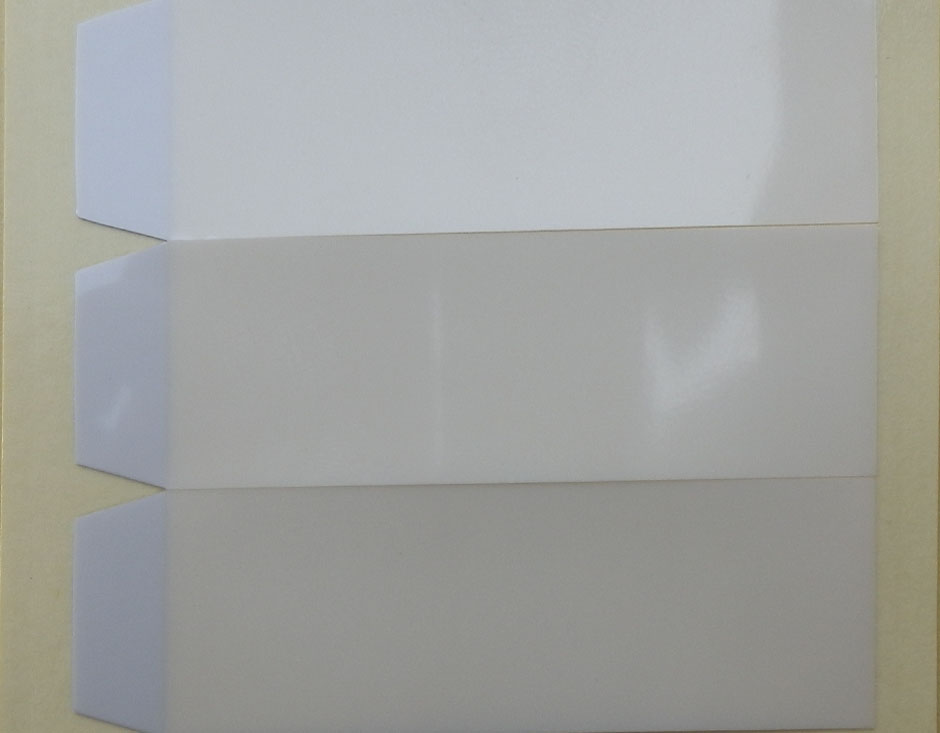
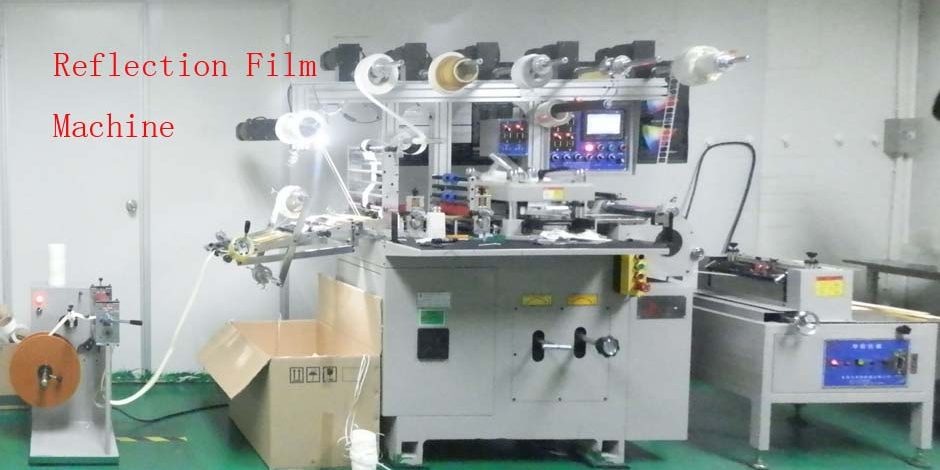
Reflection film can be divided into metal reflection film, full dielectric reflection film and metal-dielectric reflection film which can increase the reflectivity of the film surface.
Generally, there is a large reflective ratio of metals. The amplitude of the light in the metal rapidly decays when the beam descends from the air to the metal surface, then the light energy within the metal decreases, meanwhile the reflective light increases. The quicker the amplitude of the light decays, the less the light energy gets inside the metal, the stronger the reflective light will be. People always choose the metal with more stable optical properties as the material of metal reflection film, which will accelerate the decay of the amplitude of the light. We usually take aluminum as the material of metal reflection film in the ultraviolet region, aluminum and silver in the visible light region and gold, silver and copper in the infrared region. In addition, chromium and platinum are often used as film materials by some special thin films. It is very easy for aluminum, silver, copper and other metals to be oxidized in the air and the performance will be reduced, so it must be protected by a dielectric film. We usually use silicon oxide, magnesium fluoride, silicon dioxide, aluminum oxide as a protective film.
The advantage of metal reflection film is that it has a simple production process and a wide working wavelength range; the disadvantage of metal reflection film is that it has a large portion of optical energy loss. In order to improve the reflective ratio of metal reflection film, it usually adds several layers of dielectric films on the surface, which composes metal-dielectric reflection film. It should be noted that the metal-dielectric reflective film increases the reflectivity of a certain wavelength (or a wave region), but it destroys the neutral reflecting characteristics of the metal film.
Full dielectric reflection film is built on the foundation of multi-beam interference. In contrast with the brightness enhancement film, there is a layer on the optical surface of the film, which has a higher refractive index than the substrate of the film, so it can increase the reflectance of the optical surface. The simplest multilayer dielectric reflection film is made from high and low refractive index layers of films which are alternately superimposed. The thickness of each layer of film is a quarter of a certain wavelength, and the vibrational direction of reflected light in all the layers of films is the same and the synthetic amplitude of reflected light increases along with the increasing thickness of the layers of the films.
Aluminum foil reflection film is a well known metal-dielectric reflection film, which is made from aluminum foil veneer, polyethylene film, fiber and metal coating films. Aluminum foil sheet which is widely used in building roof and wall not only can insulate the heat, water, moisture and so on, but also can reflect off more than 93% of radiant heat by its excellent properties of thermal insulation.
Correspondingly, there is an anti-reflection film whose main effect is to increase the diffraction of light, so that people can watch the text and graphics for a long time. It requires a smooth surface.