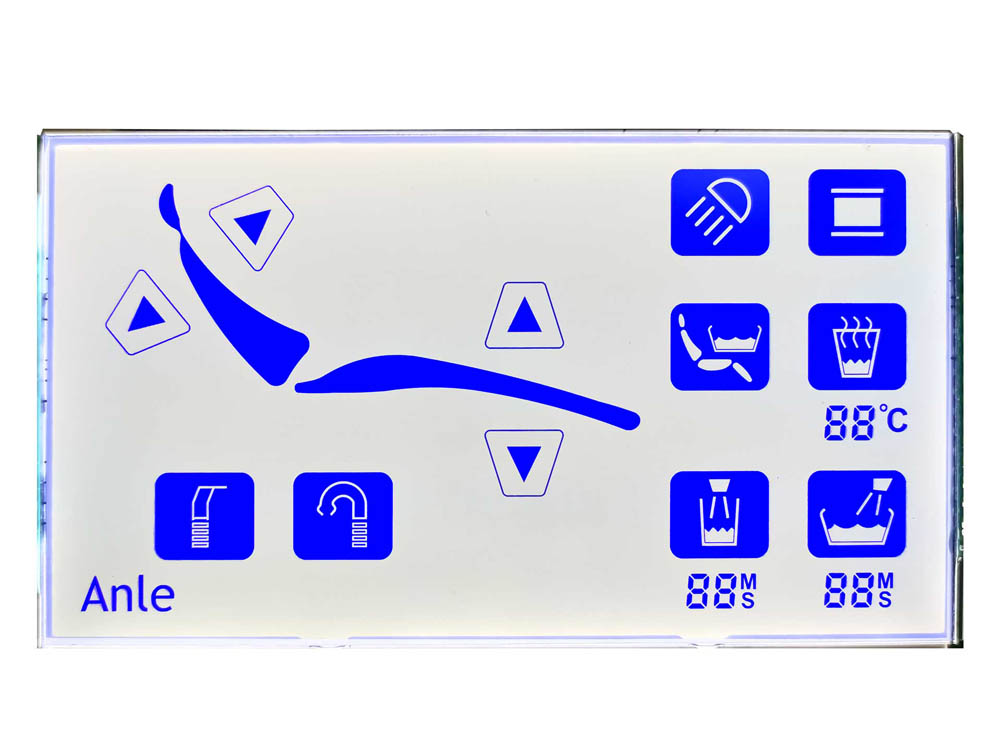
STN Positive LCD for Water Equipment
| Display Type | STN / Segment |
| Display Size | Customized |
| Display Mode | Positive / Transmissive |
| Display Effect | Grey Background and Blue Letters |
| Application | Water Equipment |
| Backlight | White |

Explore custom STN LCD glass panels for digits, icons, text and graphics in meters, appliances and OEM equipment. Select the display layout, optical mode, connection and backlight configuration to suit your product.
DisplayMan supplies custom STN LCD Glass Panels for OEM products that require better contrast, more display information or greater monochrome display flexibility than standard TN or HTN LCD glass.
STN LCD glass can be used for Segment, Character, Dot Matrix and Graphic LCD applications in meters, instruments, industrial controllers, medical devices, power equipment, utility equipment and embedded products.
STN provides a practical balance between display performance, customization flexibility and cost for many OEM monochrome LCD projects.
Choose STN LCD Glass Panels when the product needs a more flexible monochrome LCD glass solution than TN or HTN, especially for Segment, Character, Dot Matrix or Graphic LCD content.
Explore six reference designs covering segment, character and graphic displays, with positive and negative modes and different backlight configurations.
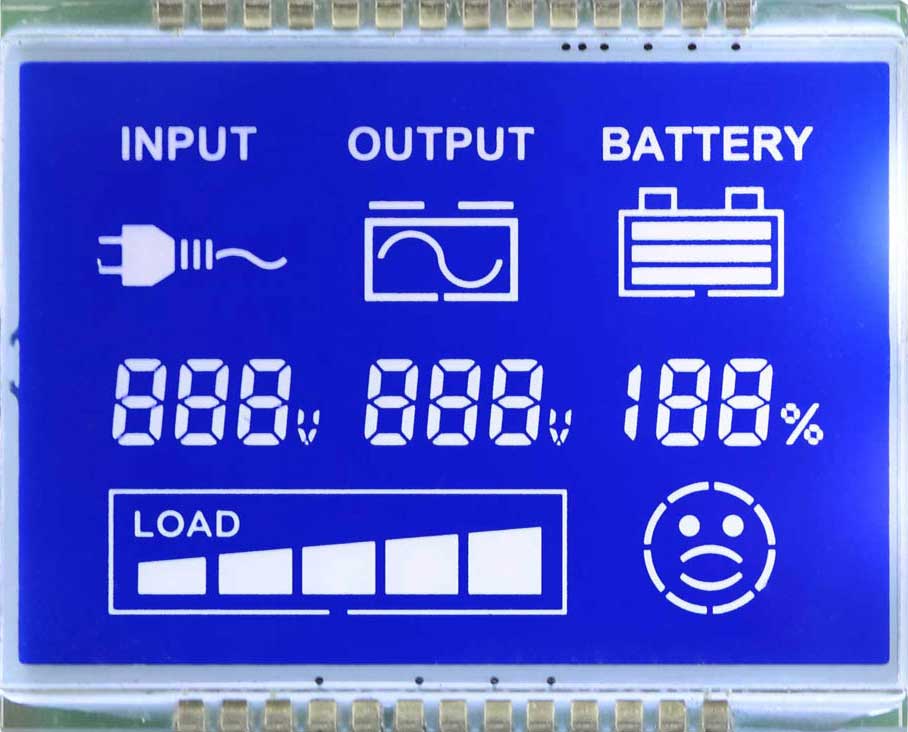
| Display Type | STN / Segment |
| Display Size | Customized |
| Display Mode | Positive / Transmissive |
| Display Effect | Grey Background and Blue Letters |
| Application | Water Equipment |
| Backlight | White |
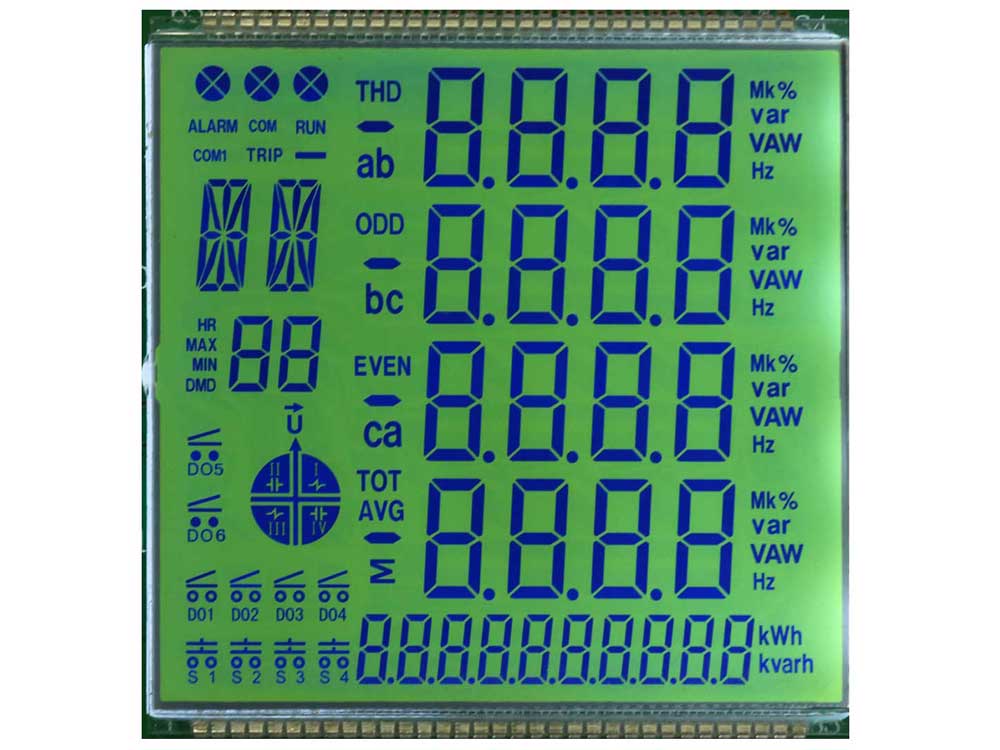
| Display Type | STN / Segment |
| Display Size | Customized |
| Display Mode | Positive / Transmissive |
| Display Effect | Yellow-green Background and Blue Letters |
| Application | Electricity Meter |
| Backlight | White |
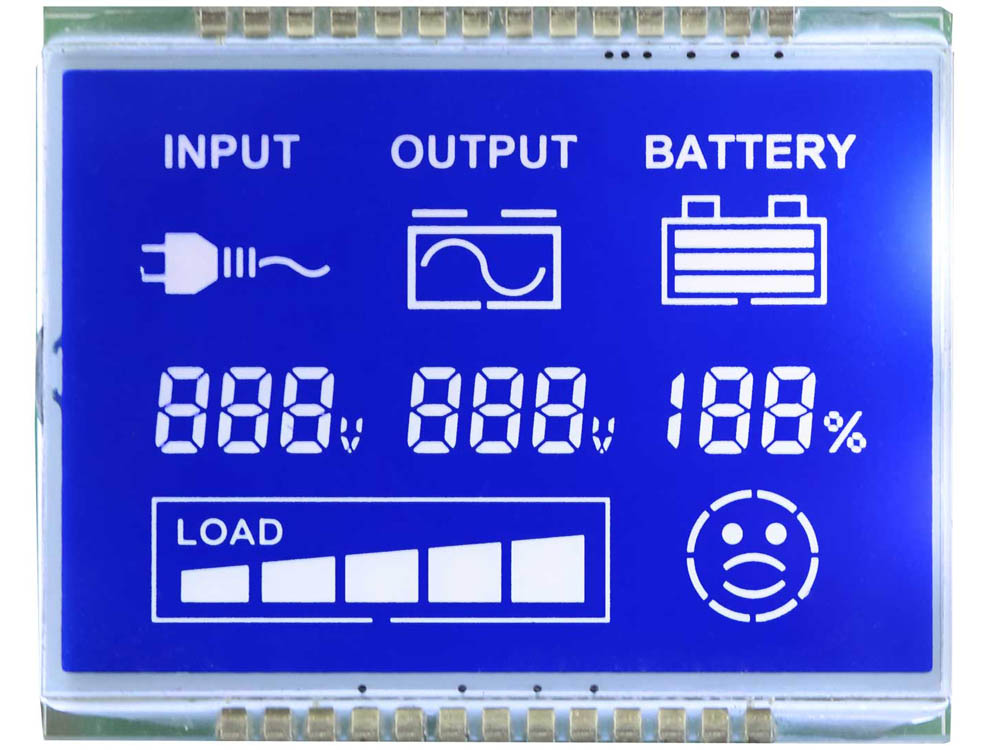
| Display Type | STN / Segment |
| Display Size | Customized |
| Display Mode | Negative / Transmissive |
| Display Effect | Blue Background and White Letters |
| Application | Charging Device |
| Backlight | White |
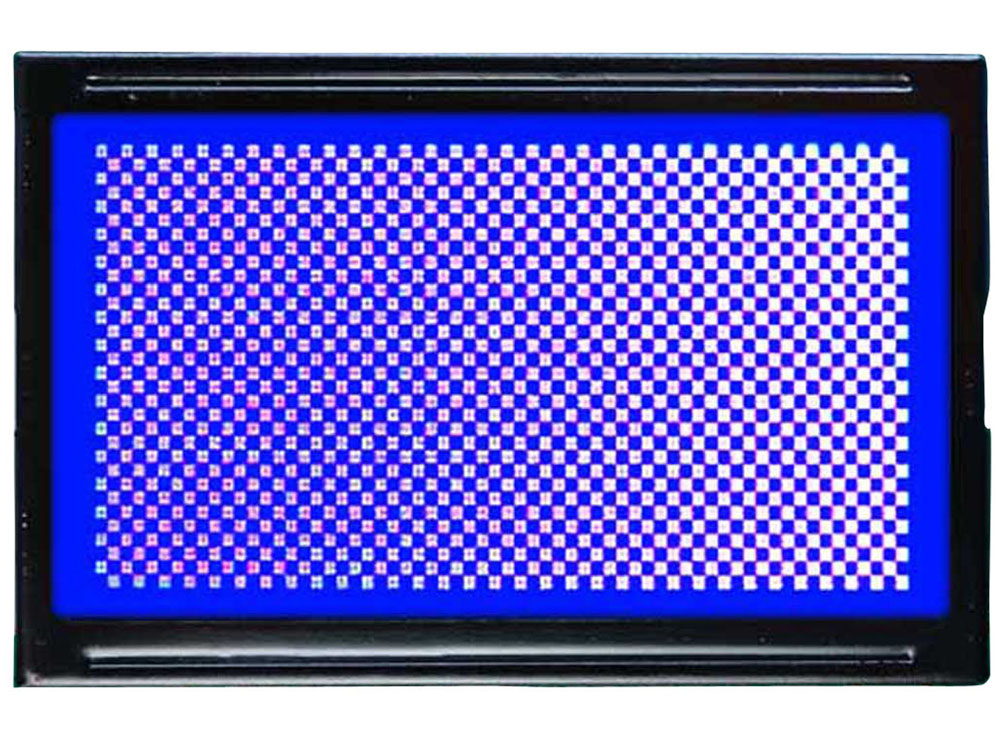
| Display Type | STN / Dot Matrix |
| Display Size | Customized |
| Display Mode | Negative / Transmissive |
| Display Effect | Blue Background and White Letters |
| Display Content | 128 × 64 Graphic |
| Backlight | White |
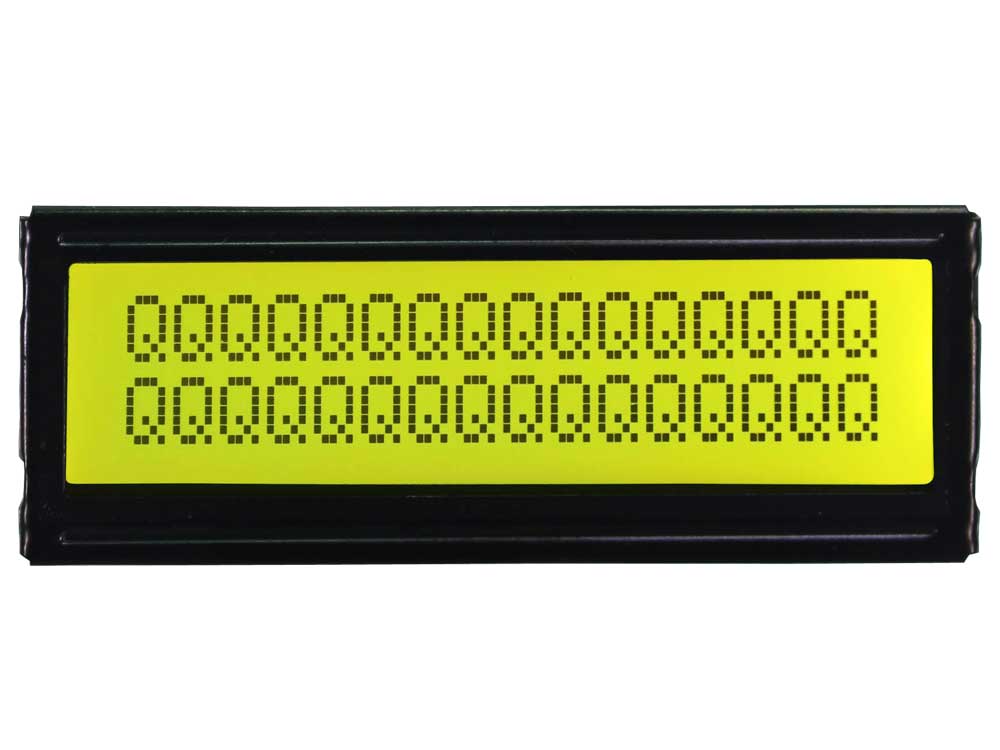
| Display Type | STN / Dot Matrix |
| Display Size | Customized |
| Display Mode | Positive / Transmissive |
| Display Effect | Yellow Background and Black Letters |
| Display Content | 20 × 2 Character |
| Backlight | White |
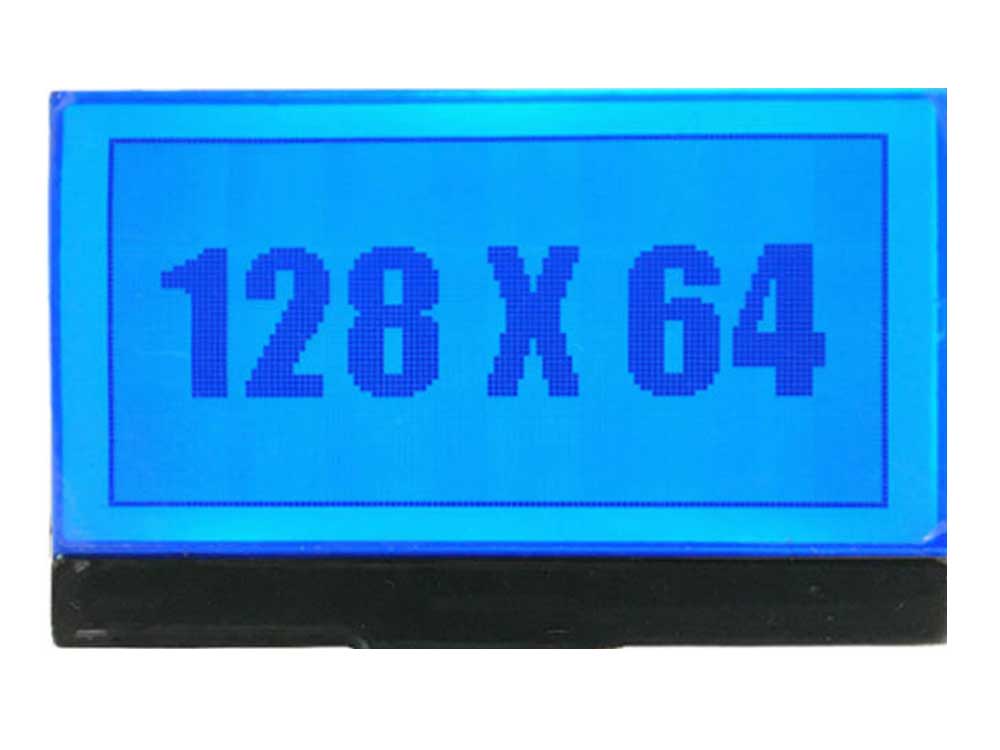
| Display Type | STN / Dot Matrix |
| Display Size | Customized |
| Display Mode | Positive / Transmissive |
| Display Effect | Grey Background and Blue Letters |
| Display Content | 128 × 64 Graphic |
| Backlight | Blue |
STN LCD glass can support both simple and more complex monochrome display projects. Selection starts from display content, then optical mode, driving structure, connection and mechanics.
| STN LCD Direction | Display Content | Display Effect | Typical Use |
|---|---|---|---|
| STN Segment LCD Glass | Fixed digits, icons and symbols | Positive or negative display | Meters, appliances, controllers and power equipment |
| STN Character LCD Glass | Fixed character rows | Positive reflective or backlit mode | Instruments, simple menus and embedded products |
| STN Dot Matrix LCD Glass | Pixel-matrix text, icons and simple graphics | Positive or negative display | 128×64, 192×64, 240×64 and related applications |
| STN Graphic LCD Glass | Menus, icons, diagrams and basic graphics | Higher information capacity than Segment LCD | Industrial panels, medical devices and test equipment |
| Positive STN LCD Glass | Light background with dark or blue content | Reflective, transmissive or transflective | Meters, water equipment and electricity meters |
| Negative STN LCD Glass | Blue or dark background with illuminated content | Usually transmissive with backlight | Control panels, meters and selected product designs |
Use TN for the lowest-cost simple segment display, HTN for improved segment contrast, FSTN for stronger graphic or dot-matrix readability and VA for premium black-background segment effects.
STN supports higher contrast, more display information and broader monochrome content than TN or HTN.
STN can be used for fixed segments, character rows, dot-matrix content and simple graphics.
Polarizer, backlight, driver, PCB, connector and housing may still be required.
STN can support more complex monochrome content and selected pixel-matrix applications.
STN generally provides better viewing and contrast than TN and HTN.
Multiplex driving can support Character, Dot Matrix and Graphic LCD structures.
Reflective, transmissive and transflective directions can be reviewed.
STN balances display performance, customization flexibility and cost.
PIN, zebra, FPC, backlight, PCB and front-panel integration can be reviewed.
| Display Type | Display Mode | Polarizer | Background | Letters | Backlight |
|---|---|---|---|---|---|
| STN | Positive | Reflective | Yellow-green | Black/Blue | No |
| STN | Positive | Transmissive | Yellow-green | Black/Blue | Yes |
| STN | Positive | Transflective | Yellow-green | Black/Blue | Yes or No |
| STN | Positive | Reflective | Grey | Blue | No |
| STN | Positive | Transmissive | Grey | Blue | Yes |
| STN | Positive | Transflective | Grey | Blue | Yes or No |
| STN | Negative | Transmissive | Blue | White | Yes |
| STN | Negative | Transflective (rarely used) | Blue | White | Yes |
| Selection Factor | Display Effect | Selection Logic |
|---|---|---|
| Positive Mode | Dark or blue content on a lighter background | Traditional, practical and readable display appearance |
| Negative Mode | Light content on a blue or dark background | Backlit interfaces and selected visual effects |
| Reflective | Uses ambient light | Low-power products without continuous backlight |
| Transmissive | Relies on backlight | Indoor or low-light applications |
| Transflective | Uses ambient light and optional backlight | Mixed-lighting environments |
| Backlight | White, blue, green, yellow-green, orange or project-based | Select together with display mode and polarizer |
Reflective STN can operate under ambient light, while negative and transmissive STN normally depends on a suitable LED backlight.
| Factor | Available Direction | Practical Use |
|---|---|---|
| Static Driving | Direct segment control | Simple design, strong contrast and higher pin count |
| Multiplex Driving | Shared COM and SEG electrodes | Supports more content with fewer physical connections |
| Duty and Bias | Project-based electrical review | Affects contrast, voltage, ghosting and driver selection |
| PIN Connection | Metal pins from the glass | Direct PCB or through-hole assembly |
| Zebra Connection | Elastomer between glass and PCB | Compact pressure-mounted assemblies |
| FPC Connection | Flexible printed circuit | Space-limited layouts and flexible cable direction |
| Module Integration | Glass combined with PCB, driver, backlight or touch | Use COB, COG or custom module review when glass alone is not enough |
Resolution or segment count, COM count, duty, bias, voltage, driver IC and pin definition must be reviewed before tooling and sample production.
STN is suitable for many monochrome applications, but it is not automatically the best choice. Select technology according to cost, content complexity, readability and visual effect.
| Factor | TN LCD Glass | STN LCD Glass |
|---|---|---|
| Contrast | Basic | Better than TN |
| Display Complexity | Simple segment display | Segment, Character, Dot Matrix and Graphic LCD |
| Viewing Performance | Basic | Better than TN |
| Cost | Lower | Higher than TN |
| Best For | Simple cost-sensitive segment displays | More flexible monochrome display projects |
| Selection Logic | Choose TN when cost is the priority | Choose STN when better contrast or more information is needed |
| Factor | HTN LCD Glass | STN LCD Glass |
|---|---|---|
| Main Use | Improved Segment LCD display | Segment, Character, Dot Matrix and Graphic LCD |
| Contrast | Better than TN | Usually better and more flexible than HTN |
| Display Content | Mostly fixed segment content | Supports more complex monochrome content |
| Cost | Lower than STN in many projects | Higher than HTN |
| Best For | Segment LCD needing better contrast than TN | More complex monochrome LCD applications |
| Selection Logic | Choose HTN for improved segment display | Choose STN for higher flexibility and more information |
| Factor | STN LCD Glass | FSTN LCD Glass |
|---|---|---|
| Display Effect | Good monochrome contrast | Improved black-and-white readability |
| Main Use | Segment, Character, Dot Matrix and Graphic LCD | Graphic and Dot Matrix LCD needing stronger readability |
| Cost | Lower than FSTN in many projects | Higher |
| Readability | Good | Better |
| Best For | General STN monochrome applications | Higher-contrast Graphic or Dot Matrix LCD |
| Selection Logic | Choose STN for practical cost and flexibility | Choose FSTN when readability matters more |
| Factor | STN LCD Glass | VA LCD Glass |
|---|---|---|
| Display Effect | Grey, yellow-green, blue or negative options | High-contrast black-background effect |
| Display Content | Segment, Character, Dot Matrix and Graphic LCD | Mainly Segment LCD and fixed content |
| Contrast | Good | Higher black-background contrast |
| Appearance | Practical monochrome effect | More premium visual effect |
| Cost | Usually lower than VA | Higher |
| Selection Logic | Choose STN for flexible monochrome display | Choose VA for black-background Segment LCD |
Values, units, communication icons, alarms and status information.
Numerical data, units, tariff information and communication status.
Parameters, menus, icons, warnings and operating states.
Values, curves, menus, units and diagnostic information.
Measurements, symbols, menus and professional monochrome UI.
Voltage, current, charging status, alarms and fixed icons.
Menus, modes, level, temperature and system information.
Compact Character, Dot Matrix and Graphic LCD interfaces.
Exact glass, resolution, pin, voltage, backlight and structure matching.
Segment, Character, Dot Matrix or Graphic LCD content.
STN should be selected for more information, better contrast or more flexible structure.
Glass size, viewing area, segment layout, character format or pixel resolution.
Positive or negative, reflective, transmissive or transflective, static or multiplex.
PIN, zebra or FPC, viewing direction, glass thickness, backlight, touch and housing.
Tooling, sample, temperature, quantity forecast, acceptance criteria and schedule.
STN is a flexible general monochrome direction. Use another technology when the priority is the lowest cost, improved Segment LCD contrast, stronger graphic readability or a premium black-background effect.
| Product Page | Choose This When |
|---|---|
| LCD Glass Panels | You need the main LCD glass technology-selection page |
| TN LCD Glass Panels | You need the lowest-cost simple Segment LCD direction |
| HTN LCD Glass Panels | You need improved Segment LCD contrast at practical cost |
| FSTN LCD Glass Panels | You need stronger readability for Graphic or Dot Matrix LCD |
| VA LCD Glass Panels | You need a premium high-contrast black-background effect |
| Monochrome LCD Displays | You need the main monochrome LCD product-selection page |
Provide the segment drawing, character format or pixel resolution together with glass size and viewing area so the LCD type, driving method, connection and tooling feasibility can be reviewed.
Visit a category page for product images, specifications and integration options.
An STN LCD Glass Panel is a custom monochrome LCD glass using Super Twisted Nematic technology. It can be used for segment, character, dot matrix and graphic LCD applications.
No. STN LCD glass is the glass display element. A complete module may also include polarizers, backlight, driver circuit, PCB, connector, frame and front-panel structure.
STN LCD glass is suitable when the product needs better contrast, more display information or greater monochrome display flexibility than TN or HTN can provide.
For contrast, multiplex capability and display flexibility, STN is usually better than TN. TN may still be more practical for very simple and highly cost-sensitive segment displays.
STN normally supports more complex monochrome content than HTN. HTN is mainly used for improved segment displays, while STN can also support selected character, dot matrix and graphic applications.
FSTN adds a compensation film to improve black-and-white readability and contrast. STN is practical for many monochrome projects, while FSTN is often preferred for higher-readability graphic or dot-matrix displays.
Choose VA when the product requires a premium high-contrast black-background segment effect rather than a more flexible general monochrome LCD structure.
Yes. Positive STN LCD can show dark, blue or project-based content on a lighter background.
Yes. Negative STN LCD normally shows light content on a blue or dark background and usually requires a suitable backlight.
Reflective STN LCD uses ambient light and can operate without continuous backlight, making it suitable for meters and low-power products.
Transmissive STN LCD relies on backlight for visibility and is used in indoor or low-light products.
Transflective STN LCD can use ambient light and optional backlight, making it suitable for mixed-lighting environments.
Yes. Backlight color, brightness, current, light guide and mechanical structure can be reviewed according to the display mode and product design.
STN LCD glass can use PIN, zebra, FPC or a project-based module structure depending on the glass size, display format, customer PCB and assembly method.
Static driving controls each segment directly. Multiplex driving shares COM and SEG electrodes to support more display information with fewer connections. Duty, bias, voltage and contrast must be reviewed together.
Touch-button integration can be reviewed for selected custom module projects when the glass is combined with PCB, backlight and front-panel structure.
Yes. Please provide the old LCD sample, glass outline, viewing area, segment layout or resolution, pin details, driving information, backlight, photos and product information.
Please provide glass size, viewing area, segment layout, character format or dot-matrix resolution, display mode, optical mode, backlight, driving method, voltage, connection type, viewing direction, temperature, touch requirement, quantity, schedule and available drawings or samples.
Send us the glass size, viewing area, display content, segment layout or resolution, display mode, optical mode, backlight, driving method, connection, viewing direction, temperature, touch requirement, quantity and schedule.
DisplayMan will review whether STN LCD glass is suitable or whether TN, HTN, FSTN or VA better matches the display content, readability, appearance and cost target.
STN LCD glass is intended for flexible monochrome content beyond simple TN or HTN segment displays. A clear layout or resolution and realistic production quantity are required before tooling and quotation.