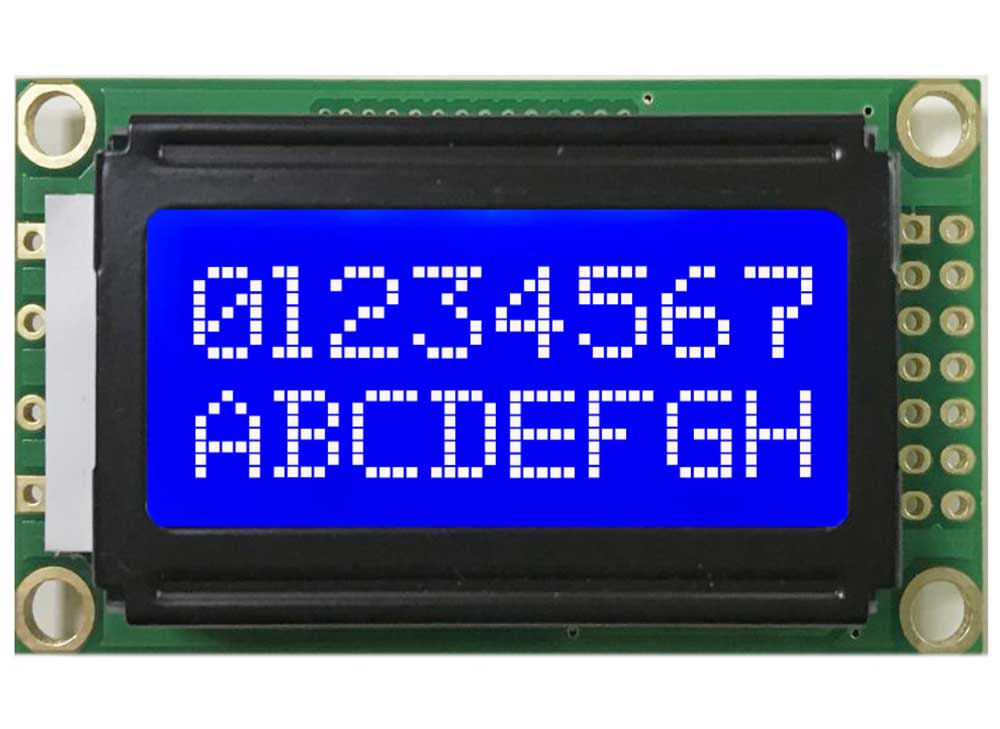
8 × 2 STN Negative Character LCD
| Display Type | STN / Dot Matrix |
|---|---|
| Display Content | 8 × 2 Character |
| Display Mode | Negative / Transmissive |
| Display Effect | Blue Background and White Letters |
| Structure | COB LCD Module |
| Backlight | White |

Explore standard and custom character LCD modules for equipment status, menus, measurements and operating instructions. DisplayMan supports character formats, display modes, backlights and mechanical integration for instruments, control panels and OEM devices.
DisplayMan supplies Character LCD Displays for instruments, control panels, meters, industrial equipment, medical devices, home appliances, audio products and embedded electronics.
Character LCD modules are selected when the product needs fixed rows of letters, numbers, symbols, menus or simple status information instead of flexible graphics, images or video.
Standard formats such as 16×2, 20×2 and 20×4 are preferred when available because they reduce development risk, tooling and replacement difficulty.
Choose Character LCD Displays when the product needs simple text, numbers or status information in a fixed character format.
A wide range of standard character LCD modules is available. The six examples below showcase selected formats and display options.
| Display Type | STN / Dot Matrix |
|---|---|
| Display Content | 8 × 2 Character |
| Display Mode | Negative / Transmissive |
| Display Effect | Blue Background and White Letters |
| Structure | COB LCD Module |
| Backlight | White |

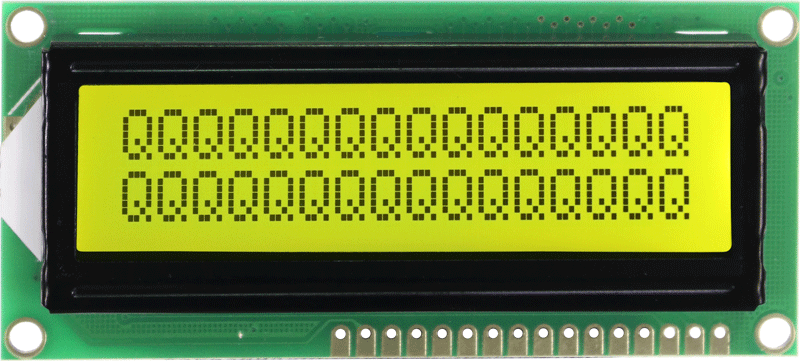
| Display Type | STN / Dot Matrix |
|---|---|
| Display Content | 16 × 2 Character |
| Display Mode | Positive / Transmissive |
| Display Effect | Yellow-green Background and Black Letters |
| Structure | COB LCD Module |
| Backlight | White |
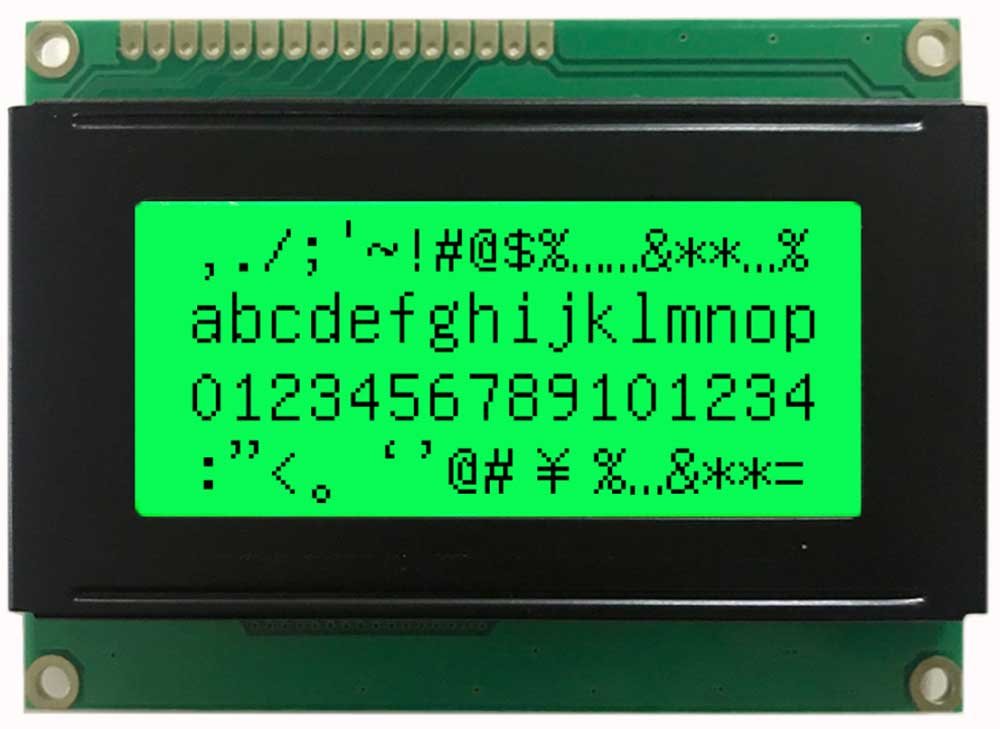
| Display Type | STN / Dot Matrix |
|---|---|
| Display Content | 16 × 4 Character |
| Display Mode | Positive / Transmissive |
| Display Effect | Yellow-green Background and Black Letters |
| Structure | COB LCD Module |
| Backlight | Green |
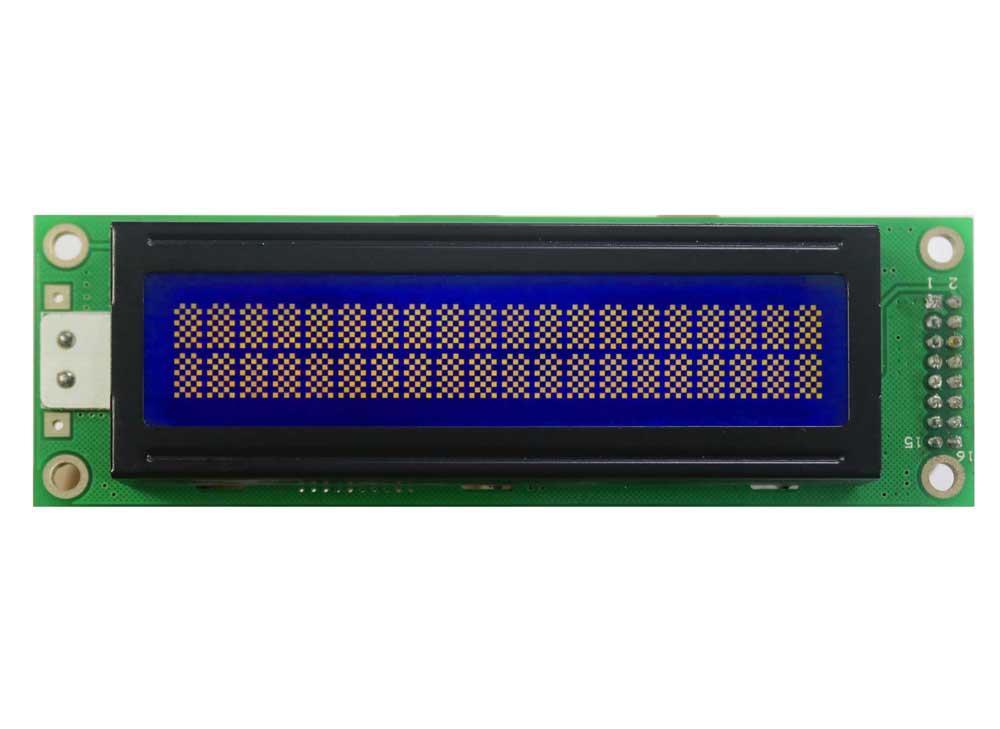
| Display Type | FSTN / Dot Matrix |
|---|---|
| Display Content | 20 × 2 Character |
| Display Mode | Negative / Transmissive |
| Display Effect | Blue Background and Yellow Letters |
| Structure | COB LCD Module |
| Backlight | Orange |
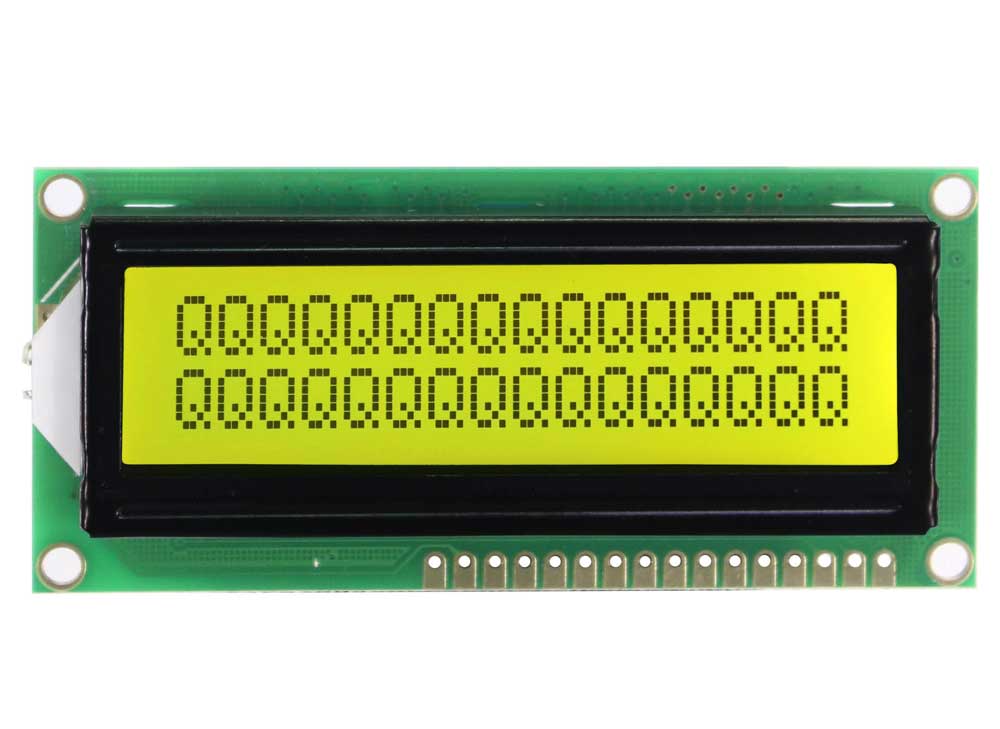
| Display Type | STN / Dot Matrix |
|---|---|
| Display Content | 20 × 2 Character |
| Display Mode | Positive / Transmissive |
| Display Effect | Yellow-green Background and Black Letters |
| Structure | COB LCD Module |
| Backlight | White |
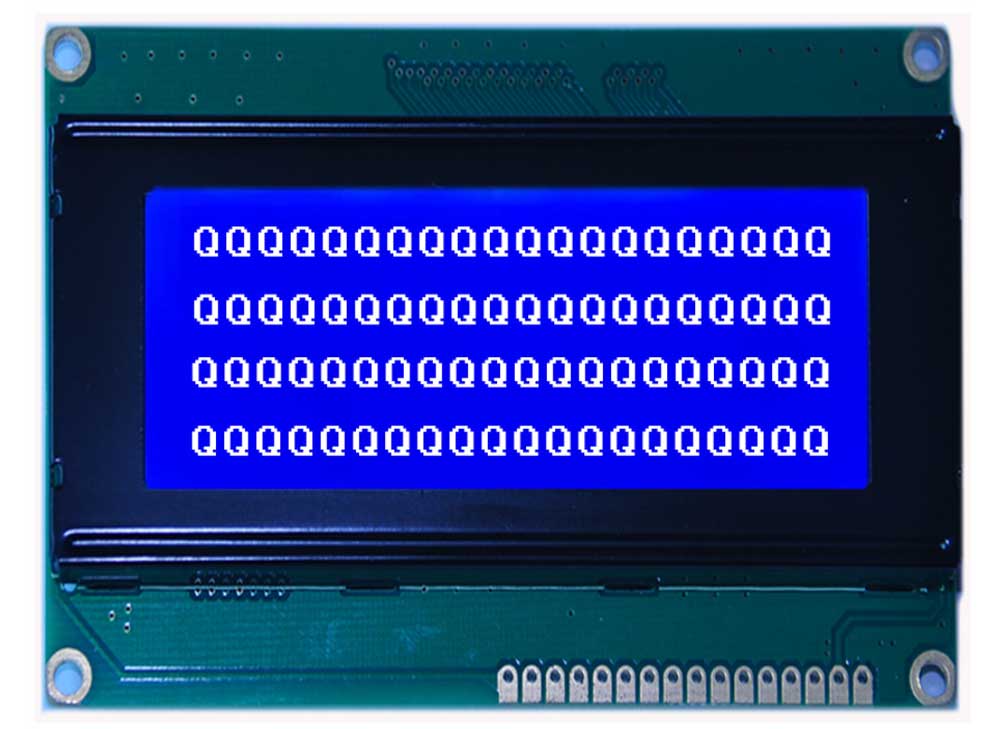
| Display Type | STN / Dot Matrix |
|---|---|
| Display Content | 40 × 4 Character |
| Display Mode | Negative / Transmissive |
| Display Effect | Blue Background and White Letters |
| Structure | COB LCD Module |
| Backlight | White |
The following formats are common reference examples. Final availability and specification must be confirmed according to display mode, backlight, interface, PCB structure, dimensions and quantity.
| Display Format | Character Capacity | Typical Structure | Display Mode | Backlight Option | Typical Use |
|---|---|---|---|---|---|
| 8×2 Character LCD | 8 characters × 2 lines | COB LCD module | STN / negative or positive | White / blue / yellow-green | Small controllers, meters and compact devices |
| 16×1 Character LCD | 16 characters × 1 line | COB LCD module | STN / FSTN | Optional LED backlight | Simple status displays and control panels |
| 16×2 Character LCD | 16 characters × 2 lines | COB LCD module | STN positive or negative | White / green / blue | Instruments, appliances and industrial devices |
| 16×4 Character LCD | 16 characters × 4 lines | COB LCD module | STN positive | Green / white | Control panels and measurement equipment |
| 20×2 Character LCD | 20 characters × 2 lines | COB LCD module | STN / FSTN | White / orange / yellow-green | Industrial controllers, meters and audio devices |
| 20×4 Character LCD | 20 characters × 4 lines | COB LCD module | STN / FSTN | Optional LED backlight | Equipment menus and multi-line information |
| 40×4 Character LCD | 40 characters × 4 lines | COB LCD module | STN negative or positive | White / blue / green | Larger control panels and information displays |
Two 16×2 or 20×4 modules may still use different PCB outlines, connectors, pin definitions, controller ICs, backlights or mounting structures.
The screen is divided into fixed character positions such as 16×2, 20×4 or 40×4.
Suitable for menus, measurements, status messages, settings and basic product information.
Common formats are mature, widely used and easier to integrate than a fully custom graphic display.
A 16×2 Character LCD can display 16 characters per line and 2 lines of text. It is not a 16-by-2 pixel graphic display.
Suitable for letters, numbers, menus, measurements and status messages.
Character LCD technology is widely used in industrial, commercial and embedded products.
Using a standard format can reduce tooling, software and mechanical development work.
Fixed character cells need less UI processing than graphic LCD or TFT LCD interfaces.
Positive, negative and different backlight colors can support different product appearances.
Existing modules can be reviewed when the exact model, pinout and mechanical information are available.
| Selection Factor | Available Direction | Practical Effect |
|---|---|---|
| LCD Technology | TN, STN, FSTN or project-based review | Affects contrast, viewing angle, color effect and multiplex performance |
| Positive Mode | Dark characters on a lighter background | Common for traditional instruments, controls and meters |
| Negative Mode | Light characters on a darker background | Requires suitable backlight and can create a modern appearance |
| Reflective | Uses ambient light | Suitable for low-power products without constant backlight |
| Transmissive | Relies on backlight | Suitable for negative displays and controlled indoor lighting |
| Transflective | Uses ambient light and backlight | Suitable for mixed lighting conditions |
| Backlight Colors | White, blue, green, yellow-green, orange or project-based review | Changes product appearance and night visibility |
A negative Character LCD normally depends on a suitable backlight, while a positive reflective LCD may operate without continuous illumination.
Standard Character LCD modules are preferred when available. Customization is most practical for display mode, backlight, connector, pin layout, PCB outline, viewing direction and mechanical matching. A completely new format may require tooling, MOQ and engineering review.
| Requirement | Character LCD Display | Graphic LCD Display |
|---|---|---|
| Display Content | Fixed letters, numbers and symbols | Icons, curves, diagrams and flexible graphics |
| Format | 8×2, 16×2, 20×4, 40×4 and similar | Pixel resolutions such as 128×64 or 240×128 |
| UI Flexibility | Limited to character cells | Flexible pixel-based layout |
| Development | Simpler for text and status | Requires more UI control |
| Cost Direction | Usually more practical for simple text | Higher when graphic flexibility is required |
| Best For | Menus, status, measurements and messages | Icons, charts and custom UI |
| Requirement | Character LCD Display | Segment LCD Display |
|---|---|---|
| Content Structure | Predefined character cells | Custom fixed digits, icons and symbols |
| Content Flexibility | Can display different letters and numbers inside each cell | Only displays the designed segment pattern |
| Typical Use | Menus, text, measurements and status messages | Meters, appliances and fixed product indicators |
| Development Direction | Use standard formats when available | Often custom-designed for one product |
| Selection Logic | Choose for text and changing values | Choose for fixed icons and lowest-power custom content |
| Requirement | Character LCD Display | TFT LCD Display |
|---|---|---|
| Color | Monochrome | Full color |
| Content | Letters, numbers and simple symbols | Graphics, images, animation and video |
| Controller Requirement | Lower | Higher |
| Power and Complexity | Usually lower | Usually higher |
| Best For | Simple instruments, controls and status displays | Modern HMI, terminals and graphical products |
| Selection Logic | Choose when simple text is enough | Choose when full graphic UI is required |
Machine settings, status messages, parameters and basic operator menus.
Values, units, menu text and status information.
Measurements, configuration information and simple diagnostic messages.
Text, values, modes and simple user instructions.
Temperature, settings, mode names and operating status.
Input, volume, track, mode and equipment-status information.
Voltage, current, charging state and parameter menus.
User prompts, status messages and simple operating menus.
Replacement projects requiring exact pinout, PCB, backlight and mechanical matching.
Text, numbers, menus and status messages without flexible graphics.
8×2, 16×1, 16×2, 16×4, 20×2, 20×4, 40×4 or another reviewed format.
Positive or negative, reflective, transmissive or transflective, and the required backlight color.
Controller, parallel or serial interface, pin header, connector, voltage and customer PCB.
Module outline, mounting holes, viewing area, connector direction and enclosure opening.
Operating range, sample testing, quantity, replacement strategy, acceptance criteria and schedule.
Character LCD is the correct product when fixed rows of text and numbers are the main buying reason. Use another product page when flexible graphics, custom segments, matrix content or compact module structure matters more.
| Product Page | Choose This When |
|---|---|
| Monochrome LCD Displays | You need the main monochrome LCD product entry and general selection |
| Graphic LCD Displays | You need pixel-based graphics, icons or flexible UI |
| Segment LCD Displays | You need custom digits, fixed icons, symbols or low-power content |
| Dot Matrix LCD Displays | You need matrix-style text or simple graphics |
| COB LCD Displays | You need a PCB-based monochrome module structure |
| COG LCD Displays | You need a compact IC-on-glass monochrome module |
| TFT LCD Displays | You need full-color graphics, images or video |
Matching only “16×2” or “20×4” is not enough. Send the old module model, connector, pin definition, PCB outline, mounting holes, backlight and sample when possible.
MONOCHROME LCD FAMILY
Visit a category page for product images, specifications and integration options.
A Character LCD Display is a monochrome LCD module designed to show fixed rows of letters, numbers, symbols and simple status information.
It means the module can display 16 characters per line and 2 lines of text.
Common formats include 8×2, 16×1, 16×2, 16×4, 20×2, 20×4 and 40×4.
Choose a Character LCD when the product mainly needs fixed text, numbers, menus or status messages and does not require free-position graphics.
Choose a Graphic LCD when the product needs icons, curves, diagrams, charts or a flexible pixel-based user interface.
Character LCD uses predefined character cells such as 16×2 or 20×4. Segment LCD uses custom fixed digits, icons and symbols designed for one specific product interface.
Character LCD is monochrome and intended for simple text or status information. TFT LCD supports full-color graphics, images, video and more complex user interfaces.
Yes. Many standard Character LCD modules use a PCB-based COB structure with the driver IC bonded on the PCB.
Selected compact character-style modules can use COG construction, but standard text-row modules are commonly supplied as COB modules.
Yes. White, blue, green, yellow-green, orange or another project-based backlight color can be reviewed according to the selected module and quantity.
Positive or negative display modes and reflective, transmissive or transflective optical modes can be reviewed.
Character LCD projects commonly use STN or FSTN, while TN or another monochrome LCD direction may be reviewed for selected requirements.
The interface depends on the module controller and PCB design. Parallel, serial, I2C, SPI or project-based interfaces may be reviewed.
Yes. Pin header type, connector position, pin definition, cable direction and selected PCB details can be reviewed.
Selected modules and custom projects can be reviewed for wider operating temperature. The exact range must be confirmed from the selected module specification.
Yes. Please provide the old module model, datasheet, photos, pin definition, connector, PCB outline, backlight information and sample if available.
Character LCD uses fixed character cells and is not suitable for flexible graphics, images, video or complex modern user interfaces.
Please provide the required character format, module size, display mode, backlight color, interface, pin or connector requirement, viewing direction, temperature, quantity, schedule and available drawing or sample.
Send us the character format, module size, display mode, backlight color, interface, connector, pin definition, viewing direction, temperature, quantity and schedule.
DisplayMan will review whether a standard Character LCD module is suitable or whether a customized module or another monochrome LCD direction better matches the product.
Character LCD is intended for fixed text, numbers and status information. Standard formats are preferred when they meet the display and mechanical requirements.