Buying Guides & Project Review
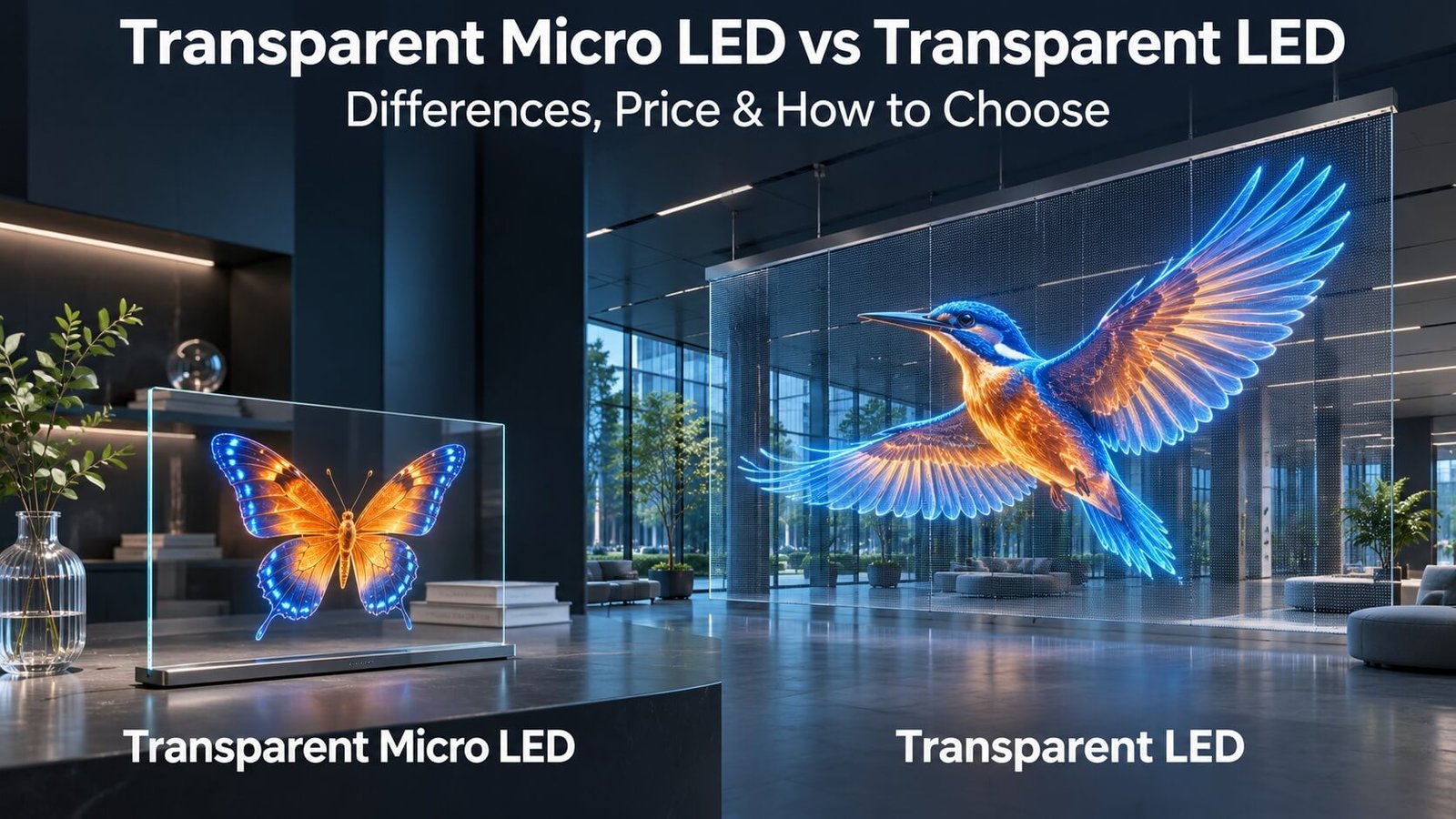
Transparent Micro LED is a strong choice for close-range viewing. Transparent LED offers several practical routes to larger transparent installations, including suspended holographic screens, floor-standing displays and flexible film applied to glass. The right choice depends on viewing distance, display area, installation conditions and the available project budget.
At DisplayMan, we supply both product families. We often find that more than one technology can meet a customer's requirements. The decision then becomes which solution delivers the desired experience at an acceptable total cost.
This guide covers the transparent LED product family before examining two important choices: COB P3.91 holographic transparent LED, our best and most advanced transparent LED offering, and flexible transparent LED film, currently our most commonly used transparent LED solution. The P6 curved-glass installation illustrates the latter in practice.
1. What Is the Difference Between Transparent Micro LED and Transparent LED?
Both technologies create illuminated images while allowing the background to remain visible. Neither requires an opaque backing to produce its intended transparent effect.
Transparent Micro LED uses microscopic emitters within a transparent display structure. Its value is particularly relevant to compact presentations and applications where people approach the screen closely. Buyers should evaluate the actual model's native resolution and pixel spacing alongside its physical dimensions.
Transparent LED covers a broader family of constructions, including modular transparent screens, holographic displays and flexible film. These formats can address windows, showrooms and architectural surfaces with different mounting requirements.
2. Comparing the Three Options
| Selection factor | Transparent Micro LED | COB P3.91 holographic transparent LED | P6 flexible transparent LED film |
|---|---|---|---|
| Primary evaluation | Close-range image experience | Premium transparent presentation over a larger area | Integration with suitable flat or curved glass |
| Format reference | Selected panel or combined display size | Suspended installation or floor-standing display | Film following the approved glass surface |
| Pixel-spacing reference | Approximately 0.732 mm in the 64-inch example | P3.91 | P6 in the illustrated installation |
| Viewing-distance reference | 64-inch example personally viewed from approximately 1 metre | DisplayMan recommends approximately 5 metres for this P3.91 product | Evaluate the P6 configuration at the intended viewing distance |
| Installation priority | Panel dimensions, base and integration | Suspension structure or stable floor base | Glass dimensions, curvature and film compatibility |
| Content capability | Text, imagery and video within native resolution | Text, detailed imagery and animation sized for viewing distance | Text, imagery and video sized for pitch and distance |
| Budget approach | Evaluate the selected configuration | Quote the complete installation | Quote the glass layout and complete installation |
| Photographic record | Use model-page images alongside the close-viewing account | Both installation examples photographed from approximately 3 metres | Curved-glass example photographed from approximately 3 metres |
The P6 photography distance is a description of this example, not a recommended optimum viewing distance. Likewise, our P3.91 recommendation should not be applied automatically to every transparent LED product.
3. When Transparent Micro LED Makes Sense
Transparent Micro LED is particularly valuable when people approach a transparent screen closely. This can include premium product presentations, showroom demonstrations and interactive displays. A large diagonal does not automatically mean that the audience must stand far away.
Our 64-inch transparent Micro LED display combines two 42-inch panels into one 1920 × 1080 Full HD landscape canvas. Its reference active area is 1405.44 × 790.56 mm. Dividing the active width by 1920 gives approximately 0.732 mm pixel spacing, considerably finer than P3.91 or P6.
The model reference lists 70% transparency, 600 nits maximum full-white brightness and 1,200 nits peak brightness. Full-white and peak figures describe different operating conditions. These are model-specific references, not specifications for every transparent Micro LED product.
I have viewed this 64-inch display from approximately one metre away. The image and see-through effect were stunning in person; my phone photographs did not fully capture that experience. This is my hands-on observation, rather than a universal minimum-distance specification.
The published October 2026 retail reference for this 64-inch model is USD 69,600 per complete standard display system, EXW. See the Micro LED price guide for the included equipment and quotation basis.
This example explains the Micro LED premium: visitors can approach a substantial Full HD transparent image and inspect its detail closely. Existing sizes are the practical starting point; a new base-panel size can require substantial development investment.
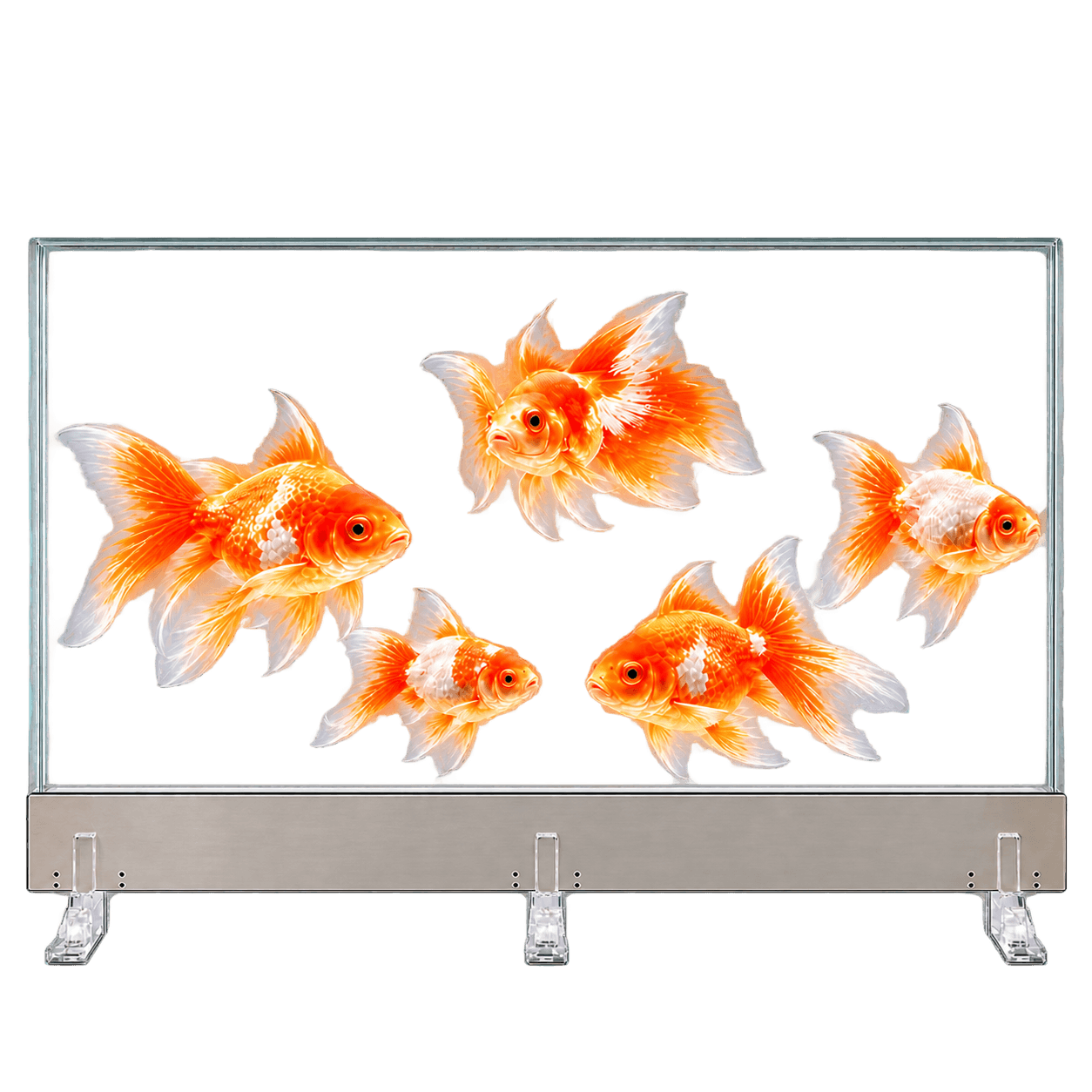
4. COB P3.91: A Premium Transparent LED Reference
COB P3.91 holographic transparent LED is our best and most advanced transparent LED offering. Our recommendation reflects the combination of fine pitch, open construction, image quality, stability, protection, thermal design and serviceability.
Within the supplied holographic range, P3.91 has the finest listed pitch. Its 250 × 1500 mm module contains 64 × 384 pixels. The manual lists 80% visual transparency, white-balance brightness of at least 3,300 cd/m², a refresh rate of at least 3,840 Hz and 170° horizontal and vertical viewing angles.
The construction uses flip-chip COB emitters on a four-layer flexible, perforated PCB. The openings preserve a view through the screen while the copper structure supports heat dissipation. Protective encapsulation and controlled driving support reliability. The manual lists IP62 protection; our discussion here concerns indoor installations.
Unlike a bulky framed assembly or a thick continuous carrier, the open structure helps the display remain visually unobtrusive. We favor this balance of pixel density and transparency for premium indoor projects. It does not mean that every alternative is unsuitable for every application.
The module can be cut only at the designated positions to accommodate installation dimensions. This is an installation-sizing feature. Maintenance uses whole-module replacement, which we find straightforward; it is not a process of cutting out individual faulty pixels.
For this P3.91 product, we recommend approximately five metres for the best overall viewing experience. It can show detailed imagery, text and animation when their physical size suits that distance.
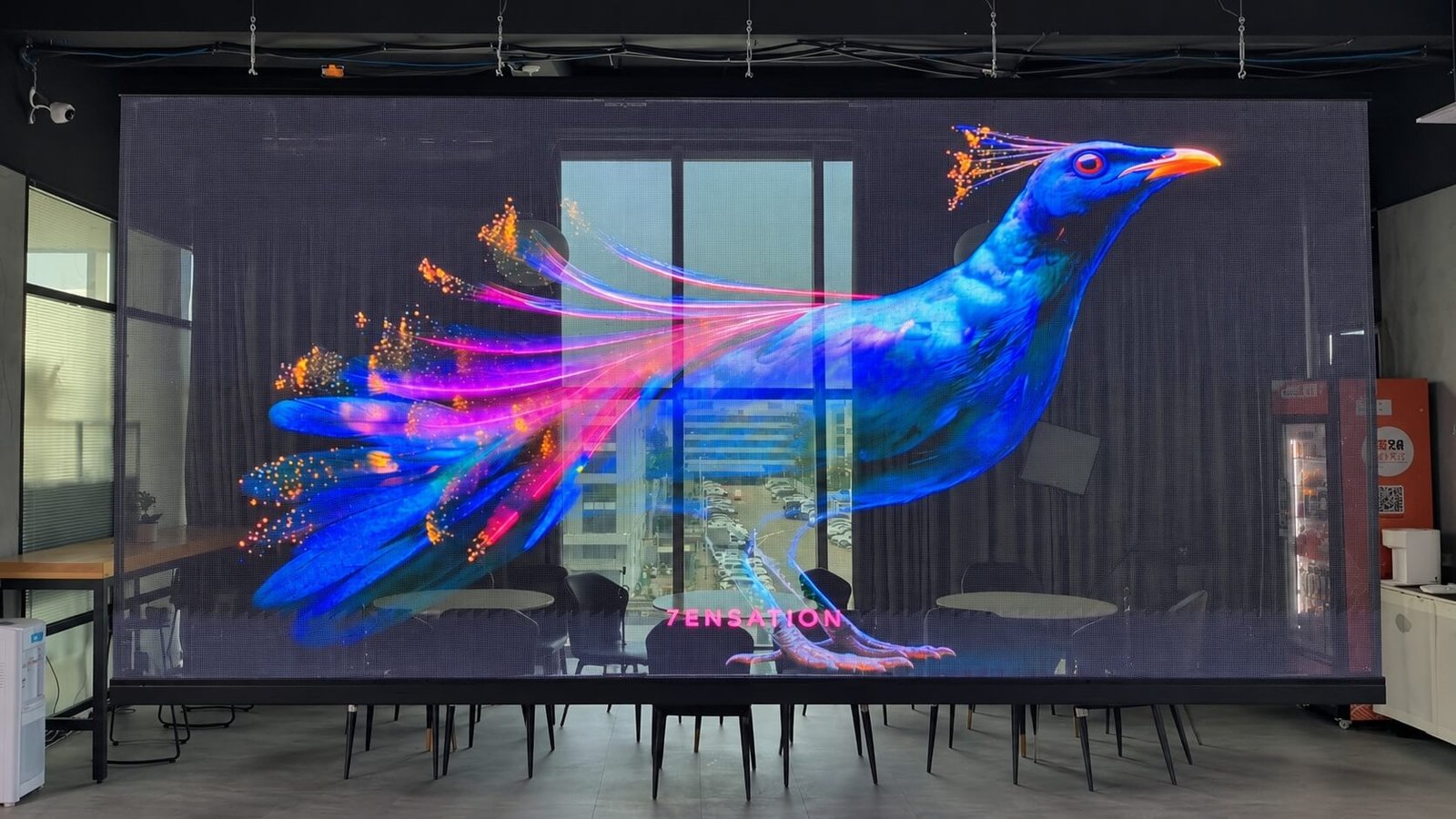
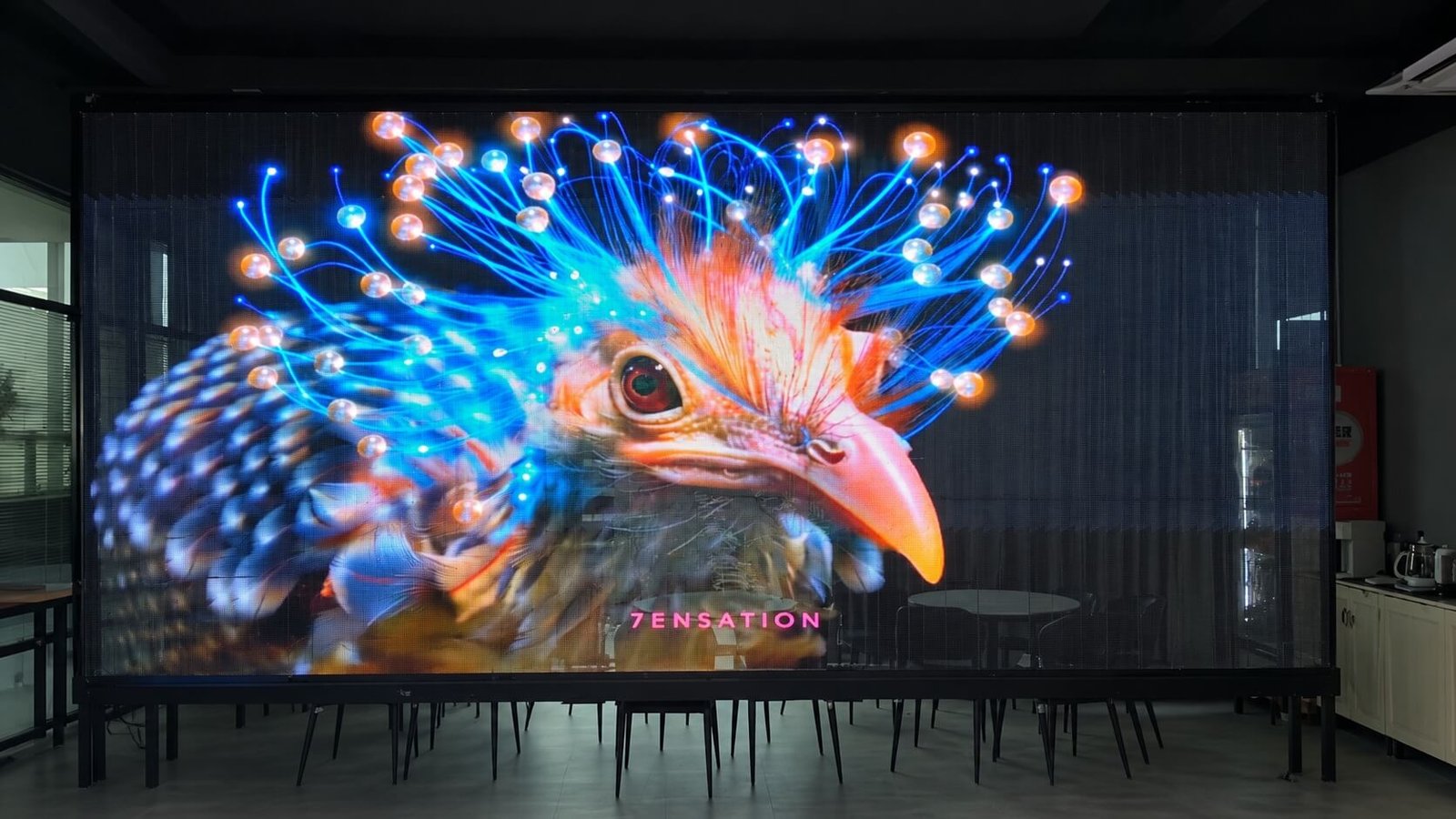
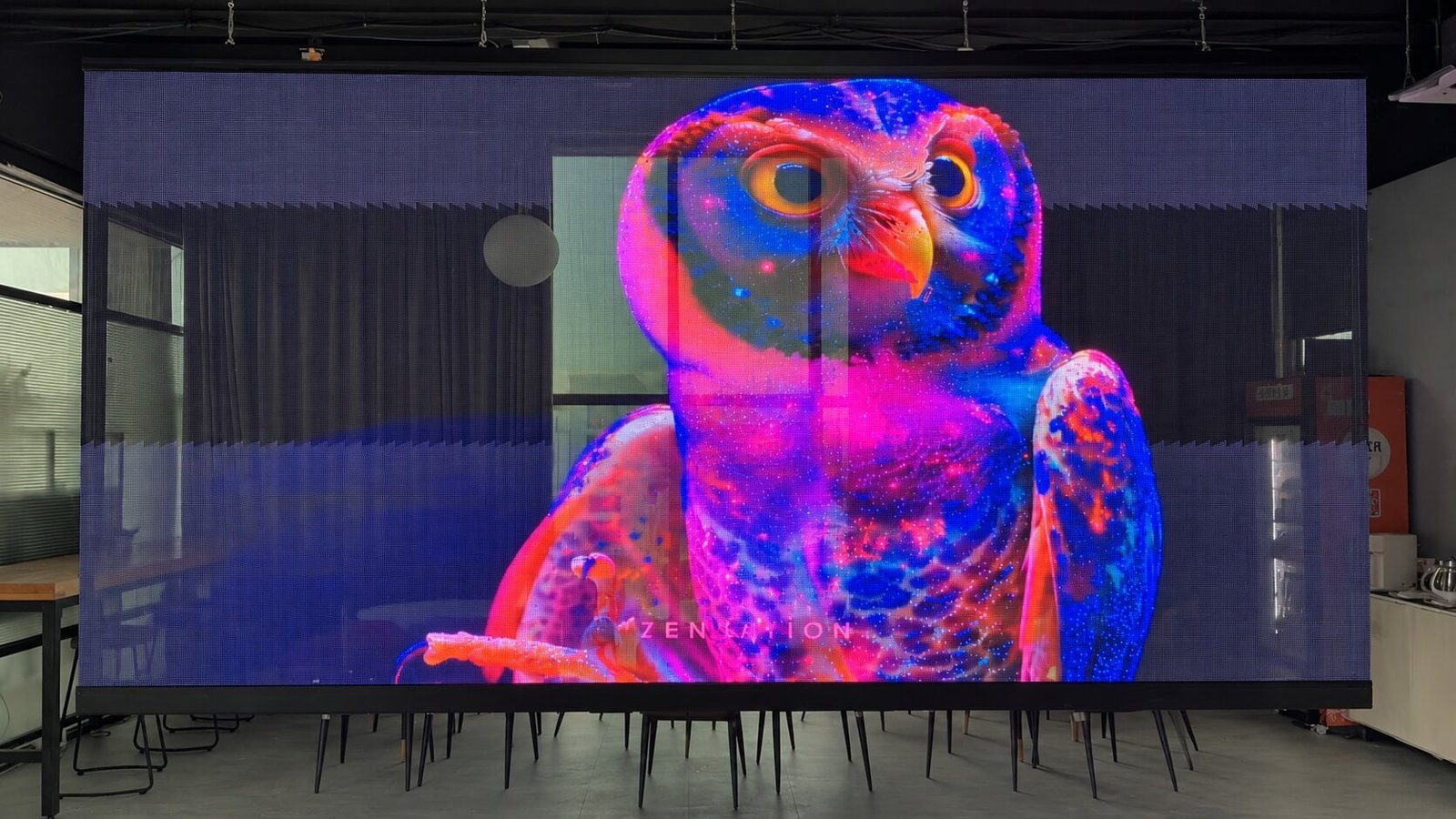
5. Holographic Installation One: Suspended, Approximately 6 × 3 Metres
The suspended example shown here is approximately six metres wide by three metres high. It demonstrates the scale available when a transparent display becomes a major feature within a room.
Bird and owl imagery appears across the screen while the space behind remains visible. This relationship between illuminated content and the surrounding room is central to the effect. A visitor sees a large moving image without experiencing the same visual enclosure as a solid display wall.
A suspended arrangement suits projects where the display should occupy a prominent position while keeping the floor beneath available. Possible settings include showrooms, exhibition spaces and large interior display areas, subject to the building and project requirements.
These photographs were taken from approximately three metres, based on the photographer's recollection. That distance records how the installation was photographed; it does not replace our approximately five-metre viewing recommendation for this P3.91 product.
The live moving presentation was considerably more striking than the quick phone photographs suggest. Camera exposure and captured LED patterns should not be used alone to judge the in-person experience.
6. Holographic Installation Two: Floor-Standing, Approximately 0.75 × 2 Metres
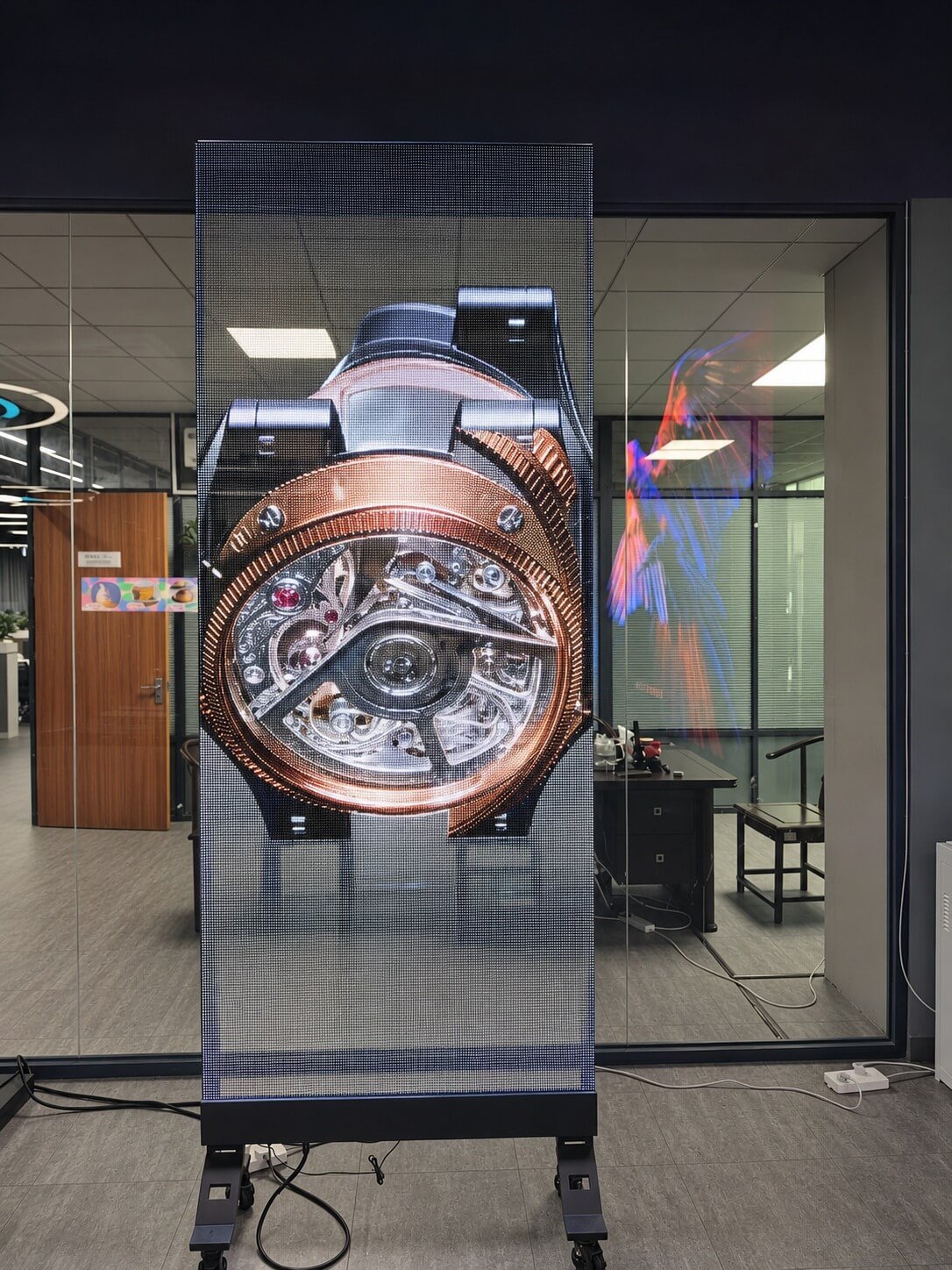
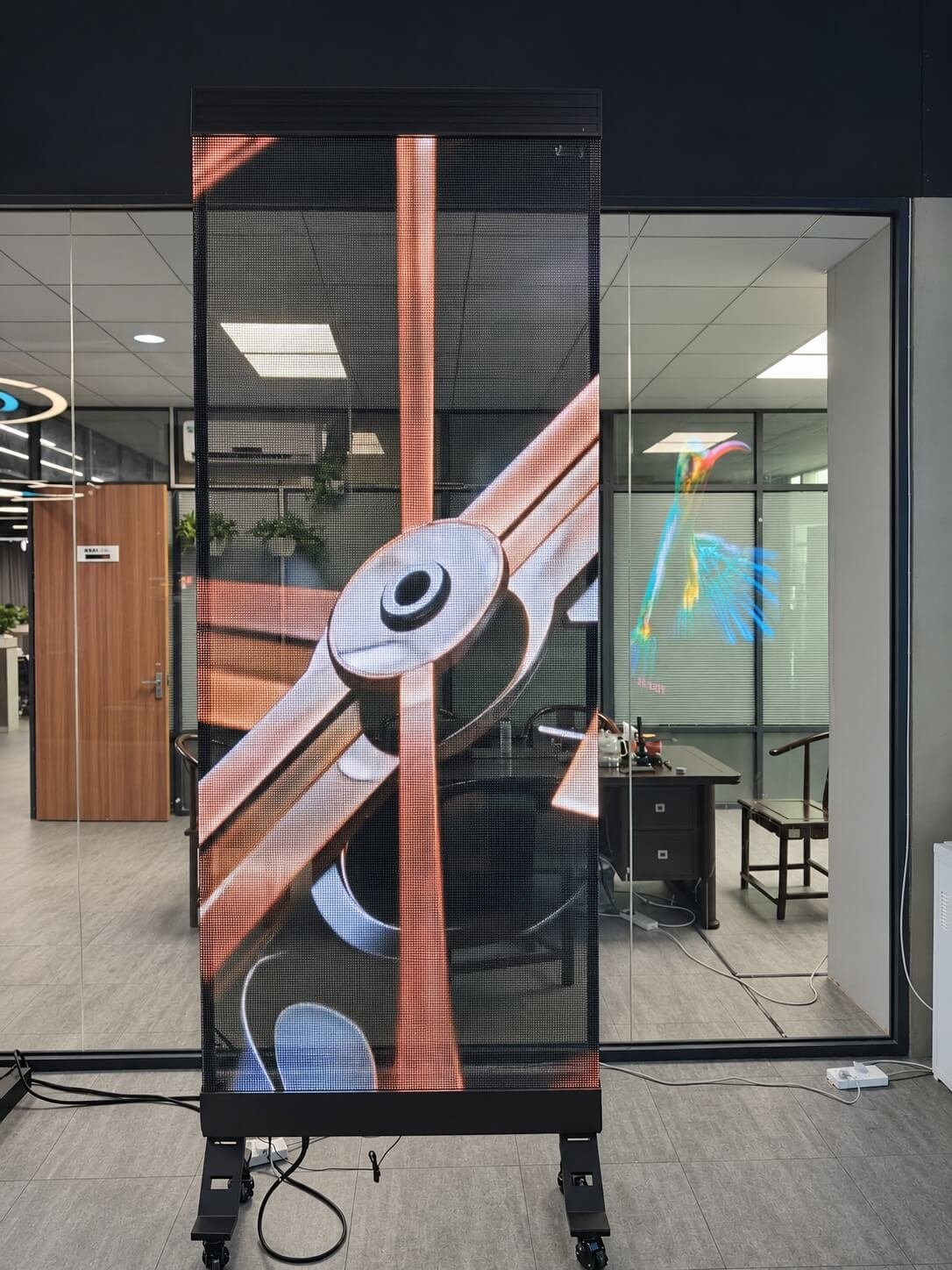
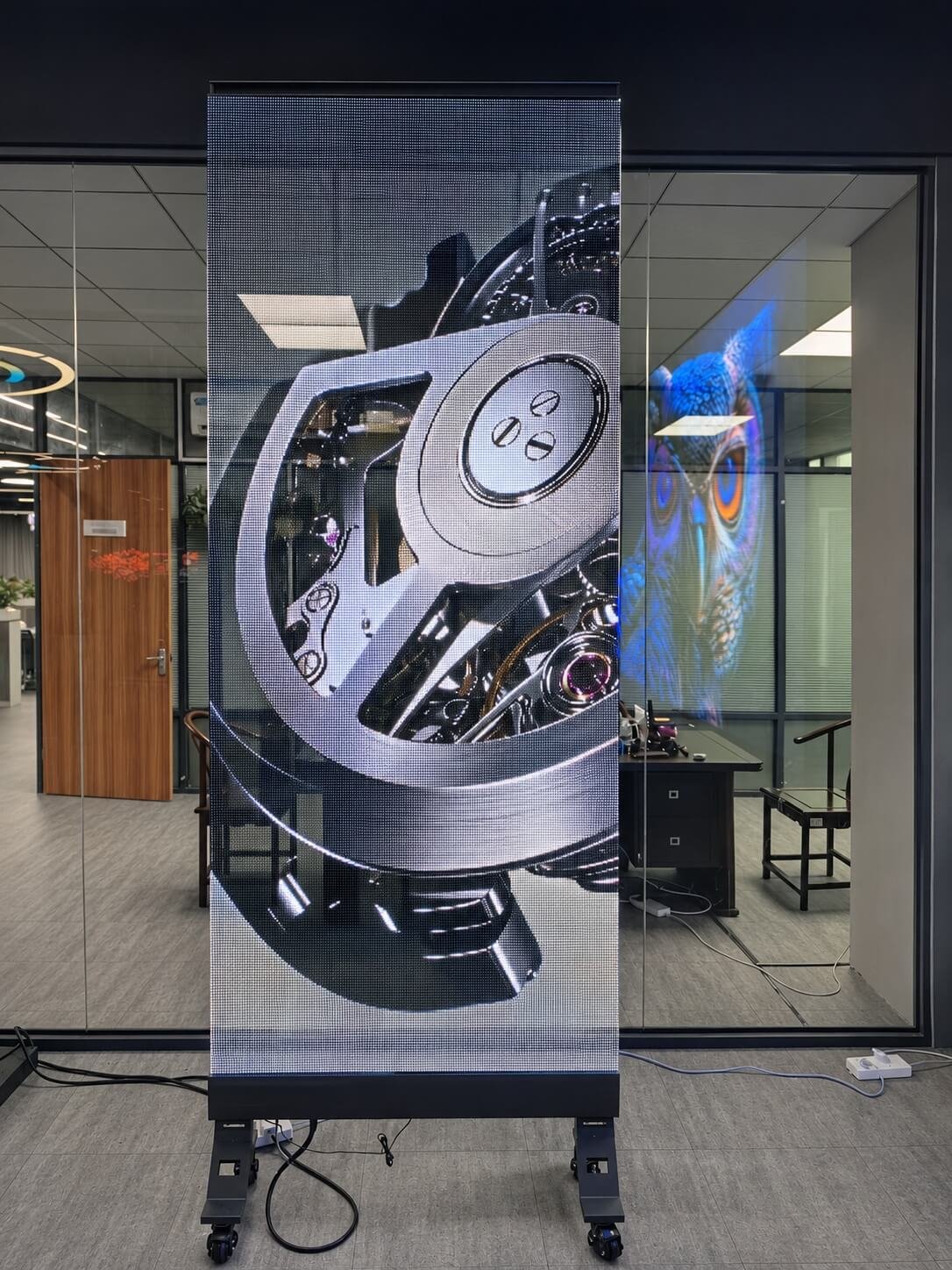
The floor-standing example is approximately 0.75 metres wide by two metres high. It presents a different installation approach using a tall, independent display with a supporting base.
Its watch imagery provides a useful demonstration of how a transparent screen can carry detailed product material. Different frames show the dial, internal mechanism and enlarged hands, while parts of the room remain visible through the display.
7. Flexible Transparent LED Film: P6 on Curved Glass
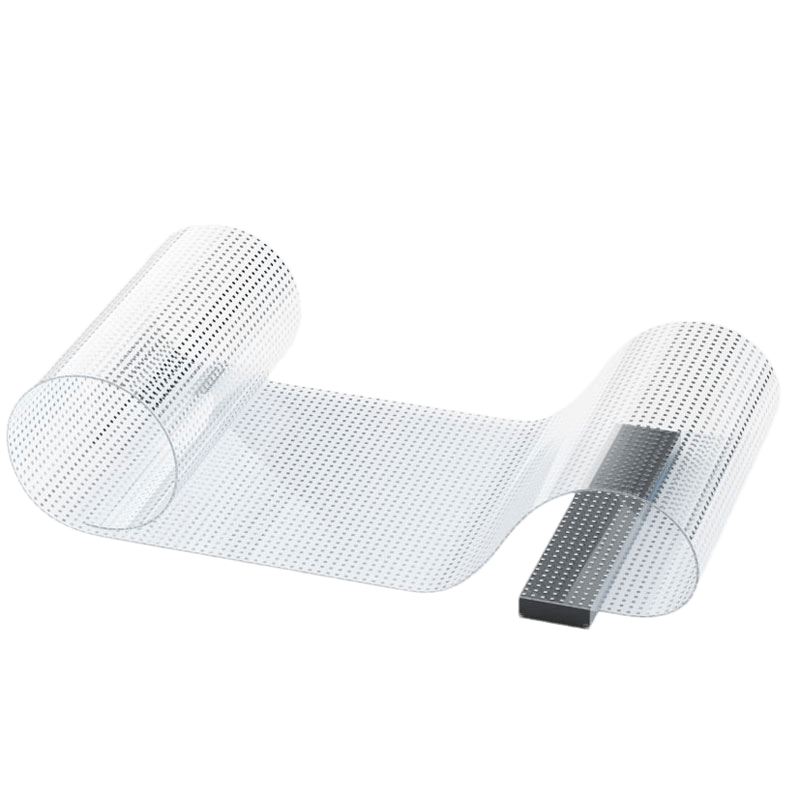
Flexible transparent LED film is currently our most commonly used transparent LED solution. For our indoor project discussions, it is the main alternative when customers want transparency but cannot justify the holographic solution’s higher investment. Price is usually the decisive factor in that choice.
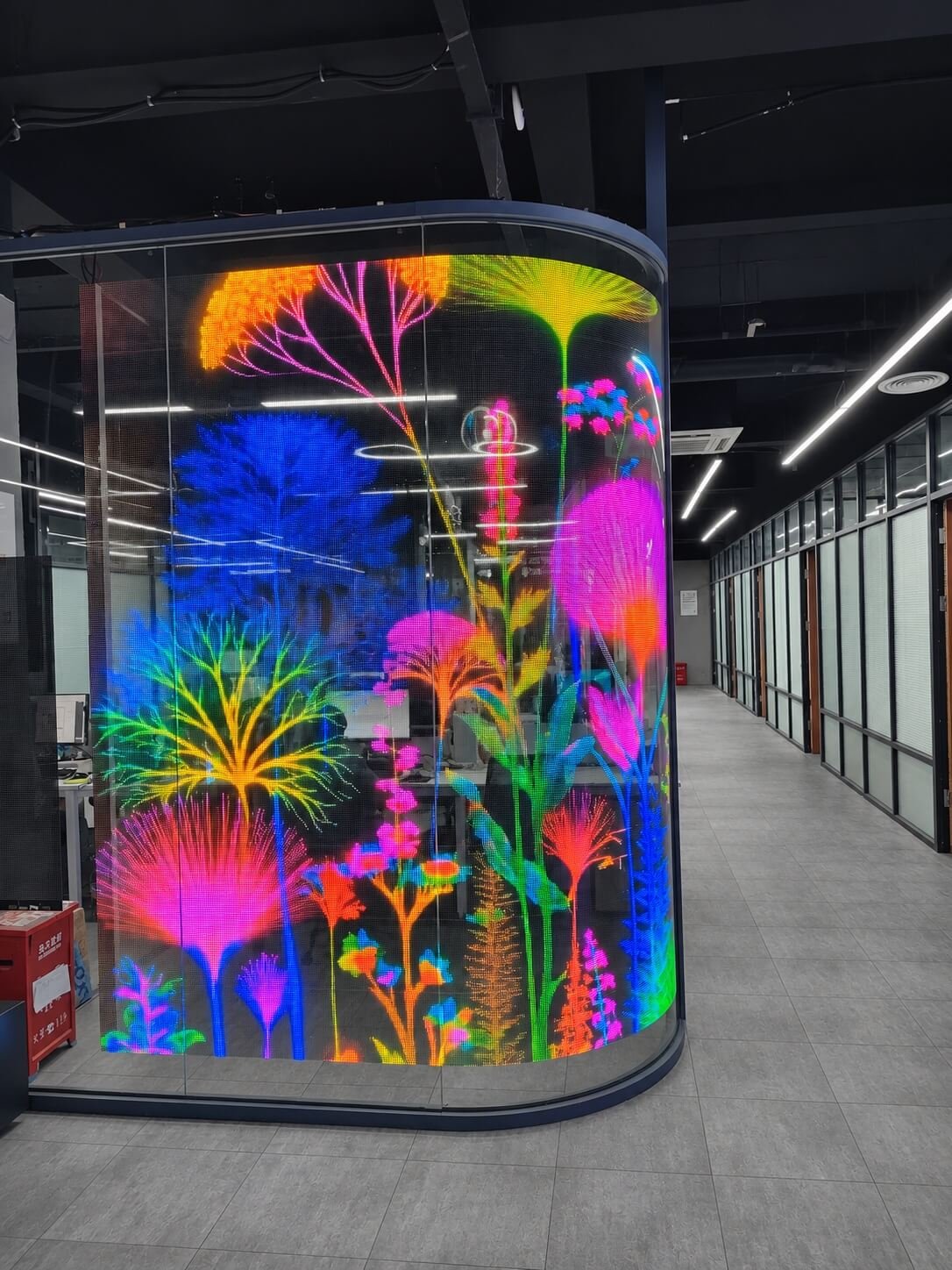
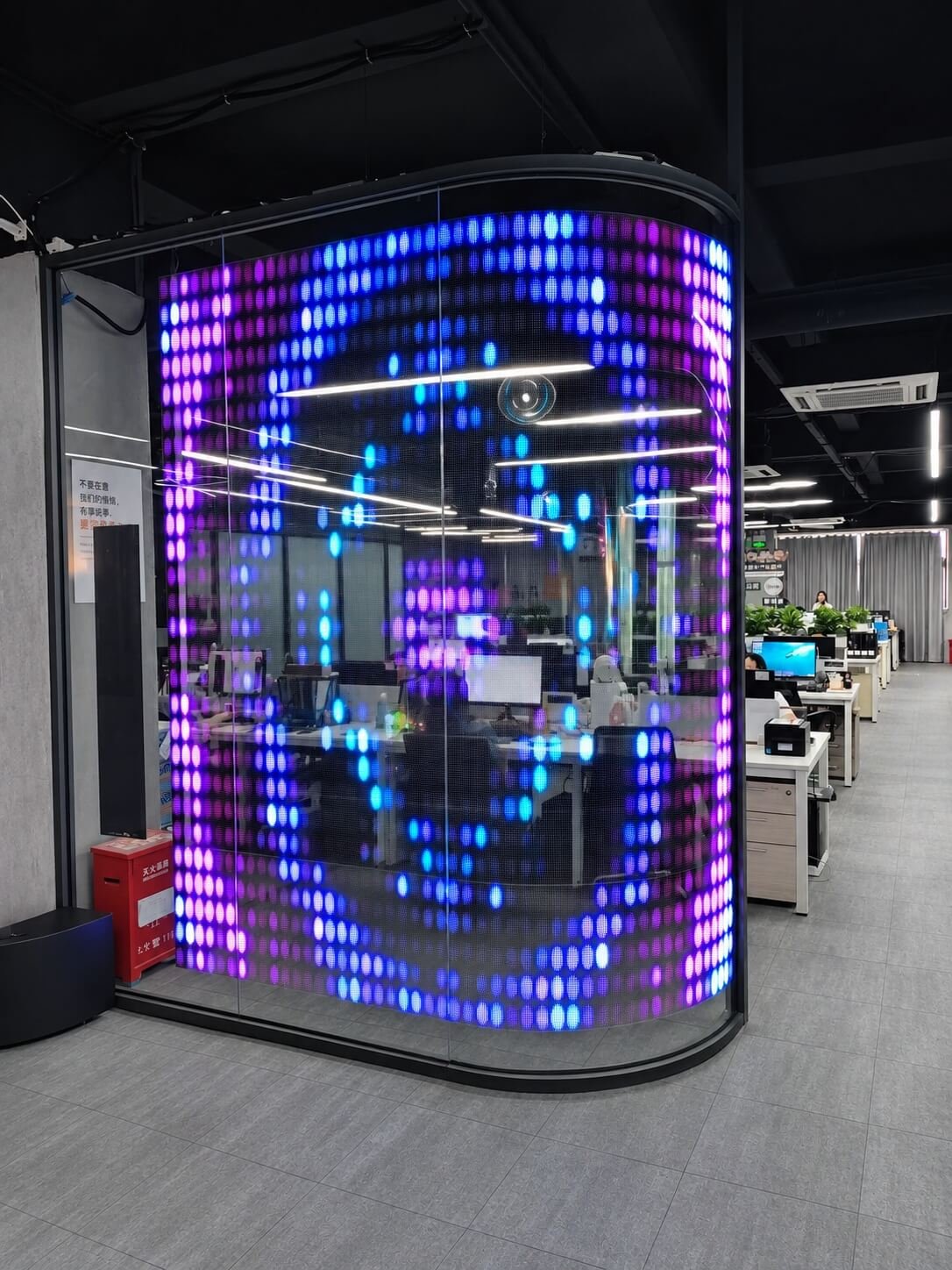
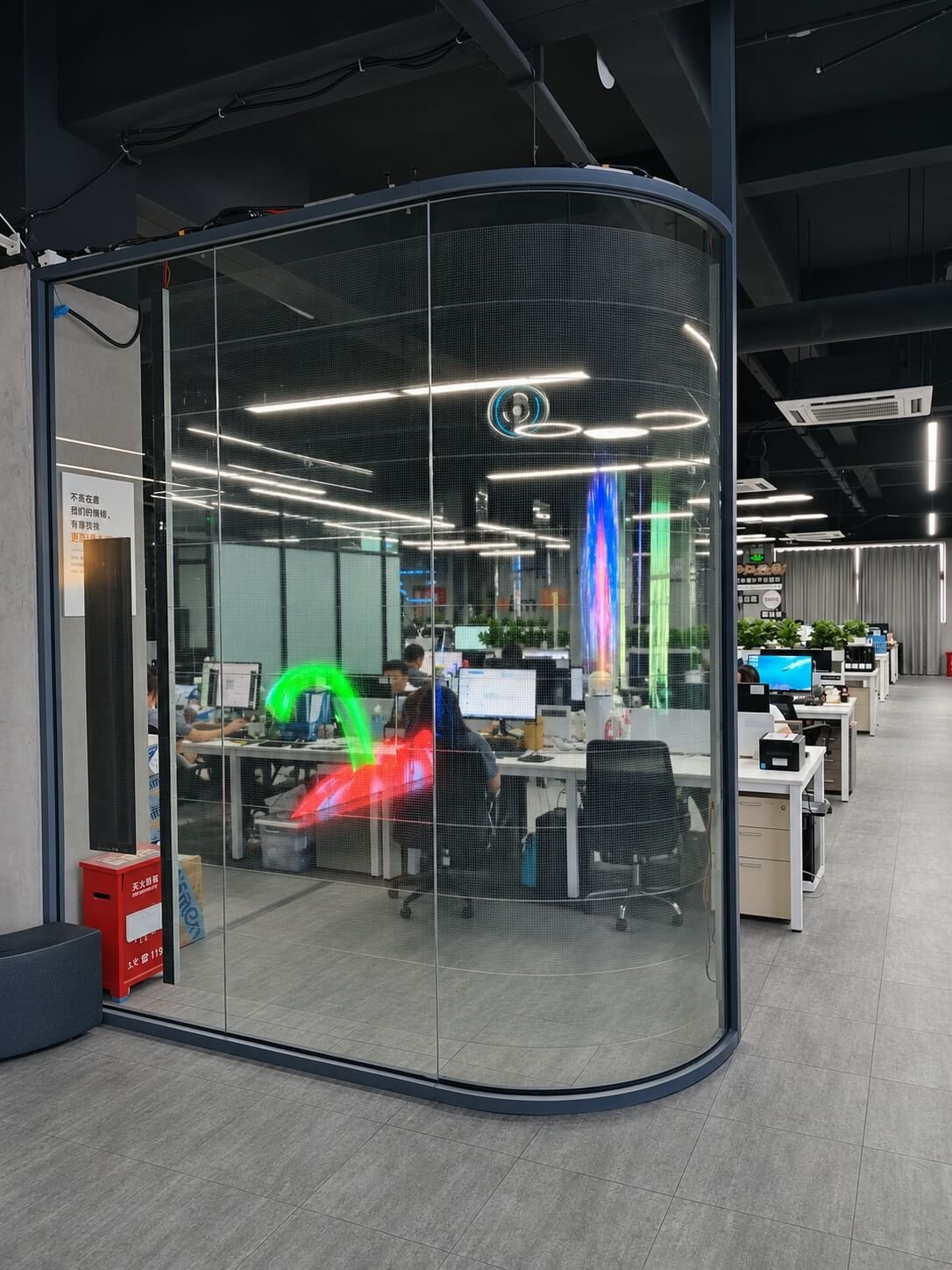
The illustrated curved-glass installation uses P6 flexible transparent LED film, photographed from approximately three metres. The quoted low-brightness configuration is specified at ≥1,200 cd/m², with a 1000 × 240 mm module format. This is the configuration associated with the reference price below.
Colorful flowers and blue-purple graphics appear on the curved glass while desks and chairs remain visible behind. The installation demonstrates how a display can follow the existing architecture. The frame with sparse illuminated content also shows the background clearly.
Flexible film provides another cost and installation route; it should not be dismissed as suitable only for simple graphics. Evaluate the intended text, imagery and video at the proposed size and distance. A satisfactory P6 installation may meet the customer’s needs at a lower investment.
Confirm the glass layout and permitted curvature before ordering. This article focuses on indoor applications and the supplied configuration, rather than assuming that a protection rating alone makes a complete assembly suitable for outdoor use.
8. Viewing Distance, Pixel Pitch and Display Size
Pixel pitch describes the spacing between adjacent pixels. P3.91 and P6 indicate different pixel spacing, but pitch must be considered together with display dimensions and viewing distance.
At the same physical display size, a smaller pitch generally provides more pixels across the image. Increasing the screen area can also increase the total resolution without changing pitch. These are different ways to meet a project's image requirements.
A large screen viewed across a room and a desktop screen viewed nearby should therefore be compared against their own tasks. Paying for finer pixels is valuable when visitors can benefit from them and the project needs the resulting image structure.
9. Price: Compare the Complete Project
The following October 2026 public reference prices cover three configurations. Micro LED is priced per complete standard system; transparent LED is priced per square metre of modules. These purchasing scopes differ, and the figures are not binding current quotations.
| Configuration | Size reference | Reference price |
|---|---|---|
| 64-inch transparent Micro LED — complete standard system, EXW | 1920 × 1080; two 42-inch panels | USD 69,600/unit |
| COB P3.91 holographic transparent LED | 250 × 1500 mm | USD 2,500/m² |
| P6 flexible transparent LED film, low-brightness ≥1,200 cd/m² | 1000 × 240 mm | USD 1,500/m² |
For the COB P3.91 and P6 module-only references, power supplies, control systems, installation structures, transport and taxes are additional. The 64-inch Micro LED system reference includes standard protective packaging and a wooden crate; freight, import duties and taxes are excluded. Optional touch or special requirements need a separate quotation. Do not treat these module figures as installed-system prices. Confirm the current configuration and quotation before budgeting a purchase.
At these references, the P3.91 module price is USD 1,000/m² above P6, approximately 67% higher. That difference becomes substantial as the area increases, which helps explain why customers often select flexible film even when they prefer the holographic presentation.
For illustration, 18 m² multiplied by these rates gives USD 45,000 for P3.91 modules or USD 27,000 for P6 modules. This is area arithmetic only: different module formats, layouts and installation requirements mean that the two figures are not interchangeable project quotations.
Micro LED has a different cost structure involving precise emitter integration, its panel platform and manufacturing volume. Compare an assembled Micro LED quotation with a complete LED system quotation, including power, controls and support—not with module prices alone.
The USD 69,600 system price and USD/m² module prices should not be used to calculate a direct price ratio. Resolution, viewing distance, display area and included equipment differ. Read our Transparent Micro LED Display Price Guide for published retail references and included equipment.
10. How to Choose for Your Project
Begin with the viewing experience and required area. For close viewing, assess transparent Micro LED first: the 64-inch example shows why fine pixel spacing has value at approximately one metre. For premium indoor transparent LED presentations, our first recommendation is COB P3.91 holographic. P6 flexible film is the more accessible alternative when budget determines the decision.
In our sales experience, customers often prefer the higher-end visual result but select another technology because of price. We see a similar pattern when customers choose transparent OLED instead of Micro LED. This is our commercial experience, not a claim that price is the only consideration in every project.
Several technologies may meet the functional requirement. Decide whether the extra visual performance justifies the additional investment, then compare complete quotations. Send your company website, dimensions, viewing distance, installation photos, sample content, quantity, target schedule and budget.
Explore All Nine Transparent Micro LED Sizes
Open the individual model pages for product images, native canvas, configuration and integration details. View the complete product family →
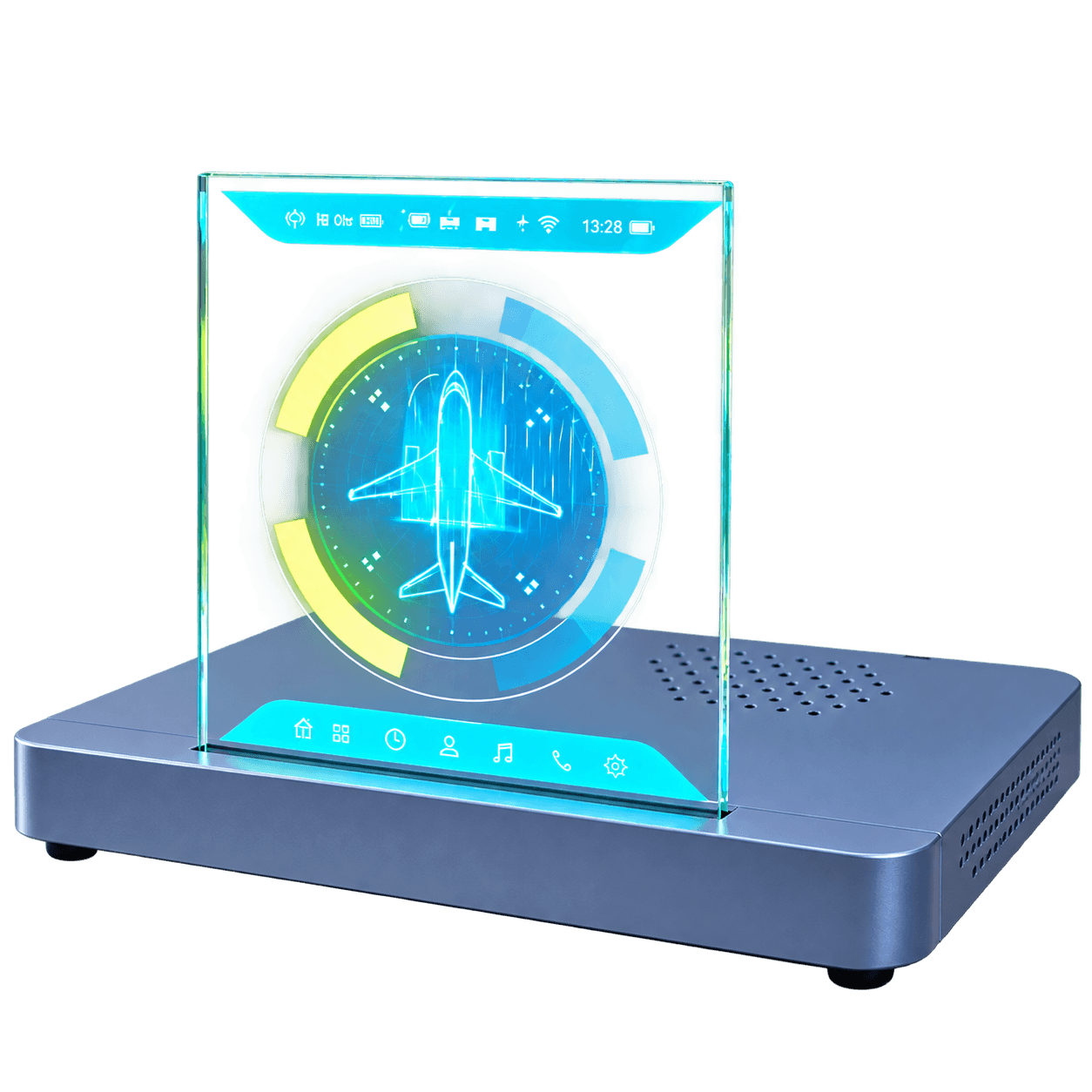
9.4-Inch Transparent Micro LED
Compact base platform.
View model details →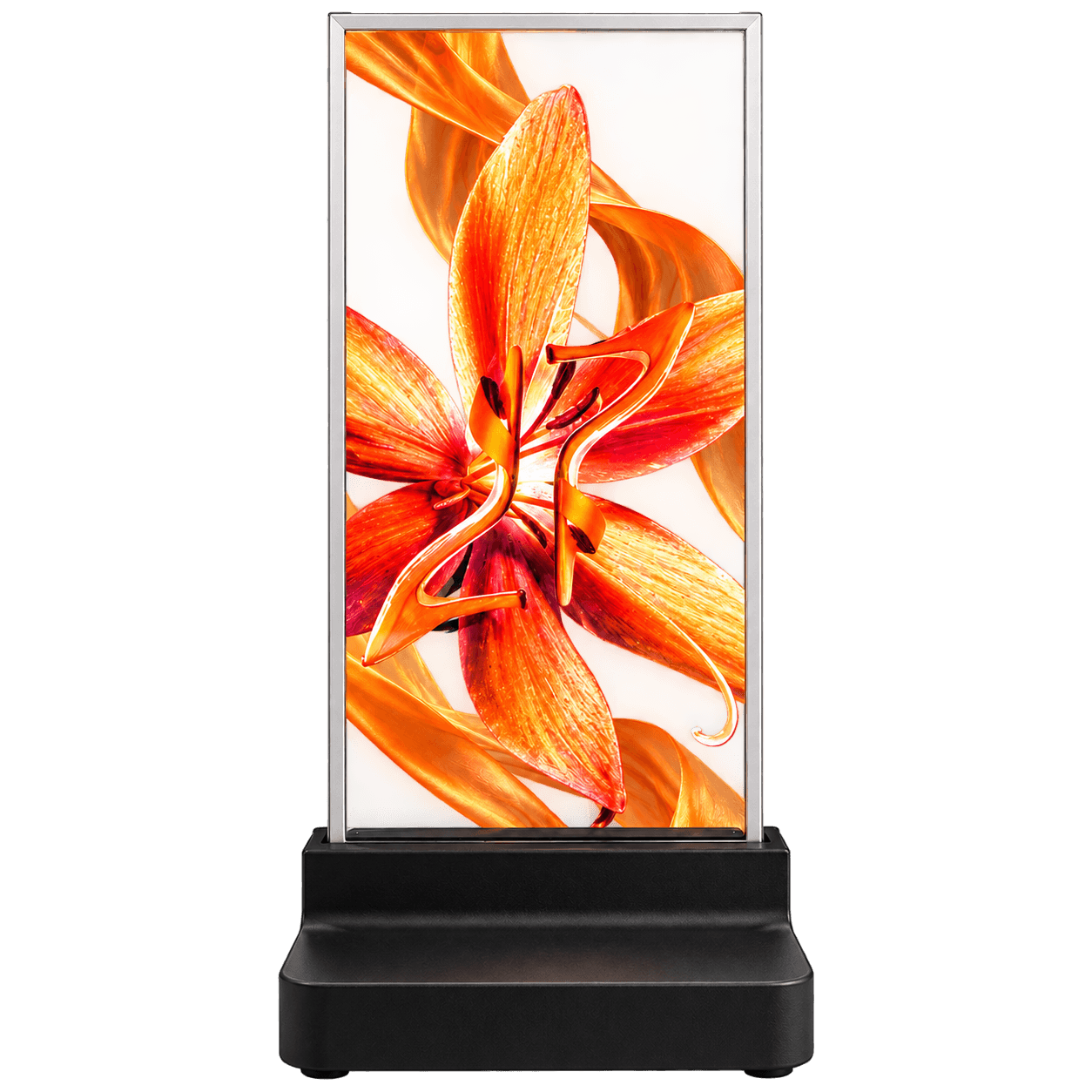
16.1-Inch Transparent Micro LED
Narrow-format base panel.
View model details →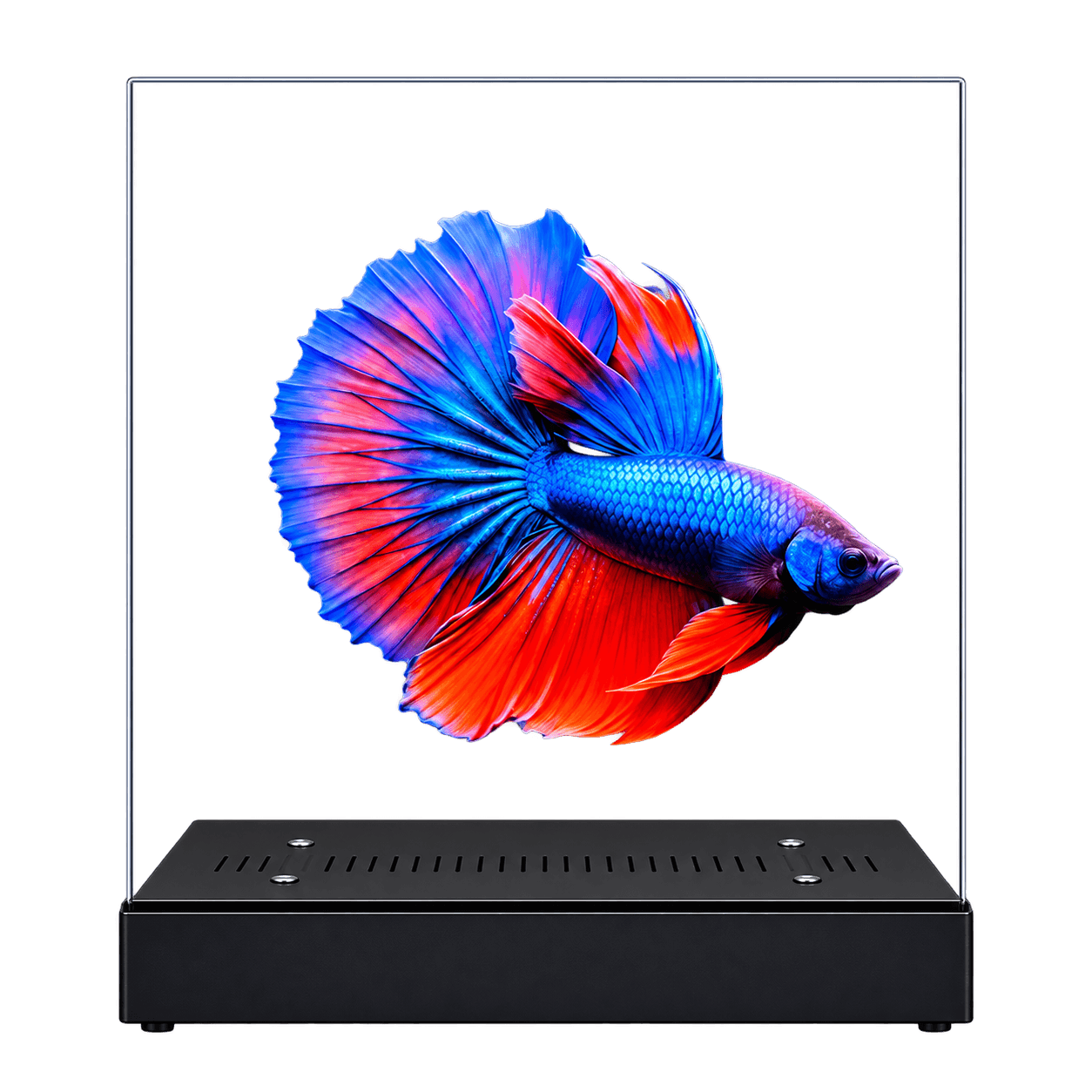
20-Inch Transparent Micro LED
Two 16.1-inch panels.
View model details →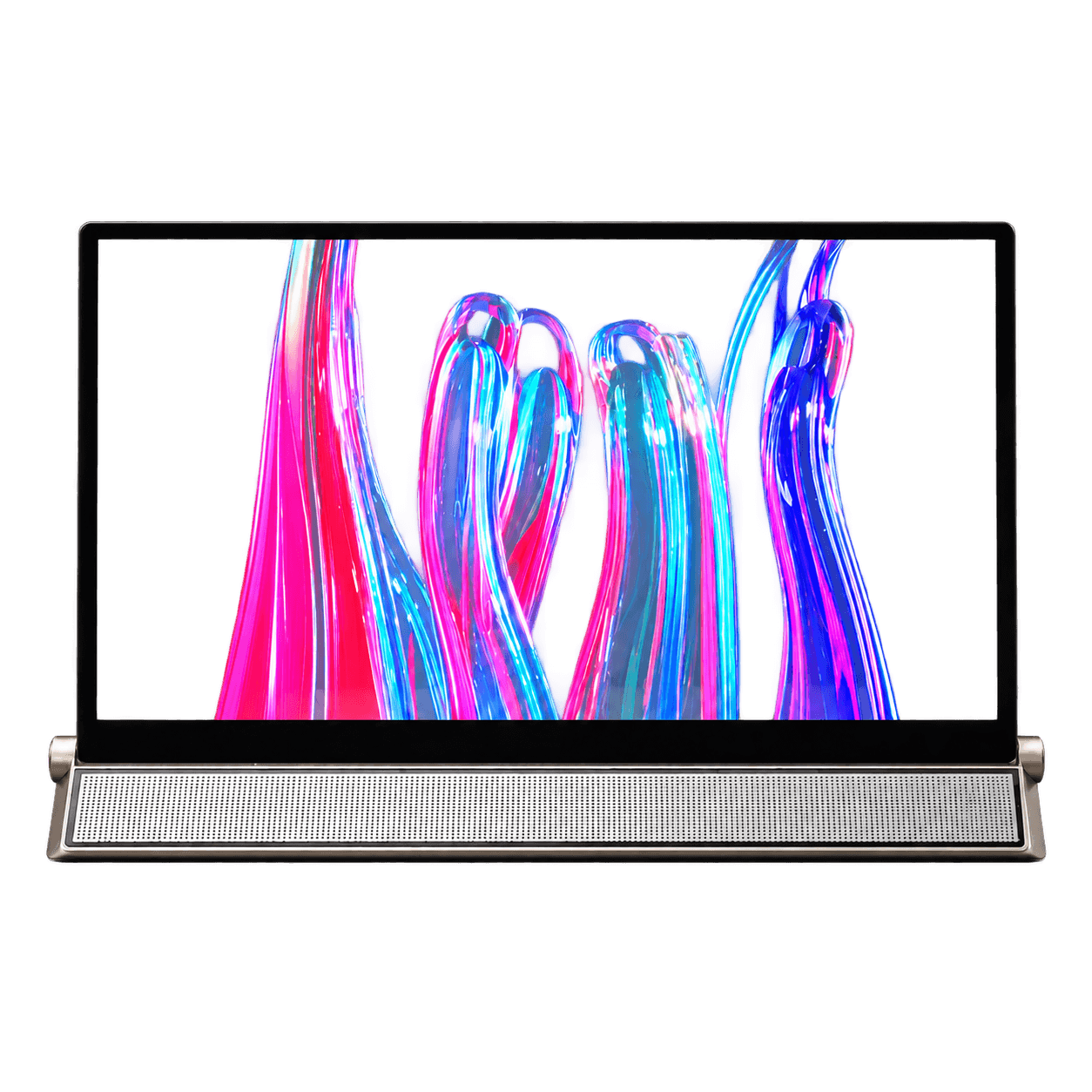
30-Inch Transparent Micro LED
Four 16.1-inch panels.
View model details →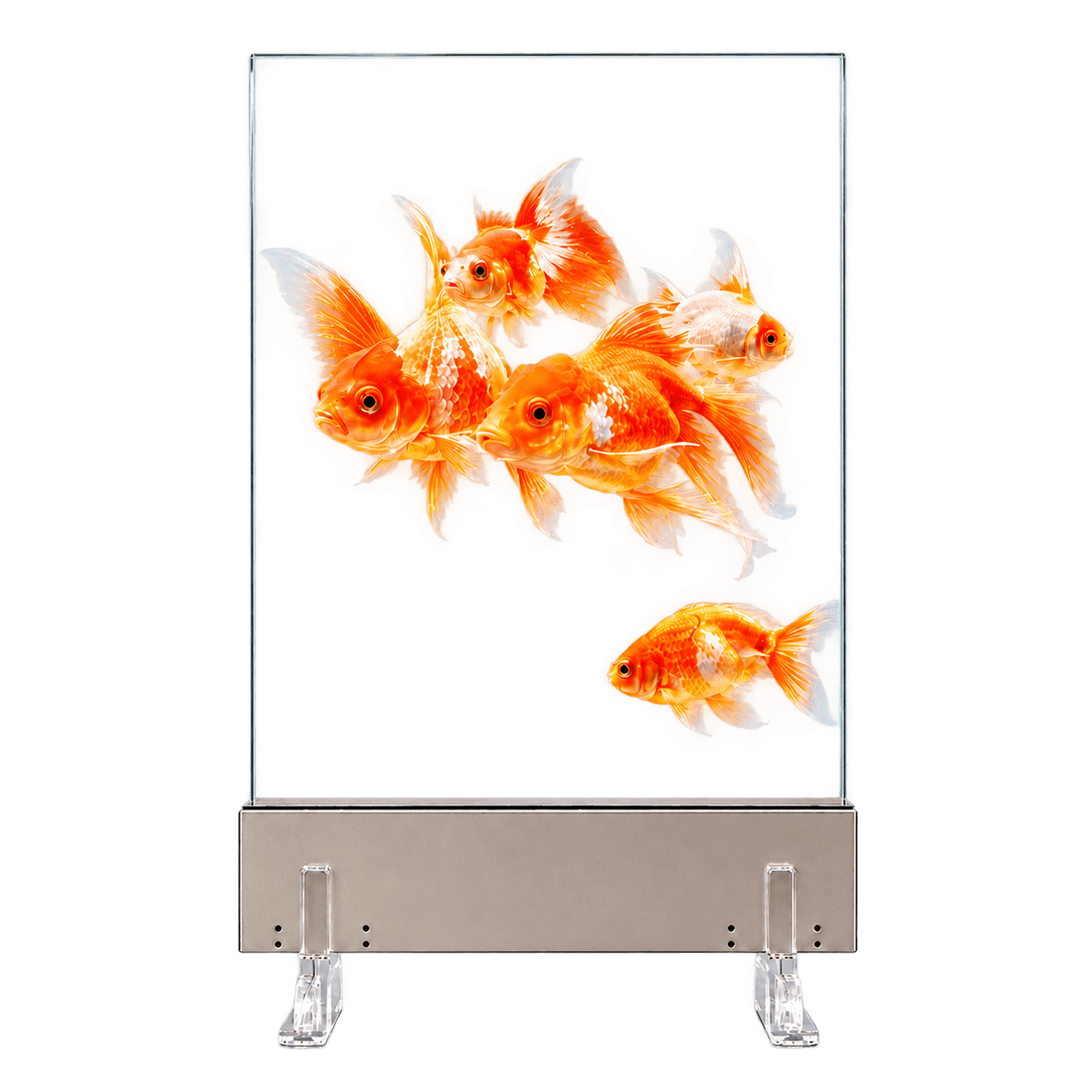
42-Inch Transparent Micro LED
Portrait base platform.
View model details →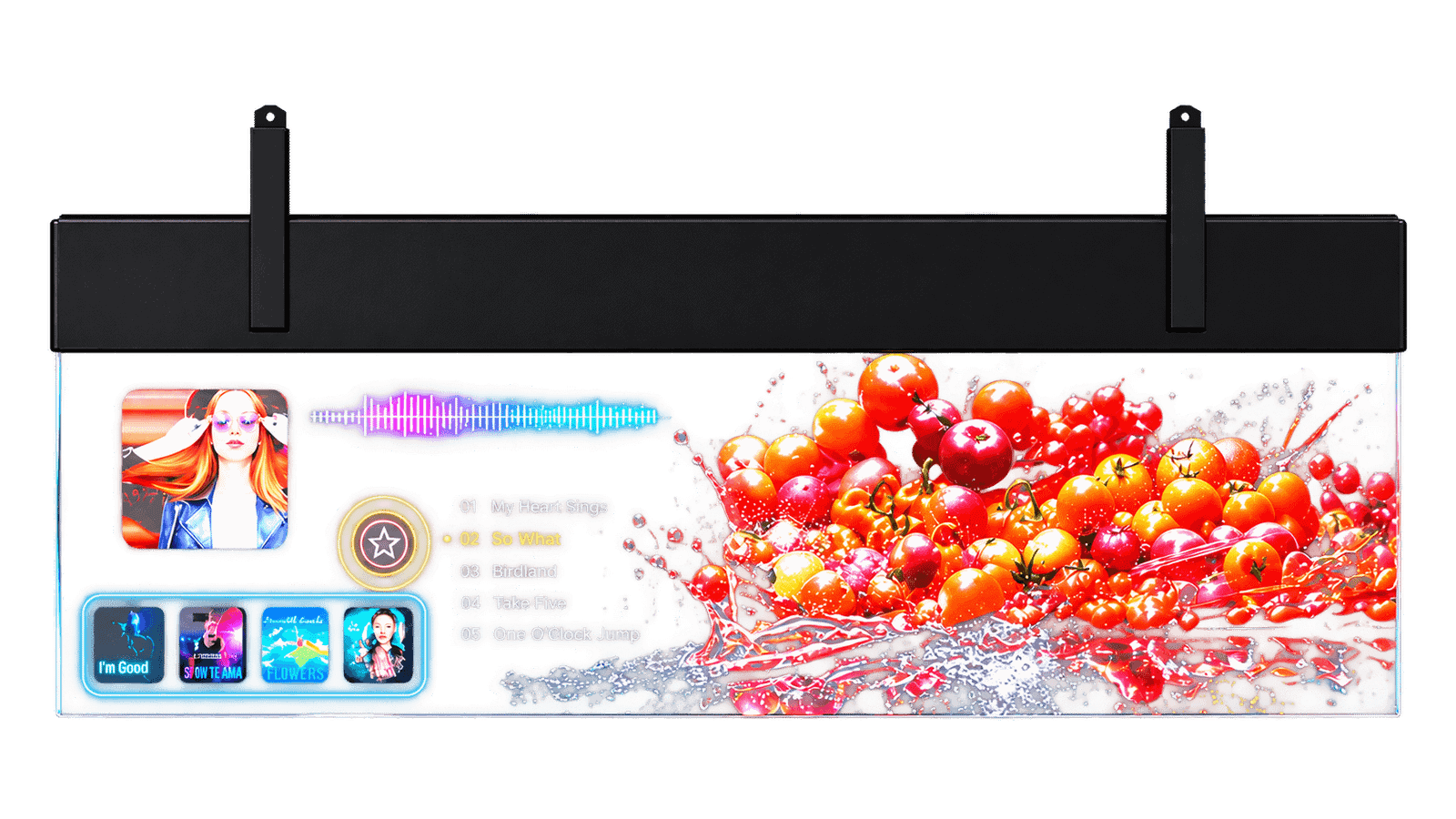
54-Inch Transparent Micro LED
Eight 16.1-inch panels.
View model details →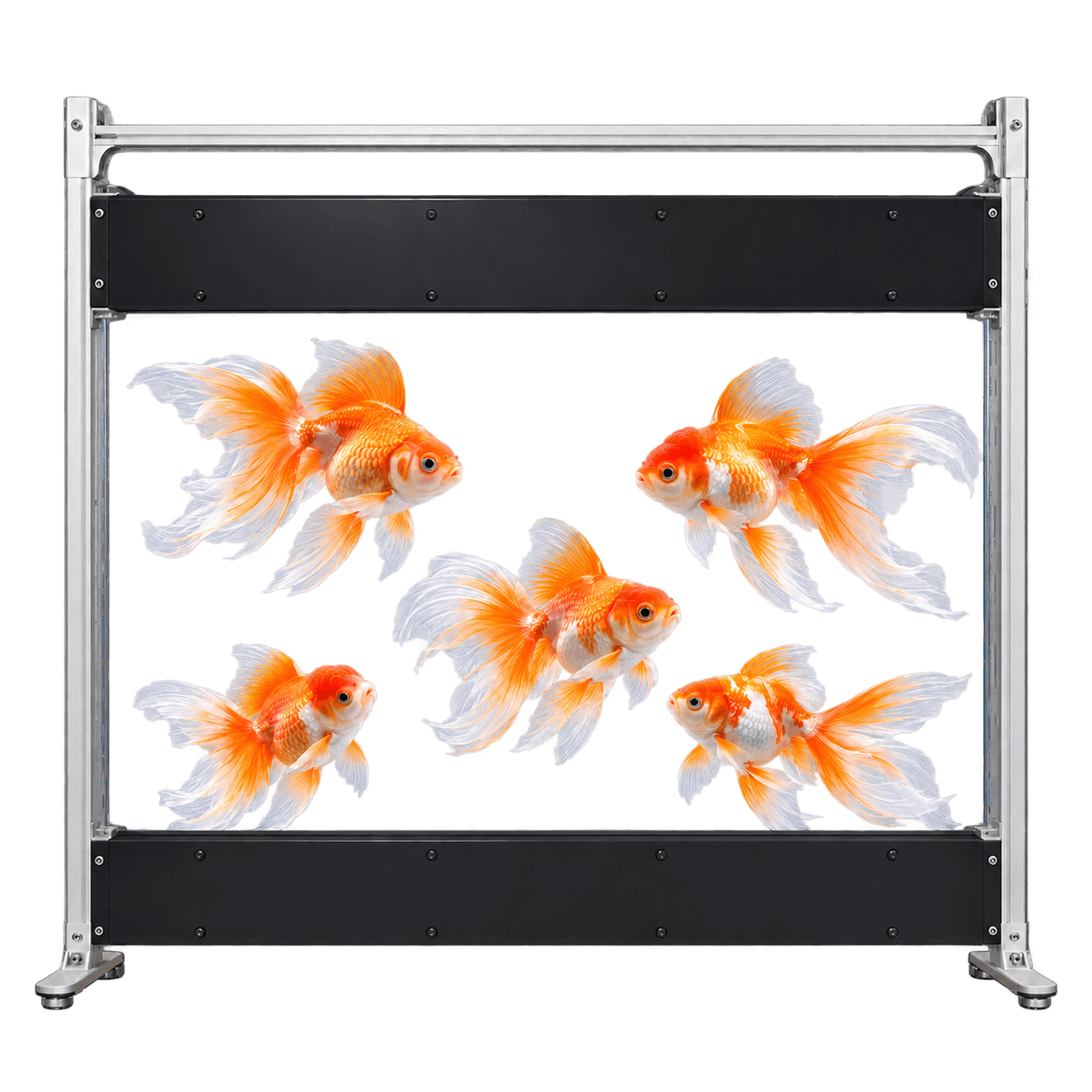
60-Inch Transparent Micro LED
Sixteen 16.1-inch panels.
View model details →64-Inch Transparent Micro LED
Two 42-inch panels.
Retail reference: USD 69,600/unit, EXW
View model details →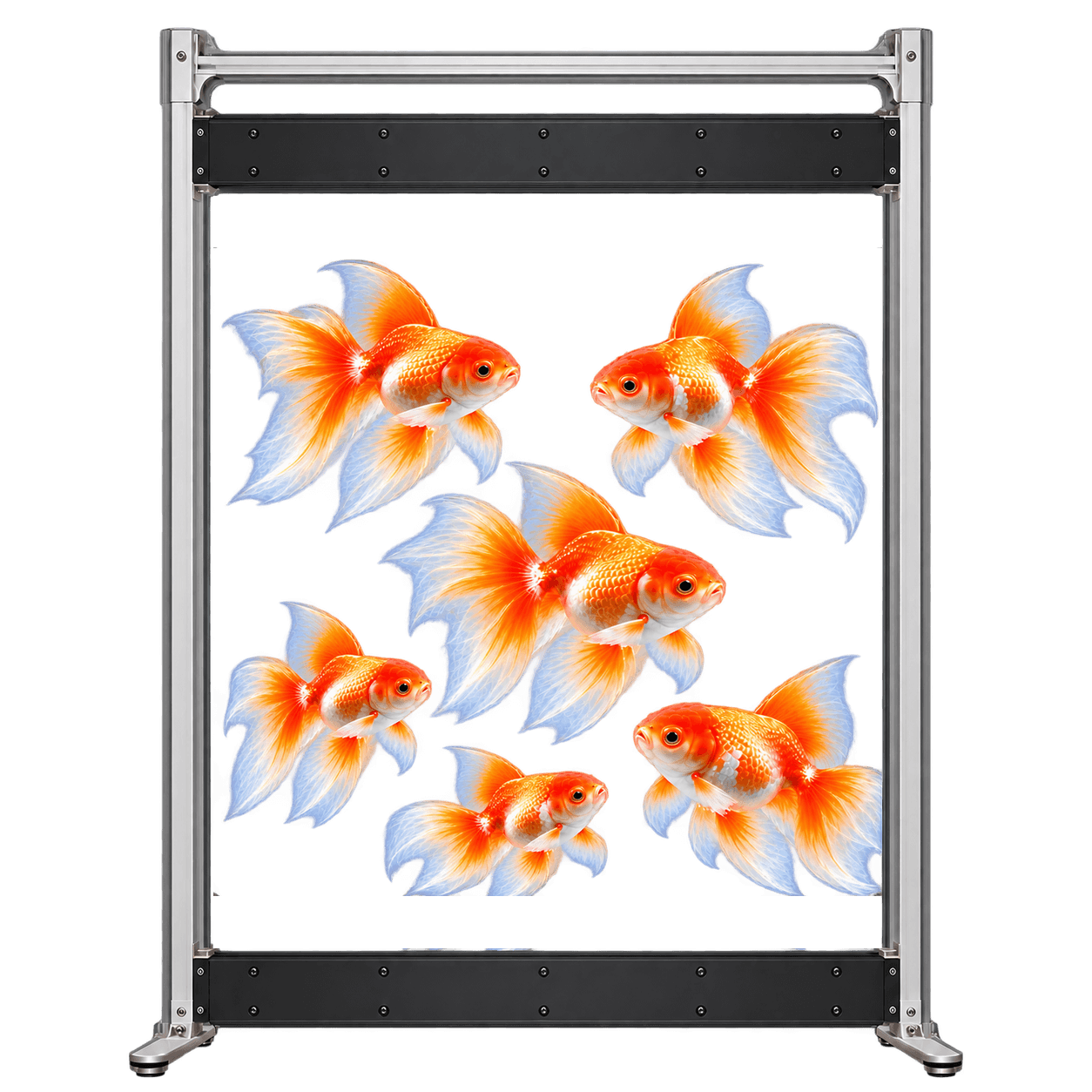
83-Inch Transparent Micro LED
Four 42-inch panels.
View model details →Explore Our Nine Transparent LED Product Options
Our Transparent LED Displays family covers nine product directions. Flexible film is our most commonly used solution; COB P3.91 holographic transparent LED is our flagship choice.
Flexible Transparent LED Film Display
View product details →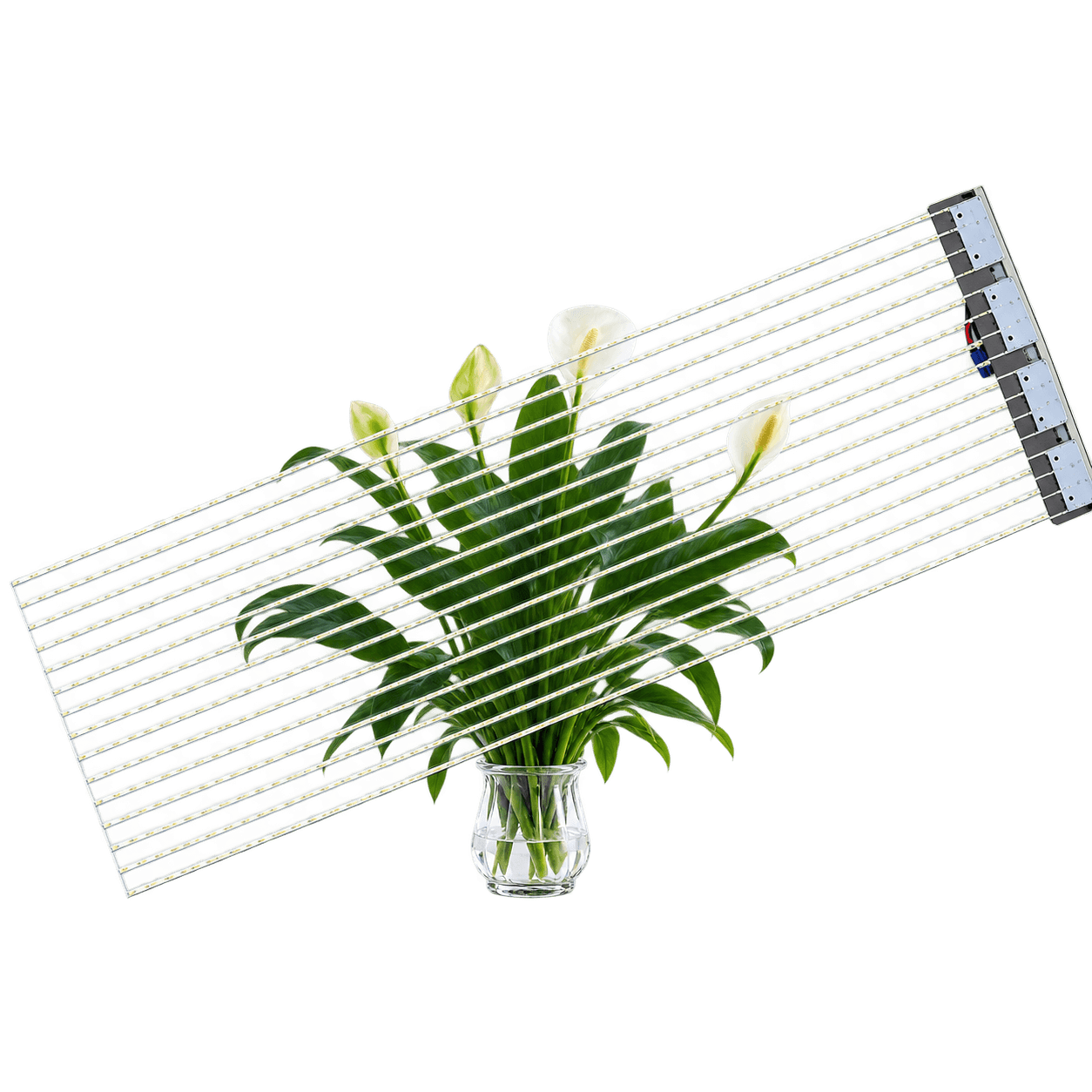
Transparent LED Film Display
View product details →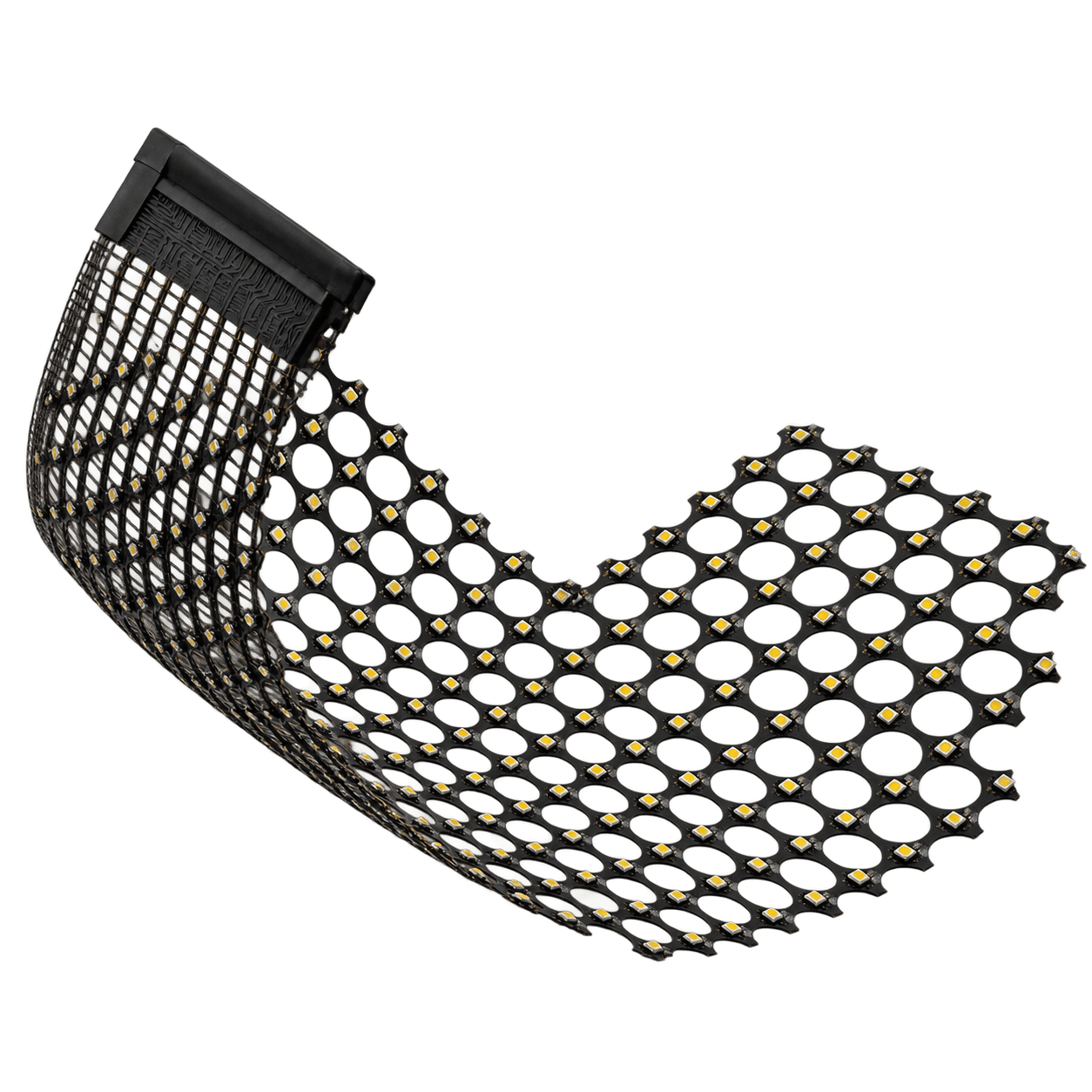
Holographic Transparent LED Display
View product details →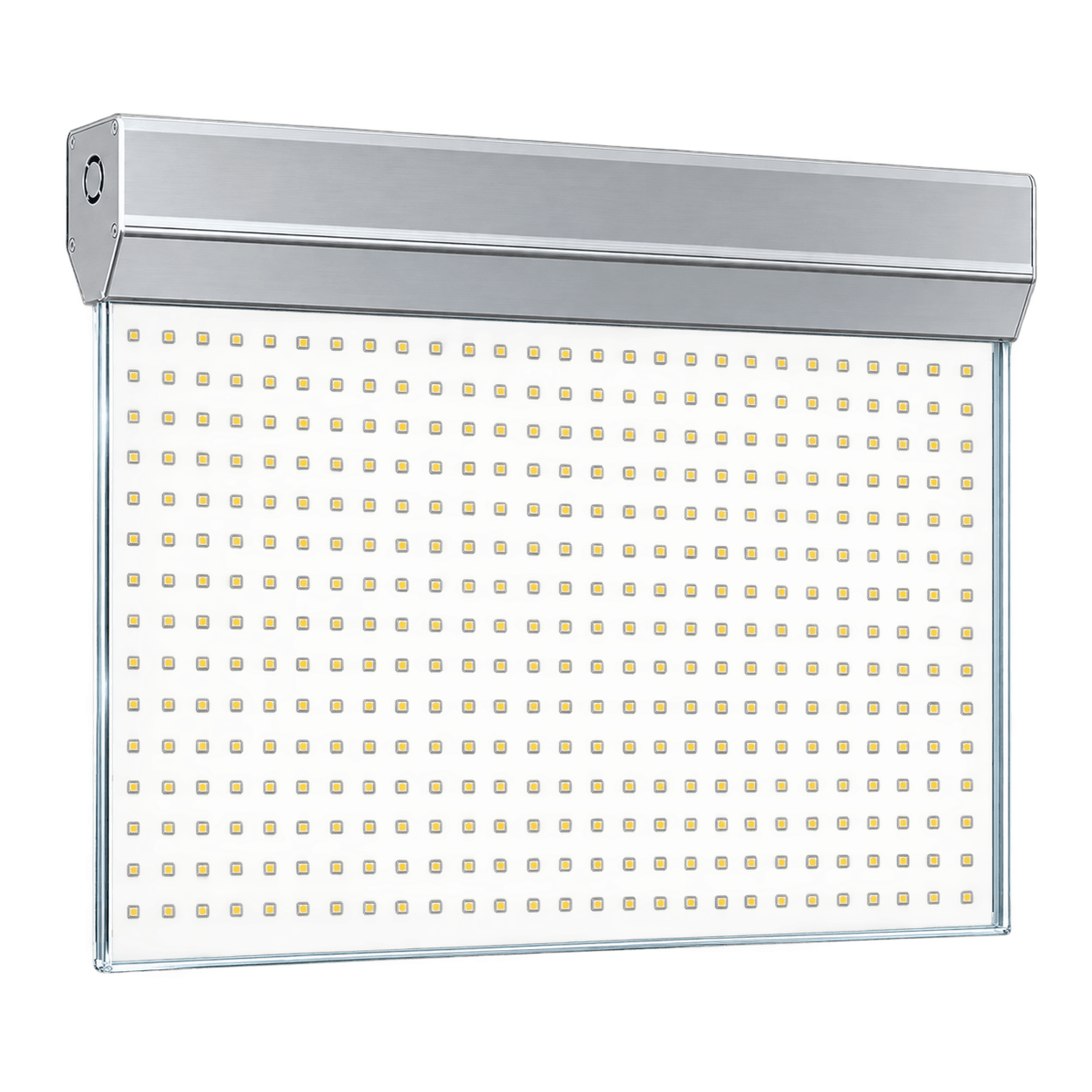
Transparent LED Glass Display
View product details →
Indoor Transparent LED Display
View product details →
Outdoor Transparent LED Mesh Display
View product details →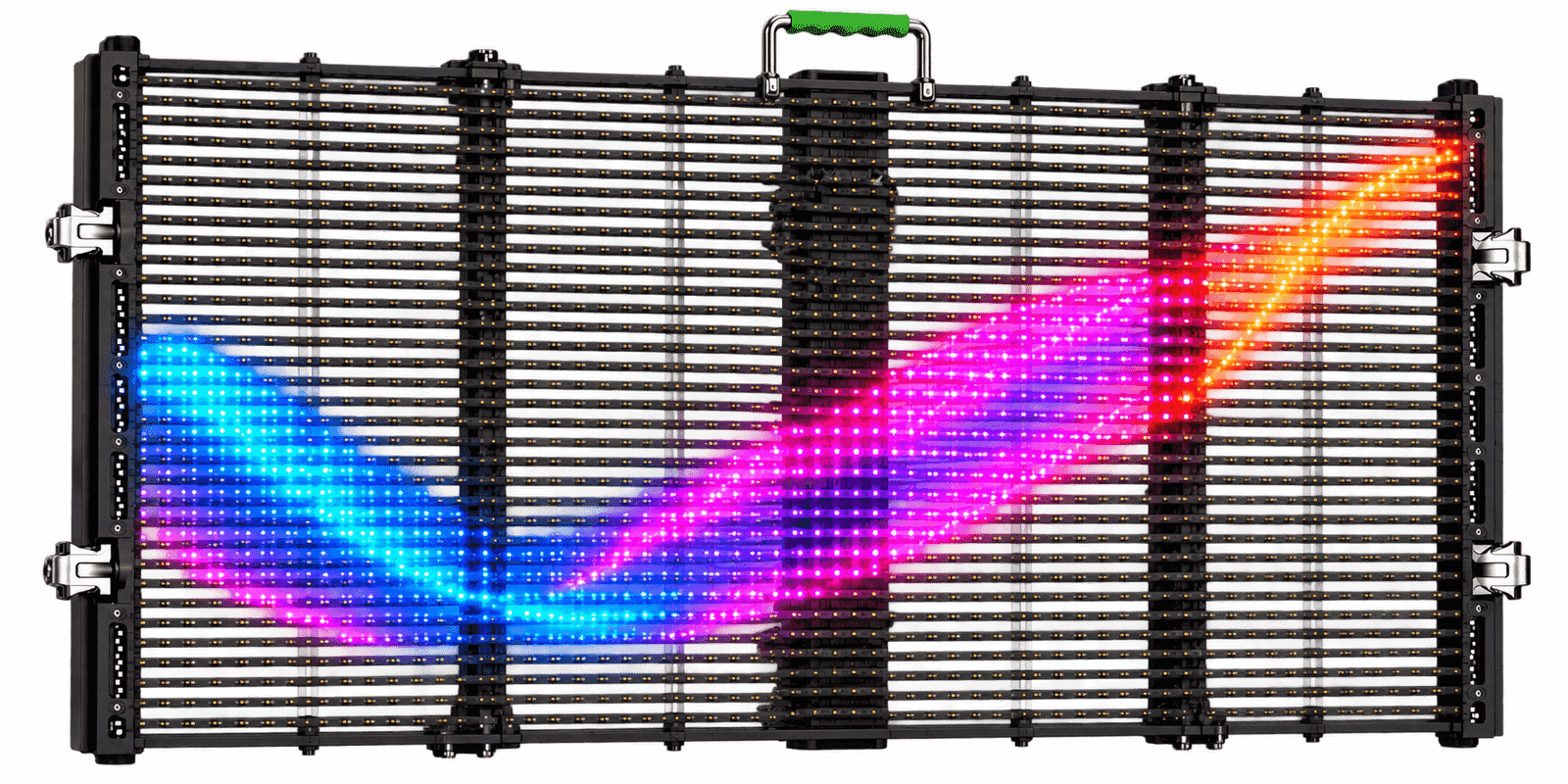
Rental Transparent LED Display
View product details →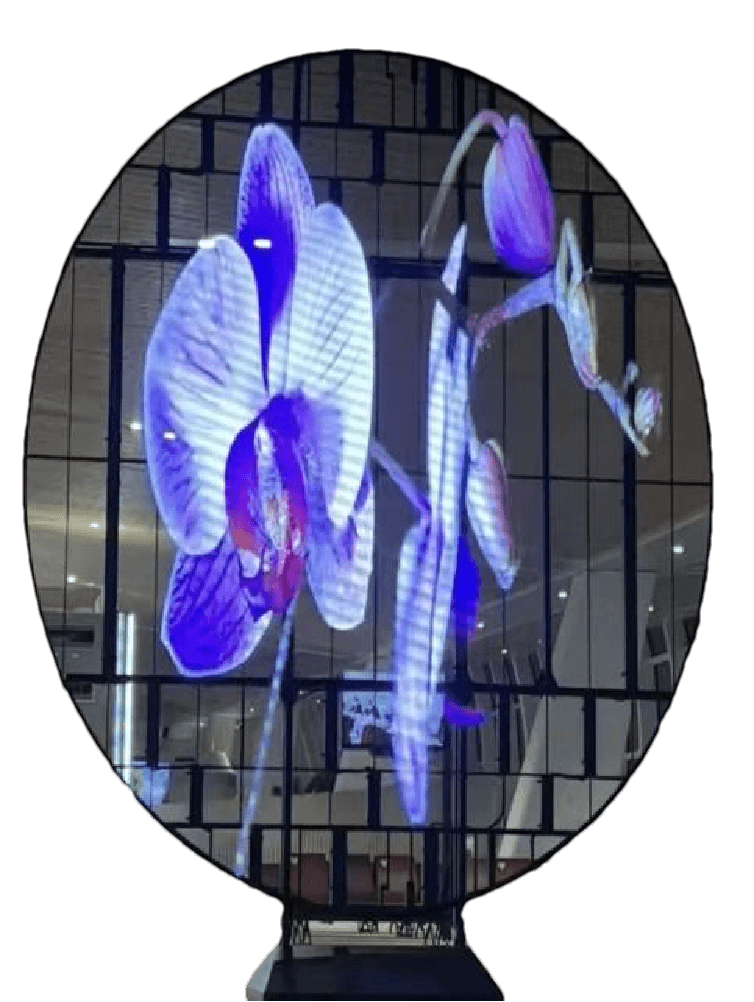
Custom Transparent LED Displays
View product details →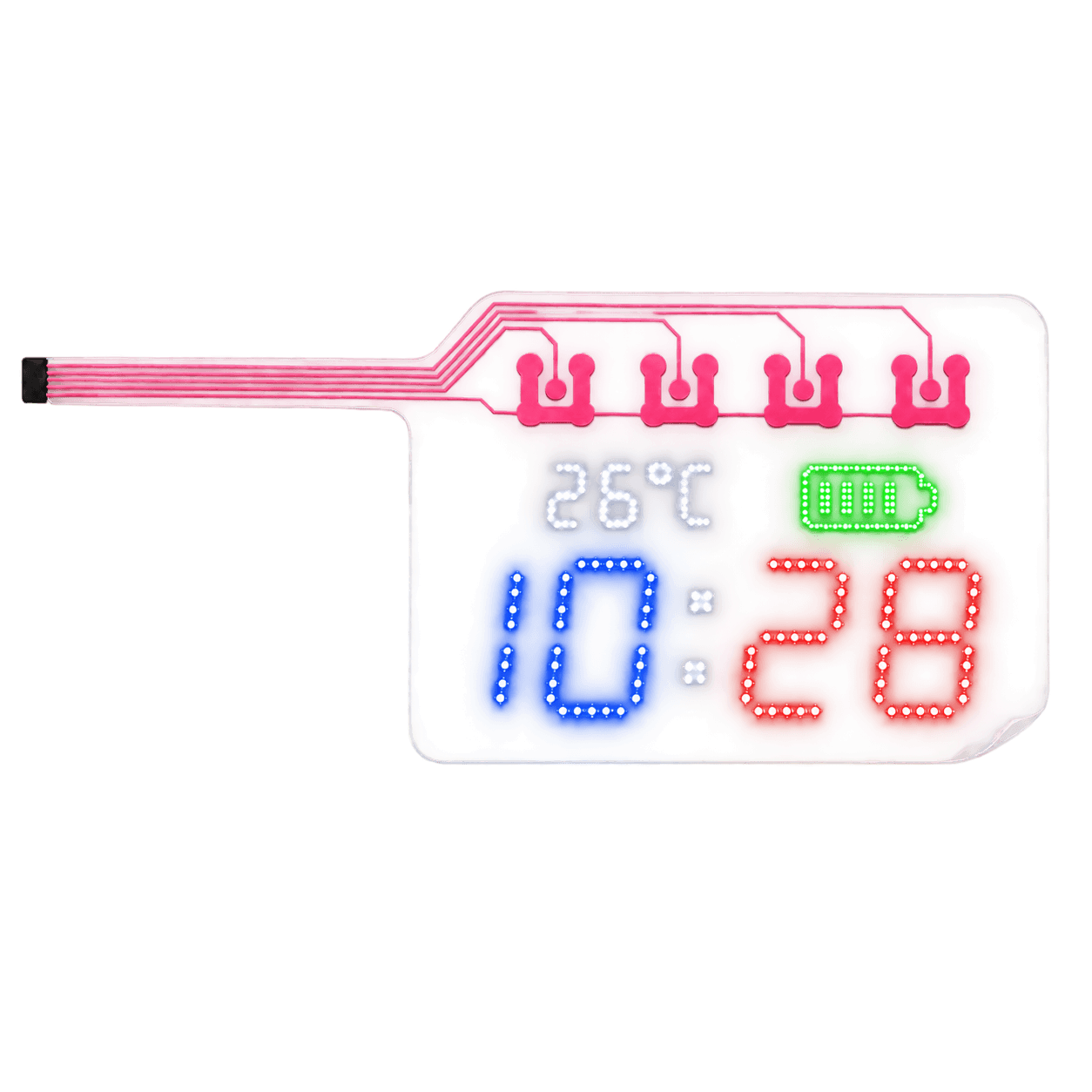
Custom Small-Format Flexible Transparent LED Displays
View product details →Project review
Discuss Your Transparent Display Project
Send installation photos, display dimensions, viewing distance, sample content, quantity and budget. We will compare suitable Micro LED, holographic transparent LED and flexible film configurations.