Buying Guides & Project Review
For a premium indoor installation, we usually start with COB holographic transparent LED when the brief combines vivid imagery, a visually light structure and a convincing see-through effect. The screen must contribute to the space while allowing the showroom, merchandise or architecture behind it to remain visible.
Our recommendation is specifically about the COB P3.91 configuration discussed here. It is our flagship transparent LED choice for this type of project. Flexible transparent LED film remains our most commonly used alternative, especially when the budget or curved-glass integration drives the decision.
Our recommendation: Start with COB holographic LED for premium indoor projects that prioritise refined imagery, an open see-through structure and protected emitting sites. Review flexible crystal film when budget and curved-glass integration take priority; review outdoor grille/mesh for exposed facades. Pixel pitch and COB encapsulation are separate reasons for selection.
1. Which Transparent LED Structure Are You Comparing?
Product names vary between suppliers. Here we use the English names in the DisplayMan transparent LED family. Indoor and outdoor grille screens belong to the same broad structural comparison, but their environmental requirements differ. Rental, special-shape and compact OEM modules are outside this article’s comparison scope.
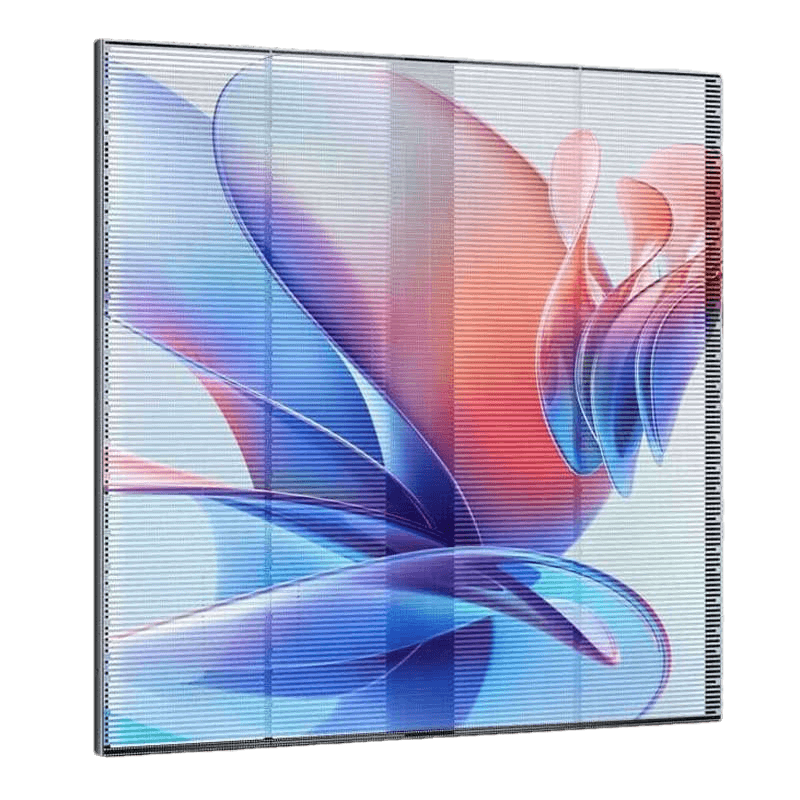
Grille & Mesh Transparent LED
Spaced LED strips with a substantial metal frame. Our compared grille products are bulkier and coarser-pitch; outdoor waterproof construction adds further bulk.
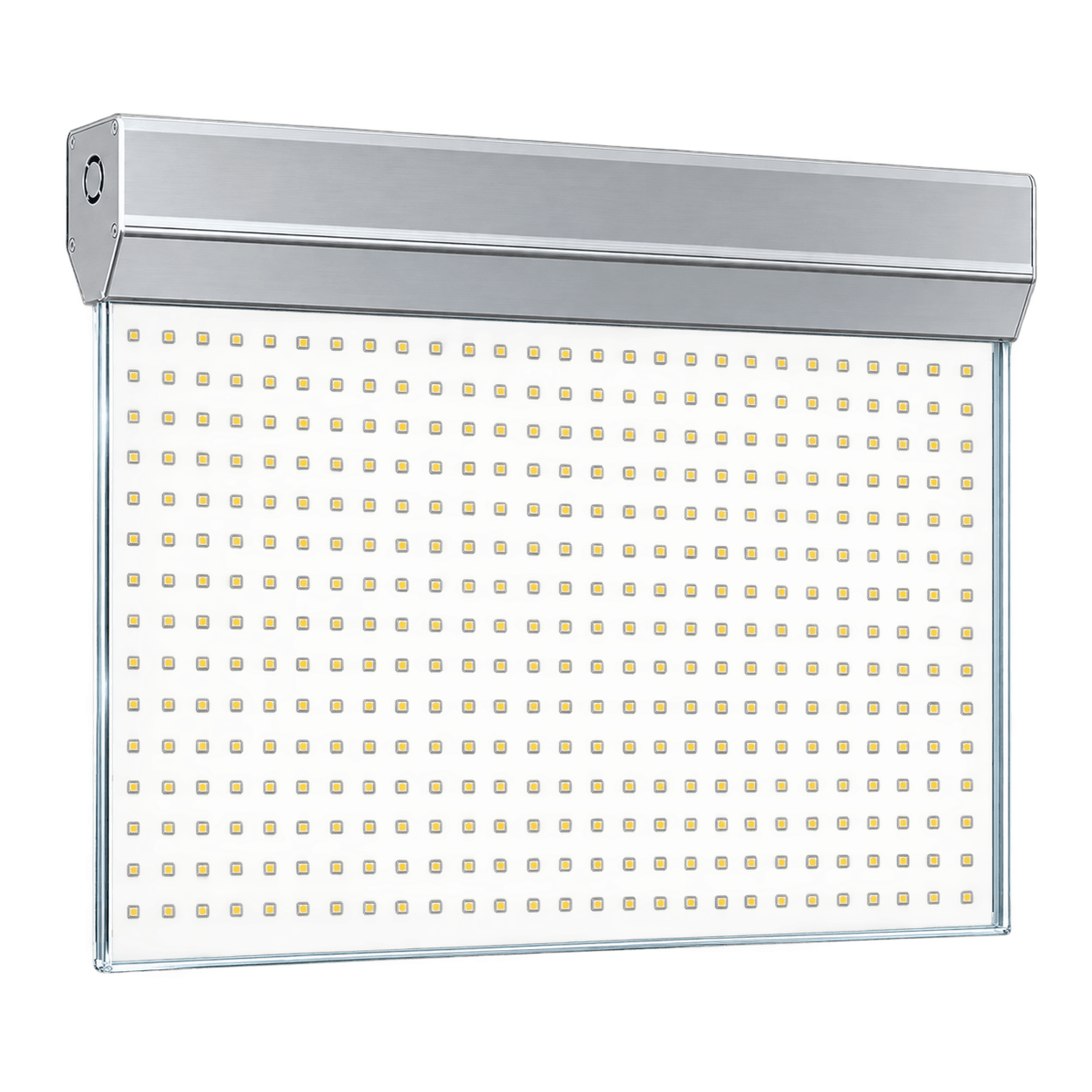
Transparent LED Glass Display
A display integrated with architectural glass. Plan the glazing, mounting and service access together.
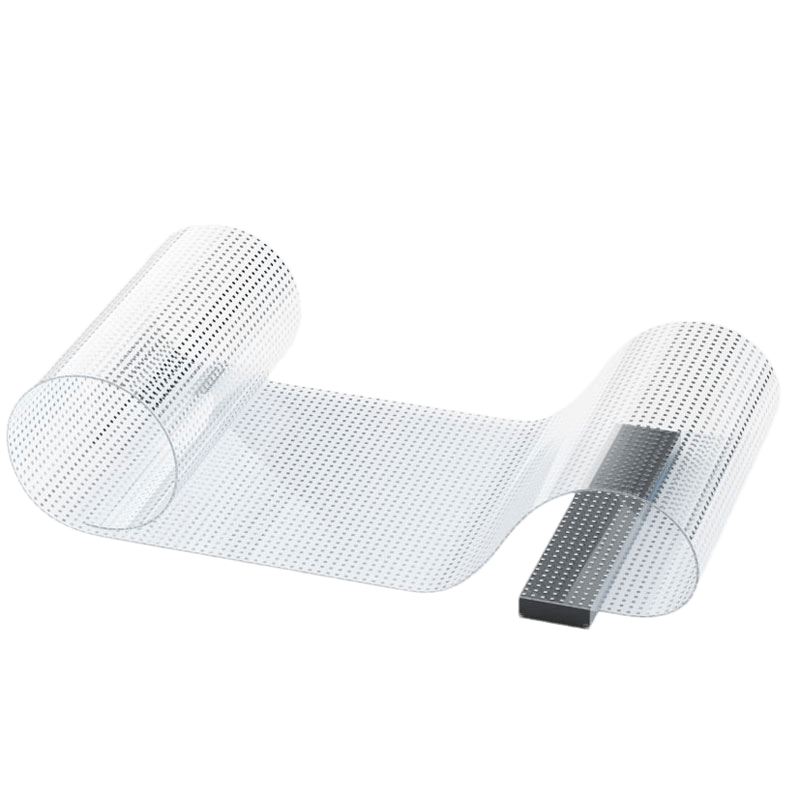
Flexible Transparent LED Film Display
A relatively thick transparent PET layer supports the emitting circuit. Our reviewed range reaches P5; its visual refinement and openness fall short of our COB holographic option.
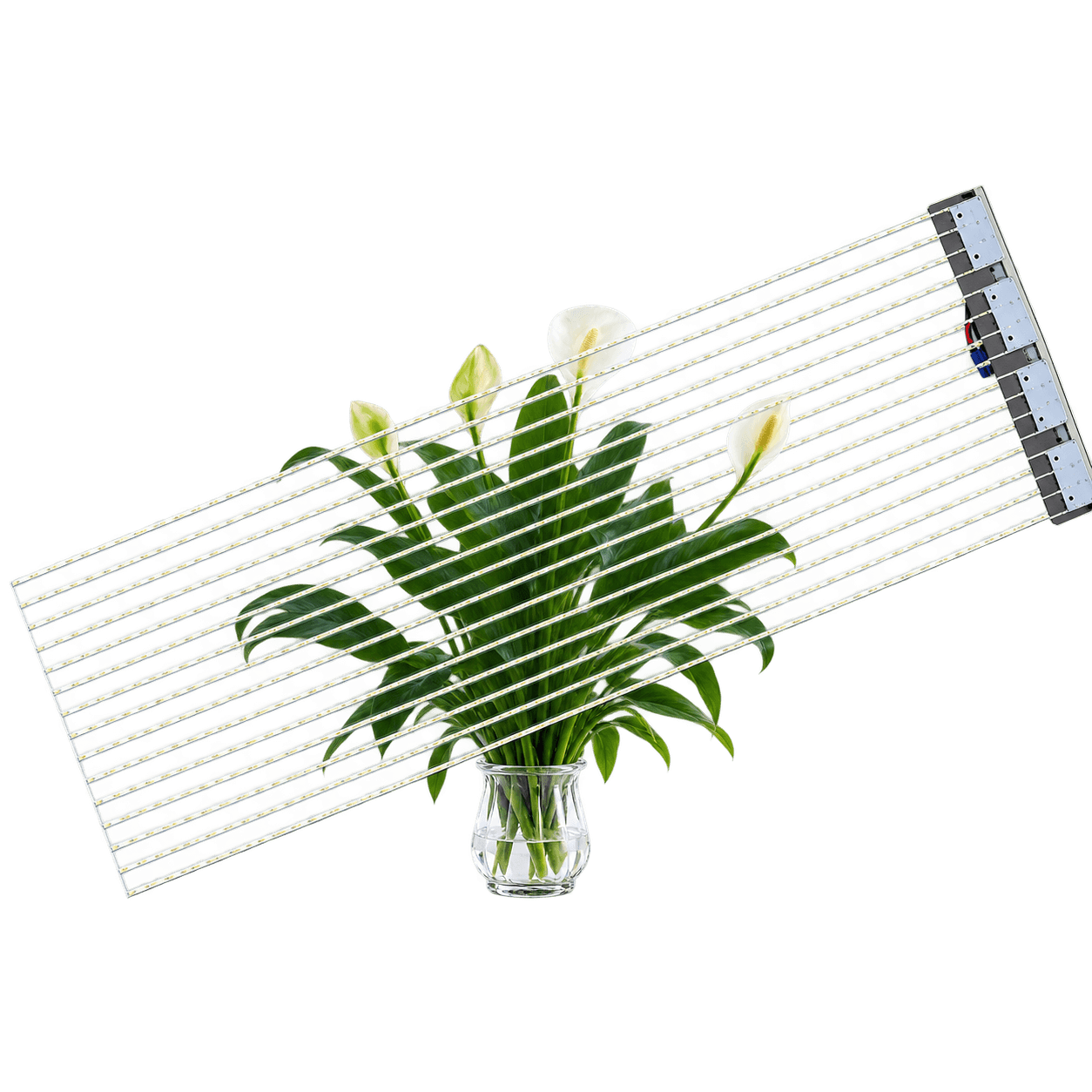
Transparent LED Film Display
A separate film-style category for suitable glass. We use it less often and generally prefer our flexible crystal-film option for visual presentation.
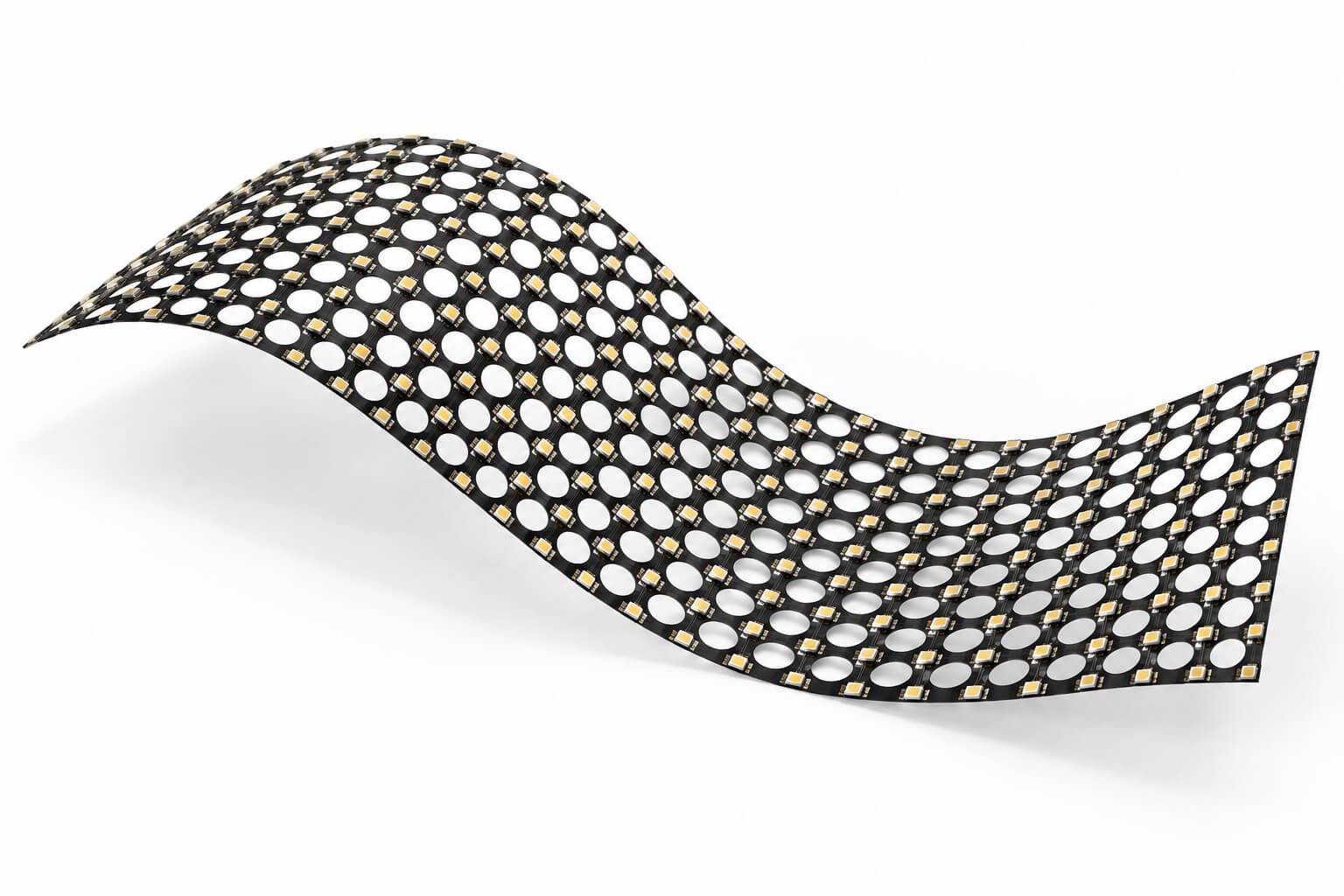
Traditional Holographic Transparent LED
An open-lattice LED structure. Inspect the emitting elements, circuit layout and quoted specifications of the actual model.
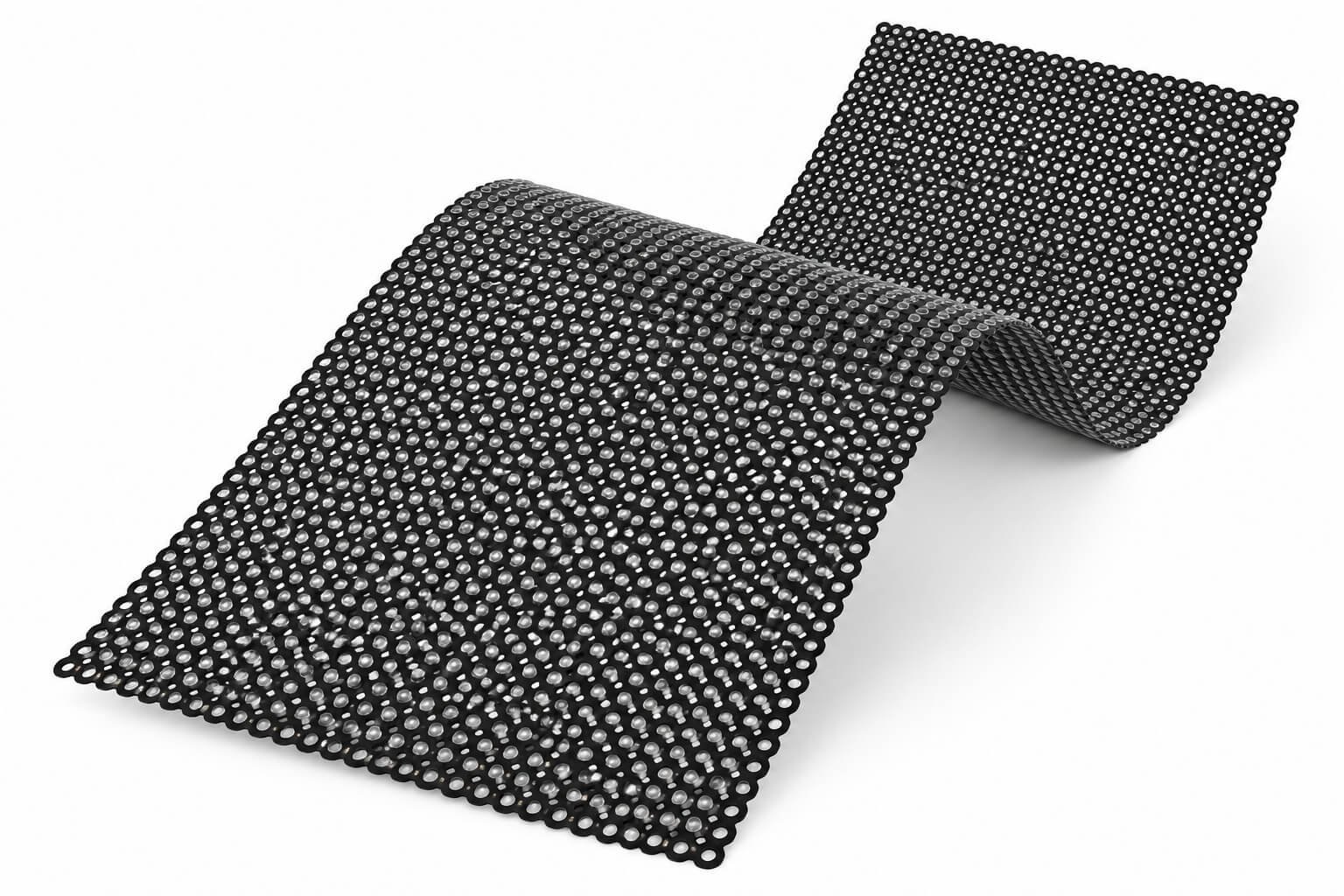
COB Holographic Transparent LED
Direct chip integration on an open circuit structure with protective encapsulation. Our preferred starting point for premium indoor projects.
Transparent LED Structures: Advantages and Limitations
The observations below refer to the products we evaluate and supply. They explain our premium indoor recommendation, not universal limits for every manufacturer.
Scroll horizontally to compare all six options →
| Selection factor | Grille / Mesh | LED Glass | Flexible Crystal Film | LED Film | Traditional Holographic | COB Holographic |
|---|---|---|---|---|---|---|
| Main advantage | Large modular installations; outdoor-rated options. | Integration with permanent architectural glazing. | Approved curved-glass integration and a lower module budget. | Glass-supported film format. | Open-lattice structure for floating-style indoor visuals. | Open structure, direct chip integration and protected emitting sites. |
| Main limitation | Substantial metal frame; comparatively coarse pitch in our reviewed products. Outdoor waterproofing adds weight and bulk. | Glazing coordination and replacement access can complicate installation. | Relatively thick PET layer reduces the see-through impression. Our reviewed range reaches P5, not P3.91. | We use it less often; visual results are less attractive than our flexible crystal-film option. | Emitter packages and their attachment remain points to inspect; protection depends on the model. | Higher module reference price than our P6 film; spares and accessible mounting are required. |
| Image and transparency | Frame, strips and larger spacing limit the refined, open appearance sought here. | Glass, circuitry and emitter spacing all affect the view. | P6 demonstration shown below. In our viewing experience, visibly less fine and open than COB holographic. | Assess the supplied construction; not our first choice for premium image presentation. | Open apertures preserve visibility; detail depends on actual pitch. | P3.91 reference; 80% manufacturer-listed visual transparency. Finer spacing than P5/P6 film, independently of encapsulation. |
| Installation and service | Plan framed support and module access; outdoor assemblies need additional environmental engineering. | Plan glass mounting, connections and possible glass removal. | Plan bonding, curvature and removal/replacement of an affected film section. | Confirm bonding and the replacement procedure. | Confirm mounting and component repair or module replacement. | Hanging or floor-standing examples; cut only at approved positions. Maintenance: replace the complete affected module. |
| Protection, heat and power | Outdoor protection adds structure; power depends on the quoted configuration. | Confirm complete-assembly protection and power. | Confirm the exact brightness version and encapsulation. PET-backed construction differs from an open lattice. | Confirm the actual model; no matched thermal test is available here. | Compare protection and power at matched brightness/content; no universal failure rate is assumed. | Local protective encapsulation; P3.91 sheet: IP62, average/maximum 165/550 W/m². No matched temperature-reduction claim. |
| Cost and selection | Choose when large structured or outdoor deployment dominates; accept the structural bulk. | Choose when architectural glass integration is essential. | P6 module reference: USD 1,500/m². Our practical budget alternative. | Review for a specific integration requirement. | Review its actual specification and quotation; no matched price is supplied here. | P3.91 module reference: USD 2,500/m². Our preferred premium indoor starting point. |
Price basis: October 2026 references, modules only. Power supplies, control systems, installation structures, transport and taxes are additional. Visual transparency is manufacturer terminology, not a measured optical-transmission result for the complete assembly.
Why choose holographic for premium interiors? Its open image plane avoids the thick continuous PET layer of the compared crystal-film construction and the substantial frame of a grille screen. This is why we shortlist it for visually refined interiors.
Why move from traditional holographic to COB? Direct chip integration and protective encapsulation explain our construction preference. Separately, P3.91 gives finer spacing than the P5/P6 film options discussed here. COB encapsulation alone does not establish a finer pitch than every traditional holographic model.
2. What Changes with COB Holographic Transparent LED?
COB means chip on board. The supplied P3.91 documentation describes red, green and blue flip-chip emitters integrated directly onto the circuit structure, rather than using the same packaged lamp arrangement as the traditional comparison product. Local encapsulation protects the emitting components while gaps remain between the circuit features.
The important distinction is the combination of direct chip integration and an open structure. This is not a conventional opaque COB video wall made transparent by a marketing label. The unoccupied areas preserve the view through the display, while the emitting areas produce the image.
“Holographic” describes the floating-style visual presentation in this product category. Content is still shown on a physical LED plane; this is not a free-space volumetric hologram. Carefully prepared imagery makes the visible subject appear suspended within the surrounding space.
3. Traditional Holographic LED vs COB Holographic LED
The fundamental comparison is packaged LED construction versus direct chip integration with protective encapsulation. These are identifiable structural differences. Pixel pitch, power and operating temperature require separate model-specific comparisons.
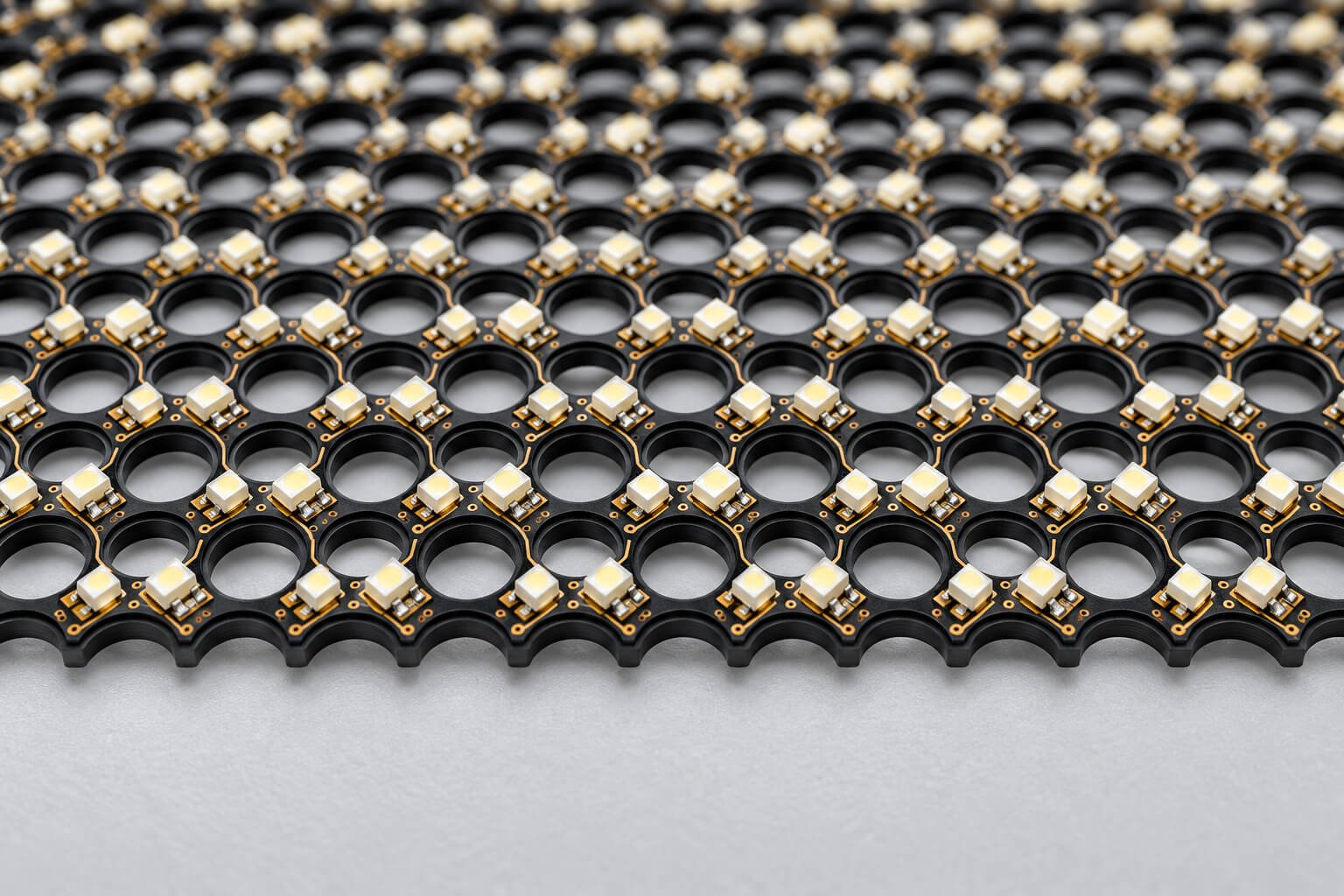
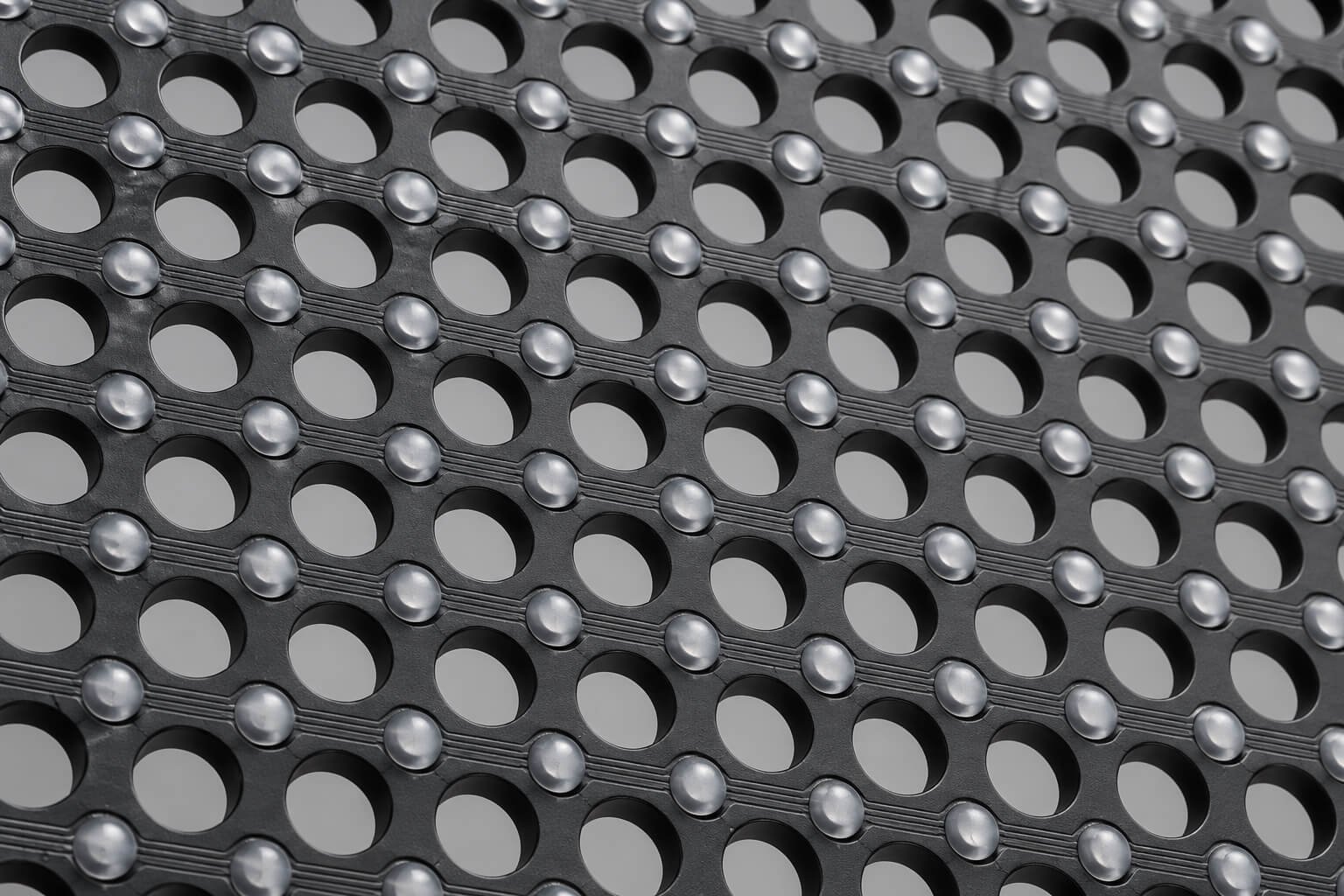
These product-page structure references illustrate the different constructions. They are not photographs taken at a matched magnification or evidence of a measured performance difference.
| Evaluation | Traditional holographic LED | Our COB P3.91 reference |
|---|---|---|
| Emitter construction | Packaged LED arrangement; inspect package size, attachment and driver layout. | Direct RGB flip-chip integration with protective encapsulation. |
| Image detail | Depends on the quoted pitch and native canvas. | 64 × 384 pixels per 250 × 1500 mm standard module. |
| See-through appearance | Depends on lamps, circuits, substrate and supports. | Manufacturer-listed 80% visual transparency; review the assembled installation. |
| Protection and handling | Ask what is protected and whether exposed elements need special handling. | Encapsulation and a listed IP62 protection grade; controlled handling remains necessary. |
| Heat and energy | Request the same brightness, content and test conditions for comparison. | Listed average / maximum power: 165 / 550 W/m². |
| Service plan | Confirm whether repair is component-level or by module replacement. | Our project maintenance approach is whole-module replacement. |
COB removes the separate packaged-lamp stage in the compared construction. We prefer its protected integration, but do not assign a failure-rate or temperature advantage without matched test data.
4. Why P3.91 Matters for Premium Image Presentation
P3.91 means approximately 3.91 mm pixel spacing. Each standard 250 × 1500 mm module contains 64 × 384 pixels; the approved arrangement determines the final canvas.
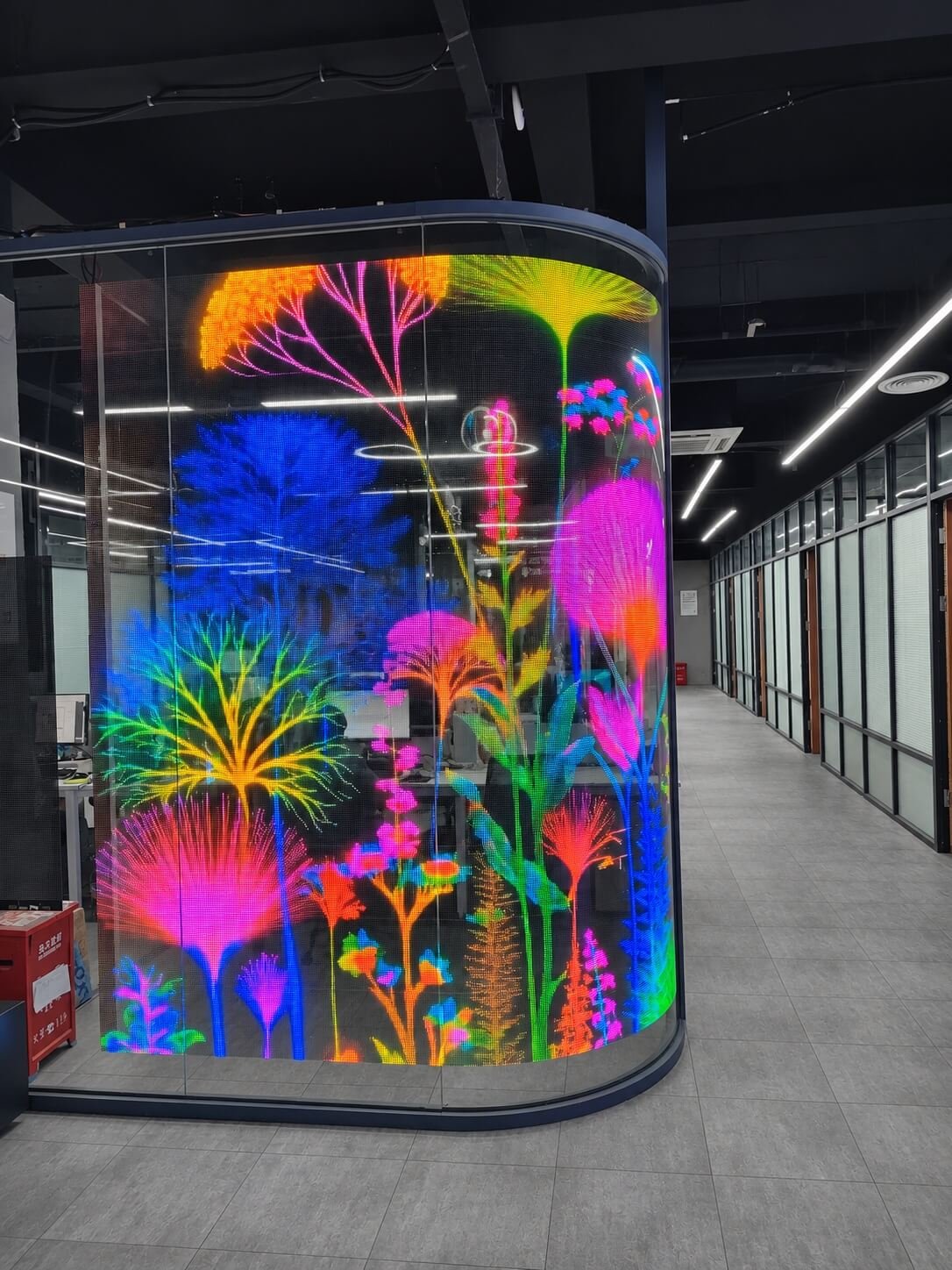
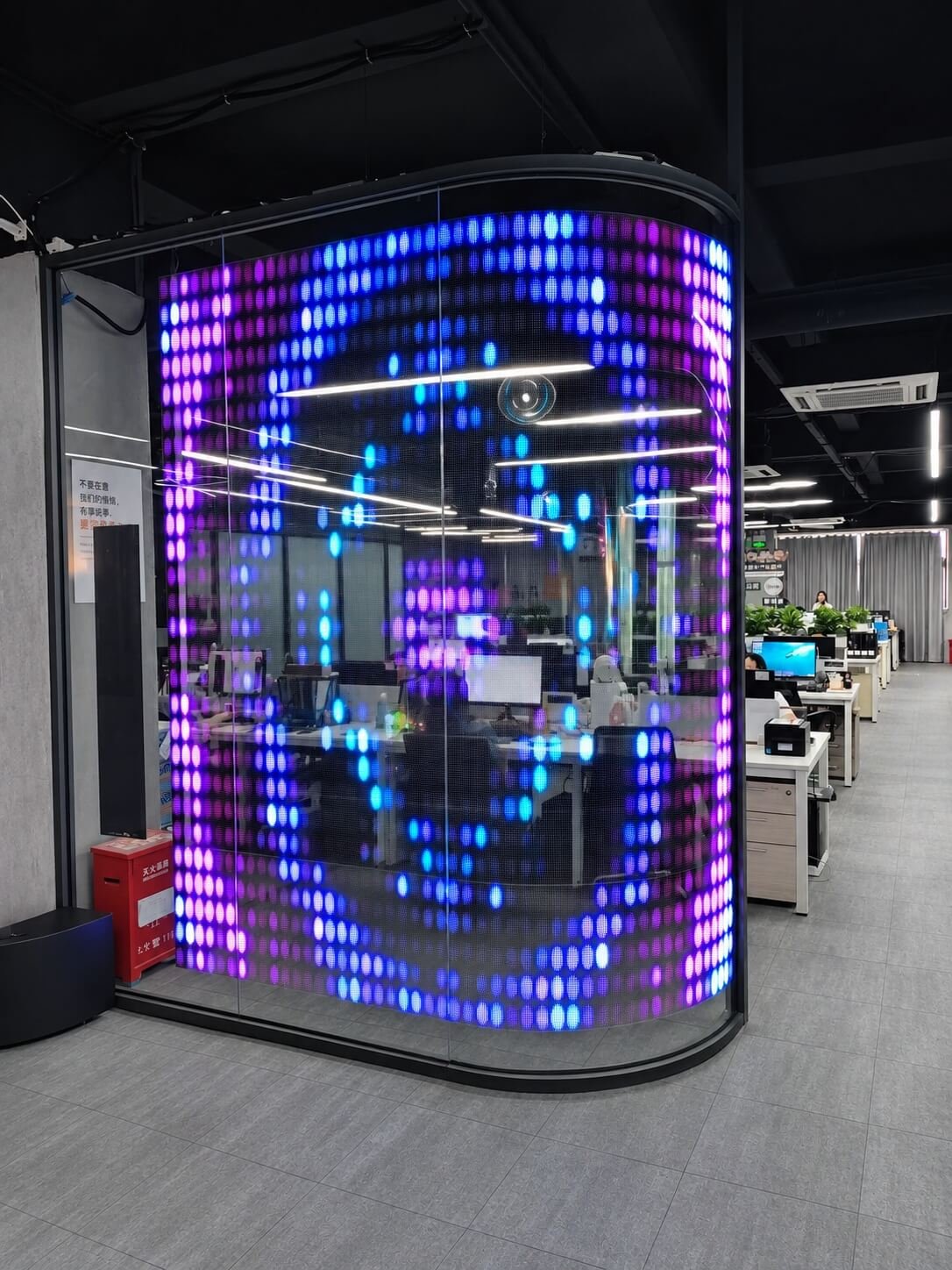
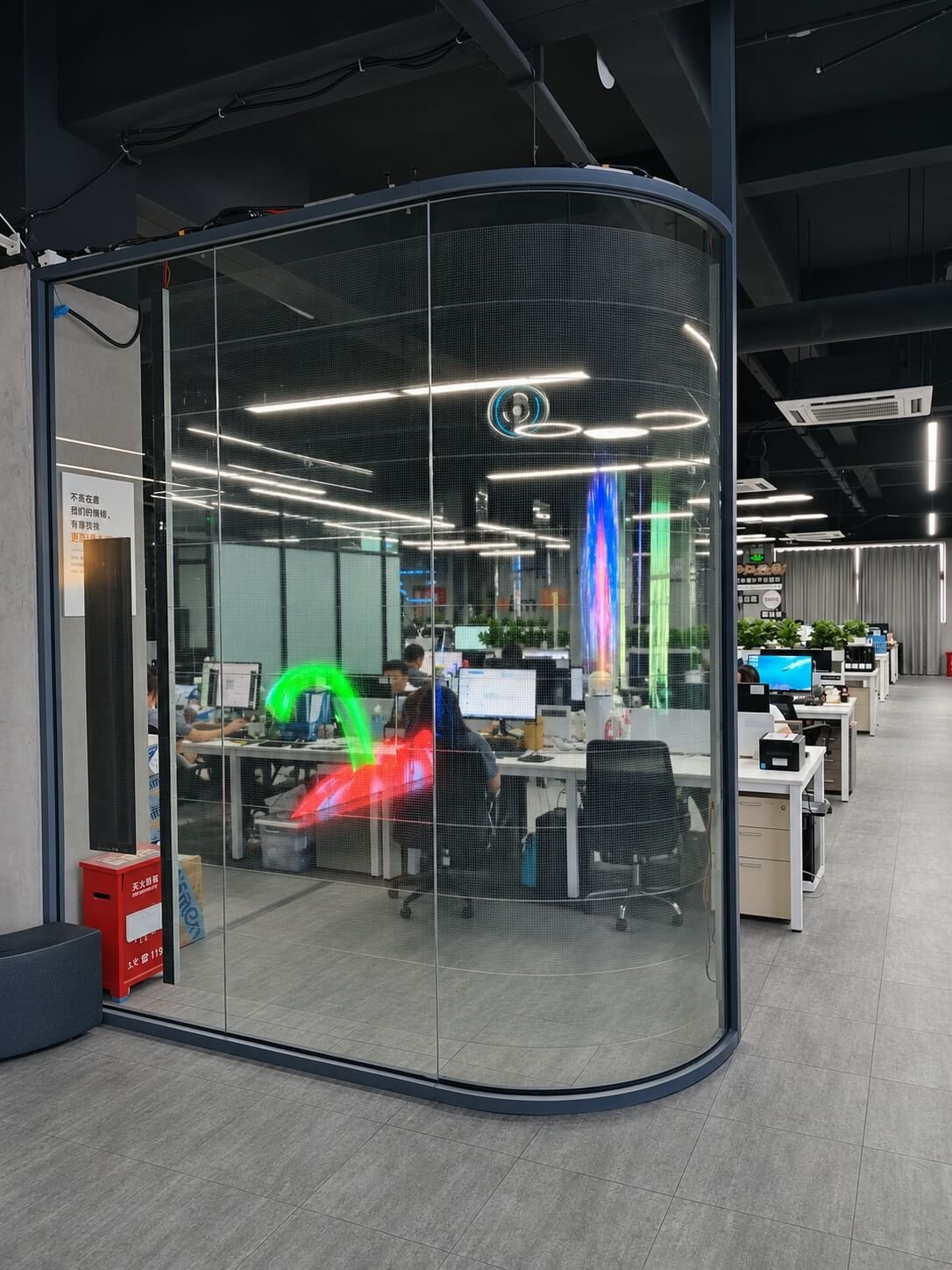
Our reviewed flexible crystal-film range reaches P5, while the curved-glass demonstration here is P6. In our in-person assessment, these film products are markedly less fine and see-through than the COB holographic display. The film’s relatively thick PET layer affects openness; pixel spacing affects detail. These are separate effects.
At equal active area and approximately square spacing, nominal P3.91 provides about 1.64 times the pixel density of P5, or 2.35 times P6. These are geometric ratios, not image-quality scores. For very close viewing, review transparent Micro LED versus transparent LED.
5. Transparency Is About the Complete Installation
The manufacturer lists 80% visual transparency for this P3.91 model. That term should not be confused with certified optical transmission through a finished glass assembly. Open-area percentage, visual transparency and measured light transmission describe different things; compare like-for-like figures.
In a premium interior, the visible result includes the supporting structure, cabling, power distribution and any glass behind the screen. A lightweight emitting surface can lose much of its architectural advantage if service equipment is placed across the main sightline. Plan those elements with the display, rather than hiding them after installation.
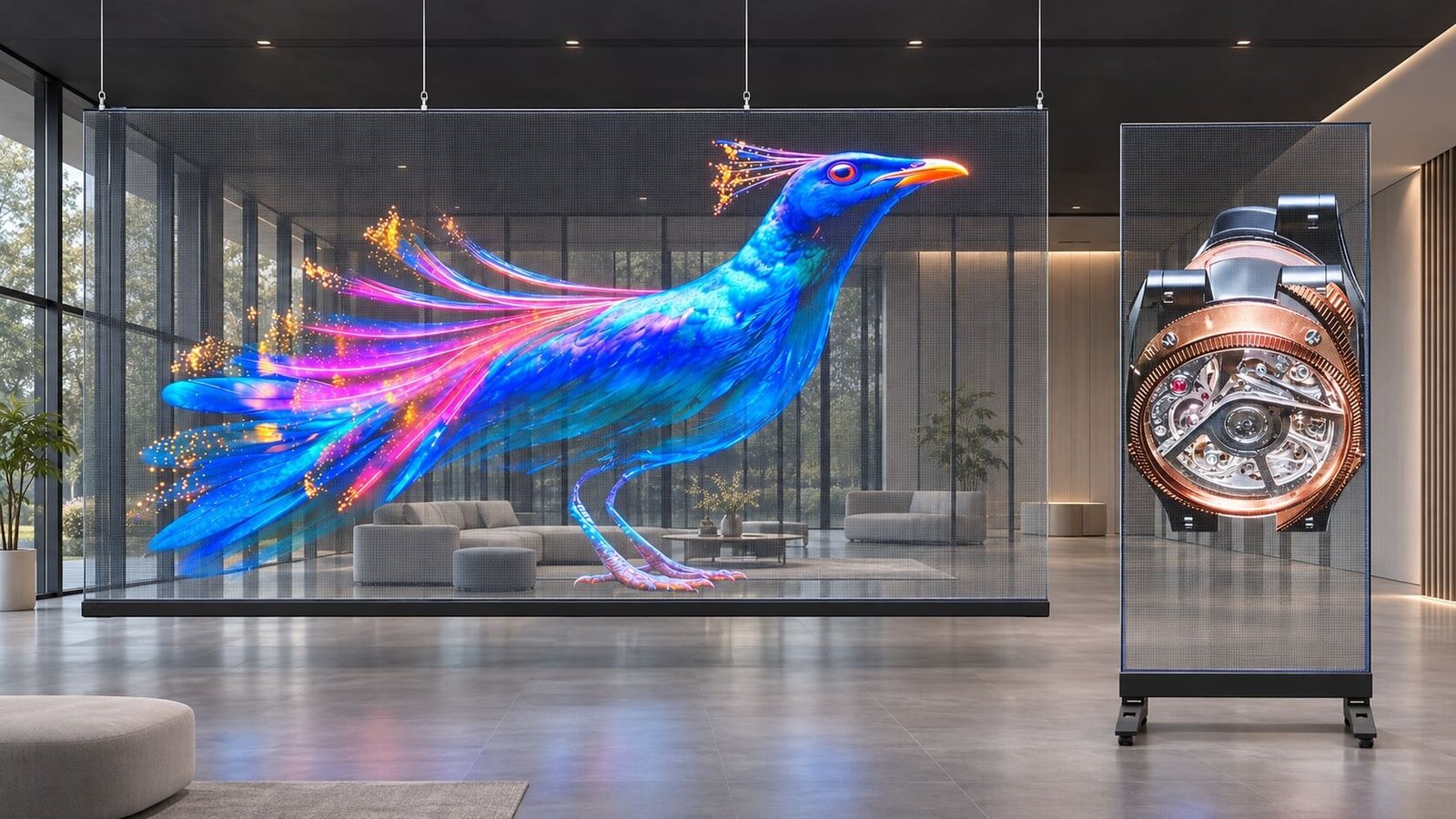
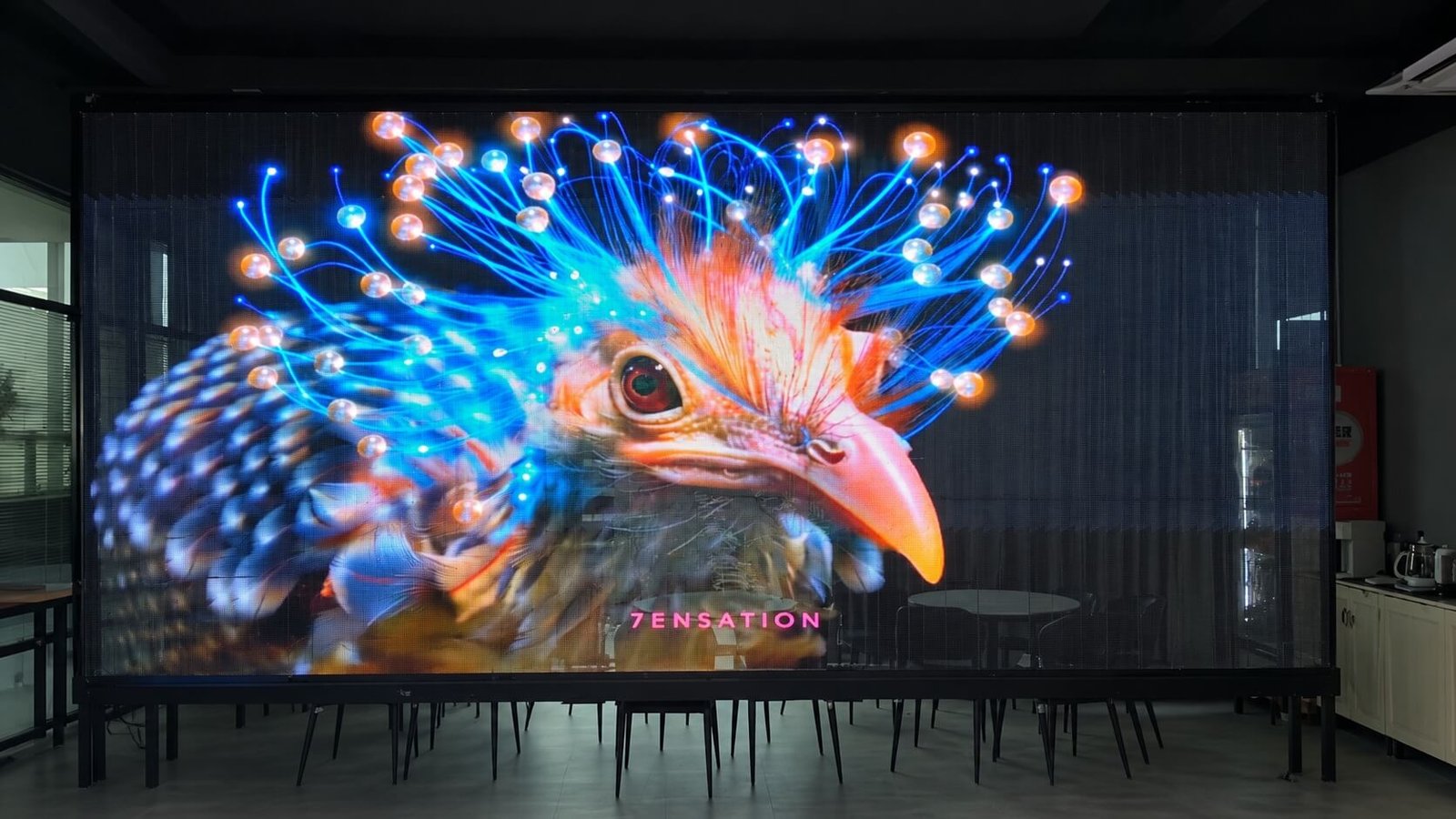
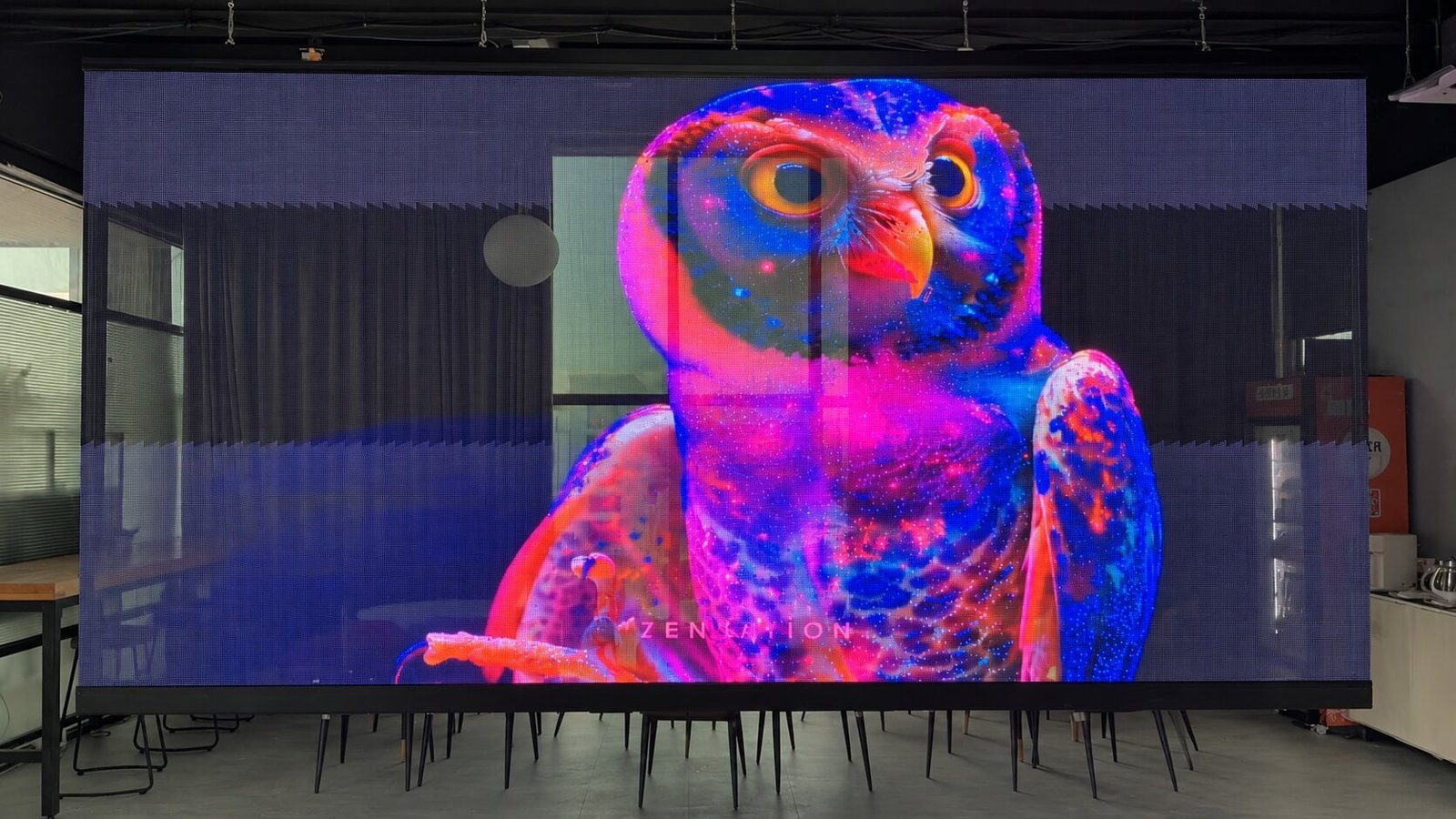
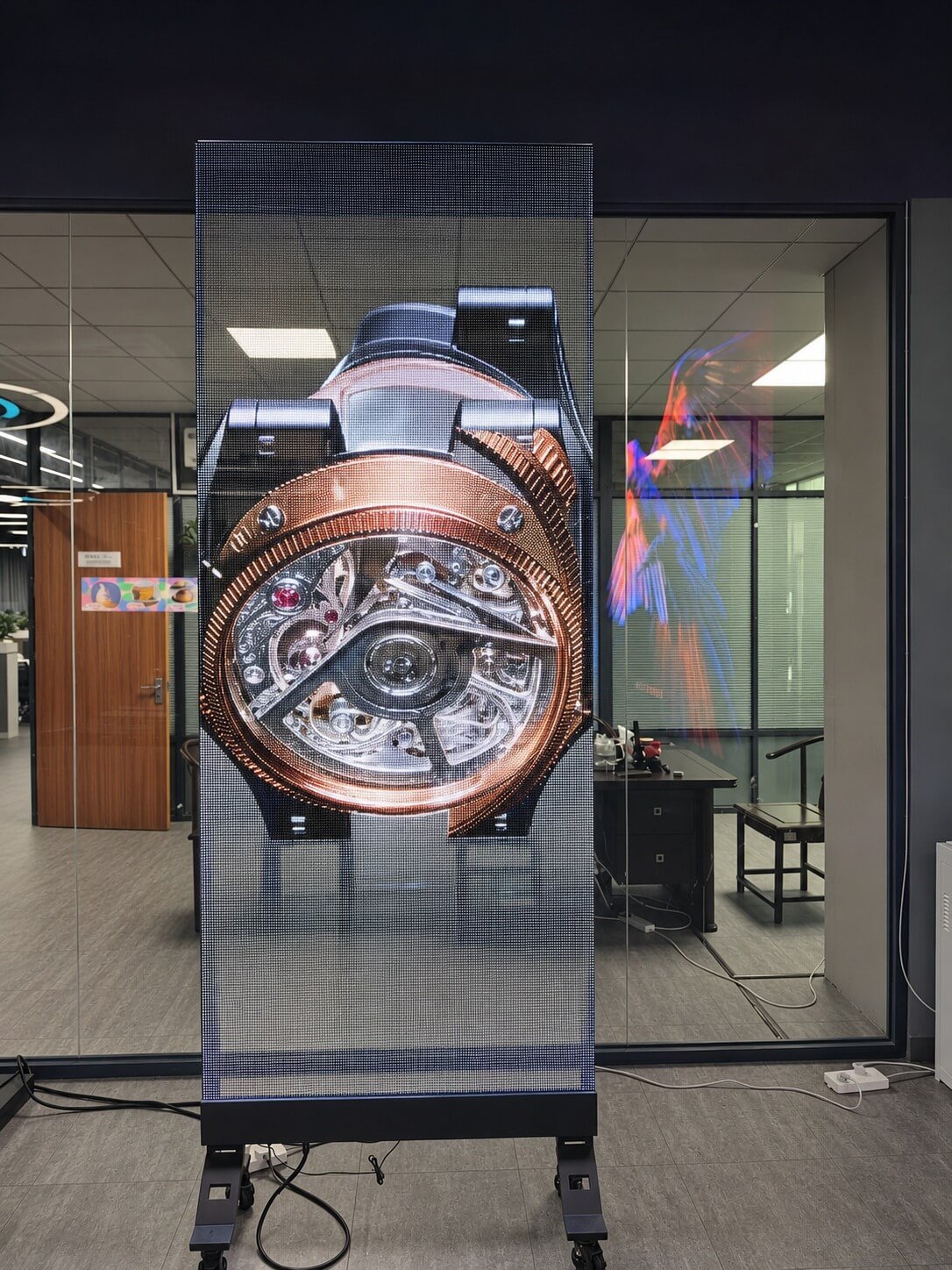
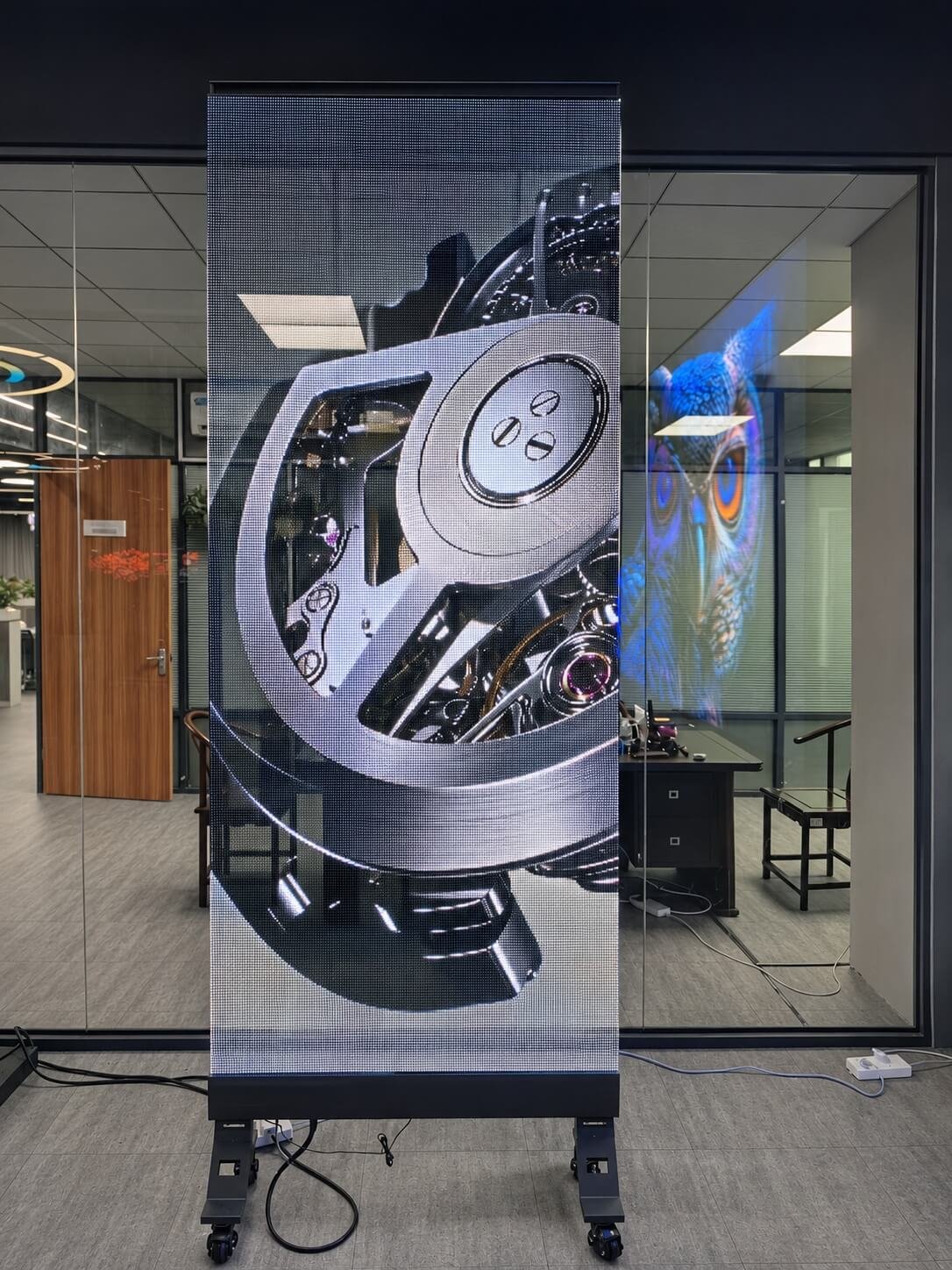
Our hands-on impression of the demonstrations was vivid imagery with a strong see-through effect. The original phone photographs did not fully convey the in-person experience. The images below are presentation assets based on those demonstrations; they illustrate the layouts rather than serving as optical measurements.
Application Scenarios: Similar Uses, Different Construction Choices
Traditional and COB holographic transparent LED can serve the same types of indoor spaces. These application illustrations show the intended presentation and integration opportunities, rather than a side-by-side performance test. The actual module construction, pitch, protection and service arrangement determine which proposal we recommend.
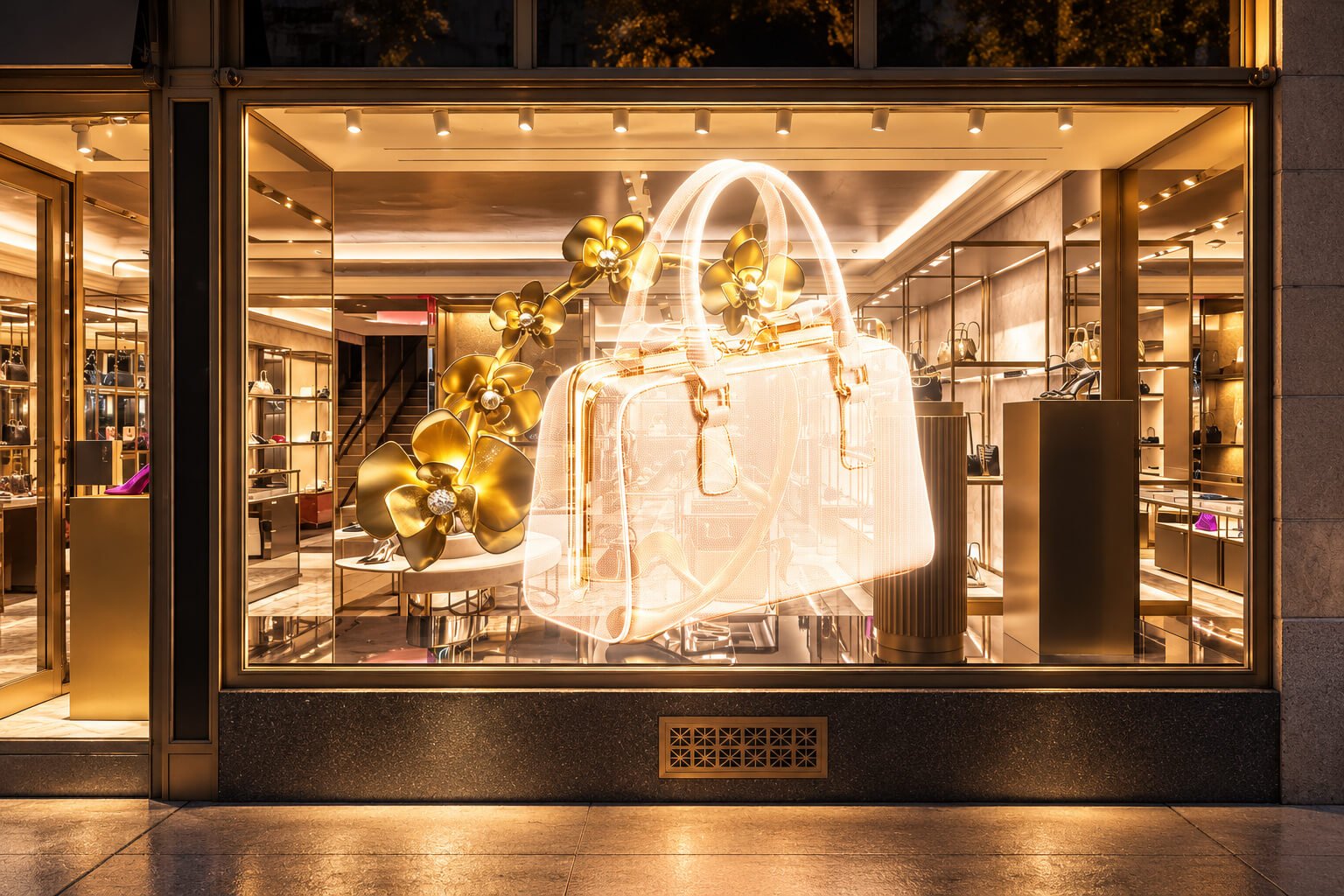
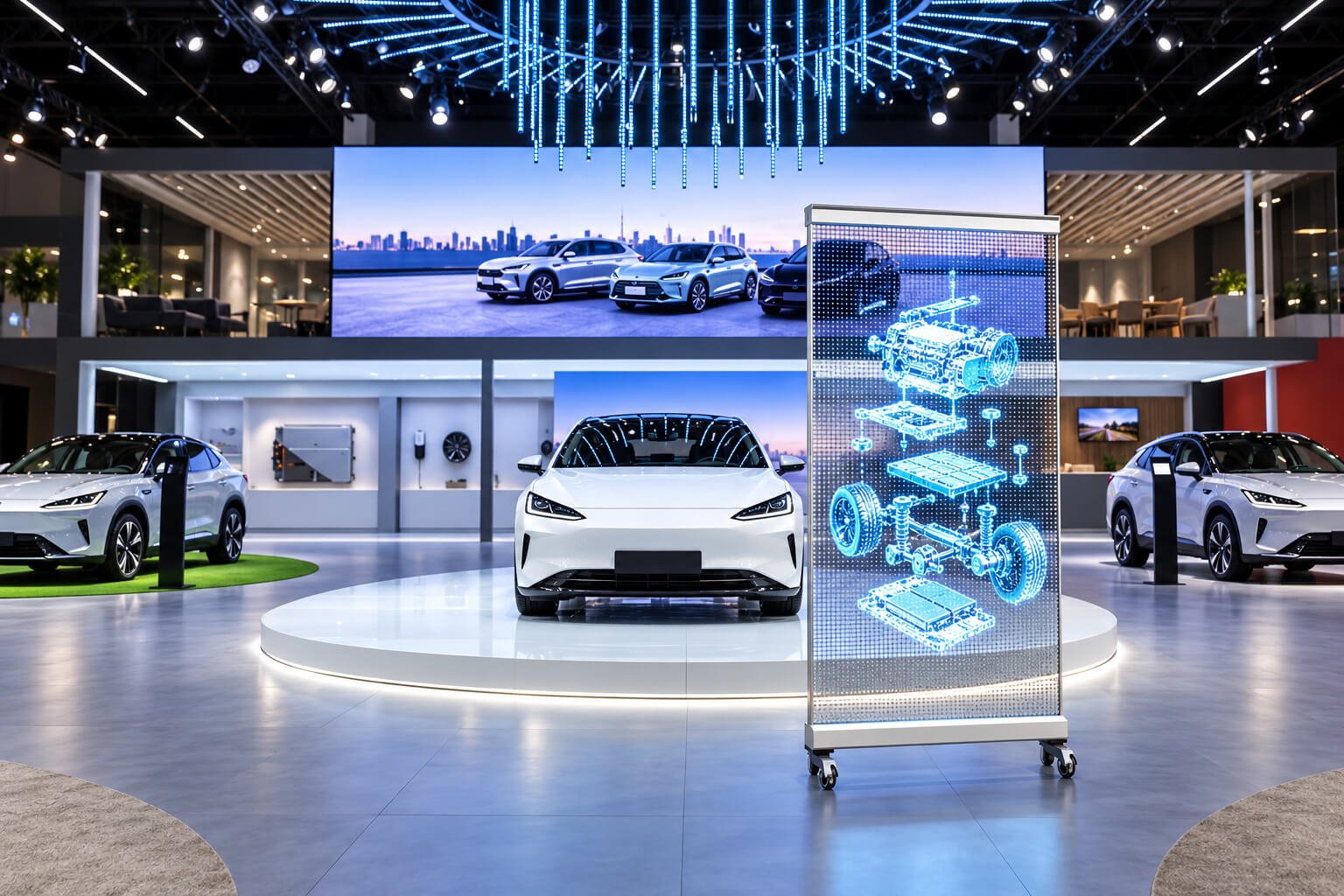
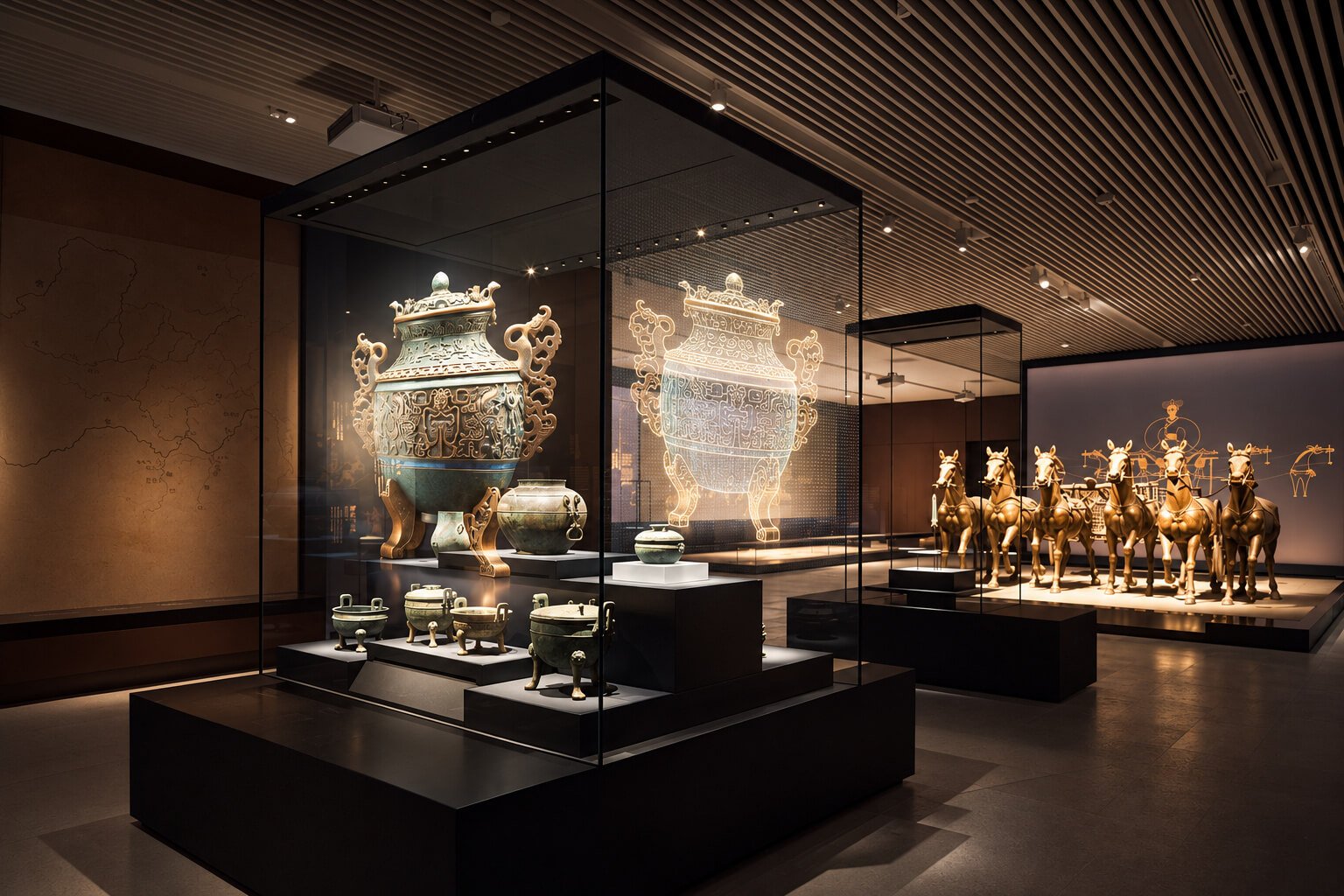
Both holographic product types can address these application briefs when the proposed model and mounting are suitable. Similar scene imagery does not establish equal picture quality, stability or protection. The comparison tables explain why COB is our preferred starting point for premium indoor projects.
6. Stability, Protection and Heat: What Supports the Recommendation?
The P3.91 sheet lists IP62 protection. It does not make the installed screen weatherproof or suitable for unrestricted outdoor use. Connections, power supplies and control equipment also need an appropriate installation environment. For this article, our recommendation remains focused on indoor projects.
Average and maximum power are listed as 165 and 550 W/m². Actual consumption depends on brightness and content. At 18 m², those figures imply approximately 2.97 kW average-reference load and 9.9 kW maximum-reference load before separately assessing ancillary equipment. Electrical design must follow the approved system specification.
7. COB P3.91 Manufacturer Reference Specifications
| Parameter | Supplied model reference |
|---|---|
| Standard module | 250 × 1500 mm; 64 × 384 pixels |
| Pixel density | 65,536 pixels/m² |
| White-balance luminance | ≥3,300 cd/m² |
| Visual transparency | 80%, manufacturer terminology |
| Viewing angles | 170° horizontal / 170° vertical |
| Refresh and grayscale | ≥3,840 Hz; 16-bit |
| Power | 165 W/m² average; 550 W/m² maximum |
| Protection | IP62; assess the complete indoor assembly separately |
Source: COB Invisible Holographic Screen manual, P3.91 parameter table. Confirm the ordered configuration; photographs are not specification measurements.
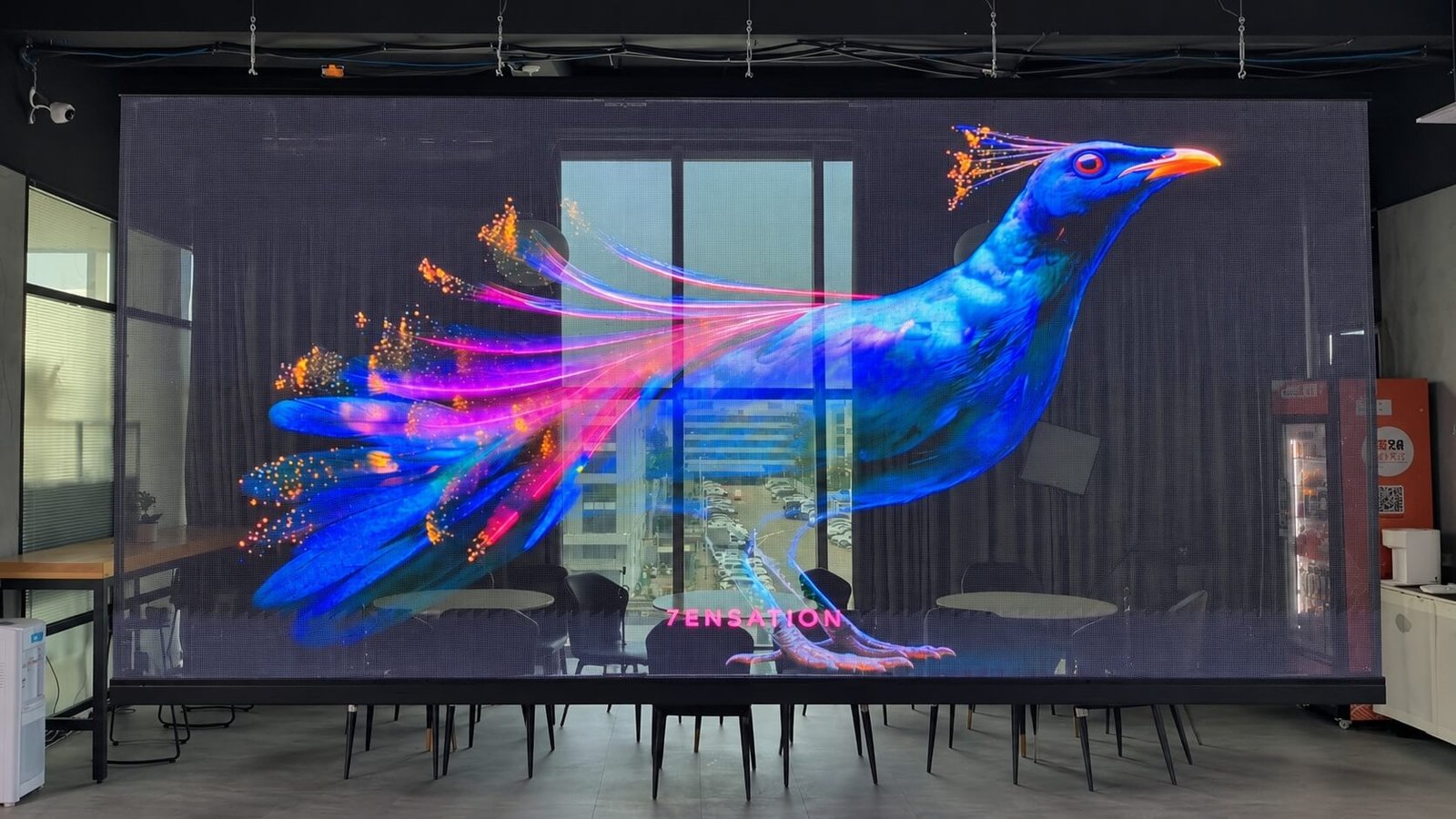
8. Suspended Installation: Approximately 6 × 3 Metres
Our large hanging demonstration was approximately six metres wide by three metres high. It shows how a broad transparent image plane can create a strong showroom focal point while preserving visibility into the space behind it. The photographs were taken from approximately three metres away.
For a permanent suspended installation, engineering review must cover the supporting points, full assembly weight, alignment, power location and safe maintenance access. The approximate demonstration dimensions are not a fabrication drawing. Confirm the actual module layout and native canvas before preparing final video content.
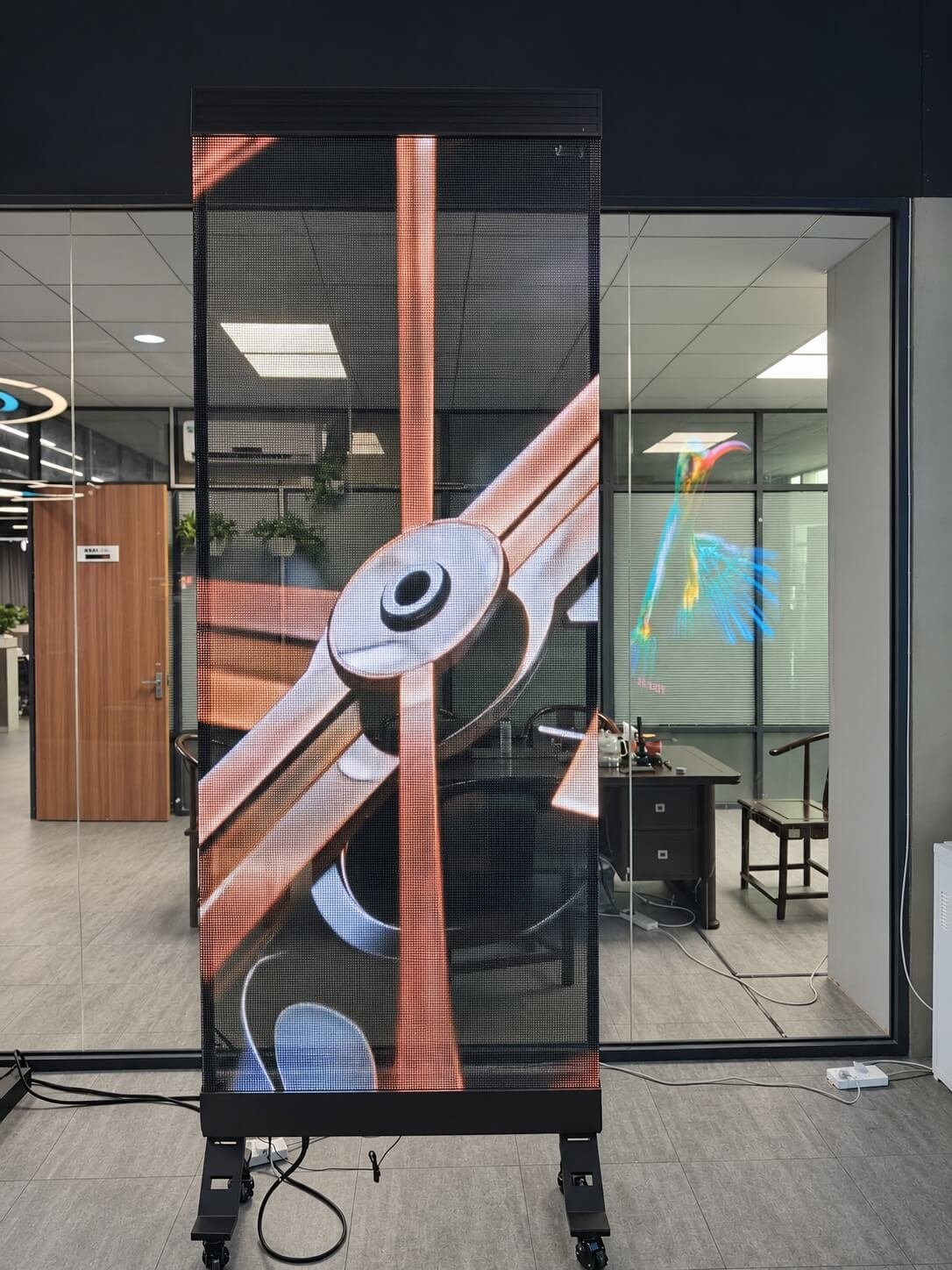
9. Floor-Standing Installation: Approximately 0.75 × 2 Metres
The floor-standing demonstration was approximately 0.75 metres wide by two metres high, also photographed from around three metres. Watch imagery shows how a tall, narrow format can support luxury retail content without requiring a full-width architectural installation.
10. Cutting to Fit and Replacing a Module Are Different Tasks
For dimensional adaptation, approved modules can be cut only along the designated positions in the supplier’s cutting layout. This does not mean any point on the display can be cut freely. The approved drawing must identify the permitted cut locations, resulting dimensions, connection arrangement and content mapping.
Maintenance uses a different procedure: replace the complete affected module. We do not describe repair as cutting out a failed pixel. In our experience, replacement is straightforward when access, spare modules and connectors are planned properly.
11. Is the COB Premium Worth the Additional Budget?
The public references below are dated October 2026 and cover modules only. They are budget references, not binding current quotations. The P6 example is the flexible crystal-film installation, not the separate traditional Transparent LED Film Display category.
| Configuration | Module size | Module-only reference |
|---|---|---|
| COB P3.91 holographic transparent LED | 250 × 1500 mm | USD 2,500/m² |
| P6 flexible transparent LED film; quoted low-brightness version ≥1,200 cd/m² | 1000 × 240 mm | USD 1,500/m² |
Power supplies, control systems, installation structures, transport and taxes are additional. COB is USD 1,000/m² higher at these references, approximately 67% above P6. For 18 m², simple multiplication gives USD 45,000 versus USD 27,000 for modules. This is not a pure COB encapsulation premium: the comparison also changes pixel pitch and brightness. The COB specification lists ≥3,300 cd/m²; the P6 price is for a ≥1,200 cd/m² low-brightness version. Complete project quotations must align those requirements.
In our sales experience, budget is often the decisive reason a customer chooses flexible film after preferring the holographic presentation. Assess whether the visual result and planned service access justify the complete installed cost.
12. When We Recommend COB—and When We Review Another Option
We recommend starting with COB P3.91 for premium indoor retail, showrooms, museums and artistic installations where fine imagery and low visual obstruction carry real commercial value. Approve it using representative content, the intended viewing distance, the full mechanical proposal and the replacement plan.
Choose flexible crystal film when its image result meets the brief and the glass-supported layout or lower initial module budget matters more. Review an outdoor grille or mesh platform for exposed facade work. Review LED glass when the architectural glazing itself defines the project. Traditional holographic LED also deserves evaluation when its documented configuration offers a suitable balance.
Send the display dimensions, installation photographs, viewing distance, intended content, operating hours, brightness conditions, mounting preference and target budget. We can then compare complete proposals. The objective is a premium result that can be installed and maintained confidently, with the recommendation tied to the actual project.
Frequently Asked Questions
Is COB holographic LED always the best transparent display?
It is our preferred starting point for premium indoor transparent LED projects. Outdoor exposure, close-viewing resolution, architectural glass and budget can favour another solution.
Can the module be cut anywhere?
No. Cutting is permitted only at designated positions in the approved supplier layout. Maintenance is by whole-module replacement.
Is the quoted price for a complete installed screen?
No. October 2026 references of USD 2,500/m² for COB P3.91 and USD 1,500/m² for the quoted P6 version cover modules only. Power, control, installation structures, transport and taxes are additional.
Does 80% visual transparency mean 80% optical transmission?
No. It is the manufacturer’s visual-transparency reference. Optical transmission through the finished installation requires its own definition and measurement.
Reference Basis
Technical figures: COB Invisible Holographic Screen manual, P3.91 table. Prices: our October 2026 module references. Demonstration dimensions and camera distances are approximate. PET construction, the reviewed film range and comparative viewing impressions reflect our product-selection experience. Product classifications: DisplayMan transparent LED family. No matched third-party optical, temperature or failure-rate test is claimed.
Related reading: Holographic Transparent LED Display · Flexible Transparent LED Film Display · Transparent Micro LED vs Transparent LED.
Explore Our Nine Transparent LED Product Options
Our Transparent LED Displays family covers nine product directions. Flexible film is our most commonly used solution; COB P3.91 holographic transparent LED is our flagship choice.
Flexible Transparent LED Film Display
View product details →Transparent LED Film Display
View product details →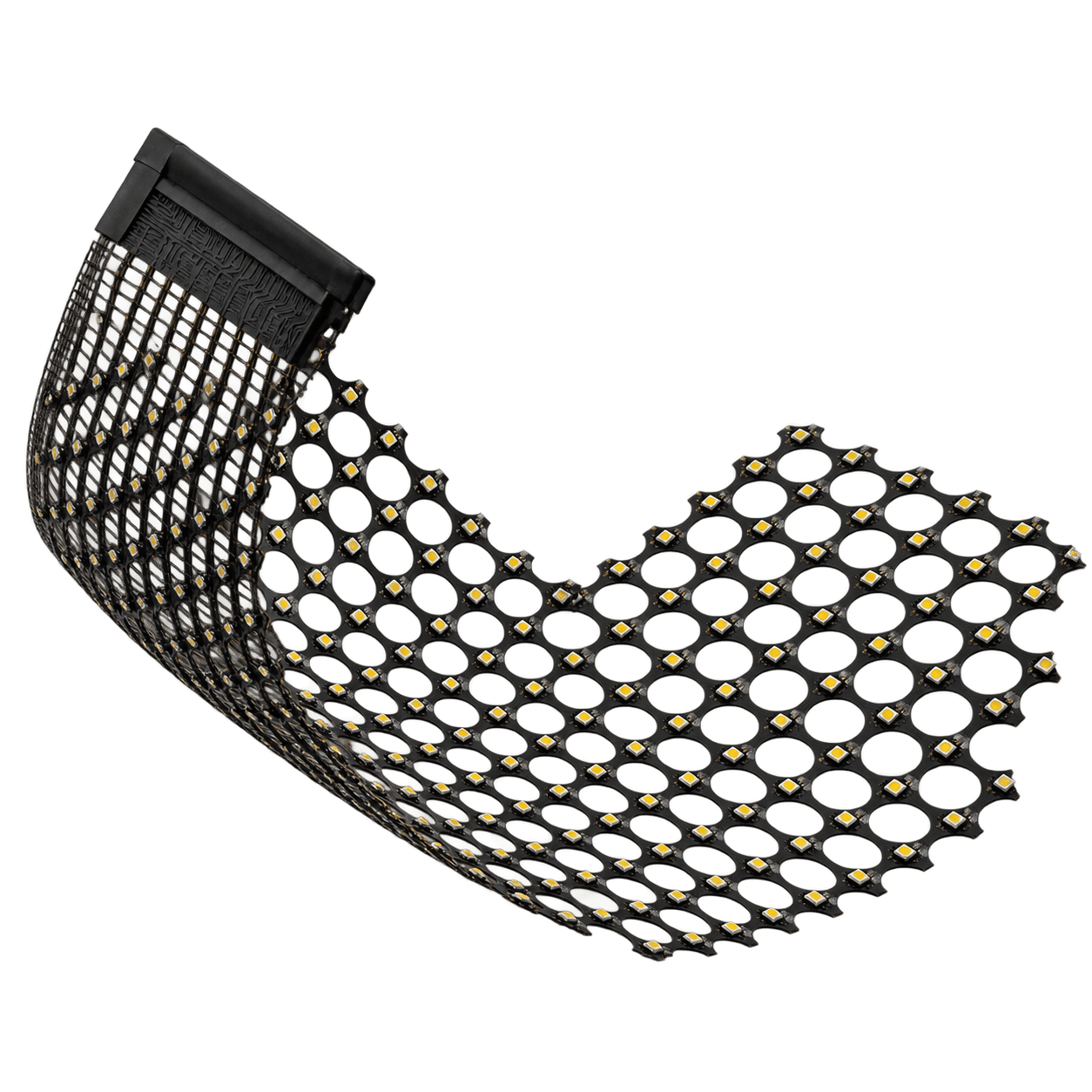
Holographic Transparent LED Display
View product details →Transparent LED Glass Display
View product details →Indoor Transparent LED Display
View product details →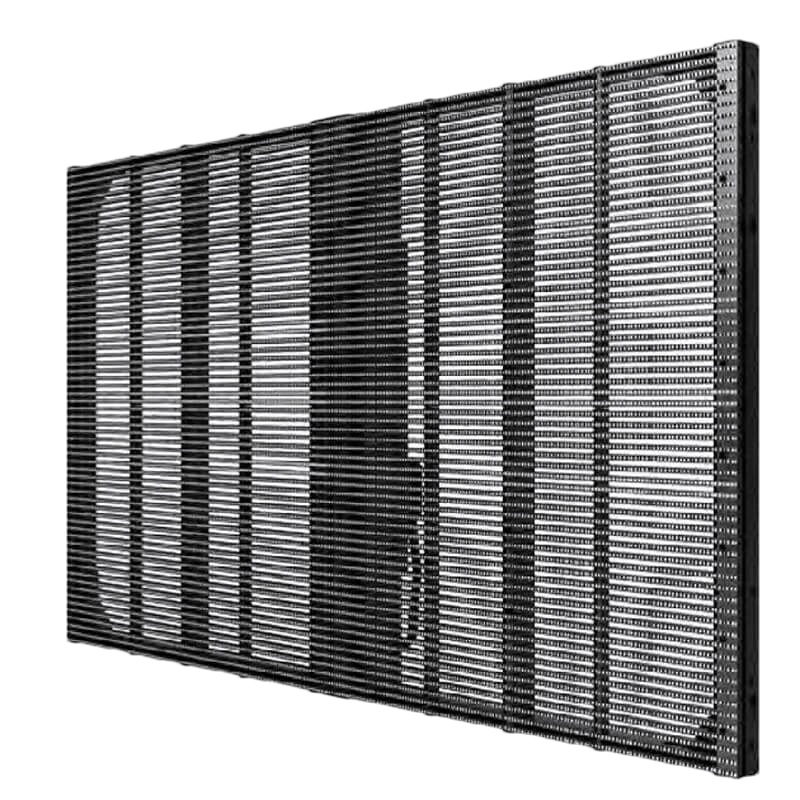
Outdoor Transparent LED Mesh Display
View product details →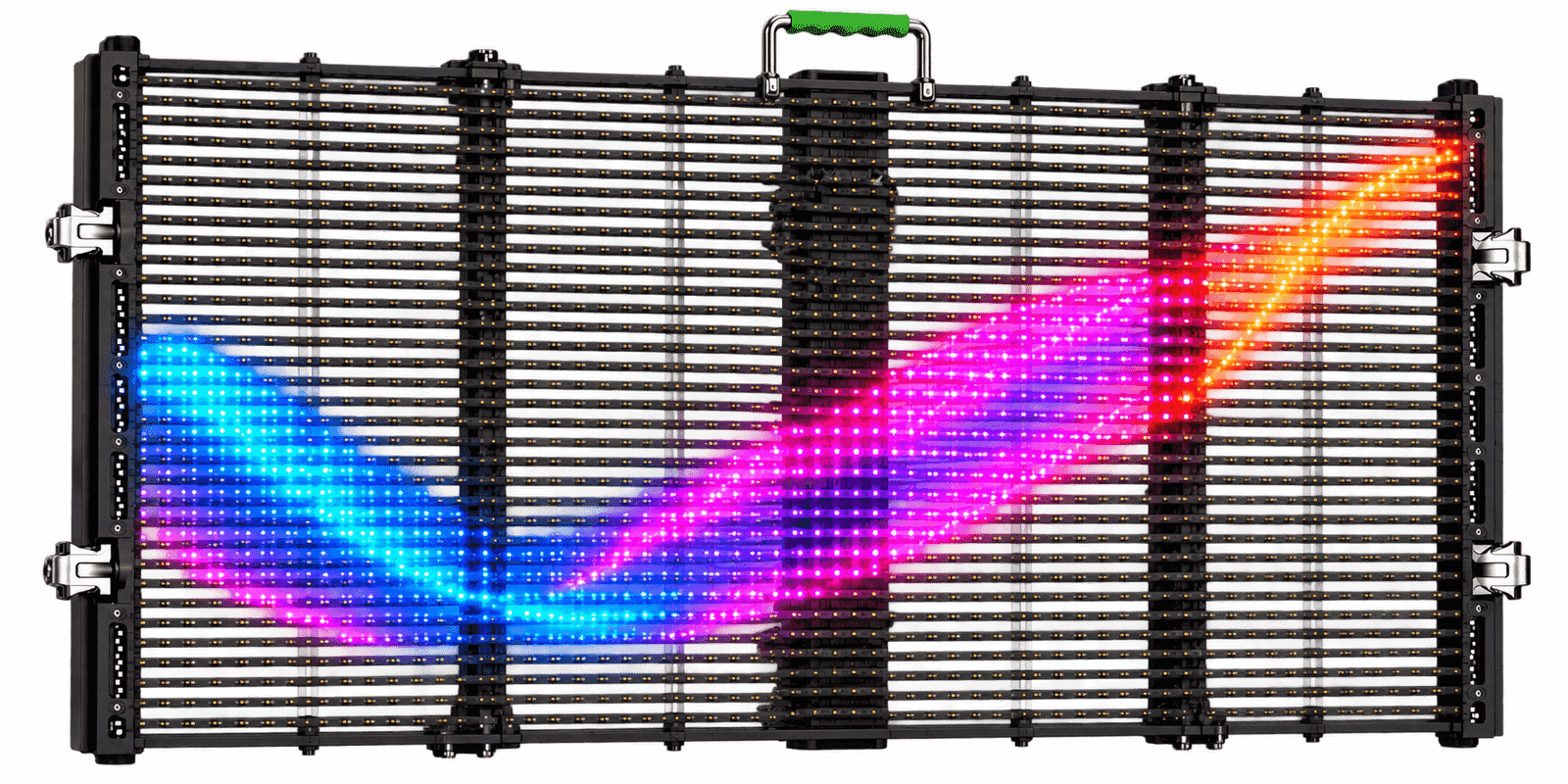
Rental Transparent LED Display
View product details →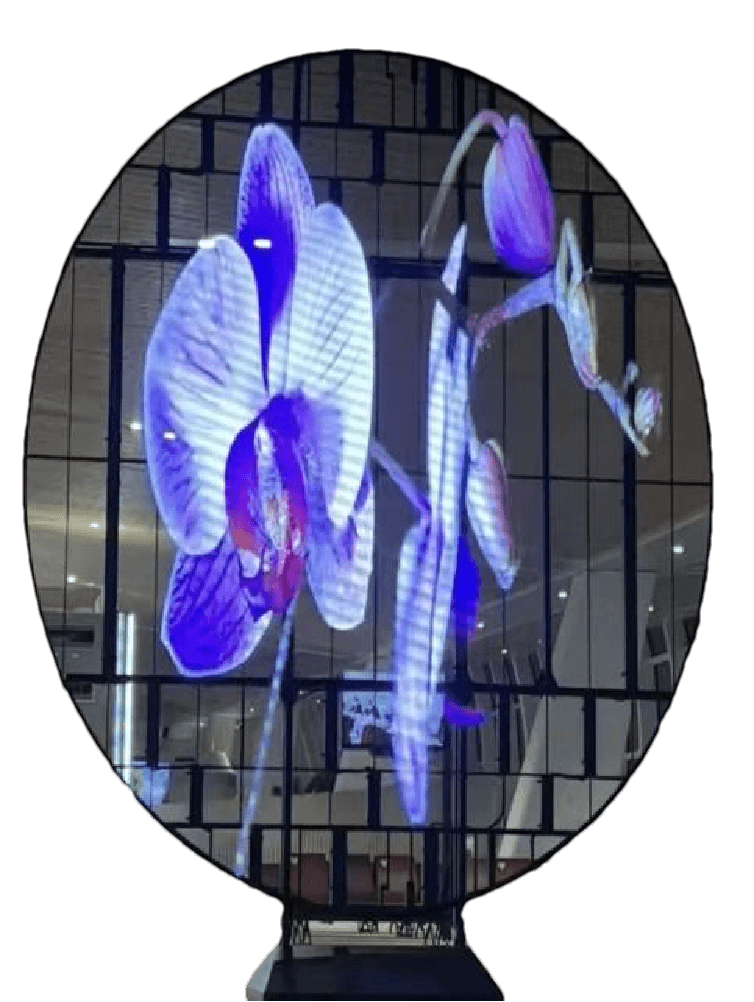
Custom Transparent LED Displays
View product details →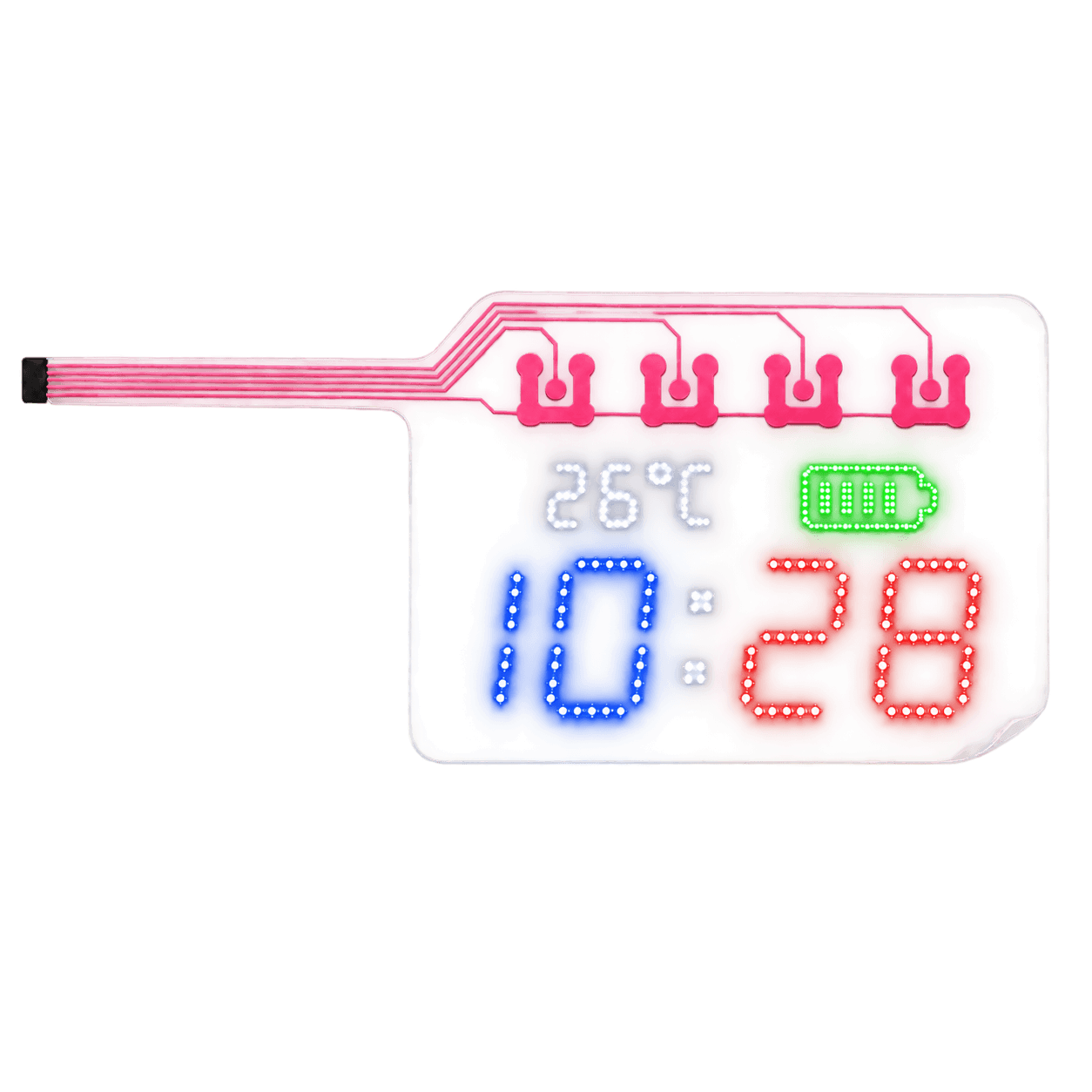
Custom Small-Format Flexible Transparent LED Displays
View product details →Project review
Discuss Your COB Transparent LED Project
Send installation photos, display dimensions, viewing distance, sample content, quantity and budget. We will review a COB P3.91 proposal and compare suitable transparent LED alternatives.