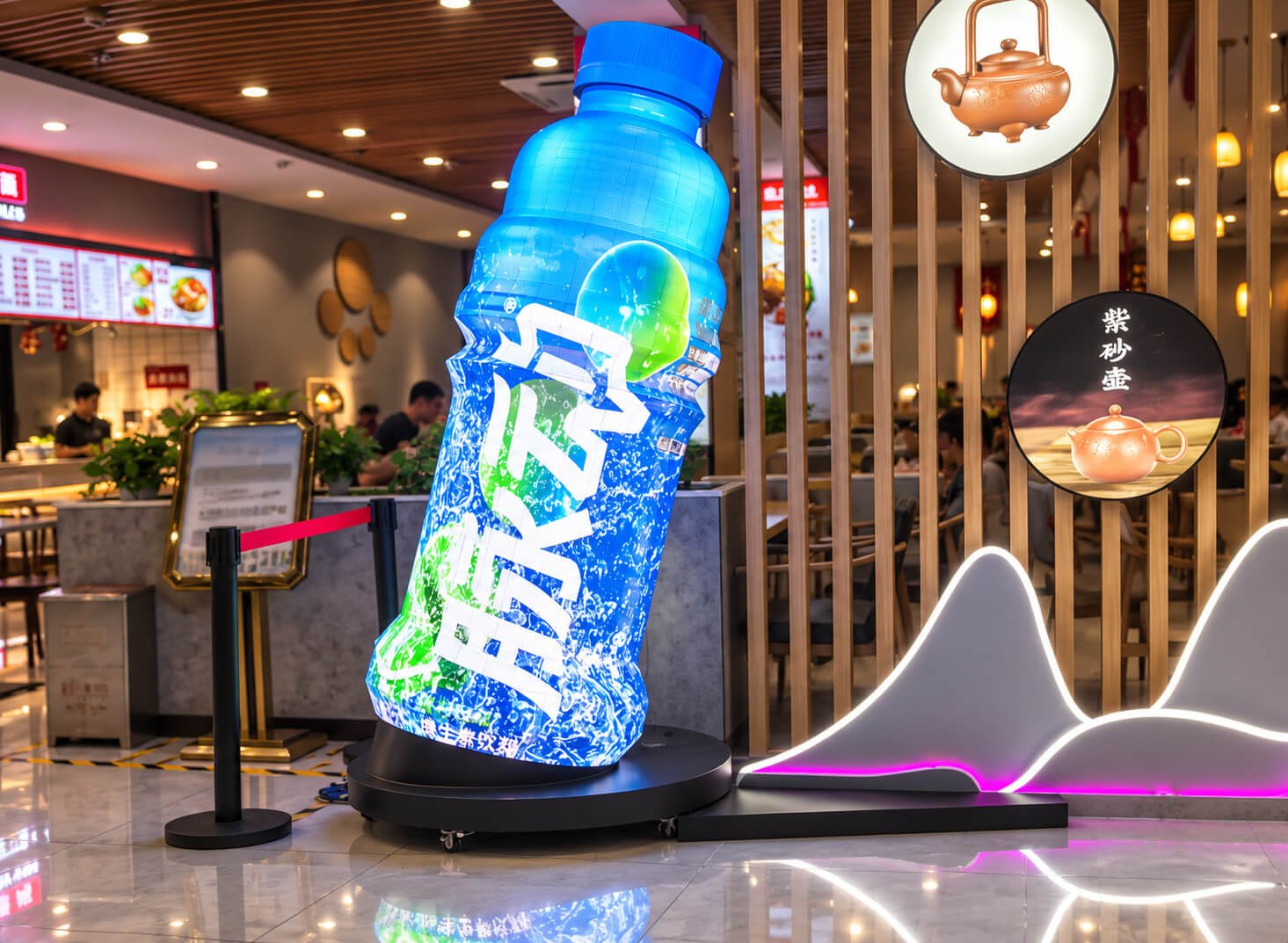
Blue Beverage Bottle Display
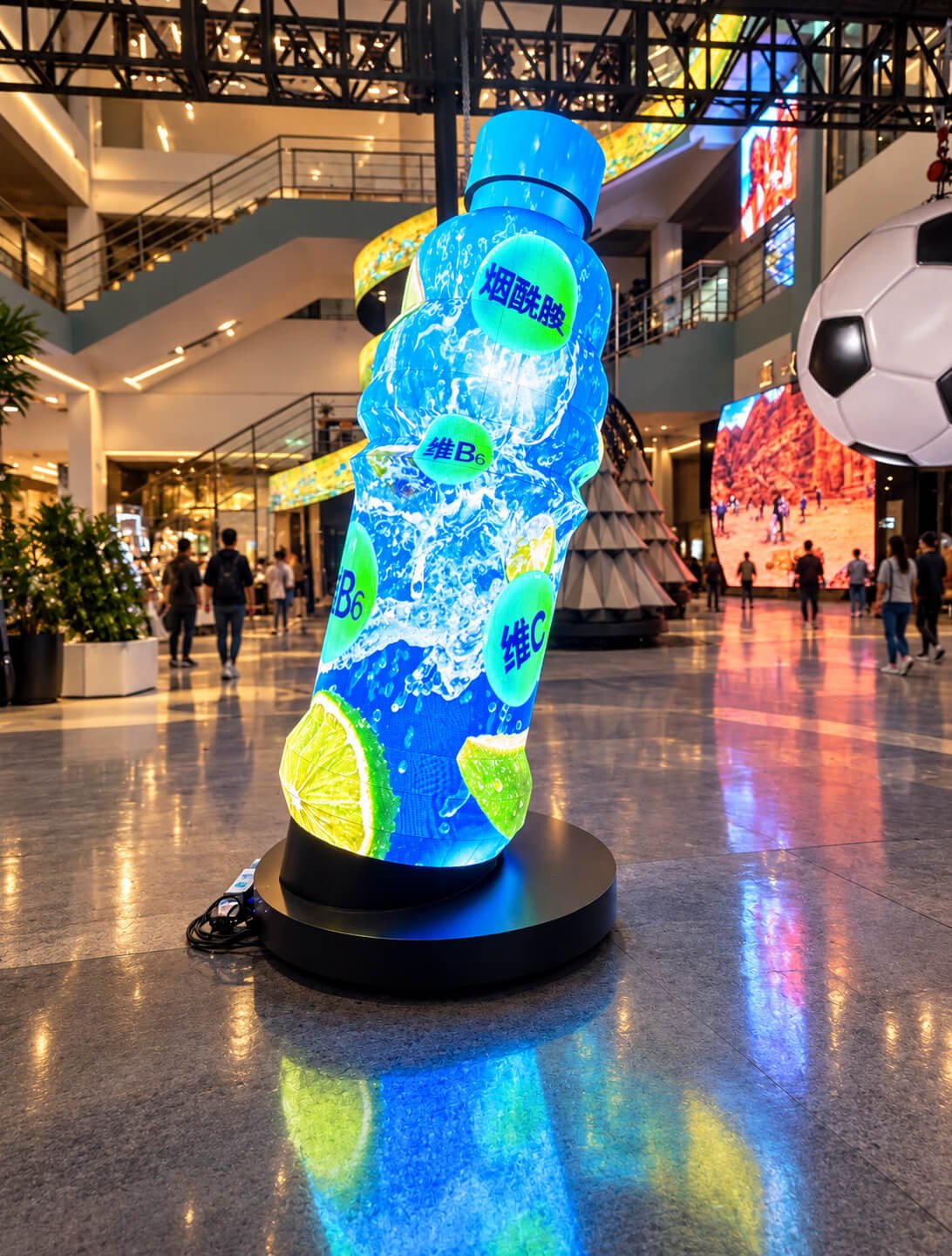
A tilted beverage-bottle silhouette combines bright blue packaging graphics with a freestanding promotional format.
DisplayMan develops bottle-shaped LED displays for beverage promotions, retail launches, exhibitions and brand experience spaces. The bottle body, shoulders, neck and cap are reviewed together to create a recognizable silhouette with programmable visual content.
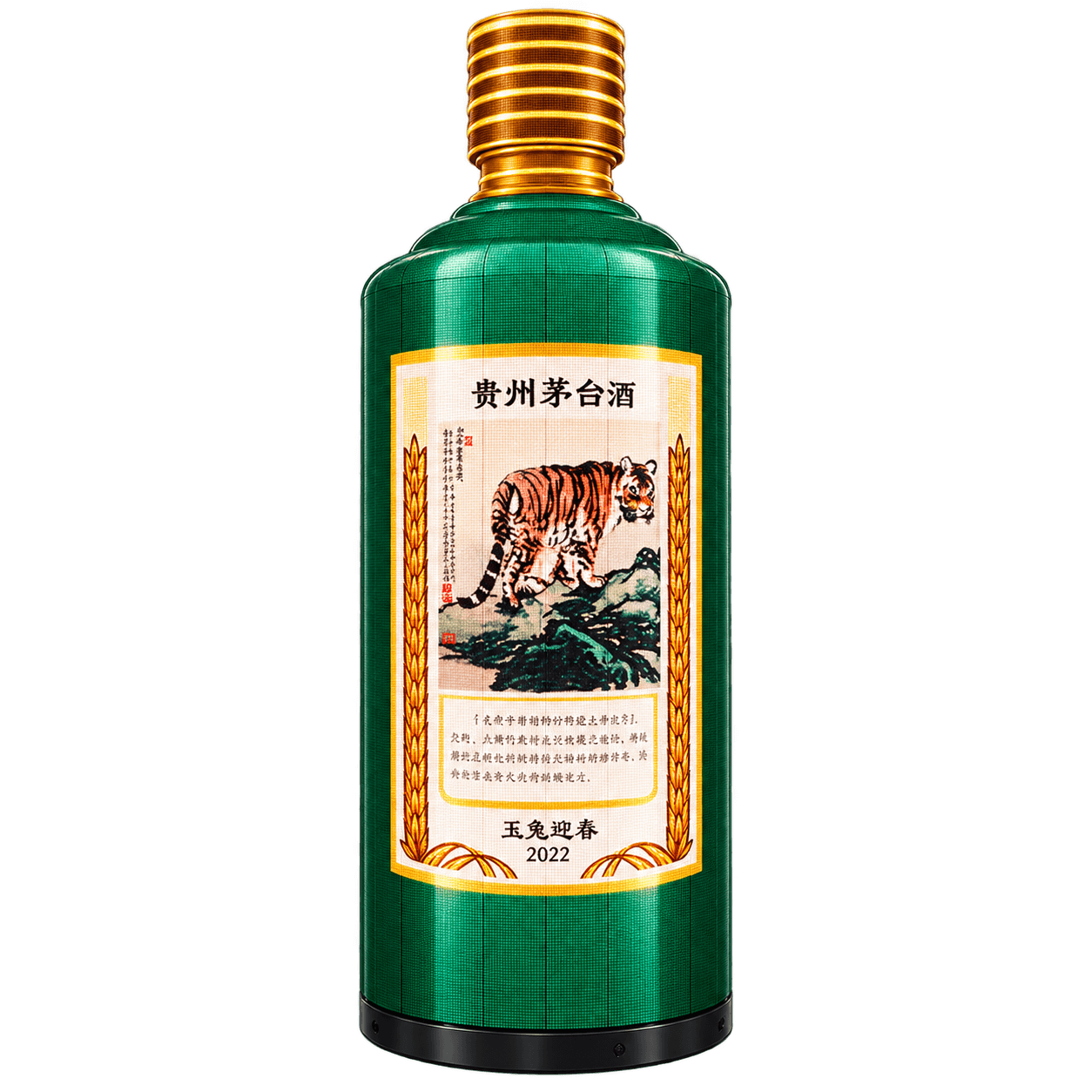
Eight redrawn visual references show beverage, spirits and wine-bottle directions. Final structure, active display areas and content are defined for each project.
A tilted beverage-bottle silhouette combines bright blue packaging graphics with a freestanding promotional format.
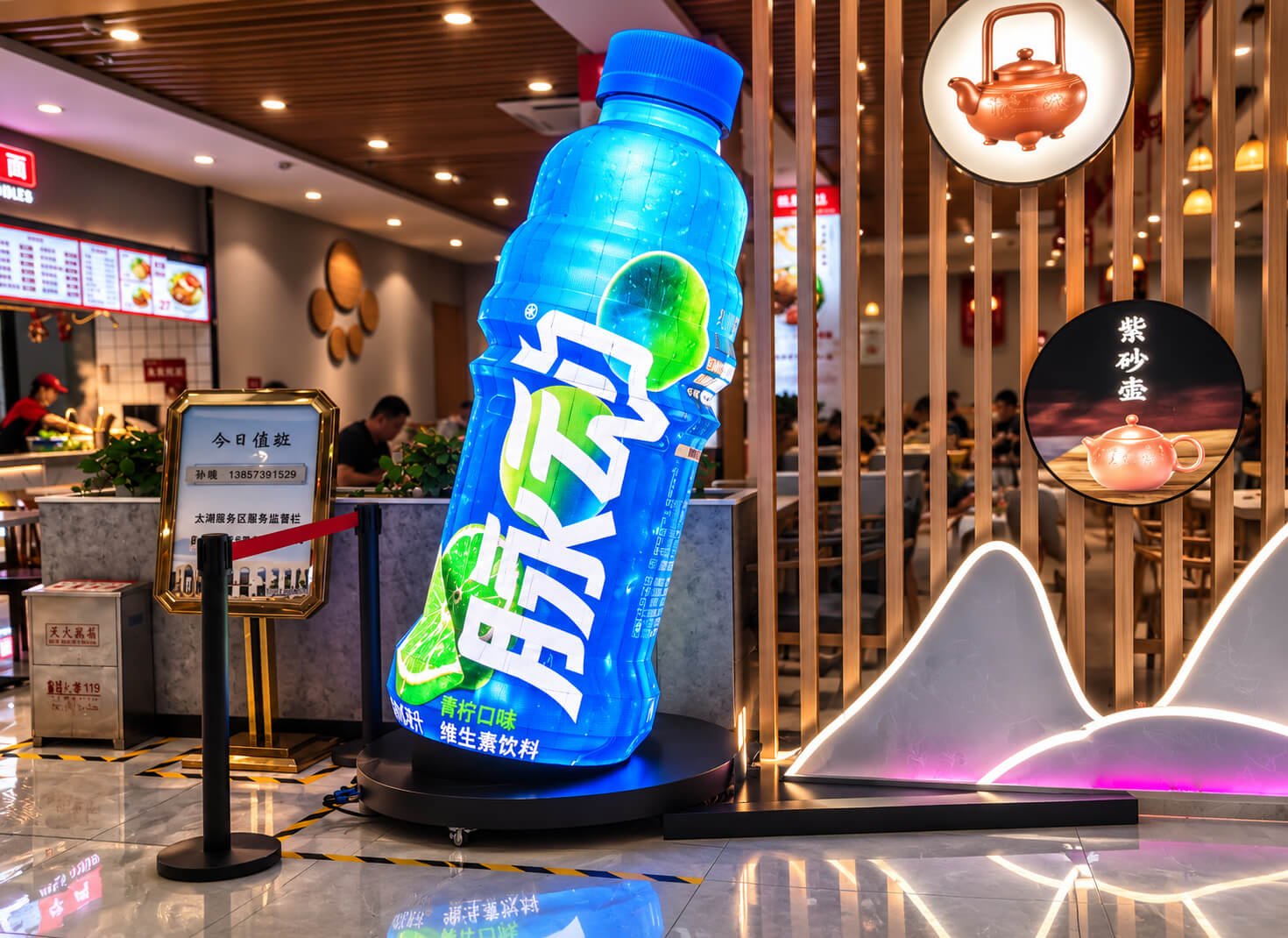
An alternate view highlights the bottle profile and its presentation within a branded interior.
Colorful beverage imagery turns the bottle-shaped screen into a focal point within an exhibition space.
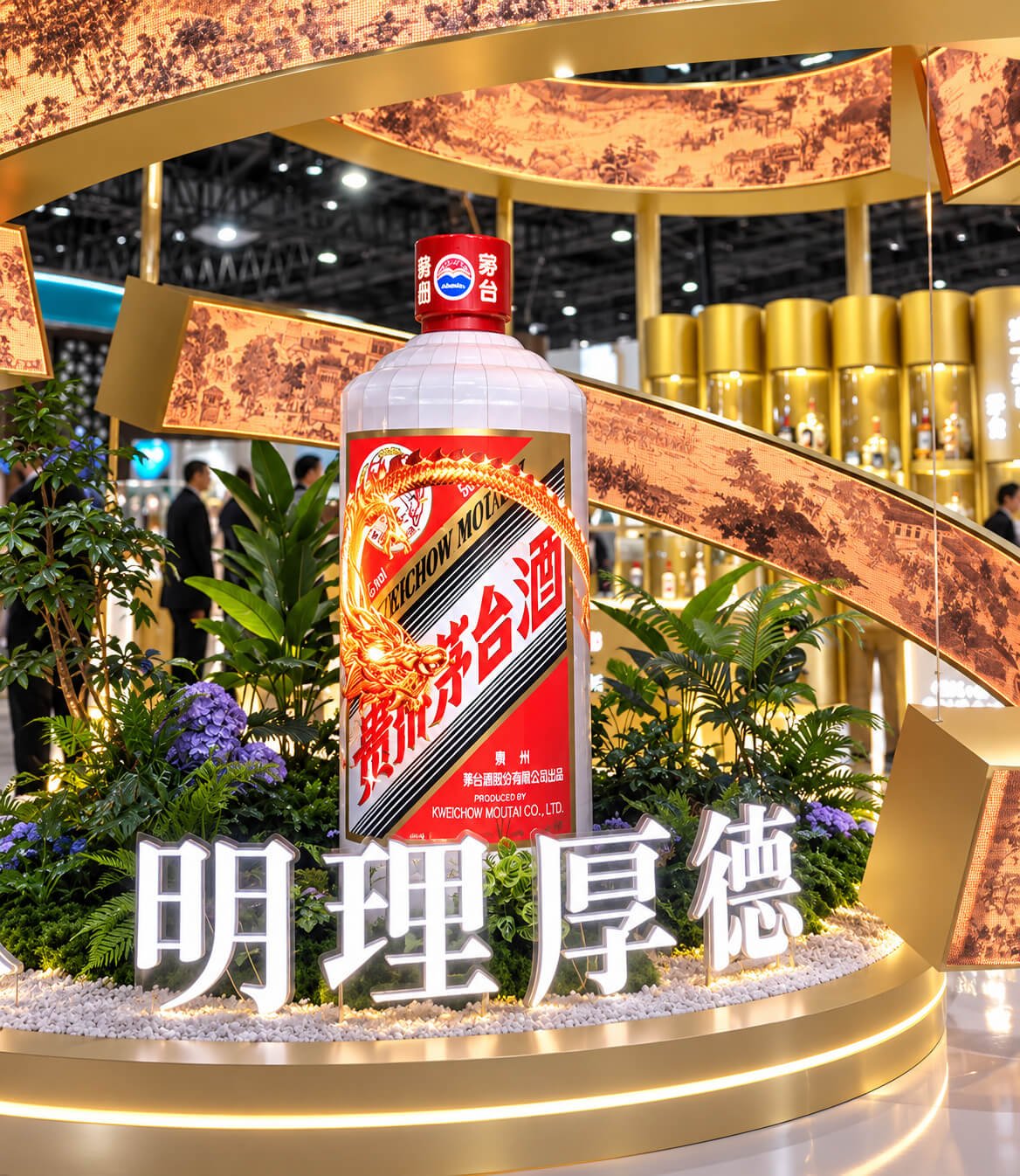
A large spirits-bottle display integrates recognizable packaging artwork into a themed exhibition setting.
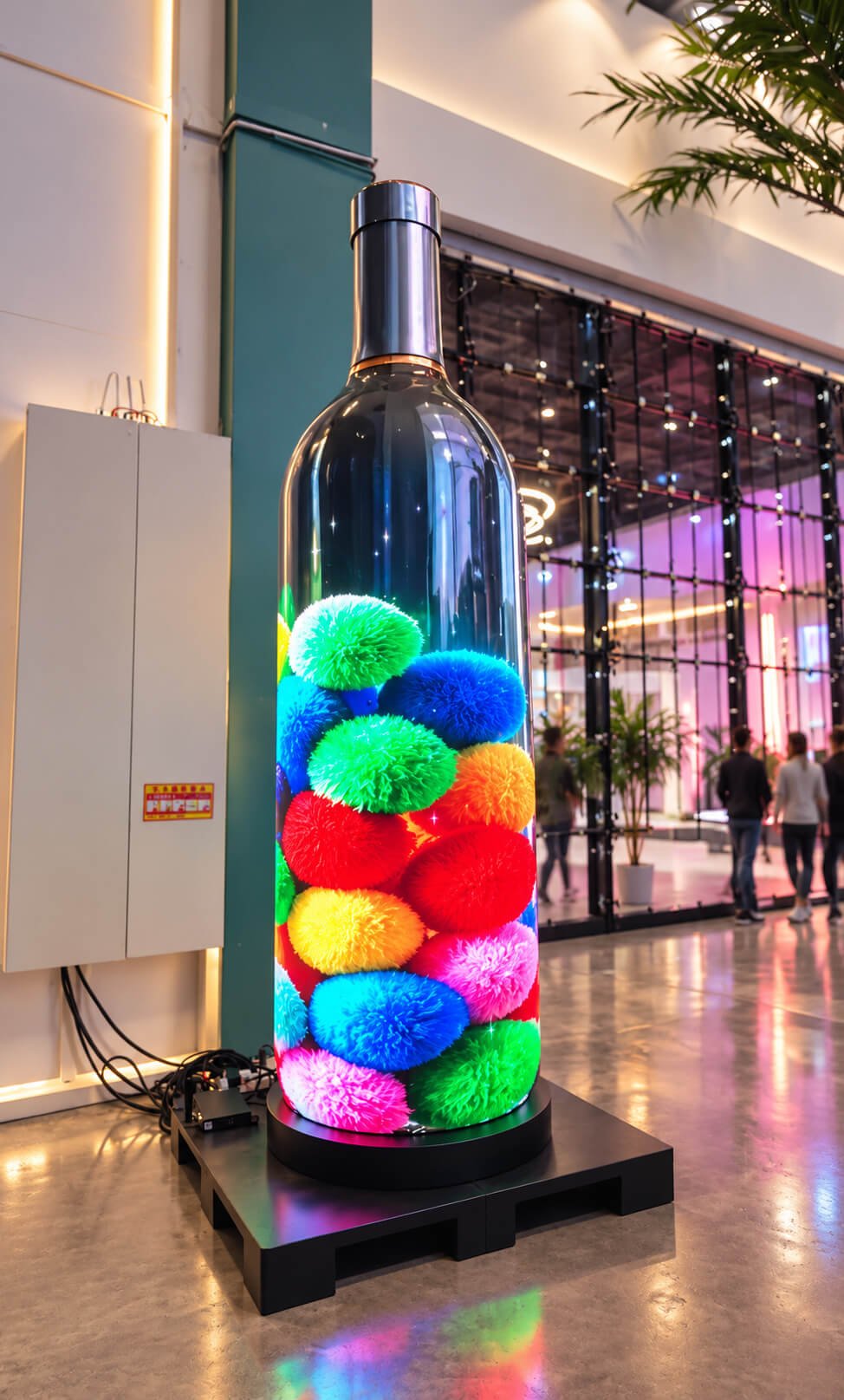
Bright spherical graphics show how a wine-bottle silhouette can carry creative content beyond a conventional label.
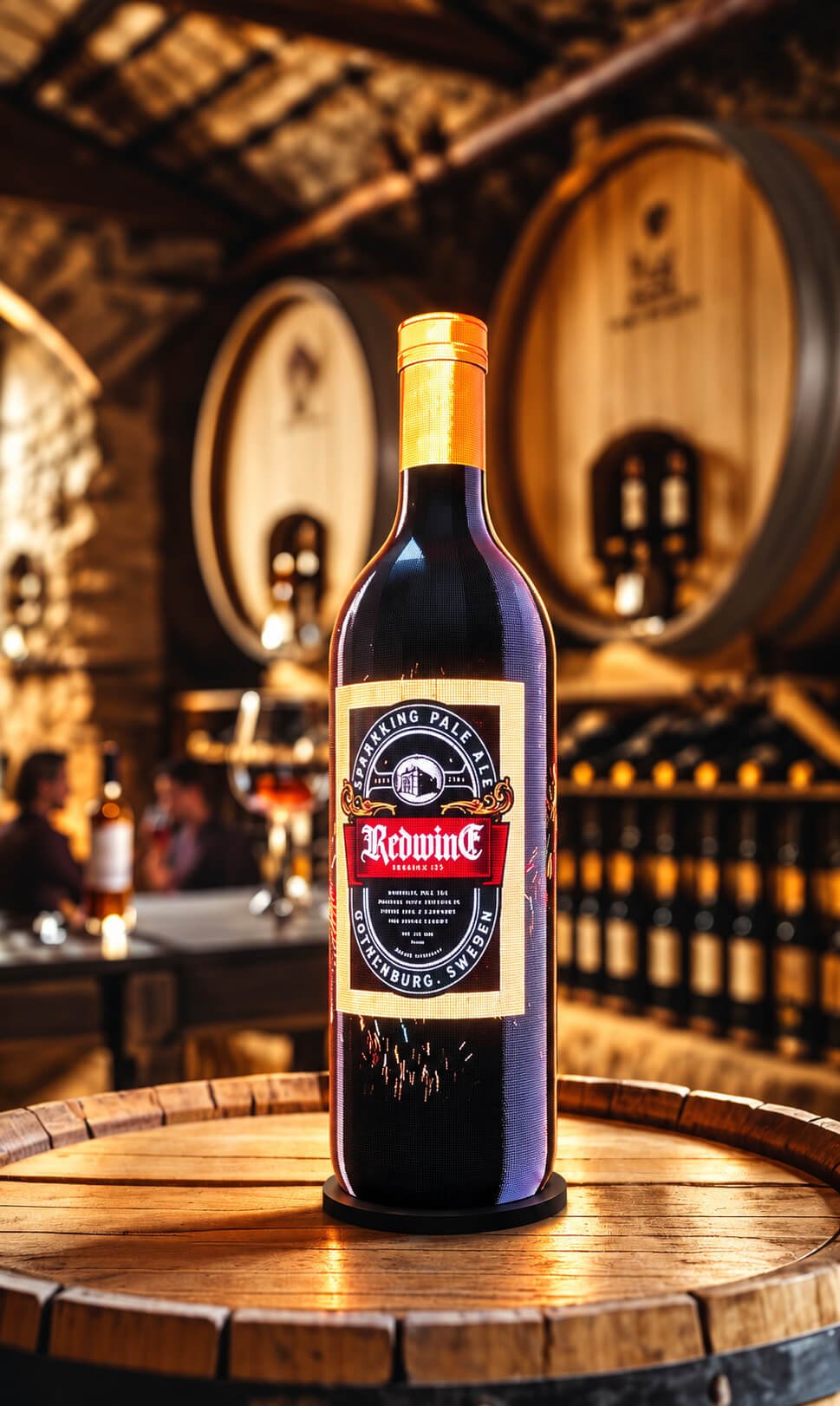
A traditional label composition illustrates a restrained visual direction for wine-related displays and brand storytelling.
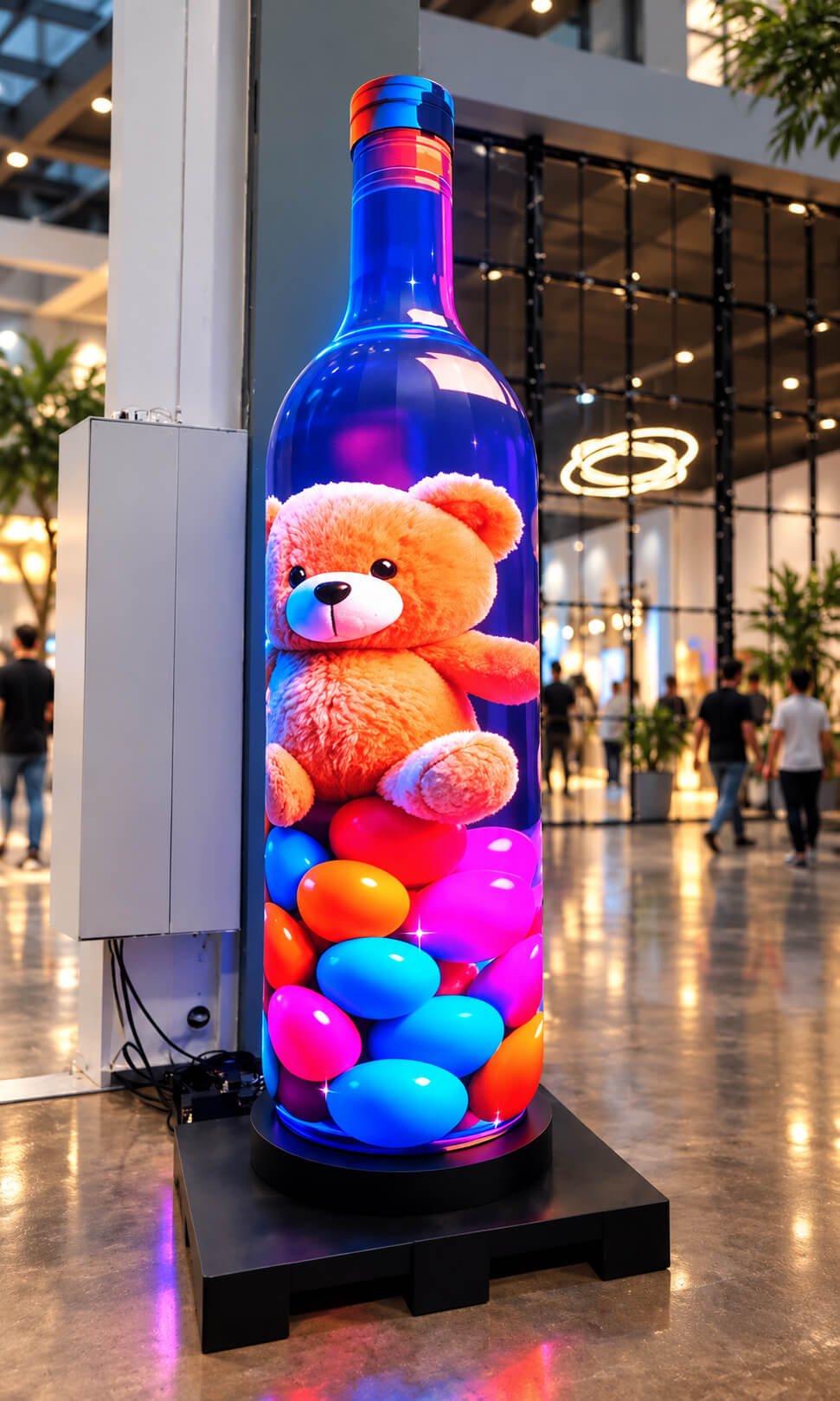
A teddy-bear graphic and vibrant colors demonstrate a playful campaign theme on the bottle-shaped surface.
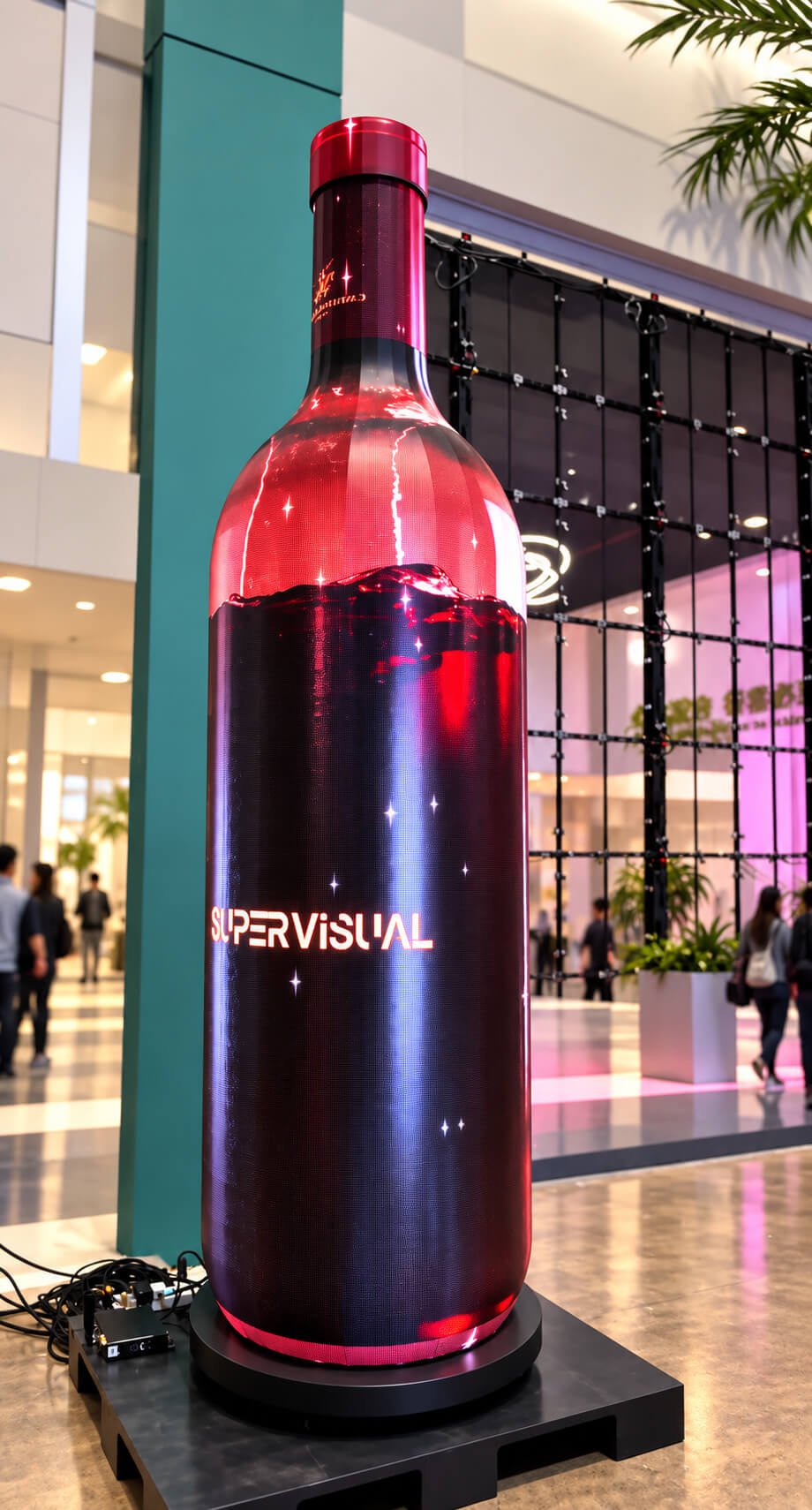
A red-and-black content treatment emphasizes the long neck and clean outline of a wine-bottle format.
A bottle-shaped LED display combines a recognizable physical package with changing digital artwork. Its value comes from the relationship between the silhouette, the campaign and the surrounding space.
A successful design should still suggest the intended bottle when viewed without its label. Body proportions, shoulder slope, neck length and cap shape are therefore part of the display specification. Enlarging a packaging drawing is only the starting point: the LED surface, internal structure and service access must fit within that outline.
The same physical display can show a packaging label, animated ingredients, brand colors or seasonal campaign content. This flexibility is useful when the bottle shape remains consistent across several campaigns. A different bottle profile, however, cannot be created through software alone; substantial changes to the silhouette require mechanical and module changes.
Start with the packaging silhouette and viewing environment. A familiar bottle shape can remain recognizable while the on-screen campaign changes.
Rounded bodies, short necks and distinctive caps suit beverage promotions. A tilted presentation requires a support structure designed for the final center of gravity.
Long necks, shoulders and label zones need coordinated structure and pixel mapping. Decorative caps or neck sections can be used where LED coverage adds little value.
Use a product photo, dimensional drawing or 3D model to define the shape. Review the body, shoulder transitions, cap and base before committing to a final design.
Change colors, labels, motion graphics and seasonal artwork through the selected playback system. Physical silhouette changes require a separate mechanical review.
These are different development routes. Confirm which route applies before comparing quotations or assuming that an illustrated design is a standard stocked product.
Where a suitable structure and module layout already exist, the project may focus on artwork, control configuration, finish and selected mechanical details. Compatibility must still be checked against the desired dimensions, installation environment and viewing distance. An existing bottle design should not be assumed to scale freely to any height or diameter.
A new profile may require a dedicated frame, different module geometries, new carriers and a revised pixel map. Distinctive shoulders, deep recesses or a narrow illuminated neck increase the engineering work. Provide the original packaging reference early so the team can identify which details define the brand and which can be simplified.
Agree on the physical outline and active LED zones before finalizing campaign graphics. The label, colors and animation can change within the supported pixel map, while the cap, neck and shoulder proportions remain fixed. This distinction prevents a content update from being mistaken for a change in the actual product form.
A practical review progresses from reference artwork and dimensions to geometry, module segmentation, structure, system configuration and content mapping. The quotation should state the development scope, prototype or sample requirements, approval points and final delivery items. Production follows the agreed drawing and specification, rather than a reference image alone.
Overall height alone does not determine feasibility. The smallest illuminated diameter, shoulder geometry, viewing distance and required label detail can be more restrictive than the main bottle body.
| Selection Factor | What to Review | Effect on the Design |
|---|---|---|
| Overall height and body diameter | Available installation space, audience distance and desired visual scale | Establishes the display proportions, supporting structure and transport envelope. |
| Neck and cap dimensions | Minimum radius, internal space and whether these zones need active LED | May require a different module arrangement or a decorative neck/cap. |
| Shoulder transition | Rate of diameter change, compound curvature and important packaging details | Influences segmentation, surface smoothness and mapping distortion. |
| Pixel pitch | Viewing distance, text size, content type and available module geometry | Determines useful image detail together with the physical display dimensions. |
| Active surface coverage | Body only, body plus shoulder, or extended neck/cap coverage | Changes LED area, electronics, mapping and development scope. |
| Orientation and installation | Upright or tilted, indoor or outdoor, permanent or event use | Affects stability, base design, protection and service access. |
Large moving graphics and color fields tolerate a different pixel density from small packaging text. Review the smallest important label element at the intended viewing distance, using the actual pixel map. A high-resolution source image cannot restore detail that the selected LED surface does not have enough pixels to display.
Ask for a proposed module layout rather than choosing pitch in isolation. A fine-pitch option suitable for a broad body may not be available in the geometry needed for a tight shoulder or neck. The quotation should identify the proposed pitch and any differences between active zones. Do not assume that every visible bottle detail has identical resolution.
Reducing a bottle reduces the space available for modules, wiring, power components and service access. It can also make curved transitions harder to reproduce smoothly. There is no universal minimum size for all bottle profiles; a compact design needs a geometry review before pricing or performance commitments. A simplified silhouette or partially illuminated structure may be a more practical route.
A bottle changes diameter along its height. Its engineering is more involved than wrapping a constant-radius cylinder.
Map the active display zones individually. Flexible modules may suit the body; shoulders and neck transitions may need segmented or custom modules. The cap can be an LED surface or a decorative structure.
Choose pitch together with the physical size, viewing distance and artwork detail. Fine label text requires sufficient pixels and should not be treated as readable at every angle.
Review anchoring, center of gravity, cable routing and service access. Tilted or tall designs require a project-specific support arrangement and installation assessment.
Prepare artwork for the actual pixel map. Place key labels in the main viewing zone and avoid critical text across seams or strongly changing curves.
The complete system includes power distribution, receiving cards, a compatible controller and a suitable ventilation strategy. Remote updates and synchronized playback depend on the chosen system.
Large displays may need segmented structures and planned assembly joints. Confirm access dimensions, lifting arrangements and module alignment before production.
Treat the bottle as connected zones with different curvature and visibility requirements. A continuous visual result does not necessarily mean that every zone uses the same LED module.
A constant-radius body may accommodate a compatible flexible-module arrangement. The layout should account for the closure seam, panel alignment, mounting tolerances and removal of individual modules. Put the seam away from the strongest audience approach where the installation allows it.
The shoulder changes circumference and may curve in more than one direction. Segmented or specially shaped modules can be required to follow the profile. A simplified transition can reduce complexity, but it should be agreed against the recognizable packaging outline before manufacturing.
A narrow neck has less display area and less room for electronics. Small text is often a poor use of this zone. A structural or decorative cap may preserve the intended silhouette without adding another complex active surface. If neck or cap illumination is essential, include it explicitly in the scope.
The base supports the display and may accommodate electronics, cable entry or maintenance access. Its footprint must be reviewed together with the bottle height and orientation. Keep access points reachable after installation, and distinguish the visible display height from the total assembled height.
The visible LED area is only one part of a custom bottle project. Compare proposals using the same geometry, coverage, control functions and installation scope.
A new bottle profile can involve mechanical design, PCB/module development, carriers, masks, assembly fixtures and mapping work. These costs do not disappear because the order is for one display. Ask which items are development charges, which can be reused, and what changes would trigger additional work.
A repeat order based on an approved design may reuse parts of the development work, subject to component availability and the agreed specification. Different bottle shapes should not automatically be treated as identical repeat units. Keep a controlled drawing and configuration record for subsequent orders.
Include the controller, power distribution, base, packing and required accessories when comparing the complete supply. Transport, site preparation, lifting, installation and content creation may be separate items. A lower hardware figure can reflect a narrower scope rather than an equivalent finished installation.
Review whether decorative cap details, a less complex shoulder or fewer active zones can meet the campaign objective. This should be an intentional design decision. Removing small difficult surfaces can improve serviceability and focus the available pixels on the body and main label area.
Specify the display as an integrated system, from the outer surface to playback and service tools. Confirm the included components and responsibilities in the quotation.
The system includes LED modules, mounting components and the supporting frame for the agreed shape. Panel segmentation should support transport and service as well as appearance. A drawing should identify the overall envelope, base interfaces, access points and major assembly joints.
Power supplies, receiving cards and internal cabling need organized mounting and access. Heat removal must be considered within the enclosed bottle profile. Required power, supply connections and operating conditions should be confirmed for the final configuration rather than inferred from a similar reference.
Playback can be configured around the selected controller and media source. Confirm supported inputs, file formats, scheduling and the method for updating content. Remote management requires a compatible control system and suitable network access; it is not an automatic feature of every LED bottle.
Several displays can use coordinated playback when specified with suitable control and synchronization. Define whether they show the same content, separate campaigns or one timed sequence. Handover should include the agreed pixel map, playback instructions and service documentation for the supplied system.
Design content for the installed bottle and its audience approach. A rectangular artwork file is not automatically ready for a changing-diameter display surface.
Place the logo, product name and essential campaign message in the primary viewing zone. Content on the far side of the bottle is not visible from the same viewpoint. For viewers approaching from several directions, repeated brand zones may communicate better than one long message wrapped around the entire body.
Shoulders and necks have less circumference than the body. Artwork needs to follow the actual module and pixel layout so proportions remain intentional. Request the final map before producing finished animations, and check important features near transitions and seams.
Flowing ingredients, light trails, particles and changing colors can emphasize the bottle form. Keep key brand information on screen long enough to be understood. Test the loop for the intended viewing distance and environment, including bright surroundings that may reduce the visibility of subtle dark details.
Check static labels and moving sequences on the proposed layout, including how they pass across curved transitions. Agree who supplies artwork and who adapts it. Content production, mapping support and ongoing campaign updates should be explicit deliverables if they are required.
The final design must work at the destination as well as in a showroom. Provide site information early enough for it to influence the base, transport segmentation and maintenance approach.
Confirm floor conditions, anchoring requirements, cable routes and public circulation space. Tall installations require an appropriate structural assessment. Keep service openings accessible and avoid positioning the bottle where a small maintenance task would require dismantling surrounding fixtures.
Tilting changes the center of gravity and the loads on the support. A suitable structure must be designed for the installed angle. For repeated events, consider assembly sequence, handling points, packing and replacement of exposed parts rather than treating the display as a conventional lightweight promotional prop.
Check doorways, lifts, loading routes and lifting restrictions against the packed and assembled dimensions. Large bottles may need separate body, shoulder or neck sections. Assembly joints must support reliable alignment of both the structure and the visible LED surface after transport.
Agree how modules and electronics are accessed, which components can be replaced on site, and what spare parts are included. Custom module shapes may not be interchangeable between zones. Label the parts and retain the correct map so future repairs preserve surface alignment and content orientation.
Match the design to the visitor journey, available space and campaign goals.
Create a packaging-inspired focal point for flagship stores, promotional zones and product launches. Keep circulation and service access clear.
Use bottle-shaped displays as stand features and storytelling objects.
Wine and spirits silhouettes can support brand storytelling in reception, tasting or entertainment areas, subject to the site environment.
Adapt the digital artwork for celebrations, themed displays and coordinated installations without rebuilding the bottle body.
| Format | Main Strength | When to Choose It |
|---|---|---|
| Bottle-Shaped LED Display | Recognizable packaging silhouette with programmable imagery | The bottle itself is a central part of the campaign and custom engineering is justified. |
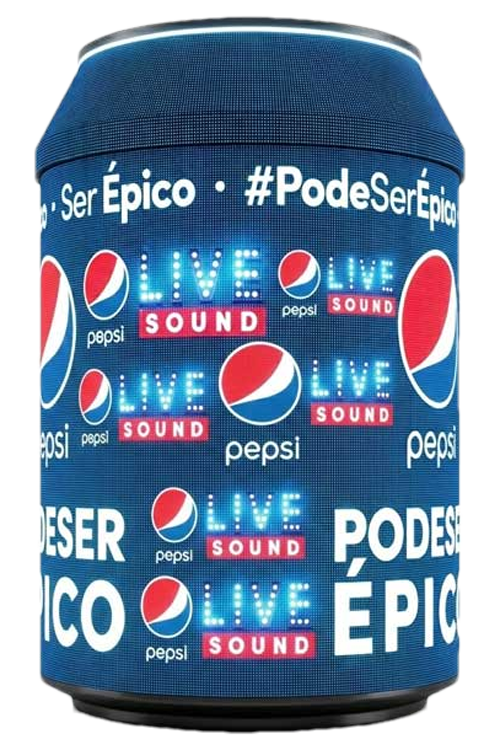
| Can-Shaped LED Display | Can-like proportions and wrap-around packaging graphics | Your product identity is a beverage can rather than a bottle with a distinct neck. |
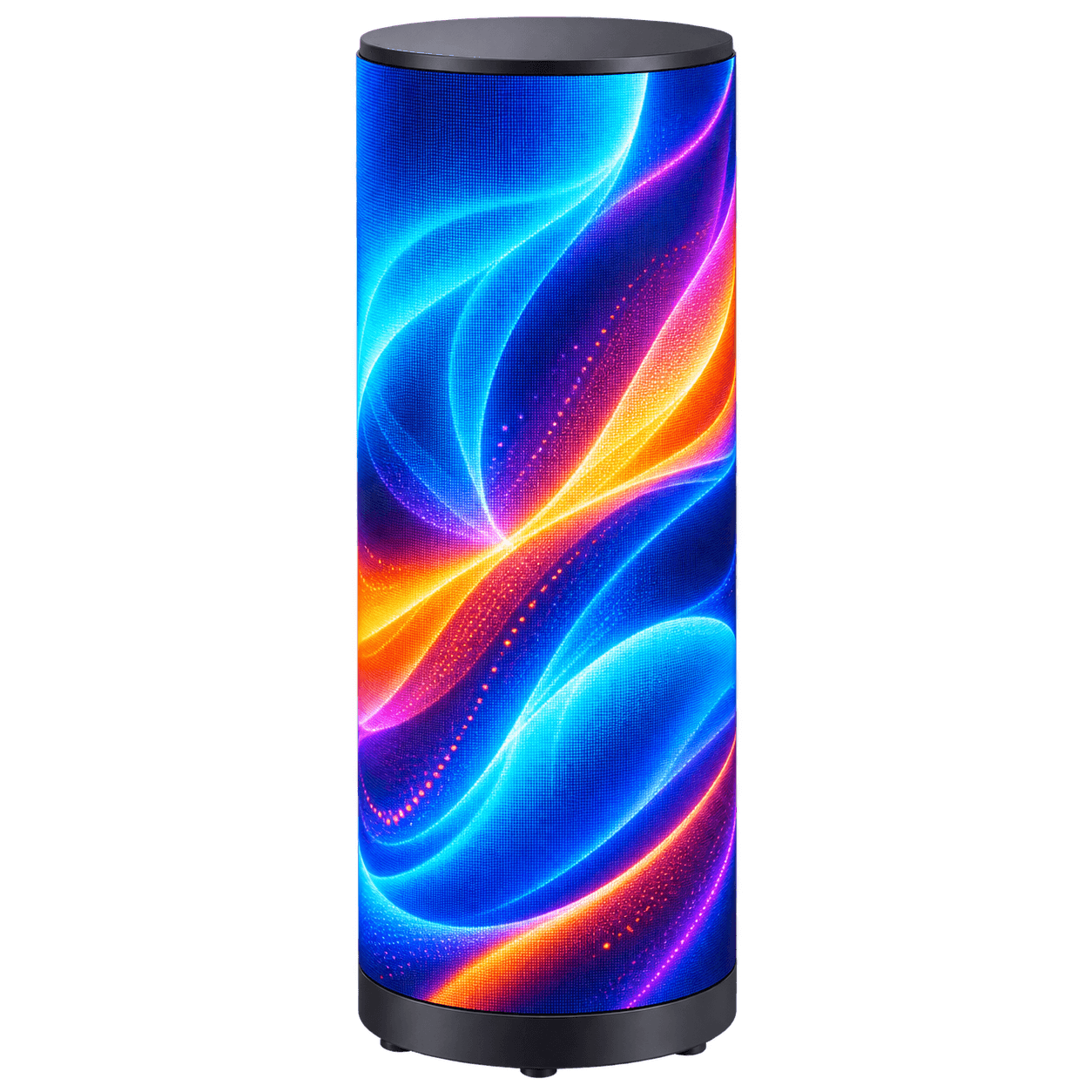
| Cylindrical LED Display | Constant-radius screen or column wrap | The project needs curved media coverage without a packaging-specific silhouette. |
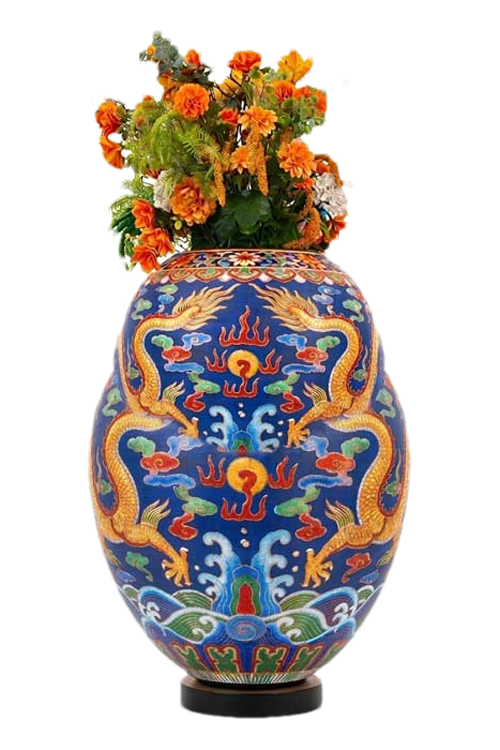
| Vase-Shaped LED Display | Decorative, artistic and cultural sculptural form | Artistic shape and changing decorative content matter more than reproducing commercial packaging. |
| Traditional Bottle Prop | Physical packaging replica with a fixed finish | The visual message is static and electronic content updates are unnecessary. |
| Flat LED Video Wall | Large conventional content canvas | Readable information, standard video layouts or a broad audience-facing surface are the priority. |
Vase LED projects can begin from the desired sculptural form, from the custom-engineering challenge, or simply from the venue and visual objective. Continue from the route that best matches the current stage of the project.
Choose a product page when the display form or technology direction is already clear.
Custom LED DisplaysParent Custom / Creative LED family for sculptural, artistic, branded and project-specific 3D LED forms.Cylindrical LED DisplayUse when the surface is a simple constant-radius wrap that can be built from standard flexible LED modules.Can-Shaped LED DisplayChoose when the changing profile is driven by a real commercial bottle, can or product package rather than an artistic vase form.Sphere LED DisplayTrue compound-curved spherical LED for globes, digital Earth, science visualization and landmark installations.Mascot & Character Shaped LED DisplayCharacter-like 3D LED platform where digital mapping creates different mascots, identities and branded personalities.Flexible LED DisplaysCurved walls, columns, cylinders and arcs using standard flexible modules when the geometry does not require full Custom LED segmentation.Rental LED DisplaysModular event LED walls for changing screen sizes, repeated assembly and stage / touring workflows.Portable Foldable LED Poster DisplaysFoldable vertical LED posters for exhibitions, roadshows and product launches when a compact mobile finished display is more practical.Choose a solution page when the changing-radius structure, module/tooling or prototype challenge is clearer than the final configuration.
Bespoke & Custom Display SolutionsFor changing-radius structures, unusual sculptural profiles, installation constraints and project-specific system integration.OEM / ODM Display Engineering & PrototypingFeasibility, module segmentation, PCB/tooling review, structure and prototype development for new Vase LED forms.All Display SolutionsBrowse DisplayMan engineering and integration routes across LED, LCD, touch and custom display systems.Choose an application page when the venue or visual objective is known but the final display form is still being selected.
Exhibition, Events & ShowroomsDigital sculptures, exhibition landmarks, experiential spaces and artistic event installations.Corporate & Office EnvironmentsCorporate lobbies, luxury hospitality, visitor centers and premium interior landmarks.Outdoor & Public Display SystemsOutdoor artistic structures where wind, drainage, anchoring, sealing, thermal design and long-term service must be reviewed.All Display ApplicationsBrowse DisplayMan applications by venue and use case before fixing the final physical form.Choose the format for its packaging identity and campaign purpose, with a clear plan for content, operation and maintenance.
Bottle LED works well when a distinctive package is central to the brand, the display will support changing campaigns, and the installation has suitable space and power. It is particularly relevant when the physical object should act as a visual landmark rather than simply carry a rectangular advertising video.
A standard display or static prop may be more appropriate for limited installation space, small detailed text, a one-time fixed message or a budget that cannot support custom development. If the bottle outline adds little value to the audience experience, a simpler display geometry can be easier to install and maintain.
A clear bottle reference and site information allow the engineering team to assess feasibility and prepare a project-specific proposal.
Send the reference bottle photo or 3D model, target height, body diameter, neck and cap dimensions, desired orientation and required LED-covered zones.
Include indoor/outdoor use, viewing distance, site photos or drawings, mounting method, quantity, content/control requirements, delivery location and project schedule.
EXPLORE THE PRODUCT FAMILY
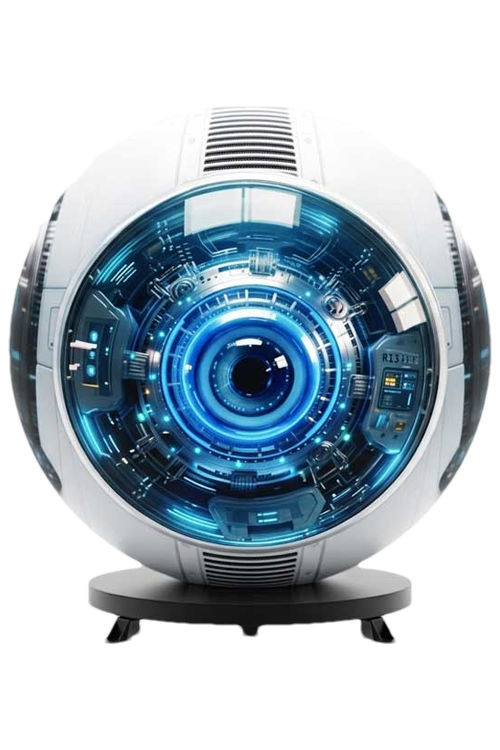
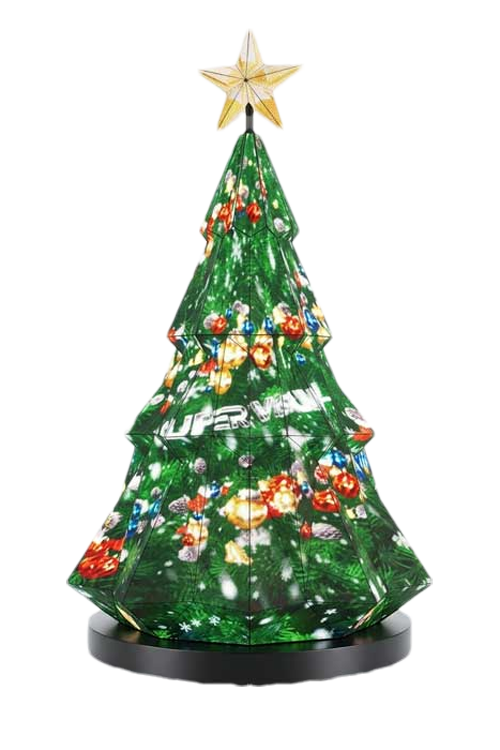

It is a custom LED display whose physical silhouette resembles a bottle. Digital artwork is mapped to the selected active surfaces of the body and, where specified, the shoulders, neck or cap.
A bottle includes changing diameters, shoulders and a neck. A simple cylinder has a constant radius, while a can-shaped display follows the shorter proportions and rim details of a can.
Send a reference photo, dimensional drawing or 3D model. DisplayMan reviews the geometry, target size, active LED coverage and support structure before confirming feasibility.
No. The body can be the main display surface while the neck, cap or selected details remain decorative. Full-surface LED coverage requires a separate engineering review.
Size and pitch are project-specific. The practical configuration depends on module geometry, minimum bending radius, shoulder transitions, viewing distance and internal space for electronics and maintenance.
Some designs can reuse existing modules in compatible areas. Complex shoulders, narrow necks and unusual profiles may require custom PCB/module shapes, carriers, fixtures or structural tooling.
Yes. Compatible content can be updated through the chosen playback system. Artwork must follow the final pixel map, and changing the physical bottle shape requires mechanical changes.
A tilted installation can be reviewed with a suitable base, support structure and anchoring plan. Stability, center of gravity and installation conditions must be assessed.
Outdoor use requires a configuration engineered for the site, including weather protection, brightness, drainage, thermal management and structural loads. Indoor reference images do not establish outdoor suitability.
Maintenance may use removable LED modules, access panels or segmented structural sections. The service method should be defined before the outer shape is finalized.
The supply scope can include the LED structure, power distribution, controller and required integration components. Content production, installation and other project services should be agreed in the quotation.
Provide the bottle reference, target dimensions, display coverage, installation environment, viewing distance, orientation, quantity, content/control needs, shipping destination and project schedule.
Send your bottle drawing, target height, body diameter, viewing distance and installation environment. DisplayMan can review the LED coverage, module segmentation, structure, pixel pitch and content mapping for your project.
A Bottle-Shaped LED Display starts with the packaging silhouette. Body proportions, shoulder transitions, neck and cap details, LED coverage, support structure and content mapping need to work together as one engineered display.