Turn Loops, Curves and Open Space into a Digital Landmark
DisplayMan develops ring-shaped and Möbius-inspired LED displays for exhibitions, atriums, brand environments and creative installations. A circular opening, sculptural loop or twisting ribbon gives digital content a physical identity that extends beyond a rectangular screen.
Choose a freestanding ring, suspended halo, nested-ring composition or custom twisted form. Each project starts with its geometry, visible LED surfaces, viewing positions and support requirements, followed by coordinated structure and content mapping.
These displays use an open circular or looping structure as part of the visual experience. The opening, curvature and installation angle matter as much as the active screen area.
Ring-Shaped LED Displays
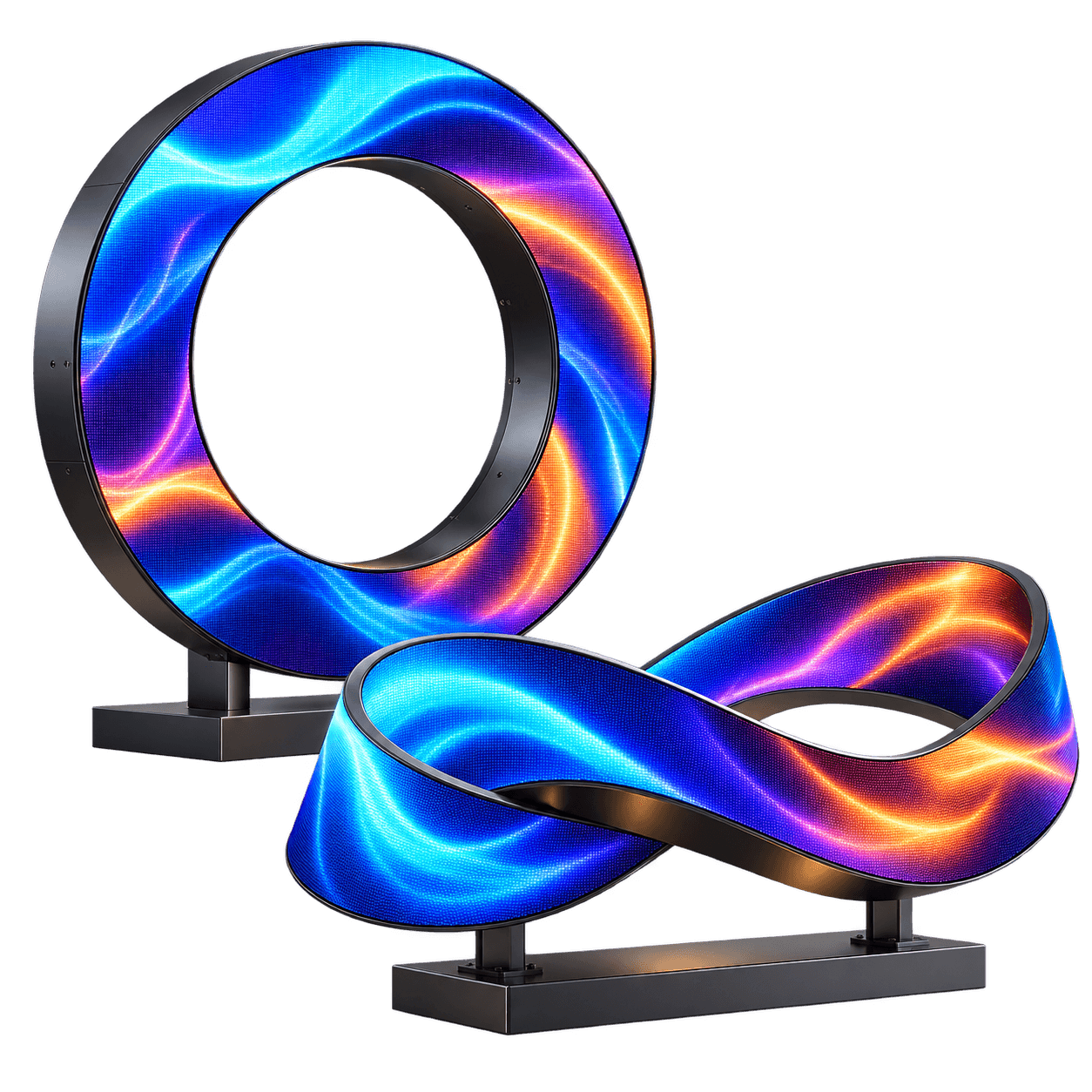
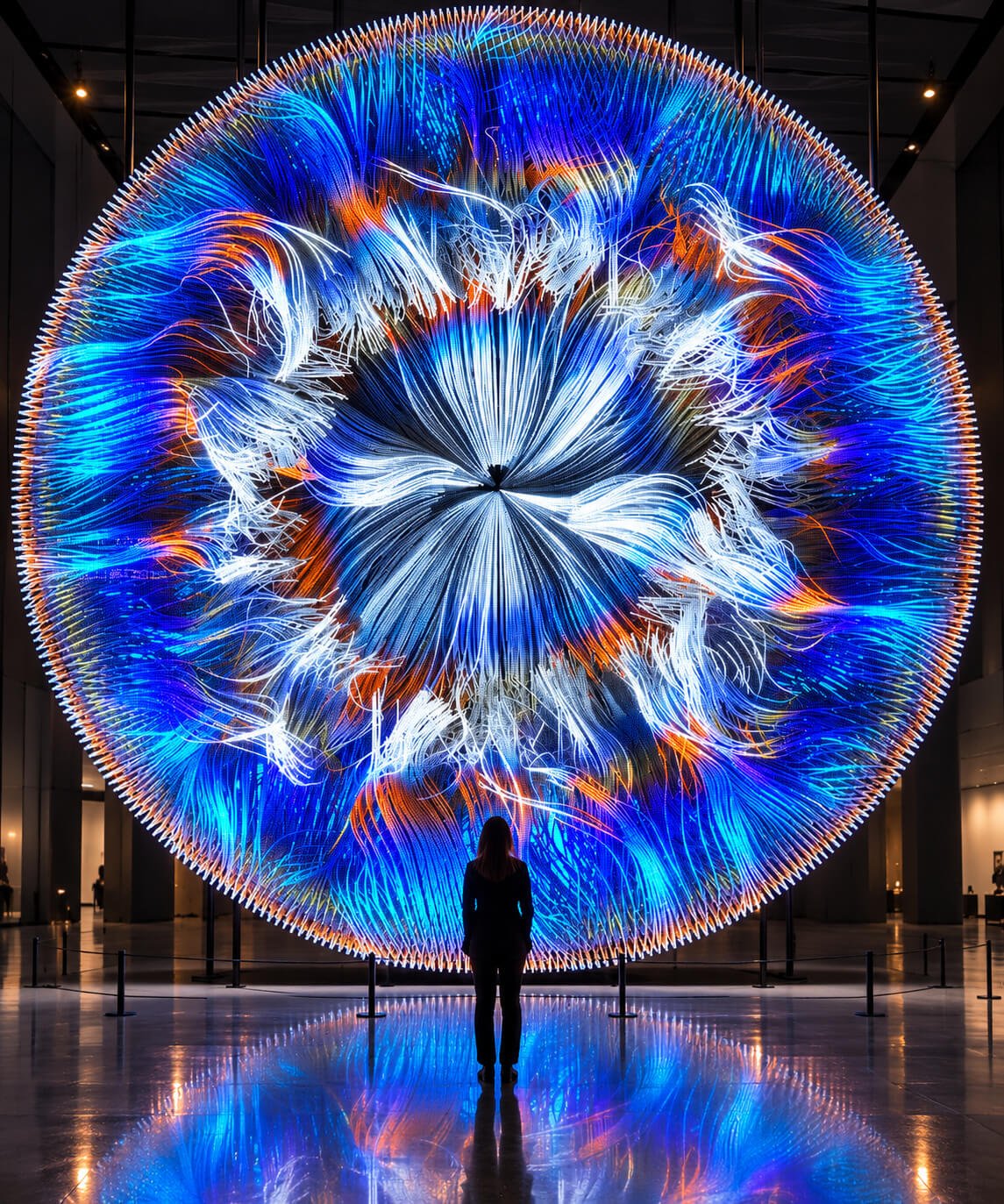
A ring can carry LEDs on an annular front face, its outer circumference, its inner circumference, or selected combinations of these surfaces. These configurations create different viewing experiences. A front-facing ring can frame a central object; an inward-facing band can address visitors inside a space; an outward-facing band can communicate around a structure. The quotation and drawing should identify each active surface rather than simply describe the product as a 360° screen.
Torus and Sculptural Circular Forms
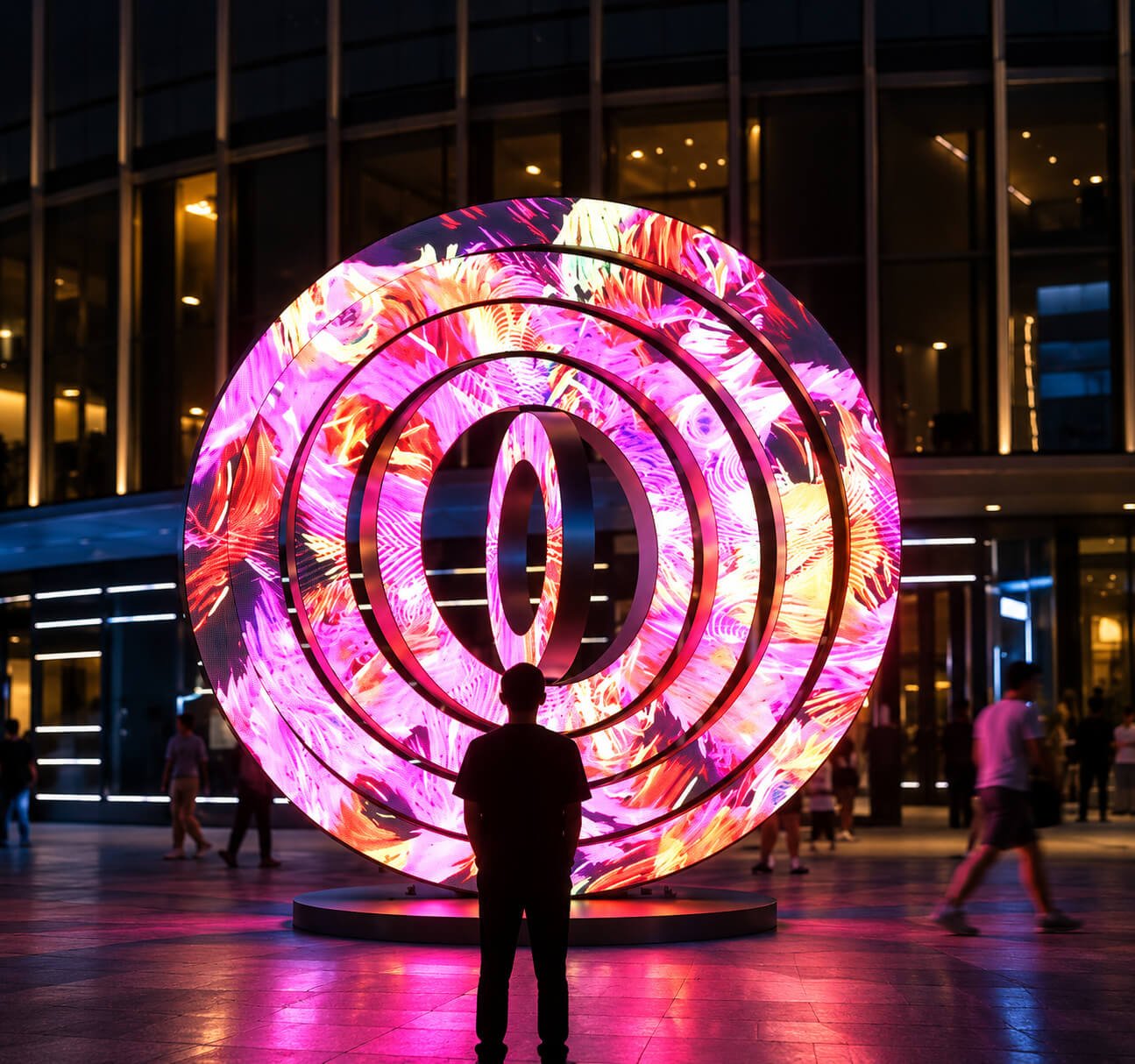
A torus has a rounded, tube-like cross-section rather than a flat annular face. Covering this surface introduces curvature in more than one direction, so its module layout and transition details require closer review. Some installations combine an LED surface with a decorative supporting ring. The visual references on this page illustrate design directions; they do not establish that every visible structural surface contains LED pixels.
Möbius-Inspired LED Ribbons
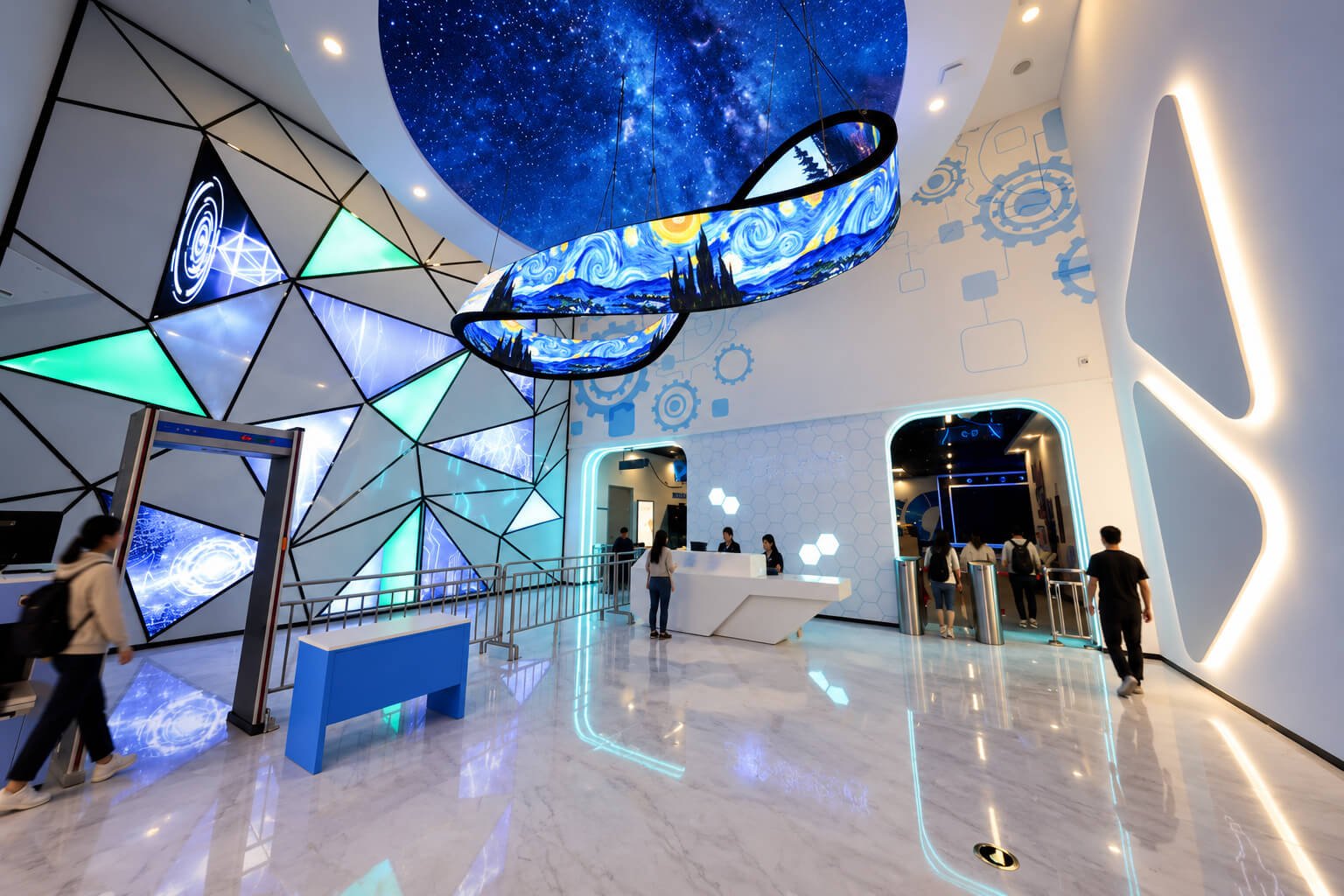
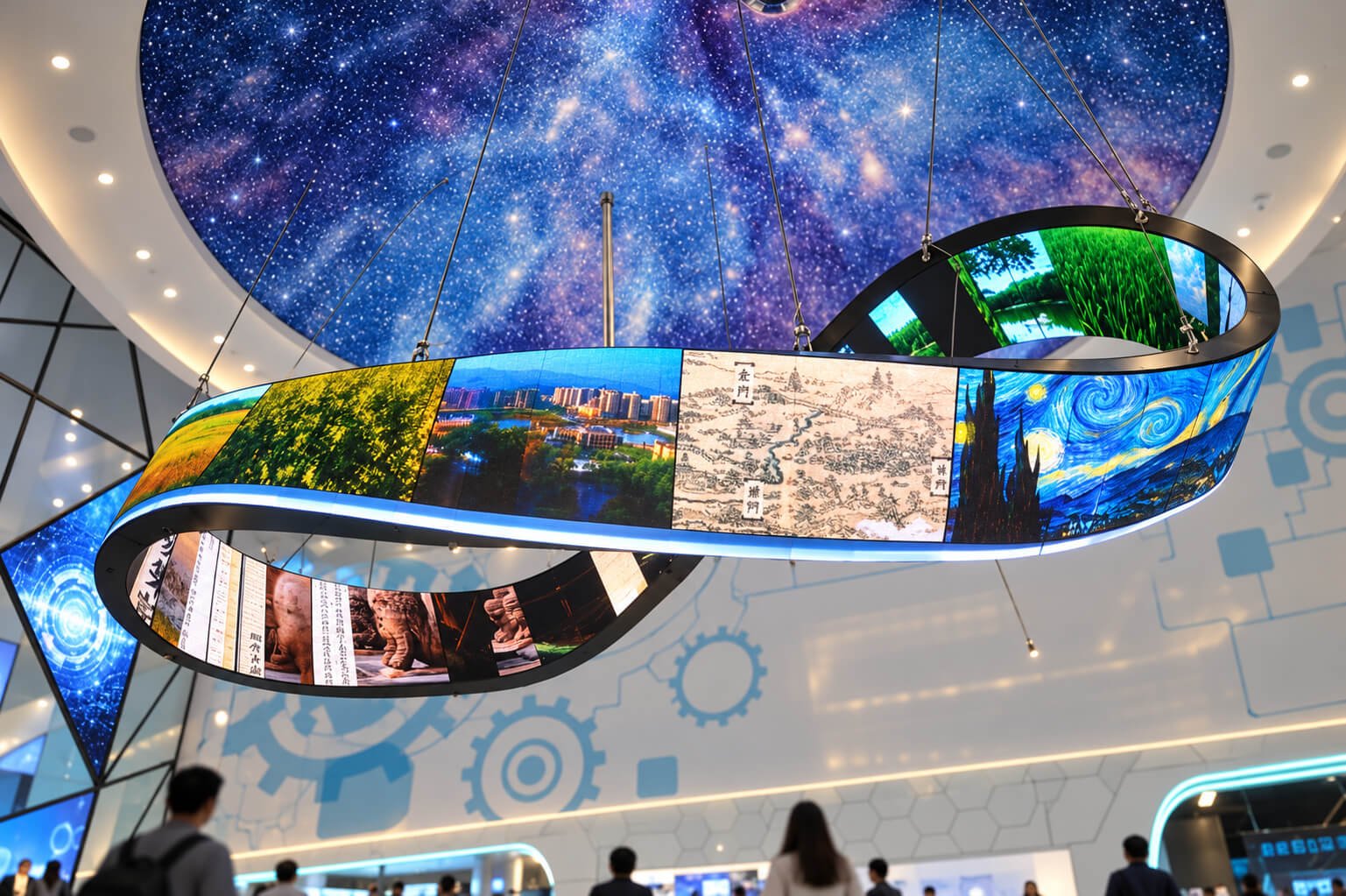
A mathematical Möbius strip has a half-twist and one continuous surface. Commercial designs may use a similar twisting silhouette without reproducing that exact topology. For procurement, a 3D model and agreed active-surface map are more useful than the name alone. The ribbon width, twist angle, local bending radius and support positions determine how modules, cabling and service access can be arranged.
One Family, Several Different Engineering Tasks
A circular portal, a stage arch and a suspended twisting ribbon share curved visual language, but they are not interchangeable structures. Some are partial loops, some frame a passage and others act as sculptural objects. Start with the intended visitor experience and then select a buildable geometry. A simple circular band may meet the brief without the complexity of a fully twisted or doubly curved surface.
Choose the Right Ring & Möbius LED Direction
Use the physical shape to support the space, audience and content rather than treating every loop as the same product.
Freestanding Circular Rings
Vertical rings create a recognizable outline for lobbies, product launches and exhibition features. Confirm whether visitors view one side or walk around the object. The base, anchoring and lower maintenance area should be integrated into the design before the ring proportions are approved. A circular frame with a central screen is a different configuration from an LED-covered annular face.
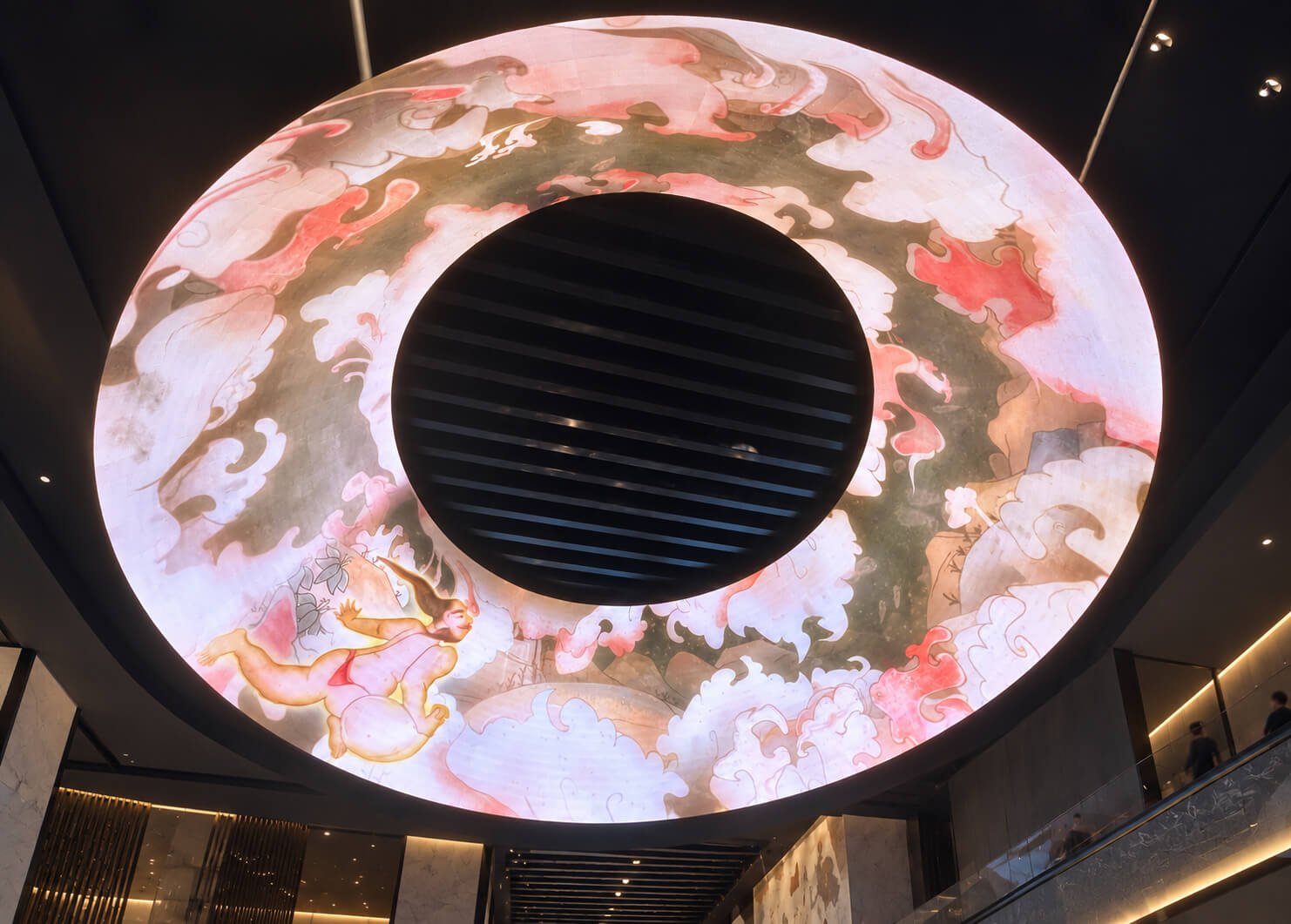
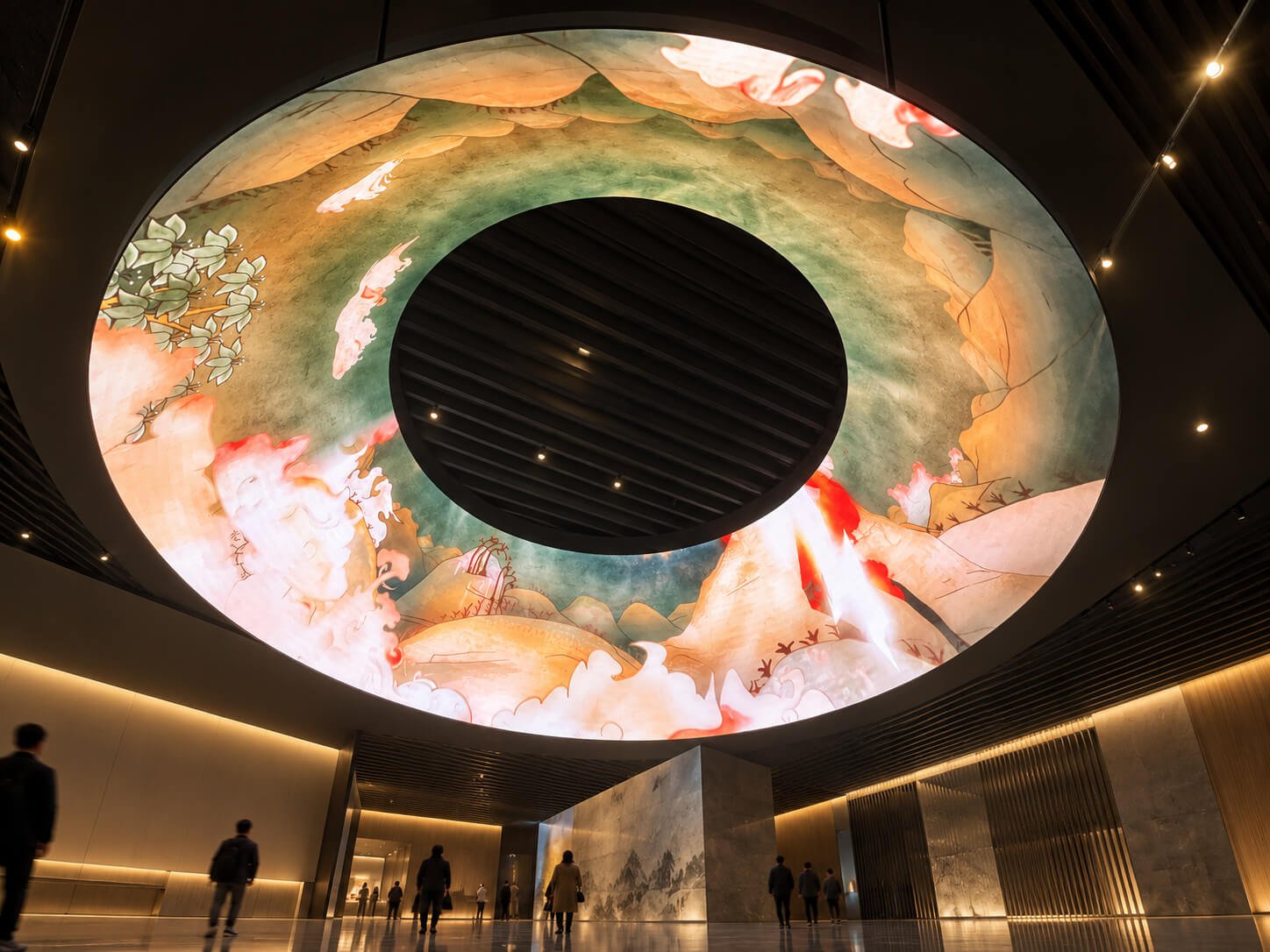
Suspended Halos and Ceiling Bands
Horizontal or tilted rings can define a zone above an exhibition stand or atrium. The visible face must match the audience below: content on an outer band may be hard to see from directly underneath. Review suspension points, total installed weight, access for service and the venue rigging arrangement alongside the screen concept.
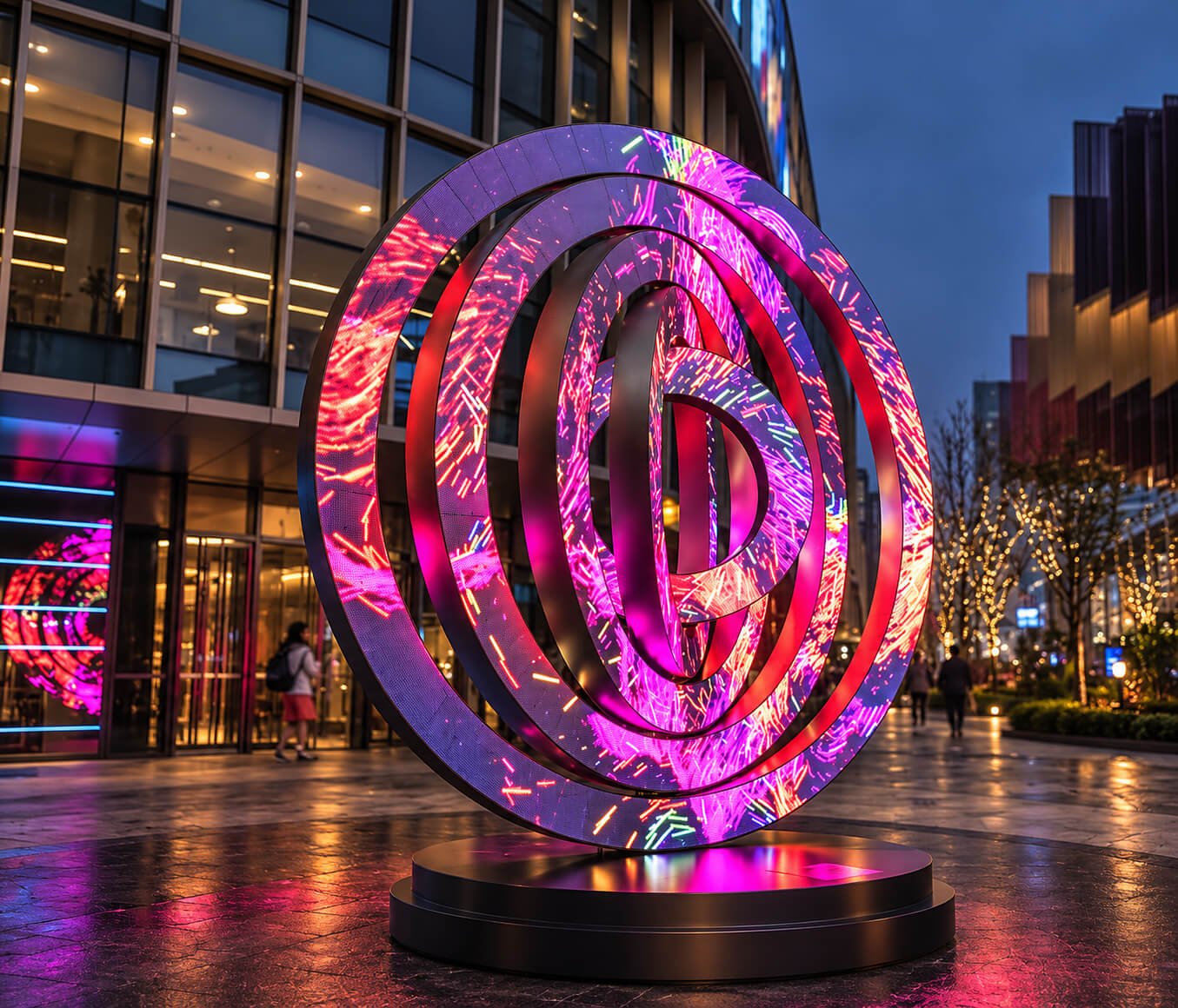
Nested and Multi-Ring Sculptures
Several rings can share a base or occupy different planes to create depth. Their overlapping surfaces and gaps affect visibility, service access and content continuity. A nested composition can be entirely static. If physical rotation or other movement is required, it needs a separately specified mechanical system and should never be inferred from a reference photograph or animation.
Twisted Ribbons and Möbius Forms
A twisting ribbon reveals different surfaces as visitors move through the space. Its appeal comes from the relationship between geometry and flowing content. Local bends and twists require detailed segmentation, and some areas may need custom modules or decorative transitions. Confirm which parts are active LEDs before choosing the final visual design.
Circular Portals and Walk-Through Features
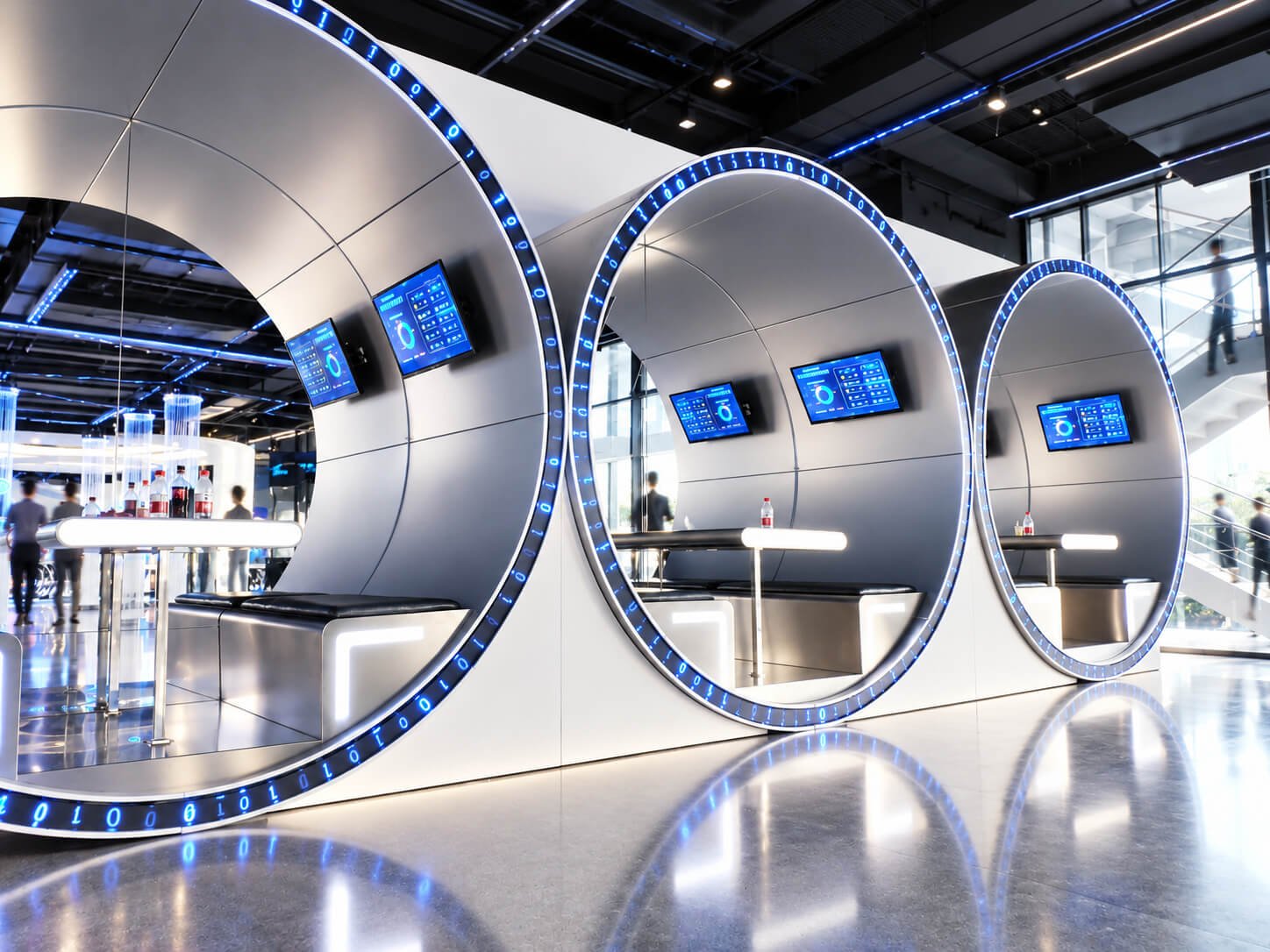
Portal installations can frame a booth entrance or create a sequence of circular openings. Integrated screens, illuminated edges and decorative cladding may coexist within one structure. If people pass through the opening, define the clear passage size, floor transition, cable protection and access requirements with the venue. An image alone does not confirm that a portal is suitable for public circulation.
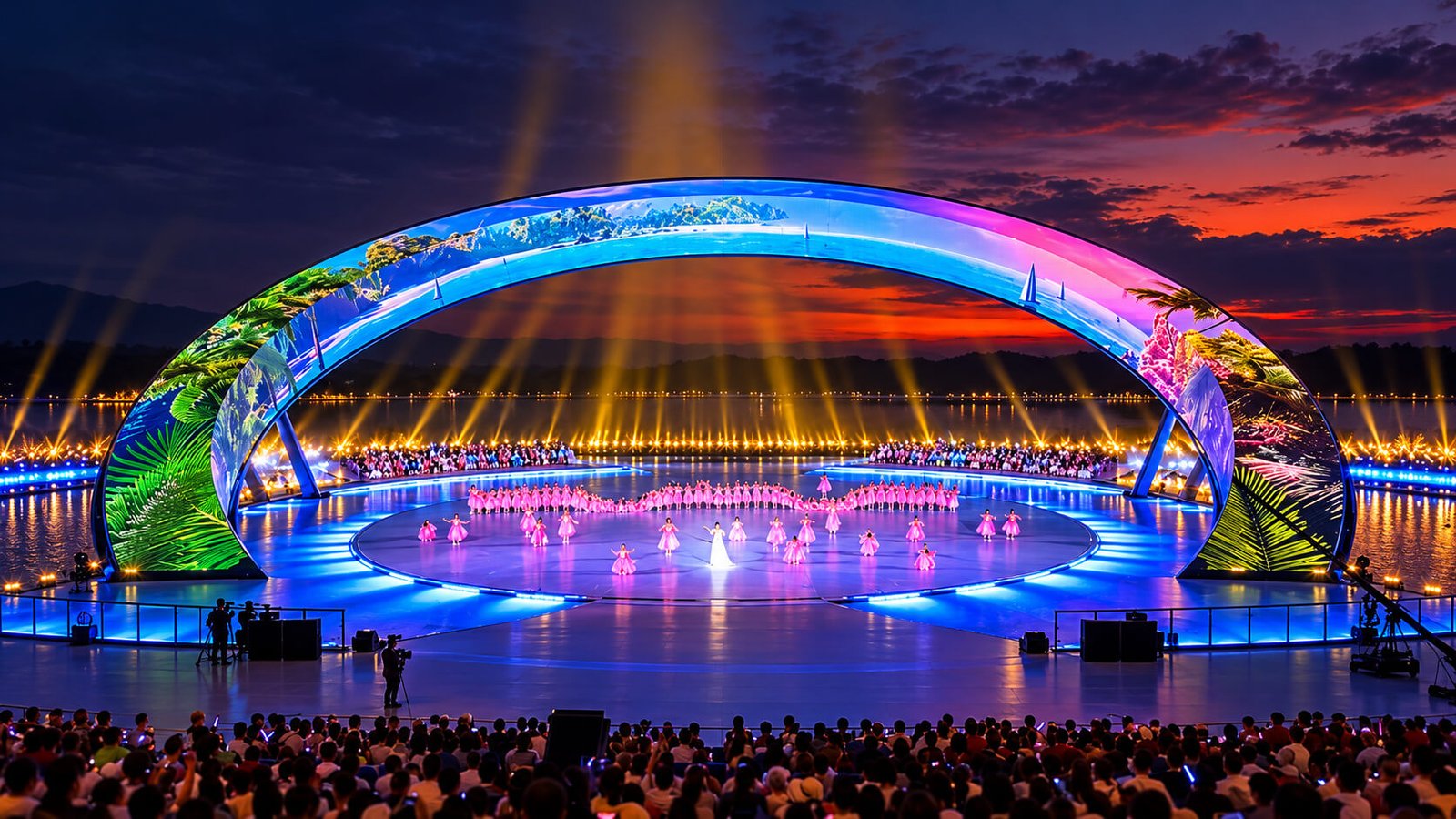
Stage Arches and Partial Loops
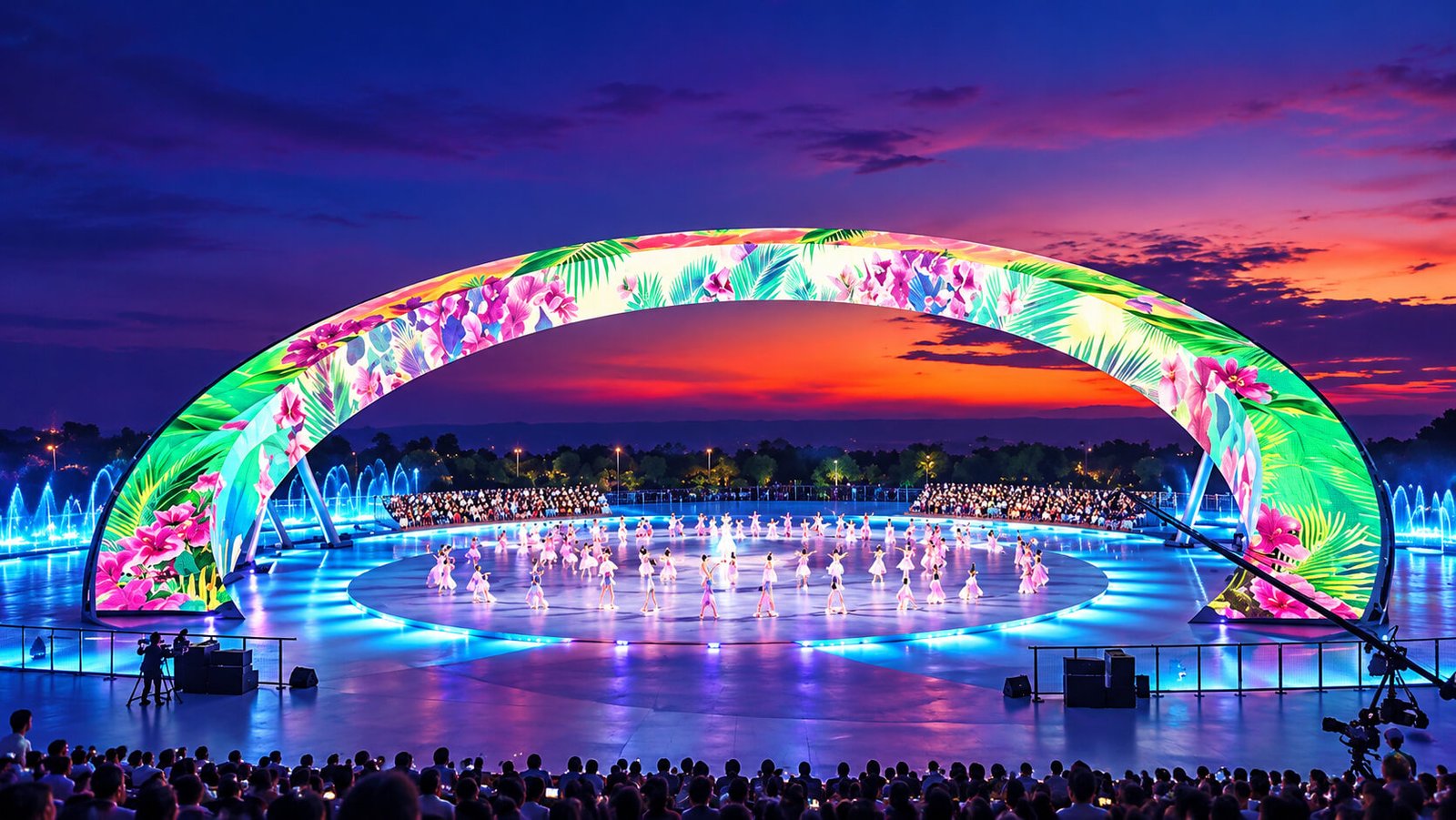
An arch can extend digital scenery around a performance area while leaving the center open. A partial loop may offer easier installation than a complete ring, but its supports, joints and screen curvature still need project-specific design. Coordinate screen brightness and content with lighting, camera positions and the stage production workflow.
12 Ring & Möbius LED Design References
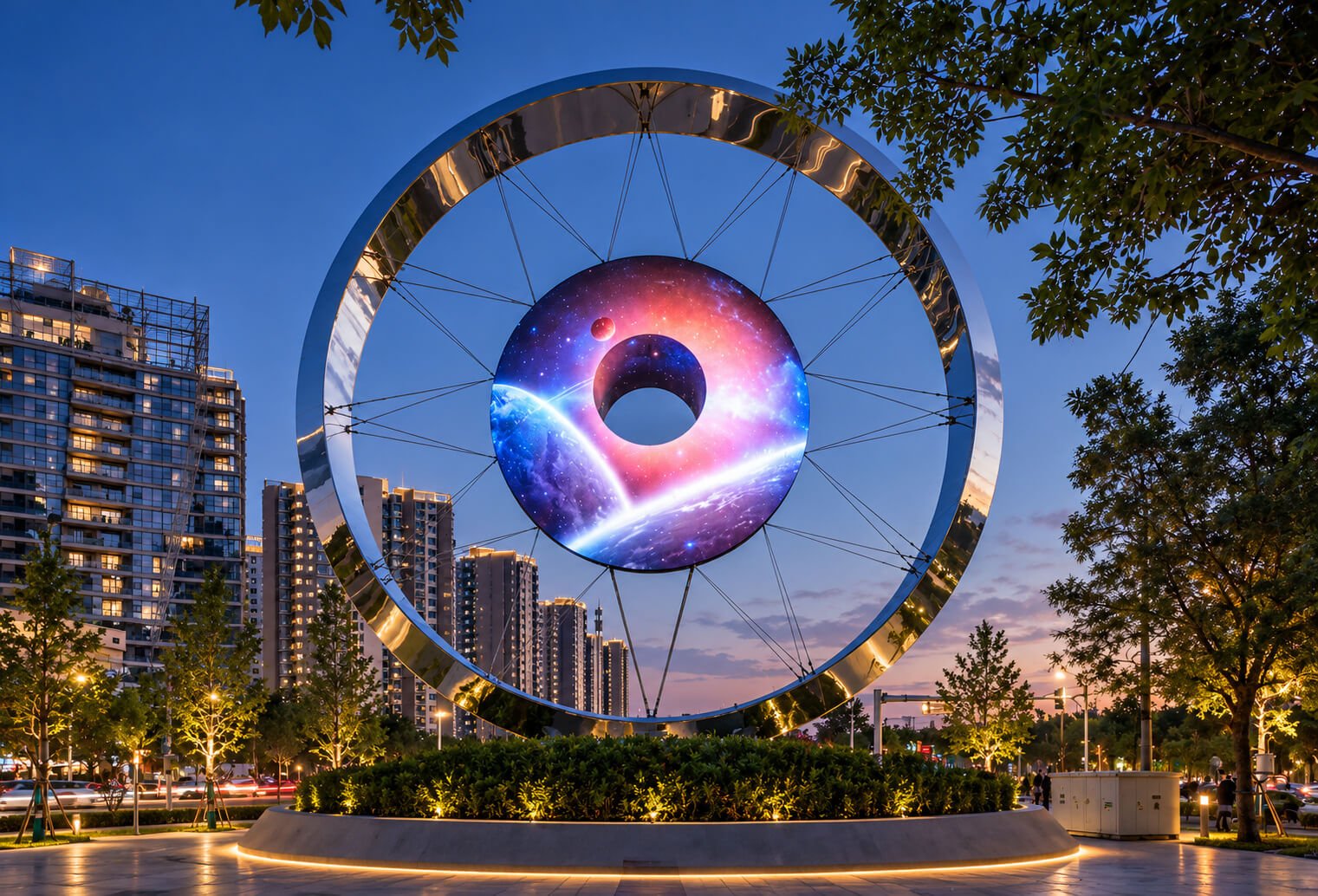
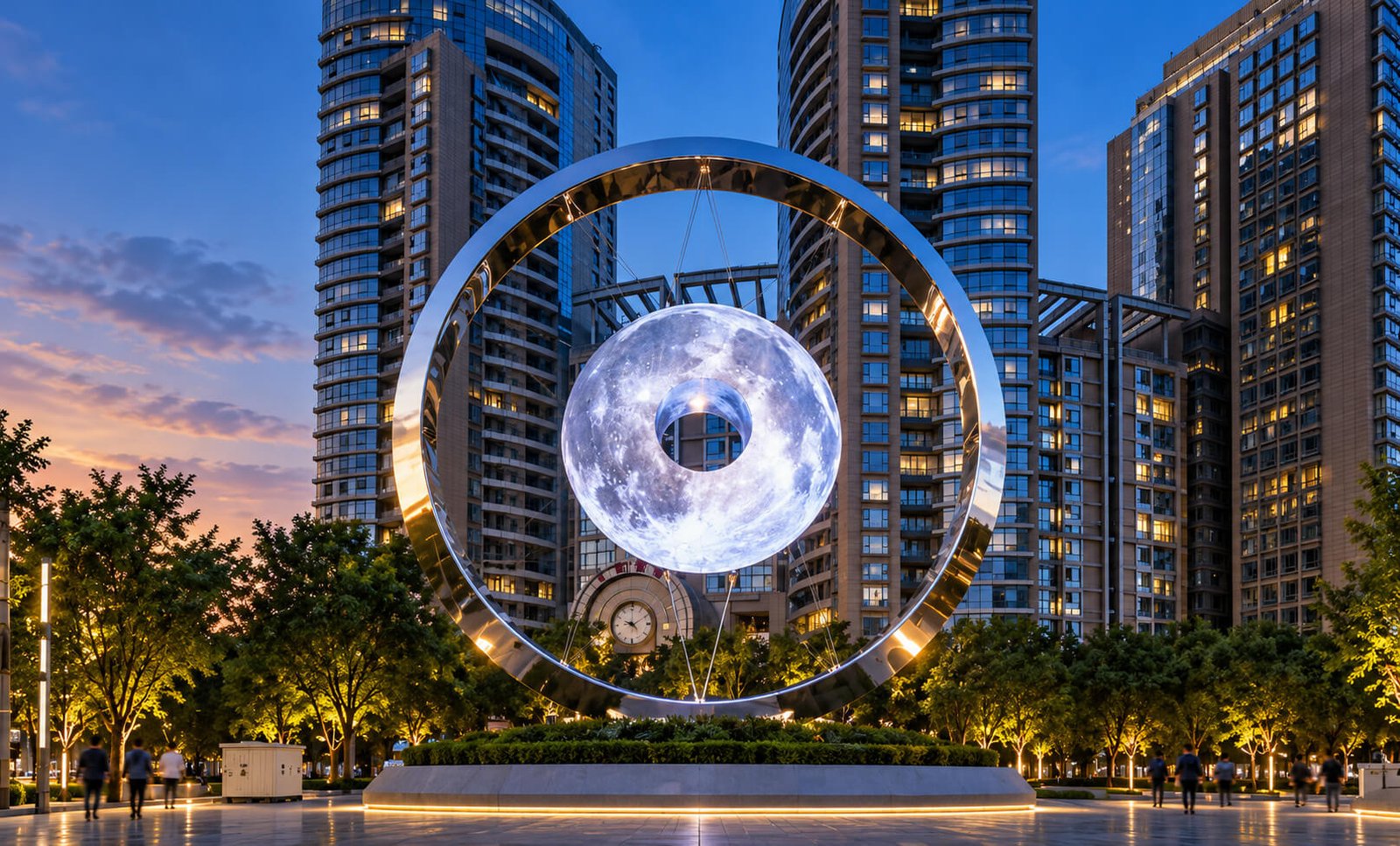
Redrawn visual references illustrate circular portals, stage arches, torus forms, nested rings and twisting ribbons. They are design references, not evidence of verified installations, mechanical movement or a shared technical specification.
A dusk presentation shows how a bright central image can contrast with a large circular supporting frame.
Size, Geometry & Pixel Pitch Selection
Overall diameter is only one dimension. The internal opening, band width, cross-section and orientation determine what can be built and what visitors can see.
Define the Full Envelope
Provide the outer diameter, inner clear opening, overall depth and intended height above the floor. For a ribbon, provide its width, path and twist using a 3D model where possible. Include the base or suspension envelope, not just the visible screen. A ring that fits on a drawing may still be too large for a loading door, lift or assembly area.
Specify Active Surfaces
Mark front, rear, inward-facing and outward-facing LED areas separately. A decorative rear panel is different from a second active display face. Curved edge coverage can add complexity without improving the main viewing experience. Decide where the audience stands and which surfaces are worth illuminating before requesting full-surface coverage.
Select Pitch Around the Actual Artwork
Pixel pitch should suit the closest viewing distance, display size and desired content detail. Narrow bands have fewer pixels across their width than broad screen faces at the same pitch. Small text, detailed logos and full video frames may not translate well to a thin ribbon. Review a pixel-map-based content preview before committing to a resolution.
Review Local Curvature and Segmentation
A module arrangement that suits a large circular band may not suit a tight twist or rounded torus. Minimum bending radius, module dimensions, transitions and service direction need to be assessed together. Do not assume a flexible module can follow any three-dimensional surface. The final assembly may combine curved modules, custom sections and non-display transitions.
Structure, Module Layout & System Engineering
An effective sculptural LED installation needs coordinated decisions about the visible form and the equipment behind it.
Structural Frame and Supports
The structure must support its own weight and the installed display equipment while allowing planned maintenance. Freestanding, suspended and building-integrated versions require different support arrangements. Confirm connection points and load information for the venue’s structural review. Final supports should be designed for the installation conditions rather than copied from a reference image.
Module Seams and Surface Transitions
Segment the screen so modules can be installed, aligned and replaced. Seams should be considered in both mechanical drawings and content layouts, especially around twist transitions. A visually continuous loop still contains physical joints and electrical connections. Review expected alignment and finish at close viewing distances before accepting the construction approach.
Power Distribution and Thermal Design
Power supplies, distribution equipment and cabling need space, ventilation and service access. An enclosed sculptural shell can restrict airflow, while a suspended installation may make servicing difficult. The electrical design should reflect the selected LED configuration and operating conditions. Supply voltage, distribution layout and site connection responsibilities belong in the agreed project scope.
Controller, Playback and Synchronization
Choose the control system around the total pixel map, number of surfaces and intended content workflow. A single loop may be handled differently from multiple independently addressed rings. If the installation must synchronize with other screens, lighting or an event system, define that requirement early. Confirm interfaces, supported content formats and operator responsibilities before delivery.
Indoor and Outdoor Configurations
Outdoor suitability requires more than an outdoor-looking reference image. Weather exposure, sunlight, drainage, corrosion conditions, temperature and structural loads must be assessed for the actual site. Indoor versions can prioritize close-view finish and controlled lighting. The environmental configuration and any required rating should be confirmed in the quotation and technical documentation.
Static or Mechanically Moving?
Digital animation can create a strong sense of rotation on a stationary ring. Physical movement is a separate scope involving drives, bearings, controls, cable management and protection around moving parts. Agree motion range, speed, operating sequence and maintenance requirements if movement is essential. Static construction should be the stated assumption unless a moving system has been specifically reviewed.
Content Mapping for Rings, Torus Forms & Twisted Ribbons
Prepare content for the final geometry. A conventional rectangular video should not be expected to fit every circular or twisting surface without adaptation.
Design for a Loop, Not Just a Rectangle
A circular band often works well with continuous motion, repeated motifs and flowing textures. Coordinate the start and end of the playback canvas so an obvious jump does not interrupt the loop. Logos and key messages should occupy deliberate viewing zones. The design should remain understandable when a visitor sees only part of the circumference.
Keep Text in Stable Viewing Zones
Long sentences across a narrow or strongly curved band can be difficult to read. Place short messages on the broadest and most directly visible areas, and allow enough display time for the audience. On a twisted ribbon, text can move into steep angles or disappear behind the structure. Use those transitions for abstract imagery rather than critical instructions.
Map Twists and Multiple Faces
The physical path and LED addressing determine how content travels around a twisted form. Prepare the playback canvas from the approved pixel map and verify orientation on each surface. A 3D preview is useful for identifying inverted graphics, awkward seams or hidden message zones. Final checks should use the assembled system and intended viewing positions.
Balance Brightness with the Space
Bright highlights and saturated colors can emphasize a sculpture, but excessive brightness may overwhelm a lobby or create distracting reflections. Review day and evening conditions, nearby screens and surrounding finishes. If photography or filming matters, include camera testing in the project acceptance plan rather than assuming every operating mode will look identical on camera.
Typical Ring & Möbius LED Applications
The strongest applications use the open center or looping path as part of the spatial design.
Exhibitions, Events & Showrooms
Suspended rings can identify a stand; circular portals can frame an entrance; twisted ribbons can provide a memorable focal point. Plan sightlines from aisles and nearby booths. For temporary events, packaging, assembly time, rigging access and repeated handling are part of the selection process, not details to resolve after the screen design.
Corporate Lobbies & Experience Centers
A ring or ribbon can support brand storytelling in a reception area or visitor route. Content may change between welcome messages, campaign graphics and abstract visual themes. Coordinate brightness, sound expectations, access for cleaning and maintenance, and the appearance of the structure when switched off.
Retail Atriums & Brand Environments
Circular structures can draw attention to a central product zone while retaining open sightlines through the middle. Confirm that the main graphic faces the actual approach direction. Suspended formats require coordination with ceiling services and site access, while floor-standing sculptures need suitable separation from circulation routes.
Museums, Cultural Spaces & Creative Installations
Looping forms can support themed storytelling, spatial graphics and digital art. Abstract content often tolerates unusual surfaces better than conventional presentations. Where information must be read precisely, pair the sculptural display with a suitable information screen rather than forcing detailed educational text across a narrow or twisting ribbon.
Installation, Transport & Maintenance Planning
Plan the complete journey from fabrication to daily operation before finalizing the visual shell.
Segment for the Delivery Route
Large rings may need sectional frames and modules that can pass through the building access route. Confirm packing dimensions, lifting arrangements, storage areas and the order of assembly. Segment joints should be accessible for alignment and electrical connection. Installation planning should include the space needed to assemble the ring, not just its final position.
Define a Practical Service Method
Identify how a technician reaches modules, power supplies and control equipment after installation. A rear service panel is ineffective if it faces a wall or inaccessible ceiling. Suspended displays may require lifting access or an agreed lowering arrangement. Keep replacement procedures and spare parts compatible with the final module segmentation.
Agree Acceptance Checks
Review geometry, visible joints, pixel mapping, content orientation, brightness behavior and control functions against agreed criteria. Include a representative content sequence rather than a single test image. Where relevant, inspect the display from multiple visitor positions and document any intentionally decorative or inactive surfaces.
Prepare the Handover
The project scope should identify drawings, connection information, controller settings, mapping files, operating instructions and spare parts supplied at handover. Confirm who creates content, who uploads it and who provides site maintenance. These responsibilities matter especially when the installation combines LED equipment with a separate rigging or building contractor.
What Drives the Cost of a Custom Ring LED Display?
Two displays with the same outer diameter can have very different costs because their active surfaces and construction are different.
Geometry and LED Coverage
A simple band using compatible modules is different from a broad torus or a tightly twisted ribbon. Active area, pixel pitch, number of display faces and transition details affect the LED configuration. A decorative rear or structural edge can simplify the build when it does not need to carry content.
Custom Development and Quantity
Non-standard module shapes, carriers, fixtures and structural components can introduce development work. Confirm which elements reuse an established design and which require new engineering. For multiple units, distinguish initial development scope from repeat-unit production. Avoid assuming a one-off sculptural concept has the same economics as a standard screen.
Site and Installation Scope
Rigging, supports, transport segmentation, site assembly and environmental requirements can change the project budget. State whether the quote is for equipment only or includes additional services. Shipping, site preparation, lifting equipment and local structural review should have clear responsibility boundaries.
Content and Operating Requirements
Custom animation, multi-screen synchronization, remote content management and physical motion should be identified separately. A basic static ring with local playback is a different scope from a moving installation coordinated with a show-control system. An accurate brief makes alternatives easier to compare without hiding important exclusions.
Ring LED vs Other Custom Display Formats
Choose the form around the experience you want visitors to have.
Ring vs Cylindrical LED Display
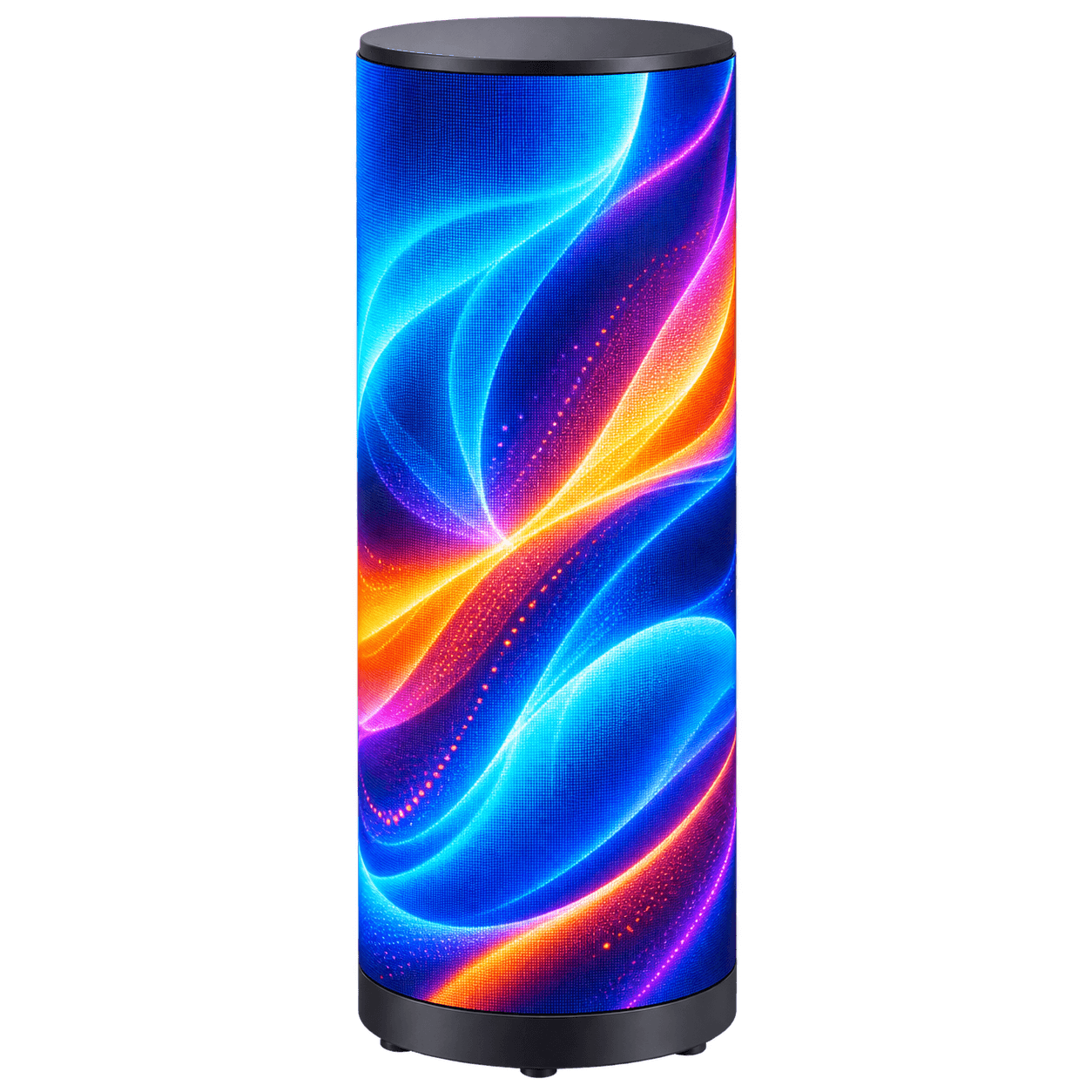
A ring preserves an open center and may offer a relatively narrow active band. A cylinder provides a taller continuous wraparound surface suited to larger graphics around a column-like object. Compare the desired content height and available floor space. Explore Cylindrical LED Displays →
Ring vs Sphere LED Display
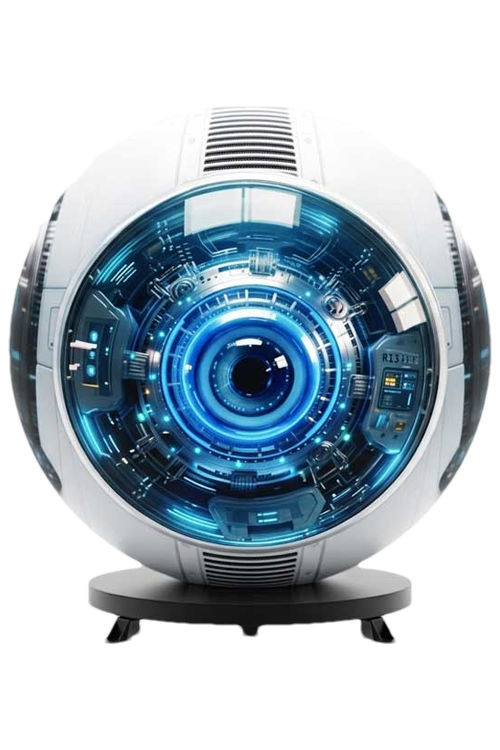
A sphere offers a rounded object without a central opening and is suited to globe imagery or full-object visual effects. A ring frames space and creates a different silhouette. Neither format automatically makes small text readable from all directions. Explore Sphere LED Displays →
Möbius Ribbon vs Conventional Curved Screen
A curved rectangular screen usually provides a more regular canvas for presentations and video. A twisted ribbon prioritizes sculptural identity and changing viewing angles. If the main task is detailed communication, a simpler screen geometry may provide a clearer result with less content adaptation.
Custom Ring vs Decorative Lighting
If the design only needs fixed color accents or basic light sequences, decorative lighting may be sufficient. Choose LED video surfaces when programmable imagery, campaign changes or mapped animation adds value. Define the content purpose before committing to the complexity of a video-capable sculptural structure.
What to Send for a Ring or Möbius LED Quote
A reference image helps communicate the visual direction. Dimensions and site information make the concept reviewable.
Geometry and Installation Brief
Send sketches or a 3D model, outer diameter, clear opening, band or ribbon width, depth, installation orientation and required active surfaces. Include site photos, mounting or suspension details, available access and indoor/outdoor conditions. Mark any required walk-through opening or physical movement explicitly.
Content and Commercial Brief
Provide viewing distances, example content, required interfaces, quantity, delivery destination and target schedule. Identify whether the project needs a single display or a coordinated multi-screen system. DisplayMan can use this information to review module layout, structure and control scope before preparing a project-specific proposal.
It is an LED display built around a circular or annular structure. Active LEDs may cover the front face, inner band, outer band or selected surfaces, depending on the project.
What is a Möbius LED Display?
It is a custom LED structure inspired by a twisting loop or Möbius strip. The exact geometry and active display surfaces must be defined in drawings; the product name alone does not establish a mathematical Möbius surface.
Can you build a custom diameter and shape?
Send target dimensions, reference images and preferably a 3D model. Feasibility depends on local curvature, module layout, support structure, available internal space and maintenance access.
Can the ring show content on both sides?
Multiple active surfaces can be reviewed. Front, rear, inner and outer LED areas should be specified individually because each adds display area, electronics and mapping requirements.
What pixel pitch should we choose?
Choose pitch with the viewing distance, active band width, overall size and content detail. The final module layout and pixel map determine the practical resolution.
Are the nested rings mechanically rotating?
Not necessarily. A nested-ring sculpture can be static, with animation creating a sense of movement. Physical rotation requires a separately reviewed mechanical and control system.
Can it be suspended from a ceiling?
A suspended version can be reviewed with suitable supports, load information, venue rigging coordination and a practical service-access plan. Ceiling suitability must be assessed for the actual installation.
Can it be used outdoors?
Outdoor use requires a site-specific environmental and structural configuration. An outdoor reference image is not a technical rating; weather protection, drainage, thermal conditions and loads need confirmation.
Can standard videos play on a Möbius screen?
Playback depends on the controller and pixel map, but conventional rectangular content often needs adaptation. Twists, gaps and narrow bands can hide or distort important details.
How are large rings transported?
Large structures may be divided into transportable sections. Packing dimensions, access routes, assembly joints and alignment procedures should be planned before production.
Do the 12 images show confirmed DisplayMan installations?
The images are redrawn visual references used to explain design directions. They do not establish verified installation history, mechanical movement or shared product specifications.
What information is needed for a quotation?
Provide geometry, dimensions, active surfaces, installation environment, support method, viewing distance, content requirements, quantity, destination and schedule. Identify physical motion separately if required.
Build a Ring or Möbius Display Around Your Space
Send your reference design, target dimensions, active LED surfaces and installation setting. DisplayMan can review the geometry, module layout, structure and content mapping for your project.
A successful circular display starts with the complete geometry. The opening, band width, twist, support method and audience viewing positions should work together before the final LED configuration is selected.
Provide a ring or ribbon drawing or 3D model, outer diameter, clear opening, band width, active LED surfaces, viewing distance, installation environment, support method, content concept, quantity and project schedule.
Send Your Display Requirement
Please share your application, display size, quantity and project background. We will review the most practical display direction.