Buying Guides & Project Review · Transparent Micro LED
What Does a Complete Transparent Micro LED Display Cost?
DisplayMan’s October 2026 public retail references start at USD 4,400. We supply complete standard display systems, with private pricing for approved distributors and separate quotations for optional touch or special requirements.
The key to understanding the price is the platform: three base-panel sizes support nine finished display models. The major initial investment sits in those base platforms, while production volume creates the opportunity to reduce unit costs.
For ordinary desktop use, provide a computer, connect HDMI and power, and switch on. The display electronics and power equipment are included.
1. Official Transparent Micro LED Retail Prices
DisplayMan maintains standardized retail and distributor price schedules. The following public prices follow our October 2026 official pricing policy and refer to the standard single-sided, non-touch configuration. Touch is an additional option.
| Display size | Official retail price / unit | Platform relationship |
|---|---|---|
| 9.4-inch Transparent Micro LED | USD 4,400 | Compact base platform |
| 16.1-inch Transparent Micro LED | USD 5,150 | Narrow-format base panel |
| 20-inch Transparent Micro LED | USD 10,800 | Two 16.1-inch panels |
| 30-inch Transparent Micro LED | USD 20,000 | Four 16.1-inch panels |
| 42-inch Transparent Micro LED | USD 50,500 | Portrait base platform |
| 54-inch Transparent Micro LED | USD 34,500 | Eight 16.1-inch panels |
| 60-inch Transparent Micro LED | Contact us for pricing | Sixteen 16.1-inch panels |
| 64-inch Transparent Micro LED | USD 69,600 | Two 42-inch panels |
| 83-inch Transparent Micro LED | Contact us for pricing | Four 42-inch panels |
Price basis: USD per unit, EXW. Standard protective packaging and a wooden crate are included. Freight, import duties and taxes are excluded.
The 60-inch and 83-inch configurations are quoted individually. A missing public price is not a signal to estimate their selling price by multiplying another model’s retail price.
These are dated price references rather than a permanent price guarantee. Request a current written quotation to confirm the selected configuration, applicable customer tier, delivery requirements and validity.
2. What Is Included in the Price?
Our standard quotation is for a complete display system, not a bare panel that requires customers to source the essential electronics separately.
| Included item | What the customer receives |
|---|---|
| Complete display | The selected transparent Micro LED assembly |
| Base / support | Standard base or ordinary base customization agreed with the order |
| Display electronics | Control board and video control box |
| Power equipment | Power supply and power cord |
| Signal connection | Signal cable for the supplied configuration |
| Protective packaging | Standard protective packaging and wooden crate |
For ordinary base customization, the price is the same as the standard base, and DisplayMan does not charge a separate tooling fee. Special functions or a base with unusual functional or structural requirements may involve an additional charge.
For normal desktop use, place the display on its base, connect a computer through HDMI, connect power and switch on. Professional installation or commissioning is not normally required for this standard setup.
Computer required: the included video control box does not mean the display is a standalone USB media player. The customer supplies a computer to provide the HDMI picture.
3. Which Options Can Change the Quotation?
Standard pricing makes the starting point clear. Additional requirements are reviewed against that starting configuration.
| Requirement | How it affects the quotation |
|---|---|
| Display model | Each finished model has its own official price or project quotation |
| Capacitive touch | Optional and charged separately; the additional price varies by size |
| Ordinary base customization | Same price as the standard base, with no separate base-tooling charge |
| Special base or functions | Additional charges may apply after reviewing the required scope |
| Double-sided display | Theoretically feasible; requires separate technical and commercial evaluation |
| New base-panel size | A new development program rather than a routine option |
| Customer eligibility and quantity | Retail or approved distributor schedule; substantial production programs require review |
We do not publish every touch-option price. Please specify the size and interaction requirements when requesting a touch-equipped quotation.
Single-Sided Viewing Is the Standard
The standard product is designed for viewing from one primary side. An image may be visible from the rear, but it is not equally clear and should not be treated as a second equivalent viewing face.
A double-sided design is theoretically possible, but it is not simply the standard single-sided product viewed from behind. It involves a different display arrangement and higher cost. Confirm feasibility and a separate quotation rather than assuming that the public retail price covers it.
A Simple Finished Structure Does Not Mean Simple Manufacturing
The standard assembly can be described at a high level as protective tempered glass, an emissive layer and protective tempered glass. In a touch configuration, the front assembly incorporates a capacitive touchscreen. This simple description of the finished layers does not capture the precision involved in manufacturing the emitting panel.
4. Why Does Micro LED Cost More Than Conventional Transparent LED?
Start with the emitters and the backplane. These are different manufacturing platforms. Conventional transparent LED signage uses a different emitter and circuit structure from the active-matrix glass platform in our transparent Micro LED range.
The supplied 16.1-inch specification lists an active-matrix LTPS-TFT glass backplane and RGB Micro LED flip chips measuring just 20 × 40 μm—equivalent to 0.02 × 0.04 mm per chip.
Nearly 400,000 Microscopic Emitters in One 16.1-Inch Panel
The 16.1-inch panel has 240 × 540 pixels. With three red, green and blue emitters per pixel:
240 × 540 × 3 = 388,800 individual RGB LED chips.
Nearly 400,000 microscopic emitting chips are integrated into the display’s emitting layer. Individual chips are too small to distinguish easily with the unaided eye under ordinary viewing conditions.
This precision helps explain why the product cannot be costed as though it were an ordinary transparent signage module using much larger visible components.
Compare Like-for-Like Measurements
Our Holographic Transparent LED Display range includes P3.91 configurations. The 3.91 mm value describes pixel pitch, not the physical size of an individual LED chip.
The 16.1-inch Micro LED reference lists a 0.692 mm pixel pitch. Compare pixel pitch with pixel pitch, and chip size with chip size. Do not compare 20 μm directly with 3.91 mm as though both describe the same measurement.
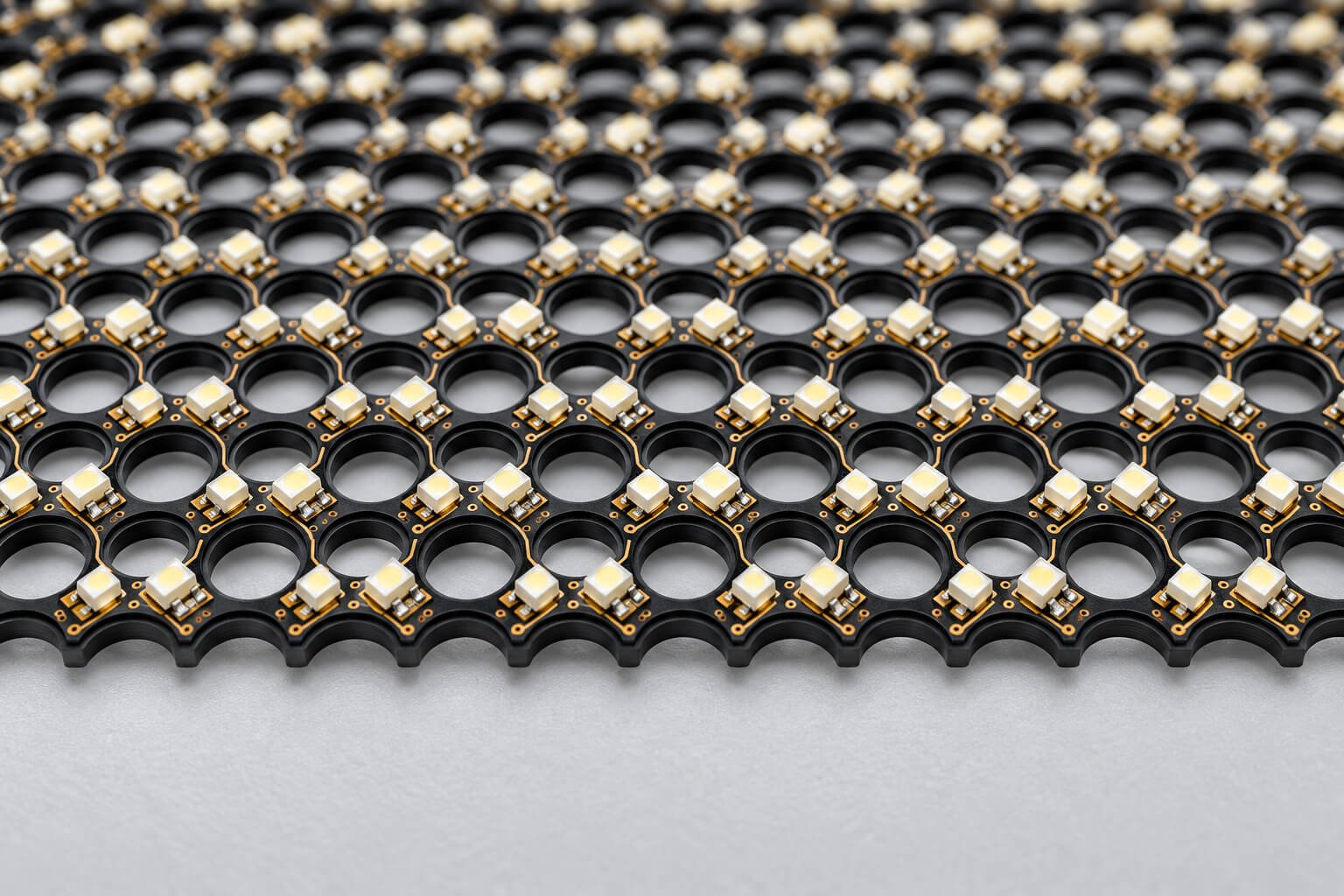
Both product directions have useful applications. Conventional transparent LED can be a practical choice for larger signage and viewing distances, while the Micro LED glass platform addresses a different combination of panel construction, transparency and image detail. Select by the actual content, viewing distance and budget.
5. Three Base Platforms Carry the Major Development Investment
According to our platform development experience, the initial investment for each of the 9.4-inch, 16.1-inch and 42-inch base platforms exceeds USD 4 million. These are the three platforms that require the substantial initial research, development and tooling investment.
The other finished models do not each require another investment of that magnitude. They are developed by combining existing base panels. Their additional development expense is very small relative to the original platform investment.
This distinction is central to understanding the product family. A 54-inch assembly is not a newly developed 54-inch base panel; it uses an existing platform in a larger configuration.
The 9.4-inch display is its own compact base platform. The other two base platforms support the following families.
The 16.1-Inch Base-Panel Family
| Finished size | 16.1-inch panel count | Layout, columns × rows | Native pixels |
|---|---|---|---|
| 16.1 inch | 1 | 1 × 1 | 240 × 540 in this orientation |
| 20 inch | 2 | 2 × 1 | 480 × 540 |
| 30 inch | 4 | 4 × 1 | 960 × 540 |
| 54 inch | 8 | 8 × 1 | 1920 × 540 |
| 60 inch | 16 | 8 × 2 | 1920 × 1080 |
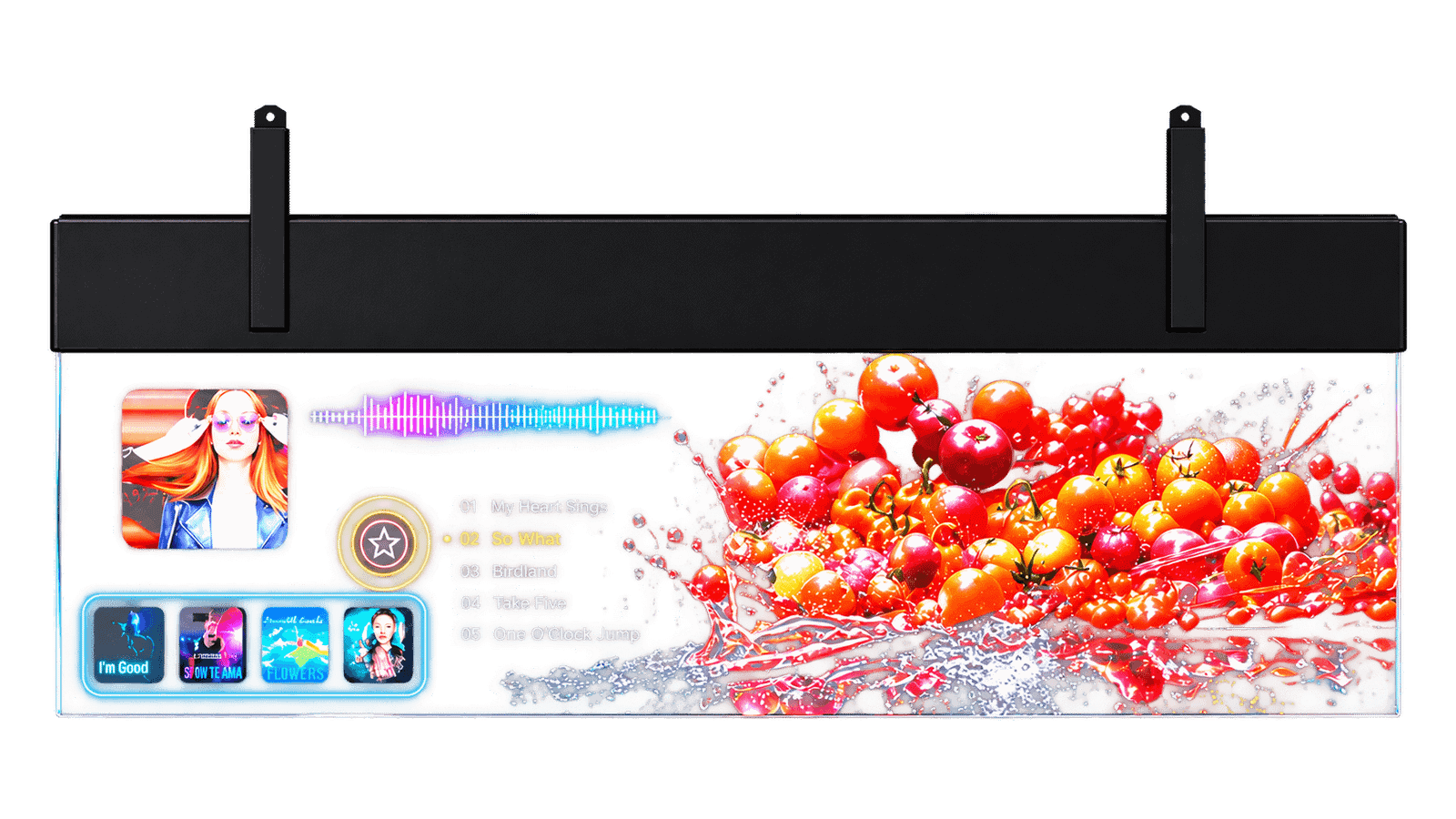
Two base panels form the 20-inch configuration; four form the 30-inch configuration. Eight form the 54-inch ultra-wide configuration, and sixteen form the 60-inch configuration.
The 42-Inch Base-Panel Family
| Finished size | 42-inch panel count | Layout, columns × rows | Native pixels |
|---|---|---|---|
| 42 inch | 1 | 1 × 1 | 960 × 1080 |
| 64 inch | 2 | 2 × 1 | 1920 × 1080 |
| 83 inch | 4 | 2 × 2 | 1920 × 2160 |
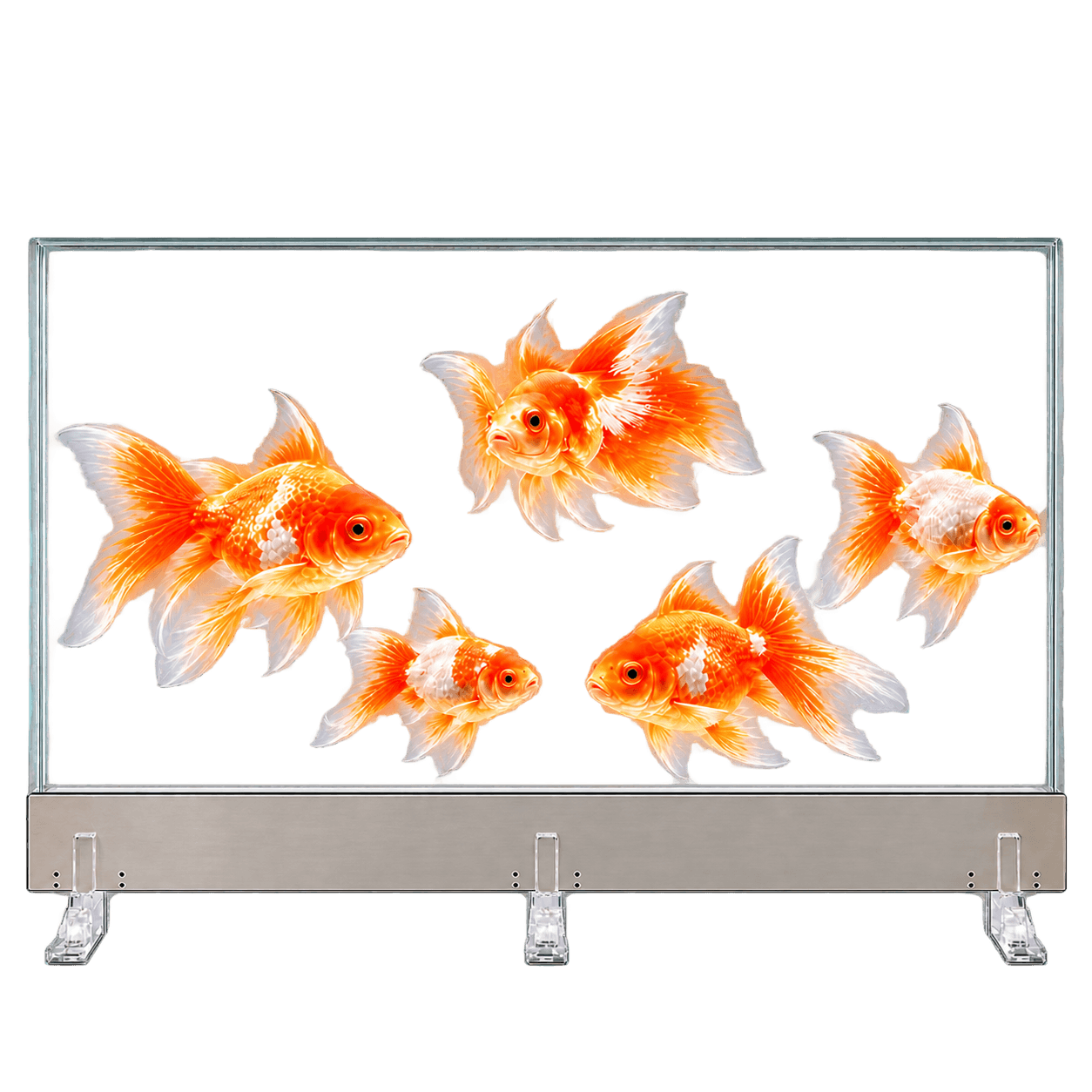
The 64-inch model combines two 42-inch base panels horizontally. The 83-inch model uses four base panels, equivalent to two 64-inch assemblies stacked vertically.
Model names describe finished configurations. Always use the selected product’s mechanical drawing and controller specification for installation and content mapping.
6. Why Production Volume Is the Main Route to Lower Prices
The major base-platform investment is made before substantial production demand develops. As more panels are produced and sold, that fixed investment can be distributed across a larger number of units.
Several finished display sizes can contribute to the same base-panel production volume. One 54-inch display uses eight 16.1-inch panels. One 83-inch display uses four 42-inch panels. Demand across those finished sizes can therefore support scale within their shared platform.
For example, 1,000 units of an 83-inch configuration require 4,000 of the 42-inch base panels. Finished-display quantity and base-panel quantity are related, but they are not interchangeable.
What Scale Could Make a Substantial Difference?
A firm order of 10,000 finished displays could create an opportunity for significant cost and price reductions. At a million-unit scale, we see the potential for pricing to approach transparent OLED.
These figures illustrate the scale of demand that could change production economics. They are not automatic discount thresholds, confirmed future prices or a promise that every model will reach the same price relationship.
An actual production quotation requires the selected model, configuration, firm purchasing quantity, delivery schedule and approval plan. A funded program with confirmed demand provides a different basis from a concept that might eventually sell in large numbers.
The current official pricing schedules remain the starting point for standard purchases. Any substantial-volume arrangement requires formal review and written confirmation.
7. Why a Larger Diagonal Does Not Always Mean a Higher Price
The official retail price of the 54-inch model is lower than the 42-inch model. This is understandable once the platform and format are considered.
The 54-inch product is an ultra-wide assembly made from 16.1-inch base panels. The 42-inch product uses the separate portrait-format 42-inch platform. Their diagonal dimensions alone do not express their manufacturing cost, active area, pixel canvas or configuration.
Compare the base platform, panel count, native resolution, aspect ratio and complete supplied assembly. A long horizontal retail presentation and a tall digital-human presentation need different formats even if their quoted diagonal sizes sound similar.
Review the full Transparent Micro LED Display family before choosing solely by inches.
8. Existing Sizes Versus a New Custom Base Panel
For standard models and ordinary assemblies based on existing panels, we quote the complete product. Customers do not separately pay the original base-platform development investment.
Routine development of a derived model also does not mean another multi-million-dollar tooling invoice. Special functions or unusual mechanical requirements are assessed separately.
A genuinely new base-panel size is a different project. A request for a 7-inch transparent Micro LED panel, for example, cannot be treated as simply cutting down an existing panel or reducing its price in proportion to its area.
We receive interest in small transparent-device concepts, including potential phone projects. A display is only one part of such a product. Before funding a new panel platform, the customer needs to validate the complete product, market demand and commercial plan.
We generally recommend evaluating our existing nine sizes first. They cover a broad range of practical presentation and integration needs without requiring a new base-panel development program.
9. Retail Customers and Approved Distributors
Our official retail schedule applies to customers without approved distributor status. Distributor prices are private and are provided only after DisplayMan approves eligibility.
Market Development Is the Main Qualification
Prospective distributors should provide their company name, website, main business and sales plan. We assess whether the company has a credible opportunity to develop the local market.
Buying a few units does not automatically create distributor eligibility. If the purchase is simply for a small number of units and there is no credible local market-development plan, retail pricing applies.
Approved distributors can access distributor pricing from their first unit. This allows a qualified partner to begin with an evaluation or demonstration purchase; it does not mean every small purchaser is a distributor.
Genuine Large-Volume Purchasing Plans
A customer with a real, substantial purchasing program can also be approved for distributor eligibility after review, even when the application differs from a conventional local reseller model.
Provide the actual project and purchasing plan so we can assess it. Distributor status and any pricing exceptions require management approval. Territorial exclusivity is not automatic.
10. Budget Beyond the Display: Computer, Freight and Integration
A standard desktop installation is straightforward. The complete supplied display includes the essential control and power equipment, and ordinary pictures and videos can be displayed from a computer through HDMI.
Special transparent-screen content production is not a prerequisite for using the display. Customers may optimize graphics for a clearer transparent presentation, but this is a creative choice rather than a mandatory activation cost.
| Budget item | What to plan |
|---|---|
| Display system | Use the current quotation for the model and options |
| Computer | Customer supplies an HDMI-connected computer |
| Freight | Quoted separately according to size, quantity and destination |
| Import duties and taxes | Excluded from the EXW display price |
| Standard desktop setup | Place the base, connect HDMI and power, then switch on; no professional commissioning normally required |
| Optional content design | Ordinary images and videos work; specialized content is optional |
| Cabinet or architectural integration | Project-specific fixtures, supports and site work are separate when required |
| Interactive application | Touch hardware does not itself create the customer’s interactive software |
Do not add professional installation charges to every standard desktop budget by default. Equally, a simple desktop setup should not be used as the installation plan for a suspended assembly, a custom cabinet or an architectural project.
11. Could Lower Prices Shift Demand Away from Transparent OLED?
We see production scale as a major opportunity for transparent Micro LED. In our hands-on comparisons, it provides a visibly clear view through the display and vivid self-emissive imagery. Our standard non-touch configurations are specified at a minimum of 60% transparency; the finished touch assembly needs its own review.
The 16.1-inch reference specifies 600 nits maximum full-white brightness, 1,200 nits peak and a 100,000-hour LED lifetime reference. Full-white and peak brightness are different conditions, and an LED lifetime reference is not a guarantee that every complete system will operate unchanged for that duration.
Its inorganic emitters also avoid the organic-material aging mechanism associated with OLED. That does not make the entire display immune to aging or every form of image degradation.
Our commercial view is that a much smaller price gap would make Micro LED compelling for more transparent-display projects. In demanding applications, even a price around twice that of a comparable transparent OLED could be attractive where the optical performance and operating requirements justify it.
This is a project-value judgment, not a claim that every Micro LED model outperforms every OLED model in every specification. Compare the required resolution, actual sample appearance, brightness conditions and complete project cost.
12. What to Send for a Current Quotation
- Company: company name, website and main business.
- Application: installation location and what you intend to show.
- Model: preferred size or available installation dimensions.
- Quantity: initial order and a realistic annual purchasing plan.
- Options: touch, base requirements and any special functions.
- Delivery: destination and required schedule.
- Distribution: target market and sales plan if applying for distributor status.
For a standard purchase, we confirm the model, configuration and applicable official price. For a substantial production program, we review the purchasing commitment and delivery plan at the appropriate scale.
Start with our Transparent Micro LED Display overview to compare the family, then send the requirements for your selected configuration.
13. Frequently Asked Questions
How much does a transparent Micro LED display cost?
The October 2026 official retail references start at USD 4,400 for the 9.4-inch model. The table above lists published prices; 60-inch and 83-inch configurations require a quotation. Confirm the current price before ordering.
Does the price include the controller and power supply?
Yes. The standard complete system includes the control board, video control box, power supply, power cord and signal cable, together with the display and agreed base.
Can it play directly from a USB drive without a computer?
The standard setup described here uses a customer-supplied computer connected through HDMI. The included video control box should not be assumed to provide standalone USB playback.
Do I need specially made content?
No. Ordinary pictures and videos can be displayed. Content can optionally be adapted to the native canvas and transparent presentation for a better result.
Is touch included in the public retail price?
No. Capacitive touch is optional and charged separately. The price varies with display size; request the touch-equipped quotation.
Is ordinary base customization charged separately?
Ordinary base customization is the same price as the standard base, without a separate tooling charge. Special functions or unusual base requirements may add cost.
Does every size require millions of dollars of development?
No. The substantial initial investment applies to the 9.4-inch, 16.1-inch and 42-inch base platforms. Derived sizes use existing panels with comparatively little additional development.
Will 10,000 units automatically qualify for a fixed discount?
No. That quantity illustrates a possible scale for significant cost reduction. Actual pricing depends on the model, configuration, purchasing commitment and delivery plan.
Can I receive distributor pricing for a few units?
Only after distributor approval. Qualification depends on local market-development potential or a genuine large-volume purchasing program. Approved partners may use distributor pricing from their first unit.
Does the price include shipping and import taxes?
No. The EXW references include standard protective packaging and a wooden crate, but exclude freight, import duties and taxes.
Explore All Nine Transparent Micro LED Sizes
Open the individual model pages for product images, native canvas, configuration and integration details. View the complete product family →
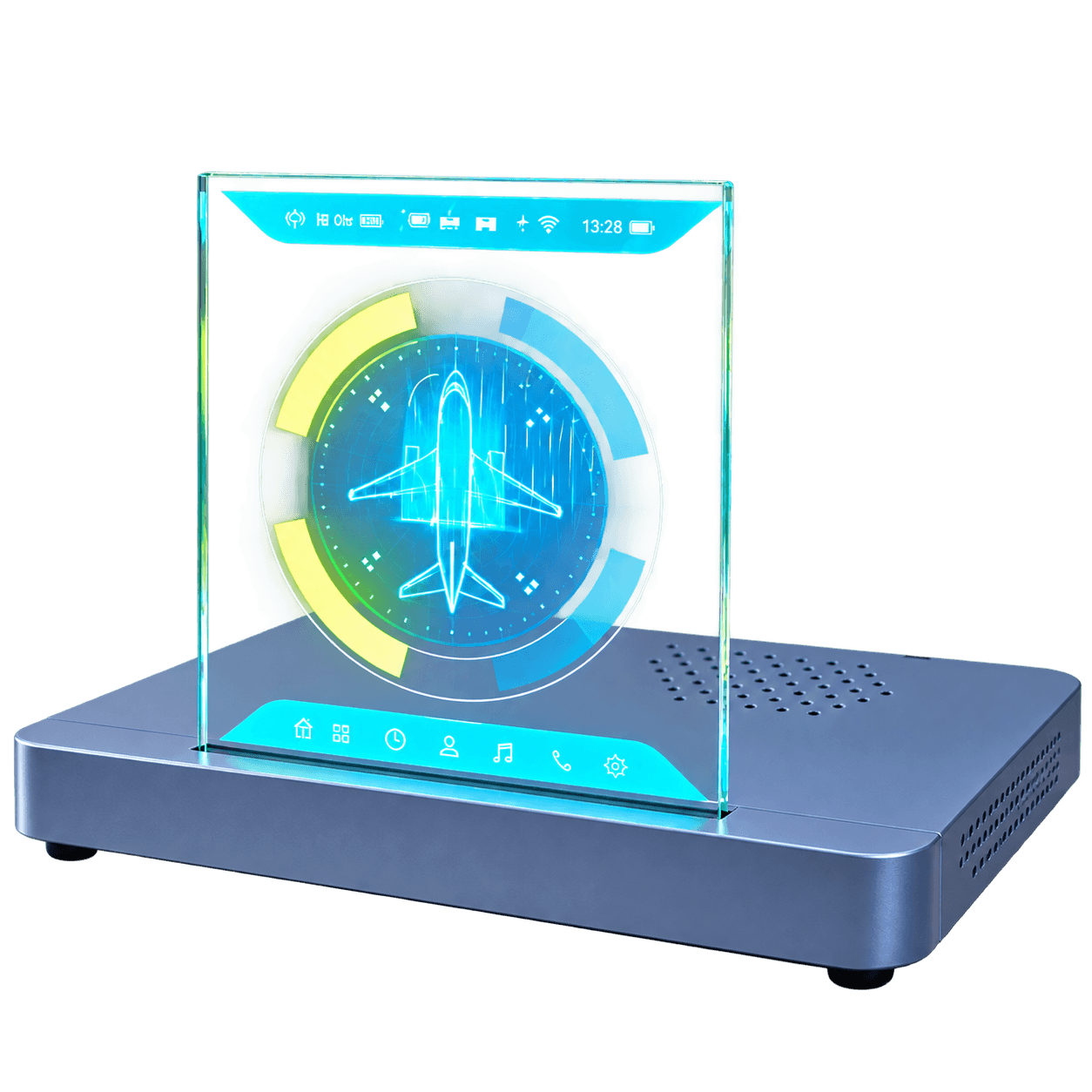
9.4-Inch Transparent Micro LED
Compact base platform.
Retail reference: USD 4,400
View model details →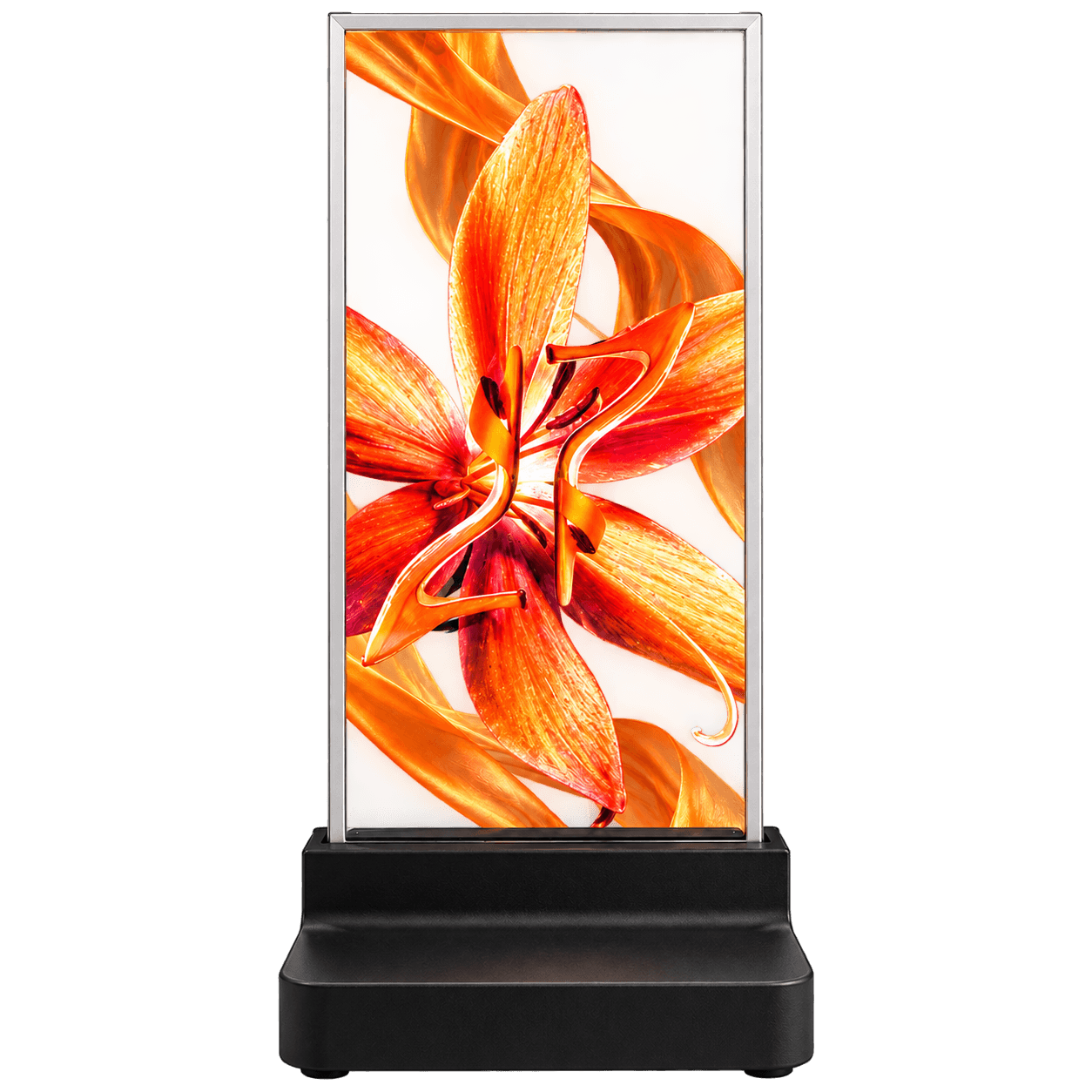
16.1-Inch Transparent Micro LED
Narrow-format base panel.
Retail reference: USD 5,150
View model details →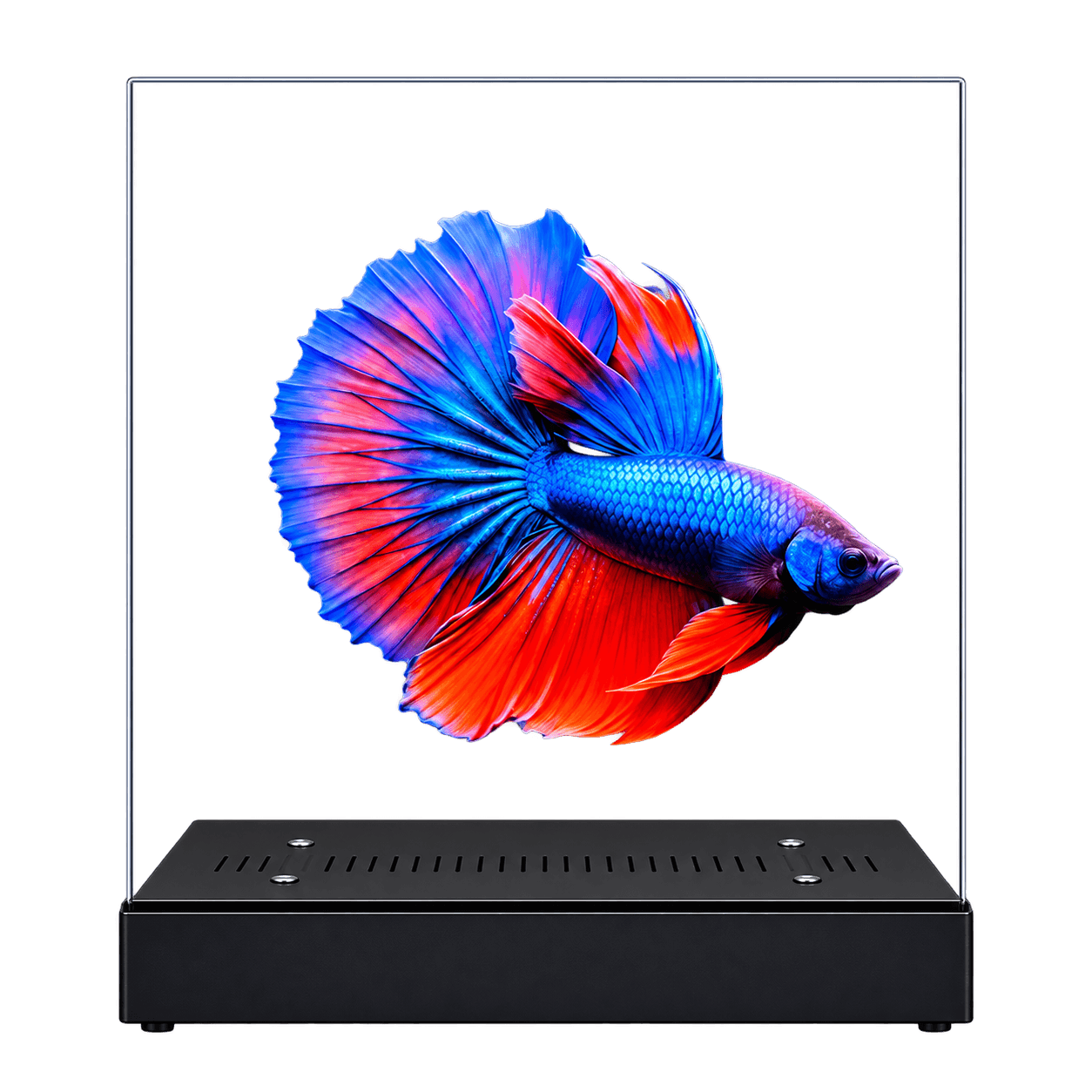
20-Inch Transparent Micro LED
Two 16.1-inch panels.
Retail reference: USD 10,800
View model details →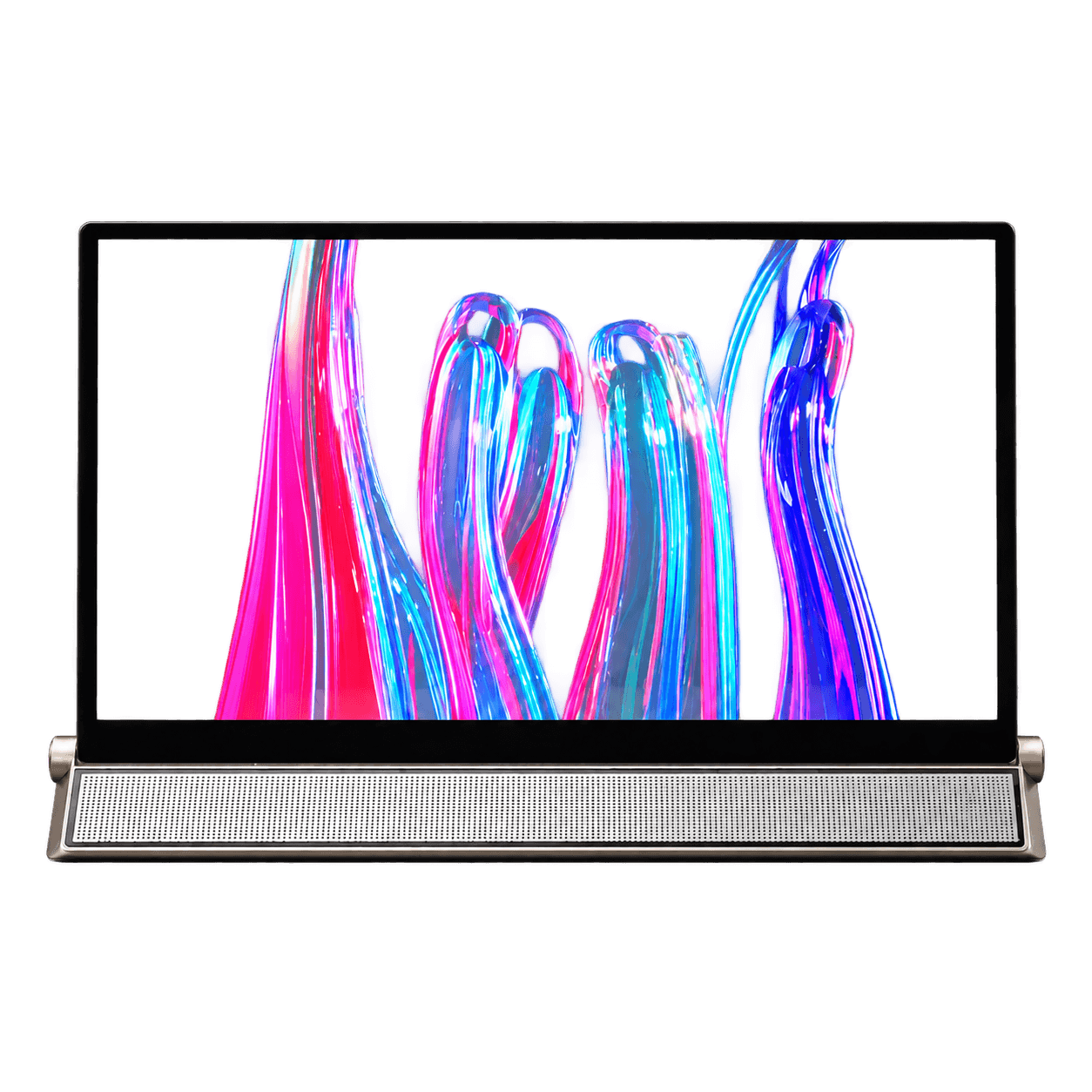
30-Inch Transparent Micro LED
Four 16.1-inch panels.
Retail reference: USD 20,000
View model details →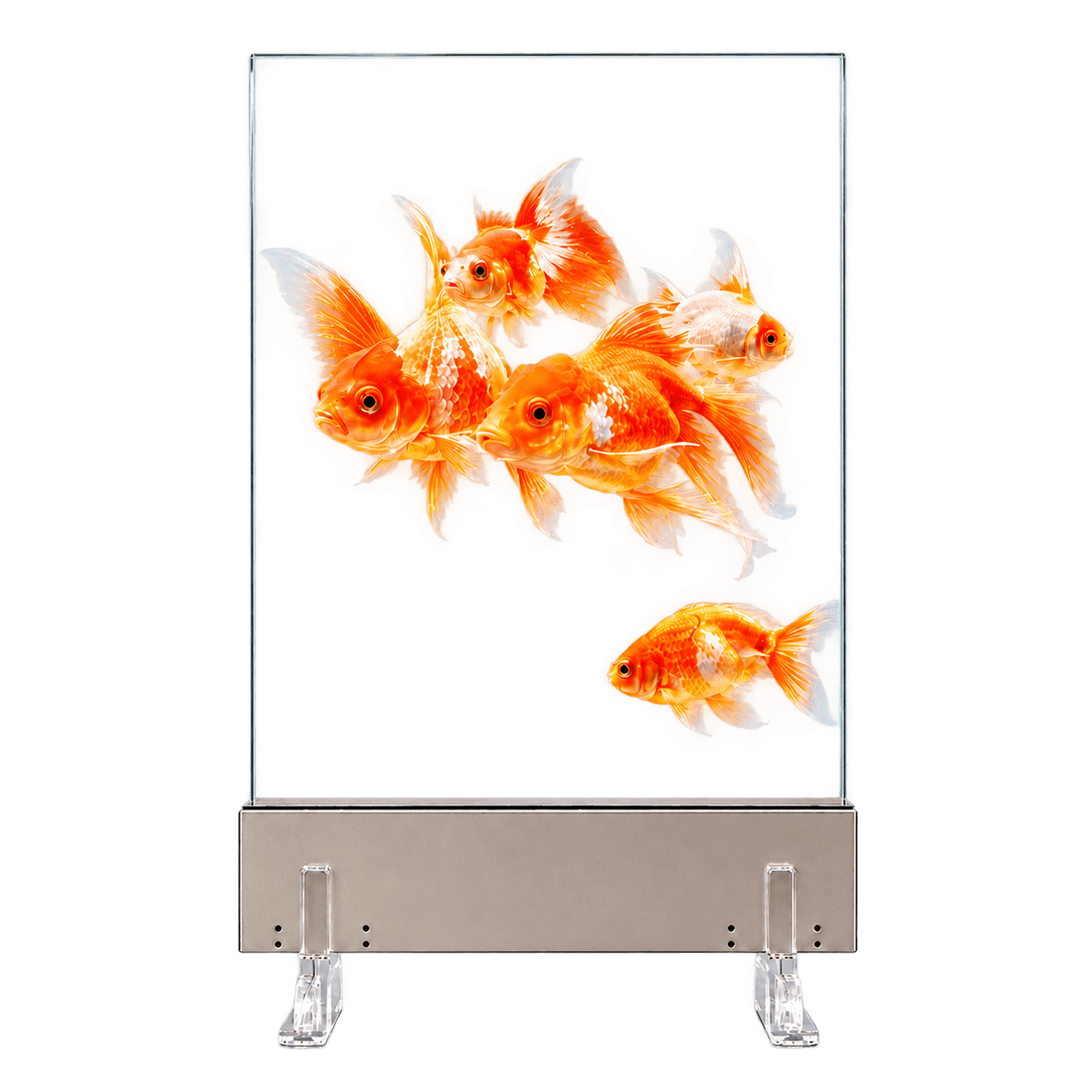
42-Inch Transparent Micro LED
Portrait base platform.
Retail reference: USD 50,500
View model details →54-Inch Transparent Micro LED
Eight 16.1-inch panels.
Retail reference: USD 34,500
View model details →
60-Inch Transparent Micro LED
Sixteen 16.1-inch panels.
Contact us for pricing
View model details →64-Inch Transparent Micro LED
Two 42-inch panels.
Retail reference: USD 69,600
View model details →
83-Inch Transparent Micro LED
Four 42-inch panels.
Contact us for pricing
View model details →Project review
Request Your Transparent Micro LED Quotation
Send your company details, preferred display size, application, initial quantity, purchasing plan, touch requirements and delivery destination. For distributor review, also include your local sales plan.
Prefer to open the enquiry form here?
Related Guides and Pricing Basis
Micro LED vs Transparent OLED · Conventional Holographic Transparent LED · OLED Burn-In · OLED Flicker and Dimming
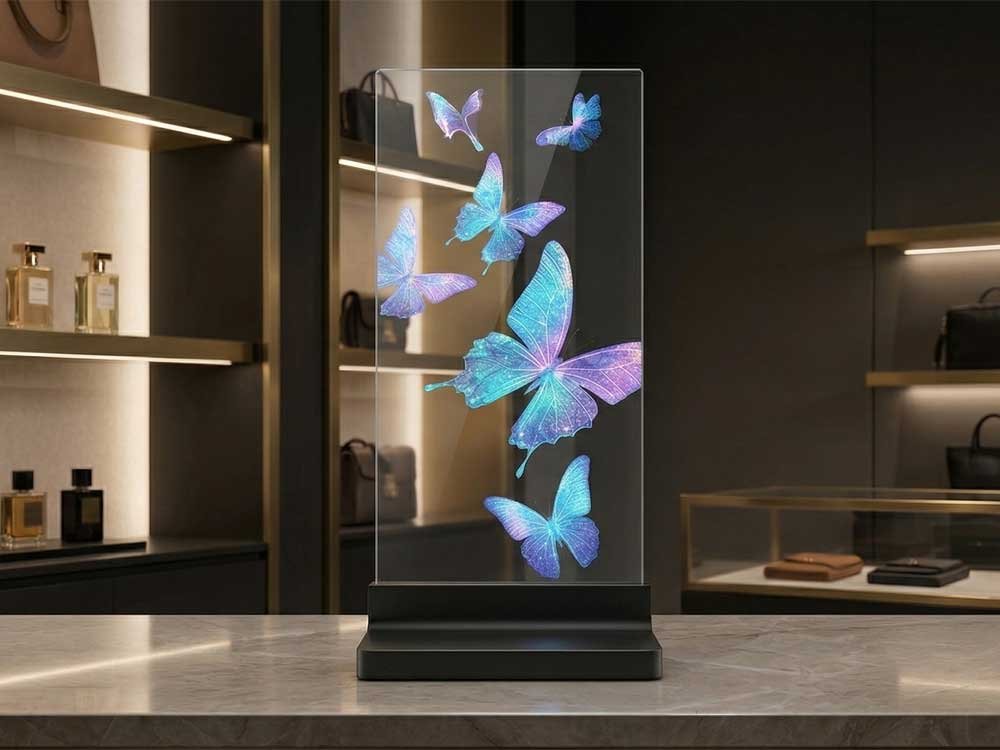
Retail references follow DisplayMan’s October 2026 official pricing policy. Technical examples follow the supplied 16.1-inch specification and the linked model pages. Platform investment and production-scale scenarios reflect DisplayMan’s engineering and commercial assessment; they are not independent market forecasts or binding future quotations. Product imagery illustrates the relevant products and structures, not a calibrated microscopic comparison.