OLED sourcing guide
Which OLED Supplier Fits Your Project?
This Top 10 OLED display manufacturer and supplier shortlist covers BOE, Tianma, Visionox, DisplayMan, EDO, TCL CSOT, SeeYA, BCDTEK, SIDTEK and Truly. Match the company’s role and available products to your requirement: AMOLED, PMOLED, Micro OLED, flexible OLED or a transparent display system.
For OEM buyers, the useful comparison is the exact panel, module or integrated assembly—not only the size of the manufacturer. DisplayMan supports OLED product selection, feasible module customization and transparent display integration.
Published by DisplayMan and including DisplayMan; the order is editorial, not a market-share ranking. Company profiles link to official technical and product information.
How to Use This Top 10 OLED Supplier List
Choose the OLED category before choosing the company. An AMOLED panel for a handheld device, a PMOLED status display, an OLED-on-silicon microdisplay and a transparent OLED installation solve different problems. A company active in one category is not automatically the right source for the others.
This Top 10 is an editorial sourcing shortlist published by DisplayMan, which is included in the list. Numbers organize the guide; they do not represent audited market-share positions or an independent quality ranking. The profiles distinguish panel fabrication, module supply and integration so that buyers can compare the relevant scope.
The geographic scope covers China-based businesses, including a Hong Kong-based group with display manufacturing operations in mainland China. Product and technology statements are based on the official pages linked below. An exhibition demonstration does not establish that a specific panel is available for an OEM order.
Confirm the actual model, supply channel, engineering support and commercial conditions before treating any company as an approved supplier. This list does not imply that DisplayMan is an authorized distributor or partner of every company mentioned.
Top 10 OLED Display Manufacturers and Suppliers at a Glance
| No. | Company | Main direction in this guide | First sourcing question |
|---|---|---|---|
| 1 | BOE | Flexible OLED panel technology | Which panel platform and order channel match the project? |
| 2 | Tianma | AMOLED and advanced display technologies | Is a suitable AMOLED model available for the application? |
| 3 | Visionox | AMOLED and flexible OLED technologies | Is the required design a supplied product or a demonstration? |
| 4 | DisplayMan | OLED module sourcing, customization and transparent-system integration | Do you need a module, supporting electronics or a finished system? |
| 5 | Everdisplay Optronics / EDO | Rigid and flexible AMOLED | Which size, interface and qualification route apply? |
| 6 | TCL CSOT | AMOLED and inkjet-printed OLED technologies | What is the commercial status of the exact panel? |
| 7 | SeeYA Technology | OLED-on-silicon / Micro OLED | Which microdisplay and optical interface suit the near-eye design? |
| 8 | BCDTEK / Xinshijia | OLEDoS, OLED modules and related solutions | Which device, module or supporting system is being quoted? |
| 9 | SIDTEK | Micro OLED display development and manufacturing | Which resolution, optics and drive requirements must be matched? |
| 10 | Truly | Display products including OLED and AMOLED | Which technology and module configuration are actually available? |
These businesses are not interchangeable. Use the profiles for an initial shortlist, then compare actual quotations and samples within the same scope.
1. BOE — Flexible OLED Panel Technology

BOE’s official f-OLED page describes its flexible OLED technology direction and applications across mobile, notebook and automotive forms. It is a relevant panel-technology company to investigate for projects aligned with available OLED platforms. [1]
For an OEM buyer, the next step is identifying a specific panel and obtaining its electrical and mechanical documentation. A technology presentation alone does not establish the order quantity, open-market availability or customization terms.
Review: active area, resolution, interface, qualification requirements and whether the intended supply route can support your volume. If your project is a small device rather than a large panel-development program, an available module plus integration support may be the more practical starting point.
Explore DisplayMan’s BOE overview or use the official reference below to investigate BOE’s published OLED direction.
2. Tianma — AMOLED and Advanced Display Technologies

Tianma’s official AMOLED information describes its active-matrix OLED technology portfolio. Its wider display business also includes LCD technologies, so identify the OLED product family rather than assuming that every Tianma module is OLED. [2]
The sourcing question is whether a suitable model, interface and supply arrangement match the project. A company’s broad display capability does not mean every size or specification can be ordered as a standard module.
Review: exact technology, outline, host compatibility, touch integration and the product’s intended operating environment. Separate the supplier’s published technology capabilities from the specific engineering support offered for your order.
3. Visionox — AMOLED and Flexible OLED Technologies

Visionox’s official site presents AMOLED development and multiple flexible-display technology directions. Its published portfolio is relevant when researching OLED panel technologies for mobile and other advanced display products. [3]
A bendable, foldable or rollable demonstration describes a particular engineered construction. It should not be read as permission to fold any OLED module freely. Confirm the commercial model and approved mechanical limits.
Review: whether the panel is a standard supplied product, the permitted curvature or folding conditions, electrical documentation, qualification needs and production-volume assumptions. Distinguish a new panel development request from integration around an existing panel.
For process background, read OLED Manufacturing Process.
4. DisplayMan — OLED Modules, Customization and Transparent Display Systems

DISPLAYMAN (SZ) TECHNOLOGY CO., LTD. is based in Shenzhen and supports OEM display selection and integration. DisplayMan’s role in this list is OLED module and system supply, rather than large-scale AMOLED panel fabrication.
The practical starting point is the customer’s application: detailed full-color graphics, a compact status display, a supported curved surface or a transparent commercial installation. DisplayMan can review suitable available products and the supporting parts needed to turn the display into a usable assembly.
Relevant product directions include AMOLED Displays, PMOLED Displays, Flexible OLED Displays and Transparent OLED Displays.
Project-dependent engineering can include FPC and connector review, touch panels, cover glass, bonding, controller electronics, mounting and enclosure integration. New active areas or pixel designs require a separate feasibility and commercial assessment; they should not be assumed from the availability of module customization.
For transparent OLED projects, review the panel together with background lighting, content, controller location and mechanical support. DisplayMan’s product directions include transparent OLED cabinets and other see-through display systems.
Best starting information: application, required dimensions, content, host interface, operating conditions, quantity, drawings and target schedule. This helps establish whether the project needs a module, a customized assembly or a complete display system.
5. Everdisplay Optronics / EDO — Rigid and Flexible AMOLED

Everdisplay Optronics (Shanghai), also known as EDO, describes its business as AMOLED research, production and sales. Its official introduction covers rigid and flexible products for several device categories, including tablets, notebooks, wearables and automotive applications. [4]
This makes EDO a relevant AMOLED panel supplier to research when the available product platform aligns with the design. Avoid relying on the old article’s historical investment figures to judge current suitability.
Review: supplied panel size and resolution, interface details, qualification route, sample availability and the level of integration included in a quotation. Device-category coverage is not a promise that every proposed OEM configuration can be supported.
For a module-level starting point, compare the available options on AMOLED Displays.
6. TCL CSOT — AMOLED and Inkjet-Printed OLED Technologies

TCL CSOT’s official technology announcements include both inkjet-printed OLED and FMM OLED directions. These should be identified as distinct process and product platforms rather than compressed into one generic “OLED panel” specification. [5]
Its published development activity is relevant for buyers investigating OLED technology options across device categories. However, a trade-show portfolio is not an open inventory list.
Review: the exact product’s commercial status, supplied specification, sample route, intended volume and integration requirements. Ask which process or architecture applies to the quoted panel if that matters to your design or qualification plan.
The key procurement outcome is a supported model and documented supply arrangement, not simply choosing the newest process name.
7. SeeYA Technology — OLED-on-Silicon Microdisplays

SeeYA’s official product and application information focuses on OLED-on-silicon, also called OLEDoS or Micro OLED. It lists microdisplay and optical-solution directions for consumer and industrial applications. [6]
These displays are intended for optical systems such as near-eye viewing and electronic viewfinders. They are not direct substitutes for a larger transparent OLED showcase or an ordinary handheld AMOLED module.
Review: display size, pixel count, interface, luminance requirements and compatibility with the optical engine. Include eye-box, field-of-view and optical-path requirements in the system review rather than selecting a microdisplay by resolution alone.
Micro OLED and transparent Micro LED are different technologies. Similar names should not lead to the wrong sourcing category.
8. BCDTEK / Xinshijia — OLEDoS and OLED Module Solutions

The BCDTEK website identifies the business as Shenzhen Xinshijia Semiconductor and describes OLEDoS, rigid/flexible display modules, IC design and related smart-glasses or headset solution activities. Its product pages distinguish microdisplay products from module and testing-equipment directions. [7]
The buyer should therefore specify whether the requirement is a microdisplay component, an OLED module, electronics or a broader system. These are different quotation boundaries.
Review: the exact product identifier, included driver functions, interface documentation, optics where applicable and the support needed for system integration. Do not assume that a company’s IC or test-equipment capability automatically covers every aspect of your finished product.
Use the current official product information rather than treating the old BCDTEK profile as a complete statement of present business scope.
9. SIDTEK — Micro OLED Development and Manufacturing
SIDTEK’s official website presents Micro OLED products and applications spanning near-eye and other optical systems. Its product information provides a route to investigate model-specific resolution and interface directions. [8]
As with other OLED-on-silicon suppliers, the display must be considered together with the optics and supporting electronics. A specification that looks attractive in isolation may not match the available optical engine or host interface.
Review: module versus panel supply boundary, resolution, driver support, thermal requirements and the optical requirements of the finished system. Confirm which published product is available for evaluation and what documentation accompanies it.
Keep this category separate from large-format transparent OLED when planning an RFQ.
10. Truly — OLED Within a Wider Display Portfolio

Truly’s official display information lists OLED, AMOLED and flexible OLED among a broader set of display technologies. The group is Hong Kong-based and has display manufacturing operations in mainland China; it is included here as part of the China sourcing ecosystem. [9][10]
Because the portfolio spans several display types, the first task is identifying the specific OLED family and actual supplied module. A general display capability statement is not a product specification.
Review: technology, dimensions, interface, customization scope, qualification requirements and order conditions. Ask which legal entity will quote and supply the assembly, particularly where several group businesses or supply channels are involved.
For compact interfaces, compare the requirements of the intended content before choosing between passive-matrix, active-matrix and other available display directions.
Panel Manufacturer, Module Supplier or System Integrator?
| Role | Typical responsibility | What to confirm |
|---|---|---|
| Panel manufacturer | Fabricates the image-forming display platform | Model availability, fabrication limits and supply access |
| Module supplier | Supplies a usable display assembly and related components | Included drivers, FPC, connector, touch and documentation |
| System integrator | Combines display, electronics and mechanics for the application | Input signal, enclosure, mounting, software boundary and service |
A supplier can cover more than one role. The practical issue is the responsibility included in your quotation, not the label on the company homepage.
For a transparent retail installation, buying a bare panel can leave the customer responsible for controllers, support structures and content integration. For a compact OEM device, a complete signage enclosure may be unnecessary. Define the supply boundary before comparing prices.
If an intermediary or distributor is involved, confirm authorization where it is claimed, traceability, technical support and who handles component changes. This article does not assert commercial relationships among the listed businesses.
Choose the OLED Product Category Before Sending an RFQ
| Project direction | Category to investigate | Important constraint |
|---|---|---|
| Compact text, icons or status information | PMOLED or a suitable segment OLED design | Display layout, driver, tooling and order quantity |
| Full-color user interface or graphics | AMOLED module | Host interface, resolution, power and software |
| Supported curved surface | Qualified flexible OLED | Bend radius, support and permitted mechanical use |
| Transparent showcase or signage | Transparent OLED system | Background light, content, mounting and controls |
| Near-eye optical instrument | Micro OLED / OLEDoS | Optics, luminance, interface and thermal integration |
AMOLED and PMOLED describe addressing. Flexible and transparent describe different construction or optical attributes. They are not mutually exclusive classification levels. See AMOLED vs PMOLED for the addressing comparison.
For a transparent display, do not assume that every OLED panel maker offers the size or module you need. Start with the available transparent product and then assess integration. If OLED is not the right fit, compare the broader LCD vs OLED selection guide and the transparent cabinet engineering guide.
OLED Procurement Checklist: From Shortlist to Approved Sample
- Define the application: content, viewing distance, installation and operating schedule.
- Identify the category: AMOLED, PMOLED, Micro OLED, transparent OLED or a qualified flexible construction.
- Freeze the geometry: active area, outline, thickness, cable exit and mounting restrictions.
- Check electrical compatibility: host interface, pinout, power rails, initialization and controller scope.
- Review operating performance: useful brightness, power, temperature, static content and temporal behavior.
- Confirm commercial conditions: sample quantity, MOQ, engineering fees, production lead time and annual volume.
- Agree on quality evidence: optical defects, uniformity, electrical function and relevant environmental checks.
- Plan continuity: exact part revision, change notification, replacement assessment and service responsibilities.
New panel development is a different commitment from adjusting a cover glass, FPC or enclosure around a standard panel. Ask for a written scope so that quotations are comparable. No universal MOQ, tooling fee or lead time applies to all ten suppliers or all OLED technologies.
For lifetime and dimming questions, use the OLED burn-in guide and OLED flicker testing guide. A manufacturer name does not replace evidence for the actual product.
DisplayMan can help translate an application requirement into a module and integration review. Send the project information first, so that the team can assess feasible product directions before detailed quotation.
Frequently Asked Questions
Is this a ranking by OLED market share?
No. This is DisplayMan’s editorial Top 10 sourcing shortlist, covering different supply-chain roles. The numbering is not an audited ranking of shipments, technology quality or financial scale.
Does DisplayMan manufacture AMOLED panels in a semiconductor fab?
DisplayMan’s role here is OLED module supply, project-dependent customization and display-system integration. New panel fabrication is a separate upstream activity.
Can I order any displayed technology as a standard sample?
Not necessarily. Technology demonstrations, qualification programs and standard commercial products have different availability. Confirm the exact model and supply route.
Can Micro OLED replace a large transparent OLED screen?
No direct substitution should be assumed. Micro OLED usually belongs in an optical viewing system; transparent OLED serves a different image size and installation requirement.
Does a flexible OLED automatically support repeated folding?
No. Confirm the qualified bend geometry, support and cycle requirement for the exact product. DisplayMan’s flexible OLED direction is bendable or curvable integration unless a specific product is qualified otherwise.
Why use a module or integration supplier instead of approaching a panel maker?
A module or integration supplier may help match the panel with electronics, touch, cover glass and mechanical requirements. Direct panel sourcing can suit other projects. Compare the technical responsibility and commercial scope that your team actually needs.
From process to product
Explore Related Display Products
Choose a product direction, then confirm the panel, module and integration requirements together.
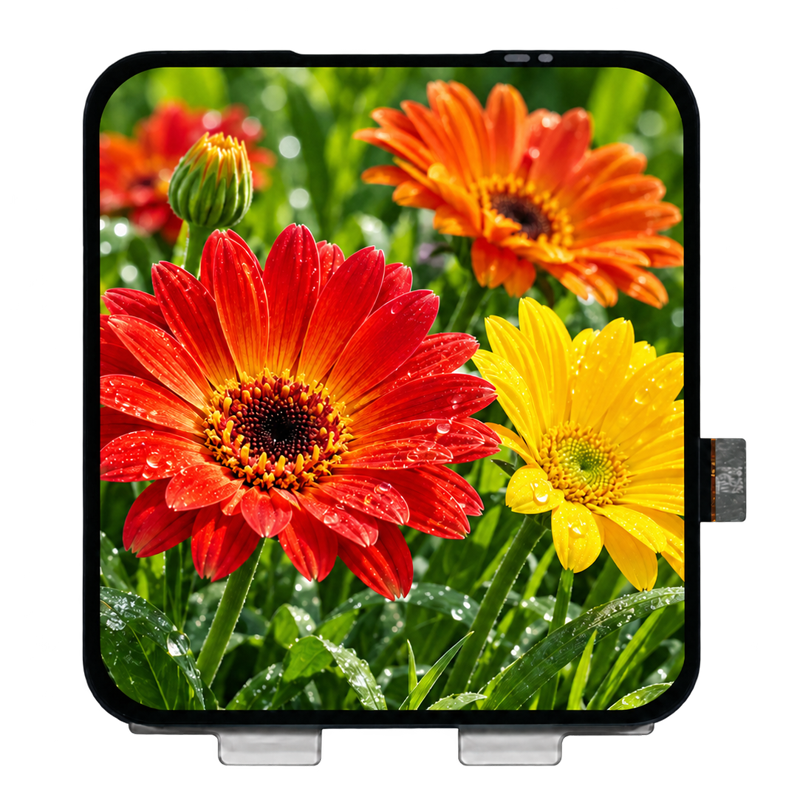
AMOLED Displays
Review full-color module options for detailed interfaces, graphics and OEM products.
Explore product options →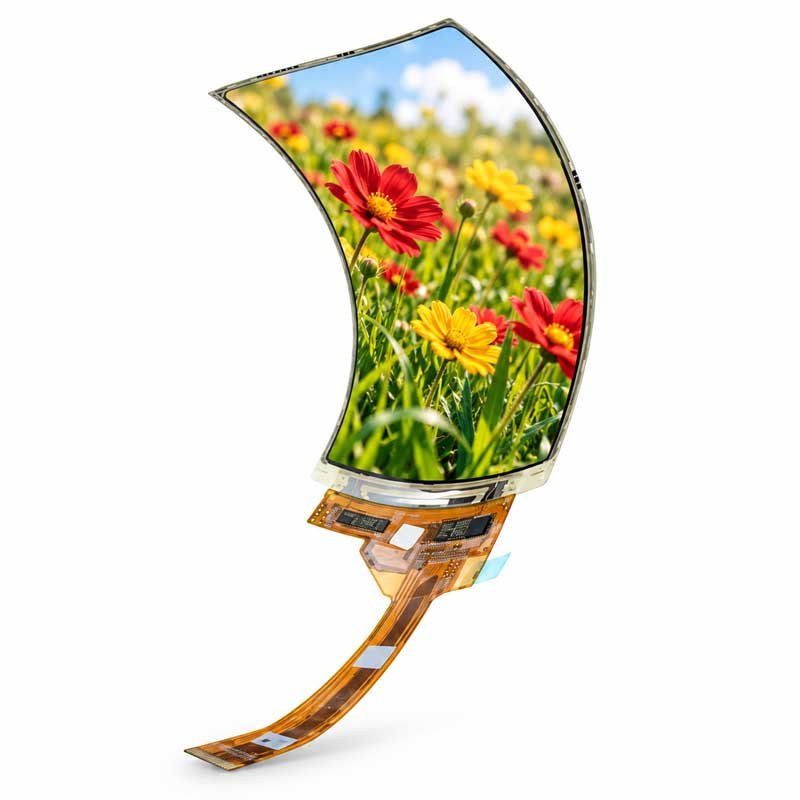
Flexible OLED Displays
Explore bendable or curvable display directions with mechanical limits reviewed for the assembly.
Explore product options →
Transparent OLED Displays
Explore see-through displays for showcases, signage and engineered commercial systems.
Explore product options →Project review
Turn Your OLED Requirement into a Practical RFQ
Send your application, preferred size, interface, quantity and drawings. DisplayMan can review suitable OLED product directions, module customization and system integration requirements before quotation.
Prefer to open the enquiry form here?
Official Sources and Further Reading
- BOE: f-OLED technology
- Tianma: AMOLED technologies
- Visionox: Official technology and product information
- Everdisplay Optronics: AMOLED business and product categories
- TCL CSOT: OLED technology portfolio
- SeeYA: OLEDoS products and optical applications
- BCDTEK / Xinshijia: Products and company scope
- SIDTEK: Micro OLED products and applications
- Truly: Display technology portfolio
- Truly: Hong Kong headquarters and mainland manufacturing contact information
Company names and logos identify the businesses discussed. Their inclusion does not imply endorsement, a partnership or distribution authorization. Confirm product availability and commercial terms directly for the exact model.